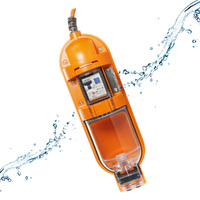

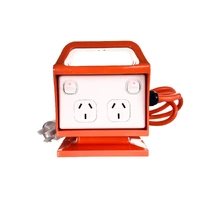
10A RCD
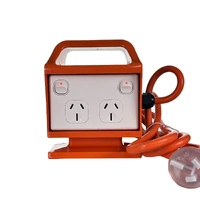
NLS 30050 | Heavy Duty Quad Outlet Safety Box | Type A RCD Protected 10A
$81.95
$74.50 ex. GST
Search Results:
Search Results:
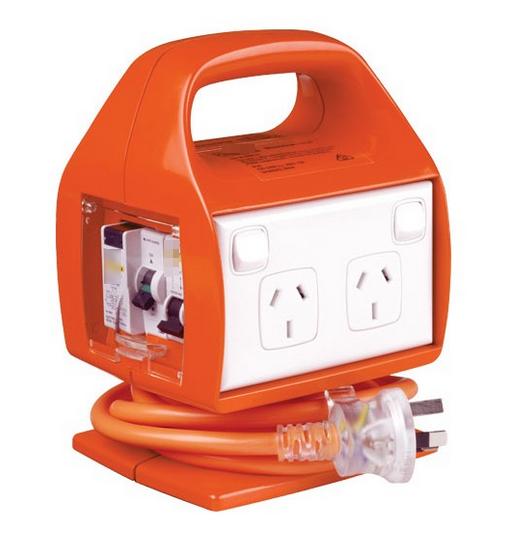
Find the best portable power packs here at Sparky Direct. [ Read More ]
Portable power packs combine protected outlets, RCD protection, circuit protection, and a site-ready enclosure in a single transportable unit. They distribute power from an existing mains supply point rather than generating or storing energy. These units are designed for temporary electrical distribution in environments where fixed switchboards are impractical or unavailable.
The key difference from standard power boards is the inclusion of residual current device (RCD) protection and dedicated circuit breakers, providing a higher level of electrical safety. The enclosure design focuses on durability, impact resistance, and outdoor suitability.
Australian portable power packs are typically rated at 10 amps or 15 amps, matching the two standard plug and socket configurations used for portable appliances and equipment. The 10 amp (10A) rating covers general-purpose equipment with standard three-pin plugs, while the 15 amp (15A) rating accommodates higher-current equipment with a larger earth pin configuration.
The current rating determines the maximum continuous load the unit can supply. A 10A unit can supply approximately 2400 watts at 240V, suitable for hand tools, lighting, chargers, and most small equipment. A 15A power pack can supply approximately 3600 watts, accommodating welders, compressors, larger tools, and event equipment where the supply circuit is correctly rated.
Selection depends on the connected equipment type, the rating of the supply circuit, and the plug configuration of the equipment. Using 15A equipment requires a correctly rated 15A supply circuit and matching 15A outlets.
Portable power packs, battery power stations, and USB power banks serve different purposes and should not be confused. RCD-protected portable power packs distribute mains power with built-in safety features. They require an available mains supply to operate.
Battery power stations store electrical energy in internal batteries and use inverters to convert DC battery power to AC mains voltage. They operate independently of fixed power but have limited capacity determined by battery size. USB power banks are small-capacity battery units for charging phones, tablets, and portable electronics via USB ports.
When users search for portable power packs with inverters, solar charging, or high-capacity portable power, they are typically seeking battery power stations rather than the RCD-protected distribution units covered in this category. The correct product choice depends on whether temporary distribution of existing mains power or independent battery storage is required.
Residual current devices (RCDs) are designed to disconnect power supply when leakage current is detected, typically within 30 milliseconds at 30mA sensitivity. This rapid disconnection reduces the risk of electric shock in situations where current flows through an unintended path, such as through a person contacting a live conductor.
RCD protection is particularly important in temporary power setups, outdoor environments, damp conditions, and situations where equipment may be exposed to water, mechanical damage, or deteriorating cable insulation. Worksites, events, market stalls, and outdoor maintenance work all benefit from RCD protection on temporary power distribution.
RCD testing and inspection requirements depend on the application and workplace safety procedures. Most units include a test button that should be operated regularly to verify RCD function. Some workplaces require documented RCD testing as part of electrical safety management. Where testing, repair, or compliance verification is required, this work should be carried out by competent persons or licensed electricians as appropriate.
Portable power packs include miniature circuit breakers (MCBs) or similar overcurrent protection devices to protect the unit and connected equipment from overload and short circuit conditions. These devices automatically disconnect power when current exceeds the rated value for a sustained period or when a fault condition occurs.
Outlet configuration varies by model and intended use. Some units provide multiple 10A outlets only, while others offer a combination of 10A and 15A outlets. Each outlet circuit may have dedicated protection or share a common circuit breaker depending on design. The total connected load must remain within both the individual outlet rating and the overall unit rating.
When connecting multiple devices, the combined current draw must be calculated. Equipment labels typically show current draw in amps or power consumption in watts. To convert watts to amps at 240V, divide watts by 240. For example, a 1200W heater draws approximately 5 amps. Multiple devices on a single power pack must not exceed the rated capacity.
Load Management: Always verify that the total connected load, extension lead rating, and supply circuit capacity all match or exceed the expected current draw. Motors, compressors, and refrigeration equipment draw higher starting currents than running currents. Allow adequate margin for start-up surges.
Site-ready enclosures are designed to withstand transport, storage, and use in construction, industrial, and outdoor environments. Impact-resistant plastic housings, reinforced corners, and protective cable entries are common design features. Carry handles and cable management provisions support safe transport and storage.
Lead length varies by product and determines the distance between the supply point and the work area. Typical leads range from 3 to 20 metres. Longer leads provide greater flexibility but add weight and cable management requirements. Extension leads can be used to extend reach, provided they are correctly rated for the connected load and outdoor use where applicable.
Outdoor suitability depends on enclosure rating, cable type, and RCD protection. While many portable power packs are designed for outdoor use, they should be positioned to minimise exposure to water ingress, heat, and mechanical damage. Units should not be used in locations where they will be submerged, exposed to direct water spray, or subjected to extreme environmental conditions beyond their design rating.
A 10 amp portable power pack is appropriate for general-purpose temporary power distribution from standard 10A supply outlets. This covers the majority of hand tools, battery chargers, LED work lights, low-power appliances, laptops, test equipment, and small site loads. These are commonly used in residential maintenance and light commercial work.
Most Australian homes and many commercial premises have 10A outlets as the standard socket configuration. A 10A portable power pack can be connected to any correctly installed 10A outlet without requiring specialised supply infrastructure. This makes 10A units more versatile for electricians and contractors working across varied sites.
Equipment that operates within the 10A / 2400W limit and uses standard three-pin plugs is compatible with 10A power packs. This includes most corded power tools, lighting systems, chargers, fans, small pumps, and general-purpose electrical equipment encountered in building services, maintenance, and fit-out work.
A 15 amp portable power pack is suitable only where a correctly rated 15A supply circuit is available and the connected equipment requires 15A outlet capacity. Common 15A equipment includes welders, larger air compressors, high-power tools, food service equipment, event lighting and sound systems, and industrial equipment designed for higher current draw.
The 15A plug has a larger earth pin that prevents it from being inserted into a standard 10A socket. This is a deliberate safety feature to prevent overloading 10A circuits. Any attempt to modify 15A plugs, adapt them to 10A outlets, or use unapproved adapters creates a serious electrical safety hazard and is prohibited under Australian wiring rules.
Before selecting a 15A power pack, verify that the site has a correctly installed 15A supply circuit. Not all sites provide 15A outlets, particularly in residential settings. In commercial and industrial premises, 15A outlets are typically installed in workshops, plant rooms, and areas where higher-power equipment is regularly used. Where uncertainty exists, consult the site electrical documentation or engage a licensed electrician to verify supply capacity.
Equipment labels display either current rating in amps or power consumption in watts. This information is typically found on the equipment nameplate, label, or in the product documentation. To determine if equipment is suitable for a 10A or 15A power pack, add up the current draw of all devices that will be connected simultaneously.
For equipment rated in watts, convert to amps by dividing by 240. For example, a 2000W welder draws approximately 8.3 amps, a 1500W heater draws 6.25 amps, and a 500W LED light draws approximately 2 amps. When multiple devices will run concurrently, the total current must remain below the unit rating with adequate margin for safety.
Motors, compressors, pumps, and refrigeration equipment draw significantly higher current during start-up than during continuous running. This inrush current can be three to six times the running current for a brief period. Where motor-driven equipment will be used, allow additional capacity or ensure equipment is started sequentially rather than simultaneously.
For commercial installations, uncertain load assessments, or situations where multiple high-power devices will be used, a licensed electrician can verify load calculations, supply capacity, and appropriate equipment selection. This avoids undersizing equipment, overloading circuits, or creating unsafe operating conditions.
Licensed electricians use portable power packs for maintenance call-outs, temporary lighting during switchboard work, testing equipment, battery chargers for cordless tools, and controlled temporary supply adjacent to fixed electrical installations. The compact format and RCD protection make them practical for work where disconnecting the main supply or working on energised equipment requires a separate protected power source.
Common requirements include rugged build quality for transport in service vehicles, clear labelling of outlet ratings and protection status, accessible test/reset buttons for RCD verification, and appropriate lead length for the working area. Many electricians keep multiple units of different capacities to match varying site requirements.
For testing and commissioning work, portable power packs provide a known-good protected supply that can be used independently of the installation being tested. This is particularly useful when verifying new circuits, troubleshooting existing installations, or providing temporary power during fault rectification.
Construction sites, fit-outs, workshops, plant rooms, fabrication areas, and temporary work zones require portable protected power for tools, lighting, equipment, and temporary services before permanent electrical infrastructure is commissioned. Site electrical safety procedures often mandate RCD protection on all temporary power distribution.
The robust enclosure design of portable power packs suits the high-impact environment of active construction sites. Protection against dust, debris, and moisture ingress is essential where equipment may be stored outdoors, transported between work zones, or exposed to site conditions.
Coordination with site safety systems is important. Some sites require documented RCD testing at specified intervals, visual inspection of cables and equipment before use, and tagging or labelling of tested equipment. Where portable power packs are used as part of workplace safety procedures, testing and inspection requirements should align with site electrical safety management plans and relevant standards.
Markets, pop-up shops, mobile food service, outdoor lighting, sound equipment, displays, and marquees all require protected temporary power in public-access environments. Event organisers and site controllers typically specify electrical safety requirements including RCD protection, cable routing, and equipment inspection.
Selecting units suited to public-access environments means considering weatherproof design, clear safety labelling, stable positioning to prevent tipping, and cable management to reduce trip hazards. Where equipment is accessible to the public, additional care is needed to prevent tampering, accidental disconnection, or unauthorised connection of unsafe equipment.
Before using portable power packs at events or markets, confirm the site power supply rating, outlet availability, and any specific electrical safety requirements from the venue or event organiser. Some venues provide dedicated event power outlets with documented capacity and protection. Others require users to arrange their own temporary supply through licensed electricians.
Before purchasing a portable power pack, verify the following specifications match the intended application:
The price range for portable power packs varies based on current rating, outlet count, protection features, build quality, and brand. While budget units may appear attractive, false economy occurs when undersized, under-protected, or poorly built equipment fails in use, causes damage to connected equipment, or creates safety hazards.
Quality indicators include clear labelling of ratings and protection features, robust construction with proper cable entry protection, accessible test buttons with positive feedback, and Australian compliance markings from established brands. Units marketed as lightweight or compact may sacrifice protection features or build quality.
For professional trade use, the additional cost of reputable brands with documented compliance, proper RCD protection, and durable construction is typically justified by longer service life and safer operation. This reduces the likelihood of equipment failure on critical jobs. For occasional domestic use, mid-range units from established suppliers offer reasonable protection without professional-grade pricing.
Standard power boards provide multiple outlets from a single supply point but typically lack RCD protection and dedicated circuit breakers. They are appropriate for low-risk indoor applications where the fixed installation already provides adequate protection. For outdoor use, worksite applications, or environments where additional protection is required, RCD-protected portable power packs are the safer option.
Extension leads extend the reach of fixed outlets but do not add protection features. Combining an RCD-protected portable power pack with appropriately rated extension leads provides both reach and protection. The extension lead rating must match or exceed the connected load to avoid cable overheating.
Portable generators produce electrical power independently of fixed mains supply. They are appropriate for remote sites, emergency backup, or locations without available mains power. Generators require fuel, maintenance, noise management, and exhaust ventilation. Where mains power is available, RCD-protected distribution from the existing supply is simpler, quieter, and avoids fuel and maintenance requirements.
Battery power stations store energy in internal batteries and use inverters to produce mains voltage output. They provide limited capacity determined by battery size, typically ranging from a few hundred watt-hours to several kilowatt-hours. They suit applications requiring independence from mains power but short operating duration, such as camping, emergency backup, or remote monitoring equipment.
For continuous or high-power loads over extended periods, battery capacity is insufficient and recharging requirements become impractical. RCD-protected portable power packs connected to mains supply provide unlimited duration power at full rated capacity without battery limitations.
Portable electrical equipment in Australia must comply with relevant AS/NZS standards. This includes AS/NZS 3760 for in-service safety inspection and testing of electrical equipment, and AS/NZS 3000:2018 (Wiring Rules) for fixed electrical installations and temporary supply arrangements.
Portable power packs sold in Australia should carry approval markings indicating compliance with applicable product safety standards. Equipment without Australian compliance markings may not meet safety requirements and should not be used in commercial or workplace applications.
Connecting portable power packs to existing outlets for temporary use does not typically require a licensed electrician, provided the supply outlet is already correctly installed and rated for the load. However, licensed electricians must carry out any work involving modification of fixed electrical installations, installation of new supply outlets, repair of damaged equipment, or assessment of supply capacity where uncertainty exists.
Commercial and industrial sites often have additional electrical safety requirements under workplace health and safety legislation. This may include documented inspection and testing, electrical safety management plans, and specific competency requirements for personnel working with electrical equipment. Where portable power equipment is used in workplace settings, compliance with relevant workplace safety procedures and documentation requirements is essential.
Safe use of portable power packs requires visual inspection before each use. Test the RCD regularly using the test button. Ensure connections are secure and not damaged. Avoid overloading by exceeding rated capacity. Protect cables from mechanical damage, water ingress, and heat exposure.
Equipment should be stored in a dry location when not in use. Cables should be coiled loosely without tight bends or kinks. Units should not be used if damage is visible or RCD testing fails. Any equipment that shows signs of damage, overheating, or intermittent operation should be withdrawn from service and inspected by a competent person before further use.
Portable electrical equipment should be inspected before use for visible damage to cables, plugs, outlets, and enclosure. The RCD test button should be operated regularly to verify protection function. A successful test produces an audible click and disconnects power, which is then restored using the reset button.
Formal inspection and testing requirements depend on the application and applicable workplace safety procedures. AS/NZS 3760 provides guidance on inspection frequency, testing procedures, and documentation for portable electrical equipment in commercial and industrial settings. High-use environments may require quarterly or six-monthly testing, while lower-risk applications may allow annual inspection cycles.
After use in dusty or dirty environments, enclosures can be wiped clean with a damp cloth. Avoid using solvents, abrasive cleaners, or high-pressure water that may damage seals, labels, or cable entries. Outlets should be kept free from dust, debris, and moisture.
Store units in a dry location protected from temperature extremes, direct sunlight, and mechanical damage. Cables should be coiled loosely and secured to prevent tangling or kinking. Stacking heavy objects on portable power packs may damage the enclosure or internal components.
Portable power packs have a finite service life determined by use frequency, environmental exposure, and build quality. Signs indicating replacement or professional assessment is needed include failed RCD testing, damaged or deteriorated cables that cannot be repaired, cracked or broken enclosure components, and overheating during normal use. Also watch for intermittent outlet function and physical damage from impact or crushing.
Equipment that no longer passes visual inspection or RCD testing should be withdrawn from service immediately. Some damage can be repaired by licensed electricians or authorised service centres. However, in many cases replacement is more economical than repair, particularly for lower-cost units or equipment that has reached the end of its expected service life.
Watch 20mm PVC Sweep Bend 90 degree orange Heavy Duty video
Watch 3M 160RNPKAP3 Vinyl Electrical Insulation Tape Rainbow video
Watch 3M Temflex Vinyl Electrical Insulation Tape video

I got these power points installed in my home and I love that I can remove the covers and change them. We originally only had the white covers when we moved in and I decided to gradually change the covers to 'cove'. I reckon it goes much better with the colours of our home. Great product and easy to install the covers.
Excellent choice for the carport power point. Needed a power outlet for the carport to plug the car accessories etc into. This unit is cheap to purchase and as its a weatherproof GPO it can handle any weather. Needed a sparky to plug it in and set it up. Worth the $$ for the piece of mind.
My partner and I have bought two big orders now from Sparky Direct and both times our packages arrived very quickly and we received all the correct items in excellent condition. We are very happy with the product quality and service of this company and will definitely continue to do business with them.
Quality electrical accessories in stock • Fast Australia-wide delivery • Competitive trade pricing
Browse Power Points → Get Expert Advice →Yes, they are commonly used for markets, events, and temporary installations requiring protected power.
Sparky Direct supplies portable power safety boxes Australia-wide, offering compliant and reliable temporary power solutions with convenient delivery.
They are securely packaged and delivered via standard courier services.
Unused products are generally eligible for return according to the seller’s returns policy.
Warranty coverage varies by manufacturer and typically covers defects in materials or workmanship.
Yes, they are supplied fully assembled with integrated protection and connection leads.
Yes, selecting the correct current rating and protection type is essential for safe operation.
Yes, they simplify temporary power distribution by providing multiple protected outlets from one supply.
Yes, they are a standard safety solution for licensed electricians and trades.
Yes, provided the total load does not exceed the unit's rated capacity.
No, they operate silently as they contain no moving parts or generators.
It is recommended to use the built-in test function to confirm RCD operation before connecting equipment.
Portable power packs are rechargeable battery units designed to supply electrical power to devices and equipment when mains power is unavailable.
When appropriately rated, they are suitable for use in wet, dusty, or high-risk environments.
Yes, most include carry handles and compact designs for easy transport and repositioning.
Safety boxes provide multiple outlets with built-in protection, reducing reliance on multiple leads and improving site safety.
Yes, they are widely used on construction sites where temporary, protected power is required.
Yes, built-in protection helps disconnect power during faults, reducing the risk of equipment damage and personal injury.
They are commonly available with multiple outlets, such as quad outlet configurations, to power several tools or devices at once.
Common outputs include USB ports, 12V sockets, and 230–240V AC outlets, depending on the model.
Many models are suitable for outdoor use when used in dry conditions, and according to manufacturer guidelines.
Quality portable power packs are manufactured to meet relevant Australian electrical and safety requirements when supplied and used correctly.
They are commonly used for camping, worksites, emergency backup, travel, and powering small appliances or tools.