
Search Results:
Search Results:
Search Results:
Search Results:
A wire stripper removes the outer insulation from a conductor, exposing bare metal for termination, jointing, or connection. The tool cuts through insulation without severing or scoring the conductor beneath. This distinction matters: a nicked conductor weakens the wire, increases resistance at the joint, and can cause premature failure or fire risk in a live circuit.
Most strippers use a notched or V-shaped blade calibrated to specific conductor sizes. The operator sets the blade depth, clamps the wire, and draws or rotates the tool to shear the insulation cleanly. Self-adjusting models detect cable diameter automatically and apply consistent blade depth without manual adjustment.
The terms are often used interchangeably, but there is a practical distinction. Wire strippers typically handle single-core conductors, such as individual insulated wires pulled through conduit. Cable strippers are designed to remove the outer sheath from multi-core cables, such as TPS flat cable or armoured cables, without damaging the cores inside.
Many trade tools combine both functions. The electrician hand tools range at Sparky Direct includes models that strip both the outer sheath and individual cores in a single pass, which saves time on large jobs.
Incorrect stripping causes conductor damage that may not be immediately visible but creates long-term risk. Nicked conductors fail under load, particularly in high-current circuits. Scoring the insulation on adjacent cores in a multi-core cable creates a potential fault path. Using the wrong blade setting leaves insulation residue on the conductor, affecting contact quality at terminals.
Trade note: AS/NZS 3000:2018 (the Wiring Rules) requires all connections to be sound and mechanically secure. Conductor damage from poor stripping technique directly compromises compliance. Always strip cables using the correct tool for the conductor size and insulation type.
Manual strippers are the most widely used type in electrical trade work. They feature a set of notched blades sized for specific conductor cross-sections, typically ranging from 0.5 mm² to 6 mm². The operator selects the correct notch, clamps the wire, and pulls to strip. They are reliable, compact, and well-suited to repetitive work on known cable sizes.
Fixed-notch manual strippers are straightforward and durable, but require the correct size selection each time. Using the wrong notch is the most common cause of conductor damage with this type of tool.
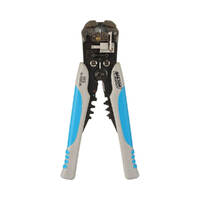
Self-adjusting strippers detect the conductor diameter mechanically and set blade depth automatically. The operator places the wire, squeezes the handles, and the tool strips cleanly without manual size selection. This reduces stripping errors and speeds up repetitive work significantly.
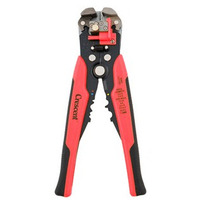
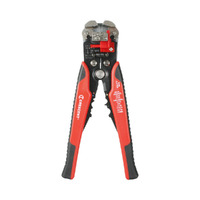
The Crescent CBLSTRIP is a popular self-adjusting model among Australian electricians. It handles the outer sheath and individual cores in a single tool, making it well-suited to TPS and flat cable work. Verified customer reviews consistently highlight its speed and the elimination of re-adjustment between different wire sizes.
Rotary strippers use a rotating blade to score around the circumference of a cable sheath. The tool is positioned at the desired strip length and rotated around the cable to cut evenly through the insulation. They are especially effective on round multi-core cables, armoured cable, and larger cross-sections where a standard squeeze-action stripper cannot apply even cutting pressure.
Coaxial strippers are purpose-built for RG59, RG6, and similar coaxial cables used in antenna, CCTV, and data installations. They cut through the outer jacket and dielectric layers in a single pass, exposing the braid and centre conductor at precise depths. TV and data tools including coaxial strippers are stocked for trade professionals working in structured cabling and AV installations.
Combination tools integrate wire stripping, cutting, and crimping functions in a single handle. They suit technicians who work across multiple cable types and need to minimise the number of tools on the belt. Trade-grade combination tools maintain acceptable performance across all three functions. Entry-level combination tools often compromise on cutting precision and crimping consistency.
Fixed-notch blades are sized to standard conductor cross-sections. They provide consistent, repeatable performance on the cable sizes they are designed for. Adjustable blade systems allow the operator to dial in the depth for non-standard insulation thicknesses, which is useful when working with specialist cables or import products that deviate slightly from Australian standard dimensions.
Trade electricians working predominantly on AS/NZS-compliant TPS cable rarely need adjustable blades. Those working in AV, data, or international equipment installations benefit from the flexibility.
Blade quality directly affects stripping performance and tool life. Hardened steel blades retain sharpness through repeated use on PVC insulation. Stainless steel blades resist corrosion in humid environments. Lower-quality blades dull quickly, which increases the force required to strip and raises the risk of conductor damage from the user applying excessive pressure.
Klein Tools and Major Tech both produce strippers with hardened precision blades designed for sustained trade use.
Not all strippers handle all insulation types equally. Standard PVC insulation, cross-linked polyethylene (XLPE), rubber, silicone, and Teflon each have different hardness and elasticity. A blade setting correct for PVC may score through XLPE or fail to cut cleanly through silicone. Confirm the tool's rated insulation compatibility before using it on specialist cables.
The starting point is conductor cross-section. Most twin and earth cables used in Australian residential wiring run between 1 mm² and 6 mm². A manual stripper covering this range handles the majority of domestic installation work. For larger cross-sections used in sub-mains and distribution boards, a rotary or heavy-duty stripper is more appropriate.
Manual fixed-notch strippers deliver high precision when the correct notch is used. They require deliberate size selection with each cable. Self-adjusting strippers prioritise speed: the automatic depth-setting mechanism eliminates size selection entirely, which reduces errors and increases throughput on large installations.
For fitting-off work at switchboards and outlet points where cable sizes vary frequently, self-adjusting models provide the most efficient workflow. For pulling in and terminating a single cable type across an entire job, a fixed-notch manual stripper is a dependable choice.
Residential work demands compact, versatile tools that handle TPS flat cable efficiently. Commercial and industrial work introduces armoured cable, larger cross-sections, and more demanding stripping schedules that favour heavier-duty tools with longer service life. CABAC and Channellock supply trade-grade tools suited to sustained commercial use.
Licensed electricians benefit most from tools that offer consistent performance, ergonomic handles for all-day use, and blade longevity that reduces replacement frequency. Insulated strippers rated to 1000 V are a practical choice for any tradesperson working in environments where accidental contact with energised conductors is a risk, even though circuits must always be de-energised before stripping work begins.
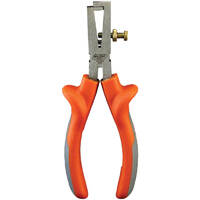
The Clipsal 852QCP insulated stripping pliers are a longstanding trade favourite, valued for their fit-off performance and slim profile that suits tool belts in confined spaces.
A quality stripper cuts through insulation in a single clean action, leaving a square, burr-free end. The conductor beneath should be undamaged and free of insulation residue. Any scoring on the conductor surface, torn insulation edges, or need for a second pass are indicators of blade wear, incorrect size selection, or poor blade quality.
The handle mechanism must transfer sufficient force to the blade without slipping. Ratchet-style mechanisms lock the blade in position before the cut is released, which prevents partial strips. Standard spring-return mechanisms are lighter and faster but rely on consistent grip pressure from the operator.
Handle ergonomics affect fatigue levels over a full working day. Soft-grip overmoulded handles reduce hand fatigue during high-volume stripping. Longer handles provide more leverage for larger cable sizes. Slim profiles suit work in confined switchboard spaces. The optimal handle depends on the primary application.
Trade-grade tools use hardened steel blades, reinforced pivot points, and durable handle materials. Entry-level tools may use softer steel that dulls within months of daily use. For tools used every working day, trade-grade construction provides better cost-per-strip value over the life of the tool, even at a higher initial price.
Slipping occurs when the blade notch is too large for the conductor, when the insulation is harder than the blade can cut at the applied force, or when the hinge mechanism is worn and cannot maintain clamping pressure. Check the correct notch size first. If the correct notch causes slipping, inspect the pivot and spring tension. A worn pivot is a sign the tool has reached the end of its service life.
Conductor damage is almost always caused by using a notch that is too small for the conductor. The blade bites into the conductor surface rather than stopping at the insulation layer. Self-adjusting strippers reduce this risk significantly. When using a fixed-notch tool, start with a larger notch and move smaller until the strip is clean and the conductor is undamaged.
After stripping, run a fingernail lightly across the conductor surface. Any groove or indentation indicates scoring. A scored conductor in a joint or terminal should be re-cut above the damage and re-stripped before connection.
Dull blades require more force to cut and increase the risk of tearing insulation rather than slicing it cleanly. The result is ragged edges, conductor scoring, and possible slipping. On tools with replaceable blades, replace the blade set at the first sign of reduced cutting performance. On tools with fixed blades, a blade that no longer cuts cleanly indicates the tool needs replacement.
Moisture causes rust on carbon steel blades and pivot points. Rust on blade edges affects cutting sharpness and can contaminate conductor surfaces. Wipe tools dry after working in wet conditions. Light machine oil on the pivot and blade edges extends service life in humid or coastal environments. Tools stored in sealed cases or with a light oil coating show significantly less corrosion over time.
Budget wire strippers are adequate for occasional use in light applications. For daily trade use, they represent poor value: blades dull quickly, pivot wear causes slipping within months, and handle comfort is typically inadequate for sustained use. Trade-grade tools from established brands cost more upfront but deliver consistent performance across thousands of cycles, reducing total cost of ownership significantly.
| Brand | Key Feature | Best Suited For |
|---|---|---|
| Clipsal | Insulated 1000V rated, slim profile | Fit-off work, switchboard terminations |
| Crescent | Self-adjusting, sheath and core stripping | Residential TPS, high-volume installations |
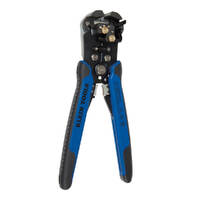
| Klein Tools | Hardened precision blades, broad size range | Commercial and industrial work |
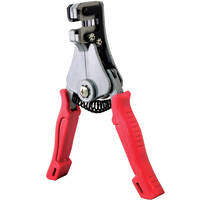
| Major Tech | Automatic wire stripping, precise depth | Repetitive stripping tasks, diverse cable sizes |
Contractors running multiple crews benefit from purchasing strippers in quantity to standardise toolkits across sites. Uniform tools reduce training time and ensure consistent results. Sparky Direct supplies trade quantities to licensed electricians and electrical contractors across Australia, with competitive pricing on volume orders. Contact the team via the contact page for bulk pricing enquiries.
For manual strippers: select the notch one size larger than the conductor diameter, test on a short off-cut first, then adjust if needed. Apply smooth, even pull force rather than jerking the tool. For sheathed multi-core cable, strip the outer sheath first using the cable stripper function or notch, then strip each core individually.
For self-adjusting strippers: position the cable at the correct strip length, ensure the cable is seated fully in the jaw, and apply a single smooth squeeze. Do not partially release and re-squeeze mid-stroke, as this can cause the blade to score the conductor.
Inspect blade edges regularly for visible wear, nicks, or flat spots. On adjustable tools, verify blade depth settings periodically using a known conductor size. Replace blade sets before performance deteriorates to the point of conductor damage. Most quality strippers use standard blade sets available from the original manufacturer.
Store strippers in a dry location away from cutting edges that could nick the blade. Tool bags with individual pockets prevent tools from contacting each other during transport. Avoid leaving strippers in vehicle toolboxes without protection in coastal areas where salt air accelerates corrosion on exposed steel surfaces.
Residential work in Australia is predominantly TPS (twin and earth) flat cable in 1 mm², 1.5 mm², 2.5 mm², and 4 mm² sizes. A self-adjusting stripper that handles both the outer sheath and individual cores covers the full range of tasks from rough-in cable pulls through to fitting-off at outlets, switchboards, and light fittings. The speed advantage of self-adjusting tools is most apparent on large residential builds where cable volumes are high.
Commercial installations introduce larger cable sizes, armoured cables, and cables with specialist insulation. A rotary stripper or heavy-duty manual tool is required for cables above 10 mm². Cable cuts and cable cutters are used alongside strippers for sizing cable before stripping. Industrial environments may require tools with insulated handles rated to 1000 V to comply with site safety requirements.
Data cabling requires strippers with fine blade control to avoid damaging the small-gauge conductors in Cat5e and Cat6 cables. Coaxial strippers are essential for maintaining signal integrity in antenna and CCTV installations. Punch down tools are used alongside strippers for terminating data cables at patch panels and wall outlets.
Stripping work must be carried out on de-energised circuits. This is a fundamental requirement under AS/NZS 3000:2018 and relevant state electrical safety legislation across Australia. Lock out and tag out procedures must be applied before any conductor is handled. Insulated-handle tools provide a level of protection against incidental contact but do not replace the requirement to de-energise the circuit.
Safety glasses are recommended when stripping cable, as small insulation fragments can be ejected during cutting. Cut-resistant gloves protect against blade contact when handling tools with exposed blades. Keep tool blades closed or sheathed during transport and storage to prevent hand injuries when reaching into tool bags.
All electrical installation work in Australia must comply with AS/NZS 3000:2018 (Wiring Rules). Conductor integrity after stripping is a core compliance requirement. Any conductor damaged during stripping must be re-cut before use. Insulated stripping tools rated to 1000 V that carry IEC 60900 or AS/NZS 4233 compliance markings are suitable for use in live-adjacent environments where site safety procedures require insulated tools.
Clean, precise stripping reduces the number of cable re-cuts needed on a job. Every re-cut wastes cable length. On a large installation with hundreds of termination points, the cumulative cable waste from poor stripping practice is significant. Self-adjusting strippers with consistent blade depth reduce re-cut frequency and lower material waste on site.
Copper is a high-value recyclable material. Cable off-cuts, including stripped insulation and conductor ends, can be separated and recycled through metal recyclers. Many electrical contractors maintain scrap copper bins on site for this purpose. Insulation waste from stripping is disposed of as general waste, but clean separation from copper improves the recyclability of both materials.
Choosing trade-grade tools with replaceable blades extends tool life and reduces landfill contribution. A stripper body that lasts a decade with periodic blade replacement generates significantly less waste than replacing budget tools annually. When a tool reaches the end of its service life, metal components can be separated and recycled through appropriate waste streams.
Online purchasing from a specialist electrical wholesaler gives trade professionals access to the full range of strippers from Clipsal, Crescent, Klein Tools, Major Tech, CABAC, and Channellock in a single location. Trade pricing, stock availability, and delivery speed are the main purchase drivers for working electricians. Browsing the wire strippers range online allows direct model comparison before ordering.
A reliable electrical wholesaler stocks genuine manufacturer products, provides accurate product specifications, and offers Australia-wide delivery on in-stock items. Sparky Direct has supplied licensed electricians and electrical contractors across Australia since 2005. The range covers manual, self-adjusting, and rotary strippers alongside the broader hand tools and electrician hand tools ranges.
In-stock items at Sparky Direct are dispatched promptly for delivery across Australia. Bulk orders for contractors requiring multiple units can be arranged through the trade team. The electrical tools category includes complementary items such as cable cutters and crimping tools for ordering alongside strippers in a single transaction.
Watch Clipsal 852QCP | Insulated 200mm Quick Connect Stripping Pliers | Green video
Watch Crescent CBLSTRIP | Self-Adjusting Wire Stripper Cutter & Crimper video
Watch Major Tech WS0310 | 1.0mm² to 3.2mm² Automatic Wire Stripper video

These are the best pliers Clipsal ever produced - nothing beats them for stripping cables when you're fitting-off. The lack of stops mean they slot nicely in & out your tool belt and take up less space - who even works live on 1000V cables with cable strippers? It absolutely baffles me why Clipsal discontinued these, but Clipsal have been doing a lot of dumb stuff since Schneider took over...
Been using these pliers for years. Still going strong. The grip style on these is preferred over the superseded model. Bought another few pairs to ensure I have enough available when they're discontinued.
This tool is a real time saver. Cleanly strips the sheath and/or the wires without needing re-adjustment.
Quality products in stock • Fast Australia-wide delivery • Competitive trade pricing
Browse Wire Strippers → Get Expert Advice →Incorrect use or the wrong size setting can nick or damage conductors.
Sparky Direct supplies wire strippers Australia-wide, offering reliable tools suited to electrical trade use.
Wire strippers are packaged securely and delivered via standard courier services.
Unused wire strippers are generally eligible for return according to the seller’s returns policy.
Warranty coverage varies by manufacturer and typically covers defects in materials or workmanship.
Wire strippers are available individually and in electrician tool kits.
Keeping them clean and storing them properly helps maintain performance.
Yes, wire strippers are commonly used by apprentices under appropriate supervision.
Cutting and stripping edges can wear with heavy use and may eventually need replacement.
The right choice depends on the wire sizes used and whether speed or precision is the priority.
They can be used for basic tasks, but household electrical work must be done by a licensed electrician.
Quality wire strippers feature ergonomic handles designed to reduce hand fatigue.
Automatic wire strippers can be faster for repetitive tasks, while manual strippers offer more control.
Wire strippers are used to remove insulation from electrical wires without damaging the conductor underneath.
Wire strippers are easy to use with basic training and familiarity with wire sizes.
Using the correct tool helps prevent damage to the conductor and ensures reliable electrical connections.
Wire strippers do not require calibration, but correct adjustment is important for clean stripping.
Yes, wire strippers are essential tools for electrical installations, which must be carried out by a licensed electrician.
Most wire strippers are suitable for copper conductors, while compatibility with aluminium should be confirmed in product specifications.
Many wire strippers include built-in cutting edges for trimming wires to length.
They are typically made from hardened steel with ergonomic or insulated handles for durability and comfort.
Yes, insulated wire strippers are available and are designed for added safety when working near electrical conductors.
Many wire strippers are manufactured in line with relevant AS/NZS standards, particularly when designed for electrical work.
Yes, wire strippers are designed to suit specific wire gauges, with many tools covering a range of sizes.
Common types include manual wire strippers, automatic wire strippers, and multi-function stripping and cutting tools.