
Search Results:
Search Results:
Search Results:
Search Results:
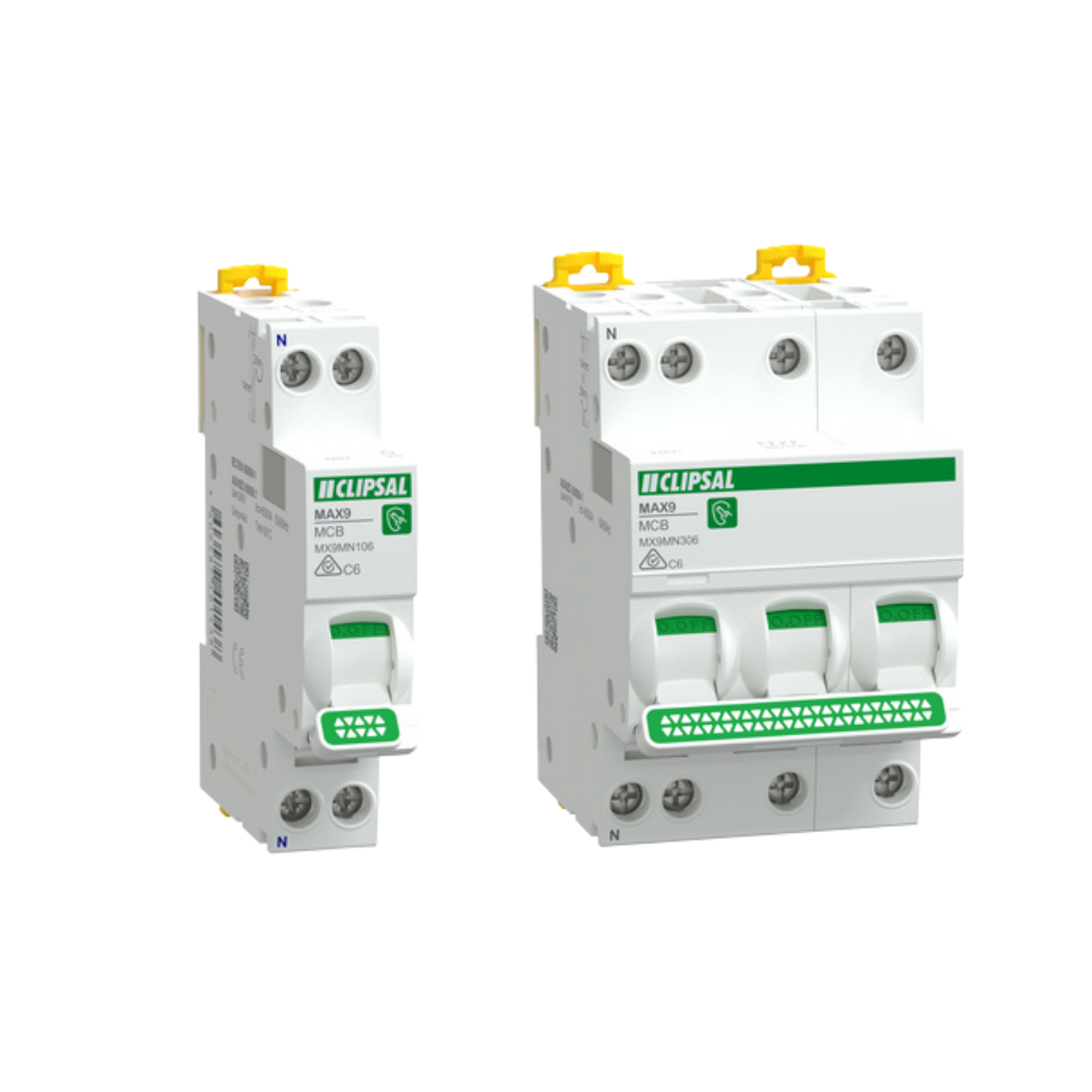
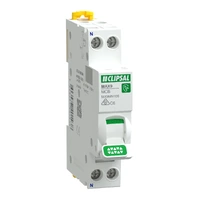
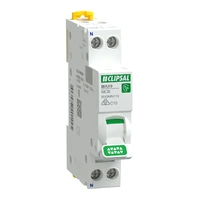
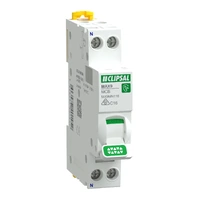
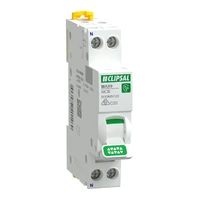
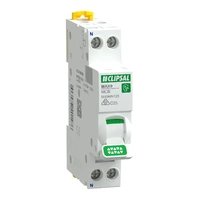
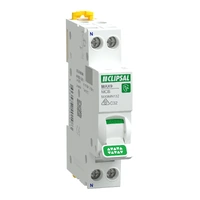
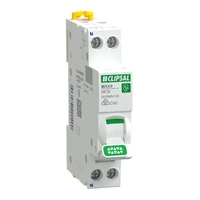
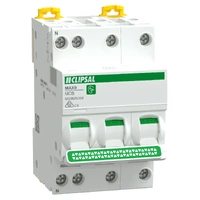
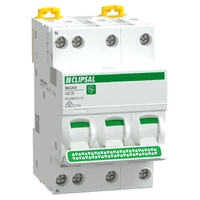
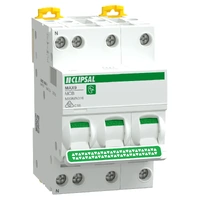
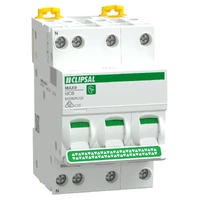
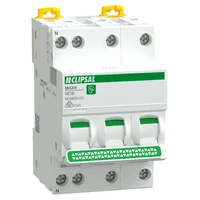
Find the best MAX9 PRO MX9MN products here at Sparky Direct. [ Read More ]
The MAX9 PRO MX9MN range covers the full set of switchboard protection components an electrician needs to build a compliant Australian distribution board. Each device clips onto a standard 35mm DIN rail and uses the MAX9 connection system for fast wiring and simple expansion.
A modular DIN rail system holds every protective device on one horizontal rail inside the switchboard. Power feeds in through a busbar at the top, then drops down through each MCB or RCBO before reaching the load. This layout keeps the wiring tidy, makes circuits easy to identify, and lets the electrician add or replace devices without rebuilding the panel from scratch.
Modern switchboards carry far more circuits than older boards because solar inverters, EV chargers, battery storage, smart lighting, and high current appliances all need their own protection. An integrated system like MAX9 keeps these circuits coordinated, which delivers faster fault isolation, less downtime when a fault occurs, and a clear path for future upgrades.
The MAX9 PRO MX9MN range is widely specified in Australian commercial and industrial work for three reasons: it centralises protection, it scales easily, and it backs the whole system with the Schneider Electric service network.
Centralising every protective device on one rail simplifies the entire job. The electrician can label each circuit clearly, route final cables in one direction, and verify trip coordination quickly during commissioning. Maintenance is also faster because every device sits in the same place using the same mounting standard.
Most commercial sites add load over time, and the MAX9 system supports this growth by leaving spare module positions on the rail. When a new circuit is needed, the electrician adds an MCB or RCBO and extends the busbar, with no need to swap the enclosure or rewire existing circuits.
Commercial loads include lighting, HVAC, refrigeration, and data equipment, and each load carries its own surge and earth leakage risk. The MAX9 range covers these risks with matched MCBs, RCBOs, and surge protection devices that share trip coordination data, which reduces nuisance tripping and improves overall system uptime.
The range suits any project where consistent, scalable, modular protection is required. The same DIN rail format works in a small office board, a multi-storey commercial building, or an industrial control panel.
Office fit-outs require lighting circuits, general power, mechanical services, and data room protection. The slim RCBO format frees up panel space, which matters when the board sits inside a tenancy meter cupboard with limited room.
Factory environments mix three phase motor loads with single phase control circuits. The 3PN and 4 pole MAX9 RCCBs handle the three phase side, while the slim 1PN RCBOs cover the smaller circuits. This keeps the whole panel inside one modular system rather than two product families.
Apartment buildings and high end homes often include EV chargers, solar inverters, and battery systems. The MAXBAR+ kits are designed for exactly this scenario. The kit pre-configures the main switch, solar circuit, and battery circuit so the installer can deliver a tidy, compliant board faster.
Modular architecture means every device shares a common width unit (one module is 18mm) and clips onto the same 35mm DIN rail. The rail and busbar carry power across the whole row, so each device only needs to be inserted, terminated, and labelled.
Standardised mounting lets the electrician arrange devices to match the circuit schedule. Critical loads can sit at the top of the rail, lighting circuits in the middle, and general power at the bottom. The layout supports clear documentation and quick fault finding later.
Slim 1PN RCBOs occupy a single 18mm slot, which doubles the usable circuit count compared with traditional 36mm two module RCBOs. Three pole MCBs occupy three slots, and four pole RCCBs occupy four slots. The electrician chooses the module mix to match the load schedule.
When new circuits are added, the existing devices stay in place. The new device clips onto the spare rail position and connects to the busbar. This keeps the cost and the disruption of an upgrade to a minimum, which is one of the reasons MAX9 is specified in commercial fit-outs that change tenants regularly.
Three core protection types make up most MAX9 boards: MCBs for overcurrent, RCBOs for combined overcurrent and earth leakage, and surge protection devices for transient overvoltage. Each type is also available in the broader circuit protection catalogue.
MAX9 MCBs are available across single pole, two pole, and three pole formats. Ratings start at 2A for control circuits and run up to 63A for distribution feeders, with the C-curve trip characteristic suited to general purpose lighting and power circuits with normal inrush currents.
RCBOs combine the overcurrent function of an MCB with the residual current detection of an RCD in one device. The MAX9 slim 1PN format is rated at either 10mA or 30mA Type A trip, with current ratings from 10A to 40A. The full Clipsal RCBO range covers all common circuit sizes.
The MAX9 SPD range protects sensitive electronics from transient overvoltage caused by lightning or grid switching. A typical 1P 40kA surge arrester sits at the supply end of the board to clamp the surge before it reaches downstream circuits. More on these devices is covered in the surge protection device guide.
Understanding the difference between an MCB and an RCBO is essential for correct circuit design. Each protects against a different fault type, and many circuits need both.
An MCB protects the wiring from overload and short circuit faults. The thermal element trips on sustained overload, and the magnetic element trips on a fast short circuit. Without an MCB the cable can overheat, melt insulation, and start a fire.
An RCBO does the job of an MCB and adds residual current detection. The residual current side trips on small earth leakage currents, typically at 30mA, which protects a person from electric shock. Combining both functions in one device saves space and simplifies the board layout. The same logic applies in the broader RCBO range.
When each circuit has its own RCBO, a fault on one circuit only trips that circuit. Other circuits continue to run. This is far better than the older approach of one shared RCD covering many circuits, where any earth fault knocks out everything downstream. The single circuit approach is now standard for compliant Australian boards.
Older fixed boards used wire-in protection with limited expansion capacity. The MAX9 system replaces this with a modular DIN rail layout that can be reconfigured at any time. The footprint is smaller, the labelling is clearer, and the time to commission is shorter.
Generic DIN rail systems do the basics, but they often lack matched busbars, accessory kits, and consistent trip coordination. The MAX9 range solves this by supplying every part of the protection chain from one product family designed to work together.
Distributed protection scatters devices across multiple sub-boards, which adds cabling cost and makes fault tracing slower than a centralised approach. A single centralised MAX9 board keeps the protection logic in one place, which simplifies both the original install and any future upgrade.
| Feature | MAX9 PRO MX9MN | Generic DIN Rail | Fixed Switchboard |
|---|---|---|---|
| Slim 1 module RCBO | Yes, 18mm | Limited availability | Not applicable |
| Matched busbar kits | Yes, MAXBAR+ | Often third party | Hard wired |
| Future expansion | Add to spare rail position | Possible if space allows | Requires board rebuild |
| Trip coordination | Designed as a system | Mixed brands common | Engineered per board |
| Surge protection integration | MAX9 SPDs available | Add-on required | Add-on required |
Breaker rating must match the cable size and the connected load. A common general purpose circuit uses 2.5mm cable protected by a 20A breaker. Lighting circuits typically use 1.5mm cable with a 10A or 16A breaker. Always check the cable rating against AS/NZS 3008 before fixing the breaker size.
Single pole devices protect single phase circuits, while three pole devices protect three phase loads such as motors and air conditioners. C-curve breakers handle moderate inrush, and D-curve breakers are used where heavy inrush is expected, such as transformers and capacitor banks.
Allow at least 25 percent spare module capacity in any new board, which provides room for added EV chargers, battery storage, or new tenancy circuits without a full board upgrade. Larger projects can step this allowance up to 40 percent of the rail.
The MAX9 1PN slim format halves the module width compared with traditional two module RCBOs. In a meter cupboard with fixed dimensions, this lets the electrician fit twice the protected circuits in the same space. Compare options across the single pole RCBO and 4 pole MCB and RCD combinations ranges.
The slim format does not compromise protection ratings: the same 30mA Type A trip applies, and the breaker ratings cover the full 10A to 40A range used in residential and light commercial work. The result is a smaller footprint with no loss of protection capability.
Putting one RCBO on each final circuit means a fault on one circuit only trips that circuit, while the rest of the board stays live. This matters for commercial sites where a single circuit fault should never take out a whole tenancy. For arc fault protection on top of this, see the Clipsal AFDD range.
The MAX9 platform supports DIN rail energy meters and current transformers that report energy consumption per circuit, which helps facility managers identify high consumption loads and plan tariff optimisation. Data feeds back through Modbus or pulse outputs to a logger or building management system.
Smart RCBOs and metering devices can flag rising leakage currents or recurring trips. Catching a slow degradation before it causes a hard fault reduces both downtime and emergency callout costs. The data can be logged locally or pushed to a building management system.
Modbus output from compatible MAX9 accessories integrates with most BMS platforms, allowing the BMS to alarm on trips, log circuit loading, and generate maintenance reports. This visibility is particularly valuable in healthcare, data centres, and large commercial properties where uptime is critical.
Mount the DIN rail level and secure it firmly to the back panel. Group devices by function: incoming main switch, surge protection, then circuit RCBOs grouped by area. Leave one or two module gaps between groups to support clear labelling.
RCBOs and MCBs generate heat under load, so the enclosure must allow this heat to dissipate, particularly when many high current devices sit close together. Surface mounted enclosures generally vent better than recessed units, and the manufacturer derating chart should always be checked for high ambient temperatures.
Every circuit needs a clear, durable label that matches the circuit schedule. Engraved or laser printed labels last longer than handwritten ones. The schedule itself must live inside the door of the board so the next electrician can read it years later.
Always confirm the upstream supply protection coordinates correctly with the MAX9 devices on the rail. Selectivity tables from Schneider Electric show the upstream device size that will allow the downstream MAX9 breaker to clear a fault first. Without this check a fault can trip the main switch instead of the faulty circuit.
AS/NZS 3000 sets the rules for circuit protection on every Australian installation. The current edition requires RCD protection on all final subcircuits in domestic and similar premises, and additional RCD coverage in many commercial situations. The MAX9 RCBO range satisfies these rules with Type A residual current detection.
MCBs sold in Australia must comply with AS/NZS 60898 for circuit breakers up to 125A. RCBOs follow AS/NZS 61009. MAX9 devices carry both certifications, which is verified by the RCM mark on the product and the matching test reports filed by Schneider Electric.
The Regulatory Compliance Mark (RCM) confirms the device meets Australian electrical safety and EMC requirements. Always check for the RCM on every protection device installed. Any device without it cannot be legally connected in Australia.
MAX9 devices are rated for thousands of mechanical operations and hundreds of full load switching cycles. This durability rating drives the long service life expected from a Schneider Electric product, which is one of the reasons electricians choose the system for installations that need to last 20 years or more.
Commercial environments stress switchboards through high cycling, dust, and ambient heat. The sealed terminal design on MAX9 devices reduces dust ingress and corrosion at the contact points. Annual thermographic surveys remain a smart practice for any board carrying critical loads.
A modular system makes a faulty device easy to replace. Switch off the main, remove the busbar, swap the device, refit the busbar, and restore supply. The whole job takes minutes rather than the hours required for a fixed switchboard rebuild.
Oversizing the breaker means a cable fault may not trip the protection in time, while undersizing causes nuisance tripping under normal load. Always size the breaker to the cable rating, then verify the load matches the cable rating: three matched values for cable, breaker, and load.
Boards often run out of space within a few years because the original install used every available slot. Build in 25 percent spare capacity from day one. The cost of a slightly larger enclosure is far lower than a full board replacement later.
Every commercial site will eventually add load such as a new EV charger, a heat pump, or a server room. Plan the rail layout so these can be added without removing existing devices, grouping critical loads near the main switch and keeping general circuits at the lower end of the rail.
Common error: Mixing brands across the same rail can break trip coordination. While generic DIN rail accepts most brands, the matched busbar and selectivity behaviour only works inside one product family. For new boards, stay inside the MAX9 system end to end.
Retail tenancies need fast install times to meet handover dates. The MAX9 modular layout supports this by reducing wiring time and labelling effort. The same board layout can be replicated across multiple stores, which standardises maintenance for the property owner.
Process plants run a mix of three phase motors, single phase controls, and instrumentation circuits. The 3PN and 4 pole MAX9 RCCBs handle the motor side, while slim 1PN RCBOs cover the smaller circuits. The whole board sits inside one product family with consistent spares, which simplifies stocking for maintenance teams.
Multi-tenancy buildings require separate metering and isolation per tenancy, and modular MAX9 boards make this straightforward. Each tenancy gets its own group of protection devices on a shared rail, with clear labelling and easy swap-out when tenants change.
Sparky Direct stocks the MAX9 PRO MX9MN range alongside the wider Clipsal MAX9 brand range and the matching MAX9 circuit breakers catalogue. Online ordering supports trade pricing, fast Australia-wide delivery, and full Schneider Electric warranty cover.
Budget DIN rail breakers exist, but they often lack the certification, busbar compatibility, and selectivity data needed for compliant commercial work. The cost difference is small once labour and rework are counted. Trade-grade MAX9 devices remain the right choice for any board that must perform over its full design life.
Contractors building multiple boards can order MAX9 components in volume through Sparky Direct. Panel builders also benefit from the matched MAXBAR+ kits, which speed up assembly compared with cutting and drilling individual busbars on the bench. For contact details and bulk pricing, use the Sparky Direct contact page.
Repeated tripping usually points to one of three causes: an overloaded circuit, a degraded appliance with high earth leakage, or a wiring fault. Check the circuit current first, then test the connected appliances individually with the circuit isolated.
When an existing board is full, the slim 1PN RCBO format can free up space without replacing the enclosure. Swap older two module RCBOs for slim 1PN units and the rail capacity often doubles, but verify cable terminations are correct before re-energising the board.
Coordination problems usually appear when devices from different brands sit on the same rail. Check the upstream and downstream selectivity tables from Schneider Electric. If the upstream device is too small, the wrong breaker will trip first when a fault occurs.
Club Clipsal is Australia's largest electrician community offering trade rewards, business support, and exclusive benefits. When you nominate Sparky Direct as your preferred wholesaler, we automatically apply your Clipsal spend points to your Club Clipsal account daily.
Entry-level offering coaching, mentoring, and training discounts
Unlock exclusive industry tools and networking events
Access Toyota fleet offers and business software discounts
Maximum benefits, including VIP experiences and rewards
1. Sign Up: Create your Club Clipsal account at clipsal.com/club-clipsal or via the iCat mobile app
2. Nominate Sparky Direct: Select Sparky Direct from the wholesaler dropdown menu in your profile
3. Add Email: Enter your Sparky Direct account email address in the membership number field
4. Start Earning: Every dollar spent on Clipsal products earns points automatically
Redeem points from the rewards store, including gift cards, tools, and experiences. Access business summits, product training, and industry networking events. Receive early access to new product launches and special promotions. Connect with fellow electricians via the Club Clipsal community app.
Watch Fluke ST240+ | RCD Socket Tester With Beeper video
Watch Volt Safety LVR-KIT | Low Voltage Switchboard Rescue Kit video
Watch Wago 221-2411 | 4mm² 2-Way Inline Splicing Connector | Jar of 60 video

For under 120$ how could you go wrong? A perfect accessory to your solar installation, why? You install this and it is now your work, not to be touched by the next fly by nighter cowboys. It guarantees your work wont be fiddled with as its config locks in main switch, solar and another solar or battery inv cct. You then wire from the main switch off to their existing bus wiring so you spell out what is your work and what is existing. Awesome for compliance because ot shows you care about your work and best bang for buck as it is well priced. Don't stress about hot joints, this bad boy has got you coverrd.
This is very neat busbar for 3 phase applications specially where space is limited and you want to use many many slim RCBOs in one bar. You can shorten the bar as required. Some modifications (off label) also possible if you want to add additional 3 phase MCBs to the bar. Another version of this bar is available in a unique kit form (MX9K318PP) ideal for residential application where you can neatly integrate ev charging, solar and battery storage. This is a brilliant design that should be incorporated into the meter box of all modern residential electrical wiring.
Recently i had a project on the go with a short window of time to complete the task. I have been using Sparky Direct because the large product range available to me and fellow Sparky's is current and in stock..Getting product lines supplied correctly and on time means i can plan ahead with the knowledge that my order is only a click away. Regards John.
Quality products in stock • Fast Australia-wide delivery • Competitive trade pricing
Browse MAX9 PRO MX9MN Range → Get Expert Advice →Yes, it is suitable for new builds and electrical upgrades.
Unused items may be returned if they are in original condition, in line with Sparky Direct’s returns policy.
Sparky Direct supplies the MAX9 PRO MX9MN Range Australia-wide, offering reliable circuit protection solutions with convenient delivery.
They are securely packaged and delivered via standard courier services.
Warranty coverage varies by manufacturer and typically covers defects in materials or workmanship.
Yes, devices in the MAX9 PRO MX9MN Range are typically sold individually.
Yes, selecting the correct rating and type ensures safety and compliance.
Yes, they are designed to fit efficiently within modern switchboards.
Once installed correctly, they generally require minimal maintenance.
Yes, it is suitable for replacing or upgrading existing circuit protection.
Quality construction ensures long service life under normal operating conditions.
Yes, the modular design helps keep switchboards organised and tidy.
They are designed for straightforward installation by licensed electricians.
The MAX9 PRO MX9MN Range is a range of modular electrical protection devices designed for use in distribution boards and switchboards.
Yes, it is a commonly specified range for modern electrical installations.
It offers reliable circuit protection with a compact, modular design.
They provide circuit protection against overcurrent and short-circuit conditions.
Yes, they are designed to integrate with standard modular switchboards.
Yes, the range is available in various current ratings to suit different circuit requirements.
They are designed for standard DIN rail mounting.
Yes, the range is suitable for commercial and light industrial applications.
Yes, they are suitable for residential electrical distribution boards.
Quality devices in this range are manufactured to meet relevant AS/NZS electrical and safety standards when installed correctly.
They are used to protect electrical circuits from overloads and short circuits.
The range typically includes miniature circuit breakers and related protection components.