
Search Results:
Search Results:
Search Results:
Search Results:
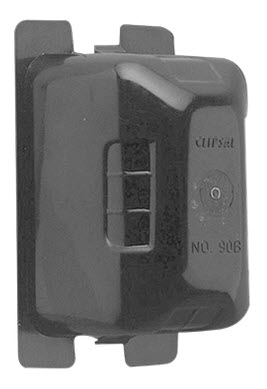
An insulating shroud is a moulded non-conductive cover that fits over a live terminal, cable lug, busbar joint, or connection block. The shroud sits between the energised conductor and the surrounding panel space. It blocks finger access and tool contact during normal operation, isolation work, and routine inspection.
Shrouds are usually made from PVC, polyamide (nylon), or polypropylene. They are sized to match common terminal patterns on circuit breakers, isolators, and main switches. Most slip-on or clip-on variants take seconds to fit and remove.
The shroud creates a physical barrier with a defined creepage and clearance distance. Creepage is the surface path between two conductors. Clearance is the shortest air gap. Both must exceed the minimum values for the rated voltage so that flashover cannot occur under normal conditions.
A correctly fitted shroud encloses the terminal screw, the lug barrel, and a short length of insulated cable. This stops a slipped screwdriver, a dropped cable lug, or a stray strand of conductor from bridging two phases or shorting to earth.
Shrouds reduce three measurable risks: shock, arc flash, and equipment damage. By covering exposed metal at the moment of greatest hazard (during commissioning and live testing), shrouds turn a Category 0 risk surface into a Category 2 protected one. They are part of a layered safety strategy that also includes personal protective equipment, lockout devices, and proper isolation procedure.
Bare terminals at 230V or 400V can deliver a fatal shock through brief skin contact. Shrouds remove the exposed metal surface entirely. They also contain the worst case of an arc fault by limiting the air path available for plasma propagation between phases.
The most common switchboard incident on Australian sites is tool bridging. A screwdriver shaft slips between an active and a neutral terminal during torque checks, panel inspection, or thermography. Shrouds cover the screw heads, forcing tools to engage at the correct angle. The result is fewer incidents, fewer tripped main switches, and fewer damaged components.
AS/NZS 3000:2018 (the Wiring Rules) requires that all live parts in fixed wiring be either inaccessible or insulated. Shrouds are one of the simplest ways to achieve this on factory-built and on-site assembled boards. AS/NZS 61439 sets the equivalent requirement for low-voltage switchgear assemblies. Inspectors look for shrouded terminals during new-board commissioning and during routine compliance audits.
Shrouds are not a substitute for proper enclosure design. They supplement the enclosure by protecting terminals when the front cover is removed for service. The combination is what satisfies the standard, not either component on its own.
Domestic, commercial, and industrial distribution boards use shrouds on main switch terminals, RCD line and load connections, and RCBO incoming feeds. Shrouds become essential as soon as the board cover is removed, because the busbar comb and main switch terminals sit at full supply potential.
MCC panels carry three-phase 415V at high fault levels. Contactor coils, overload relays, and starter outputs are routinely shrouded so that a maintenance technician can inspect or test one circuit while the rest of the panel remains energised.
Busbar joints and large cable lugs carry the highest fault currents in any installation. A bolted lug at the main switch can carry 100A to 800A continuously. Shrouds at these connection points prevent contact and also reduce the risk of foreign objects (screws, washers, swarf) falling onto the joint during overhead work.
PVC is the most common shroud material on Australian boards. It is cheap, easy to mould, and dielectrically sound up to 1000V. PVC handles ambient temperatures from -10C to about 70C. Above 70C the material softens and can deform under sustained load.
Polypropylene and nylon (polyamide) shrouds rate to 105C continuous, with short peaks above that. They are the standard choice for motor terminal boxes, power factor correction panels, and any enclosure mounted near a heat source. Nylon is also more abrasion-resistant than PVC, which matters in panels that vibrate.
Look for UL94 V-0 or V-2 ratings on the shroud datasheet. V-0 means the material self-extinguishes within 10 seconds and produces no flaming drips. V-2 allows brief flaming drips. For switchboard applications, V-0 is preferred. Glow-wire test ratings (650C or 850C per IEC 60695) are also used in switchgear specifications.
Red shrouds are used on the line side of switches and on phase conductors in single-phase work. The colour signals "live" at a glance during inspection and reduces the chance of misidentifying a circuit during maintenance.
Black shrouds typically cover neutral terminals on AS/NZS-compliant boards, and grey often signals earth or shared/sub-circuit terminals. Colour use varies by manufacturer, so always cross-check with the panel schedule before relying on colour alone.
Transparent shrouds let an inspector confirm correct termination without removal. They suit thermal imaging inspections too, since infrared passes through clear PVC sufficiently to read surface temperatures on the lug or cable. Many modern RCBOs ship with clear shroud accessories so the contractor can confirm the wiring is correct after installation.
Shrouds carry a stated maximum working voltage. Common ratings are 500V (light commercial), 1000V (mainstream switchboard work), and 1500V (solar DC string applications). The rating refers to the continuous voltage the material can withstand without partial discharge.
Dielectric strength is measured in kV per millimetre of material. PVC compounds typically achieve 14 to 20 kV/mm. The shroud wall thickness sets the absolute breakdown voltage, so a 2mm PVC wall offers around 30kV breakdown margin. This is well above any normal mains transient.
An under-rated shroud may pass visual inspection but fail under impulse voltage from lightning surges, switching transients, or motor inrush. Failure modes include partial discharge tracking on the surface, eventual carbonisation, and flashover. Always match the shroud rating to the system voltage including any expected transients. Surge protection devices reduce transient stress on shrouds, but they do not replace the rating requirement.
The shroud must rate above the panel's worst-case internal temperature. A switchboard in direct sun, with high ambient and 80% loading, can reach 65C internally. PVC at this temperature is at its limit, so polyamide is the safer specification.
Outdoor-rated shrouds use UV-stabilised compounds. Standard indoor PVC chalks and embrittle after 18 to 24 months of UV exposure. For weatherproof boards and outdoor isolators, specify UV-rated shrouds or rely on the IP66 enclosure to shield them. Chemical resistance matters in industrial environments with solvents, oils, or saline air.
Snap-fit shrouds engage moulded ribs on the device body. Clip-on types use a separate spring or hinge. Screw-fixed shrouds bolt to the panel and provide the highest retention against vibration. Choose retention based on the application: snap-fit for residential boards, screw-fixed for transport and mining equipment.
Vibration warning: Snap-fit shrouds can dislodge under sustained vibration. Mining, marine, and rail applications should use screw-fixed retention or secondary cable-tie restraint.
Insulating tape is sometimes used to wrap exposed terminals as a temporary measure. Tape has three weaknesses: it loses adhesion above 50C, it tears on sharp edges, and it cannot be removed and re-applied without degradation. Electrical tape is suitable for cable joints under additional protection, but not for permanent terminal coverage.
Insulated terminal blocks build the insulation into the housing itself. They are excellent for control wiring but not always available for the high-current main connections at the top of the board, which is where shrouds remain the practical answer.
Enclosures and full barriers block access at the panel level. Shrouds are the secondary protection that stays in place when the cover is open. Best practice combines both: a touch-safe enclosure when closed, and shrouded terminals when open.
| Method | Continuous Use | Live Working | Compliance Standing |
|---|---|---|---|
| Insulating shroud | Yes | Suitable | Recognised in AS/NZS 61439 |
| Insulating tape | No (temporary) | Not recommended | Not recognised as primary protection |
| Insulated terminal block | Yes | Suitable for control circuits | Recognised, limited current rating |
| Enclosure or barrier | Yes | Closed only | Primary compliance method |
Start with the terminal manufacturer and part number. Most major brands (Clipsal, Hager, NHP, Eaton) publish dedicated shroud catalogues sized for their specific RCBO, MCB, and main switch ranges. Generic shrouds suit standard lug sizes but rarely fit the moulded landings on branded breakers.
For 230V/400V boards in a sheltered location, standard 1000V PVC is sufficient. For solar DC strings up to 1500V, use PV-rated shrouds. For high-temperature or vibration-prone environments, specify polyamide with screw retention.
Commercial boards are typically tidy, cool, and dry. Snap-fit PVC is fine. Industrial boards face heat, dust, vibration, and occasional chemical exposure. Specify polyamide V-0, screw-fixed where possible, and confirm the shroud is part of the panel manufacturer's tested assembly under AS/NZS 61439.
The Wiring Rules require that all live parts in fixed installations be either out of reach or insulated. Section 2.5 covers basic protection by insulation and by enclosure. A correctly fitted shroud satisfies the basic protection requirement at the terminal.
AS/NZS 61439.1 sets the type-test requirements for low-voltage switchgear assemblies. Form-of-separation tests (Forms 1 to 4) define the level of internal segregation between busbars, devices, and outgoing terminals. Shrouds are routinely used to achieve Form 2b and higher without the need for separate metal partitions.
The shroud's contribution to the assembly's IP rating depends on how it interfaces with the surrounding enclosure. Most shrouds add IPXXB (finger-safe) at the terminal even when the enclosure cover is removed. Confirm IP performance with the panel builder, not by adding the shroud's individual rating to the enclosure rating.
Always isolate the supply and prove dead with an approved tester before fitting or adjusting a shroud. Verify the test instrument on a known live source before and after the dead test. Use lockout devices on the upstream isolator while the work continues.
The shroud must fully cover the screw head, the lug body, and a short length of insulated cable past the lug barrel. Gaps of more than 4mm fail the finger-safe requirement. Trim or replace any shroud that does not seat fully against the terminal landing.
Cables under tension can lift a snap-fit shroud off its locating ribs. Route cables so the shroud sits naturally in place. Use cable ties at the gland plate to take the strain off the terminal connection itself. This is also good practice for thermal performance because relaxed cables conduct heat more evenly.
After fitting shrouds, do a torque check on every covered terminal. The shroud may have nudged the lug during installation, and a loose connection under load is a fire risk that the shroud cannot mitigate.
Inspect shrouds at every routine maintenance visit. Look for cracks, surface tracking marks, discoloration, and brittleness. A shroud that has changed colour from white to yellow is showing UV or thermal degradation and should be replaced.
Annual inspection is the standard for commercial and industrial boards. Solar DC arrays often warrant six-monthly checks because of higher operating temperatures and continuous UV exposure on outdoor combiner boxes. Domestic boards should be checked at every periodic test by a licensed electrician.
Replace any shroud that is cracked, brittle, scorched, or that no longer seats firmly against the terminal landing. Replace all shrouds in a panel after an arc fault, even if they appear undamaged, because plasma exposure can degrade the polymer chains internally.
A shroud that is too small leaves the screw head exposed. One that is too large does not lock onto the device and can fall off. Always cross-reference the device part number with the shroud part number from the same manufacturer.
Never fit a shroud to a live terminal. The act of fitting brings hands and tools close to the exposed conductor that the shroud is meant to protect. Isolate, prove dead, fit the shroud, then re-energise. This is non-negotiable on every Australian site.
Tape applied as a substitute for a proper shroud is one of the most cited defects in compliance audits. The tape provides no creepage clearance, no impact resistance, and no permanent identification. Specify the correct shroud at the design stage and avoid the patch-up approach altogether.
Sparky Direct stocks insulating shrouds, switchboards, and matched accessories from leading Australian and international brands. Stock is held in Brisbane and shipped Australia-wide. Online ordering suits trade buyers and licensed electricians who need quick turnaround on switchboard accessories.
Imported shrouds without certification documentation are sometimes sold at half the price of the equivalent trade-grade item. The risk lies in unverified dielectric strength, missing flame ratings, and poor dimensional control. The cost saving disappears the first time a shroud fails an inspection or has to be cut off because it does not fit.
Trade buyers building multiple boards benefit from carton-quantity ordering. Sparky Direct offers trade pricing on bulk orders of electrical accessories, and the procurement team can quote on full kit-of-parts lists for switchboard projects.
If a shroud will not click into place, check for two things: a mismatched part number and a damaged locating rib on the device body. Replacing the shroud rarely solves a fit problem caused by a damaged device. The device itself may need replacement.
Any visible bright copper or bare lug barrel is a defect. Mark the panel for return-to-service inspection, isolate the affected circuit, and fit the correct shroud or extend the existing one with a manufacturer-supplied gap-filler accessory.
Cracking near a lug bolt is a sign of over-torque on the bolt and resulting stress on the shroud. Replace the shroud and check the bolt torque against the manufacturer's specification. Cracking in open air on the shroud face usually indicates UV or thermal ageing and warrants a full panel inspection.
Club Clipsal is Australia's largest electrician community offering trade rewards, business support, and exclusive benefits. When you nominate Sparky Direct as your preferred wholesaler, we automatically apply your Clipsal spend points to your Club Clipsal account daily.
Entry-level offering coaching, mentoring, and training discounts
Unlock exclusive industry tools and networking events
Access Toyota fleet offers and business software discounts
Maximum benefits, including VIP experiences and rewards
1. Sign Up: Create your Club Clipsal account at clipsal.com/club-clipsal or via the iCat mobile app
2. Nominate Sparky Direct: Select Sparky Direct from the wholesaler dropdown menu in your profile
3. Add Email: Enter your Sparky Direct account email address in the membership number field
4. Start Earning: Every dollar spent on Clipsal products earns points automatically
Redeem points from the rewards store, including gift cards, tools, and experiences. Access business summits, product training, and industry networking events. Receive early access to new product launches and special promotions. Connect with fellow electricians via the Club Clipsal community app.
Watch Volt Safety LVR-KIT | Low Voltage Switchboard Rescue Kit video
Watch Volt Safety LVR-KIT | Low Voltage Switchboard Rescue Kit video
Watch Volt Safety LVR-KIT | Low Voltage Switchboard Rescue Kit video

For under 120$ how could you go wrong? A perfect accessory to your solar installation, why? You install this and it is now your work, not to be touched by the next fly by nighter cowboys. It guarantees your work wont be fiddled with as its config locks in main switch, solar and another solar or battery inv cct. You then wire from the main switch off to their existing bus wiring so you spell out what is your work and what is existing. Awesome for compliance because ot shows you care about your work and best bang for buck as it is well priced. Don't stress about hot joints, this bad boy has got you coverrd.
This is very neat busbar for 3 phase applications specially where space is limited and you want to use many many slim RCBOs in one bar. You can shorten the bar as required. Some modifications (off label) also possible if you want to add additional 3 phase MCBs to the bar. Another version of this bar is available in a unique kit form (MX9K318PP) ideal for residential application where you can neatly integrate ev charging, solar and battery storage. This is a brilliant design that should be incorporated into the meter box of all modern residential electrical wiring.
Wanted to add another power circuit to my full distribution board. The NLS30784 RCBO helped achieved this as I could remove the 3ph RCD and 3 x 16amp CB taken up 7 spaces and replaced them all with 4 x NLS30794 RCBOs. Now giving me the extra circuit plus space for 3 more if ever needed. The extra bonus also is now each circuit has its own RCD, where before you would loss all power circuit with a single RCD trip. During installation I found the NLS30794 having the bottom offset terminal inputs are a good option for wiring multiple devices using a busbar comb, However I didn't require to use this option. If required in the future I will definitely use this device again.
Quality products in stock • Fast Australia-wide delivery • Competitive trade pricing
Browse Insulating Shrouds → Get Expert Advice →Yes, they help prevent accidental contact with live components.
Sparky Direct supplies insulating shrouds Australia-wide, offering reliable electrical safety solutions with convenient delivery.
Insulating shrouds are securely packaged and delivered via standard courier services.
Unused products are generally eligible for return according to the seller’s returns policy.
Warranty coverage varies by manufacturer and typically covers defects in materials or workmanship.
Yes, insulating shrouds are typically sold as individual safety accessories.
Yes, correct sizing and compatibility are important for effective insulation.
They can help support safer and more compliant installations.
Yes, many are designed to fit compact electrical assemblies.
Once fitted correctly, they generally require no maintenance.
Yes, they are commonly used when upgrading or modifying electrical systems.
Quality insulating shrouds are designed for long-term use.
They may be visible, depending on the component and enclosure.
An insulating shroud is a protective cover designed to insulate and shield electrical connections or terminals.
Yes, they are widely used as an added safety measure.
They help reduce the risk of electric shock and improve overall electrical safety.
They are straightforward for licensed professionals to fit correctly.
They primarily provide electrical insulation, with some protection against dust and debris.
Yes, they are used in residential, commercial, and industrial applications.
Yes, they are available in various sizes to suit different components and terminals.
They are typically made from durable, non-conductive plastic or rubber materials.
Yes, they are often used in switchboards and electrical panels.
They are commonly used on terminals, connectors, switches, and contactors.
Quality insulating shrouds are manufactured to meet relevant AS/NZS electrical and safety standards when used correctly.
They are used to reduce the risk of accidental contact with live parts and to improve electrical safety.