
Search Results:
Search Results:
Search Results:
Search Results:
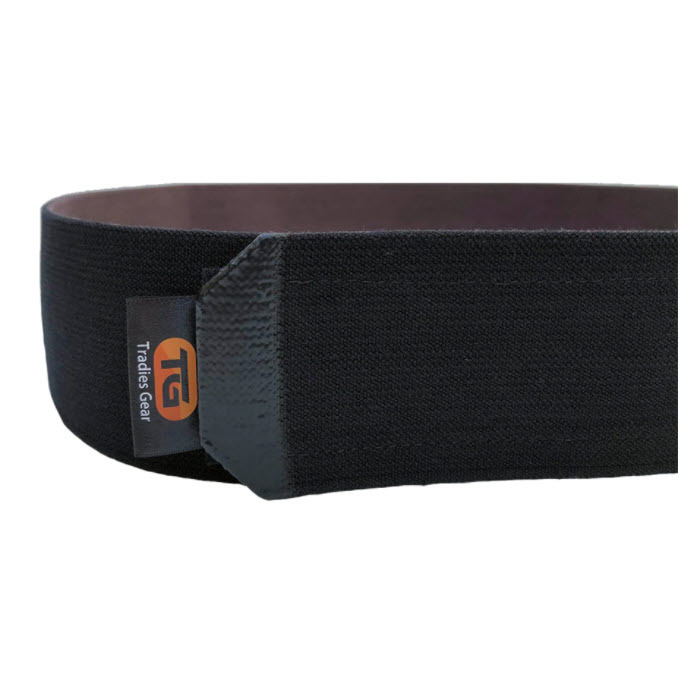
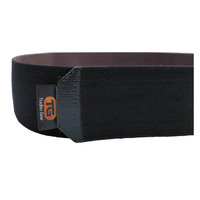
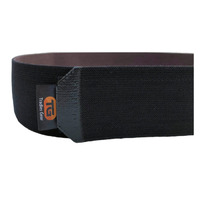
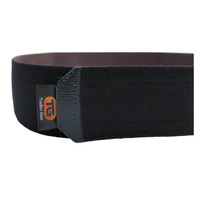
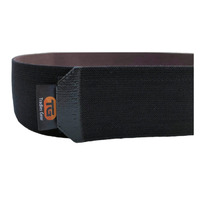
A no-buckle belt replaces the traditional metal buckle with a hook-and-loop fastening system. When you secure the belt, the two fastening surfaces press together and grip firmly. The closure holds under movement, bending, and moderate load. To release, you simply pull the ends apart.
A standard work belt uses a metal frame buckle with a prong that passes through a punched hole in the leather or webbing. That buckle sits at the front of the waist. When you bend forward or crouch, the buckle frame presses directly into your abdomen. This is uncomfortable during long shifts and can cause bruising or skin irritation over time.
A no-buckle belt has no metal components at the front. The fastening sits flush and flat. There are no hard edges, no prong, and no raised frame. The profile stays consistent around the full circumference of the waist.
Electricians and other tradespeople spend significant time in positions that put pressure on the waistline: reaching into meter boxes, working beneath flooring, pulling cable through ceiling cavities, and crouching in plant rooms. A buckle that digs in during these tasks creates cumulative discomfort.
The flat profile of a no-buckle belt also reduces the risk of marking surfaces. Panel finishes, car paintwork, and cabinetry can all be scratched by a hard metal buckle when a tradesperson leans across them. A buckle-free design removes that contact point entirely.
The hook-and-loop closure on a no-buckle belt is adjustable across a continuous range, not limited to a set number of punched holes. This makes it easier to accommodate different clothing thickness across seasons or to share a belt between workers of similar waist size.
The no-buckle belt available from Sparky Direct is a 38mm wide hook-and-loop work belt from TradiesGear. It is available in a full range of sizes from Small (30 inch) through to 3-6XL (40-48 inch). While the core product is consistent, it is worth understanding how the design category as a whole works.
This is the most common no-buckle belt design for trade use. A strip of hook material on one end presses against a loop surface on the other. The grip is firm enough to hold under load but can be released with a clean pull. The TradiesGear belt uses this system.
Some no-buckle belt designs incorporate elastic webbing rather than rigid woven material. These offer additional give during movement. However, for tradework involving tool pouches or belt loops, a rigid woven belt provides more stable support and less lateral sag.
Belt width affects both comfort and load distribution. A 38mm width is a practical standard for general trade use. Wider belts distribute load more evenly but may not pass through all work trouser loops. The TradiesGear 38mm belt fits standard workwear and most belt-loop configurations.
For electrical and general trade work, a rigid woven no-buckle belt is the appropriate choice. It needs to hold trousers securely while also supporting side-mounted tool pouches or clip accessories. The TradiesGear belt available through Sparky Direct is designed for this purpose.
For office, travel, or casual use, lighter-weight elastic designs may be preferable. These prioritise comfort over load-bearing capacity. They are generally not suitable for carrying tools.
Measure your actual waist size in inches at the point where you wear your trousers, not your clothing size. No-buckle belts with hook-and-loop closures allow a range of adjustment within each size, but selecting the closest match to your waist measurement ensures the fastening engages across its full surface area rather than at the edge of its range.
Sizing note: The TradiesGear no-buckle belt is sized in waist inches. The 3-6XL variant covers a waist range of 40 to 48 inches and suits workers who find standard belt sizes restrictive. If your measurement falls near the boundary between two sizes, size up for comfortable hook-and-loop engagement.
A no-buckle belt worn through trouser loops can work alongside a separate tool bag or over-belt tool carrier. Because there is no raised buckle at the front, the no-buckle belt does not interfere with the positioning of a work apron, tool pouch strap, or knee pad harness.
Check that your workwear loops accept a 38mm belt before ordering. Most standard work trousers accommodate this width, but some fitted styles use narrower loops.
Sparky Direct ships Australia-wide with fast dispatch. The full size range is stocked and available through the Tradie Belt no-buckle belt category. Purchasing online gives you access to the full size run in a single transaction, which is useful for teams or businesses kitting out multiple workers at once.
No-buckle work belts are typically constructed from woven nylon or polyester webbing. These materials resist stretching under load, hold their shape after repeated washing, and tolerate the grime, moisture, and abrasion of a working environment. The TradiesGear belt uses this construction.
The longevity of any hook-and-loop belt depends largely on how well the fastening surface is maintained. Hook-and-loop closures lose grip when the hook surface becomes clogged with lint, thread, or debris. Keeping the closure clear of material pick-up extends the effective life of the fastening significantly. When not in use, press the two surfaces together to prevent the hook side from snagging on other fabrics.
Woven webbing tolerates exposure to general site conditions: dust, light moisture, and incidental contact with grease or cutting compound. It does not corrode and will not rust in the way that a metal buckle frame can. For prolonged exposure to water (outdoor drainage work, wet-area installations), allow the belt to dry fully before storing it rolled or flat. Avoid folding it tightly with the fastening compressed, as this can distort the hook surface over time.
With reasonable care, a quality woven no-buckle belt will outlast many standard leather work belts. There are no metal components to corrode, no prong to bend, and no buckle frame to crack. The primary wear points are the fastening surface and the edges of the webbing where it contacts trouser loops. Inspect these areas periodically for fraying or grip degradation.
Electricians work in postures that place continuous pressure on the waistline. Reaching into switchboards, working in roof spaces, and running cable through walls all involve bending and stretching that brings the belt buckle into contact with the body. A no-buckle belt removes that pressure point entirely.
There is also a secondary benefit for electricians working on finished surfaces. A metal buckle can scratch painted walls, powder-coated enclosures, and cabinetry. A flat-profile no-buckle belt significantly reduces this risk. For work in prestige residential or commercial fit-out environments, this is a practical advantage worth considering.
Sparky Direct also stocks a range of complementary electrician hand tools, hand tools, and safety glasses for the fully equipped tradie.
Any tradesperson who spends extended periods on-site benefits from the comfort advantages of a buckle-free design. Construction workers, plumbers, and carpenters who crouch, kneel, and climb throughout the day find that the absence of a hard buckle reduces cumulative fatigue at the waistline.
Panel beaters, auto electricians, and appliance technicians regularly lean across vehicle bodywork, painted surfaces, and finished panels. A no-buckle belt eliminates one of the most common causes of incidental surface scratches in these environments. Combined with appropriate nitrile safety gloves, it forms part of a considerate approach to surface protection on-site.
The flat profile of a no-buckle belt also suits travel. Metal belt buckles trigger airport security screening. A hook-and-loop belt contains no metal and passes through scanners without issue. This is a secondary benefit for tradies who travel between states for work or commute through security screening regularly.
Hook-and-loop belts require a different fitting approach to buckle belts. Rather than selecting a specific hole, you adjust the closure to the point where the belt sits firmly without compressing. The closure should engage across most of its surface area, not just at one edge. An under-tensioned closure will shift during movement; an over-tensioned closure reduces the usable life of the hook-and-loop surface.
A correctly fitted no-buckle belt stays in position during normal trade movement. It should not slip down when you crouch, ride up when you reach overhead, or shift sideways when you turn. If the belt is moving in use, check that the closure is fully engaged and that the size selected matches your waist measurement.
On cold days or in air-conditioned environments, tradespeople often wear additional base layers under their work clothing. This adds bulk at the waistline. The continuous adjustment range of a hook-and-loop belt accommodates this variation without requiring a different belt or a different hole. Re-fasten the belt over the outer clothing layer to the appropriate tension.
Multiple customers who reviewed the TradiesGear no-buckle belt specifically noted comfort improvement during extended shifts. The absence of a hard buckle pressing against the abdomen reduces the low-level physical fatigue that accumulates across an eight-hour or ten-hour day on-site.
If a no-buckle belt is shifting during normal activity, the most likely causes are: the closure is not fully engaged, the belt is slightly too large for your current waist size, or the hook surface has accumulated debris that is reducing grip. Check the closure engagement first. If the hook surface is visibly clogged with lint or thread, clean it with a stiff brush or adhesive tape before re-testing.
Hook-and-loop fastening relies on the hook elements maintaining their shape. Repeated compression, washing at high temperatures, or contact with tumble dryer heat can deform the hook fibers and reduce grip. Wash the belt in cold or warm water only. Air dry where possible. Avoid ironing over the fastening surface.
The edges of woven webbing experience the most friction where the belt contacts trouser loops. Over time, fraying can develop at these points. This is normal wear and does not affect function unless the fraying progresses significantly into the body of the webbing. A small amount of edge fraying does not compromise belt integrity.
Some tool pouch systems include a rigid back plate designed to slide onto a standard belt. These attachments assume a belt of sufficient rigidity to hold the pouch upright. A 38mm woven no-buckle belt is generally rigid enough for this purpose. Very lightweight or elastic no-buckle belt designs may not provide adequate rigidity for heavy tool pouches. Use dedicated tool bags for heavier loads requiring more structural support.
Woven nylon or polyester belts can be cleaned by hand or in a washing machine on a gentle cycle using cold or warm water. Close the hook-and-loop fastening before washing to prevent the hook surface from snagging on other items in the load. Use a mild detergent. Avoid bleach, which can degrade webbing fibers and weaken the structure over time.
Air dry the belt flat or loosely coiled. Avoid exposing it to prolonged direct sunlight when not in use, as UV exposure can cause fading and gradual fiber degradation in synthetic webbing. Store the belt with the closure fastened to protect both fastening surfaces.
The hook surface of a Velcro-style closure is the component most likely to degrade first. Keep it free of lint and debris. After each use, press the surfaces together before storing. Inspect the hook surface every few months for compression or deformation of the hook elements. A well-maintained closure will last significantly longer than one that is regularly left open and exposed to pocket lint or loose fibers.
Replace the belt when: the hook-and-loop closure no longer holds firmly even after cleaning, the webbing shows fraying that has progressed beyond the edges into the main body, or the belt no longer sits flat and has developed a permanent set or kink. A belt that has reached the end of its serviceable life will show this clearly in daily use, shifting during normal activity even when correctly fastened.
Watch No Buckle Belt | 38mm Wide | Size: 3-6XL (40-48 Inch) video

Smoothest transaction I've ever had from an online purchase. My item feels and looks top quality and size was perfect. From placing the order to receiving it in the post was extremely quick! Excellent work Sparky Direct
I love this belt so much that I threw out my big buckle RM Williams belt. This no buckle belt is a complete game changer for people like me who need to constantly bend over as there is no buckle to stick into my stomach.
I bought this for my wife. She said this is more comfortable than she thought it was going to be. Also with no buckle we are less likely to scratch cars when we lean over them. Very happy customer here.
Quality products in stock • Fast Australia-wide delivery • Competitive trade pricing
Browse No-Buckle Belts → Get Expert Advice →The absence of a front buckle helps prevent pressure or digging when bending or kneeling.
Sparky Direct supplies no belt buckle belts Australia-wide, offering comfortable and practical belt solutions for trade and everyday use.
No buckle belts are lightweight and delivered via standard courier services.
Unused belts are generally eligible for return in line with the seller’s returns policy.
Warranty coverage varies by manufacturer and typically covers defects in materials or workmanship.
Most no buckle belts are adjustable and sold as one-size-fits-most.
They require minimal maintenance beyond keeping them clean and checking for wear.
Yes, they are suitable for apprentices and tradespeople at all experience levels.
Quality no buckle belts are designed for durability, but lifespan depends on usage and care.
Yes, they are suitable for work pants, jeans, and other heavy-duty clothing.
Their adjustable design makes them suitable for a wide range of body shapes and sizes.
When adjusted correctly, no buckle belts provide reliable support for everyday and work use.
Yes, they are simple to use and quick to adjust.
A no belt buckle belt is a belt designed without a traditional front buckle, using alternative fastening systems for improved comfort and flexibility.
Yes, they are designed to remain comfortable during long periods of sitting, bending, or working.
No buckle belts reduce discomfort caused by bulky buckles and allow greater freedom of movement.
Yes, they can be worn for both work and casual use due to their comfort and simplicity.
Yes, their low-profile design makes them suitable for wearing under tool belts or harnesses.
Yes, they are popular with electricians and other trades for comfort, but they are not a substitute for required safety equipment.
Belts are not typically subject to AS/NZS electrical standards, but quality products are manufactured to meet general safety and durability expectations.
Yes, most no buckle belts are fully adjustable to suit different waist sizes.
They are usually made from durable elastic, nylon webbing, or reinforced fabric designed for daily wear.
Yes, no buckle belts are well suited to workwear as they reduce pressure points and interference with tools or safety gear.
They are commonly used by tradespeople and workers who need comfort, reduced bulk, and ease of movement during long workdays.
No buckle belts typically use low-profile clips, hooks, elastic tension, or side-adjust systems to secure the belt without a bulky buckle.