
Search Results:
Search Results:
Search Results:
Search Results:
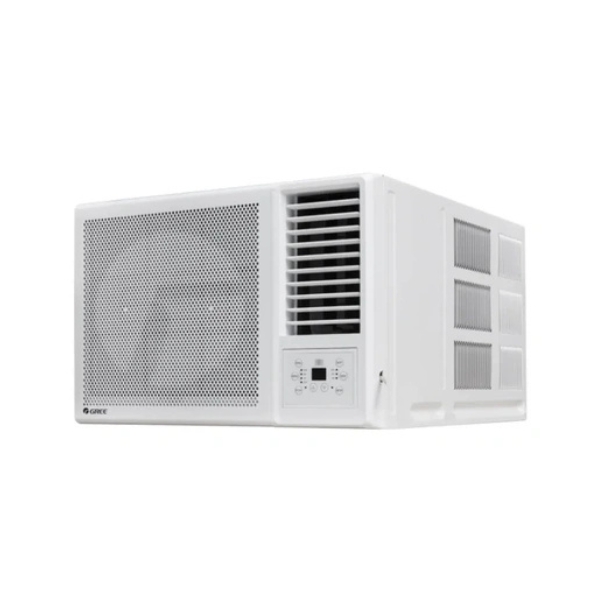
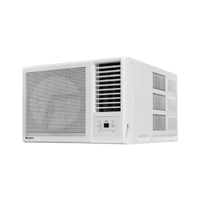
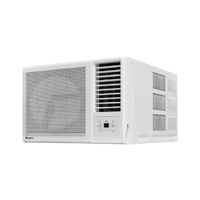
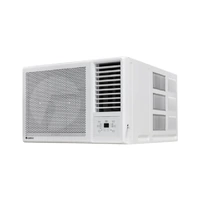
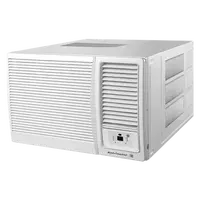
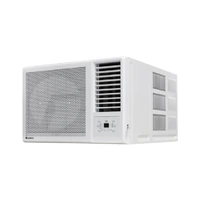
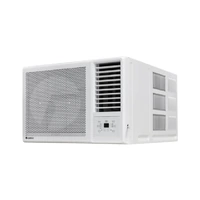
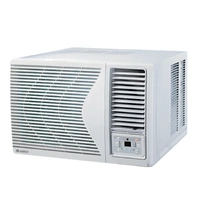
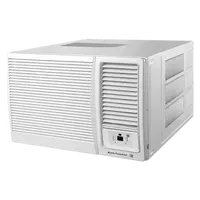
Find the best Window/Wall Mount Air Conditioners here at Sparky Direct. [ Read More ]
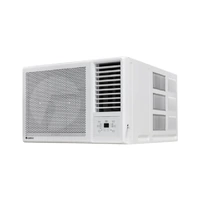
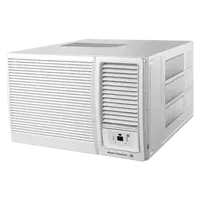
A window wall mount air conditioner is a single-chassis unit designed to sit in an external wall cavity or a permanent window opening. All the working parts (compressor, coils, fan, and electronics) live inside one housing. The rear of the unit faces outside to reject heat. The front vents cool air into the room. Because there is no separate outdoor condenser, no refrigerant lines need to run between walls, which simplifies both installation and future replacement.
These units use the same vapour-compression refrigeration cycle as a split system. Warm indoor air passes across the evaporator coil, gives up its heat to the refrigerant, and returns to the room as cool, dehumidified air. The refrigerant carries that heat to the condenser coil at the rear of the unit, where a second fan blows outdoor air across the coil to release the heat outside. A reverse cycle model swaps the direction of the refrigerant flow to provide heating in winter.
A split system air conditioner separates the indoor head and the outdoor condenser, linked by pair coil and wiring. A portable unit sits on the floor and vents hot air through a flexible hose. A ducted system pushes conditioned air through ceiling ducts to multiple rooms. A window wall unit keeps everything in one box and cools a single room with no external pipework and no floor space lost to a portable chassis.
Window wall units suit homes where a split system is not practical. Common scenarios include rental properties where the tenant cannot penetrate external walls for pair coil, and strata buildings with restrictions on outdoor condenser placement. They also suit brick-veneer walls with an existing sleeve, along with granny flats or studio apartments that have limited wall space. They also work well as a second-room solution in a house that already has central cooling.
Cooling-only models are cheaper to buy and suit climates where winter heating is not a priority. Reverse cycle models cool in summer and heat in winter using the same refrigeration cycle run in reverse. In most of Australia, reverse cycle is the better long-term value because a single unit replaces a separate heater. Coastal Queensland, Darwin, and parts of WA often choose cooling-only, while Sydney, Melbourne, Adelaide, and Canberra generally benefit from reverse cycle.
Fixed wall installation is the standard approach in Australia. The unit sits permanently in a sleeve through an external wall, sealed against weather and secured with brackets. Removable window units slide into a sash window with a frame kit, and can be taken out in winter. Removable units are less common here because most Australian windows are sliding or awning style rather than the double-hung sash windows common in North America.
Entry-level units focus on essential cooling with basic controls, a mechanical thermostat or simple digital display, and single-speed compressors. Premium models add inverter technology, multi-stage fan speeds, sleep mode, 24-hour timers, Wi-Fi control, and higher ZERL star ratings. The price gap reflects real differences in energy consumption, noise levels, and temperature stability over long running periods.
Non-inverter units cycle the compressor on and off to maintain temperature. This produces noticeable temperature swings and higher start-up current draw. Inverter units vary compressor speed continuously to match the cooling load, holding the room within one degree of setpoint and using less energy at part-load. For bedrooms and spaces occupied for long periods, an inverter window wall unit is the quieter and more efficient choice.
A 20 square metre room with a standard 2.4 metre ceiling typically needs between 2.5 kW and 3.5 kW of cooling capacity. The exact number depends on insulation, window size and orientation, ceiling height, and occupancy. A north or west-facing room with large windows pushes the requirement toward 3.5 kW. A well-insulated south-facing bedroom may only need 2.5 kW.
Cooling capacity is measured in kilowatts (kW). A common trade rule of thumb is 100 to 150 watts per square metre for standard residential rooms. Use the lower figure for well-insulated, shaded rooms and the higher figure for rooms with poor insulation, west-facing windows, or high ceilings. For a 15 sqm bedroom, that works out to roughly 1.5 to 2.2 kW. For a 30 sqm living area, budget 3 to 4.5 kW.
Australia spans several climate zones. Humid tropical Queensland and the NT need higher capacity for dehumidification, not just temperature drop. Dry inland climates can run smaller units efficiently because there is less latent heat load. Southern cities with cold winters should prioritise reverse cycle models with strong low-ambient heating performance. Local building standards and the Australian Building Codes Board climate map help size correctly for each zone.
Oversizing is the most common error. A unit that is too powerful cools the air quickly and shuts off before it can remove enough humidity, leaving the room cold and clammy. Undersizing causes the unit to run continuously without reaching setpoint, driving up running costs and shortening compressor life. Always calculate the load properly or ask the supplier to check the sizing before purchase.
The Zoned Energy Rating Label (ZERL) replaced the old single-rating label for air conditioners sold in Australia. It shows separate cooling and heating star ratings for three climate zones: hot, average, and cold. A unit can score six stars for cooling in the average zone but only three for heating in the cold zone. Check the rating for the zone that matches your postcode at the Energy Rating website.
Window wall units can be efficient for single-room use because they cool only the occupied space. Compared with running central cooling for one bedroom, a well-sized window wall unit often uses less total power. Compared with a modern inverter split system of the same capacity, a non-inverter window unit will use more energy. The comparison depends on which technology you buy, not the mounting style alone.
A 2.5 kW cooling-only window unit running four hours a day during a Brisbane summer uses roughly 350 kWh over the season. At an average residential tariff of 33 cents per kWh, that is around $115 for the summer. A 3.5 kW reverse cycle inverter unit used year-round in Melbourne (cooling plus winter heating) typically costs $250 to $400 per year, depending on set temperature and usage hours.
Setpoint has a big effect. Each degree below 24 degrees Celsius adds roughly 10 percent to cooling consumption. Closing blinds on hot afternoons, sealing door gaps, and using ceiling fans to improve air circulation all reduce the compressor runtime. Night-time sleep mode gradually raises the setpoint through the night, cutting consumption by 20 to 30 percent compared with running a fixed temperature until morning.
A good digital thermostat holds the room within one degree of setpoint. Mechanical dial thermostats on older units drift two to three degrees, which wastes energy and feels inconsistent. Look for models with a visible display, a dedicated sleep mode, and at least a 24-hour timer. Week-schedule timers are useful for homes with regular occupancy patterns.
Manufacturer sound ratings are given in decibels (dB). A unit rated at 40 dB or below on low fan speed is suitable for bedrooms. Between 45 and 50 dB it is fine for living areas but may disturb light sleepers. Above 55 dB the unit is noticeably loud. Inverter models generally run quieter at part load because the compressor ramps down rather than cycling.
Every window wall unit has a washable mesh filter behind the front grille. Premium models add carbon or electrostatic filters for odour and fine-particle control. Filters must be cleaned every two to four weeks during heavy use. A blocked filter reduces airflow, drops cooling output, and forces the compressor to work harder.
Wi-Fi control is now standard on mid-range and premium window units. A dedicated app lets you switch the unit on before arriving home, adjust setpoint from another room, and check filter reminders. Voice assistants allow hands-free control. Not every model supports every platform, so confirm the compatibility before purchase if you already use a specific smart home ecosystem.
Wall installation requires a properly sized sleeve cut through the external wall, sealed against weather ingress, and structurally supported. Window installation relies on a mounting frame that spans the open sash with side panels to fill the gaps. Wall mounting is more permanent, more secure, and generally quieter because the sleeve absorbs vibration. Window mounting is reversible, which suits some rental situations.
A typical window wall unit weighs 35 to 55 kilograms. The wall cavity must carry the load without sagging, which usually means a timber or steel lintel above the sleeve and brackets below. Brick veneer and double-brick walls generally support the weight without reinforcement. Lightweight cladding or cavity walls may need additional framing. Check the manufacturer's installation guide for minimum wall thickness and clearance requirements.
Most Australian window wall units up to 2.5 kW cooling run on a standard 10 amp GPO. Larger units (3.5 kW and above) may need a dedicated 15 amp or 20 amp circuit. The installer must verify the circuit rating, RCD protection, and consumer mains capacity against the unit's full-load current. Older properties may need a switchboard upgrade before a higher-capacity unit can be connected.
Licensed Installation Required: In Australia, the electrical connection of a fixed air conditioning unit is licensed electrical work under state and territory regulations. Only a licensed electrician can complete the final circuit connection. Refrigerant handling on pre-charged units is self-contained in window wall models, which removes the need for an ARCtick refrigerant licence for standard installations, but any pipework modification does require ARCtick certification.
Fixed-wired air conditioning installation falls under electrical licensing laws in every Australian state and territory. A licensed electrician verifies circuit ratings, installs the isolator switch within reach of the unit, tests earth continuity, and signs the Certificate of Electrical Safety. DIY electrical work on fixed wiring is illegal for the homeowner in all Australian jurisdictions and voids most household insurance policies.
| Factor | Window Wall | Split System | Portable | Ducted |
|---|---|---|---|---|
| Upfront cost | Low to mid | Mid | Low | High |
| Installation cost | Mid | Mid to high | None | High |
| Rooms covered | One | One per head | One | Whole home |
| Efficiency (typical) | 3 to 5 stars | 4 to 7 stars | 2 to 3 stars | 3 to 5 stars |
| Noise indoors | Moderate | Low | High | Low |
| External unit needed | No | Yes | No (hose vent) | Yes |
A split system is quieter, more efficient, and usually covers a slightly larger area for the same cooling capacity. A window wall unit is cheaper to install, takes less planning, and has no outdoor condenser to place. For a single bedroom, both options work well. For a large open-plan living area, a split system is generally the better fit.
A portable unit requires no permanent installation and can move between rooms. The trade-off is higher noise, lower efficiency, and floor space taken up by the chassis. Portables also lose cooling capacity because the exhaust hose leaks heat back into the room. A window wall unit is the better long-term choice when the cooling need is in one fixed location.
Ducted cooling delivers even temperatures throughout the home and the indoor unit is invisible once installed. The cost is significantly higher for both equipment and installation, and zoning is needed to avoid running up power bills by cooling unoccupied rooms. For a single room or a supplementary unit in an already-cooled home, a window wall unit is the economical choice.
The main advantages are simple installation with no pair coil, low upfront cost, quick replacement when the unit fails, and compatibility with existing sleeves. The main disadvantages are higher noise than a split system, fewer high-efficiency options in larger capacities, and limited availability of premium brands at the very top of the market.
The Australian window wall AC market is served by a mix of global and specialist brands. Entry-level options focus on value and basic features. Premium brands add inverter technology, higher star ratings, and longer warranties. Commonly stocked options at Sparky Direct include Haier, Gree, and Rinnai, which cover the budget through mid-tier space.
The highest-rated window wall units in the Australian market share a common feature set. These include inverter compressors, ZERL ratings of four stars or higher in the average zone, sound ratings at or below 45 dB on low fan speed, and 24-hour programmable timers. Models from Mitsubishi Electric and Mitsubishi Heavy Industries consistently rank near the top for reliability and quiet running, though their main focus is split systems rather than window wall units.
Standard manufacturer warranty on a window wall unit is two to five years on the main unit and up to ten years on the compressor. Premium brands typically offer the longer terms. After-sales support matters most for spare parts supply and authorised service networks. Check that the brand has an Australian service agent before purchase, especially for less well-known import brands.
Common spare parts for window wall units include remote controls, PC boards, fan motors, and thermostats. Established brands like Daikin and Fujitsu have wide parts availability through local service agents. Budget brands may need parts shipped from overseas, which can mean weeks of downtime during the hottest part of the year.
Entry-level 2.5 kW window wall units start around $550 to $750. Mid-tier 3.5 kW reverse cycle units with inverter technology fall in the $900 to $1,500 range. Premium 5.0 kW units with Wi-Fi, high ZERL ratings, and premium build quality range from $1,800 to $2,800. Installation adds roughly $400 to $800 depending on the wall type and whether a new sleeve is required.
For tight budgets, focus on cooling-only 2.5 kW models from established brands rather than unknown imports. A cheap unit that fails in year three costs more than a mid-tier unit that lasts ten years. The cheapest options that still deliver reasonable value come from brands with Australian service networks and a minimum three-star ZERL rating for the local climate zone.
Value is not the same as lowest price. Calculate total cost of ownership over ten years: purchase price, installation, running costs based on local tariff, maintenance, and likely repair costs. A $1,400 inverter unit that uses 30 percent less energy often beats a $750 non-inverter unit on total cost within five years of year-round use.
Buying from a trade electrical supplier gives access to technical advice, genuine stock, manufacturer warranty support, and knowledgeable staff who can match the unit to the application. Retail big-box stores compete on price but typically offer less technical support. Online trade suppliers like Sparky Direct combine competitive pricing with trade expertise, which is useful when matching capacity to a specific room or installation scenario.
Stock availability changes across the summer peak. Buying in spring or early autumn usually guarantees faster dispatch and wider model choice. During a Sydney, Brisbane, or Perth heatwave, popular mid-tier units can sell out within days. Placing the order before the hot weather arrives avoids the rush and keeps installation dates flexible.
Wash the front filter every two to four weeks during heavy use. Remove the filter, rinse under a cold tap, let it dry completely, then reinsert. A blocked filter cuts airflow, reduces cooling output, and forces the compressor to run longer. Clean the front grille with a damp cloth and keep the outdoor-facing louvres clear of leaves and debris.
At the end of the cooling season on a cooling-only unit, run the fan-only mode for 30 minutes to dry the evaporator and prevent mould. Turn off the power at the isolator switch if the unit will not be used for more than two months. Fit an outdoor cover to keep dust and insects out of the rear grille. For reverse cycle units used year-round, no seasonal storage is needed.
Warning signs include reduced cooling output, unusual noises from the compressor or fan, water dripping inside instead of outside, musty smells from the vents, and error codes on the display. A licensed technician can diagnose most issues in a single visit. Refrigerant loss is uncommon in sealed window units but possible after 8 to 10 years of service.
A well-maintained window wall unit typically lasts 10 to 15 years. To reach the upper end of that range, keep filters clean and arrange an annual professional service. Keep the outdoor grille clear and avoid running the unit below 16 degrees Celsius, since that strains the compressor. Allow 15 to 20 minutes between switching off and switching back on to let pressures equalise.
Start with the room. Measure the floor area, note the ceiling height, identify window orientation, and assess insulation. Next, define the use case: bedroom needs quiet running, living area needs responsive control, home office needs programmable scheduling. Finally, choose the capacity and feature set that matches, rather than picking the unit first and hoping it fits.
Book the installer before the hot weather hits. Ask about electrical compliance certificates, confirm the sleeve dimensions match the unit, and check whether any strata or council approvals are needed before work starts. For rental properties, written landlord permission is required before any wall or window modification.
Sparky Direct carries a range of window wall units alongside the broader air conditioning catalogue. Trade buyers benefit from competitive pricing, fast Australia-wide delivery, and technical support from staff who work with electricians every day. Supporting accessories like wall brackets, ducting and capping, and installation kits are available in the same order.
Watch Daikin FTXV25WVMA-KIT | 2.5KW Reverse Cycle Split System Air conditioner R32 video
Watch Mitsubishi Electric Air Conditioner Split System 2.5 KW Cooling - 3.2 Kw Heating | MSZ-AP25VGD video
Watch Rinnai HSNRA80 | 8.0 KW Reverse Cycle Split System Air conditioner | R410A video

Right on Christmas our old Mitsubishi split system died after 20 years. We purchased our new one from Sparky Direct. It is so quiet and cooling much better than the previous one. The guys at Sparky Direct were so helpful, their warehouse was very clean and organised . First time purchasing and I will be using them again Thanks
Recent installation of 7.1kw unit & totally stoked with both product & provider.Took larger output option with no regrets. Living area heats to an acceptable temp. in half hour time frame.Whisper quiet & unobtrusive presence makes the total package a welcome addition to domestic bliss. Can recommend without reservation.
After receiving good advice and help on line from Sparkys. I selected the Mitsubishi 5kw split system. Once installed, I cannot believe how quiet and perfect the replacement unit has been for my home. Highly recommend it and considering the same system for my adjacent studio apartment.
Quality products in stock • Fast Australia-wide delivery • Competitive trade pricing
Browse Window Wall Mount Air Conditioners → Get Expert Advice →Yes. Their compact, all-in-one design makes them suitable for rooms with limited space.
Window and wall mount air conditioners are available from Sparky Direct, offering access to reliable units with Australia-wide delivery.
Delivery options depend on the supplier and location, with availability across metropolitan and regional Australia.
Yes, subject to landlord approval and building regulations.
Yes. Window and wall mount air conditioners typically include a manufacturer’s warranty when installed as specified.
Consider room size, energy efficiency, noise level, power supply, and installation requirements.
Yes. Reverse-cycle models provide both heating and cooling for all-season comfort.
Electricity use depends on unit size, energy rating, and usage patterns.
Yes. Filters should be cleaned regularly to maintain airflow and air quality.
Routine servicing is generally recommended every 12 months to maintain performance.
Yes. Installation is possible in existing buildings, subject to wall or window structure and approvals.
Yes. Many models are suitable for bedrooms, provided noise levels and capacity are appropriate.
Yes. These units are designed to cool single rooms efficiently when correctly sized.
Window and wall mount air conditioners are self-contained units designed to be installed through a window or wall opening, providing cooling and, in some models, heating for single rooms.
Yes. Most models feature simple controls or remote operation for straightforward temperature adjustment.
Noise levels vary by model, but many modern units are designed to operate quietly for improved comfort.
Yes. Installation should be carried out by licensed professionals to ensure safety and compliance.
Yes. They are often used in apartments, subject to building rules and installation approvals.
Most window and wall mount air conditioners operate on standard single-phase power suitable for residential use.
Some window and wall mount air conditioners are reverse-cycle models that provide both cooling and heating.
Suitable room size depends on the unit’s cooling capacity, room dimensions, insulation, and heat load.
Energy efficiency varies by model and capacity, with many units offering competitive energy ratings under Australian energy labelling requirements.
Window and wall mount air conditioners supplied in Australia are designed to meet applicable AS/NZS electrical and safety standards when installed correctly.
Yes. Window and wall mount air conditioners are commonly used in Australian homes, units, and small spaces where split systems may not be practical.
Unlike split systems, window and wall mount air conditioners combine all components into one unit, eliminating the need for an outdoor condenser.