
Search Results:
Search Results:
Search Results:
Search Results:
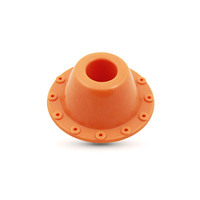
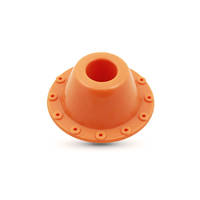
Find the best Conduit Locating Flanges here at Sparky Direct. [ Read More ]
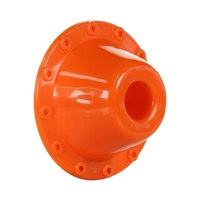
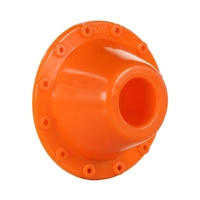
A conduit locating flange is a circular fitting designed to anchor a length of conduit into a knockout hole. The flange seats against the inside or outside face of the enclosure wall and grips the conduit body. This stops the conduit from sliding back through the hole and prevents rotation under torque. Most flanges thread or clip onto the conduit and lock against the panel using a back nut, integral lugs, or a snap-fit profile.
The entry point is where a conduit run is most likely to fail mechanically. Cable weight pulls down on the conduit, vibration can loosen unsecured fittings, and thermal cycling drives expansion and contraction. A locating flange holds the conduit in its design position, transfers load from the conduit body into the enclosure wall, and protects the cables inside from abrasion at the knockout edge.
A flange, a coupling, and a gland do different jobs. A conduit coupling joins two lengths of conduit end-to-end. A cable gland seals around a cable as it enters an enclosure. A locating flange is purpose-built for one job: hold the conduit in place at the panel wall. On many installations, all three fittings work together rather than substituting for each other.
System integrity depends on every fitting holding its position over the life of the installation. A locating flange contributes by removing movement at the entry point. With movement removed, internal cables sit still, terminations stay tight, and the conduit run resists pull-out forces from above. Loose entry points are a leading cause of cable damage in industrial sites.
Single-piece flanges thread onto the conduit during fabrication. Two-piece or split flanges clamp around the conduit after the run is in place, which is useful when you cannot remove an end cap or terminal. Split flanges cost slightly more but save time on retrofit work where dismantling the conduit run is impractical.
Surface-mount flanges sit proud of the panel wall and are visible from the outside. Flush-mount versions recess into the wall for a cleaner finish in switchboards or visible junction enclosures. Choice depends on the appearance requirement and how much depth the enclosure can give up internally.
Standard locating flanges retain position but do not seal. Versions with integrated gaskets or O-rings add an IP-rated seal against dust and moisture at the conduit entry. These are common on outdoor switchboards and IP-rated adaptable boxes where water ingress would cause failure.
Flange profiles match the conduit type. Rigid PVC flanges use a smooth bore and threaded thread engagement. Corrugated conduit needs a flange profile that engages the corrugations to prevent pull-out. Flexible metal conduit uses a different fitting style again. Always match the flange to the conduit profile, not just the diameter.
PVC is the workhorse material for residential and light commercial work. It is light, easy to install, resists most household chemicals, and pairs naturally with PVC medium duty rigid conduit. PVC is the most cost-effective option where mechanical loads are moderate and ambient temperatures stay below 60°C.
Steel flanges handle higher mechanical loads, fire ratings, and environments where PVC would soften. Galvanised steel suits dry industrial spaces. Stainless steel, particularly 316 grade, is the right choice for food processing, marine, or chemical exposure where galvanised would corrode. Steel flanges also offer better fire performance in plant rooms.
Aluminium flanges resist salt-air corrosion better than carbon steel and weigh less than stainless. They are common on outdoor lighting columns, coastal switchboards, and infrastructure cabinets exposed to weather. Aluminium pairs well with aluminium-bodied enclosures to avoid galvanic corrosion between dissimilar metals.
Engineered polymers like nylon and polyamide combine impact strength with chemical resistance. They handle vibration well, do not corrode, and tolerate a wider temperature range than standard PVC. These materials suit machine guards, mobile plant, and food-grade installations where stainless is overkill.
Australian conduit work uses metric sizing. The most common locating flange sizes are 20mm, 25mm, 32mm, 40mm, and 50mm to match the standard rigid and corrugated conduit range. Larger sizes (63mm and above) appear in industrial and infrastructure work. The size always refers to the conduit outside diameter.
A 25mm flange fits 25mm OD conduit, but it must also match the profile. Rigid smooth-bore conduit needs a smooth-bore flange. Corrugated conduit needs a flange that engages the rib pattern. Mixing profiles even at the correct nominal size produces a loose joint that will not retain position under load.
Knockouts in switchboards and adaptable boxes are sized to match standard conduit and gland diameters. A 25mm conduit needs a 25mm knockout. If the knockout is over-sized or rough, the flange will not seat correctly and the conduit will not be retained. Many enclosures come with multiple knockout sizes punched at manufacture.
Mismatched flange and conduit sizing is the most common cause of conduit pull-out. A 20mm flange on 25mm conduit will not engage. A 25mm flange on 20mm conduit will rattle and let the conduit slide. Always confirm the conduit OD before ordering flanges, and order spares to allow for site variation.
Locating flanges are standard practice on every conduit entry into a switchboard. They retain the conduit position, transfer cable weight to the panel wall, and stop the conduit moving when cables are added later. On large boards, dozens of flanges may be in use across the gland plate.
Adaptable boxes and conduit junction boxes use locating flanges to hold each conduit entry. The flange does the mechanical work, and a separate gland or grommet handles any IP sealing. This split-function approach keeps each fitting doing what it is designed for.
Plant rooms, pump houses, and motor control rooms put constant vibration into conduit fittings. Steel or nylon flanges with locking lugs hold position better than smooth PVC under these conditions. On critical control wiring, double-check flange torque during scheduled maintenance.
Street lighting columns, pump stations, traffic cabinets, and substation accessories all use locating flanges at conduit entries. These installations run for decades, so material choice and mechanical retention matter more than cost. Stainless or aluminium flanges with sealed gaskets are common here.
A clean knockout is the foundation of a good flange installation. Punch or drill the hole to the correct size, then deburr the edge with a file or knockout cleaner. Sharp edges damage cable insulation and prevent the flange from seating flat. Always check the knockout diameter before bringing the flange to the panel.
Tighten the back nut firmly but not excessively. PVC flanges can crack if over-tightened, while metal flanges need enough torque to compress any gasket and lock the lugs. Hand-tight plus a quarter turn with a spanner is a reasonable rule for most plastic flanges. Manufacturer torque specifications take priority where given.
Push the conduit into the flange until it bottoms out before tightening. A conduit that is not fully seated will slide out under load even with the flange tight. After tightening, give the conduit a firm pull to confirm it is held. If it moves at all, recheck the size and seating.
Walk the run after installation and test each flange by hand. Look for visible gaps, cracked plastic, missing gaskets, or flanges that turn freely on the conduit. Note any issues in the install log so they get rectified before the panel is closed.
1. Over-tightening plastic flanges: PVC and nylon crack under excessive torque. The crack often goes unnoticed until water ingress or cable damage shows up later.
2. Incorrect sizing and loose fitment: A flange that is one size out feels close enough on the bench but fails under load. Always confirm conduit OD with a vernier if in doubt.
3. Poor knockout preparation: Burred or oversized knockouts let the flange wobble. The conduit may seem secure on day one but will work loose over months.
4. Missing complementary sealing: A locating flange retains position but does not seal. Outdoor entries need a gasket, gland, or sealed flange variant in addition to the locating function.
AS/NZS 2053 is the Australian standard covering conduits and conduit fittings for electrical installations. The standard specifies dimensions, materials, mechanical performance, and marking for the conduit system as a whole, including locating flanges. Products supplied for Australian installations should carry compliance marking against this standard.
AS/NZS 3000:2018 (the Wiring Rules) is the umbrella standard for electrical installations. The rules require mechanical protection of cables, secure fixing of wiring systems, and appropriate IP rating at enclosure entries. Locating flanges contribute directly to compliance with these clauses by holding the conduit at the entry point.
Look for Regulatory Compliance Mark (RCM) or equivalent certification on the product or packaging. Certified flanges have been tested for mechanical retention, dimensional accuracy, and material performance. Uncertified imports may look identical but can fail premature pull-out tests, leaving the installer exposed to a non-compliance finding.
The IP rating of an enclosure is only as good as the weakest entry point. A switchboard rated IP56 with a non-sealed locating flange drops to a much lower effective rating. Where IP performance matters, specify a sealed flange variant or pair the locating flange with a separate IP-rated gland.
The primary safety contribution of a locating flange is movement prevention. A still conduit means undisturbed cables, intact insulation, and stable terminations inside the panel. Most cable insulation damage at panel entries comes from conduit movement that goes unnoticed for years.
The flange spreads cable and conduit weight across the panel wall rather than concentrating it on the knockout edge. This protects the enclosure body and prevents long-term distortion of thin gauge metal cabinets. On large vertical drops, this load distribution is critical.
Match the material to the environment and a flange will outlast most other components in the installation. Stainless and aluminium flanges in coastal sites routinely deliver 25+ years of service. PVC flanges in dry indoor work have similar longevity. The failure mode is almost always wrong material choice rather than wear.
Locating flanges need almost no maintenance once installed correctly. Periodic visual inspection during scheduled switchboard maintenance is enough to catch the rare failure. Look for cracks in plastic flanges, visible corrosion on metal flanges, and any conduit movement at the entry point.
| Function | Locating Flange | Saddle/Bracket | Cable Gland |
|---|---|---|---|
| Primary purpose | Retains conduit at panel entry | Supports conduit along the run | Seals around cable at entry |
| Mechanical retention | Yes, at the entry point | Yes, along the conduit | On the cable, not the conduit |
| IP sealing | Optional with gasket variant | No | Yes, primary function |
| Typical position | At enclosure wall | Along wall or ceiling run | At enclosure wall |
| Best paired with | Saddles along the run | Flanges at endpoints | Flange behind it |
Conduit saddles support conduit along its length, fixing it to walls, ceilings, or framing at regular intervals. Locating flanges anchor the same conduit at the start and end of the run where it enters an enclosure. Both fittings work together: saddles along the route, flanges at the entry points.
A cable gland clamps and seals around the cable that exits the conduit. A locating flange clamps and retains the conduit body itself. They are complementary, not interchangeable. On a typical outdoor switchboard, a 25mm conduit comes through a sealed locating flange, terminates inside the panel, and individual cables exit through their own glands further down the run.
Most professional installations combine all three fittings. The conduit is held at every entry by a flange. It is supported along the run by saddles. Cables exiting the conduit at termination points pass through glands. Each fitting does one job well, rather than asking one component to handle position, support, and sealing simultaneously.
Get the flange right and the rest of the system follows. The conduit holds position, the cables stay protected, the enclosure keeps its IP rating, and the install passes inspection without rework. Get the flange wrong and the issues compound: pull-out, water ingress, cable damage, and warranty claims.
PVC locating flanges in 20mm and 25mm sizes typically run a few dollars each at trade pricing. Steel and stainless versions cost more, reflecting the material and machining. Sealed gasketed variants add a small premium over standard flanges. Bulk packs improve the per-unit price significantly for high-volume jobs.
Buying flanges by the box or jar is standard practice for trade work. A box of 100 PVC flanges costs less per unit than buying 100 individuals and saves time on stock management. For one-off domestic jobs, individual units make more sense. Hold a small mixed-size stock in the van for unplanned needs.
Imported flanges that lack RCM marking can be tempting at low prices but carry compliance risk. An installer using non-compliant fittings is liable if the issue is detected during inspection or insurance assessment. The price difference rarely justifies the exposure.
Trade counters offer immediate pickup but limited stock. Online electrical wholesalers carry deeper ranges, often at lower prices, with overnight or two-day delivery. The choice usually comes down to urgency: counter for today, online for planned work.
Sparky Direct ships locating flanges Australia-wide. Standard sizes (20mm, 25mm, 32mm) are stocked in volume across PVC and metal variants. Less common sizes and material grades may have a short lead time but remain available through the same checkout.
Start with the conduit OD and profile. Then layer in the environment, IP requirement, and mechanical load. The decision tree is short: if the answer to all three is straightforward, a standard PVC flange usually does the job. As the requirements get harsher, step up through nylon, aluminium, galvanised, and stainless.
Ordering by quantity rather than profile is the most common buyer error. A box of 25mm flanges sold for rigid conduit will not work on 25mm corrugated conduit. Read the product listing carefully and confirm the conduit type as well as the size. Order a small sample first if working with an unfamiliar brand.
Allow 10–15% spare flanges over the headcount needed for the run. Knockouts get punched in the wrong place, threads cross, plastic cracks during install, and additional conduit entries get added on the day. A small spare stock keeps the job moving rather than waiting for a parts run.
Sparky Direct stocks the complete conduit fitting range, from locating flanges through to flange covers and straight glands. The site is set up for trade buyers with bulk pricing, fast checkout, and Australia-wide shipping. Trade accounts get additional pricing tiers on volume orders.
Club Clipsal is Australia's largest electrician community offering trade rewards, business support, and exclusive benefits. When you nominate Sparky Direct as your preferred wholesaler, we automatically apply your Clipsal spend points to your Club Clipsal account daily.
Entry-level offering coaching, mentoring, and training discounts
Unlock exclusive industry tools and networking events
Access Toyota fleet offers and business software discounts
Maximum benefits, including VIP experiences and rewards
1. Sign Up: Create your Club Clipsal account at clipsal.com/club-clipsal or via the iCat mobile app
2. Nominate Sparky Direct: Select Sparky Direct from the wholesaler dropdown menu in your profile
3. Add Email: Enter your Sparky Direct account email address in the membership number field
4. Start Earning: Every dollar spent on Clipsal products earns points automatically
Redeem points from the rewards store, including gift cards, tools, and experiences. Access business summits, product training, and industry networking events. Receive early access to new product launches and special promotions. Connect with fellow electricians via the Club Clipsal community app.
Watch NLS 30004 | 20mm Conduit Locating Flange | Orange video
Watch NLS 30025 | 25mm Conduit Locating Flange | Orange video
Watch 20mm Conduit Locating Flange | LF20 video

Needed some single entry 20mm Junction boxes for a renovation wiring project. Not use to buying small amounts of electrical fittings ?? Sparky Direct made it easier & simpler, at a competitive cost. Good price, and a varied range of fittings via a prompt post made it easier to finish my project.
This is a very compact tee and great if space is limited and looks so much better than the bulk inspection tees. Wires are easy to pass through the branch section, however consideration must be given to wire qty and sizing along with the number of through wires due to the minimal area for the radial passage.
Great adaptable box, heavy gauge walls and lid. It's the little details that set this apart from the others: the lid has a slight camber on the sealing edge so that when the 4 corner screws are secured the camber compresses the sealing gasket in the middle.
Quality products in stock • Fast Australia-wide delivery • Competitive trade pricing
Browse Conduit Locating Flanges → Get Expert Advice →Yes, they help achieve a clean and professional finish at conduit exit points.
Sparky Direct supplies locating flanges Australia-wide, offering reliable conduit positioning accessories with convenient delivery.
Locating flanges are securely packaged and delivered via standard courier services.
Unused products are generally eligible for return according to the seller’s returns policy.
Warranty coverage varies by manufacturer and typically covers defects in materials or workmanship.
Yes, locating flanges are typically sold as individual electrical accessories.
Yes, selecting the correct size ensures proper conduit alignment and finish.
Once installed and built in, they generally require no maintenance.
They are mainly used in new builds but may be used in some renovation scenarios.
They may be visible at the conduit exit point once construction is complete.
Quality locating flanges are designed to withstand construction conditions.
Yes, they help hold conduit securely in place.
They are straightforward for trained professionals to install during the construction phase.
Locating flanges are electrical conduit accessories used to accurately position and secure conduit where it passes through formwork, walls, or panels.
Yes, they are a standard accessory for slab and structural installations.
They help ensure conduit ends are correctly positioned and flush after construction.
Yes, they help maintain correct conduit alignment and positioning.
Yes, they are suitable for residential, commercial, and light industrial applications.
Yes, they are widely used in residential electrical construction.
Currently, only a 20mm locating flange is available.
Yes, they are designed to work with rigid electrical conduit.
They are typically made from durable plastic suitable for electrical installations.
Yes, they are commonly used in in-slab electrical conduit installations.
Quality locating flanges are manufactured to meet relevant AS/NZS electrical and safety standards when used correctly.
They are used to hold conduit in the correct position during construction, particularly before concrete is poured.