
Search Results:
Search Results:
Search Results:
Search Results:
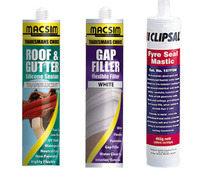
Find the best construction adhesives and sealants here at Sparky Direct [ Read More ]
Adhesives and sealants sit alongside cable, conduit, and accessories as core consumables on every electrical install. Licensed electricians, electrical contractors, refrigeration sparkies, and maintenance teams rely on the right product for several jobs each day. Those jobs include bonding surface-mounted hardware, sealing cable and conduit penetrations, finishing wall gaps around accessories, and reducing moisture, air, dust, and pest ingress where it matters. Choosing the correct product comes down to the application, the substrate, the environment, and the compliance requirement on the day.
Common categories of work that depend on these consumables include sealing conduit junction boxes, finishing surface-mount enclosure edges, weatherproofing penetrations into outdoor accessory boxes, and finishing the surrounds of electric switchboards and meter boxes. Any electrical installation work must be carried out by a licensed electrician where required by Australian law.
Adhesives and sealants are used to bond surface-mounted accessories to walls, seal conduit and cable entries, fill voids around penetrations, and finish surface gaps before painting. They also help reduce moisture, air, gas, dust, pest, and fire spread risks where the correct product is specified. Practical examples include sealing conduit entries into outdoor enclosures, finishing the edges of electrical junction boxes, and sealing cable penetrations through external walls. Where a wall, floor, shaft, or riser carries a fire resistance level, only a tested fire-stopping system is acceptable.
A typical trade kit covers the full range of expected jobs. Neutral-cure silicone handles weatherproof sealing. Fire-rated acrylic seals compliant penetrations through rated walls. Cool room mastic suits refrigeration work, and acrylic gap filler suits interior finishing. Expanding foam fills large voids, cable lubricant helps long pulls, and high-grab construction adhesive bonds surface-mounted accessories. Carrying the correct product on the van prevents poor substitutions and avoids return visits. Contractors working across domestic, commercial, industrial, and refrigeration jobs often carry different combinations to suit the day's work mix.
The seven product types are not interchangeable. Silicone is a flexible, waterproof sealant suited to weatherproof electrical work. Fire-rated acrylic seals penetrations through fire-rated building elements where it forms part of a tested system. Cool room mastic provides a vapour and thermal seal around insulated panels. Acrylic gap filler is a paintable interior finishing product. Expanding polyurethane foam fills large voids in non-fire-rated locations. Cable lubricant reduces friction during cable pulls through conduit. Construction adhesive is a high-grab bonding product for non-structural fixing of surface-mounted accessories. Each product is formulated for a specific substrate, environment, and outcome.
Silicone seals: it forms a flexible, waterproof barrier around conduit entries, enclosure perimeters, and wall penetrations. Construction adhesive bonds: it grabs and holds surface-mounted accessories such as cable trunking, conduit saddles, and mounting plates against suitable substrates. The two products share a cartridge format but solve different problems. Mechanical fixing may still be required depending on substrate, load, vibration, and the manufacturer's installation requirements. Using silicone where adhesive is needed produces weak bonds; using adhesive where a weatherproof seal is needed leaves gaps that can admit water.
Neutral-cure silicone is the workhorse sealant for weatherproofing electrical penetrations. It bonds well to metal, PVC, masonry, glass, and painted surfaces, stays flexible across temperature swings, and resists UV exposure when a UV-stable formulation is selected. Typical electrical uses include conduit entries, junction box perimeters, outdoor weatherproof GPOs, cable entries through external walls, roof and gutter-adjacent penetrations, and IP-rated accessory sealing where compatible with the manufacturer's instructions.
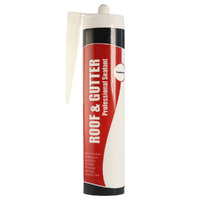
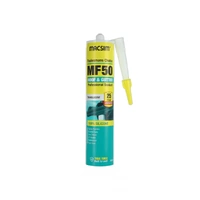
Common range examples on the Australian market include the Macsim 53TRGT MF50 Roof & Gutter Translucent Silicone and the Professional Sealants Australia Roof & Gutter Neutral Silicone. For outdoor electrical work, the buying brief is straightforward: choose UV-stable, weather-resistant, neutral-cure silicone with substrate compatibility appropriate to the surface being sealed. Acetoxy-cure (vinegar-smelling) silicone should be avoided around electrical components.
Use a neutral-cure, UV-resistant silicone suitable for metal, PVC, masonry, glass, and painted surfaces. A continuous bead around the conduit entry helps maintain weather resistance over the life of the install. The seal must not interfere with manufacturer-designed drainage paths, the enclosure IP rating, the cable gland seating, or any other component the enclosure relies on for its protection rating. Weatherproof electrical work and any penetration into live or terminated equipment should be carried out by a licensed electrician.
Yes. Clear or translucent neutral-cure silicone is suited to visible sealing around electrical enclosures and junction boxes where the silicone is compatible with the surface material. Neutral-cure is preferred over acetoxy-cure for any electrical application. Translucent finishes are particularly useful in commercial, retail, and finished architectural environments where the seal needs to disappear visually against the substrate.
Neutral-cure silicone releases non-corrosive by-products as it cures. Acetoxy-cure silicone releases acetic acid (the vinegar smell), which can corrode copper, brass, galvanised steel, and other sensitive metals. That makes acetoxy-cure unsuitable around conductors, bus bars, switchboard internals, terminal lugs, enclosure metal, and most electrical fittings. For electrical penetrations, enclosure perimeters, and weatherproof sealing, the correct selection is a neutral-cure silicone formulated for the substrate. Product selection terms to look for include roof and gutter silicone, neutral silicone, clear silicone, translucent silicone, and UV-resistant sealant.
Neutral-cure silicone is the standard choice for sealing cable penetrations through non-fire-rated external walls. It resists moisture, air movement, dust, and pests, and stays flexible as the building moves. Where the wall, floor, shaft, or riser is fire-rated, standard silicone is not acceptable: a tested fire-stopping system is required. External penetrations should also be planned to shed water rather than collect it, with the silicone bead positioned so any incidental water runs away from the cable entry.
For small annular gaps around conduit through non-fire-rated external walls, neutral-cure silicone delivers the right combination of waterproofing and flexibility. For larger voids in non-fire-rated wall cavities, expanding polyurethane foam fills the gap, with a silicone or compatible mastic applied as the weather-facing finish where appropriate. The substrate, gap size, and exposure determine the product. Around rigid PVC conduit, ensure the chosen silicone is compatible with the conduit material.
Underground conduit can carry moisture into a switchboard through condensation, capillary action along cables, and humid air movement. Sealing the conduit entries inside the switchboard with a compatible product limits the moisture path. Options include neutral-cure silicone, expanding foam, duct seal-style compounds, and other approved sealing materials selected by the electrician for the conduit material, the cable type, and the site environment. Switchboard work must only be carried out by a licensed electrician. The switchboard should not be opened, modified, or sealed internally by an unlicensed person.
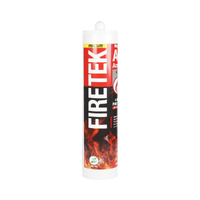
Fire-rated sealants help reinstate the fire resistance of rated walls, floors, shafts, risers, and service penetrations. They are the compliant product class for electrical penetrations through any building element with a Fire Resistance Level (FRL) under the National Construction Code. A typical electrical-trade product is the MACSIM 53FTAC300 FIRESEAL 6 Professional Acrylic Sealant (MF06): a paintable, low-odour, water-based fire-rated acrylic.
Fire-stopping is a system, not a product on its own. Compliance comes from installing the tested system as documented: the right sealant, in the right configuration, in the right substrate, around the right service. Australian context for product selection includes the National Construction Code (NCC), Fire Resistance Levels (FRLs), and tested systems referencing AS 1530.4 in product documentation. This page covers product selection only. Tested system installation should be carried out by a licensed electrician working with suitably qualified fire-stopping installers where required. Adjacent supplies on Sparky Direct include electrical conduits, smoke alarms, and switchboard hardware.
Yes. Where a cable, conduit, cable tray, duct, or any other service passes through a fire-rated wall or floor, the penetration must be sealed using a tested and compliant fire-stopping system. Standard silicone, standard gap filler, and standard expanding foam are not compliant substitutes. The exact product depends on the wall or floor type, the service type, the annular gap, the FRL required, and the tested system documentation that applies. Licensed electricians and suitably qualified fire-stopping installers should be engaged where compliance is required.
Fire-rated acrylic sealant is used around compliant service penetrations and in construction joints where the tested system specifies an acrylic fire-rated product. It is suited to non-combustible services such as metal conduit and steel cable tray, subject to the tested system documentation for the application. Trade-relevant features include paintability, low odour, water-based clean-up, and compatibility with standard cartridge guns. It is at home in commercial, industrial, and residential fit-outs where a project specification calls for fire-rated sealing.
Fire-rated acrylic sealant seals gaps in tested configurations: the product holds its place and helps maintain the fire resistance of the construction. Intumescent mastic expands when exposed to heat, and is commonly required where combustible services may melt or burn away during a fire, such as some PVC conduit, plastic-sheathed cables, and plastic pipework. The tested system documentation determines which product is required for a given penetration. The two products are not interchangeable, and substituting one for the other outside its tested system invalidates the fire rating of the penetration.
No, unless the exact product forms part of a tested fire-stopping system for the penetration in question. Standard silicone, gap filler, and expanding foam may seal air, moisture, or pests, but they do not restore an FRL. Using them in a fire-rated penetration creates a non-compliant install, with likely consequences including failed inspection, mandatory rework, compromised life-safety performance, and potential liability. Compliance requirements should always be checked against tested system documentation, and the work referred to suitably qualified professionals.
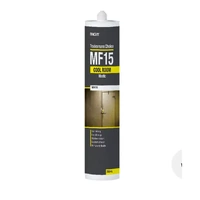
Cool room mastic is formulated for sealing service penetrations through insulated panels and other surfaces in refrigerated environments. It addresses the specific demands of cool rooms, freezers, and food-grade fit-outs: vapour resistance, low-temperature flexibility, and adhesion to foam and metal panel facings. A typical product on the Australian market is Cool Room Mastic White MF15. Sparky Direct stocks cool room mastic alongside air conditioning maintenance supplies used by HVAC electricians, refrigeration sparkies, commercial kitchen installers, and cold storage maintenance teams.
Cool room mastic seals conduit, cable, pipe, and service penetrations through insulated panels. It provides moisture vapour resistance, helps reduce condensation forming around the penetration, protects the thermal envelope of the cool room, and adheres to the typical surfaces found on insulated panels. Sealing service entries correctly helps protect the panel insulation from long-term moisture damage and supports the energy performance of the refrigerated space.
Cool room panels often present surfaces that standard silicone is not designed for: foam cores, foil-faced facings, painted metal skins, and proprietary insulated finishes. Standard silicone may not provide the required vapour seal, the correct substrate adhesion, or the low-temperature flexibility needed for refrigerated operation. The result can be premature seal failure, condensation tracking, or panel damage. Where the application is a cool room, freezer, or refrigerated panel penetration, a product formulated for that environment is the correct choice.
Plan the penetration locations before any cutting. Group services where possible to reduce the number of holes through the panel. Avoid damaging the panel skin around the cut. Confirm the mastic is compatible with the panel facing and the cable or conduit material. Seal every service entry to the same standard, including any spare or future-use penetrations. Refrigeration and electrical work on cool rooms may involve multiple licensed trades and food-safe site requirements: scope of work and sealing method should be agreed before the job starts.
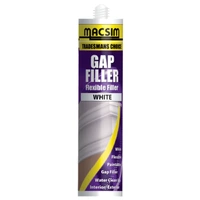
Acrylic gap filler is the right product for dry interior finishing around conduit, surface trunking, accessory backing plates, mounting brackets, and irregular wall surfaces. Common products include MACSIM Gap Filler White (53TGF). Gap filler is paintable, sands cleanly, and bridges minor wall imperfections so that the painted finish around an accessory looks tidy. It is not a waterproofing product, not a fire-rated product, and not a structural adhesive.
Typical applications cover surface-mounted conduit and saddle finishing, edges around cable duct on plastered walls, and the joint between an accessory plate and the finished wall surface. For exterior work, wet areas, and any rated penetration, gap filler should be replaced with the correct product class.
Use a paintable acrylic gap filler for dry interior applications where the finish will be painted. Gap filler bridges minor wall irregularities, cleans up at the substrate edge, and accepts paint over the cured bead. Standard silicone is a poor choice on interior walls that need painting, because most silicones reject paint. Surface preparation, dry conditions during cure, and compatible paint chemistry all affect the final result.
Gap filler is for interior, dry, paintable finishing. Silicone is for waterproof, flexible, non-paintable sealing. The two products solve different problems and are easy to mistake on a busy site. Gap filler is wrong for wet areas, outdoor penetrations, enclosure sealing, fire-rated penetrations, and underground conduit sealing. Silicone is wrong where the bead must be painted as part of the wall finish. Examples: gap filler around an interior surface conduit on a painted wall; silicone around an outdoor conduit entry into a weatherproof enclosure.
Yes. Construction adhesives are widely used in renovation and fit-out work to bond surface trunking, ducting, conduit accessories, and non-load-bearing fixtures to suitable substrates. Bond performance depends on substrate condition: old paint, dust, loose render, oil, and previous sealant residue can all cause adhesive failure. Construction adhesive may supplement, rather than replace, compliant mechanical fixing where the manufacturer or installation requirement calls for screws, plugs, or other fasteners. The substrate, the load on the accessory, and the manufacturer's instructions decide whether adhesive alone is enough.
Electricians commonly use a high-grab construction adhesive or trade-grade bonding adhesive suited to masonry, plasterboard, concrete, painted surfaces, and PVC where the adhesive specification confirms compatibility. Typical applications cover surface conduit, saddle backing strips, accessory mounting bases, and dado duct runs. The decision factors are the load on the accessory, the substrate condition, the manufacturer's installation instructions, and whether mechanical fixing (such as screws into conduit saddles or wall plugs) is required by the install spec. Adhesive alone is rarely the full answer where vibration, weight, or accessibility apply.
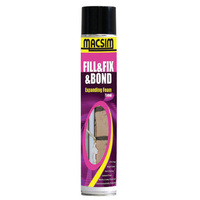
Expanding polyurethane foam fills larger cavities and irregular annular spaces where small-bead sealants would be impractical or wasteful. A typical Australian product is the 750ml Expanding Foam (53MPF) commonly carried in trade kits. Foam expands as it cures, so it bridges gaps that no cartridge bead can match. It also delivers useful secondary benefits: pest exclusion, draught reduction, moisture control, and wall cavity sealing where a clean finish is not required.
Standard expanding foam is for non-fire-rated locations only. Where a fire rating applies, only a tested fire-rated foam system is acceptable. Typical electrical applications include sealing voids around corrugated conduit through wall cavities, filling around communication conduits in non-rated locations, and closing off the wall-cavity side of recessed enclosures.
Standard polyurethane expanding foam is suitable for non-fire-rated wall cavities and large conduit voids. Product compatibility with PVC conduit and PVC cable sheathing should be confirmed before use, because some foams chemically interact with certain plastics. Foam should not be applied where it would restrict required movement of the cable, block intentional drainage, prevent heat dissipation from the cable run, or seal off access required for future maintenance. Fire-rated locations always require a tested fire-rated foam system or another approved fire-stopping configuration.
No. Standard expanding foam is not a fire-stopping product, and it cannot reinstate the FRL of a rated wall. A fire-rated penetration requires a tested system installed strictly to its tested configuration: the correct product, the correct annular gap, the correct depth, and the correct substrate. Using standard foam in a rated penetration produces a non-compliant install, with likely consequences including failed inspection, mandatory rework, and compromised life-safety performance. Where the wall is fire-rated, the work belongs to a tested fire-stopping system and a suitably qualified installer.
Pest exclusion around electrical penetrations typically uses neutral-cure silicone, expanding foam, mastic, or approved conduit sealing compounds, with the choice driven by location, gap size, substrate, and any compliance requirement. Common entry points include external wall conduit, meter boxes, switchboard entries, wall cavities, and roof spaces. Practical pest risks on site include rodents, ants, cockroaches, and other insects that follow warm cable runs into buildings. Switchboard sealing and any work in live electrical areas must be handled by a licensed electrician.
Silicone works best for smaller external gaps and finished perimeter seals where flexibility and weather resistance matter. Expanding foam is the better choice for larger internal cavities and voids where a small-bead sealant would be impractical or expensive. Foam often needs trimming after cure, and a weather-facing silicone or compatible mastic finish where there is exposure to rain or UV. Neither standard foam nor standard silicone is suitable for fire-rated penetrations unless the product is part of a tested system.
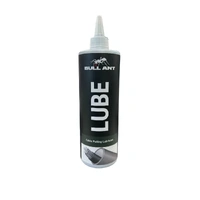
Cable lubricant is a pulling aid, not a sealant or an adhesive. It reduces friction between cable sheath and conduit wall during the pull, lowers the tension required to draw cable through bends, and helps prevent insulation abrasion. A common Australian product is the TuffStuff HYDROLUBE Bull Ant Cable Lube. Cable lube earns its place on long conduit runs, multiple-bend installations, high cable fill ratios, larger-diameter cables, and the kind of commercial and industrial pulls where dry friction would otherwise risk damaging the sheath.
Sparky Direct stocks cable lube alongside the cable, conduit, and accessories used in the same install, including electrical cables and cable clips. The benefits show up in faster pulls, less labour, less risk of damaged insulation, and cleaner cable installations.
Water-based gel cable lubricants are the standard choice with PVC and metal conduit. They suit common Australian cable types including TPS flat, twin and earth, multicore, and PVC-sheathed cables, provided the manufacturer's directions confirm compatibility. The lubricant should be matched to the cable and conduit material. Petroleum-based lubricants should be avoided with PVC, as they can attack the plastic over time and lead to sheath degradation.
Yes. Water-based cable lube is generally suitable for PVC-sheathed cable and PVC conduit when used according to the manufacturer's directions. It does not attack PVC, washes off cleanly with water, and is the trade-standard choice for typical Australian residential and commercial cable pulls. Petroleum-based lubricants should not be used on PVC because they can soften and degrade the plastic over time. Excess lubricant should be wiped from termination points, cable glands, heat-shrink areas, and any sealing surfaces before the cable is terminated or the gland is sealed.
Use cable lube on long conduit runs, tight bends, large cables, high cable fill ratios, difficult retrofit pulls, and any run where sheath damage looks likely. Pulling dry on these jobs increases the force required, raises the risk of insulation abrasion, slows the install, and can leave cable damaged before it is even terminated. On short, straight, low-fill runs with smaller cable, dry pulling is usually fine. The judgment call is the electrician's: if the pull looks hard, lube is worth the few minutes it takes to apply.
The right product depends on four questions. First, the substrate: PVC, metal, concrete, masonry, plasterboard, glass, painted surface, or insulated cool room panel. Second, the environment: indoor dry, outdoor exposed, wet area, UV-exposed, underground conduit, refrigerated space, or fire-rated building element. Third, the purpose: bond, seal, fill, finish, fire-stop, or lubricate. Fourth, the compliance requirement: the National Construction Code, the Fire Resistance Level, any tested system that applies, and the licensed electrical work involved. Working through those four filters quickly narrows the trade kit down to one or two correct products.
| Application | Recommended product type | Why it is used | Avoid using |
|---|---|---|---|
| Weatherproof enclosure conduit entry | Neutral-cure silicone, UV-stable | Flexible, waterproof, compatible with metal and PVC | Acetoxy-cure silicone, gap filler |
| External wall cable penetration (non-fire-rated) | Neutral-cure silicone or specified mastic | Resists moisture, dust, pests, air movement | Acetoxy silicone, untested foam in rated walls |
| Fire-rated wall or floor penetration | Tested fire-rated sealant or intumescent system | Reinstates the FRL under tested configuration | Standard silicone, gap filler, standard foam |
| Cool room panel penetration | Cool room mastic | Vapour seal, panel-compatible, low-temperature flexibility | Standard interior silicone, gap filler |
| Finished interior conduit gap (paintable) | Acrylic gap filler | Paintable, sands clean, bridges minor irregularities | Silicone (most reject paint) |
| Large non-fire-rated wall cavity void | Expanding polyurethane foam | Fills irregular voids, pest and draught exclusion | Standard foam in fire-rated locations |
| Cable pull through conduit | Water-based cable lube | Reduces friction, protects sheath, suits PVC | Petroleum-based lubricants on PVC |
| Bonding cable trunking to masonry | Construction adhesive, plus mechanical fixing where required | High initial grab, suits masonry and PVC | Silicone (no structural grab) |
| Underground conduit moisture control | Electrician-selected sealant, foam, or duct seal-style compound | Blocks capillary and vapour paths into switchboard | Wrong compound for conduit material |
Interior dry finishing work usually calls for paintable acrylic gap filler. Outdoor work and wet areas usually call for neutral-cure silicone with UV resistance and substrate compatibility. Cool room and refrigerated panel penetrations call for cool room mastic. Fire-rated building elements call for a tested fire-stopping product, regardless of whether the location is indoor or outdoor. The differentiators that decide the product are UV resistance, paintability, flexibility, water resistance, and substrate compatibility. Reading the product datasheet against those five criteria takes a minute and avoids most selection mistakes.
Bond and seal performance starts before the cartridge comes out of the gun. Clean, dry, dust-free, oil-free, and stable surfaces give the product a fair chance of curing properly. Application temperature, manufacturer-stated curing time, joint movement under thermal cycling, the condition of the substrate, and the removal of any old or loose sealant all affect the result. Most failed beads and failed bonds trace back to substrate preparation rather than the product itself.
Sparky Direct is an Australian online electrical wholesaler stocking the consumables electricians, refrigeration sparkies, and maintenance teams use across the working week. The category covers neutral-cure silicone, fire-rated acrylic, cool room mastic, acrylic gap filler, expanding foam, cable lubricant, and high-grab construction adhesive. Brands carried include Macsim and TuffStuff Trade Solutions. Order is online, with Australia-wide delivery and a range suited to residential, commercial, refrigeration, and industrial electrical work.
Sparky Direct is the destination for the full sealant and adhesive trade kit on one site. The range supports licensed electricians, sole traders, contractors, HVAC and refrigeration sparkies, maintenance teams, and informed buyers running their own jobs. Practical buying language: filter by product type, application, compliance need, and job environment, then add the matching conduit glue or fixings if the install needs them.
Watch Macsim 53TRGT | Silicone MF50 Roof & Gutter Translucent video
Watch MACSIM 53FTAC300 | FIRESEAL 6 Professional Acrylic Sealant | MF06 video
Watch Professional Sealants Australia PSA-RGPROSEAL | Roof & Gutter Neutral Silicone | Clear video

Best roof silicone I've used, and over 20 years I've used nearly every brand available.
I have bought a box of the Macsim 53TRGT | Silicone MF50 Roof & Gutter Translucent, it's not just cheap & also delivery to me very fast than any other shop. I will ordering more as it's very handy too.
This product is easy to use and plyable easily washes offf, can’t go wrong with this product it’s really reliable
Quality products in stock • Fast Australia-wide delivery • Competitive trade pricing
Browse Construction Adhesives & Sealants → Get Expert Advice →Yes, bonded joints can help absorb vibration and reduce noise compared to mechanical fixings.
Sparky Direct supplies silicone and construction adhesives Australia-wide, offering reliable bonding solutions with convenient delivery.
They are securely packaged and delivered via standard courier services.
Unused products are generally eligible for return according to the seller’s returns policy.
Warranty coverage varies by manufacturer and typically relates to product quality when stored and used correctly.
Yes, construction adhesives are commonly sold in cartridges, tubes, or sausages depending on the product.
Yes, selecting the right adhesive ensures proper bonding and long-term performance.
Performance varies by product, so temperature limits should be checked before use.
They are generally clean when applied correctly and excess can be removed before curing.
Fast-grab products are often used for quick fixes and installations.
Yes, clean and dry surfaces help ensure the best bond strength.
Yes, they are commonly used for renovations, repairs, and upgrades.
Yes, they are widely used by builders, electricians, and trades across many applications.
Construction adhesives are high-strength bonding products designed to join building materials securely without mechanical fasteners.
Yes, most are designed for straightforward application with standard tools.
They provide strong bonding without visible fixings and help reduce vibration and movement.
Yes, products are available with fast-grab, rapid cure, or extended open time options.
They are commonly applied using a caulking gun or applicator, following manufacturer instructions.
Many construction adhesives offer moisture resistance, making them suitable for bathrooms, kitchens, and outdoor areas.
Most construction adhesives are designed to provide long-lasting or permanent bonds once cured.
Many products are suitable for both indoor and outdoor applications, depending on their formulation and environmental rating.
Silicones are typically flexible sealants used for sealing and waterproofing, while construction adhesives are designed for strong structural bonding.
Quality construction adhesives are manufactured to meet relevant Australian product and safety requirements when used as intended.
Certain construction adhesives and silicones are suitable for use around electrical installations when used as specified and not in place of mechanical or compliant fixing methods.
They can bond materials such as timber, concrete, masonry, metal, plasterboard, ceramics, and some plastics, depending on the product type.