
Search Results:
Search Results:
Search Results:
Search Results:
An industrial marking crayon is a solid, hand-held marker made by blending pigment with a wax or clay base. The binder holds the pigment in a stable form. Pressure transfers a thin layer of pigment onto the surface. The result is a bold, opaque line that adheres physically to the substrate rather than relying on a liquid solvent.
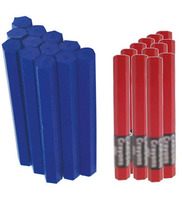
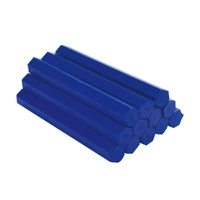
A trade-grade marking crayon is built to a different standard than a school crayon. The stick is denser, the pigment load is higher, and the formulation is engineered for visibility on dark, dirty, or porous materials. Most industrial crayons come in hexagonal or round profiles, often paper-wrapped, and are sized to fit a holder for cleaner handling.
Wax-based crayons soften slightly under friction. The wax acts as a carrier, filling the pores of the surface and locking the pigment in place. Clay-based crayons rely on a harder mineral binder. They abrade across rough or abrasive surfaces and leave a fine pigment deposit that resists smudging. Both formats produce marks that survive weather, abrasion, and UV exposure far longer than ink-based options.
Liquid markers depend on solvent flow. On wet, oily, or dusty surfaces, the solvent beads or wicks away before the pigment can bond. Industrial crayons skip the solvent entirely. The pigment is delivered as a solid, so surface contamination has far less effect on adhesion. This makes crayons the default choice for marking freshly cut steel, wet timber, hot rubber, or dusty masonry.
On a busy site, the marking tool has to keep up with the work. Crayons hit a spot that liquid markers and pencils cannot reach.
Construction surfaces are rarely clean. Concrete is dusty. Steel arrives oiled. Timber comes off the saw damp. A wax-based crayon cuts through this surface contamination and bonds to the substrate underneath. The mark stays visible even if the surface is later wetted, brushed, or moved.
A crayon does not have a tip to clog or a reservoir to dry out. There is nothing to prime, shake, or replace. You can leave a crayon in a tool bag for months, then pull it out on a freezing morning and start marking. This reliability matters when you are halfway through a steel cut and need a witness mark immediately.
Heat, cold, rain, dust, and UV all degrade liquid marker performance. Industrial crayons handle these conditions because the binder is solid and the pigment load is high. The same crayon works at minus 20 degrees in a freezer room and at 60 degrees on a rooftop in summer.
Not every crayon is suitable for industrial work. Trade-grade products have specific properties that hobby crayons lack.
A trade-grade crayon should keep its mark visible after rain, after washdown, and after weeks in direct sun. The binder system is formulated to lock pigment into the substrate so that weathering does not lift the mark. Heat-resistant variants tolerate temperatures up to around 200 degrees on hot steel and pipework.
Crayons are graded by hardness, usually soft, medium, and hard. Soft wax crayons suit smooth or sealed surfaces and lay down a thick, vivid mark. Hard clay crayons are matched to abrasive surfaces such as raw concrete or sawn timber, where a softer stick would wear out in minutes.
Industrial crayons used in regulated workplaces should meet relevant standards. Common references include ASTM marking specifications, RoHS limits on heavy metals, and a current Safety Data Sheet for the formulation. For food contact or pharmaceutical environments, additional certifications around heavy metals and migration are required.
Workplaces operating under AS/NZS ISO 45001 safety management systems should keep current SDS records for any marking compounds in use. Where marks are required for compliance audits or inspection workflows, the crayon must meet the project specification before use on-site.
Crayons fall into three broad families. The right pick depends on the surface, the environmental conditions, and how long the mark needs to last.
Wax based crayons are the everyday workhorse. They lay down a soft, dense line on most surfaces and give the highest visibility per stroke. They are the standard choice for steel fabrication, timber yards, and general construction marking. The trade-off is faster wear on abrasive substrates.
Clay based sticks are denser and harder. They survive contact with raw concrete, gritty masonry, and rough sawn timber where a wax crayon would crumble. The mark is finer than a wax stick but still bold enough to read across a job site.
Specialist formulations cover edge cases. UV reactive crayons fluoresce under blacklight for security or quality control sorting. Fluorescent colours stand out under low site lighting. Disappearing crayons fade after a fixed period, useful for temporary instructions that must not remain permanent.
Marking crayons are one of several tools in a tradesperson's kit. Understanding where each one wins helps you choose without guesswork.
| Tool | Best For | Limitations |
|---|---|---|
| Industrial Crayon | Wet, oily, rough, hot surfaces | Less precision than a fine marker |
| Liquid Paint Marker | Smooth, clean, dry surfaces | Tip clogs, dries out, fails when wet |
| Solid Paint Marker | Permanent marks on metal and plastic | Slower to apply, higher cost per mark |
| China Marker (Grease Pencil) | Glass, glossy plastic, photographs | Smudges easily, low UV resistance |
| Standard Pencil | Fine layout work indoors | Invisible on dark or wet surfaces |
Liquid paint markers give a sharper, more precise line on clean, smooth surfaces. They are the better choice for fine writing, asset tagging, and indoor work. They lose to crayons on wet, oily, or porous surfaces and on any job where the marker has been sitting unused for weeks.
Solid paint markers, sometimes sold as paint sticks, sit between traditional crayons and liquid markers. They are tougher than wax crayons and more weather resistant, but they cost more per stick and apply more slowly. For high-volume site marking, a basic wax crayon is faster and cheaper.
Chalk smudges easily and washes off in the first rain. China markers (grease pencils) suit glass and glossy plastics but fade quickly on porous materials. Industrial crayons sit between the two, durable enough for outdoor work but fast enough for high-volume marking.
Three questions cover most selection decisions: what is the surface, what are the conditions, and how long does the mark need to last?
Soft wax crayons go on smooth surfaces (sealed steel, painted metal, polished concrete). Medium crayons cover most general timber and untreated steel. Hard clay crayons are reserved for raw concrete, abrasive stone, and rough sawn timber. Using a soft crayon on rough concrete will wear it down within a few marks.
For outdoor, wet, or UV exposed jobs, choose a weather resistant or water resistant grade. For hot pipe, hot rolled steel, or freshly forged work, a heat resistant grade rated for the actual surface temperature is essential. For freezer or cold storage marking, pick a low-temperature formulation that does not become brittle.
Permanent marks need a wax based or solid pigment crayon designed to bond and weather. Temporary marks can use a softer wax or a disappearing crayon that fades on schedule. Quality control marks that must come off before delivery should use water-soluble or removable formulations.
Colour choice is more than aesthetics. It carries information and drives readability across distance and lighting.
Yellow, orange, and white are the strongest performers on dark steel, fresh concrete, and weathered timber. Red and blue work well on light surfaces. For low-light conditions, fluorescent colours read faster across a site than standard pigments.
Many sites use a colour code to communicate status without writing. Green for approved, red for reject, yellow for hold, blue for inspection. Stocking three or four colours of the same crayon brand keeps the marks consistent across shifts and crews.
Where marks are read by automated scanners or UV verification systems, the crayon must produce a mark within the scanner's contrast window. UV reactive formulations are common in tyre manufacturing and rubber processing for this reason.
Industrial crayons appear across almost every heavy trade. The use case differs but the requirements (durability, visibility, low maintenance) are consistent.
On site, crayons mark cut lines on timber framing, pipe lengths, drill points on concrete, and reference lines on formwork. They suit conditions that pencil and pen cannot handle, such as wet concrete, dusty masonry, and rough sawn timber. Some site teams pair crayons with measuring tapes for fast layout work.
Sawmills use crayons to grade lumber, mark defects, and identify stock for downstream sorting. Hard clay crayons are preferred because rough sawn timber chews through softer wax sticks. Colour coding speeds up grading lines without slowing the operator.
Tyre and rubber plants use specialist crayons that adhere to oily, dusty, and warm rubber surfaces. Many of these formulations are designed not to interfere with subsequent vulcanisation or bonding processes. UV reactive crayons are common in this sector for automated quality verification.
Fabricators use crayons to mark cut points, weld locations, and grade identification on steel sections. Heat resistant variants are essential when marks must survive preheating, welding, or post-weld heat treatment. Workshop teams often combine crayons with cable cutters and other electrician-grade hand tools to manage installs on structural steel.
Marking conditions vary widely. The crayon needs to survive the environment for as long as the mark needs to be readable.
Outdoor marks must resist rain, sun, and temperature swings. Water resistant wax crayons hold their mark through repeated wetting and drying cycles. UV stable pigments prevent fading over weeks of exposure. For long-duration outdoor work, choose a crayon with both water and UV resistance.
Hot rolled steel, freshly forged components, and hot piping require crayons rated for the surface temperature. Standard wax crayons melt and smear on hot surfaces. Heat resistant grades are formulated with high-melt-point binders that hold a clean mark up to around 200 degrees.
Cold storage marking exposes crayons to brittle conditions. Hard clay sticks become fragile and snap easily. Wax based crayons formulated for low temperatures stay flexible and lay down a clean mark even at minus 20 degrees.
Each surface type has its own marking quirks. The crayon and the substrate need to be matched.
Timber accepts wax and clay equally well. Concrete and masonry chew through soft wax, so a clay based or hard wax crayon performs better. On polished concrete, use a softer crayon for a vivid mark. On raw or saw-cut concrete, use a hard stick to reduce wear.
Mill scale, oil films, and rust all interfere with markers. Crayons cut through these layers thanks to the high pigment load and solid binder. For freshly hot-rolled or oiled stock, a heat resistant or oil-tolerant crayon is the safe choice. Chemical inks may not adhere where crayons still bond.
Rubber and plastics often have residual mould release agents on the surface. Specialist crayons formulated for these materials cut through the contamination and bond to the polymer beneath. Avoid solvent based markers on plastics, since the solvent can craze or stress-crack the substrate.
Surface Preparation Note: Even an industrial crayon performs better on a surface that is wiped free of standing water or loose dust. A quick wipe with a rag improves mark adhesion and durability without the overhead of a full clean.
The crayon does most of the work, but technique matters for clarity and longevity.
Light pressure leaves a faint, easily lost mark. Excessive pressure crumbles the stick and wastes material. Aim for steady, moderate pressure with the stick held at around 45 degrees to the surface. This gives a wider contact patch and a more legible line.
For oily or dusty surfaces, run the crayon back over the mark a second time. The first pass scrapes through contamination, the second pass deposits a clean pigment line. On very rough surfaces, slow the stroke to allow the binder to fill the surface texture properly.
Where marks are read by scanners, write in the colour and size specified by the system. Keep the marks square to the scanner direction. Avoid overlapping marks or smudges, since these confuse contrast detection. Confirm the crayon formulation is approved for the scanner type.
Crayons last for years when stored correctly. Poor storage shortens their life and reduces mark quality.
Wax based crayons soften in heat. Store them away from direct sun and out of vehicle dashboards in summer. Clay based crayons are tolerant of warm storage but break easily if dropped on hard surfaces. Keep both types in their original packaging or a dedicated section of a tool bag with a soft liner.
Most industrial crayons have a shelf life of three to five years when stored in a cool, dry place. The pigment does not degrade noticeably over that period, but the binder can dry out or oxidise, making the stick brittle. Rotate stock so older crayons are used first.
Heat is the main enemy. A wax stick left on a hot bench softens, then resets in a deformed shape that does not fit a holder. Cold is gentler but can make clay sticks brittle. For sites in extreme climates, store the crayons in an insulated container and bring out only the day's supply.
Industrial crayons are generally low risk, but specific applications carry additional requirements.
Marking food processing equipment, packaging, or food contact surfaces requires food-safe formulations. Look for products certified to relevant food contact standards and free of heavy metals. The SDS will identify the certification status.
Where workplace VOC limits apply, choose zero-VOC or low-VOC crayons. For tyre and rubber plants, the crayon must not interfere with vulcanisation. Suppliers list rubber compatibility in the technical data sheet.
Every industrial crayon should have a current Safety Data Sheet. Keep the SDS in the site's safety system alongside other consumables such as spray paint and underground warning tapes. Workers handling crayons in confined spaces should follow normal PPE practice, including safety glasses for any crayon-related cutting or trimming.
A few simple errors cause most of the marking problems on site. Avoiding them takes only a moment of selection care.
The most common mistake is using a soft wax crayon on rough concrete or sawn timber. The stick wears down in minutes and the marks are poor. Match hardness to surface roughness from the start.
Generic hardware-store crayons are fine for casual marking but may not meet food-safe, RoHS, or rubber-compatibility specifications. For regulated work, source from a supplier who provides current SDS and certification documents.
Light, fast strokes leave thin marks that fade quickly. Use steady, moderate pressure and a 45 degree stick angle. On contaminated surfaces, run the crayon over the mark a second time to ensure pigment transfer.
Before opening a new pack, confirm three things: the hardness suits the surface, the formulation suits the conditions, and the SDS is on file for any regulated workplace. This three-point check eliminates most field complaints about crayon performance.
The Australian market carries crayons across a broad price band. The right pick depends on volume, application, and how long the marks need to last.
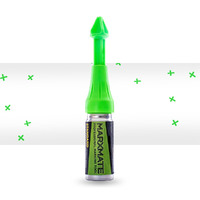
Online electrical wholesalers stock the brands trade buyers expect. Sparky Direct lists industrial crayons alongside complementary products such as electrical tape, Marxmate marking tools, and other site essentials. Buying through a trade-focused supplier gives you stock visibility and consistent pricing.
Hardware-store crayons start at low single-digit dollars per stick. Trade-grade Pica-Marker and equivalent products cost more per unit but last longer, mark cleaner, and meet recognised specifications. For occasional use, the cheap option is fine. For daily site work, the cost per mark on a trade-grade product is usually lower.
Contractors who get through dozens of crayons a week should buy by the carton. Bulk pricing reduces unit cost, and stock rotation prevents shelf-life issues since the crayons are used quickly. Pair the bulk order with related consumables such as Klein Tools hand tools and GripIt Anchors fixings to consolidate freight.
When crayons underperform, the cause is usually one of three things.
Fading on outdoor work points to UV degradation. Switch to a UV-stable formulation. Smearing usually means the crayon is too soft for the surface or the surface is contaminated. Step up to a harder grade or wipe the surface before marking.
If the mark wipes off too easily, the binder is not bonding. Causes include heavy oil, mould release agents on plastic, or moisture beneath the surface. Try a specialist formulation rated for the substrate, or wipe and dry the surface before re-marking.
Crayons that crumble in use are usually mismatched to surface roughness or stored in heat. Move to a harder grade for abrasive surfaces. Move to a cooler storage location to prevent softening. For breakage in cold conditions, switch to a low-temperature formulation. Keep complementary marking tools such as Dymo labellers on hand for jobs where a crayon mark is not the right answer.
Watch Pica classic industry/ paint marker white | PIC524-52 video
Watch Pica Marker 150-41 | TIEFLOCHMARKER Permanent BLUE Marker for Deep Holes video
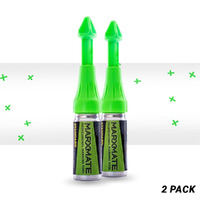
Watch Marxmate | 2 Pack | Professional Marking Tool | Up to 50mm video

Thought i would splash out and buy one of these as I always struggled to mark recessed mounting holes in lights, outlets and various other stuff. I've ruined so many sharpies and permanent markers in the past trying to pullout the tip in order to mark out mounting holes. This works surprisingly really well, definitely worth the money.
Great bit of kit! I've had a std Pica dry for a while, and wanted another, finer pencil. Saw this kit online on another website and kind of balked at the price. Then I found this and there was no question. Means i can now have multple coloured stad Pica Drys and the thinner option for more detailed work.
Pica pencil is a god sent , excellent quality and tough enough for the building site , the 0.9 mm diameter pencil is great even for marking over rough sawn timber and it's always protected inside the green casing , great tool!!
Quality products in stock • Fast Australia-wide delivery • Competitive trade pricing
Browse Industrial Marking Crayons → Get Expert Advice →Yes, they are widely used by electricians, builders, plumbers, and fabricators.
Sparky Direct supplies industrial crayons Australia-wide, offering reliable marking solutions for trade and industrial use with convenient delivery.
Industrial crayons are securely packaged and delivered via standard courier services.
Unused products are generally eligible for return according to the seller’s returns policy.
Warranty coverage varies by manufacturer and typically covers defects in materials or workmanship.
Yes, industrial crayons are typically sold individually or in packs.
Yes, selecting the right colour improves visibility and identification.
No, they require no maintenance beyond normal use.
Yes, they are commonly used for layout and reference marking on site.
They are designed to resist smudging better than standard marking tools.
Bright colour options make markings easier to see in low-light environments.
Quality crayons are designed to withstand job site conditions.
Yes, they are specifically designed to mark hard and rough materials.
Industrial crayons are marking tools designed for use on rough, oily, wet, or dusty surfaces in trade and industrial environments.
Yes, they are simple to handle and require no sharpening.
They provide clearer, more durable markings on tough surfaces where pencils may not work.
Yes, they are suitable for residential, commercial, and industrial applications.
Yes, they are commonly used in outdoor and harsh environments.
Some industrial crayons are designed to withstand higher temperatures, depending on the product type.
They are available in various colours to suit different marking and identification needs.
Marks are generally semi-permanent and can often be removed depending on the surface and conditions.
Yes, many industrial crayons are designed to mark clearly on wet, oily, or dirty surfaces.
Yes, they are commonly used by electricians for marking conduit, cable routes, and installation points.
Quality industrial crayons are manufactured to meet relevant safety and material standards for trade use.
They are used to mark materials such as metal, concrete, timber, plastic, and rubber during installation or fabrication work.