
Search Results:
Search Results:
Search Results:
Search Results:
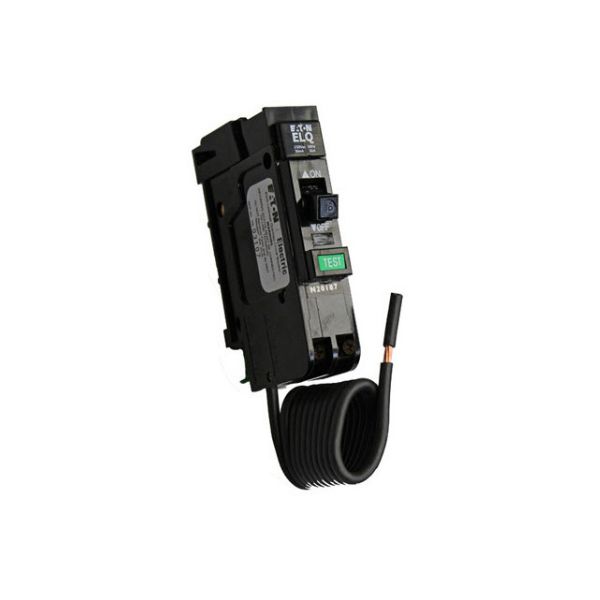
Find the best earth leakage circuit breakers here at Sparky Direct. [ Read More ]
An ELCB sits inside the switchboard and constantly monitors the current flowing in the active and neutral conductors of a circuit. In a healthy circuit, the current going out on the active equals the current returning on the neutral. When current leaks to earth through a damaged appliance or wet insulation, that balance is broken.
An ELCB is a protective switching device fitted on a final sub-circuit or whole switchboard. The original voltage-operated ELCB design has been superseded in Australia by the current-operated type, which is now commonly sold and installed as a residual current device. The function is the same: detect leakage and isolate the supply.
Inside a current-operated ELCB, both the active and neutral conductors pass through a small toroidal core. The core senses any difference between the two currents. If the difference exceeds the rated tripping value, the device opens its contacts and disconnects the circuit.
A 30 mA ELCB typically clears a fault in 30 milliseconds or less. That speed matters because the human body can tolerate only a small leakage current for a very short time before serious injury occurs. Fast disconnection limits the energy delivered through a person to a survivable level.
Standard circuit breakers only respond to overload and short circuit. They do not see leakage current flowing to earth through a person or a damp appliance. Earth leakage protection fills that gap and is now mandatory on most domestic and workplace circuits under AS/NZS 3000.
The leading cause of electrocution in homes is contact with a faulty appliance whose live parts are in contact with an exposed conductive surface. A 30 mA ELCB cuts the supply quickly enough to prevent ventricular fibrillation in most adult contact scenarios.
Long-term insulation breakdown causes small currents to flow continuously to earth. Over time, this heats joints, deteriorates surrounding material, and can ignite combustible surfaces. An ELCB shuts the circuit down before that thermal runaway becomes a fire.
A standard MCB only opens on currents that exceed its thermal or magnetic threshold, typically 10 amps or more. A leakage fault of 50 to 200 milliamps is more than enough to kill a person but well below the trip point of any MCB. Only an ELCB or RCD can see that fault and act on it.
Switchboards in Australia commonly contain a mix of MCBs, RCDs, RCBOs, and main switches. Each device has a defined role, and using the right one for each circuit is what keeps the overall installation safe and compliant.
A standard single pole circuit breaker protects wiring from overload and short circuit damage. An ELCB protects people from electric shock by detecting earth leakage. Both functions are needed, which is why modern switchboards combine them on a single circuit.
An RCD is a current-operated earth leakage device that does not include overcurrent protection. An RCBO combines an RCD and an MCB in one slim DIN-rail module. RCBOs are now the preferred choice in new installations because each circuit gets its own dedicated leakage protection without losing entire sections of the board on a single trip.
A fuse is a one-shot overcurrent device with no leakage detection. Earth fault relays are used in larger commercial and industrial systems to monitor higher-level leakage on whole boards. ELCBs handle final sub-circuit protection and are the standard for residential and most commercial work.
Earth leakage devices come in several configurations. The right type depends on the supply, the load, and how the switchboard is laid out.
Voltage-operated ELCBs detected a rise in voltage on the earth conductor. They are now obsolete in Australian installations because they relied on a low-resistance earth path that cannot be guaranteed in modern multiple earthed neutral systems.
Current-operated ELCBs are what is fitted today. They sense the imbalance between active and neutral and trip independently of the earth electrode resistance. This is the only type accepted under current AS/NZS 3000 wiring rules for new work.
Single phase ELCBs and single pole RCBOs protect 230 V circuits in domestic and small commercial work. Three phase devices, including 4 pole MCB/RCD combinations, are used on 400 V supplies feeding three phase plant or whole-board protection.
Two numbers define every ELCB: the current rating in amps and the sensitivity in milliamps. Both must match the circuit and the application.
The amp rating tells you the maximum continuous load the device can carry. Common sizes for sub-circuit protection are 10 A, 16 A, 20 A, 25 A, 32 A, 40 A, and 63 A. The rating must match the cable size and the protected load.
Sensitivity sets the leakage threshold at which the device trips. The 30 mA value is the standard for personal protection on socket outlets and lighting. The 10 mA option is used where extra protection is required, such as patient areas. The 100 mA and 300 mA options are used for fire protection and equipment grouping where personal shock protection is provided downstream.
A 30 mA device must trip within 300 milliseconds at rated leakage and within 40 milliseconds at five times rated leakage. Type A devices also detect pulsed DC leakage from electronic loads, which Type AC devices cannot see. Type A is now the standard recommendation in modern switchboards.
Earth leakage protection is required on almost every final sub-circuit in modern Australian installations. The right product depends on the building type and the loads being supplied.
Every socket outlet circuit and every lighting circuit in a home built or rewired under current rules must have 30 mA earth leakage protection. Rental properties have additional state-based testing and disclosure requirements that the property manager and electrician share.
Commercial fit-outs follow the same baseline rule plus extra protection on high-risk circuits such as outdoor signage, kitchen equipment, and cleaning sockets. Larger boards often use a mix of RCBOs on individual circuits and main switch level RCDs on grouped feeds.
Industrial work uses ELCBs on portable and outdoor power, plant feeds, and any circuit reaching equipment that may be wet, damaged, or operated by a worker holding a tool. Construction sites typically run portable RCD protection on every lead and outlet.
Some locations carry a much higher risk of electric shock because water, contact with earthed surfaces, or the use of portable tools is unavoidable. These zones get the strictest protection requirements.
Choosing an ELCB is not just about the amp rating. The sensitivity, the type, the breaking capacity, and the brand of the existing switchboard all matter.
Use 30 mA on personal protection circuits, 100 mA on grouped feeds where the downstream devices already have 30 mA protection, and 10 mA only when a specific design or standard calls for it. Mixing these levels correctly is what allows a board to be both safe and selective.
Not every DIN-rail device fits every busbar. Clipsal RCBOs are designed for Clipsal MAX9 and Resi MAX boards. Hager RCBOs suit Hager enclosures and busbars. Mixing brands on the same busbar is poor practice and can cause loose terminations.
Boards with many electronic loads can suffer cumulative leakage that pushes a single 30 mA RCD past its trip point. Using individual RCBOs per circuit, choosing Type A devices, and separating sensitive loads onto their own protection are all proven fixes.
How earth leakage protection is arranged across a switchboard determines how safe and how usable the installation is when faults occur.
An older approach uses a single main switch RCD covering the entire board. It satisfies the basic safety rule but loses every circuit on a single trip. This is no longer the preferred design for new work.
Modern boards use one RCBO per circuit. A fault on one circuit only trips that circuit, which keeps lighting on while a faulty power circuit is investigated. The cost is higher per device, but the result is far better diagnostics and continuity.
Where a downstream RCBO and an upstream RCD both protect the same path, the upstream device should be less sensitive or time-delayed so that the closest device trips first. This is called discrimination, and it stops a small fault wiping out a large board.
Earth leakage devices must be installed by a licensed electrician under AS/NZS 3000. The work also has to satisfy state-based wiring approvals and the manufacturer fitting instructions.
Section 2.6 of AS/NZS 3000 sets out where 30 mA RCD protection is required on socket outlets, lighting circuits, and fixed appliances. The rules are updated periodically, so check the current edition before designing a board.
Group circuits so that a single trip does not isolate critical loads such as fridges, alarms, and medical equipment. Label every circuit clearly. Leave room on the busbar for at least two future circuits in residential boards.
Switchboard work is licensed electrical work in every Australian state. Unlicensed installation voids insurance and is a criminal offence in most jurisdictions. Use a licensed electrician for every ELCB installation, replacement, or upgrade.
An ELCB only protects when it actually trips on a fault. Regular testing confirms the device is still working and is required under AS/NZS 3000 and AS/NZS 3760.
Every ELCB has a test button on the front. Pressing it injects a small leakage current internally and should cause the device to trip. The recommended interval is every three months in residential use and monthly in commercial settings.
A handheld ELCB tester such as a dedicated insulation and continuity tester measures the actual trip time at rated and at five times rated leakage. The result must fall within the limits set by AS/NZS 61008.
Workplaces must keep dated records of every test. Records support insurance claims, satisfy WHS audits, and show that the duty of care to workers and visitors is being met.
An ELCB that trips repeatedly is doing its job. The fault is somewhere on the protected circuit, and finding it is part of the diagnostic process.
Water in junction boxes, outdoor sockets, and submerged cable joints is the single most common cause of leakage trips. Damaged or perished cable insulation behind walls is the next most common.
Older fridges, kettles, and pool pumps often develop small leakage currents as their internal insulation ages. Unplugging suspect appliances one by one and watching whether the trips stop is a quick way to identify the culprit.
For repeat trips, an electrician will use an insulation resistance tester to check each circuit conductor against earth. Readings below one megohm usually point to the faulty section of cable or accessory.
Nuisance tripping happens when an ELCB trips even though no single appliance is genuinely faulty. The cause is usually accumulated small leakage from many electronic devices on the same protected group.
Modern electronics each contribute a few milliamps of natural leakage to earth through their EMC filters. Put enough of them on one 30 mA RCD and the total exceeds the trip threshold even though every device is working correctly.
Splitting kitchen, office, and entertainment loads across separate RCBOs reduces the number of leakage sources on each device and prevents accumulation trips.
Type A RCBOs detect both AC and pulsed DC leakage, which makes them less prone to phantom trips on inverter and switching power supply loads. Type AC devices are now considered legacy technology for new work.
ELCBs are mechanical devices and they do wear out. A regular test schedule is the only reliable way to confirm a device is still trip-ready.
Stiff toggle action, scorch marks on terminals, audible buzzing under load, and failure to reset after a known fault are all warning signs. A device showing any of these symptoms should be replaced rather than reset.
An ELCB that does not trip on its push-button test or fails a timed trip test must be replaced immediately. Do not put the circuit back in service with a known faulty protection device.
Manufacturers typically rate ELCBs for around twenty years in normal use. When replacing an older device, take the opportunity to upgrade from Type AC to Type A and to move from a board-wide RCD to per-circuit RCBOs.
The reliability of an ELCB depends on the quality of the device, the quality of the installation, and the environment it sits in.
Trip times can drift as contacts age and lubricants harden. Annual timed testing in commercial settings catches drift early. Devices that fail the timed test should be retired even if they still trip on the push-button.
Loose terminations cause local heating, which damages the plastic body and changes the trip characteristic. Torque every termination to the manufacturer specification and recheck after the first three months of service.
Combine quality devices, correct installation, and regular testing. That combination keeps an ELCB performing the way it did on day one for the full service life of the switchboard.
Workplaces have specific duties under both AS/NZS 3000 and the Work Health and Safety regulations adopted in each state.
Construction sites must use 30 mA RCDs on every portable tool circuit and every site shed socket. Many sites also use individual portable RCDs at the lead end as a second layer of protection.
Every employer has a duty to provide a safe electrical environment. Functional ELCB protection is part of that duty, and so is keeping records that show the protection is being tested and maintained.
AS/NZS 3760 sets the testing intervals and procedures for in-service portable equipment, including portable RCDs. Records must show the test date, the result, and the identity of the competent person who carried out the test.
The Australian market has a clear split between trade-grade brands suited to long service in residential and commercial boards and budget devices that often skip Type A detection or have lower breaking capacity.
Buying from a specialist electrical wholesaler such as Sparky Direct gives access to genuine Hager, Clipsal, NHP, and Eaton stock with full warranty backing. Stock is shipped Australia-wide direct from a trade warehouse.
Budget ELCBs may meet basic AS/NZS approvals but often use Type AC detection only and shorter-life mechanisms. Trade-grade devices from Hager, Clipsal, NHP, Eaton, and Legrand are the right choice for any installation that has to last.
Sparky Direct supports contractors with trade pricing on bulk RCBO and RCD orders. Contact the trade desk for project pricing on switchboard-quantity orders.
Most ELCB problems fall into one of three patterns. Working through them systematically saves the cost of unnecessary device swaps.
Unplug everything on the affected circuit and reset the device. Plug appliances back in one at a time. The trip will return when the faulty appliance is reconnected.
If the device will not reset with all loads disconnected, the fault is in the fixed wiring. An insulation resistance test isolates the section that has failed.
Common leakage fault sources include water in outdoor junction boxes, perished oven element insulation, and damaged flexible cords on garden equipment. Check the most exposed parts of the circuit first.
Club Clipsal is Australia's largest electrician community offering trade rewards, business support, and exclusive benefits. When you nominate Sparky Direct as your preferred wholesaler, we automatically apply your Clipsal spend points to your Club Clipsal account daily.
Entry-level offering coaching, mentoring, and training discounts
Unlock exclusive industry tools and networking events
Access Toyota fleet offers and business software discounts
Maximum benefits, including VIP experiences and rewards
1. Sign Up: Create your Club Clipsal account at clipsal.com/club-clipsal or via the iCat mobile app
2. Nominate Sparky Direct: Select Sparky Direct from the wholesaler dropdown menu in your profile
3. Add Email: Enter your Sparky Direct account email address in the membership number field
4. Start Earning: Every dollar spent on Clipsal products earns points automatically
Redeem points from the rewards store, including gift cards, tools, and experiences. Access business summits, product training, and industry networking events. Receive early access to new product launches and special promotions. Connect with fellow electricians via the Club Clipsal community app.
Watch Major Tech MT310 | Socket ELCB Tester video
Watch Kyoritsu 5406A | Digital RCD ELCB Tester With Auto Ramp Function video
Watch HAGER ADA916T | 16 Amp 2 Pole 6kA | 30mA RCD/MCB RCBO video

Wanted to add another power circuit to my full distribution board. The NLS30784 RCBO helped achieved this as I could remove the 3ph RCD and 3 x 16amp CB taken up 7 spaces and replaced them all with 4 x NLS30794 RCBOs. Now giving me the extra circuit plus space for 3 more if ever needed. The extra bonus also is now each circuit has its own RCD, where before you would loss all power circuit with a single RCD trip. During installation I found the NLS30794 having the bottom offset terminal inputs are a good option for wiring multiple devices using a busbar comb, However I didn't require to use this option. If required in the future I will definitely use this device again.
The Fluke tester is an excellent tool for anyone serious about electrical safety. It's incredibly easy to use - just plug it in, and within seconds, it confirms if the wiring is correct or alerts you to any issues. The beeper feature adds an extra layer of confidence, especially when you're quickly testing multiple sockets. The design feels sturdy, and it's compact enough to fit into any toolbox. It gave me peace of mind knowing all my sockets are safe. Highly recommend for both professionals and homeowners looking for a reliable socket tester.
Outstanding quality product, Super fast delivery, Perfect fitment. I researched before I ordered this product - the service and ease of ordering on the Sparky Direct site was one of the best I've experienced. The products were in stock, exactly as described, and a premium quality product that fitted... and they arrived ahead of time too! The overall customer experience was excellent. Sparky Direct do what they say and outshine others who pale by comparison. I couldn't be happier and would highly recommend to all.
Trade-grade RCDs and RCBOs • Hager, Clipsal, NHP, Eaton stock • Fast Australia-wide delivery • Trade pricing
Browse Earth Leakage Circuit Breakers → Get Expert Advice →Yes, they are a standard safety device in modern electrical installations.
Sparky Direct supplies earth leakage circuit breakers Australia-wide, offering reliable electrical safety solutions with convenient delivery.
They are securely packaged and delivered via standard courier services.
Unused items may be returned if they are in original condition, in line with Sparky Direct’s returns policy.
Warranty coverage varies by manufacturer and typically covers defects in materials or workmanship.
Yes, earth leakage circuit breakers are typically sold as individual devices.
Yes, correct selection ensures reliable protection and compliance.
Yes, upgrades are commonly carried out to improve safety.
Yes, they are particularly important in areas where moisture is present.
They should be tested periodically using the test button to ensure correct operation.
Yes, they can usually be reset once the cause of the trip is resolved.
Occasional tripping can indicate a fault that should be checked by a licensed electrician.
It may trip due to faulty appliances, damaged wiring, or moisture issues.
An earth leakage circuit breaker is a safety device designed to disconnect power when it detects current leaking to earth.
Yes, it significantly improves electrical safety in homes.
It provides an added layer of protection against electric shock.
It disconnects power very quickly when leakage is detected to minimise risk.
Some models provide earth leakage protection only, while others combine multiple protection functions.
They are available in various current ratings and sensitivity levels to suit different applications.
Yes, they are widely used in commercial and industrial electrical systems.
They are commonly required for safety protection in modern residential electrical systems.
They are typically installed in switchboards or distribution boards to protect electrical circuits.
Quality devices are manufactured to meet relevant AS/NZS electrical and safety standards when installed correctly.
Earth leakage circuit breakers perform the same function as RCDs, although terminology may vary.
It helps protect people and property by reducing the risk of electric shock and electrical fires.