
Great Price
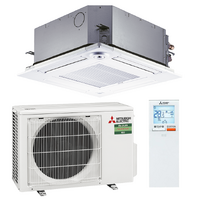
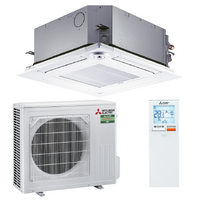
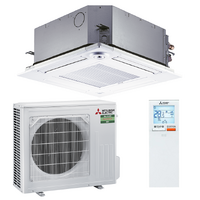
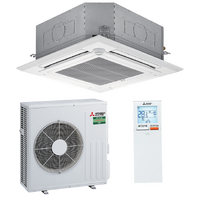
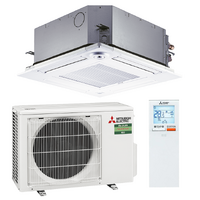
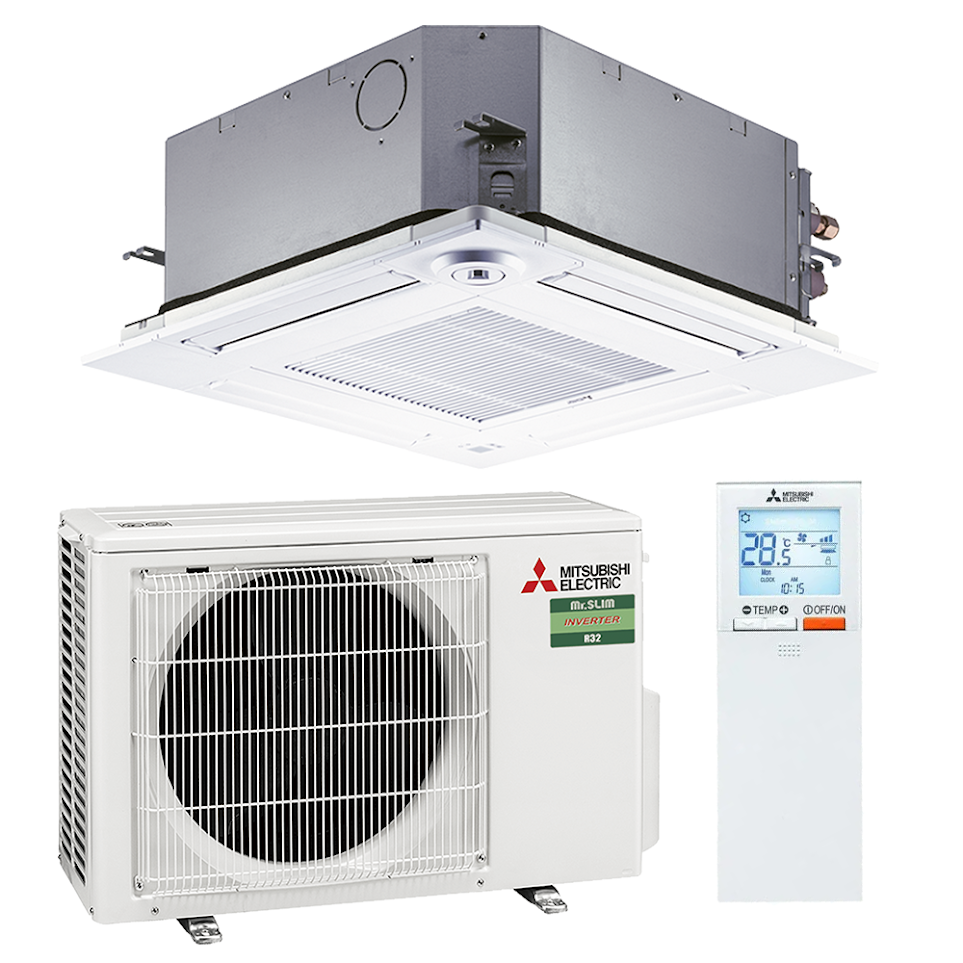
Mitsubishi Electric Air Conditioner | 2.5KW Compact Cassette Split System | 1 Phase | SLZM25VALKIT
$1,751.79
$1,592.54 ex. GST
Search Results:
Search Results:
Find the best Cassette Air Conditioner here at Sparky Direct. [ Read More ]
A cassette air conditioner is a ducted-style indoor unit designed to sit inside a ceiling void. The body of the unit hides above the ceiling line, and a square or rectangular face panel sits flush with the ceiling tiles or plasterboard. The result is a clean, low-profile installation that distributes air across the room without occupying wall or floor space.
Cassette units pair with an outdoor condenser, which is mounted at ground level or on a wall bracket outside the building. Refrigerant pipework, control cabling, and a condensate drain run from the indoor unit through the ceiling void to the outdoor condenser.
The principle is the same as any reverse-cycle split system. Refrigerant cycles between the indoor and outdoor units, absorbing heat from the room in cooling mode and releasing it outside. In heating mode the cycle reverses. The cassette unit's fan draws warm room air in through a central return grille, passes it across the cooled (or heated) coil, and discharges it outward through the louvre vents in the face panel.
What sets cassette systems apart is the air distribution pattern. Where a wall-mounted head pushes air in a single direction, a four-way cassette throws conditioned air in all four directions simultaneously, creating uniform coverage across the floor area below.
A cassette installation involves more components than a wall-mounted split. The main parts are the indoor unit body, the decorative face panel (often sold separately), the outdoor condenser, copper refrigerant pair coil, control cable, and condensate drainage. Most cassette units also need a condensate pump because the unit sits above ceiling level and gravity drainage is rarely an option.
The face panel is typically white or off-white and sized to fit a standard suspended ceiling grid. Many panels include integrated motion sensors, infrared receivers for the remote, and louvre motors for swing control.
A wall-mounted split is the cheapest and easiest split system to install. It sits at eye level and pushes air in one direction, which can leave dead zones in larger rooms. Portable units sit on the floor, vent through a window hose, and offer poor efficiency and noisy operation. A cassette system removes the visual intrusion of both options and delivers better air coverage. The trade-off is higher upfront cost and the need for a suitable ceiling void.
Cassette systems are the default choice for many commercial fitouts. Offices benefit from the even airflow because workstations sit anywhere across an open floor plan. Retail spaces use cassettes because the flat panel does not interrupt sightlines or display lighting. Medical rooms, dental surgeries, and consulting rooms favour cassettes for the same reason: the unit stays out of the way and the air distribution is gentle and uniform.
In Australian homes, cassette systems appear most often in new builds and major renovations where the ceiling can be designed around the unit. They suit large open-plan living areas, master suites, and home offices where homeowners want climate control without the visual presence of a wall head.
Open-plan rooms are difficult for wall-mounted splits to cool evenly. The single-direction airflow creates a strong stream near the unit and weak coverage in distant corners. A four-way cassette mounted centrally in the ceiling solves this by throwing air outward in all directions, so a 60 to 80 square metre living and kitchen zone gets consistent temperature across the whole space.
Cassette panels come in three main configurations. A four-way unit discharges air on all four sides and suits central ceiling positions in square or open-plan rooms. A three-way unit blocks one outlet and suits installations near a wall, where airflow against the wall would be wasted. A two-way unit discharges from opposite sides and works well in rectangular rooms or corridors.
A single-split cassette pairs one indoor unit with one outdoor condenser. This is the simplest configuration and suits a single zone. A multi-split system runs multiple indoor units (which can mix cassette, wall-mounted, and ducted heads) from one larger outdoor unit, reducing the number of condensers on the outside of the building. Multi-split is popular in homes with several rooms to condition and in commercial fitouts with multiple zones.
Residential cassette systems usually fall in the 2.5 kW to 9 kW range and use single-phase power. Commercial cassettes run larger, often 7 kW to 14 kW per indoor unit, and may be three-phase. Commercial systems also support more sophisticated controls, including BMS (building management system) integration and centralised scheduling.
Entry-level cassette units typically come from Haier, Rinnai, and Mitsubishi Heavy Industries. These brands offer reverse-cycle inverter performance at lower price points than the premium tier. A 5 kW four-way cassette in this segment generally lands well below the equivalent Daikin or Mitsubishi Electric unit.
Sizing a cassette system is the single most important decision in the buying process. An undersized unit will run flat-out and never reach setpoint. An oversized unit will short-cycle, waste energy, and fail to dehumidify properly. The right capacity depends on floor area, ceiling height, insulation, window orientation, and local climate.
A common rule of thumb in Australia is 0.15 kW of cooling capacity per square metre of floor area, adjusted for ceiling height and exposure. A standard 30 square metre room with 2.4 metre ceilings needs roughly 4.5 kW. A west-facing room with large glass windows needs more. A well-insulated south-facing room needs less.
| Room Size (sqm) | Standard Capacity (kW) | Hot/Exposed Capacity (kW) |
|---|---|---|
| 15 to 25 | 2.5 to 3.5 | 3.5 to 5.0 |
| 25 to 40 | 3.5 to 5.0 | 5.0 to 7.0 |
| 40 to 60 | 5.0 to 7.1 | 7.1 to 9.0 |
| 60 to 80 | 7.1 to 9.0 | 9.0 to 12.5 |
| 80 to 100 | 9.0 to 12.5 | 12.5 to 14.0 |
Standard 2.4 metre ceilings work well with most cassette systems. If ceilings are higher than 2.7 metres, capacity should be increased proportionally because the unit has more air volume to condition. Cathedral or raked ceilings are challenging for cassettes because the warm air rises away from the return grille.
Brisbane, the Sunshine Coast, and tropical North Queensland sit in climate zones with high summer humidity and long cooling seasons. Capacity calculations for these regions should sit at the upper end of the standard range. Coastal exposure also means salt air degrades outdoor units faster, so a salt-resistant condenser coating is worth specifying.
The most common mistake is buying on price rather than load. A 5 kW unit in a 60 square metre living area will struggle on a 35-degree day. The second most common mistake is buying based on the room the unit sits in, ignoring adjacent open spaces that the air will spill into. Calculate for the full conditioned volume.
A four-way cassette delivers what manufacturers describe as 360-degree airflow. The four louvre outlets push conditioned air horizontally across the ceiling, where it spreads outward and gradually descends into the occupied zone. This pattern avoids the cold-draft sensation that wall-mounted units create when they blow air directly toward seated occupants.
Most cassette units include motorised louvres that swing automatically through a range of angles. This spreads the airflow across a wider arc and prevents temperature stratification in any single zone. Some premium units (Daikin Streamer, Mitsubishi Electric AE Series) include occupancy sensors that direct airflow away from people to prevent discomfort.
The practical airflow reach of a four-way cassette is around 6 to 8 metres in each direction from the unit centre, depending on capacity and ceiling height. This means a single 9 kW cassette can effectively cover a 12 by 12 metre open zone. Larger spaces benefit from multiple cassettes spaced across the ceiling.
Indoor sound levels for a typical cassette unit sit between 28 dB(A) at low fan and 38 dB(A) at high fan. This is quieter than most wall-mounted splits because the fan and coil sit above the ceiling, with the panel acting as a baffle. The result is a system that can run unnoticed in offices, bedrooms, and consulting rooms.
Australian air conditioners carry Energy Rating Labels showing annual energy consumption and a star rating from one to ten for both cooling and heating. The EER (Energy Efficiency Ratio) measures cooling output per watt of input. The COP (Coefficient of Performance) measures the same for heating. Higher numbers mean lower running costs for the same output.
Almost every cassette system sold in Australia today is an inverter unit. Inverter compressors vary their speed to match the cooling load, ramping up to reach setpoint quickly and then settling to a low steady state. Fixed-speed units cycle on and off at full power, using more energy and creating greater temperature swings. If a unit is advertised without the word "inverter," check the spec sheet carefully.
The most energy-efficient cassette systems on the Australian market typically come from Daikin and Mitsubishi Electric. Their premium series achieve five-star plus ratings in both cooling and heating modes. Mid-tier brands like Fujitsu and Mitsubishi Heavy Industries sit in the four-star range for similar capacities.
The biggest running cost savings come from controlling when and where the system runs. Multi-split cassette systems allow each indoor unit to run independently, so unused rooms stay off. Programmable timers, Wi-Fi control, and BMS integration let users schedule cooling around occupancy patterns. A typical office can cut consumption by 30 percent or more by scheduling the system to start 30 minutes before opening rather than running overnight.
Wi-Fi Control: Many cassette systems can be retrofitted with Wi-Fi adaptors for smartphone control and energy monitoring. Daikin, Fujitsu, and Mitsubishi all offer manufacturer adaptors that integrate with their respective apps.
Cassette units need a minimum ceiling void depth to fit the unit body. Compact cassettes (around 570 by 570 mm panel) typically need 250 to 280 mm of clear void above the ceiling. Standard 4-way cassettes (around 840 by 840 mm panel) need 280 to 320 mm. The void must also be clear of trusses, beams, ducts, and pipework directly above the install point.
Copper refrigerant pair coil runs from the indoor unit through the ceiling void, down a wall cavity, and out to the outdoor condenser. Pair coil sizing depends on the system capacity and the run length. Sparky Direct stocks air conditioning pair coil in standard diameters and lengths.
The outdoor unit must sit on a level base, clear of obstructions, with adequate airflow around all four sides. Air conditioning slabs or wall brackets provide a stable, vibration-isolated mounting platform.
Cassette units sit above the ceiling, so condensate water cannot drain by gravity in most installations. Built-in condensate pumps lift the water to the nearest drain point, often a stormwater downpipe or a connected drain stack. The pump must be sized for the lift height (typically up to 750 mm) and the run length.
Installation costs vary widely. A straightforward residential cassette install with a short pipe run and easy outdoor unit placement typically costs $1,200 to $2,500 in labour. Commercial installs with long pipe runs, multi-split configurations, or BMS integration can run several thousand dollars per indoor unit. Get at least three written quotes before committing.
Air conditioning installation in Australia requires both an electrical licence (for the wiring) and a refrigerant handling licence (ARC tick for the gas work). DIY installation is illegal and voids the manufacturer's warranty. The work must comply with AS/NZS 3000:2018 (Wiring Rules) and AS/NZS 5149 (refrigeration safety standards).
Licensed installers can source installation kits, flaring kits, copper pipe benders, vacuum pumps, and gauges from the air conditioning tools range.
A ducted system uses a single large indoor unit hidden in the ceiling void, with insulated ducts running to multiple ceiling diffusers. Ducted systems condition the whole house from one unit and offer the most discreet finish (only small grilles visible). They cost more to install, need significant ceiling space for ducting, and zoning requires motorised dampers. Cassette systems condition individual rooms or zones with one unit per zone, cost less per zone, and don't need ductwork.
| Feature | Cassette | Wall-Mounted Split |
|---|---|---|
| Visible footprint | Flat ceiling panel | Wall-mounted head |
| Airflow direction | 2-way, 3-way, or 4-way | Single direction |
| Coverage in open plan | Excellent | Limited reach |
| Install complexity | High (ceiling void required) | Low (wall and outside) |
| Typical cost | Higher | Lower |
| Best for | Open-plan, commercial, premium homes | Bedrooms, smaller rooms |
Choose cassette when the room is open-plan and larger than 25 square metres, when wall space is limited or unwanted, when aesthetics matter, or when multiple zones need conditioning without a full ducted install. Choose wall-mounted or window units for smaller bedrooms, rentals, or budget-constrained installs.
Cassettes need a ceiling void, which rules out cathedral ceilings and many older homes with tight roof spaces. They cost more to buy and install than wall-mounted equivalents. Servicing requires working at height. And because the unit is hidden, leaks or faults can sometimes go undetected until significant damage has occurred.
The premium tier of the cassette market is dominated by Japanese manufacturers. Daikin leads on energy efficiency and refrigerant innovation. Mitsubishi Electric is known for build quality and quiet operation. Fujitsu offers strong mid-tier value with the Lifestyle range. Panasonic competes on smart features and connectivity. Each has cassette models suited to residential and small commercial applications.
Several models stand out in the current Australian market. The Daikin FCAG Round Flow Cassette leads on premium efficiency. The Mitsubishi Electric SLZ Compact Cassette suits smaller residential rooms. The Fujitsu AUTG Compact Cassette is a solid mid-range performer. The Mitsubishi Heavy Industries FDT Series is a commercial workhorse. Haier and Rinnai compete on price for budget-conscious buyers.
Standard manufacturer warranties run from 5 to 7 years on parts and labour, with some premium brands offering up to 10 years on the compressor. Service network coverage matters more than the headline warranty figure. Daikin, Mitsubishi Electric, and Fujitsu have nationwide service networks with parts available in most regional centres. Lesser-known brands may have limited service options outside metro areas.
Most premium cassette systems support BMS integration via BACnet or Modbus, which is essential for commercial installations. For residential use, Wi-Fi adaptors enable smartphone control and integration with home automation platforms like Google Home and Apple HomeKit.
The best value in the cassette market sits in the mid-tier. Brands like Fujitsu, Mitsubishi Heavy Industries, and Haier deliver strong build quality and warranty cover at lower prices than the premium Daikin and Mitsubishi Electric ranges. For a typical 5 to 7 kW residential cassette, the mid-tier saving versus premium can be 20 to 35 percent.
Affordable does not mean compromised. A Haier or Rinnai 5 kW four-way cassette delivers reliable inverter performance and reverse-cycle heating at a price point accessible to most renovation budgets. These units suit secondary living areas, granny flats, home offices, and small commercial fitouts where premium brand cachet is not a priority.
Trade wholesalers consistently undercut retail electrical chains and big-box retailers on cassette systems. The supply chain runs through wholesale distribution to electricians and refrigeration mechanics. Buying from a trade wholesaler accesses that pricing tier directly.
Online ordering removes the showroom markup and gives access to the full national stock pool rather than what one local store happens to carry. Sparky Direct ships cassette units, panels, and accessories Australia-wide, with pickup also available from the Brisbane warehouse.
Retail electrical and big-box stores carry a limited range, often only one or two brands, and price for the consumer market. Trade suppliers stock multiple brands across multiple capacities, with volume discounts and faster turnaround on special orders. For licensed installers and serious homeowners, trade supply is the standard route.
The single most important maintenance task is cleaning the return air filter. Cassette units have an easily accessible filter behind the central return grille, which can be removed, vacuumed, and washed in a sink. Doing this every 4 to 8 weeks in heavy use, or every 3 months in light use, keeps efficiency high and prevents the indoor coil from clogging.
Annual professional servicing is recommended for any cassette system, and is often required to maintain warranty cover. A service includes coil cleaning, condensate pump inspection, refrigerant pressure check, electrical connection check, and operational testing. The condensate pump and drain pan are the most common failure points and benefit from yearly inspection. Air conditioning maintenance supplies and accessories support both DIY filter cleaning and professional service work.
A well-installed and well-maintained cassette system will run reliably for 12 to 18 years. Beyond that point, efficiency drops as compressor performance degrades, refrigerants may become obsolete (R22 systems are no longer serviceable in Australia), and parts availability becomes a problem. Plan replacement at the 15-year mark for commercial systems and 18 years for low-use residential.
Start with the room. Measure the floor area and ceiling height. Note the orientation, glazing, and insulation. Decide whether a single-split or multi-split arrangement makes more sense given the building layout. Then match capacity, panel configuration (2-way, 3-way, or 4-way), and brand to the application and budget.
Commercial buyers should prioritise BMS compatibility, manufacturer service network coverage, parts availability, and zoning flexibility. Specify systems from brands with strong commercial track records (Daikin, Mitsubishi Electric, Mitsubishi Heavy Industries) and budget for annual servicing as a fixed operational cost.
Residential buyers should focus on energy rating (running costs add up over a 15-year life), noise levels (especially in bedrooms), warranty terms, and aesthetics of the panel finish. A 5 kW four-way cassette in a main living area is a common starting point for renovations.
Always use licensed installers. Confirm the installer holds both an electrical licence and an ARC refrigerant handling licence. Get multiple quotes, in writing, that itemise the unit, the installation labour, the materials (pair coil, drain pump, brackets), and the commissioning. A clear, itemised quote makes comparison straightforward and prevents scope disputes later.
Watch VALUE VET-19Li | HVAC Flaring Tool VET-19Li video
Watch Polybender | 1/2 Internal Copper Tube Bender | Red video
Watch Polybender | 3/8 Internal Copper Tube Bender | Yellow video

Great way to control my Fujitsu aircon with my phone from anywhere. Easy to instal and setup. I can be lazy and not have to go upstairs to turn on or off. Far easier control interface on the phone than the remote which came with the ac, especially for any timing functions. Sparky Direct has the best price when compared to all other sources.
Right on Christmas our old Mitsubishi split system died after 20 years. We purchased our new one from Sparky Direct. It is so quiet and cooling much better than the previous one. The guys at Sparky Direct were so helpful, their warehouse was very clean and organised . First time purchasing and I will be using them again Thanks
Recent installation of 7.1kw unit & totally stoked with both product & provider.Took larger output option with no regrets. Living area heats to an acceptable temp. in half hour time frame.Whisper quiet & unobtrusive presence makes the total package a welcome addition to domestic bliss. Can recommend without reservation.
Quality products in stock • Fast Australia-wide delivery • Competitive trade pricing
Browse Cassette Air Conditioners → Get Expert Advice →Yes. Their multi-directional airflow helps distribute air evenly across the room, reducing hot and cold spots.
Cassette air conditioners are available from Sparky Direct, offering access to quality systems.
Delivery options depend on the supplier and location, with availability across metropolitan and regional Australia.
Yes, subject to building approvals, ceiling access, and assessment by licensed professionals.
Yes. Cassette air conditioners typically include a manufacturer’s warranty when installed and operated in accordance with Australian guidelines.
Consider room size, ceiling space, required capacity, energy efficiency, and access for licensed installation.
Yes. Reverse-cycle cassette air conditioners provide effective heating and cooling throughout the year.
Energy use depends on system size, efficiency rating, thermostat settings, and usage patterns.
Yes. Filters should be checked and cleaned periodically to maintain airflow and indoor air quality.
Routine servicing is generally recommended every 12 months to maintain efficiency and reliable operation.
Yes, provided there is adequate ceiling space and access for installation, which should be assessed by a qualified installer.
Yes. They are suitable for homes with sufficient ceiling space, particularly for large open-plan living areas.
Most cassette air conditioners are operated via wall controllers or remote controls with clear temperature and mode settings.
A cassette air conditioner is a split system where the indoor unit is recessed into the ceiling, distributing air evenly in multiple directions while keeping the unit discreet.
Yes. Cassette air conditioners are designed for low noise operation, making them suitable for workplaces and living areas.
Yes. Only the flat ceiling grille is visible, making cassette air conditioners a popular choice for clean, modern interiors.
Yes. Installation must be completed by licensed refrigeration and electrical professionals to ensure safety, performance, and regulatory compliance.
Cassette air conditioners are typically designed to condition one defined space, with zoning dependent on overall system design and layout.
Many modern cassette air conditioners use R32 refrigerant, which has a lower global warming potential compared to older refrigerants.
Electrical requirements vary by system size, with many units using single-phase power and larger systems requiring specific electrical assessment by a licensed electrician.
Yes. Most cassette air conditioners are reverse-cycle systems, providing cooling in summer and heating in winter.
Adequate ceiling cavity space is required to house the indoor unit and services, with exact requirements varying by model and installation design.
Energy efficiency depends on the model and capacity, with many cassette air conditioners offering competitive energy ratings under Australian energy labelling requirements.
Cassette air conditioners supplied in Australia are designed to meet applicable AS/NZS electrical and safety standards when installed by licensed professionals.
Cassette air conditioners are commonly used in offices, retail spaces, restaurants, and larger residential rooms with suitable ceiling space.