
Lowest Price
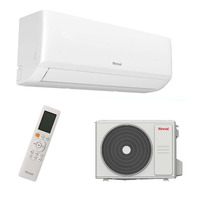
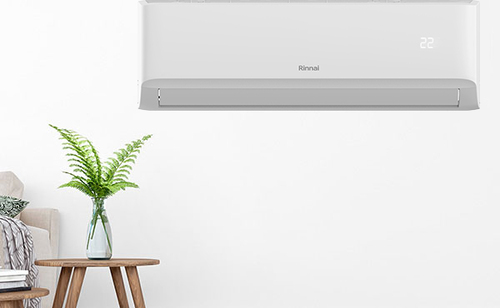
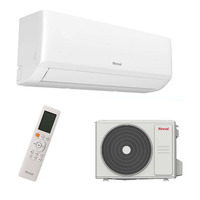
Rinnai HSNRP26B | P Series | 2.6kW Reverse Cycle Split System | Gold Guard
$820.63
$746.03 ex. GST
Search Results:
Search Results:
The Rinnai P Series is the brand's mainstream inverter split system range, sitting between the entry-level Q Series and the premium T Series. It is aimed at homeowners replacing older single-room units, builders fitting out new homes room by room, and small business operators cooling shops, offices, and back-of-house spaces. The range covers most domestic capacity needs without stepping up to ducted or multi-head systems.
A split system moves heat between two units using a refrigerant loop. The indoor head pulls warm room air across a cold evaporator coil, transferring heat into the refrigerant. That refrigerant carries the heat outside to the condenser, where a fan dumps it into the open air. In heating mode the cycle reverses, pulling heat from outside and releasing it indoors. The compressor in the outdoor unit drives the whole process.
The indoor head holds the evaporator coil, fan, filters, and electronics. The outdoor unit houses the compressor, condenser coil, and condenser fan. Insulated copper pair coil and a control cable run between the two, carrying refrigerant and signals. A condensate drain line carries water from the indoor coil to a safe discharge point. Each component must be sized and installed to match the others.
Split systems are quieter than window and portable units because the noisy compressor sits outside. They cool larger areas more efficiently, look tidier inside, and run on lower energy for the same output. Window units are cheaper to install but block a window, while portable units use a duct hose and lose efficiency through warm air infiltration. For most Australian homes, a split system is the better long-term choice.
Rinnai is a Japanese manufacturer with a long Australian presence in gas appliances, hot water, and heating. The brand expanded into split system air conditioning to offer a familiar name across multiple home comfort categories. Rinnai air conditioners are backed by an Australian warranty network and are stocked widely through electrical wholesalers.
The P Series adds Wi-Fi connectivity as standard, includes Gold Guard fin coating on the outdoor coil for corrosion resistance, and uses R32 refrigerant in newer models for lower environmental impact. The product name often appears as "P Series Gold Guard" on packaging. These features push the P Series above basic budget units while keeping pricing below premium imports.
Rinnai competes with Daikin, Fujitsu, Mitsubishi Electric, and Haier in the Australian split system market. The P Series typically lands at a lower price than equivalent Daikin or Mitsubishi units while offering similar inverter technology and Wi-Fi control. Daikin holds a stronger reputation for ultra-quiet operation and ducted ranges, but for standard wall-mounted use the P Series performs well.
The P Series suits bedrooms, living rooms, home offices, granny flats, retail shops, and small offices. It works well as a whole-home solution when sized correctly per room. For larger open-plan areas above 60 square metres, the upper capacity models handle the load. The range is not designed for industrial spaces or 24/7 server room cooling.
The P Series range spans roughly 2.5kW to 8.0kW cooling capacity. Common model codes start with HSNRP, followed by the capacity number. For example, HSNRP35B is the 3.5kW model and HSNRP80B is the 8.0kW model. All units in the range are reverse cycle, so each delivers both cooling and heating.
For small rooms up to about 20 square metres, the 2.5kW and 3.5kW P Series models are the right starting point. These suit standard bedrooms, study nooks, and small home offices. Smaller capacity units run more efficiently in the right size space and avoid the short-cycling that comes from oversizing.
Mid-range capacities of 5.0kW to 6.0kW handle medium living rooms, larger bedrooms, and rumpus rooms between 25 and 45 square metres. This is the sweet spot for most family homes where one unit covers a single primary living space. The mid-range models balance upfront cost against capacity headroom for hot summer days.
The 7.1kW and 8.0kW P Series models are sized for open plan kitchen, dining, and living combinations of 50 to 80 square metres. They are also used in shop fronts and small commercial offices. For spaces above this range, a multi-head system or ducted setup usually performs better than a single oversized split.
Beyond the P Series, Rinnai also produces the entry-level Q Series and the premium Rinnai T Series. The Q Series strips back features for budget builds. The T Series adds higher star ratings, quieter operation, and extended warranty terms. The P Series sits in the middle as the most versatile choice for typical residential use.
Sizing starts with the room area in square metres, then adjusts for ceiling height, window orientation, insulation level, and climate zone. A unit too small struggles to cool on hot days and runs constantly. A unit too large cools quickly but cycles on and off, which wastes energy and fails to remove humidity. Match capacity to the actual room, not to a generic rule of thumb.
A common starting estimate is 0.13 to 0.15kW per square metre for cooling in an average insulated room. A 20 square metre bedroom needs roughly 2.6 to 3.0kW, which lines up with a 3.5kW model after climate adjustments. North-facing rooms with large windows or poor insulation push this higher. Use the estimate as a guide, then refine for the specific room.
Bedrooms used mainly at night need less capacity than west-facing living rooms used through the afternoon heat. Kitchens add heat from cooking, so bump capacity up. Rooms with high ceilings need more output to move warm air out of the upper space. A home office with multiple computers and a south-facing window may need less than the area suggests.
Queensland sits in a hot humid climate zone, which means cooling load is the dominant sizing factor. Add 10 to 20 percent capacity above the baseline estimate for coastal Queensland and tropical north regions. Brisbane homes typically need slightly more capacity than equivalent rooms in Sydney or Melbourne. Humidity removal is a real cooling load that smaller units can struggle with.
The most common mistake is oversizing on the assumption that bigger is always better. An oversized unit reaches set temperature quickly, then shuts off before it has dehumidified the air, leaving the room cool but clammy. The second common mistake is undersizing for west-facing rooms or poorly insulated spaces. Always factor in real conditions, not idealised ones.
An inverter compressor changes speed instead of switching fully on or off. This holds room temperature steady while drawing less power, especially during the long stretches of light load between extreme demands. Inverter units typically use 30 to 40 percent less energy than older fixed-speed equivalents over a typical year.
The P Series offers several fan speeds plus auto, which lets the unit set the speed based on the gap between current and target temperature. Vertical and horizontal louvre control directs airflow away from beds, desks, or seating positions. Wide angle swing covers larger rooms more evenly.
Cool and Heat are the two primary modes. Dry mode reduces humidity without lowering temperature significantly, useful for muggy days when full cooling is not needed. Fan mode just circulates air without conditioning it. Auto switches between cool and heat based on the room temperature relative to the setpoint.
The smaller P Series models run between 22 and 30 dB on the lowest fan speed, which is quiet enough for bedroom use. The larger 7.1kW and 8.0kW units are noisier on high speed, but the inverter holds them at low speed once the room reaches the setpoint. Outdoor unit placement away from neighbouring bedroom windows is important during installation planning.
P Series Wi-Fi is built in, not an add-on dongle. The Rinnai app supports scheduling, mode changes, and temperature adjustments from anywhere with internet. Compatibility with Google Assistant and Amazon Alexa allows voice control. Setup runs through the app on the home Wi-Fi network during commissioning.
All P Series models meet Australian Minimum Energy Performance Standards (MEPS) and carry the Energy Rating Label with cooling and heating star ratings. Higher star ratings reduce running costs over the unit's lifetime. The label also shows annual estimated energy use, which is a more useful comparison than star count alone.
A 3.5kW P Series unit running 8 hours a day in Queensland summer might use around 600 to 900 kWh per cooling season, depending on settings and weather. At an electricity rate of 30 cents per kWh, that works out to roughly $180 to $270 per season for one room. Larger units and longer running hours scale the cost up proportionally.
Non-inverter units cycle the compressor fully on, then fully off, which wastes energy on each restart and produces noticeable temperature swings. Inverter units modulate compressor speed, which is smoother and more efficient. Over a 10 year life, the energy savings from an inverter typically more than cover the price difference at purchase.
Setting cooling to 24 degrees instead of 21 degrees can cut running costs by 20 to 30 percent. Closing doors to unconditioned rooms reduces the load. Using the timer to switch off during cool overnight hours avoids running the unit when natural ventilation would do the job. Cleaning filters monthly keeps efficiency up.
Licensed Trade Required: Split system installation must be carried out by a licensed electrician for the electrical connection and a refrigerant handling licence holder for the refrigerant work. DIY installation is not legal in Australia and voids warranty.
Air conditioner installation involves electrical wiring, refrigerant handling, and structural mounting. Each of these is regulated. The electrical work must comply with AS/NZS 3000:2018 and be carried out by a licensed electrician. Refrigerant handling requires an Australian Refrigeration Council licence. Both protect the homeowner and the wider environment.
Most P Series models run on a dedicated 240V single phase circuit, sized to the unit's maximum current draw. Larger units may require a 20A circuit with appropriately rated cable. The electrician confirms switchboard capacity before installation and adds an isolator near the outdoor unit so power can be cut for service.
The indoor head is mounted high on a wall with clear airflow into the room and unobstructed return air. Avoid placing it directly above beds or seating. The outdoor unit needs ventilation clearance on all sides, a level mounting surface, and protection from direct rain into the electrics. Pair coil runs should be as short and direct as practical.
A standard back-to-back installation, where indoor and outdoor units sit on opposite sides of the same wall, is the simplest and cheapest. Costs rise with longer pipe runs, multi-storey installations, switchboard upgrades, and difficult outdoor mounting locations. Get an installation quote separately from the unit purchase.
Standard installation takes between three and six hours. The team mounts both units, runs the pair coil and drain line through the wall, completes the electrical and refrigerant connections, vacuum tests the system, charges with refrigerant, and commissions the unit. Installers should walk you through controls and Wi-Fi setup before leaving.
A reverse cycle system uses the same components for cooling and heating, just with the refrigerant flowing in the opposite direction. In winter, the outdoor unit absorbs heat from the cold outside air and releases it indoors. This is far more efficient than electric resistive heating because the unit moves heat rather than generating it.
A reverse cycle split system delivers around 3 to 4 kW of heat for every 1 kW of electricity drawn. A standard plug-in electric heater delivers 1 kW of heat for 1 kW of electricity, with no multiplier. For sustained heating across winter months, a reverse cycle unit cuts running costs significantly compared to portable heaters.
Queensland winters are mild compared to southern states, so heating load is a smaller part of the annual energy use. Even so, reverse cycle is the practical choice because the same unit handles the long hot summer and the short cool winter. Sub-tropical and coastal Queensland conditions sit well within the operating envelope of every P Series capacity.
Heating output drops as outdoor temperature falls. In cold mornings below 5 degrees, a unit that just covers cooling may struggle in heating mode. For homes in elevated or inland regions where winter mornings drop near zero, sizing slightly above the cooling estimate gives a buffer. Most coastal Queensland homes do not need this adjustment.
| Feature | Rinnai P Series | Daikin Standard Split | Fujitsu Lifestyle Range |
|---|---|---|---|
| Wi-Fi Standard | Yes, built in | Add-on adaptor | Add-on adaptor |
| Refrigerant | R32 | R32 | R32 |
| Coil Coating | Gold Guard standard | Optional upgrade | Standard on most models |
| Capacity Range | 2.5kW to 8.0kW | 2.5kW to 9.4kW | 2.5kW to 9.4kW |
| Typical Price Position | Mid-range | Upper mid-range | Upper mid-range |
Daikin holds a strong reputation for ultra-quiet operation and broad ducted compatibility. Daikin split systems typically cost 15 to 25 percent more than equivalent P Series units. For wall-mounted single-room use, the performance gap is small. The Rinnai P Series wins on built-in Wi-Fi and price.
Fujitsu has a strong Australian distribution network and good warranty terms. The Fujitsu split system range covers similar capacities and feature levels. P Series tends to undercut Fujitsu on upfront price while offering Wi-Fi as standard rather than as a paid add-on.
Ductless splits are cheaper to install than ducted systems, easier to retrofit, and let each room run at its own temperature or stay off. The downsides are visible indoor heads in every room, multiple outdoor units for whole-home coverage, and pipe penetrations through external walls. For most Australian homes, the ductless split is the practical choice.
Step up from the P Series to a premium unit if quiet operation is critical, if the room demands the very highest energy rating, or if extended warranty terms matter. Mitsubishi Electric and Daikin top-tier ranges fit this brief. For most rooms, the P Series delivers 90 percent of the result at 75 percent of the cost.
Prices vary by capacity, refrigerant generation, and current market conditions. Smaller 2.5kW and 3.5kW units sit at the lower end of the range, with larger 7.1kW and 8.0kW units commanding a higher price. Trade pricing through electrical wholesalers is typically lower than retail. Always factor installation cost separately when comparing total spend.
The P Series sits firmly in the affordable mid-tier of the Australian split system market. The Q Series is cheaper but trades away some features. Other mid-tier options include Haier and Gree, which compete on price. Compare on energy rating and warranty length, not just sticker price.
The 2.5kW and 3.5kW models from the P Series and competing budget-friendly ranges often land near or below the $1000 mark for the unit alone. Installation typically adds a similar amount or more depending on complexity. For genuinely tight budgets, sticking with smaller capacities and simple installations keeps the total project cost down.
Trade wholesalers, online electrical retailers, and direct factory outlets typically beat big-box retail pricing on the same models. Stock availability and shipping speed matter as much as headline price when planning an installation. Ordering through a wholesaler that also stocks air conditioning accessories and installation kits simplifies the project.
Online trade suppliers like Sparky Direct stock the full range of split systems with fast Australia-wide delivery and trade pricing available to all customers. Buying online lets you compare specifications across brands at your own pace, then arrange separate installation through a local licensed installer. Make sure the unit ships with the manufacturer warranty intact.
Clean the indoor unit filters every four to six weeks during heavy use months. Dust loaded filters reduce airflow, cut efficiency, and stress the system. Most P Series filters lift out without tools, rinse under tap water, and clip back in once dry. Keep the outdoor unit clear of leaves, garden debris, and pet hair build-up around the coil.
Book a professional service once a year, ideally before the summer cooling season starts. The service technician checks refrigerant pressure, electrical connections, drain operation, and coil condition. Catching small issues early prevents the larger failures that need expensive parts. Some manufacturer warranties require documented servicing to remain valid.
Reduced cooling output usually points to dirty filters, blocked outdoor airflow, or low refrigerant. Water dripping inside means a blocked condensate drain. Strange smells often come from mould build-up in the indoor unit, which a professional clean clears. Error codes on the indoor display panel give specific fault information for the technician.
Call a licensed air conditioning technician if the unit stops cooling or heating, if it leaks water, if it makes new noises, or if it displays an error code. Refrigerant leaks must be repaired by a licensed handler, never DIY. Electrical faults require a licensed electrician.
Use a licensed installer, keep installation paperwork, document annual servicing, and use only manufacturer-approved parts during repairs. Most P Series warranties cover parts for a defined period and labour for a shorter period, with extensions available through the dealer network. Read the warranty terms before installation, not after a fault occurs.
List what the unit needs to do before browsing models. A bedroom unit needs quiet operation and good night mode. A living room unit needs strong airflow and quick cool-down. A home office may need scheduled control through Wi-Fi. Rank the must-haves and let the spec sheet do the elimination work.
Buying on price alone often leads to undersized or low-rated units that cost more in running expenses over their life. Skipping installation planning leaves you stuck with a unit that does not fit the intended location. Ignoring star ratings adds 30 to 50 percent to running costs. Always plan the install before buying the unit.
Confirm switchboard capacity, available circuit space, and the cable run distance to the proposed outdoor unit location. Check body corporate or strata rules if the property is a unit. Identify the outdoor mounting position with clear ventilation, accessible service space, and minimal noise impact on neighbours. These checks happen before purchase, not after delivery.
Online ordering through electrical wholesalers gives access to the full air conditioning range plus stock visibility, shipping times, and trade pricing. Order ahead of summer rather than during peak demand when stock can run short. Coordinate delivery with your installer's available date so the unit is on site when they arrive.
Watch Rinnai HSNRA80 | 8.0 KW Reverse Cycle Split System Air conditioner | R410A video
Watch Daikin FTXV25WVMA-KIT | 2.5KW Reverse Cycle Split System Air conditioner R32 video
Watch Mitsubishi Electric Air Conditioner Split System 2.5 KW Cooling - 3.2 Kw Heating | MSZ-AP25VGD video

This is our 3rd Rinnai air conditioner all have worked flawlessly for up to 3 years seem to be good on power and work as they should
I have installed several brands of Split systems, The Rinnai not only is it extremely quiet it brings the room to temperature very fast. The price is amazing for the quality system.
Great product easy to install and set up have already installed two in bedrooms.
Quality products in stock • Fast Australia-wide delivery • Competitive trade pricing
Browse Rinnai P Series → Get Expert Advice →Yes. During cooling mode, Rinnai P Series units help remove excess moisture from the air, improving indoor comfort.
Rinnai P Series air conditioners are available from Sparky Direct, offering access to genuine products.
Delivery availability depends on the supplier and location, with options commonly available across metropolitan and regional Australia.
Yes, subject to building approvals, outdoor unit placement, and assessment by a licensed installer.
Yes. Rinnai P Series air conditioners are supplied with a manufacturer’s warranty when installed and used in accordance with Australian guidelines.
Consider room size, required capacity, energy efficiency, noise levels, and access to licensed installation services.
Yes. Reverse-cycle operation allows the Rinnai P Series to provide effective heating and cooling throughout the year.
Electricity use depends on system size, energy rating, thermostat settings, and usage habits. Inverter technology helps limit unnecessary energy consumption.
With correct installation and regular maintenance, a Rinnai P Series air conditioner can provide reliable performance for many years.
Some Rinnai P Series models offer optional Wi-Fi control, allowing remote operation via compatible smartphone applications.
Larger capacity Rinnai P Series models can be suitable for open-plan spaces when correctly sized for the total area.
Yes. Their quiet performance and stable temperature control make them suitable for sleeping areas.
Routine servicing is generally recommended every 12 months, or more often in high-use or dusty environments.
The Rinnai P Series is a range of split system air conditioners designed for residential use, offering reverse-cycle heating and cooling for individual rooms or defined living spaces.
Most models include a simple remote control with clear temperature, fan speed, and operating mode settings.
Yes. Rinnai P Series air conditioners are designed for low noise operation, making them suitable for bedrooms, living rooms, and home offices.
Yes. Installation must be carried out by licensed refrigeration and electrical professionals to ensure safety, performance, and compliance.
Many Rinnai P Series models use R32 refrigerant, which has a lower global warming potential compared to older refrigerants.
Most residential Rinnai P Series models operate on single-phase power, with electrical requirements confirmed by a licensed electrician during installation.
Yes. Rinnai P Series air conditioners are reverse-cycle systems, providing cooling in summer and heating in winter.
Yes. Rinnai P Series air conditioners use inverter technology to adjust compressor output, helping maintain consistent temperatures and reduce energy use.
Suitable room size depends on the unit’s kilowatt capacity, room dimensions, insulation, ceiling height, and heat load. A licensed installer can assist with correct sizing.
Energy efficiency varies by model and capacity, with Rinnai P Series units offering competitive energy ratings under Australian energy labelling requirements.
Rinnai P Series air conditioners supplied in Australia are designed to meet applicable AS/NZS electrical and safety standards when installed by licensed professionals.
Yes. Rinnai P Series air conditioners are designed to perform reliably in Australian climates, including hot summers and cool winter conditions.