
Search Results:
Search Results:
Search Results:
Search Results:
Electric cooktops use several element designs. The type fitted to an appliance depends on its age, manufacturer, and market segment. Identifying the correct type is the first step in sourcing a compatible replacement.
Solid plate elements are the most common type found on older Australian freestanding ovens and cooktops. They consist of a cast iron disc with a resistance heating coil sealed inside. Heat spreads across the entire disc surface.
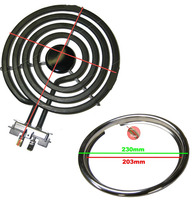
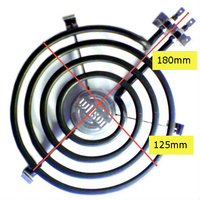
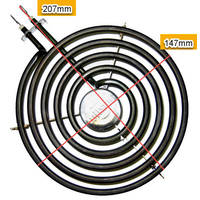
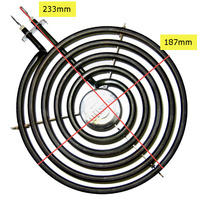
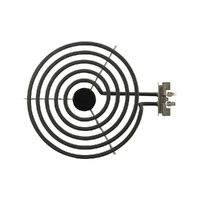
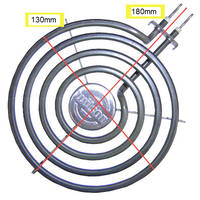
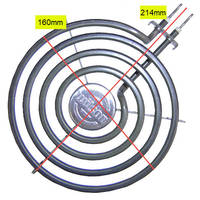
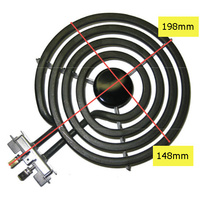
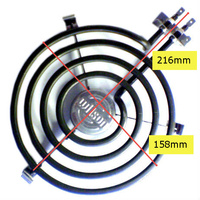
Coil elements use an exposed spiral of resistance wire mounted in a drip bowl. They plug directly into a socket beneath the cooktop surface, which makes them easy to remove and replace without tools. This design was common on North American and some older Australian appliances. Coil elements are less common in current Australian production but remain available as replacement parts.
Ceramic cooktops use radiant elements positioned beneath a smooth glass-ceramic surface. The element heats the glass, which transfers heat to the cookware. These are distinct from solid plate elements and are not interchangeable. Replacement of ceramic radiant elements requires removing the glass top and is a more involved repair job than solid plate element swaps.
Standard elements bring a solid plate to cooking temperature in two to four minutes. Rapid heat elements use higher wattage ratings, typically 2100W to 2400W, to reach temperature faster. Many modern cooktops fit a rapid heat element to one hotplate, usually the largest zone, and standard elements to the remainder. Wattage and diameter must both match when replacing either type.
Solid plate (EGO) elements are the standard for Australian freestanding ovens. Coil elements plug in and lift out. Ceramic radiant elements sit under glass cooktop surfaces. Each type requires a specific replacement. Do not substitute one type for another.
Sourcing the correct element quickly is often the main challenge in appliance repair. Availability varies between retail, trade, and online channels.
Online electrical wholesalers carry a broader range of replacement elements than most bricks-and-mortar appliance retailers. Stock is indexed by part number, wattage, and compatibility codes, which makes it easier to match a specific model. Delivery to most Australian metro and regional addresses is available within one to three business days for in-stock items.
A reliable supplier indexes products by part number, cross-reference codes, and appliance model compatibility. This reduces the risk of ordering the wrong element. Clear return and exchange policies matter when fitting a replacement to an older appliance where part numbers may have changed. Check that the supplier carries trim rings and drop plates alongside elements, as these are often needed together.
Appliance repair technicians benefit from suppliers who stock high-rotation element sizes in bulk. Fast dispatch reduces appliance downtime for customers. Oven elements and appliance parts stocked at a trade wholesaler are typically available for same-day or next-day dispatch on weekday orders. Account pricing and volume discounts are available for trade buyers placing regular orders.
Getting the wattage and diameter right is critical. An incorrect element will either fail to heat properly or may create a safety hazard.
Hot plate elements for Australian cooktops typically range from 1100W to 2100W. Smaller hotplates, around 145mm to 165mm diameter, are commonly rated at 1100W to 1500W. Larger hotplates, around 180mm to 220mm diameter, are typically rated at 1800W to 2100W. The wattage rating determines heat output and current draw. Always match the wattage of the replacement element to the original specification.
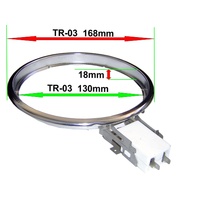
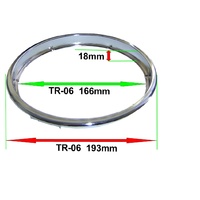
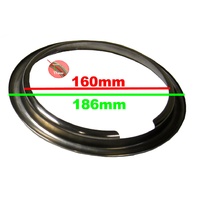
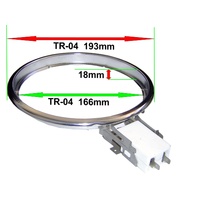
Element diameter is measured across the outer edge of the cast iron plate. Common diameters in Australian cooktops are 145mm, 165mm, 180mm, and 220mm. A trim ring is fitted around each element to fill the gap between the element and the cooktop aperture. Trim rings are model-specific. The wrong diameter element will not seat correctly and the trim ring will not fit.
Higher wattage elements reach cooking temperature faster and recover heat more quickly after a cold pan is placed on them. However, wattage must match the original element specification. Fitting a higher-wattage element than specified can overload the switch and wiring circuit. Fitting a lower-wattage element will result in poor cooking performance and slower heat recovery.
Fitting the wrong wattage element can damage the hotplate switch, wiring, and surrounding components. In some cases, an oversized element may cause the switch contacts to fail prematurely through excessive current draw. Always verify wattage from the appliance data plate or existing element markings before ordering.
| Element Diameter | Typical Wattage | Typical Use |
|---|---|---|
| 145mm | 1100W | Small hotplate, simmer zone |
| 165mm | 1250W to 1500W | Medium hotplate, standard cooking |
| 180mm | 1800W | Medium-large hotplate |
| 220mm | 2000W to 2100W | Large hotplate, rapid heat zone |
Accurate identification prevents ordering errors. Several methods can be used, and combining more than one method produces the most reliable result.
The appliance model number is printed on a data plate fixed to the back, side, or inside the door frame of the cooktop or oven. This number can be used to look up the correct element part number in a compatibility database. Suppliers who specialise in appliance parts index their products against common appliance model numbers.
Most elements carry a part number stamped or printed on the underside of the plate or on an attached label. EGO part numbers follow a consistent format and are widely cross-referenced across appliance brands. Recording the element part number before removal is the most direct way to identify an exact replacement.
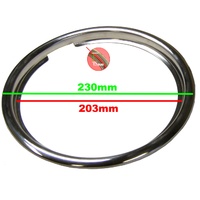
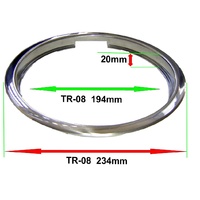
Trim rings fit around the base of the element to cover the cooktop aperture. Each trim ring suits a specific element diameter and mounting configuration. Drop plates sit beneath the element to catch spills. When replacing an element, check whether the trim ring and drop plate also need replacement. Suppliers such as those stocking cooktop parts carry trim rings alongside elements.
Many Australian cooktop brands have used EGO-manufactured elements under their own part numbers. An EGO element sold under a Westinghouse, Chef, or Simpson part number may be identical to the standard EGO unit. Cross-referencing part numbers through a supplier database can identify compatible alternatives when the original part number is discontinued.
Identification tip: Record the element part number, appliance model number, element diameter, and wattage before placing an order. Any one of these alone may be sufficient, but having all four eliminates any risk of receiving an incompatible part.
Selecting the correct element requires matching several specifications, not just wattage or diameter alone.
A solid plate EGO-style element is not interchangeable with a coil or ceramic radiant element. The cooktop housing, switch, wiring, and aperture are designed for a specific element type. Always confirm the element type before selecting a replacement. If the existing element has been removed and the type is unclear, check the appliance model number against a parts database.
Residential cooktops use standard duty elements designed for moderate daily use. Commercial kitchen appliances use elements rated for continuous high-cycle operation. Fitting a residential element to a commercial appliance will result in premature failure. Check the original equipment specification when replacing elements in commercial kitchens.
For residential cooktops in high-use households, or for rental property maintenance, choosing a quality branded element reduces callback frequency. Wilson Elements and EGO-manufactured units are the primary brands sold by trade suppliers in Australia and are built to meet Australian electrical standards.
Universal or multi-fit elements are designed to suit a range of cooktop models within a given diameter and wattage class. They use adjustable mounting brackets or standard terminal configurations. These are suitable when the original part number is unavailable and cross-referencing confirms compatibility. Check diameter, wattage, terminal configuration, and mounting style before fitting a universal element.
Not all elements perform equally. Several factors determine how a replacement element will perform over its service life.
A quality solid plate element distributes heat evenly across the full disc surface. Uneven heat distribution causes hot spots that damage cookware and produce inconsistent cooking results. EGO-manufactured elements use a precision-wound coil embedded in thermally conductive cast iron to achieve consistent heat spread.
Each time an element heats and cools, the materials expand and contract. Over time, this thermal cycling fatigues the resistance coil and sealing materials. High-quality elements use coil alloys and sealing compounds that tolerate thousands of cycles without failure. Lower-grade elements may show resistance drift and uneven heating within months of installation.
Overheating, spill contamination, and mechanical impact can cause element plates to warp. A warped plate makes poor contact with the cookware base, reducing heat transfer efficiency. Heavy cast iron construction resists warping better than lighter pressed steel alternatives.
Elements sold in Australia must comply with AS/NZS 60335.1 and the relevant appliance-specific standard. Branded elements from established manufacturers such as Global Components and Wilson Elements carry compliance documentation. Unbranded elements from unknown sources may lack compliance testing records.
Several fault patterns are common with hot plate elements. Identifying the fault correctly avoids unnecessary parts replacement.
Complete failure to heat is the most common element fault. The resistance coil inside the plate has broken, creating an open circuit. Current cannot flow through the coil, and no heat is produced. The element must be replaced. Before replacing, verify that the hotplate switch and supply wiring are functional. A multimeter resistance test across the element terminals will confirm whether the coil is open circuit.
Uneven heating indicates partial coil failure or physical damage to the element plate. The coil may have a high-resistance section, or the plate may be warped enough to cause uneven contact. In either case, replacement is the correct course of action. Partial coil failure will worsen over time and may lead to arcing inside the element body.
Surface cracks, blistering, or heavy pitting on the element plate indicate the element has reached the end of its service life. Heavy spill contamination baked into the surface can also accelerate degradation of the sealing compound around the coil. Replace elements showing significant physical damage rather than attempting to continue use.
Coil-type plug-in elements connect to the cooktop through a socket with spring-loaded contacts. Worn or corroded socket contacts cause intermittent heating and can produce arcing at the connection point. In this case, replacing the element alone may not resolve the fault. The socket and element should both be inspected. A licensed electrician should assess socket damage before fitting a new element.
Understanding failure causes helps to extend element life and to identify whether a fault is covered under any applicable product warranty.
The resistance coil inside a solid plate element expands during heating and contracts during cooling. Over years of use, this repeated movement fatigues the coil material. The coil eventually cracks or breaks at a stress point. This is a normal wear failure mode and is not caused by misuse. Elements in daily use typically last five to fifteen years depending on operating temperatures and usage frequency.
Liquids spilled onto a hot plate element can seep through the sealing compound and contact the coil. This causes localised corrosion and may short the coil to the element body. Heavy scale build-up from repeated boil-overs insulates the plate surface and causes the element to run hotter than designed, accelerating coil fatigue. Keeping elements clean and dry extends service life.
Loose terminal connections cause arcing at the element terminals. This burns the terminal posts and can propagate back into the element body. Wiring that has deteriorated due to heat exposure over many years can also cause intermittent supply issues. If terminal damage is found on an element being removed, inspect the wiring and switch before installing the replacement.
Running a hotplate at maximum setting for extended periods accelerates coil fatigue. Commercial use, or residential use with extended high-heat cooking, reduces element lifespan. Rapid heat elements rated at 2100W are more susceptible to thermal stress than standard elements because they operate at higher coil temperatures.
Basic electrical testing can confirm whether an element has failed before ordering a replacement. A multimeter is the primary tool for this work.
An open circuit fault means the resistance coil has broken and current cannot flow. To test for this, isolate the appliance from the power supply, disconnect the element terminals, and measure resistance across the two terminal posts. A functional element will show a resistance reading consistent with its wattage rating. An open circuit element will show infinite resistance (OL on a digital multimeter).
Set the multimeter to the resistance (ohm) measurement function. Place one probe on each element terminal. A 1800W element operating at 230V has a theoretical resistance of approximately 29 ohms. Readings substantially higher than expected suggest partial coil damage. A reading of zero ohms indicates a short to earth, which also requires element replacement.
Use Ohm's Law to calculate expected resistance: R = V squared divided by P. For a 230V, 1800W element: 230 x 230 / 1800 = approximately 29 ohms. For a 2100W element: 230 x 230 / 2100 = approximately 25 ohms. These are approximate values. A reading within 10% of the calculated figure is within normal tolerance.
If an element passes the resistance test, the fault may lie in the hotplate switch or supply wiring. With the appliance isolated, check continuity through the switch at each heat setting. A switch that fails to pass continuity at one or more positions is faulty and must be replaced. Do not assume the element is faulty before testing the switch circuit.
Any fault involving the internal wiring, switch assembly, or cooktop control circuit requires a licensed electrician. Visual inspection and resistance testing of the element terminals are within the scope of an initial fault check, but reconnection, wiring repairs, and switch replacement must be carried out by a licensed person. See the installation section below for further detail on legal requirements.
Hot plate element replacement involves working on a 240V appliance. Legal requirements and safety precautions apply.
Before removing or touching any element terminals, the appliance must be isolated from the power supply. For a freestanding oven or cooktop, this means switching off at the dedicated circuit breaker and, where possible, unplugging the appliance from its outlet. Never rely on the hotplate switch alone to isolate the element. The switch is a control device, not an isolation point.
In all Australian states and territories, electrical installation and repair work must be carried out by a licensed electrician. This includes replacing hot plate elements where the work involves accessing terminal connections inside the appliance. The relevant legislation in each state applies. Unlicensed electrical work is illegal and voids the appliance manufacturer warranty. It may also create insurance liability if a subsequent fault or fire occurs.
Legal requirement: Hot plate element replacement that involves disconnecting and reconnecting wiring terminals must be carried out by a licensed electrician in all Australian states and territories. This is not a DIY task. Contact a licensed appliance repair technician or electrician for element replacement.
The general replacement process for a solid plate element involves isolating the supply, removing the trim ring and drop plate, lifting out the old element, disconnecting the terminal wires, connecting the replacement element, refitting the trim ring and drop plate, and restoring the supply for a function test. The exact procedure varies by cooktop model. Some models require removal of the cooktop or oven top panel to access element terminals.
After installation, the replacement element should be tested at each heat setting to confirm correct operation. The element should reach temperature evenly across the plate surface. Any unusual smell, discolouration, or sparking during the first use indicates a connection problem and the appliance should be isolated immediately for re-inspection.
Element replacement is typically far more cost-effective than appliance replacement. Understanding the cost structure helps trade buyers and consumers make informed decisions.
OEM (original equipment manufacturer) elements are produced by the same manufacturer as the original fitted element, most commonly EGO or Wilson Elements. Aftermarket elements are produced to the same specifications but sold under generic part numbers. Both types are widely available from trade suppliers. Quality aftermarket elements from established suppliers perform equivalently to OEM parts in most residential applications.
Individual hot plate elements for standard residential cooktops are available from trade suppliers at prices well under $50 for most common sizes. Trim rings and drop plates are additional items if required. Trade account holders purchasing in volume can access reduced per-unit pricing. This compares favourably against appliance service call rates, which typically include a minimum charge before parts and labour.
Appliance repair technicians and property managers maintaining multiple freestanding ovens benefit from holding common element sizes in stock. The most frequently replaced elements across Australian cooktops are the 1800W 165mm and 2100W 220mm sizes. Holding these sizes avoids delays from ordering per job and reduces per-unit cost through volume purchasing.
A functional freestanding oven with a failed hot plate element is almost always worth repairing rather than replacing, provided the oven body, oven cavity, and switches are in good condition. The element cost is a small fraction of the replacement appliance price. For appliances over fifteen to twenty years old where multiple components have failed, the cost-benefit calculation changes. A licensed electrician or appliance technician can assess whether repair is the better option in borderline cases.
Routine care significantly extends hot plate element service life and reduces the frequency of replacement.
Placing cold water or wet cookware directly onto a hot element causes rapid localised cooling of the element surface. Repeated thermal shock accelerates fatigue in both the cast iron plate and the internal coil sealing compound. Allow elements to cool before cleaning or placing cold items on the surface.
Allow elements to cool fully before cleaning. Wipe spills from the element surface with a damp cloth. Avoid abrasive cleaners that can damage the surface coating and expose the underlying iron to corrosion. Do not submerge solid plate elements in water. Trim rings and drop plates can be removed and cleaned separately, which also allows inspection of the element seating area for spill contamination.
Reduced heat output, longer heating times, and uneven surface temperature are early signs of coil deterioration. Monitoring these indicators allows planned replacement before a complete element failure leaves an appliance unusable. For rental property managers and commercial operators, scheduling element inspection as part of periodic appliance maintenance reduces the risk of unplanned downtime.
In high-use commercial or rental settings, replacing elements on a scheduled basis rather than waiting for failure reduces service disruption. The replacement cycle depends on usage intensity. A residential element in moderate use may last ten years or more. An element in a rental property or commercial kitchen may benefit from inspection every three to five years.
Hot plate element replacement is a routine task across several trade sectors.
The largest volume of hot plate element replacement occurs in residential freestanding ovens. These appliances use solid plate EGO-style elements across the top cooking zones. Element failure is the most common reason a licensed electrician or appliance technician is called to a residential cooking appliance. The range of elements available from trade suppliers covers the majority of Australian cooktop models in current and past production.
Appliance repair technicians are the primary trade buyers for hot plate elements. Their work involves identifying the failed component, sourcing the correct replacement, and carrying out the installation to the appliance manufacturer specification. Fast parts availability and accurate compatibility data are the key factors these buyers prioritise when selecting a supplier. Linking through to fan forced oven elements and grill elements allows a single-supplier approach for full cooktop and oven restorations.
Commercial kitchens using solid plate electric cooktops require elements rated for continuous high-duty operation. Standard residential elements are not suitable for commercial use. When sourcing elements for commercial applications, confirm with the supplier that the specification is appropriate for continuous duty. Appliance downtime in a commercial kitchen has direct cost implications, so holding spare elements on site is common practice.
Electrical safety requirements apply to hot plate element replacement in the same way as any other electrical repair work.
Replacement elements must comply with AS/NZS 60335.2.6, which covers safety requirements for cooking appliances. Elements sold by established trade suppliers in Australia are manufactured to meet this standard. Using non-compliant elements may void appliance warranties and creates safety risks including fire and electrical shock. Always purchase replacement elements from a reputable supplier who can confirm compliance.
Carrying out element replacement without an electrical licence is illegal under state electrical safety legislation throughout Australia. Beyond the legal consequences, unlicensed work on a 240V appliance carries significant personal safety risk. Incorrectly connected terminals can cause arcing, fire, and electrocution hazard. All terminal connections and wiring on cooktops must be made by a licensed person.
New elements should be stored in a dry location to prevent surface corrosion before installation. Handle elements carefully during installation to avoid cracking the cast iron plate. A cracked plate can cause arcing inside the element body when energised. Inspect new elements visually before installation to confirm there are no signs of damage from transit.
An element that is incorrectly seated, or fitted with an incompatible trim ring, may not make proper contact with the cooktop aperture. This can cause the element to overheat at the contact points and damage the surrounding cooktop components. Confirm correct fitment by checking that the element sits flush, the trim ring seats fully around the perimeter, and the terminal connections are secure before energising the appliance.
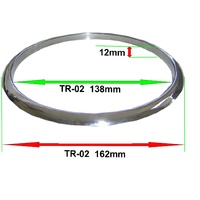
Watch Hotplate Element 1100W HP-02 | FV10A000 / 9523 - Suits TR-02 + DP-02 video
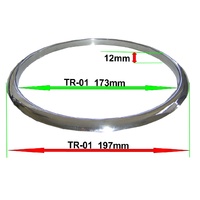
Watch Hotplate Element 1800W | HP-01 / FV11A000 / 9525 - Suits TR-01 + DP-01 video
Watch Hotplate Element 2100W HP-06 | FK720000 / 1801-10 - Suits TR-08 video

Just so you know this works perfectly as a replacement for bottom oven element in Malleys Viceroy Wall Oven Model VR96ARB. It's about 30 years old and in Masterton home. I found this exact model hard to find much on other than I already had a Wilson one in it. The ovens they used back then and still today are just great, so my wife wanted to keep it going. This is the second Wilson element for the lower oven, will be back for upper oven element shortly. Wilson Elements is a good reliable product.
We have a trusty old Simpson conventional double oven for over 3 decades now, loving everything about it. Its heating element died recently and we were concerned that we had to get a whole new unit installed thinking no replacement parts would be available for such an old unit...until we came across Sparky Direct. There was a wide range of oven elements listed with all the part numbers you could think of. We found ours, ordered, it arrived quickly and it was a perfect fit. Very happy we did not need to replace the whole oven.
The replacement element was easy to install, great quality for a fair price. You can definitely tell the difference in heating time compared to the old unit as the new element heats up within seconds. Very happy with the purchase.
Quality products in stock • Fast Australia-wide delivery • Competitive trade pricing
Browse Hot Plate Elements → Get Expert Advice →When functioning correctly, they are designed to provide consistent and even heat.
Sparky Direct supplies hot plate elements Australia-wide, offering reliable replacement components with convenient delivery.
They are securely packaged and delivered via standard courier services.
Unused items are usually eligible for return according to the seller’s returns policy.
Warranty coverage varies by manufacturer and generally covers defects in materials or workmanship.
Yes, hot plate elements are typically sold as individual replacement components.
Yes, electrical appliance repairs must be carried out by licensed professionals.
They generally require no maintenance other than normal appliance care.
Using the wrong element can affect safety and appliance performance.
They are designed for long service life under normal household use.
Yes, they operate at high temperatures and should be handled with care.
Replacement should be carried out by a licensed electrician or qualified appliance technician.
Yes, uneven or insufficient heat can impact cooking performance.
A hot plate element is an electric heating component used in cooktops and ovens to generate heat for cooking.
Yes, regular heating and cooling cycles can cause elements to wear over time.
Signs include uneven heating, slow heat-up, or the element not heating at all.
Replacement hot plate elements are available for many common appliance models.
Yes, they are commonly used in residential electric cooking appliances.
Efficiency depends on design and usage, with correct matching helping ensure optimal performance.
Power ratings vary depending on size and application and should always match the appliance specifications.
Yes, they are available in various diameters, shapes, and wattages to suit different appliances.
They are typically made from metal heating coils encased in protective materials designed to withstand high temperatures.
Yes, hot plate elements are often designed for specific appliance models and power ratings.
Hot plate elements are generally manufactured to meet relevant AS/NZS electrical safety standards, depending on the product.
They are commonly used in electric cooktops, freestanding ovens, and some commercial cooking appliances.