
Search Results:
Search Results:
Search Results:
Search Results:
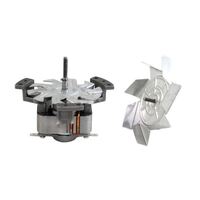
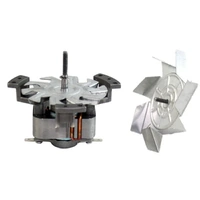
A fan-forced oven works by circulating heated air throughout the cooking cavity. The oven fan motor is what makes this circulation possible. It sits mounted at the rear of the oven, typically behind a metal plate or baffle, and drives a fan blade that pulls air across the heating element and pushes it around the cavity walls. Without a working motor, the oven reverts to radiant heat only, which behaves very differently from fan-forced cooking.
Most Australian domestic ovens sold in the last three decades use fan-forced operation as their primary cooking mode. The fan motor runs continuously during cooking cycles, making it one of the most mechanically stressed components in the appliance.
Moving air transfers heat more efficiently than still air. In a fan-forced oven, this means lower set temperatures can achieve the same cooking result compared to a conventional oven. The circulating airflow also reduces the temperature difference between oven zones, so food on the top shelf and food on the bottom shelf cook at similar rates. A failing fan motor disrupts this balance. Partial motor failure, where the motor still runs but at reduced speed, shows up as uneven browning, longer cooking times, or hot spots near the element.
The fan motor contributes to temperature stability by preventing heat from stratifying inside the cavity. When the element cycles on and off to maintain the set temperature, the fan keeps the heat distributed so the thermostat receives an accurate reading of average cavity temperature. A slow or intermittent motor causes the thermostat to read incorrectly, leading to temperature overshoot or undershoot. This directly affects cooking outcomes and energy efficiency.
Fan-forced ovens typically require temperatures set 10 to 20 degrees Celsius lower than recipes written for conventional ovens. When the motor fails and the oven operates without circulation, this offset no longer applies. Food may burn at temperatures that previously worked, or cook unevenly without explanation.
In Australia, the terms fan-forced and convection are often used interchangeably, but there is a distinction. Fan-forced ovens have a fan element (a circular heating element surrounding the fan) in addition to the standard bake and grill elements. Convection ovens may use a fan without a dedicated fan element, relying on the main bake element for heat. The motor itself is similar in both cases, but the surrounding wiring configuration and thermostat arrangement differ. When sourcing a replacement, confirming the oven type helps identify whether the motor specification needs to account for the fan element circuit.
Oven fan motors are mounted in one of two ways. Internal mounting places the motor body inside the oven cavity, which exposes it directly to cooking heat. External mounting locates the motor behind the rear oven wall, with only the shaft and fan blade protruding into the cavity. External mounting protects the motor windings from peak cavity temperatures and is more common in modern appliances. Identifying which configuration applies to the oven being serviced determines the access method and the required motor temperature rating.
Most domestic oven fan motors use AC induction motors running at 240V, 50Hz. These are simple, reliable, and do not require electronic speed control. Some newer appliances, particularly those with programmable cooking functions or inverter control systems, use DC motors with electronic speed controllers. AC motors are generally easier to source as replacements and are interchangeable where the physical dimensions and shaft configuration match. DC motors require a compatible controller circuit and are more model-specific.
Domestic oven fan motors are rated for intermittent household use. Commercial oven motors run at higher duty cycles, often continuously through extended service periods, and are built with heavier-duty bearings and higher thermal ratings. A domestic motor should not be substituted into a commercial appliance. When sourcing replacement motors for commercial kitchen equipment, confirm the application type and select a motor rated for continuous commercial duty.
Australian domestic oven fan motors operate at 240V AC, 50Hz. Wattage ratings vary by model, typically ranging from 20W to 60W for the motor alone, not including the fan element. The motor wattage is not the same as the oven's total power consumption. When specifying a replacement, match the voltage rating exactly. A motor rated for a different voltage or frequency will either fail immediately or run at incorrect speed, causing overheating.
The motor shaft diameter, length, and the method used to attach the fan blade to the shaft are critical compatibility factors. Common shaft types include flat-faced, keyed, and threaded configurations. If the shaft dimensions do not match the original fan blade attachment, the blade will either not fit or will not be secured properly. Mounting plate bolt patterns and standoff dimensions must also match the oven's rear cavity structure. Where possible, use the original motor dimensions as a reference before ordering a replacement.
Oven fan motors connect to the oven's wiring harness via spade connectors, push-on terminals, or purpose-made plugs. The connector type and the number of terminals must match. Most domestic motors have two or three terminals. A two-terminal motor has a single winding circuit. A three-terminal motor may have a thermal cutout integrated into the motor body, adding protection against overheating. When replacing a motor, verify the terminal layout before connecting the wiring to avoid reversing live and neutral conductors.
Fitting an incompatible motor creates several risks. An undersized motor will overheat and fail prematurely. An oversized motor may exceed the wiring harness current capacity. A motor with the wrong shaft dimensions can cause the fan blade to contact the cavity wall, creating noise, vibration, and mechanical damage. In some cases, the blade striking the cavity generates sparks. Confirming specifications before ordering avoids these outcomes.
Always confirm the part number before ordering: Use the oven's model number (usually on a plate inside the door frame or behind a rear access panel) and the motor's original part number to identify the correct replacement. Generic descriptions such as "suits most ovens" are not sufficient for reliable compatibility confirmation.
The most reliable method for identifying a compatible replacement motor is to use the oven's model number and the motor's original part number together. The oven model number is printed on a rating plate, typically located inside the door frame, on the side wall of the cavity, or on a rear access panel. The motor part number appears on a label affixed to the motor body itself. Both numbers together allow accurate cross-referencing to OEM and aftermarket equivalents.
If the motor label is damaged or missing, the oven model number alone is often sufficient to identify the correct motor through a parts supplier's compatibility database.
OEM (original equipment manufacturer) motors are made or specified by the oven manufacturer. They are guaranteed to fit without modification and match the original performance specification. Aftermarket motors are produced by third-party manufacturers to the same or equivalent specification. Quality aftermarket motors from reputable suppliers perform comparably to OEM parts and are typically lower in cost. The key consideration is confirming dimensional compatibility rather than brand matching.
In some oven models, the fan motor is sold only as part of a complete motor and fan blade assembly. Replacing the assembly rather than just the motor simplifies installation and ensures the fan blade and motor shaft are matched. If the fan blade is cracked, bent, or out of balance, replacing the motor alone without addressing the blade will result in continued noise and vibration. Inspect the fan blade condition before ordering parts and source the assembly if the blade shows damage.
Several oven brands commonly found in Australian homes share platform components. The Electrolux group (which includes Westinghouse, Chef, and Simpson) has used common motor specifications across product lines for extended periods. This means a single motor part number may suit multiple brand variants. European brands such as Bosch and Smeg use their own motor specifications and are less likely to share components with local brands. Always verify against the specific model number rather than assuming cross-brand compatibility.
A correctly functioning fan motor maintains consistent airflow velocity throughout the cooking cycle. Airflow strength depends on motor speed (RPM), fan blade diameter, and blade pitch angle. These factors are fixed by the original motor and blade design. A replacement motor should match the original RPM specification to avoid changing the airflow pattern. Running a motor at lower RPM than specified reduces air circulation and cooking performance. Running it faster than specified increases noise and mechanical wear.
The primary indicator of motor bearing quality is operating noise. A new or recently replaced motor with good-quality bearings runs with a low, consistent hum at cooking temperatures. As bearings wear, noise increases progressively through squealing, grinding, and eventually loud rattling or clattering as the bearing race degrades. Bearing quality is one of the main differences between economy and premium aftermarket motors. Bearings rated for high-temperature operation retain their lubricant longer and resist the degradation that causes noise and eventual seizure.
Oven fan motors operate in a hot environment, particularly when they are internally mounted within the cavity. Motor windings are insulated with materials rated to specific temperature classes. Class B insulation is rated to 130 degrees Celsius, class F to 155 degrees, and class H to 180 degrees. A motor with a lower temperature class than the original may fail faster due to insulation degradation. When sourcing a replacement, confirm that the thermal rating meets or exceeds the original specification.
Oven fan motors sold in Australia for use in domestic appliances should comply with AS/NZS 60335-1 (safety of household electrical appliances). Compliance is typically indicated by an RCM (Regulatory Compliance Mark) on the product or packaging. Purchasing parts from established Australian electrical suppliers provides a degree of assurance that compliance requirements have been considered. Unbranded motors sourced from unknown suppliers may not meet these requirements.
If the oven heats but the fan does not spin, the motor circuit has failed. Possible causes include a burned-out motor winding, a failed thermal cutout, a broken wiring connector, or a seized bearing preventing the shaft from rotating. Start by checking whether the fan blade can be turned by hand when the oven is cold and unplugged. If it moves freely, the bearing is not seized and the fault is likely electrical. If it does not move, the bearing has seized and the motor needs replacement regardless of the electrical test results.
Grinding noise during operation indicates worn or dry motor bearings. Squealing is an early-stage bearing wear symptom and will progress to grinding if not addressed. Rattling can indicate a loose fan blade, a foreign object in the cavity, or a bearing that has lost its outer race integrity. Distinguishing between these requires listening to the noise while the oven is running and observing whether the noise changes with temperature. Bearing noise typically worsens as the motor heats up. A rattling fan blade usually produces noise at consistent intervals rather than continuously.
A motor running at reduced speed produces less airflow than specified. This shows up as cooking results that are inconsistent with the oven's settings. The oven reaches the set temperature (confirmed by a thermometer), but food takes longer to cook or browns unevenly. Reduced motor speed can result from worn bearings increasing rotational friction, partially open winding circuits reducing motor torque, or a power supply issue reducing the voltage reaching the motor. Measuring motor speed directly requires specialist equipment. A simpler diagnostic is to listen for changes in motor hum pitch, which correlates with speed.
A motor that runs for a period and then stops, or that produces burning smells during operation, is likely failing due to thermal overload. The motor's built-in thermal cutout (where fitted) trips when the winding temperature exceeds its rated limit. This can happen due to bearing friction increasing the load on the motor, insulation degradation causing partial winding shorts, or ambient temperatures in the oven cavity exceeding the motor's rating. After the motor cools, it may restart, only to trip again under load. This pattern indicates the motor needs replacement rather than further fault-finding.
Any change in the noise profile of a running oven fan motor warrants investigation. A gradual increase in noise level over weeks or months is normal bearing wear in progress. A sudden change from quiet operation to loud grinding or clattering indicates rapid bearing failure. Vibration felt through the oven body when the fan is running suggests the fan blade is out of balance, has come loose from the shaft, or has been distorted by heat or impact with a foreign object.
Visually observing the fan blade through the oven's rear inspection ports (where accessible) can reveal reduced speed. If the fan blade is visible through a wire guard or through the oven back, compare its apparent speed at full operating temperature to its speed when the oven first starts. A significant reduction in speed at temperature indicates bearing wear causing increased friction as the motor heats up. A fan that starts then stops before the cooking cycle ends is showing intermittent motor failure.
If cooking results have gradually worsened without any change to recipes or settings, the oven fan motor may be underperforming rather than fully failed. Users often attribute uneven browning or longer cooking times to recipe variation before identifying the oven as the cause. Testing with an oven thermometer and paying attention to whether air movement is felt when the oven door is briefly opened during operation can help confirm whether the fan is working correctly.
A hot electrical smell during oven operation, distinct from normal cooking odours, points to motor winding insulation breaking down. This smell is acrid and plastic-like rather than food-related. It appears when the motor is under load and dissipates when the oven is switched off. A burning smell accompanied by the oven tripping the circuit breaker or RCD suggests a winding short has developed to the motor frame, creating an earth fault. This requires immediate attention as it is a safety issue.
Before using any test instruments, perform a visual and mechanical inspection with the oven isolated from the power supply at the switchboard. Remove rear access panels or the oven from its housing to reach the motor. Look for visible heat damage to wiring insulation, connector corrosion, or physical damage to the motor body. Attempt to rotate the fan blade by hand. It should turn smoothly with minimal resistance. Rough, jerky, or seized rotation confirms bearing failure without requiring electrical testing.
With the oven isolated and the motor disconnected from the wiring harness, use a multimeter set to resistance (ohms) to test the motor winding. A reading of infinite resistance (open circuit) across the winding terminals indicates a burned-out winding. A reading close to zero (short circuit) indicates an internal winding fault. A normal winding shows a low but measurable resistance, typically between 10 and 200 ohms depending on motor design. Testing for voltage at the motor terminals (with the oven energised by a licensed electrician) confirms whether the supply circuit is reaching the motor.
Oven faults are not always caused by the fan motor. A failed fan element causes no heat even though the fan runs. A faulty thermostat causes temperature instability but the fan continues to operate. A failed bake element causes poor cooking in conventional mode but may not affect fan-forced operation. Isolating which component has failed requires checking each part of the circuit separately. If the oven heats normally in conventional mode but performs poorly in fan-forced mode, the fan circuit (motor, fan element, or the associated selector switch) is the area to investigate.
Oven fault diagnosis that involves opening the appliance and testing live circuits must be carried out by a licensed electrician in Australia. Visual inspection with the oven disconnected is generally safe for a competent person, but any work involving energising the appliance with covers removed, or connecting and disconnecting wiring under power, requires a licensed electrical worker. If the oven is tripping circuit protection, shows signs of arcing, or the fault involves the mains supply wiring to the appliance, engage a licensed technician immediately.
Oven fan motors are exposed to sustained high temperatures throughout their service life. Every heating and cooling cycle thermally stresses the motor windings, insulation, and bearing lubrication. Over time, insulation becomes brittle and loses its dielectric strength. Bearing lubricants dry out or carbonise, increasing friction and heat within the bearing itself. This progressive degradation is normal and represents the expected wear mechanism rather than a defect. The typical service life of a domestic oven fan motor is eight to fifteen years under normal use conditions.
Cooking releases grease vapour that circulates through the oven cavity along with the air driven by the fan motor. Over time, grease accumulates on the motor exterior, on the fan blade surfaces, and within accessible bearing housings. Accumulated grease holds heat, raises operating temperature, and attracts dust. The combined effect accelerates bearing wear and degrades winding insulation. Externally mounted motors are less exposed to grease than internally mounted designs, which helps explain why external motor configurations often have longer service lives.
Ball bearings in oven fan motors are pre-lubricated during manufacture and are not serviceable in the field. As the lubricant depletes through heat exposure, the bearing balls run dry against the race, increasing friction and heat. This progresses from increased noise to bearing surface wear, deformation of the race, and eventual seizure. Seizure places the full load of the motor's torque on the winding circuit, rapidly overloading the windings and causing thermal failure. Replacing the motor at the noise-increase stage avoids this cascade failure.
Electrical faults external to the motor can also cause apparent motor failure. A loose spade connector creates resistance at the terminal, which generates heat at the connection point and causes voltage drop at the motor. Sustained voltage drop causes the motor to draw higher current to maintain speed, overloading the windings. A wiring harness that has been routed too close to the oven element can suffer insulation damage from radiant heat, causing intermittent short circuits that affect motor operation. Inspecting the wiring harness as part of any motor replacement is good practice.
Before beginning any work on an oven, isolate the supply at the circuit breaker or fuse in the switchboard and verify isolation using a non-contact voltage tester at the oven's supply terminals. For hardwired ovens, this means isolating the dedicated circuit. For plug-in ovens, unplugging the appliance is sufficient. Do not rely on the oven's own power switch as isolation. The switch disconnects the oven's control circuits but may not interrupt the supply to the terminal block. Confirm zero voltage before touching any wiring or internal components.
Internal motors require removing the oven's rear cavity panel to reach the motor mounting. This is typically held by screws accessible from inside the oven cavity. The fan blade must be removed from the shaft before the motor can be accessed. Fan blade attachment methods vary: some use a nut threaded onto the shaft, others use a push-on retention clip, and some use a key and circlip arrangement. Rear-mounted motors are accessed by removing the oven from the housing and opening the rear service panel. This method is more common in built-in ovens and provides better access with less disassembly.
Photograph the existing wiring arrangement before disconnecting any terminals. This documents which conductor connects to which motor terminal and prevents incorrect reassembly. When removing spade connectors, grip the connector body rather than pulling the wire. Pulling the wire can loosen the crimp between the conductor and connector, creating a high-resistance joint that generates heat during operation. Replace any connectors that show heat discolouration, corrosion, or damaged insulation rather than reusing them.
In all Australian states and territories, connecting or disconnecting electrical wiring to a fixed appliance, or performing internal wiring work on a hardwired appliance, constitutes electrical work that requires a licensed electrical worker. This includes oven fan motor replacement in hardwired ovens. Plug-in appliances in some jurisdictions may allow unlicensed internal repair, but the boundary differs by state. If in doubt, engage a licensed appliance repairer or electrician to complete the replacement. This protects both safety and insurance validity.
After installing the replacement motor, confirm that the fan blade turns freely by hand before restoring power. Check that all wiring connectors are fully seated and that no wiring is positioned to contact the motor body, fan blade, or heating elements. Only then restore power and run a short test cycle to confirm normal operation before reassembling any access panels.
Domestic oven fan motors in Australia typically range from around $30 to $120 depending on the brand, model compatibility, and whether the motor is supplied alone or as a complete assembly with the fan blade. OEM motors sourced directly from appliance manufacturers or authorised parts distributors tend to be at the higher end of this range. Aftermarket motors from reputable electrical parts suppliers are generally at the lower to mid range. Commercial oven motors are higher due to their heavier construction and extended duty ratings.
OEM parts guarantee a fit but carry a price premium, sometimes 30 to 50 percent higher than a quality aftermarket equivalent. For appliances within their warranty period, using OEM parts preserves warranty coverage. For out-of-warranty appliances, an aftermarket motor from a reputable Australian supplier is a sound choice. The key is confirming dimensional compatibility and wiring match rather than prioritising brand. A well-specified aftermarket motor from a known supplier offers comparable reliability at lower cost.
Trade buyers and appliance repairers who service multiple brands benefit from maintaining stock of common motor specifications. High-turnover motor part numbers for prevalent Australian oven brands (particularly those in the Electrolux group) justify holding inventory. Sparky Direct supplies oven fan motors alongside a complete range of fan forced oven elements, grill elements, and oven thermostats and switches to support trade repair workflows.
Replacing an oven fan motor is cost-effective when the repair cost is less than approximately 30 to 40 percent of the appliance's replacement value. For a mid-range oven worth $800 to $1,200, a fan motor replacement costing $80 to $150 including labour represents good value. When multiple components have failed simultaneously, or when the oven body or element wiring is degraded, the repair-versus-replace calculation shifts. A licensed appliance repairer can provide an honest assessment of whether the total repair cost is justified against the appliance's age and condition.
Keeping the oven interior clean reduces the amount of grease vapour available to deposit on the fan motor and its surroundings. Cleaning oven spills before they carbonise reduces smoke production during subsequent cooking cycles. Using the oven's pyrolytic cleaning function (where fitted) at appropriate intervals keeps the cavity walls clean without liquid cleaners that could affect motor components. When cleaning oven interiors, avoid directing spray cleaners towards the fan motor area, as chemical residues can attack wiring insulation and connector contacts.
Operating an oven at unnecessarily high temperatures for extended periods adds thermal cycles to the fan motor without benefit. Matching the cooking temperature and duration to the recipe rather than defaulting to maximum heat reduces cumulative thermal stress. Allowing adequate cool-down time between extended cooking sessions gives the motor time to dissipate heat before the next cycle. Avoiding using the oven's self-clean function at higher frequencies than necessary reduces the total number of extreme-temperature cycles the motor experiences.
The best maintenance practice for an oven fan motor is regular observation of operating noise and cooking performance. A slight change in noise character is the earliest detectable sign of bearing wear, appearing well before the motor fails completely. Noting when cooking times begin to extend, or when uneven results appear without recipe changes, helps identify motor degradation early. Acting on early signs avoids the secondary damage that can occur when a seized motor overloads its winding circuit and damages the connected wiring harness.
For high-use ovens in commercial or hospitality settings, scheduled preventative motor replacement at defined intervals, rather than waiting for failure, avoids unplanned downtime. Service intervals depend on operating hours and duty cycle. For domestic ovens approaching the end of their expected service life (ten years or more), replacing the fan motor and other wear components such as hot plate elements as part of a planned service extends the appliance's working life cost-effectively.
The Electrolux group is the largest single-brand presence in the Australian domestic oven market. Westinghouse, Chef, and Simpson ovens sold in Australia have historically shared platform components, including fan motors, across model generations. A motor part number that suits a Westinghouse 600mm freestanding oven from a given production period will often suit the equivalent Chef and Simpson models from the same period. This component commonality makes sourcing replacement motors for these brands more straightforward than for imported European appliances.
European-origin brands use motor specifications developed for European standards and electrical conditions. While voltage and frequency are identical (240V, 50Hz), the physical dimensions, shaft configurations, and connector types differ from Australian-origin platform components. Replacement motors for these brands are typically sourced as OEM parts through authorised distributor networks, or as aftermarket equivalents produced to the specific European brand's dimensions. Cross-brand substitution between European and Australian oven brands is rarely possible without modification.
Fisher and Paykel cooking appliances share some component heritage with Electrolux group products but have their own platform specifications. Omega is a value-tier brand that has used motors from a variety of sources over its product history, making part identification more variable. For both brands, using the specific oven model number to cross-reference against a reputable Australian parts database gives the most reliable result.
Ovens more than fifteen years old may have discontinued OEM motor part numbers. In these cases, aftermarket suppliers who cross-reference physical dimensions and electrical specifications can often identify a current motor that functions as a direct replacement even if the original part number is no longer available. The key dimensions to provide are shaft diameter, shaft length, mounting plate configuration, and winding terminal count. A reputable parts supplier can use this information to recommend compatible current-production motors.
Residential appliance repair represents the primary market for domestic oven fan motors in Australia. Licensed electricians and appliance repairers attend call-outs where the oven has stopped heating evenly, is making noise, or has stopped functioning in fan-forced mode. Having common motor specifications on hand, or being able to source them quickly from a reliable supplier, determines job turnaround time. Sparky Direct's online ordering and Australia-wide delivery supports same-day or next-day parts availability for most jobs.
Scheduled appliance service contracts for body corporate buildings, student accommodation, and rental property managers require access to reliable parts at consistent pricing. A fan motor that fails in one unit of a multi-unit development is likely to fail in others of the same age and brand. Bulk ordering of common motor specifications reduces per-unit parts cost and ensures stock is available when failures occur. Sparky Direct supplies appliance parts to trade accounts across Australia.
Commercial ovens and combi-steamers in restaurant and catering environments use fan motors with higher duty ratings than domestic appliances. Failure of a fan motor in a commercial kitchen during service creates immediate operational impact. Trade buyers managing commercial kitchen maintenance need access to commercial-grade motor stock with fast supply. Distinguishing between domestic and commercial motor specifications is critical: installing a domestic motor in a commercial application will result in rapid failure under the higher duty cycle.
Household electrical appliances sold and repaired in Australia must meet the safety requirements of AS/NZS 60335-1 (General requirements for household electrical appliances) and the relevant part-specific standard, in this case AS/NZS 60335-2-9 (Grills, toasters and similar portable cooking appliances, which covers oven heating systems). The RCM mark on a replacement motor component indicates the supplier has assessed compliance with applicable requirements. Replacing a motor with a non-compliant component may affect the appliance's overall compliance status and could create insurance or liability issues if a subsequent incident occurs.
Unlicensed electrical work on fixed appliances is illegal in Australia and can void home insurance policies. Beyond the legal implications, working on a 240V appliance without proper training and tools creates genuine risk of electrocution, fire from incorrectly connected wiring, or appliance damage from incorrect reassembly. If the work involves a hardwired oven (as most built-in models are), engage a licensed electrician or appliance repair technician. The cost of licensed labour is a small fraction of the cost of the consequences of unlicensed work gone wrong.
When a licensed electrician tests a live circuit during fault diagnosis, they must use insulated test leads rated to the circuit voltage, appropriate personal protective equipment, and test instruments calibrated to the relevant standard. Working with the oven energised while covers are removed requires awareness of all live conductors in the vicinity and use of insulated probe tips. When the test is complete, the appliance is isolated before reconnecting or disconnecting any wiring. These are standard practice requirements for all electrical fault-finding work, not optional precautions.
An incorrectly installed fan motor creates safety risks beyond performance issues. A motor wired with reversed polarity may still operate but places the switching element on the neutral conductor rather than the active, leaving the motor windings live when the oven appears to be switched off. A motor mounted without its grounding connection creates an earth fault risk if the winding insulation fails. Confirming correct polarity, secure mechanical mounting, and continuity of the earth path before returning the appliance to service are non-negotiable steps in any motor replacement job.
Oven fan motors are available through appliance parts specialists, electrical wholesalers, and online retailers. Online purchasing offers access to a broader range of part numbers and allows comparison of specifications before buying. The key advantage of a specialist electrical supplier over a general online marketplace is the availability of technical support to confirm compatibility before ordering. This reduces the risk of receiving a part that does not fit and having to manage a return.
A reliable supplier maintains accurate product data including motor dimensions, shaft specifications, and compatibility information. They stock parts from known suppliers rather than unbranded products of uncertain origin. They can respond to technical queries from trade buyers and have clear return policies for parts ordered incorrectly. An Australian-based supplier who holds local stock can meet next-day delivery requirements for urgent repairs, avoiding the extended lead times associated with international shipping.
Sparky Direct stocks oven fan motors alongside a complete range of oven repair parts including fan forced oven elements, grill elements, hot plate elements, hot water elements, and oven thermostats and switches. Trade buyers benefit from competitive pricing, Australia-wide delivery, and a product range that covers common repair parts for domestic ovens. The broader oven elements and appliance parts category covers most appliance service requirements in one place. Wilson Elements products, trusted by Australian appliance repairers, are available through Sparky Direct.
Watch Fan Forced Oven Element 2000W EUROMAID HIGHLANDER | FE-33 video
Watch Fan Forced Oven Element 2100W | FE-35 video
Watch Fan Forced Oven Element 2200W | FE-05 / 10318 / GA26A000 video

Just so you know this works perfectly as a replacement for bottom oven element in Malleys Viceroy Wall Oven Model VR96ARB. It's about 30 years old and in Masterton home. I found this exact model hard to find much on other than I already had a Wilson one in it. The ovens they used back then and still good. The last one of these branded elements lasted 12 years or so whereas a replacement genuine one only went for 12 months! It is different shape - hour glass / z shape compared to original square one. I purchased 2 so have a spare! All good.
We have a trusty old Simpson conventional double oven for over 3 decades now, loving everything about it. Its heating element died recently and we were concerned that we had to get a whole new unit installed thinking no replacement parts would be available for such an old unit...until we came across this replacement oven element that was a direct fit without any modification at all!! The crispy pork roasts roast again, rich cheese cakes come out perfectly, day in day out, just as they always have been, no changes to my old recipe. yey.
These guys and girls were great, didn't have the exact product I needed, but they were able to problem solve and give me the next best thing... which is more then 4 other electrical shops could do in the Morayfield/Caboolture vicinity. Thanks everyone you got me out of having to buy a whole new oven.
Quality parts in stock • Fast Australia-wide delivery • Competitive trade pricing
Browse Oven Fan Motors → Get Expert Advice →Yes, regular exposure to heat and use can cause gradual wear.
Sparky Direct supplies oven fan motors Australia-wide, offering reliable replacement parts with convenient delivery.
They are securely packaged and delivered via standard courier services.
Unused items are usually eligible for return according to the seller’s returns policy.
Warranty coverage varies by manufacturer and generally covers defects in materials or workmanship.
Yes, oven fan motors are typically sold as individual replacement components.
Yes, oven repairs must be completed by licensed electricians or authorised technicians.
Using an incorrect motor can affect performance, safety, and appliance lifespan.
They are designed for long service life under normal household use.
They generally require no maintenance beyond normal appliance care.
Replacement should be carried out by a licensed electrician or qualified appliance technician.
Worn bearings or damage can cause rattling, humming, or grinding noises.
Yes, poor air circulation can lead to uneven temperatures or overheating in some areas.
An oven fan motor powers the internal fan that circulates hot air inside a fan forced oven for even heat distribution.
Some cooking functions may still work, but fan forced cooking performance will be reduced.
Common signs include unusual noises, the fan not spinning, or uneven cooking results.
They support temperature regulation by helping distribute heat evenly during operation.
They are used in fan forced ovens, but not in conventional ovens without fan assistance.
Replacement motors are available for many common oven brands and models.
Yes, a functioning fan motor helps ensure even cooking and consistent temperatures.
Yes, they are designed to operate in high-temperature oven environments.
Voltage varies by model and must align with the oven’s electrical specifications.
Yes, oven fan motors are often model-specific and must match the oven’s voltage, mounting, and speed requirements.
Oven fan motors are generally manufactured to meet relevant AS/NZS electrical safety standards, depending on the product.
It is typically located at the rear of the oven cavity, behind the fan cover.