
Search Results:
Search Results:
Search Results:
Search Results:
Test tags and electrical stickers are the visible record of an inspection. A licensed or competent person tests the equipment, then attaches a tag or label that verifies the test was performed and indicates when the next test is due. The tag is the link between the test result and the person using the gear on site.
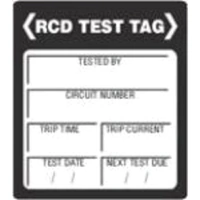
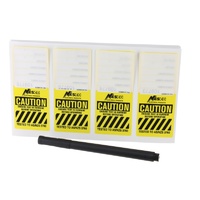
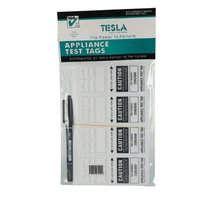
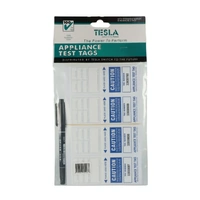
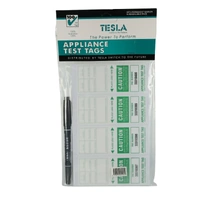
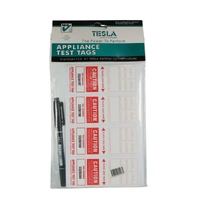
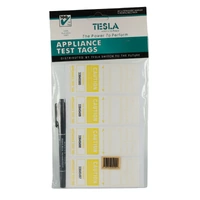
A test tag is a small plastic or laminated label fixed to the cord of a portable appliance after electrical testing. It records the test date, the next test due date, the technician's name or licence number, and a unique asset identifier. Tags are colour-coded so a worker can confirm currency at a glance without needing to read the fine print.
Stickers and adhesive labels serve the fixed installation. Switchboards, distribution boards, and circuit components carry labels that identify circuits, voltage, and isolation points. Solar inverters, battery systems, and main switches require specific warning and identification labels under electrical accessories standards. These labels do not expire on the same cycle as portable appliance tags but must remain legible for the life of the installation.
Tags and stickers create an audit trail. A safety inspector, insurer, or principal contractor can walk through a site and verify compliance from the labels alone. Missing or expired tags signal that equipment has not been tested and must be removed from service. Combined with a written register, the tags form the compliance evidence required under workplace health and safety law.
Australian workplace law requires electrical equipment to be safe to use. Testing and tagging is the recognised method for proving a portable appliance is safe at the time of inspection. The standard sets out how often to test, what to test for, and how to record the result.
AS/NZS 3760:2022 is the in-service inspection and testing standard for electrical equipment. It defines the visual checks, the earth continuity test, the insulation resistance test, and the polarity check that a competent person must complete. The standard also sets the format for the tag, including the minimum information that must appear on the label.
Damaged leads, faulty plugs, and degraded insulation cause electric shock and fires. Regular testing finds these defects before they injure a worker. The tag confirms that the appliance was checked, and the colour or print date shows whether the check is current. Risk reduction comes from the inspection itself, with the tag as the verifiable proof.
Failure to test and tag where required exposes a business to fines under state work health and safety acts, refused insurance claims after an incident, and removal from the site by a principal contractor. On construction and mining sites, untagged equipment is treated as unsafe and quarantined immediately. The cost of compliance is small compared with the cost of a single incident or site shutdown.
Not every workplace has the same testing obligation. The frequency and scope depend on the work environment and the way equipment is used. Understanding who falls inside the requirement is the first step in setting up a compliant program.
Construction, demolition, and mining sites are required to test and tag all electrical equipment used on site. Commercial offices, retail premises, hospitality, manufacturing, and healthcare sites all fall under workplace safety law and must inspect equipment at intervals that match the risk. Hire equipment must be tested before each hire or after each return.
A competent person under AS/NZS 3760:2022 has the training, knowledge, and experience to perform the inspection and operate the test instrument. Licensed electricians qualify automatically. Other workers can become competent by completing an accredited test and tag course, which covers visual inspection, instrument use, fault finding, and record keeping.
The employer or person conducting the business is responsible for ensuring testing happens, the records are kept, and unsafe equipment is removed. Records must show what was tested, when, by whom, and the result. A digital register or paper log book both satisfy the standard provided the records are accurate, current, and available for audit.
Colour coding lets a worker confirm tag currency from across a workshop. Different industries use different colour cycles, so the colour on a tag carries a specific meaning depending on the site type. Sparky Direct stocks all standard colours from Nesco and other compliance brands.
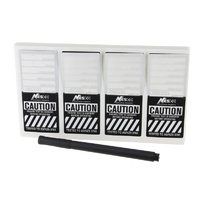
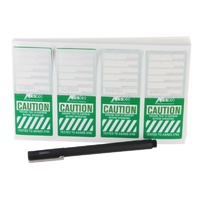
Construction and mining use a four colour rolling system: red, green, blue, and yellow. Each quarter has a designated colour, and a tag in the current colour shows the equipment has been tested within the last three months. Workers learn the active colour at site induction, so any tag in the wrong colour is immediately visible as out of date.
Office and commercial environments use longer test intervals, so colour coding is less critical. Many sites use a single colour and rely on the printed test date and next test due date for verification. Black, white, or yellow tags are common in these settings, and the focus is on the printed information rather than a rotating colour cycle.
Healthcare and patient care environments follow additional rules under AS/NZS 3551 for biomedical equipment. Tags in these settings often distinguish between general appliances and medical electrical equipment, and patient care areas may require more frequent testing. The tag colour and content reflect these higher risk categories.
Tags and stickers come in several formats, each suited to a specific application. Choosing the right type depends on whether the item is portable or fixed, how harsh the environment is, and how the tag attaches.
Swing tags are the standard for portable equipment. They tie around the appliance cord near the plug and stay with the item through normal use. The tag carries the test date, next test due date, technician identifier, and asset number. Pre printed packs from Volt Safety and Nesco cover most workshop needs.
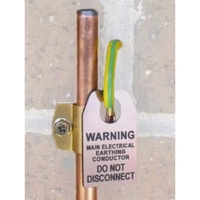
Switchboards, distribution boards, and circuit components use adhesive labels that stay in place for the life of the installation. Solar PV systems, battery storage, and main switches require specific warning and identification labels under AS/NZS 5033 and AS/NZS 4777. These labels are typically vinyl or polyester to handle UV and contact wear.
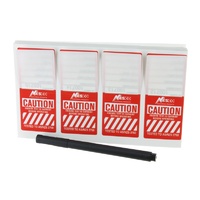
Lockout tagout procedures use specific isolation tags that warn against re energising equipment. Danger tags, out of service tags, and personal lockout tags have defined formats and are typically used together with Lockout Kits and padlocks. These tags are not the same as compliance test tags and serve a different purpose during maintenance and repair.
Tags and stickers look similar but answer different questions. A test tag confirms a recent inspection. An electrical sticker identifies the equipment, the circuit, or a hazard. Knowing the difference prevents the wrong label from being applied to the wrong item.
| Attribute | Compliance Test Tag | Electrical Identification Sticker |
|---|---|---|
| Purpose | Records inspection date and result | Identifies circuit, voltage, or hazard |
| Standard | AS/NZS 3760:2022 | AS/NZS 3000, AS/NZS 5033, AS/NZS 4777 |
| Lifespan | Replaced every test cycle | Permanent, replaced if illegible |
| Attachment | Cable tie or wire to cord | Adhesive to fixed surface |
| Colour Coded | Yes, by quarter or industry | By function or hazard class |
A compliance tag is time bound. It expires and must be replaced after each test. An identification label is permanent. It tells you what the circuit does or what the hazard is, and only changes if the installation changes. Mixing them up creates audit findings, even if the equipment is otherwise safe.
AS/NZS 3000 requires every circuit at the switchboard to be clearly identified. The label must show the circuit function and any conditions that affect isolation. Solar systems, batteries, and EV chargers add further label requirements at the inverter, isolator, and main switch. Sparky Direct stocks compliance label kits for solar and battery installations sized to typical residential and commercial systems.
Underground services and concealed cables require warning markers. Underground Electrical Warning Tapes are buried above the cable to alert future excavation. Conduit colour codes and circuit ferrules at junction boxes complete the identification chain from the switchboard to the final outlet.
Test intervals vary by environment. Higher risk sites test more often. The interval is set by the standard and reflects how quickly equipment can deteriorate in that setting.
| Environment | Interval | Tag Cycle |
|---|---|---|
| Construction and demolition | 3 months | Quarterly RGBY |
| Mining and quarrying | 3 months | Quarterly RGBY |
| Manufacturing and workshops | 6 to 12 months | Date based |
| Commercial offices | 5 years | Date based |
| Hire equipment | Before each hire | Date based |
| New equipment | Before first use (visual) | Initial tag |
Construction and mining sites test every three months. The work environment is rough on cords and plugs, and the consequences of a fault are severe. Quarterly testing aligned to the RGBY colour cycle gives an immediate visual check that all equipment is current.
Office equipment in low risk environments has a five year test interval, provided the equipment is used in normal conditions and visual inspections happen between formal tests. The longer interval reflects the much lower wear rate of plug pack appliances in a clean office.
New equipment requires a visual check and an initial tag before first use, but a full electrical test is not always required. Hire equipment must be tested before each hire or after each return, regardless of the previous test date. The hire company carries this obligation in most cases.
The right tag survives the working life of the appliance until the next test. Choosing well means matching the material, the adhesive, and the print to the environment.
Plastic swing tags suit indoor workshop and commercial environments where the tag stays clean and dry. Vinyl labels cope with cleaning chemicals and outdoor exposure. Thermal transfer labels printed in house carry barcodes and asset numbers and are best for high volume programs with hundreds of items per site.
Indoor tags can use standard plastic stock with thermal or laser print. Outdoor tags need UV resistant materials and inks, otherwise the print fades within a quarter and the tag becomes unreadable. Solar installation labels and external switchboard markers always require UV grade vinyl.
Workshop tools, hire fleets, and mining equipment see physical abuse that destroys ordinary paper tags within days. Heavy duty plastic, chemical resistant vinyl, or stainless steel tags suit these settings. The right tag costs more upfront but saves the labour cost of replacing failed tags between tests.
Outdoor and harsh use environments need tags that match. Weatherproof options keep the print legible and the tag attached through the full test interval.
UV stable polyester and vinyl resist fading from direct sunlight. The pigment ink stays readable for several years rather than fading in months. UV resistance is essential for any tag that lives outside or near a window with strong sun exposure.
Sites with degreasers, cleaning chemicals, or constant handling need tags with abrasion resistant face stock and chemical resistant adhesive. Vinyl with a clear laminate top coat handles this best. Cheaper paper tags fail quickly in these settings and lead to recurring replacement costs.
Some sites require tamper evident tags that show clear damage if removed. Destructible vinyl is one option, where the label tears if peeled. Wire seal attachment, used with metal seals or numbered plastic seals, prevents removal without visible evidence and suits high security or audit critical applications.
Off the shelf packs cover most needs at the lowest cost. Custom labels add asset tracking, branding, and barcodes for businesses that manage large fleets or multiple sites.
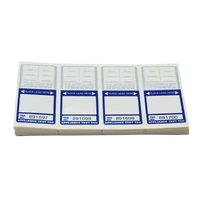
Pre printed packs include the test date, next test due, technician name, and asset number fields, ready for the inspector to fill in. Pack sizes from 100 to 1000 cover the typical contractor or facility needs. Brands like Nesco supply the standard formats accepted by AS/NZS 3760:2022.
Custom labels add company branding, unique asset numbers, and barcodes or QR codes that link to a digital register. Scanning the code on site pulls up the full test history, instructions, and next test due date. This suits hire companies, large facilities, and contractors managing fleets of test equipment.
Solar and battery installations require a specific set of compliance labels at the inverter, isolators, and main switch. Pre packaged kits cover all the labels for a typical residential or small commercial system, sized to match AS/NZS 5033 and AS/NZS 4777 requirements. Sparky Direct also stocks the relevant Electrical Test Equipment for installation testing.
The tag on the equipment is half the record. The other half is the register that holds the full test history. Together they prove compliance to an auditor or insurer.
The register lists every item of electrical equipment, the asset number, the location, the test history, and the result of each test. Faulty equipment, repairs, and disposal are also recorded. The register sits with the maintenance team or the safety officer and must be available during audits.
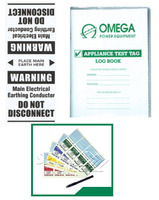
Paper log books still meet the standard and remain in common use on smaller sites. Digital registers with mobile entry speed up data capture, support photo evidence, and make audit reporting easier. The choice depends on site size, asset count, and the level of integration required with other compliance systems.
Records must be retained for the period required by state work health and safety law, typically five years. They must be accessible during an audit or after an incident. Lost or incomplete records weaken the compliance position even when the testing itself was done correctly. Robust record keeping is what turns testing activity into compliance evidence.
A working program starts with a schedule, a competent person, and a place to record results. Each component reinforces the others, and a gap in any one weakens the whole.
The schedule lists every item, the test interval that applies to it, and the next due date. Calendar reminders or scheduling software keep the testing on track. Construction sites map their schedule to the RGBY quarter. Offices set annual or five year reminders depending on the equipment class.
Workers are the first line of defence between formal tests. A daily visual check looks for cord damage, cracked plugs, missing covers, and the current tag colour. Training that makes this routine takes ten minutes per worker but prevents most in service failures. Failed visual checks remove the equipment from service immediately, regardless of when the next formal test is due.
Equipment that fails a test must be tagged out of service and quarantined until repaired or disposed of. The faulty equipment is recorded in the register with the failure mode. This process protects workers from accidentally returning faulty gear to use. Safety Lock Out equipment supports this isolation process for fixed plant.
Most compliance failures come from the same handful of errors. Recognising them early prevents repeat findings at audit and keeps the program effective.
The most common findings during workplace audits are missing or expired tags on portable appliances, illegible print on faded outdoor tags, and incomplete or lost paper records. Each of these is preventable with the right materials and a documented process.
Cheap tags fail. The print rubs off, the plastic cracks, or the tie breaks within weeks. The cost of replacing them, plus the audit risk if the tag is missing during an inspection, outweighs the small price difference at purchase. Trade grade tags from recognised compliance brands are the right starting point.
Mixing colour systems across a site creates confusion. Workers see a yellow tag and do not know whether it means current quarter, next quarter, or last year. Pick the system that matches your environment, document it in the site induction, and apply it consistently. Construction sites use RGBY, offices use date based.
A tag without a matching register entry is half a record. Auditors look for both. Common errors include skipping entries when busy, writing illegibly, losing the log book between tests, and not transferring data when staff change. A digital system or a strict paper handover routine prevents these gaps.
The tag must last from one test to the next without becoming unreadable or detaching. Performance depends on the materials, the application, and the working environment.
UV exposure, abrasion, and chemical contact all degrade print. Tags placed where they rub against the appliance casing wear faster than tags hanging free on a cord. Choosing tags rated for the environment, and placing them where they are protected from rubbing, doubles or triples their service life.
Lost tags create immediate compliance gaps. Cable tie attachment is more secure than wire ties for most portable equipment. For high value or critical assets, consider redundant labelling: a swing tag plus a discreet adhesive label inside the equipment housing, so the asset record survives even if the external tag is destroyed.
Multi site businesses face the challenge of consistency. A central register, standardised tag formats, and trained staff at each location keep the program uniform. Audit findings at one site usually surface the same gaps at others, so corrective action should be applied across the business, not just locally.
The right supply line keeps testing on schedule. Trade pricing, fast delivery, and the right brand selection matter when a quarter end is approaching and stock is low.
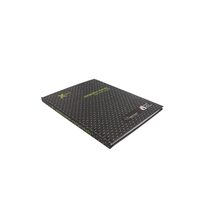
Sparky Direct stocks the full range of test tags, stickers, and compliance log books online, with same day dispatch on most stock items. The product range covers Nesco, ILD, and other compliance brands accepted under AS/NZS 3760:2022.
Cheap import tags are tempting on price but fail in service. Print fades, plastic cracks, and ties break before the next test cycle. Trade grade tags from established compliance brands carry the print quality and material durability needed for genuine compliance. The price difference per tag is small over the life of the program.
Contractors testing across multiple sites order tags by the thousand. Bulk packs cut the per tag cost and keep stock on hand for unplanned testing. Combine bulk tag orders with log books and printer ribbons in a single delivery to consolidate freight and admin.
Even a well run program runs into the same recurring problems. Knowing the cause and the fix saves time and avoids compliance gaps.
Inspector Tip: If a tag is illegible at the time of inspection, the equipment is treated as untagged. Replace any faded tag immediately, even if the printed test date is still in date.
Faded tags usually point to UV exposure or chemical contact. The fix is upgrading to UV resistant or chemical resistant material for the affected equipment. Check whether the appliances live outside, near a window, or in a wash bay, and match the tag specification to the location.
Lost tags come from poor attachment. Wire ties cut through plastic over time, and cheap cable ties degrade in heat. Switching to UV stable nylon cable ties or stainless steel wire seals fixes the problem in most cases. For adhesive labels, surface preparation matters: clean, dry, and oil free is the rule.
Workers confused by mixed colour systems create real safety risk. The fix is signage at the site entrance showing the active colour for the quarter, and a brief refresher at toolbox meetings. New starters get the colour system at induction and a printed reference card to keep with their site pass.
Watch Volt Safety LVR-KIT | Low Voltage Switchboard Rescue Kit video
Watch Volt Safety LVR-KIT | Low Voltage Switchboard Rescue Kit video
Watch Volt Safety LVR-KIT | Low Voltage Switchboard Rescue Kit video

I was in a hurry, and I needed something special. I had a compliance officer looking over my shoulder and I was in for a spanking of I didn't get the parts I needed. Sparky Direct had them and delivered.
Great layout! Is easy to find any records you're looking for. Simple and straight forward layout.
Sparky Direct were very helpfull suppling the log book good product very well priced, did the job very well.
Quality products in stock • Fast Australia-wide delivery • Competitive trade pricing
Browse Test Tags and Stickers → Get Expert Advice →Yes, they are designed to be clearly visible and easy to understand.
Sparky Direct supplies test tags and stickers Australia-wide, offering compliant and reliable electrical safety labelling with convenient delivery.
They are securely packaged and delivered via standard courier services.
Unused products are generally eligible for return according to the seller’s returns policy.
Warranty coverage varies by manufacturer and typically covers defects in materials or printing.
Yes, test tags and stickers are typically sold individually or in packs.
Yes, choosing the right material and format ensures durability and compliance.
Yes, appropriate tag types are available for both environments.
Yes, they are designed to remain visible while equipment is in use.
They are replaced according to testing intervals or if damaged or unreadable.
Yes, they are commonly used on construction and work sites.
Yes, they provide clear evidence of testing during audits or safety checks.
Yes, they are a standard part of electrical safety and compliance processes.
Test tags and stickers are labels used to identify electrical equipment that has been inspected and tested for safety.
Yes, they support safer workplaces by identifying compliant and tested equipment.
They help demonstrate that electrical equipment has been tested and is safe to use.
Yes, they are widely used in commercial, industrial, and construction settings.
Many test tags are designed to resist moisture, handling, and general site conditions.
Yes, they are available in paper, vinyl, and durable plastic options.
Yes, they are commonly used on portable electrical appliances and tools.
Yes, colour coding is often used to quickly identify the test period or inspection cycle.
Common details include test date, next test due date, tester identification, and pass or fail status.
In many workplaces, test tagging is required as part of electrical safety and compliance programs.
Yes, test tags are used in accordance with relevant AS/NZS standards and workplace safety requirements.
They are used to record testing details such as test date, retest date, and the person or company that carried out the inspection.