
Search Results:
Search Results:
Search Results:
Search Results:
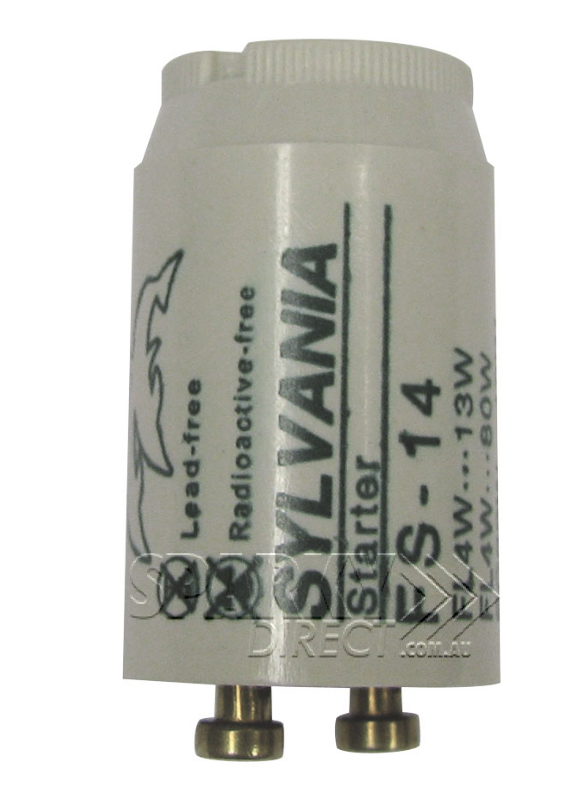
Find the best fluorescent light starters here at Sparky Direct. [ Read More ]
A fluorescent light starter is a small switching device, usually housed in a cylindrical plug-in capsule, that sits in a holder mounted inside the fluorescent fixture. Its job is to initiate the discharge process that allows a fluorescent tube to produce light. The most common type contains a bimetallic strip and a small neon bulb inside a sealed gas-filled envelope. When voltage is applied, the neon bulb glows and heats the bimetallic strip, causing it to bend and make contact. That contact preheats the tube electrodes, then the strip cools, breaks the circuit, and the resulting voltage spike ionises the gas in the tube to start the light. Once the lamp is running, the starter plays no further role.
In a preheat fluorescent circuit, the starter is wired in parallel with the lamp. At switch-on, the full mains voltage appears across the starter, triggering the glow discharge inside the capsule. The bimetallic contacts close and current flows through the lamp filaments to heat them. When the contacts open, the magnetic ballast generates a high-voltage pulse that strikes the arc. This entire sequence takes one to three seconds in a functioning circuit. A failing starter may repeat the cycle multiple times, producing the characteristic flickering seen in older fluorescent fittings before the lamp eventually either ignites or gives up.
Starters, ballasts, and tubes work as a matched system. The magnetic ballast limits current once the arc is established and provides the inductive kick needed to start the lamp. The starter provides the controlled preheat and the trigger pulse. The tube contains the gas mixture that sustains the discharge. If any one of these three components fails, the whole system stops working. Correct diagnosis matters. Replacing a starter when the ballast has failed will not fix the problem. Replacing a tube when the starter is at fault is an unnecessary expense.
Electronic ballasts do not require starters, but a large proportion of Australian commercial and industrial sites still operate magnetic ballast fixtures installed over the past 30 to 40 years. Offices, warehouses, schools, and retail spaces fitted with older T8 and T12 fluorescent systems continue to rely on preheat starters as a routine consumable. Starters are inexpensive, easy to replace, and extend the working life of fixtures that are otherwise in good condition. Until a site transitions fully to LED batten lighting or other modern alternatives, starters remain a practical and cost-effective maintenance item for facilities teams and electrical contractors.
The most common indicator of a failing starter is a lamp that flickers repeatedly before igniting, or that takes noticeably longer to start than it used to. In a healthy circuit the starter completes its switching cycle in a second or two. A worn starter may cycle multiple times before the lamp strikes, or may fail to generate a sufficient voltage pulse, leaving the tube attempting to start but not succeeding. Occasional slow starts in cold weather are normal, but persistent flickering at room temperature points to a starter that needs replacing.
If a fluorescent tube does not light at all, the starter is the first component to swap out. Starters are the cheapest part of the circuit and the most likely to fail. Replace the starter first before assuming the tube or ballast is at fault. If the new starter does not resolve the problem, substitute the tube with a known-good lamp. If both replacements fail, check the ballast.
Blackening at the ends of a fluorescent tube indicates that the electrodes are being overworked. This can result from a starter that is holding its contacts closed for too long, allowing excessive current to pass through the filaments. Over time this degrades the electrodes and shortens lamp life. If replacement tubes consistently develop blackened ends within a short period, check whether the starter is the correct wattage rating for the tube and whether it is functioning correctly.
Start with the starter: it is inexpensive and quick to swap. If replacing the starter resolves the problem, you are done. If not, substitute the tube with a known-good lamp of the correct wattage and tube type. If the fixture still fails to operate after replacing both the starter and the tube, the ballast is the likely culprit. Ballast testing requires a multimeter and a working knowledge of fluorescent circuit wiring. In commercial settings, ballast replacement is generally a licensed electrician's task. Sparky Direct stocks fluorescent ballasts for contractors carrying out this type of remedial work.
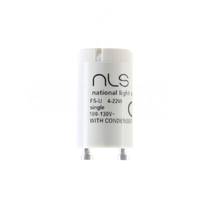
The 4-22W starter suits smaller fluorescent lamps, including compact fluorescent tubes and shorter T8 lamps typically found in domestic kitchens, bathrooms, and small commercial fixtures. This wattage range is the correct choice for lamps rated up to 22 watts. Using a higher-rated starter in a low-wattage fitting can cause premature lamp failure and overworked electrodes. Check the lamp wattage and the fixture label before selecting a starter to confirm you are in the right wattage bracket.
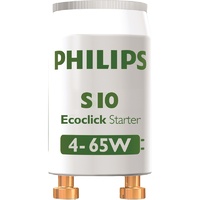
The 4-65W starter covers the full range of standard fluorescent lamp sizes up to 65 watts. This makes it suitable for the majority of T8 and T12 tubes used in commercial and industrial applications. This is the most commonly stocked starter for electrical contractors maintaining office lighting, warehouse battens, and retail fluorescent fittings. Its wider wattage range means it can serve as a single replacement across a broad mix of lamp sizes, which simplifies stock management on large sites.
Starter selection relates to the wattage of the lamp, not the tube diameter designation. A T8 lamp rated at 18W and a T12 lamp rated at 18W both use the same wattage-appropriate starter. T5 lamps are typically used with high-frequency electronic ballasts that do not require a starter. If you are working with a T5 fixture and it has a starter socket, confirm whether the ballast is magnetic or electronic before sourcing a replacement starter.
Standard glow starters are the most common type in Australian installations. Some specialist applications use thermal starters. These use a bimetallic strip directly without a neon glow lamp, and are designed for cold storage environments where low temperatures slow the standard glow discharge process. Delay-start starters are designed to extend the preheat period before firing, reducing electrode wear and extending tube life in applications where lamps are switched frequently. For most standard commercial and residential fluorescent maintenance, a quality glow-type starter in the correct wattage range is the appropriate choice.
Starters are only required in circuits using magnetic (inductive) ballasts. Electronic ballasts incorporate their own starting circuitry and do not use external starters. Fitting a starter in a circuit with an electronic ballast will not cause damage but also has no effect. When maintaining unfamiliar fluorescent fixtures, check the ballast type before assuming a starter is needed. Magnetic ballasts are typically heavier, oil-filled or resin-filled components. Electronic ballasts are lighter, with a plastic housing and a printed circuit board.
The starter wattage rating must fall within the range that includes the lamp wattage. A 4-22W starter suits lamps from 4 to 22 watts. A 4-65W starter covers lamps from 4 to 65 watts. Common fluorescent lamp wattages in Australian commercial installations include 18W, 36W, and 58W for T8 tubes. Starters are generally labelled with their wattage range printed on the capsule or packaging. When in doubt, a 4-65W starter will cover the majority of standard commercial lamp wattages.
Before purchasing starters in bulk, confirm that the fixtures use magnetic ballasts with starter sockets. Open one representative fitting and check for the starter holder, a small cylindrical socket usually mounted on the body of the fixture near the lamp holder. If no starter socket is present, the fixture uses an electronic ballast and does not require starters. For large facilities with a mix of fixture ages, it is worth cataloguing which bays or zones use magnetic ballast fittings before ordering stock.
Australian mains voltage is 230V AC at 50Hz. Fluorescent starters sold for the Australian market are rated for this voltage. If sourcing starters from overseas suppliers, confirm the voltage rating on the capsule. A starter rated for 110-130V will not function correctly on 230V mains and may fail immediately or cause inconsistent starting. All starters stocked by Sparky Direct are rated for Australian mains voltage.
Quality starters use sealed metal or robust plastic capsules that resist moisture ingress, capacitors that suppress radio frequency interference during switching, and bimetallic strips calibrated for consistent contact timing. Cheap starters may use inferior bimetallic elements. These can hold contacts closed too long, increasing electrode wear, or fail to generate a sufficient voltage spike, causing repeated cycling without ignition. For commercial and facilities applications where large quantities of starters are replaced on a regular maintenance schedule, specifying starters from established brands reduces labour costs associated with repeat callouts.
Sparky Direct supplies starters from National Light Sources (NLS) and Philips. Both are established electrical products brands with a track record in Australian commercial and industrial applications. These brands manufacture starters to consistent quality standards, which matters when purchasing large quantities for facilities maintenance programs.
No. Starters must be matched to the lamp wattage and the circuit voltage. Using the wrong wattage starter is one of the most common mistakes in fluorescent lamp maintenance. A starter rated below the lamp wattage may not generate enough preheat current, while a starter with an excessively wide range may perform inconsistently in low-wattage applications. The starter also needs to physically fit the starter socket. The bayonet-type socket used in Australian fluorescent fittings is standard across most local fixtures, but some imported or specialty fittings use different socket sizes.
Use the table below as a quick reference for common Australian fluorescent lamp types and the correct starter wattage range:
| Lamp Type | Wattage | Tube Length | Recommended Starter |
|---|---|---|---|
| T8 Fluorescent | 18W | 600mm | 4-22W or 4-65W |
| T8 Fluorescent | 36W | 1200mm | 4-65W |
| T8 Fluorescent | 58W | 1500mm | 4-65W |
| T12 Fluorescent | 20W | 600mm | 4-22W or 4-65W |
| T12 Fluorescent | 40W | 1200mm | 4-65W |
| Compact Fluorescent (CFL) | 5-18W | Various | 4-22W (check ballast type) |
Magnetic ballasts are heavier components, typically potted in resin or oil, and are usually larger than electronic equivalents. They produce a slight hum during operation. Electronic ballasts are lighter, run cooler, and operate silently at high frequency. A fixture with an electronic ballast will not have a starter socket, or if it has one installed from a previous configuration, the socket will be unused. If you are unsure, check for a starter socket physically inside the fitting before ordering replacement starters.
The most frequent error is using a 4-65W starter in a fixture where the lamp wattage is above 65W. Although 65W covers most standard lamps, some larger industrial tubes exceed this rating and require a specialist starter. A second common mistake is fitting starters into electronic ballast fixtures where they are not needed and may cause confusion during future fault finding. Always confirm the ballast type and the lamp wattage before purchasing replacement starters for an unfamiliar installation.
Safety note: Always isolate the circuit at the switchboard before opening a fluorescent fitting or replacing any components. Fluorescent fixtures operate at mains voltage and can retain voltage in the ballast briefly after switch-off. Confirm isolation with a voltage tester before touching any wiring or components inside the fitting.
Switch off the fitting at the wall switch and then isolate the circuit at the switchboard. Use a non-contact voltage tester to confirm there is no live voltage present at the fixture before opening it. Allow the lamp and ballast to cool if the fitting has been running, as fluorescent lamps and magnetic ballasts retain heat. Work in accordance with AS/NZS 3000:2018 for any electrical work carried out in Australian commercial or residential installations.
Once the circuit is isolated and the fitting is confirmed dead, locate the starter holder inside the fitting body. The starter is a small cylindrical component that pushes into the holder and locks with a quarter-turn. Push the starter in slightly, rotate it approximately 90 degrees anticlockwise, and pull it free from the holder. Insert the replacement starter, push it in, and rotate clockwise until it locks. Refit any covers, restore power at the switchboard, and test the lamp. The whole process typically takes under two minutes per fitting.
Restore power and observe the lamp start sequence. A functioning circuit with a new starter should ignite the tube within two to three seconds. If the lamp flickers repeatedly without igniting, the tube itself may be faulty or the ballast may be failing. If the lamp ignites and operates normally, the repair is complete. Document the replacement date and the lamp and starter details if the site uses a maintenance log for its lighting systems.
Starter replacement in a domestic or commercial setting is generally considered a routine maintenance task. Any work that involves opening a distribution board, tracing wiring faults, or replacing a ballast requires a licensed electrician. Under Australian electrical licensing law, unlicensed persons must not carry out electrical installation work. If the fault involves wiring, switchboard components, or ballast replacement, engage a licensed electrical contractor. Sparky Direct serves contractors across Australia: contact us for trade advice and bulk purchasing for maintenance programs.
The most reliable approach to fluorescent maintenance is to replace starters proactively rather than reactively. On a large site with many fluorescent fixtures, waiting for starters to fail individually creates a reactive maintenance burden and disrupts staff. Grouping starter replacements with scheduled lamp replacements reduces the number of maintenance visits and keeps lighting levels consistent across the facility. Keep a stock of starters in both wattage ranges on site so replacements are always on hand.
Starters typically last between 6,000 and 10,000 switching cycles. In a commercial environment where lights run eight hours per day and switch on and off once per shift, this equates to roughly two to four years of service. In facilities with frequent switching, such as corridor lighting on motion sensors, starters may wear faster. A common approach in facilities management is to replace all starters at the same time as lamp replacements. For standard office fluorescent installations, this is typically every two to three years.
Given the low cost of starters relative to lamp replacement labour, it is standard practice to fit a new starter every time a lamp is replaced. This eliminates the risk of a lamp failing shortly after installation due to a worn starter, and it avoids a repeat maintenance visit to the same fitting. Bulk purchasing of starters in both common wattage ranges from Sparky Direct's lighting starters range reduces per-unit cost. It also ensures consistent product quality across the site.
Large commercial buildings may contain hundreds or thousands of fluorescent fittings. A structured maintenance program that logs fitting locations, lamp types, and replacement dates reduces unplanned outages and makes it easier to plan budgets for consumables. When planning a fluorescent maintenance program, identify the ballast types in use across the site and map out the lamp wattages installed. Set a starter stock level that covers one full lamp replacement cycle without reordering mid-program. Sparky Direct provides trade pricing and volume discounts suitable for contractors and facilities teams running these programs.
The simplest field test is substitution: fit a new starter and a new tube, then observe results. If a known-good starter and known-good tube fail to ignite the lamp, the ballast is the most likely fault. Ballast failures can present as complete non-starting, continuous cycling without ignition, overheating, or a burning smell from the fitting. A multimeter can be used to check ballast output voltage, but this work should be carried out by a licensed electrician given that ballast wiring operates at mains voltage. Sparky Direct stocks replacement fluorescent ballasts for contractors undertaking this level of remedial work.
A well-functioning starter preheats the lamp electrodes correctly, allowing the arc to strike at the designed voltage with minimal energy waste. A failing starter that cycles repeatedly before ignition draws current through the lamp filaments multiple times without producing usable light. This repeated cycling consumes electricity without providing illumination, and it degrades the lamp faster than normal operation. Maintaining starters in good condition keeps the fluorescent circuit operating as designed and extends lamp service life.
The energy consumed during repeated failed start attempts is relatively small on an individual fitting basis. The more significant energy cost comes from premature lamp replacement. A faulty starter that repeatedly overstresses the tube electrodes shortens lamp life, increasing the frequency and cost of tube replacements. In a large facility with hundreds of fittings, this accelerated lamp turnover represents a real maintenance cost that proactive starter replacement can reduce.
For facilities managers evaluating the cost of maintaining fluorescent lighting versus upgrading to LED, starter and lamp replacement costs are part of the calculation. Fluorescent systems using magnetic ballasts carry ongoing consumable costs for tubes, starters, and occasional ballast replacements. These costs, combined with the higher energy consumption of fluorescent lamps compared to LED equivalents, typically form part of the business case for LED upgrades in larger facilities. Sparky Direct stocks LED highbays and weatherproof LED battens for sites at the stage of planning that transition.
LED lighting operates on low-voltage DC current supplied by an integrated or external driver. There is no gas discharge arc to initiate, no electrodes to preheat, and no inductive ballast required. LED systems are either wired directly to mains voltage through a driver, or they replace fluorescent tubes in existing fixtures via retrofit products designed to bypass the ballast. In either case, starters are not part of the circuit and are not fitted.
LED retrofit tubes are designed to fit standard fluorescent lamp holders. Depending on the product, they may require the ballast to be bypassed (direct-wire LED tubes) or may be compatible with existing magnetic or electronic ballasts (plug-and-play LED tubes). Direct-wire LED tubes deliver better efficiency and longer life but require a licensed electrician to modify the fixture wiring. Plug-and-play types are simpler to install but maintain the ballast in the circuit, which introduces a point of failure and reduces the energy efficiency gain. Sparky Direct stocks LED light bulbs and tubes suitable for retrofit applications.
For a single fitting, ongoing starter and lamp replacement costs are low. For a large facility with 200 or more fluorescent fittings, the cumulative cost of lamp replacements, starter replacements, ballast failures, and maintenance labour builds over a five-year period. LED systems typically have higher upfront capital costs but lower ongoing maintenance requirements. LED tubes generally have rated service lives of 30,000 to 50,000 hours, compared to 8,000 to 15,000 hours for standard fluorescent tubes. The decision to maintain fluorescent or upgrade to LED depends on the age of the fixtures, the planned tenure in the building, and the available capital budget.
Maintaining existing fluorescent systems with starters and lamp replacements makes practical sense in several situations. These include short-term leases, fixtures in good structural condition where replacement is not budgeted, limited LED retrofit options for a specific lamp size, and sites with an existing stock of spare lamps and consumables. In these cases, keeping the fluorescent system running efficiently with quality starters and timely lamp replacements is the right approach until a planned upgrade cycle begins.
Fluorescent tubes contain small quantities of mercury, which is essential to the lamp's operation but must be kept out of landfill. Spent fluorescent starters do not contain mercury and can generally be disposed of with general waste, but the tubes themselves require specific handling. Ballasts manufactured before the 1980s may contain polychlorinated biphenyls (PCBs), which require specialist disposal. For modern magnetic ballasts, standard electrical waste disposal applies.
Fluorescent tubes must be disposed of through a mercury lamp recycling program. In Australia, the Fluorocycle scheme provides collection and recycling services for fluorescent lamps. Local councils, electrical wholesalers, and some hardware retailers operate drop-off points for spent tubes. Do not break fluorescent tubes before disposal: broken tubes release mercury vapour and require the area to be ventilated. Contact your local council or state environment authority for specific disposal guidance applicable to your location and the volume of tubes being disposed of.
A phased transition from fluorescent to LED reduces the volume of disposal at any single point and spreads capital costs over time. A practical approach is to plan LED conversions zone by zone, starting with the areas of highest lamp usage or largest energy consumption. As fluorescent fittings are decommissioned, arrange tube recycling through a registered scheme and catalogue which fixtures have been converted to track progress. Interior LED lighting options from Sparky Direct cover the full range from retrofit tubes to complete fixture replacements suitable for office, retail, and industrial applications.
Experienced electrical contractors working on commercial and industrial fluorescent maintenance typically carry both the 4-22W and 4-65W starters at all times. This covers the full range of standard lamp wattages without needing to make a separate purchasing decision for each job. Having both ranges on the van means starter replacement can be completed in a single visit regardless of what lamp wattage is installed in the fitting.
Starters are low-cost items that benefit from bulk purchasing. For facilities teams running planned maintenance programs, ordering starters in quantities that match the number of fittings on site reduces per-unit cost. It also ensures stock is available when the maintenance schedule runs. Sparky Direct provides trade pricing for bulk orders across its electrical accessories range, including starters. Contact the Sparky Direct trade team for volume pricing on large maintenance programs.
For routine fluorescent maintenance, sourcing starters from a reliable supplier with consistent stock availability matters as much as unit price. A supplier that runs out of stock mid-program forces contractors to source elsewhere, which may introduce inconsistent product quality or unfamiliar brands. Sparky Direct maintains stock of starters in both common wattage ranges and ships Australia-wide.
Sparky Direct's fluorescent light starters category page lists currently available starters with product specifications, pricing, and stock status. Orders placed online are dispatched with fast Australia-wide delivery. For remote sites or facilities in regional areas, online purchasing from Sparky Direct is often faster and more cost-effective. Local trade counters may not carry specialist starter stock.
Starters are priced individually at retail, but volume pricing applies to large bulk orders. Factor in delivery costs when comparing prices across suppliers: a slightly lower unit price from a distant supplier may be offset by freight charges. Sparky Direct delivers to all Australian states and territories, with freight calculated at checkout based on order weight and destination.
Older Australian homes often retain fluorescent strip lights in kitchens, laundries, and garages. These fixtures typically use T8 lamps with magnetic ballasts and require starters. Residential applications commonly use the 4-22W range for smaller fittings and the 4-65W range for standard 1200mm tube fittings. Starter replacement in residential fluorescent fixtures is a straightforward task, though any wiring work must be carried out by a licensed electrician.
Commercial office buildings represent the largest volume application for fluorescent starters in Australia. Open-plan offices may contain hundreds of recessed fluorescent fixtures running T8 36W or 58W lamps. These sites benefit from planned maintenance programs that replace starters and lamps together on a two-to-three-year cycle. Sparky Direct's starters range and ballasts support the full scope of commercial fluorescent maintenance.
Industrial sites and warehouses often use high-bay fluorescent fixtures with 58W or 65W T8 lamps in magnetic ballast configurations. These environments expose fittings to temperature fluctuations, vibration, and airborne contaminants that can accelerate starter wear. Planned maintenance intervals in industrial settings may need to be shorter than in office environments. For warehouses transitioning to LED, LED highbays offer a direct replacement for fluorescent high-bay fixtures with significantly reduced maintenance requirements.
Schools, hospitals, retail centres, and government buildings with large fluorescent installations benefit from structured maintenance contracts that include starter replacement as a standard line item. A well-planned program documents each fitting's lamp type, installation date, and last replacement, making it straightforward to schedule replacements before failures occur. Sparky Direct supports contractors running these programs with consistent stock availability, trade pricing, and fast delivery across Australia. For facilities making the transition from fluorescent to interior LED lighting, the Sparky Direct range covers both the ongoing fluorescent maintenance phase and the eventual LED upgrade.
Watch NLS 10113 | Starter 4-22 Watt With Condenser 100-130v 50/60Hz video
Watch Atco-CMP EC18-20-B2 | Fluorescent Ballast 220/240v 18W video
Watch Atco-CMP EC36-40-B2 | Fluorescent Ballast 220/240V 36W video

Hard to find someone that stocks and sells US starters at a reasonable price. All good.
Motor controller with latching option. Great for application with mechanical latching option when want power to automatically restore to fan or such if loose and restore supply power. Great for the motor application I have..
If you are installing standard size plates (power points, light switches, etc.) in a shed with Top Hat rails, these are the mounting block for the job. I trialled mounting a single powerpoint to a top hat rail using this mounting block and it was a perfect fit. Easy to screw the top hat rail to the block and then attached the power point. Will definitely be using many more of these.
Quality products in stock • Fast Australia-wide delivery • Competitive trade pricing
Browse Fluorescent Starters → Get Expert Advice →Yes, they are generally low-cost components.
Sparky Direct supplies fluorescent light starters Australia-wide, offering reliable replacement components with convenient delivery.
They are securely packaged and delivered via standard courier services.
Unused products are generally eligible for return according to the seller’s returns policy.
Warranty coverage varies by manufacturer and typically covers defects in materials or workmanship.
Yes, starters are typically sold as individual components.
Yes, using the correct starter ensures proper lamp operation and lifespan.
They play a role in starting the lamp but have minimal impact on ongoing energy use.
Quality starters are reliable when correctly matched to the lamp.
No, properly functioning starters operate silently.
It is often recommended to replace the starter when replacing the tube.
No, they are usually hidden within the light fitting.
Prolonged faulty operation may reduce lamp lifespan.
A fluorescent light starter is a small electrical component that helps start the operation of certain fluorescent lamps.
Yes, starters can wear out and may need periodic replacement.
Common signs include flickering, delayed start, or the light not turning on.
Yes, they are used in both residential and commercial fluorescent lighting systems.
Yes, they are typically plug-in components designed for simple replacement.
They are used with older magnetic ballast systems, not with electronic ballasts.
Yes, a faulty starter can cause flickering or prevent the lamp from starting.
Yes, starters are rated for certain lamp wattages and must be matched correctly.
Common types include glow starters designed for specific wattage ranges.
Quality starters are manufactured to meet relevant AS/NZS electrical and safety standards.
Yes, they are still used in many traditional fluorescent lighting systems.
It temporarily closes the circuit to preheat the lamp electrodes, allowing the fluorescent tube to ignite.