
Search Results:
Search Results:
Search Results:
Search Results:
Every electrical circuit needs reliable end-points. Cable lugs do that job at the boundary between flexible conductor and rigid hardware. They sit at the connection between cable and switchboard, motor, battery, or earth bar.
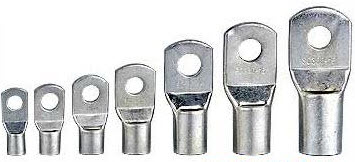
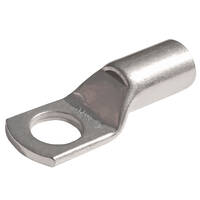
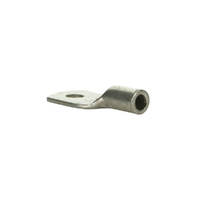
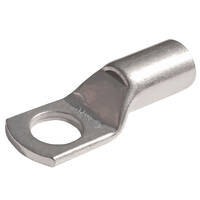
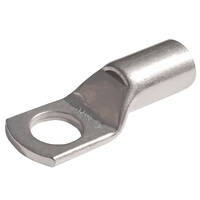
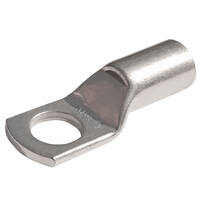
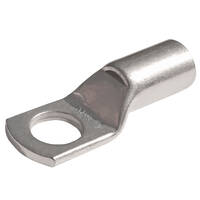
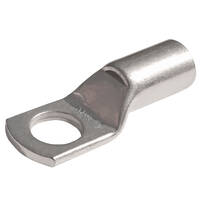
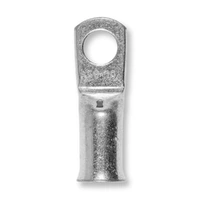
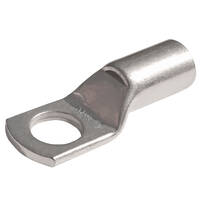
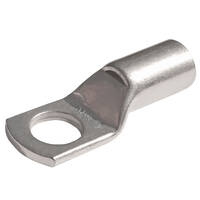
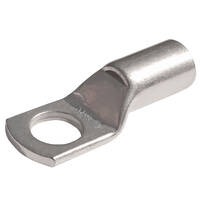
A cable lug is a shaped metal fitting with a barrel at one end and a flat tongue with a stud hole at the other. The barrel slips over the stripped conductor and is crimped down with a hydraulic or hand tool. The tongue then bolts onto a busbar, terminal block, or stud. Tin-plated copper is the most common material because it carries current well and resists corrosion.
A loose or poorly terminated cable end is one of the most common causes of switchboard fires. Loose strands create gaps. Gaps mean higher contact resistance. Higher resistance produces heat, and heat eventually melts insulation. A correctly crimped lug eliminates these gaps and creates a gas-tight, vibration-resistant joint.
The crimp process cold-welds the conductor strands to the inner barrel of the lug. This compresses out air gaps and produces a metal-to-metal interface across the full barrel length. The result is a connection with resistance close to that of the cable itself, which keeps voltage drop and heat generation to a minimum.
Bare conductor under a screw terminal works for small cable sizes in light fittings or accessories. Once you move beyond about 6mm², the surface area becomes too small for reliable contact. Lugs spread the load across a wider face and eliminate the risk of strands escaping the clamp.
Cable lugs come in several styles, and the right choice depends on the application, the cable size, and how often the connection might need to be undone.
Compression lugs are the workhorse of switchboard and main switch terminations. Once crimped with the matching die, the joint becomes mechanically and electrically permanent. This is the preferred choice where vibration, current, and long service life all need to be addressed in a single termination.
Mechanical lugs use one or more set screws to clamp the conductor inside the barrel. They suit installations where the cable might need to be removed or re-terminated, such as test rigs, temporary builds, or aluminium feeder cables that benefit from periodic torque checks.
Ring tongue lugs stay in place when the screw is loose, which makes them the safest choice for vibration-prone equipment. Fork (or spade) lugs are faster to fit because they slide under a partly loosened screw. Pin terminals work on screwless terminal blocks where a flat tongue would not fit.
Insulated lugs come with a pre-moulded sleeve that covers the barrel. They are useful where adjacent live parts could be accidentally touched or where short runs of unsleeved conductor might bridge to earth. Non-insulated lugs allow heat-shrink to be added to suit the specific install.
Lug material choice has a direct impact on conductivity, corrosion resistance, and how the joint behaves over time. Mixing materials at a connection point introduces problems that the original installer may not see for years.
Copper is the standard material for cable lugs in mains and DC power applications. It has excellent conductivity, good ductility for crimping, and forms a stable interface with copper conductors. Most lugs sold for general electrical work, including those from CABAC and Alco, are made from electrolytic copper.
Aluminium feeder cables need aluminium-bodied or bi-metallic lugs. Crimping aluminium conductor into a copper barrel without the right interface paste leads to galvanic corrosion at the joint. The connection looks fine on day one and fails years later when oxide builds up between the two metals.
Tin plating gives the copper lug a protective skin that resists tarnish and oxidation. Tinned lugs are the right choice for marine, outdoor, and damp environments. The flared-entry copper lugs from TuffStuff Trade Solutions are a typical example used in switchboard and battery work.
When two dissimilar metals meet in the presence of moisture, an electrochemical reaction starts. The less noble metal corrodes preferentially. For lug terminations, this means copper lug on aluminium busbar (or the reverse) will eventually fail unless a barrier or proper bi-metal interface is used. Always match lug material to both the cable and the terminal.
Sizing has two parts. The barrel must match the cable cross-section, and the stud hole must match the bolt or stud at the terminal. Getting either wrong leads to a connection that may pass an inspection but fail under load.
Lugs are sold by the cable size they fit, expressed in mm² (such as 2.5mm², 16mm², 35mm², 70mm²). The lug barrel inside diameter is matched to the conductor outside diameter for that size of stripped cable. Pairing a 35mm² lug with 25mm² cable produces a loose crimp and a high-resistance joint.
The stud hole on the tongue end is sized to fit a specific bolt diameter, typically 6mm, 8mm, 10mm, or 12mm. Always check the stud size on the equipment terminal before ordering. A 12mm stud will not pass through an 8mm hole, and an 8mm stud in a 12mm hole leaves a gap that reduces clamping pressure.
Match lug current rating to the cable and the protective device upstream. The lug should never be the weakest link in the circuit. Manufacturer datasheets list the continuous current rating for each lug size. As a rule, a correctly crimped lug carries the full rated current of its matched cable.
The most frequent error is fitting an oversized lug to a smaller cable to make stripping easier. The crimp deforms the barrel without consolidating the conductor strands. Another common mistake is mixing crimp dies between brands, which can produce a crimp that looks correct but fails the pull-out test.
Different installations have different requirements. Switchboard work, motor connections, battery banks, and earthing all push lugs in slightly different directions.
Main and sub-main terminations in switchboards use compression copper lugs sized to the incoming cable. The choice depends on cable size, the stud at the busbar end, and whether the cable is solid or stranded. Tin-plated lugs are preferred where the board is in a damp basement or coastal location.
Battery work uses heavy copper lugs with flared entries to make insertion of fine-stranded battery cable easier. Solar storage installs, UPS banks, and forklift batteries all see vibration and current surges. The lug joint must be tight enough that nothing loosens between scheduled maintenance visits.
Three-phase motor terminations are subject to vibration and thermal cycling. Ring tongue lugs are the standard choice because they cannot fall away if the terminal screw works loose. Lug size is matched to the motor cable, which is in turn matched to the motor full-load current.
Earth conductors at switchboards and at earth stakes require dedicated lugs that match the earth conductor size. The joint must remain low-resistance for the life of the installation, so tinned copper lugs and a proper crimp are the right combination for these terminations.
A good lug joint is the result of correct stripping, the right tool, and an accurate crimp. Each step has to be done properly. Skipping any part of the sequence produces a joint that may pass a visual check but fail in service.
Strip the cable to the exact barrel length of the lug. Too short, and not enough conductor sits inside the crimp zone. Too long, and bare strands extend past the lug body. Use proper cable cutters or cable strippers to avoid nicking the conductor strands.
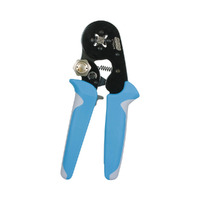
Match the crimping tool die to the lug size. Most crimpers are colour-coded or stamped with the lug size. Position the lug barrel between the dies and apply full pressure until the tool releases. For heavy lugs above 35mm², a hydraulic crimper is usually needed to deliver the required force.
Mechanical lugs are tightened to a specified torque value, listed on the lug or in the datasheet. Use a calibrated torque wrench. Under-torquing leaves the conductor loose. Over-torquing crushes the strands and weakens the cable at the entry point. Always check the manufacturer figure.
After crimping, inspect the joint for visible deformation across the full crimp zone. The lug barrel should show clear die marks. Pull-test the cable to confirm the conductor cannot be withdrawn from the barrel. Once installed, use a clamp meter or low-resistance ohmmeter to verify the joint resistance is within expected limits.
Lug failures rarely happen during installation. They appear weeks, months, or years later as discoloured terminations, blackened insulation, or tripped breakers. Understanding the failure modes helps prevent the next incident.
Discolouration around a lug, melted insulation near a termination, a smell of hot polymer, or an unexplained warm patch on a metal cover are all signals of a failing connection. Investigate immediately, since these often progress to faults under load.
A high-resistance joint converts current into heat. As the joint heats and cools, the metal expands and contracts, and the contact area gradually degrades. The cycle accelerates until the connection fails, sometimes catastrophically. Almost all overheating starts from an under-crimped or under-torqued lug.
Bare copper in damp, salty, or polluted air develops a green oxide layer that increases joint resistance. Tinned lugs resist this damage. Where exposure cannot be avoided, the lug joint should be sealed with heat-shrink and, in some cases, an environmental boot or compound.
Using the wrong die, the wrong size lug, or the wrong tool produces a weak crimp that fails under vibration or thermal stress. The joint may hold for the initial commissioning test then loosen over the first year of service. Following the lug manufacturer's installation guide is the only reliable prevention.
A thermal imaging camera quickly highlights warm joints in an energised switchboard. Once a faulty lug is identified, isolate the circuit, cut back the cable to clean conductor, fit a new lug, and re-terminate. Never re-use a lug that has been crimped and removed, as the barrel has already been deformed.
Cable terminations are governed by Australian wiring standards. Compliant installations demand the right lug, the right tool, and the right technique applied every time.
Joint resistance directly drives power loss and heat at the termination. A correctly crimped copper lug typically adds less than a milliohm of resistance to the circuit. This figure rises sharply when the crimp is loose, the lug is the wrong size, or the conductor is dirty. Aim for resistance close to that of the cable itself.
Lugs should be sized to carry the full cable rating without thermal limit being reached. In dense switchboards with multiple lugs grouped on a busbar, the rated current may need to be derated to allow for accumulated heat. Manufacturer datasheets provide derating tables for these conditions.
Cable terminations in Australia fall under AS/NZS 3000:2018 (the Wiring Rules). The standard sets out general requirements for safe and reliable terminations. Specific lug products are tested against AS/NZS 4325.1 for compression-type connectors. Compliant lugs from reputable suppliers carry test certification.
Outdoor cabinets, marine vessels, and industrial sites all stress cable terminations. Tinned lugs, sealed joints, and proper enclosure ratings combine to deliver long service life. In coastal areas, even an indoor switchboard can suffer salt-air ingress, so tinned terminations are good practice as standard.
Selecting between lug types comes down to the cable, the terminal, and the working environment. The table below summarises the practical trade-offs.
| Lug Type | Best For | Tool Required | Re-Usable |
|---|---|---|---|
| Copper Compression | Switchboards, motors, mains | Hand or hydraulic crimper | No |
| Mechanical (set-screw) | Solar combiners, test rigs | Hex key or torque wrench | Yes |
| Tinned Copper | Marine, outdoor, damp boards | Same as copper compression | No |
| Insulated Ring/Fork | Light fittings, control circuits | Insulated crimper | No |
Copper is the right choice for almost all general electrical work. Aluminium lugs have a place where the cable itself is aluminium, typically in larger feeder runs. Mixing the two without a proper bi-metal interface causes galvanic corrosion and joint failure over time.
Crimp lugs deliver the lowest joint resistance and the most reliable long-term connection. Mechanical lugs offer the convenience of being re-tightened or re-used. Most permanent installations use crimp. Most semi-permanent or test work uses mechanical.
Insulated lugs are convenient where adjacent terminals might bridge or where heat-shrink is not practical. Non-insulated lugs cost less and allow for custom heat-shrink colour coding, which is useful in larger installations where terminations need to be identified at a glance.
Use copper compression lugs for any termination that will not be removed in normal service. Use mechanical lugs where re-termination is expected. Use tinned copper for damp or coastal sites. Use insulated lugs in dense terminal blocks. Match the stud size and cable size in every case.
Cable lugs are a low-cost item compared to the cable they terminate, but the wrong choice multiplies the cost in failed terminations and call-back time.
Small copper lugs for 2.5mm² cable are typically sold for a few dollars in single units, with bulk packs reducing the per-unit cost. Large 70mm² and above lugs cost considerably more because of the copper content. Pricing varies by brand, plating, and pack size, so check the current Sparky Direct listing for accurate figures.
Tradies who terminate cable regularly benefit from buying lugs in larger packs. Single-buy options are useful for one-off jobs or for keeping the van stocked with less common sizes. Mixed assortments suit electricians whose work crosses between residential, commercial, and industrial sites.
Generic lugs from overseas markets may not meet Australian dimensional or material standards. The barrel may be thin-walled, the copper content may be low, or the plating may be inconsistent. Brands carried by trade suppliers are tested against AS/NZS standards and are the safer choice for compliant work.
Trade suppliers stock the full range of sizes and brands needed for professional electrical work. Retail and hardware stores typically carry a narrow selection aimed at DIY users(This only applies to low-voltage work; any mains-powered work needs to be done by a licensed electrician). For trade work, ordering from a dedicated electrical wholesaler avoids the time lost searching multiple retail aisles.
Sparky Direct dispatches stocked items quickly, which matters when a job is held up waiting for a specific lug size. Common sizes such as 16mm², 25mm², 35mm², and 70mm² are typically held in good quantity. Less common sizes and bi-metal lugs may have longer lead times depending on supplier stock.
The right buying approach saves time on the job and reduces the risk of a return trip for the right size or type.
Start with the cable size, then the stud size at the equipment end. Confirm whether the connection is permanent or might need to be undone. Check the environment for damp or salt exposure. These three questions resolve the lug type, material, and plating in most cases.
Ordering by approximate size rather than the cable cross-section is the most common mistake. Buying lugs for the wrong stud diameter is the second most common. Forgetting to check whether a hydraulic crimper is needed for larger sizes is the third. A short pre-order checklist prevents most of these.
Carrying a working set of common lug sizes in the van eliminates trips back to the suppliers. Most electricians stock 2.5mm², 6mm², 16mm², 25mm², and 35mm² lugs in 6mm and 8mm stud configurations. Larger sizes can be ordered as needed once the cable size is known.
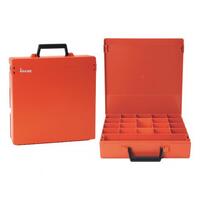
Trade Tip: Sort lug stock by cable size in clearly labelled compartments. Mixing sizes in a single tray costs minutes on every job and increases the chance of fitting the wrong lug.
Trade-grade copper compression and tinned lugs from Sparky Direct sit inside the wider electrical cables range, which makes ordering cable and lugs together straightforward. For data and low-voltage terminations, the quick connect terminals range may also be useful, and matching cable glands are stocked alongside.
Watch TuffStuff CL708F | Flared Entry Copper Lug | 70mm² - 8.0mm Stud video
Watch CU lug 35mm2 cable 12mm stud | CAL35-12 video
Watch CU lug 16mm2 cable 8mm stud | CAL16-8 video

Excellent quality lug, the flared entry certainly makes it easier to insert fine stranded flexible conductors.
I am 100% positive that these will carry the current that the wire can deliver. I'm using in a12v high current situation.
This is a good quality product with reasonable delivery time and well-packed for transportation. Easy to use and the insolation is thick as standard.
Quality products in stock • Fast Australia-wide delivery • Competitive trade pricing
Browse Cable Lugs → Get Expert Advice →Installation requires correct tools and training, which is why lugs are typically installed by licensed professionals.
Electrical lugs are available from Sparky Direct, offering access to compliant electrical components with Australia-wide delivery.
Delivery options depend on the supplier and location, with availability across metropolitan and regional Australia.
Yes. Electrical lugs are available in individual packs and bulk quantities depending on requirements.
Warranty coverage depends on the manufacturer and supplier, with conditions applying to correct use.
Consider cable size, lug type, material, current rating, and electrician recommendations.
When correctly installed and protected, electrical lugs can last for many years.
Yes. Heavy-duty lugs are widely used in commercial and industrial electrical systems.
Yes. Lugs are commonly used in residential switchboards and equipment connections.
Reuse is not always recommended, as deformation during crimping may affect connection quality.
Lugs do not usually require maintenance but are inspected during routine electrical checks.
Some lugs are visible within switchboards or equipment, while others are enclosed within housings.
Yes. Incorrect lug size or type can lead to poor connections, heat buildup, or equipment damage.
Electrical lugs are connectors used to terminate and secure electrical cables to terminals, busbars, or equipment connection points.
Yes. Correctly crimped or terminated lugs help ensure consistent electrical contact.
Lugs provide a secure and reliable connection, helping prevent loose connections, overheating, and electrical faults.
Yes. Electrical lugs must be installed by licensed electricians to ensure safety, correct termination, and compliance.
Yes. Certain lugs are suitable for outdoor use, particularly when corrosion-resistant materials are selected.
Specific lugs are designed for copper or aluminium conductors, and compatibility should be matched to the cable type.
Yes. When correctly sized and installed, electrical lugs are suitable for high-current and power distribution applications.
Yes. Lugs are available in a wide range of sizes to suit different cable cross-sections and terminal stud sizes.
Yes. Common types include ring lugs, fork lugs, pin lugs, blade lugs, and compression lugs.
Electrical lugs are commonly made from copper, tinned copper, aluminium, or brass depending on the application.
Quality electrical lugs supplied in Australia are manufactured to meet relevant AS/NZS electrical and safety requirements when installed correctly.
Lugs are commonly used in switchboards, control panels, batteries, motors, and other electrical equipment requiring secure cable termination.