
Search Results:
Search Results:
Search Results:
Search Results:
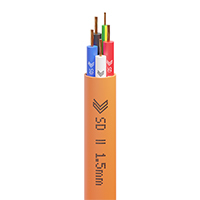
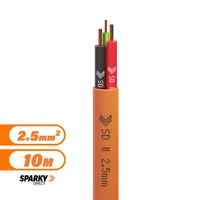
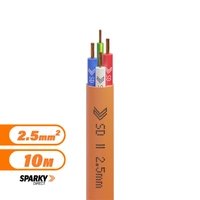
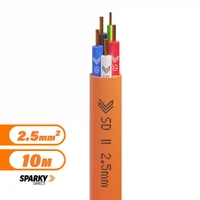
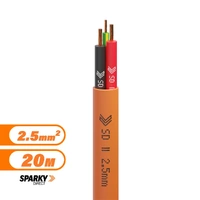
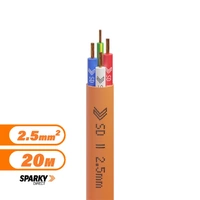
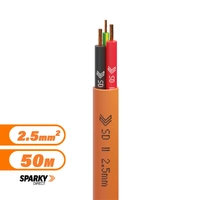
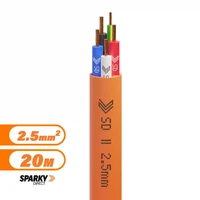
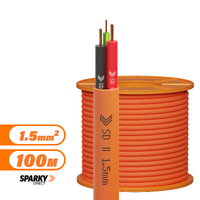
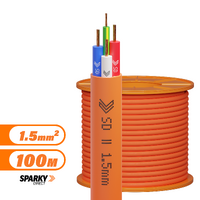
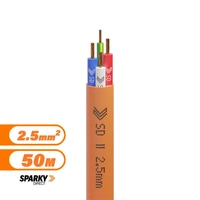
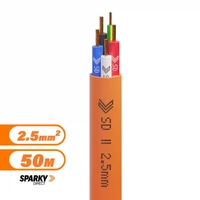
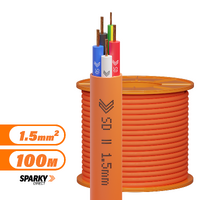
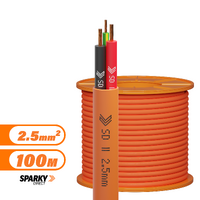
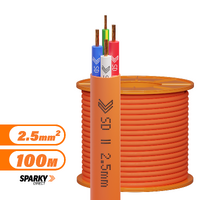
Orange circular cable is a heavy-duty power conductor used right across Australian commercial, industrial, and infrastructure projects. The cable carries mains-voltage current to switchboards, submains, and dedicated equipment circuits where flat building wire is not the right tool for the job.
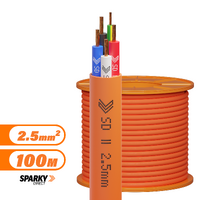
An orange circular cable consists of stranded copper conductors, individual core insulation, fillers to maintain a round profile, and a tough orange outer sheath. Each core is colour-coded to match Australian wiring conventions for active, neutral, and earth identification. The round geometry allows the cable to flex evenly in any direction during installation, which matters when pulling through conduit or routing around tight bends.
The circular profile reduces friction inside conduit and prevents the cable from kinking under tension. Round cables also pack more efficiently into cable trays and ladders. The orange jacket itself acts as a mechanical and chemical barrier, protecting the cores from abrasion, UV exposure, and minor impact damage during the build phase.
Standard Building Wire is a single-core conductor with PVC insulation only. It needs to be run inside conduit for any external or exposed installation. Orange circular cable bundles multiple cores inside a sheathed assembly, which means it can be installed in conduit, on tray, or direct buried with appropriate protection. For sub-mains feeds and three-phase distribution, the all-in-one circular construction saves install time.
In a typical commercial fit-out, orange circular cable runs from the main switchboard to sub-distribution boards on each floor. From there, smaller circuits branch out using flat TPS cable for lighting and general power. The orange cable handles the high current loads of the submain leg, while the flat cable handles individual room circuits.
Compliance is non-negotiable in Australian electrical work. Orange circular cable used on any installation must meet the relevant AS/NZS standards, both for the cable itself and for how it is installed.
AS/NZS 5000.1 covers the construction, performance, and testing of polymeric insulated cables rated up to 0.6/1kV. Orange circular cables sold at Sparky Direct are manufactured to this standard. The 0.6/1kV rating means the cable is suitable for nominal mains-voltage applications, including 230/400V three-phase submains.
AS/NZS 5000.2 covers cables rated up to 450/750V, which suits internal wiring in equipment and lower-voltage feeders. Most orange circular cable used on commercial and industrial sites is the 0.6/1kV variant, but lower-voltage versions exist for specific control and machine wiring tasks.
AS/NZS 3000 (the Wiring Rules) governs how cable is selected, installed, terminated, and protected in any electrical installation in Australia. Section 3 covers cable selection, including current-carrying capacity, voltage drop, and protection against fault current. Every orange circular cable run must be sized and installed in accordance with these rules.
AS/NZS 3008 provides the technical detail behind cable selection: current ratings under various installation methods, derating factors for grouped cables, ambient temperature corrections, and voltage drop tables. Sizing a submains cable correctly means working through both AS/NZS 3000 and AS/NZS 3008 calculations. Underestimating either current capacity or voltage drop leads to nuisance tripping or cable overheating.
Orange circular cable is available in several core configurations to match the load and circuit type. Choosing the correct configuration prevents oversizing and avoids the cost of unused cores.
Single-core orange circular cable carries one conductor and is grouped with others for three-phase feeders. The 2C+E configuration carries two cores plus earth, suiting single-phase loads with dedicated earth. The 3C+E carries three actives plus earth for three-phase loads requiring a separate earth. The 4C+E adds a neutral for three-phase plus neutral installations. The 5C configuration provides three actives, neutral, and earth combined.
Single-phase circuits use 2C+E cable for active, neutral, and earth. Three-phase loads such as motors, three-phase outlets, and balanced commercial distribution boards require 4C+E or 5C cable. The right configuration depends on the load type and how the circuit is protected.
Some orange circular cables use a reduced earth conductor smaller than the active cores. This is permitted under AS/NZS 3000 when the earth fault current is calculated to clear within the protective device time. Reduced earth versions cost less and pull more easily, but they suit specific applications only.
Standard orange circular cable is unarmoured and suits installation in conduit, on tray, or in protected pathways. Armoured versions add a metallic sheath (typically steel wire or steel tape) for direct burial or installations exposed to mechanical damage. Armoured cable costs more and terminates differently, so it is reserved for applications where the protection is genuinely required.
Cable size is the single biggest factor in safe, compliant installation. Sizing wrong leads to overheating, voltage drop, and protection device mismatches.
Orange circular cable is available in common conductor sizes from 1.5mm² up to 25mm² and beyond. The 2.5mm² and 4mm² sizes suit small submains and dedicated appliance circuits. The 6mm², 10mm², and 16mm² sizes handle larger submains, three-phase distribution, and high-load equipment feeds. Sizes above 25mm² are typical for main switchboard supplies and large industrial installations.
Current-carrying capacity depends on conductor size, installation method, ambient temperature, and how many other cables share the pathway. AS/NZS 3008 publishes baseline current ratings for each size and installation method. Apply derating factors for grouped cables, elevated ambient temperature, and thermal insulation contact. Always check the rated capacity against the protective device upstream.
Long submain runs lose voltage along the cable. AS/NZS 3000 limits voltage drop to 5% from the point of supply to the point of use. For long runs, the cable size must be increased to keep voltage drop within limits, even when current capacity alone would allow a smaller cable. Use AS/NZS 3008 voltage drop tables or a compliant calculator to verify.
Every cable has a minimum bending radius, typically expressed as a multiple of the cable diameter. Pulling cable around bends tighter than the rated radius damages insulation and can compromise the conductor. Plan conduit routes and tray bends to respect the manufacturer bending radius spec.
Selecting cable involves matching electrical, mechanical, and environmental requirements to the right product. Get any of these wrong and the installation either fails compliance or fails in service.
Start with the connected load: total current draw, single or three-phase, and any inrush characteristics for motors or transformers. Add the run length, then select the smallest cable size that meets both current capacity and voltage drop limits after derating. Always coordinate with the upstream protective device.
Submains feed sub-distribution boards from the main switchboard. Subcircuits run from a board to a final point of use, such as a hot water unit, oven, or three-phase outlet. Infrastructure runs feed external assets: site lighting, pumps, gates, and remote pillars. Each application has different sizing drivers (length, load profile, protection coordination) and may favour different configurations.
Above-ground exposed runs need UV-stable sheath. Direct buried runs need either armoured cable or compliant conduit such as Heavy Duty Rigid Conduit. Industrial environments with chemical exposure may require XLPE insulation rather than PVC. Match the sheath and insulation to the actual install environment, not the easiest spec on the shelf.
Common mistakes include sizing on current capacity alone (ignoring voltage drop), forgetting derating factors when cables are bunched, and selecting reduced earth without verifying fault loop impedance. Another frequent error is using indoor-rated cable in exposed external locations. Each mistake creates a compliance and safety problem.
The insulation and sheath determine how the cable performs across temperature, weather, and chemical exposure. Different materials suit different jobs.
X-90 stands for cross-linked polyethylene insulation rated to 90°C continuous conductor temperature. XLPE handles higher current at the same conductor size compared to PVC, and tolerates short-term overload better. It is the standard choice for higher-rated submains and three-phase feeders.
V-90 is PVC insulation rated to 90°C. It suits general-purpose installations where the current rating sits comfortably below the cable maximum. PVC is widely used and cost-effective, but the 90°C rating must be coordinated with the termination temperature limits at switchgear.
The 5V-90 outer sheath is a tough PVC layer rated to 90°C, providing mechanical protection, chemical resistance, and the visible orange identification. The sheath is what takes the abrasion, UV, and impact, allowing the inner cores to do their electrical job in a stable environment.
Orange circular cable handles outdoor use when the sheath is UV-rated and the installation method protects the cable from standing water and physical damage. Direct burial requires either armoured cable or installation inside compliant conduit. For exposed runs, check the sheath UV rating in the manufacturer datasheet before specifying.
Orange circular cable shows up across most sectors that need reliable mains-voltage power distribution. The applications drive the configuration, size, and installation method.
In commercial buildings, orange circular cable handles the submains from the main switchboard to each floor distribution board, plus dedicated feeds for HVAC plant, lift motors, and three-phase outlets. The cable typically runs in cable tray above suspended ceilings or in dedicated electrical risers.
Industrial sites use orange circular cable for machine feeds, three-phase plant, compressors, and process equipment. Mining sites require cable that handles tough mechanical conditions, often combined with armouring and protective conduit. Configuration choices reflect the load type and the environment.
Underground runs to street lighting, traffic control, and remote pillars rely on orange circular cable installed in conduit or as armoured direct-buried cable. Civil works, marine, and rail infrastructure use the cable wherever sub-mains-level current needs to reach a remote location.
Air conditioning plant, heat pumps, and three-phase HVAC compressors typically need dedicated submains. Orange circular cable suits this role because the configuration matches the three-phase load, and the sheath protects the cable through plant rooms and external runs to roof-mounted equipment.
Cable selection only succeeds if installation matches the design. The Wiring Rules specify how cable is supported, terminated, and protected.
Common installation methods include enclosed in conduit (above or below ground), supported on cable tray or ladder, clipped direct to surfaces in protected areas, and direct buried with mechanical protection. Each method has its own current rating in AS/NZS 3008. Mixing methods along a single run requires sizing to the worst case.
Vertical runs need support intervals tight enough to prevent cable strain on terminations. Horizontal runs on tray need clipping at intervals that prevent sag. Cable should be routed away from heat sources, sharp edges, and locations where future works could damage the sheath.
Orange circular cable terminates at switchgear using crimp lugs or direct conductor connection into rated terminals. Use sized Lugs matched to the conductor and the termination block. Strip and dress the cable cleanly using quality Wire Strippers, and use compliant Cable Glands at enclosure entries to maintain ingress protection ratings.
Real installations rarely match the textbook conditions assumed in baseline current tables. Grouped cables share heat. Cables in thermal insulation lose heat poorly. Elevated ambient temperatures reduce capacity. Apply the AS/NZS 3008 derating factors that match the actual install method and conditions, not the most favourable case.
Orange circular is one of several cable types used for mains-voltage distribution. Choosing between options depends on the application, install method, and load.
TPS (twin and earth, or three and earth) is flat building wire used for general lighting and power circuits inside walls and ceilings. Orange circular handles larger submains, three-phase feeders, and runs that need a tough sheath for tray, conduit, or buried installation. TPS is faster to install in domestic walls; orange circular suits the larger feeders behind the scenes.
Round cables flex evenly and pull cleanly through conduit. Flat cables sit neatly against framing in domestic and light commercial wall cavities. For three-phase or large single-phase circuits routed through conduit, tray, or external pathways, round wins on installability. For final subcircuits in domestic walls, flat wins on cost and ease.
Orange circular is not the right choice for general-purpose lighting circuits, low-current data and signal cables, or applications requiring flexibility for movement. Use the cable type matched to the job, not the heaviest option available.
For high-load installations, orange circular offers integrated mechanical protection, multi-core configurations matched to three-phase loads, and a sheath that survives industrial and external environments. The combined cable assembly reduces install time compared to running multiple single-core SDI Cable runs in conduit.
A submain installed today should perform for decades. Cable selection and install quality determine whether the run reaches its design life.
Quality orange circular cable handles continuous load at its rated capacity without insulation degradation. The 90°C insulation rating provides headroom for short-term overloads and elevated ambient conditions. Sustained operation above the rated temperature accelerates insulation breakdown and shortens cable life.
The orange sheath protects against routine knocks, abrasion during install, and minor impact in service. For applications where heavier impact or rodent attack is a risk, use armoured cable or install inside rigid conduit. Designing in the right level of mechanical protection up front avoids costly remediation.
Most cable failures trace back to install errors: tight bends, damaged sheath at terminations, missed derating factors, or termination faults that overheat the conductor. Following correct install practice, using quality terminations, and respecting bending radius specs prevents the majority of failures.
Cable manufacturers typically design for service lives of 25 to 40 years when installed within rated conditions. Real-world life depends on actual operating temperature, environmental exposure, and installation quality. A well-installed cable run will outlast multiple equipment refresh cycles.
Cable cost varies with conductor size, configuration, and bulk versus cut length. Buying smart matters because cable is often a significant project cost line.
Prices scale with copper content, so larger conductor sizes cost more per metre. Smaller sizes (2.5mm² and 4mm²) sit at trade-friendly price points; larger sizes (16mm² and above) carry significantly more copper and cost accordingly. Three-phase configurations cost more than single-phase due to additional cores.
Full-drum bulk pricing offers the best per-metre rate when the project demand justifies the spend. Cable Cuts let smaller jobs avoid the cost of a full drum and the offcut waste. Match the buying format to the actual cable demand.
Below-spec cable from non-compliant sources may be marked similarly to compliant product but fall short on conductor diameter, insulation thickness, or sheath quality. Non-compliant cable is illegal to install and creates serious liability. Buy from suppliers who source from manufacturers with verifiable AS/NZS compliance.
Online wholesalers offer trade pricing without the markup of retail counter sales, plus fast nationwide shipping. The trade-off is no in-person counter, so plan ahead and order with delivery time built into the project schedule. Sparky Direct ships orange circular cable Australia-wide.
Common sizes and configurations stay in stock for fast dispatch. Larger or specialist configurations may have longer lead times. Check availability when planning project schedules, and order early for jobs with critical install dates. The Electra-Cables range covers the most popular orange circular configurations.
Buying cable well comes down to the same discipline as installing it well: get the spec right, plan the quantity, and avoid the common traps.
Work from the load schedule and the protection coordination back to the cable. Verify size against current capacity, voltage drop, and short-circuit withstand. Confirm the configuration matches the circuit type (single-phase, three-phase, with or without separate neutral). Specify the sheath and insulation for the install environment.
Frequent buyer mistakes include underestimating run length and ordering short, mixing single-core counts to fake a multi-core configuration, skipping armoured spec for direct buried runs, and ordering reduced earth without checking fault loop calculations. Each one costs time and money to fix on site.
Add a sensible allowance for terminations, vertical drops, and routing variations. A 10% allowance on calculated run length is typical for straightforward installs; complex routes need more. Order a continuous length where possible, since joints in submains must be made with compliant joint kits and add a failure point.
Sparky Direct stocks the common Orange Circular Cable sizes and configurations from compliant manufacturers, with trade pricing and Australia-wide delivery. The full Twin & Earth Cables and Solar Cables ranges are also available for projects that need the full cable spec covered from one supplier.
Watch 1.5mm SDI Red Cable | Single Double Insulated 1.5mm Red 20mtr Cut | 15SDI-R20 video
Watch NLS 30146 | 25mm PVC Cable Gland Black video
Watch NLS 30311 | 20mm PVC Cable Gland Black video

I have been dealing with Sparky Direct for years and I have never had a problem. I have always received great service along with quality products and great prices. Thank you.
This is a good quality product with reasonable delivery time and well-packed for transportation. Easy to use and the insolation is thick as standard.
Excellent service which is the very high benchmark Sparky Direct have set themselves and are widely known for.
Quality cable in stock • Fast Australia-wide delivery • Competitive trade pricing
Browse Orange Circular Cables → Get Expert Advice →Yes. They are suitable for outdoor and buried applications when correctly installed.
Orange circular cables are available from Sparky Direct, offering access to compliant electrical products with Australia-wide delivery.
Delivery options depend on the supplier and location, with availability across metropolitan and regional Australia.
Yes. They are suitable for new installations, renovations, and electrical upgrades.
Warranty coverage depends on the manufacturer and supplier, with conditions applying to correct use and installation.
Consider conductor size, number of cores, installation method, compliance markings, and electrician recommendations.
Yes. They are used in residential, commercial, and light industrial electrical installations.
Yes. When compliant products are installed by licensed electricians, they provide a safe power solution.
The cables themselves do not require maintenance but are checked during electrical inspections.
Yes. They are often used when upgrading or relocating underground power supplies.
When correctly installed, orange circular cables can provide many years of reliable service.
No. Once installed underground, they are concealed, with the orange sheath serving as identification during excavation.
They are designed for professional handling and offer sufficient flexibility for trenching and conduit installation.
Orange circular cables are heavy-duty electrical cables with a circular profile and orange outer sheath, commonly used for fixed wiring and underground installations.
Yes. They are designed to withstand moisture, soil conditions, and external environmental exposure.
They offer strong insulation, durability, and clear visual identification for safer underground installations.
Yes. Installation must be carried out by a licensed electrician to ensure safety and compliance.
Yes. Orange circular cables are available in configurations suitable for both single-phase and three-phase systems.
Yes. They are commonly used in residential applications such as underground supply to homes, sheds, and garages.
Yes. They are available in a range of conductor sizes and core configurations to suit different electrical loads.
Orange circular cables typically use copper conductors for reliable electrical performance.
Yes. Orange circular cables are specifically designed for underground use when installed in accordance with Australian wiring rules.
They are commonly used for underground power supply, mains connections, sub-mains, and outdoor electrical installations.
Quality orange circular cables supplied in Australia are manufactured to meet relevant AS/NZS electrical and safety standards when installed correctly.
The orange colour is used to clearly identify underground and external electrical cabling for safety and compliance purposes.