
Search Results:
Search Results:
Search Results:
Search Results:
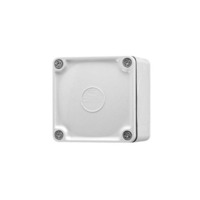
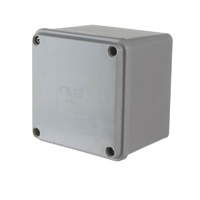
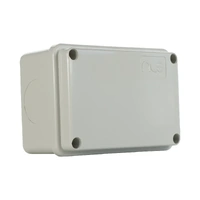
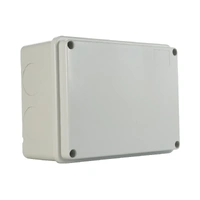
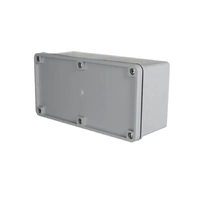
Find the best Adaptable Boxes here at Sparky Direct. [ Read More ]
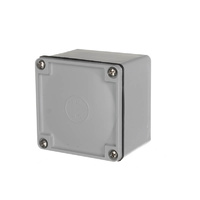
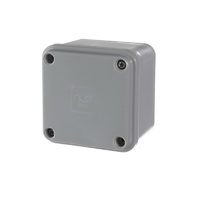
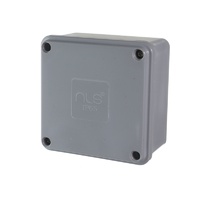
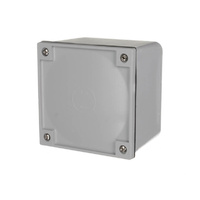
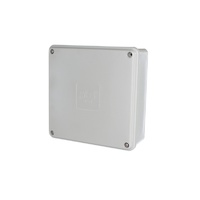
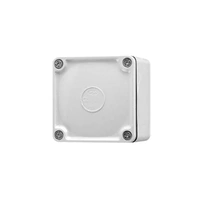
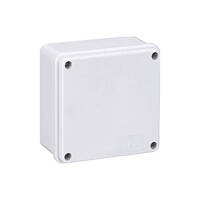
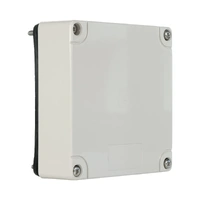
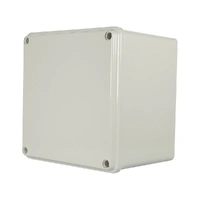
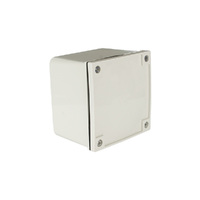
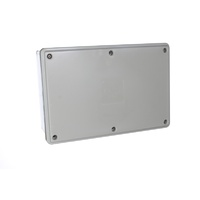
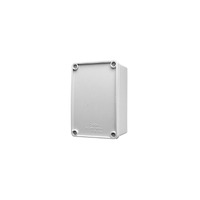
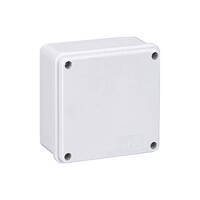
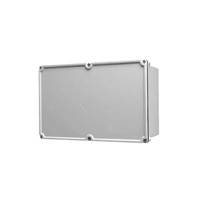
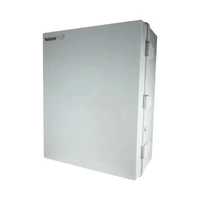
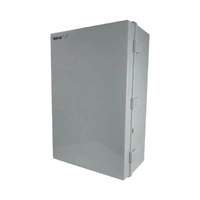
An adaptable box is a sealed enclosure designed to house electrical junctions, cable terminations, and connection points within a compliant wiring system. Unlike fixed-purpose enclosures, adaptable boxes can be configured on site: knockouts allow cable entry from multiple directions to suit the specific routing of each installation. The same enclosure can serve as a junction box, a termination point, or an inspection access point depending on how it is set up.
A standard junction box has pre-formed, fixed cable entry points. An adaptable box uses removable knockout blanks, so entries can be opened from any face to match the cable run. Adaptable boxes are generally deeper, offering more internal volume that accommodates connectors, contactors, time switches, and relay modules. In Australian electrical trade terminology, the two terms are sometimes used interchangeably, though adaptable boxes specifically refer to the knockout-style format.
In Australian electrical work, "adaptable box," "weatherproof junction box," and "weatherproof enclosure" are often used for the same product. The key distinguishing feature of an adaptable box is the knockout-blank system that allows on-site configuration of cable entry points.
Common applications include outdoor cable junctions, submain terminations to sheds and outbuildings, data and MATV cable enclosures, fire alarm system junction points, garden lighting connections, and solar PV wiring. Adaptable boxes are standard components in residential, commercial, light industrial, signage, and garden lighting installations throughout Australia. They are routinely used when extending existing circuits, repairing damaged cable runs, or creating multi-way junction points in both new and retrofit electrical work.
Compliance Requirement: Under AS/NZS 3000, all cable joints and terminations must be enclosed in an accessible enclosure providing mechanical protection. Adaptable boxes installed in concealed locations must remain accessible for inspection and cannot be permanently sealed within wall cavities or ceiling spaces without an access provision.
The IP (Ingress Protection) rating on an adaptable box determines its suitability for specific environments. Choosing the wrong rating is a compliance failure that creates ongoing safety and insurance risk. The rating is defined under IEC 60529 and adopted within Australian Standards. The two digits represent protection against solid particles (first digit) and liquids (second digit).
A first digit of 5 indicates partial protection against dust sufficient to prevent harmful accumulation inside the enclosure. A first digit of 6 indicates total dust-tight protection with vacuum-seal performance tested against continuous airflow. For the liquid digit: 5 means protection against low-pressure water jets from any direction, while 6 means protection against high-pressure, heavy water jets. Both ratings allow limited water ingress that must not cause harmful effects to components inside.
| IP Rating | Dust Protection | Water Protection | Typical Application |
|---|---|---|---|
| IP56 | Partial - prevents harmful accumulation | High-pressure jets from any direction | Covered outdoor areas, eaves, sheltered external walls |
| IP65 | Total - dust-tight, vacuum-seal tested | Low-pressure directed water jets | Fully exposed outdoor, agricultural, rooftop, industrial |
IP56-rated adaptable boxes are widely accepted for residential and commercial outdoor installations where the enclosure has some shelter from direct weather exposure. This includes eaves junctions, covered deck and patio installations, and external wall locations that are partially shielded by roof overhangs. The Clipsal Series 265 range is rated IP56 and is the most commonly specified enclosure in this category across Australian electrical installations.
IP65-rated adaptable boxes are completely dust-tight and protected against low-pressure directed water jets, making them the preferred choice for fully exposed outdoor locations, agricultural environments, rooftop solar wiring, garden installations, and any site where dust accumulation could compromise internal components. IP65 is achieved through precision-moulded PVC or ABS construction combined with a gasket-sealed lid secured by multiple screws. The NLS IP65 range is the standard specification for these environments.
If the enclosure is sheltered from direct weather by a roof overhang or covered structure, IP56 is generally sufficient. If the enclosure is fully exposed to rain, dust, or is mounted in an agricultural or industrial environment, specify IP65.
The material an adaptable box is constructed from affects durability, UV resistance, weight, corrosion performance, and suitability for different installation environments. Three main options are available in the Australian market.
Non-UV-stabilised plastic becomes brittle within two to three years of sun exposure, compromising both the mechanical integrity and the IP rating of the enclosure. Any adaptable box installed in an exposed outdoor location in Australia should be UV-stabilised PVC or ABS. Both Clipsal and NLS adaptable boxes use UV-stabilised compounds as standard.
Correct sizing ensures adequate space for cable connections, maintains compliance with wiring regulations, and produces a professional installation. Adaptable boxes in the Australian market range from compact 75mm x 75mm x 50mm enclosures for simple single-junction applications up to 300mm x 300mm x 150mm enclosures for multi-circuit termination points.
The most commonly specified sizes for residential outdoor installations are 77mm x 77mm x 54mm and 108mm x 108mm x 76mm, which accommodate standard cable termination connectors with adequate clearance. Larger formats such as 150mm x 150mm x 75mm, 225mm x 150mm x 75mm, and 300mm x 300mm x 150mm are used when housing multiple cable entries, contactors, time switches, or relay modules within a single enclosure.
| Size | Typical Use | Notes |
|---|---|---|
| 75-77mm x 75-77mm x 50-54mm | Simple single-junction applications | Smallest standard size; suits garden lighting joins |
| 100-108mm x 100-108mm x 75-76mm | General residential outdoor junctions | Most common residential specification |
| 150mm x 150mm x 50-75mm | Medium applications, multiple cables | Low-profile format available for restricted depth |
| 211mm x 108mm x 81mm | Rectangular format for elongated components | Suits time switches and multiple side-by-side cables |
| 225mm x 150mm x 75mm and above | Multi-circuit termination, contactors, relays | Commercial and light industrial applications |
| 300mm x 300mm x 150mm | Large multi-circuit enclosures | Maximum standard size; industrial and commercial |
The internal volume of an adaptable box must be sufficient to house all conductors, connectors, and any additional components without overcrowding. Tight packing causes heat buildup and increases fault risk. A practical trade rule is to select a box that allows each conductor to be looped within the enclosure without forcing tight bends, with at least 25mm of clearance around all connection points. For simple single-junction applications a 77mm x 77mm box is typically sufficient. For installations housing contactors, time switches, or multiple cable entries, step up to a 150mm x 150mm or larger format. The depth dimension is often overlooked: a shallower 50mm depth suits simple terminations, while 75mm or 100mm depth is required when housing bulkier connectors or DIN rail components.
Adaptable boxes and junction boxes serve overlapping but distinct purposes. Understanding the difference helps ensure the correct enclosure is selected for each application.
A junction box has pre-formed cable entry points in fixed locations. An adaptable box uses removable knockout blanks to create entries in any of its faces, giving the installer full flexibility to configure the enclosure to suit the cable routing of the specific job. In practice, adaptable boxes are the more versatile option and are preferred when cable routing is not predetermined or when the enclosure may need to accommodate future circuit modifications.
Pre-wired junction boxes with integrated terminals are preferred when a fast, standardised connection is required without the need for separate connector blocks. Junction boxes with fixed entry points are appropriate when cable routing is fixed and unlikely to change, reducing installation time. For data, MATV, or low-voltage applications where cable segregation from mains wiring is required, purpose-built electrical junction boxes with appropriate separation ratings are the correct specification. Browse small junction boxes and large junction boxes for fixed-format alternatives.
AS/NZS 3000 Compliance: All cable joints and terminations must be enclosed in an accessible enclosure providing mechanical protection. The enclosure must be rated for its installation environment. Using an indoor-rated enclosure in an outdoor or wet area is a compliance failure. Adaptable boxes in concealed locations must remain accessible for inspection.
Selecting the best weatherproof adaptable box for an outdoor installation depends on the environment, the application, and the IP rating required for long-term performance and compliance.
The lid gasket is the single most critical component. It must be manufactured from material that remains flexible across the full temperature range of the installation environment without cracking or permanently compressing. UV-stabilised PVC or ABS construction is essential for any enclosure installed in an exposed outdoor location. Plastic lid screws are preferable to metal screws in coastal and high-humidity environments: corroded metal screws are the most common cause of lid seal failure and IP rating loss in long-term outdoor installations.
Correct lid orientation is critical. Where possible, install the adaptable box with the lid opening facing downward or to the side to prevent water pooling on the gasket joint. All cable entries must be sealed with IP-rated cable glands or conduit fittings matched to the enclosure's IP rating. Unsealed knockouts are the most common cause of weatherproofing failure in the field. Plain-to-screw conduit adaptors are the standard fitting for connecting PVC conduit runs to adaptable box entries. Stainless steel or hot-dipped galvanised fixing screws should be used for all outdoor installations to prevent rust staining and corrosion-related loosening over the service life of the enclosure.
A properly sealed adaptable box installation requires more than just the box itself. Cable glands seal individual cable entries. Plain-to-screw conduit adaptors connect conduit runs to the box. Silicone sealant can be applied around the box perimeter for additional weatherproofing on exposed installations. Browse electrical enclosures for the full range of complementary products.
Clipsal and NLS (National Light Sources) are the two dominant brands of adaptable boxes in the Australian electrical market. Each offers distinct advantages, and the correct choice depends on the IP rating required for the installation environment rather than brand preference.
The Clipsal Series 265 adaptable boxes are rated IP56 and are the most widely specified enclosure in Australian residential and commercial outdoor electrical work. The range is available in five standard sizes from 77mm x 77mm x 54mm up to 300mm x 200mm x 152mm, covering the majority of common junction and termination applications. Clipsal adaptable boxes are the default specification for many electrical contractors across Australia due to their consistent availability, well-known compliance credentials, and broad acceptance by building inspectors and certifiers. The IP56 rating is appropriate for the majority of residential and commercial outdoor installations where the enclosure has some degree of shelter from direct weather exposure.
The NLS range is rated IP65 and covers sizes from 75mm x 75mm x 50mm through to 300mm x 300mm x 150mm, with a broader size selection than the Clipsal range at the larger end of the spectrum. NLS enclosures use plastic lid screws as standard, eliminating corrosion-related maintenance issues in coastal and high-humidity environments. For fully exposed outdoor locations, agricultural settings, rooftop solar wiring, garden installations near water, or any environment where total dust exclusion is required, the NLS IP65 range provides the higher level of protection the installation demands.
| Feature | Clipsal Series 265 | NLS IP65 Range |
|---|---|---|
| IP Rating | IP56 | IP65 |
| Dust Protection | Partial (dust-resistant) | Total (dust-tight) |
| Lid Screws | Metal | Plastic (corrosion-resistant) |
| Size Range | 77mm to 300mm x 200mm | 75mm to 300mm x 300mm |
| Best For | Covered outdoor, eaves, sheltered external walls | Fully exposed outdoor, agricultural, rooftop, industrial |
Adaptable boxes are specified across a wide range of electrical projects. Understanding the specific requirements of each application type ensures the correct enclosure is selected every time.
In residential installations, adaptable boxes are most commonly used to terminate submain cables to garages, sheds, and outbuildings; for these applications, IP65 is recommended for any enclosure mounted on an external wall or structure. Garden lighting circuits, pool equipment wiring, and outdoor power outlet extensions frequently require adaptable boxes as junction and inspection points where cable runs change direction or transition between conduit and direct burial. All residential adaptable box installations must be performed by a licensed electrician in accordance with AS/NZS 3000. Browse conduit junction boxes for conduit-specific requirements.
In commercial installations, adaptable boxes are used to house relay contacts, time switches, contactors, and control wiring junctions in plant rooms, car parks, external signage, and rooftop mechanical equipment areas. Fire alarm system wiring commonly uses IP65-rated adaptable boxes as junction points throughout a building's detection loop, providing both mechanical protection and a compliant inspection access point. Industrial adaptable box installations in chemical plants, food processing facilities, and manufacturing environments often specify ABS or galvanised metal enclosures with higher IP ratings to withstand cleaning chemicals, steam, and physical impact.
Adaptable boxes are widely used in MATV and data cabling installations as distribution and junction enclosures, providing a weatherproof housing for splitters, amplifiers, and connector blocks. Solar PV and battery storage installations use adaptable boxes as junction points for DC cabling between panels, inverters, and battery systems. For rooftop environments, enclosures must be rated for the UV and thermal conditions of extended outdoor exposure. Browse the full range of surface mount enclosures and recessed enclosures for broader enclosure options across all project types.
Watch CLIPSAL Adaptable Box 163mm x 108mm x 81mm IP56 Grey | 265-4 video
Watch NLS 30092 | Adaptable Box 108mm x 108mm x 76mm video
Watch NLS 30093 | Adaptable weatherproof Box 211mm x 108mm x 81mm video

Great adaptable box, heavy gauge walls and lid. It's the little details that set this apart from the others - the lid has a slight camber on the sealing edge so that when the 4 corner screws are secured the camber compresses the sealing gasket in the middle.
Almost as good as the competitor's, 1/3 of the price. A certain brand had the market cornered for many years at ridiculous prices.
Excellent product. Great Price and Quality. I am a purchasing officer for a trailer company and we use Sparky Direct for our electrical needs. Junction Box is excellent for our trailers!
Quality products in stock • Fast Australia-wide delivery • Competitive trade pricing
Browse Adaptable Boxes → Get Expert Advice →Yes, they help contain and organise wiring connections neatly.
Sparky Direct supplies adaptable boxes Australia-wide, offering reliable electrical enclosure solutions with convenient delivery.
Adaptable boxes are securely packaged and delivered via standard courier services.
Unused products are generally eligible for return according to the seller’s returns policy.
Warranty coverage varies by manufacturer and typically covers defects in materials or workmanship.
Yes, adaptable boxes are typically sold as individual electrical enclosures.
Yes, choosing the correct size ensures safe and compliant cable management.
Once installed correctly, they generally require no maintenance.
Yes, they are commonly used when modifying or extending existing wiring systems.
They may be visible in surface-mounted installations or concealed depending on the setup.
Quality adaptable boxes are designed to withstand everyday installation conditions.
Yes, they protect cables from physical damage and environmental exposure.
They are straightforward for trained professionals to install as part of a compliant system.
An adaptable box is an electrical enclosure used to house cable connections, terminations, or junctions in an electrical installation.
Yes, they are a standard enclosure used in many electrical installations.
They provide a flexible and accessible solution for housing electrical connections.
Yes, they are commonly surface mounted for easy access.
Yes, they are designed with multiple entry points for flexibility.
Yes, they are suitable for residential, commercial, and light industrial applications.
Yes, they are widely used in indoor electrical installations.
Yes, they are available in a range of sizes to suit different wiring requirements.
They are typically made from durable plastic or metal, depending on the application.
Yes, they are commonly used with electrical conduit systems for cable entry and termination.
Quality adaptable boxes are manufactured to meet relevant AS/NZS electrical and safety standards when installed correctly.
They are used to protect electrical connections and provide access for inspection or maintenance.