
Search Results:
Search Results:
Search Results:
Search Results:
A cable tie is a deceptively simple component. The strap and head are moulded as a single piece, with internal teeth on the strap and a pawl inside the head. As the strap feeds through the head, the pawl rides over each tooth and drops into place behind it. Once the loop is tight, the pawl prevents the strap from pulling back, which is what creates the secure hold.
A cable tie is a fastener used to bind a bundle of cables, wires, hoses, or fittings into a single tidy group. Most ties are manufactured from injection-moulded nylon 6/6 polymer for indoor work, or UV-stabilised carbon-loaded black nylon for outdoor environments where ultraviolet exposure would otherwise embrittle the strap. Stainless steel ties (typically Type 304 or 316) are specified for elevated-temperature, corrosive, or chemical-exposure environments where polymer materials would fail prematurely.
The internal pawl is the locking element, engaging with the serrations along the strap as the tie is tensioned around a bundle. On standard one-piece ties, this engagement is permanent, meaning removal requires the tie to be cut. Releasable ties incorporate a small lever adjacent to the pawl, which disengages the locking action, allowing the strap to slide back through the head without compromising the integrity of the tie itself.
Cable ties contribute to a tidy installation, reduce mechanical strain on cable terminations, and prevent loose conductors from chafing against sharp metalwork or other potentially abrasive surfaces. They are routinely deployed inside switchboards, on cable trays and ladders, within enclosures, and across countless general fastening tasks where a fast, strong, low-cost loop fastening is required.
Few components combine speed, low cost, and high holding strength the way a cable tie does. A 4.8mm tie can hold over 22kg, costs cents per piece, and installs in under three seconds. Multiply that across a typical switchboard build or solar array and the time savings are significant.
A bag of 100 standard ties typically covers most domestic wiring jobs, while a bulk bundle of mixed sizes will cover a full commercial fitout. Compared with mechanical clips, screw-fixed saddles, or hook-and-loop fastener products, cable ties consistently deliver the lowest material cost per fastening point combined with the fastest installation time. They also free up scarce labour hours for higher-value tradesperson work like cable terminations, circuit testing, and compliance verification.
Tidy, well-organised cabling is not just cosmetic detailing on completed work. Properly bundled cabling separates active circuit conductors from sensitive data lines, keeps conductors clear of mechanical components and moving parts, and dramatically simplifies any subsequent fault-finding investigation. Cable ties used in conjunction with cable clips and cable duct together produce a finished installation that consistently meets the workmanship expectations of AS/NZS 3000:2018.
Cable ties eliminate the need to drill, screw, or individually fix mechanical saddles for every separate cable run on a project. On larger commercial or industrial jobs the cumulative time difference is measured in working hours rather than minutes. Ties also enable a single tradesperson to complete bundling and routing work that would otherwise require a second pair of hands.
Cable ties cross every part of the electrical and trade industries. The same product secures a switchboard loom, a solar string cable, a data patch run, and a length of garden hose.
Inside switchboards, ties keep neutral, active, and earth bundles separated and routed away from MCB toggles. On cable trays, ties secure cables at fixed intervals so weight is shared across multiple support points. In data work, ties tidy patch runs without crushing the cable jacket. Where dense management is needed, products from the broader cable management range complement ties.
In factories and plant rooms, ties anchor sensor leads, hold pneumatic hoses to frames, and keep loose wiring clear of moving machinery. UV and heat-rated ties suit outdoor plant and roof-mounted equipment. Stainless steel ties handle hot zones around motors and exhausts. The full industrial supplies range covers these heavier applications.
Outside the trade, cable ties tidy AV gear, secure trellis to garden frames, hold fence panels temporarily, and bundle storage items. The same tie that secures a solar inverter cable will also fix shadecloth to a pergola. That versatility is why almost every toolbox carries a packet.
Cable ties are not one product but a family. Choosing the wrong type leads to early failure, so it pays to understand each category before buying.
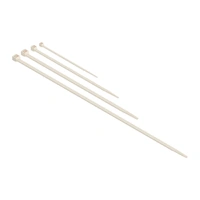
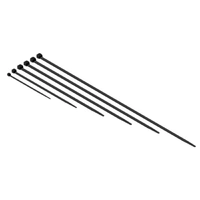
The default tie for indoor electrical, data, and general work. Available in natural (off-white) and a range of colours for circuit identification. Tensile strength is set by the strap width, typically 2.5mm, 3.6mm, 4.8mm, or 7.6mm.
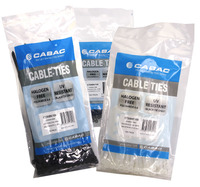
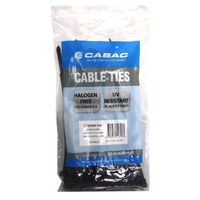
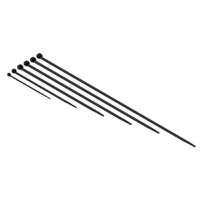
Nylon breaks down in sunlight unless stabilised. UV-resistant ties use carbon black through the bulk of the polymer, not just a surface coating. This is why they are always black. Brands like CABAC and Matelec stock UV ties that hold up for years in Australian conditions.
Where temperatures exceed about 85 degrees C, or where chemical attack is a risk, stainless steel ties are the only safe choice. They also handle very large bundles and structural fastening tasks beyond the reach of nylon.
Releasable ties have a small tab that lifts the internal pawl off the teeth. They cost more but reduce waste during cable testing, mock-ups, and any work where ties may need to be removed and reapplied.
Material choice drives almost every performance characteristic: strength, temperature range, UV life, and chemical resistance.
Nylon 6/6 is the standard polymer. It offers good tensile strength, good chemical resistance, and an operating range from about minus 40 degrees C to 85 degrees C. It absorbs moisture from the air, which is normal and does not affect performance in most settings.
Carbon-black-stabilised nylon resists ultraviolet degradation. Standard natural nylon will turn brittle after several months in direct sun. UV-stabilised black nylon typically holds its strength for several years in the Australian sun, making it the right choice for solar work, external conduit runs, and rooftop equipment.
Type 304 stainless suits most industrial uses. Type 316 adds molybdenum for better marine and chemical resistance. Coated stainless ties pair the strength of metal with an insulating polymer skin, useful where the tie may contact bare conductors.
Indoor switchboards and general use: standard nylon. Outdoor, rooftop, solar: UV-resistant black nylon. Hot zones, marine, chemical plants: stainless steel.
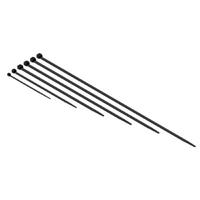
Tie sizing comes down to two numbers: length and width. Length sets the maximum bundle diameter. Width sets the tensile strength.
The usable loop is roughly the tie length minus 25mm for the head. A 200mm tie suits bundles up to about 50mm diameter. A 370mm tie handles bundles up to about 100mm. Always pick a length that leaves a small tag of strap, never one that only just fits.
Strap width is the main strength driver. As a rough guide, a 2.5mm strap holds around 8kg, a 3.6mm strap around 18kg, a 4.8mm strap around 22kg, and a 7.6mm or wider strap 50kg or more.
Pick a tie with at least double the expected load. A bundle that weighs 10kg should sit in a tie rated to 20kg or more. This margin covers vibration, dynamic loads, and the slight weakening that occurs over time from heat cycles.
| Strap Width | Typical Length Range | Tensile Strength | Common Use |
|---|---|---|---|
| 2.5mm | 100mm to 200mm | ~8kg | Light data and AV bundles |
| 3.6mm | 140mm to 300mm | ~18kg | General electrical, switchboards |
| 4.8mm | 200mm to 370mm | ~22kg | Heavy-duty bundles, solar, outdoor |
| 7.6mm+ | 300mm to 1000mm | 50kg+ | Structural, industrial, large mains |
Three questions cover most of the selection process: indoor or outdoor, light or heavy load, permanent or temporary.
Indoor installations typically use natural or coloured nylon, with colour selection sometimes used for circuit identification. Outdoor installations require UV-resistant black nylon containing a carbon black stabiliser distributed throughout the polymer matrix. There is no exception worth making here: a non-UV-stabilised tie installed externally will fail through embrittlement, often within a single Australian summer, leading to remedial work that costs significantly more than the original component.
Light-duty work uses 2.5mm or 3.6mm strap-width ties, while heavy-duty installations call for 4.8mm or wider products with correspondingly higher tensile strength ratings. The cost differential between widths is small relative to the labour involved, so specifying wider ties for borderline applications adds a useful safety margin without materially affecting the project budget.
If the cable run will be unbundled and rebundled during commissioning or testing, releasable ties significantly reduce material waste and rework time. If the bundle is intended as a permanent installation, standard one-piece nylon remains the most cost-effective option. If the bundle is located near a hot motor, in a chemical storage area, or in a marine environment, stainless steel becomes the only appropriate specification.
Cable ties are not always the best answer. Clips, saddles, and reusable straps each have a place.
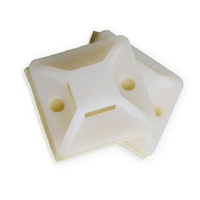
Clips and saddles fix cable to a surface at a fixed point. Cable ties bundle cables together and to other supports. The two are complementary: a typical run uses saddles to fix cables to walls or trays, then ties to bundle multiple cables before saddling. Browse conduit saddles for the surface-fix component.
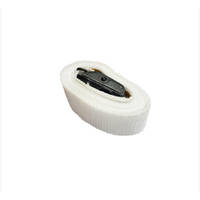
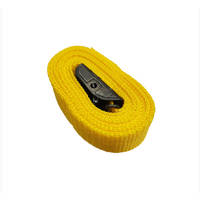
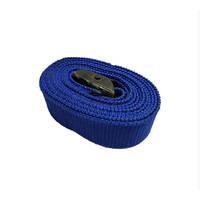
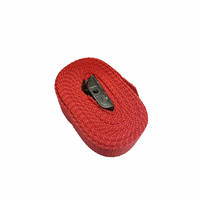
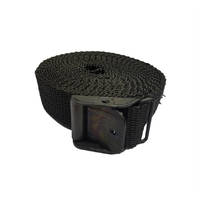
Hook-and-loop straps are reusable, gentler on cable jackets, and ideal for data centre and AV work where bundles change often. They cost more per fastening and grip with less force than a tie. Tie down straps serve the heavier reusable role for fixed loads.
Ties win on cost, speed, and grip. They lose on reusability and on jacket pressure: a tie pulled too tight can crush a soft cable. Pick the tool to suit the task.
Cable ties are simple, but bad installation creates real problems: damaged jackets, sharp edges, premature failure.
Pull the tie until the bundle is held firmly in place but the cable jackets are not visibly deformed or compressed. A tie that bites aggressively into the jacket will eventually cut through the insulation, creating a potentially serious electrical hazard. For larger or heavier bundles, two ties spaced at appropriate intervals distribute the clamping load more effectively than a single very tight tie, and reduce the risk of long-term jacket damage.
Use side cutters or a dedicated tie cutter to trim the tail flush with the head. A trimmed tail leaves no sharp edge to cut hands or snag clothing. Knife-trimmed tails leave a point that can draw blood quickly. A pair of cable cutters or insulated side cutters from a brand like Klein Tools does the job cleanly.
For cable bundles likely to need rework, releasable ties save time and waste. Common uses include mock-ups, prototypes, and bundles that get extended as new circuits are added.
AS/NZS 3000:2018 reminder: Workmanship and support of wiring systems must meet the Wiring Rules. Cable ties contribute to the support and protection of cables but do not replace approved fixings where the standard requires them. Always specify ties rated for the environment, and never use a tie as a primary load-bearing fixing.
Most cable tie failures come from a small set of repeated errors. Knowing them in advance saves callbacks.
Over-tightened ties compress and crush cable jackets, and in extreme cases can damage individual conductors within the cable assembly. The resulting damage is often invisible during initial installation, only becoming apparent when insulation resistance testing fails or when an intermittent fault appears later in the cable's service life. Tighten the tie progressively until the bundle is held firmly, then stop applying tension immediately.
Natural nylon turns brittle within months of direct ultraviolet exposure, with embrittlement progressing rapidly under typical Australian summer conditions. Once embrittlement occurs, the affected ties shatter at the slightest mechanical movement or vibration. The combined replacement cost and labour overhead far exceeds any short-term saving from choosing the cheaper non-UV product at the original purchase stage.
An undersized tie either snaps under sustained load or works gradually loose over time as vibration relaxes the polymer. An oversized tie is awkward to tighten properly and leaves an excessive trailing tail that must be trimmed and disposed of. Specify a tie length where the closed loop sits neatly around the bundle with a short tail of around 20mm to 30mm available for clean trimming.
Cable ties earn their place because the same product works across an enormous range of jobs.
Inside boards, ties bundle and route cables away from MCBs and contactors so that future maintenance can be done safely. On cable trays, ties at regular intervals stop cables sliding and concentrate weight at the support points.
In industrial plant, ties hold sensor leads to frames, anchor pneumatic and hydraulic lines, and keep loose cabling clear of moving parts. Stainless or heat-resistant ties suit zones near motors, ovens, and exhausts.
Releasable ties are ideal for temporary work: holding a cable during testing, running a temporary supply during a fitout, or supporting equipment that will be moved. Even standard ties work as quick temporary fixings if removed cleanly with cutters.
A well-chosen tie should outlive the cable it secures. Failures are almost always traceable to wrong material choice or wrong sizing.
UV degradation is the most common failure mode in Australian conditions. Stick to UV-resistant ties for any installation that sees direct sun, including rooftop solar, outdoor lighting, and external conduit. Specifying once and specifying correctly avoids replacement work later.
Heat cycling slowly relaxes the polymer, which can reduce holding force. Two ties at moderate tension hold better long-term than a single tie pulled to its limit. For permanent installations in warmer plant rooms, this small extra cost pays back in fewer service calls.
Cheap unbranded ties vary wildly in quality. The strap may bend without locking, the head may split under tension, or the polymer may include filler that weakens the structure. Trade-grade ties from brands like HPM and NLS hold their rated strength reliably.
Cable ties are a high-volume consumable. The right buying approach saves both money and time.
Sparky Direct stocks cable ties in single packs, bulk bundles, and full cartons, with same-day dispatch on most stocked items and Australia-wide delivery. The full range covers natural and UV-resistant nylon, stainless steel, and releasable ties.
Hardware-store cable ties often look identical to trade-grade product but underperform on tensile strength and UV life. For any job that has to last, trade-grade ties are the safer choice. The price difference per tie is small; the labour saving on rework is large.
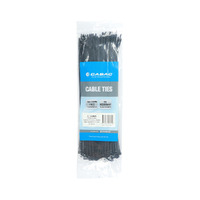
Bundles like the Cabac CT-BUNDLE2 (800 ties across four sizes) cover most domestic work in a single purchase. For larger fitouts, full cartons of a single size keep stock predictable on the truck. Trade pricing applies to bulk purchases.
When cable ties fail, the cause is usually one of three things. Each has a clear fix.
Check the published tensile rating of the tie against the actual bundle weight, including any dynamic loading from vibration or thermal cycling. If the rating is sufficient for the static load, suspect either over-tightening at installation or progressive polymer degradation from sustained heat or ultraviolet exposure. Specify a tie one size larger, or transition to UV-resistant or stainless steel product as the application warrants.
Slipping typically points to a damaged internal pawl, a contaminated or scored strap surface, or simply an undersized tie unable to grip the bundle adequately. Replace with a tie correctly sized so the loop closes firmly around the bundle with a short tail available for clean trimming.
Ties that appear brittle, cracking, or chalky on inspection are exhibiting classic ultraviolet breakdown of the polymer. Replace these with UV-resistant black nylon product, or in particularly extreme heat or chemical exposure zones, transition to stainless steel. Routinely inspect any installations more than three years old that currently use natural nylon ties in outdoor or rooftop applications.
Watch Wago 207-1372 Size 1 Gelbox Inline Connection For 221 Series Max 4mm² Connectors 4 Pack video
Watch Wago 221-2411 4mm² 2-Way Inline Splicing Connector Jar of 60 video
Watch Wago 221-612 6mm² 2-Way Compact Splicing Connectors Jar of 50 video

These Cabac Cable Ties are easy to use and very strong. They are permanent ties (non reusable) which is perfect for the security I require. The price is good, there are plenty of cables in the bundle and the size selection is just about perfect. Thanks, Sparky - you've done it again.
These cable ties hold up well and don't become brittle after months of sun exposure.
Excellent product - easy to use in field with olive grove irrigation sprinklers.
Quality products in stock • Fast Australia-wide delivery • Competitive trade pricing
Browse Cable Ties → Get Expert Advice →Quality cable ties are designed for reliable long-term use.
To cut a cable tie, use a pair of wire cutters or a
To tighten a cable tie, use the ratchet mechanism to turn the head of the cable tie. As you turn the head of the cable tie, the teeth on the head will engage with the cable tie, which will tighten.
When choosing a cable tie, it is important to consider the cable size or wire you need to secure. The cable tie should be large enough to fit around the cable or wire, but it should not be so large that it is loose.
There are three main cable tie types: nylon, polyester, and steel. Nylon cable ties are the most common type of cable tie and are a good choice for most applications. Polyester cable ties are more durable than nylon cable ties, and they are a good choice for applications where the cable tie will be exposed to harsh conditions. Steel cable ties are the most durable type of cable tie, and they are a good choice for applications where the cable tie will be exposed to extreme conditions.
Sparky Direct supplies cable ties Australia-wide, offering reliable cable management solutions with convenient delivery.
Cable ties are securely packaged and delivered via standard courier services.
Unused products are generally eligible for return according to the seller’s returns policy.
Warranty coverage varies by manufacturer and typically covers defects in materials or workmanship.
Cable ties are typically sold in packs of various quantities.
Yes, selecting the correct size and rating ensures secure cable management.
Once installed, they generally require no maintenance.
Yes, they are commonly used when upgrading or organising wiring.
They may be visible depending on the installation method.
Yes, excess tie length can be trimmed once secured.
Cable ties are fastening devices used to bundle, secure, and organise cables and wires.
Yes, they are simple to apply and secure.
Yes, they help create clean and professional-looking cable runs.
Yes, they are a standard cable management accessory.
They help keep cables organised, tidy, and safely secured.
Some cable ties are designed to resist heat and UV exposure, depending on the type.
Outdoor-rated cable ties can be used externally when specified by the manufacturer.
Yes, they are suitable for residential, commercial, and light industrial applications.
Yes, they are widely used in residential electrical and DIY projects.
Yes, they are commonly used to manage cables in electrical installations.
Yes, cable ties are available in a wide range of lengths and widths.
They are typically made from nylon or similar durable plastic materials.
Quality cable ties are manufactured to meet relevant AS/NZS standards where applicable for electrical use.
They are used to manage electrical cables, data cables, and other wiring in a neat and secure manner.