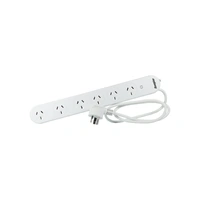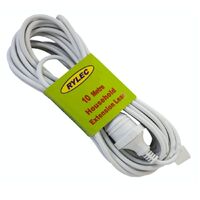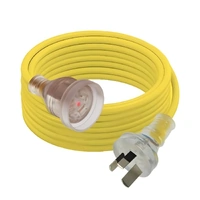

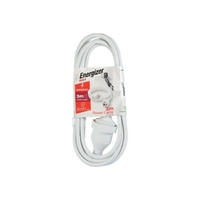

3m
CLEARANCE
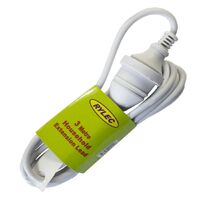
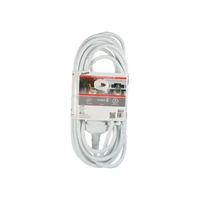
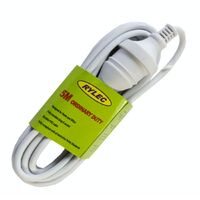
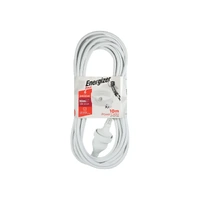
Energizer ETEXT3M | 3 Meter Extension Lead 10 Amp | White.. Discontinued
$7.64
$6.95 ex. GST
Search Results:
Search Results:
An extension lead is an electrical cable with a plug on one end and one or more sockets on the other, designed to extend the reach of a fixed power point to wherever power is actually needed. They are widely used in Australian homes, workshops, garages, outdoor spaces, and commercial environments where fixed electrical power points are not conveniently located.
All extension leads sold in Australia must comply with AS/NZS electrical safety standards, ensuring they meet minimum requirements for insulation, current capacity, and plug quality. When used correctly and within their rated capacity, extension leads are a safe and practical solution for flexible power delivery.
Always purchase extension leads from reputable suppliers. Australian-compliant leads carry the required regulatory compliance marks and are tested to AS/NZS standards for safe use at 230V/50Hz. Leads purchased from overseas or unlicensed sources may not meet these standards and could present a fire or shock hazard.
Extension leads serve a wide range of applications across residential and trade environments. In the home, they power appliances, lamps, and device chargers when fixed outlets are out of reach. In workshops and on building sites, heavy-duty leads keep power tools running across large spaces. Outdoors, weatherproof leads and 20-metre extension leads connect power to garden equipment, outdoor events, and caravan park pedestals. In home offices and entertainment rooms, multi-outlet power boards with surge protection keep sensitive electronics safe.
Understanding the difference between domestic and heavy-duty extension leads is the single most important factor in selecting the right product for the job.
The key difference is cable thickness. A heavier gauge conductor carries more current with significantly less heat build-up, which is critical for sustained high-draw applications. Using a domestic-rated lead for power tool work is one of the most common causes of extension lead overheating and cable insulation failure in Australian homes and on worksites.
| Type | Amperage | Max Wattage | Typical Lengths | Best For |
|---|---|---|---|---|
| Domestic | 10A | 2,400W | 3m, 5m, 10m | Lamps, chargers, fans, home appliances |
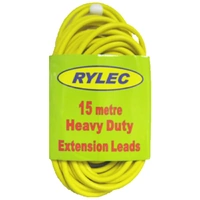
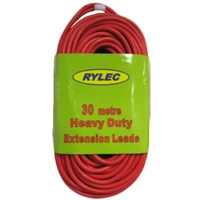
| Heavy-Duty | 15A | 3,600W | 15m, 20m, 30m | Power tools, workshops, outdoor events, caravans |
| Power Board | 10A total | 2,400W total | Varies by cord length | Multi-device home office, entertainment, charging |
| Smart Power Board | 10A total | 2,400W total | Short cord, fixed placement | Smart home, energy monitoring, app control |
Selecting the right extension lead comes down to three factors: length, load capacity, and application. Getting any of these wrong introduces safety risks that could lead to overheating, tripped circuits, or worse.
Longer leads have greater electrical resistance, which causes voltage drop — a real reduction in the voltage reaching the socket end of the lead. For high-wattage appliances, use the shortest lead that gets the job done. A 30-metre extension lead running a high-draw power tool will deliver measurably less voltage at the tool end than a 5-metre lead on the same circuit. This can cause motors to run hotter, tools to underperform, and sensitive electronics to behave erratically.
Check the wattage rating of both the lead and the appliance before connecting. A standard 10A lead handles up to 2,400W. If you are running a heater, circular saw, or other high-draw appliance, confirm the lead's maximum wattage rating first. Exceeding the rated load — even briefly — generates heat that damages cable insulation and creates a fire risk. For appliances drawing more than 2,400W, a 15A heavy-duty lead is the correct choice.
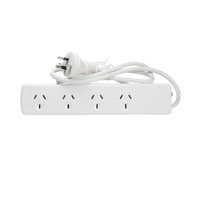
Multi-outlet extension leads and plug tops and extension sockets with overload protection offer flexibility without compromising safety, provided the total load across all outlets stays within the board's rated wattage. Never assume you can run multiple high-draw appliances from a single power board — the wattage adds up quickly and can easily exceed the circuit's capacity.
Important Safety Reminder: Daisy-chaining extension leads — connecting one lead into another — is unsafe and not recommended under Australian electrical guidelines. Always use a single lead of the appropriate length and rating for the application.
Workshop and trade use places the highest demands on extension leads. Power tools draw sustained current, often at high wattage, and are typically used over long cable runs in environments where the lead is subject to physical abuse — being dragged, stepped on, and run through grit and debris.
For power tools, choose a heavy-duty lead with a cable rated at 1.5mm² or greater to handle sustained current draw without heat build-up. A lead that feels noticeably warm during use is a warning sign — it indicates the cable is operating close to or beyond its rated capacity. Continued use in this state risks insulation damage and can lead to short circuits or fire.
Workshop and garage use benefits from longer leads — 15-metre to 20-metre lengths — so tools can reach across the full working space without the need to daisy-chain multiple leads. A single appropriately-rated lead of the correct length is always safer than connecting multiple shorter leads together.
Retractable extension leads are a practical workshop solution, keeping cables tidy and reducing trip hazards in high-traffic work areas. One critical safety rule applies: always unroll a retractable lead fully before use under load. A coiled cable traps the heat generated by current flow and can reach dangerous temperatures even at loads within the rated capacity. This is not optional — it is a genuine safety requirement.
In any environment where water ingress is possible — including outdoor construction sites, garages, and workshops where liquids are present — using a lead fitted with or connected through an RCD (Residual Current Device) provides a critical layer of protection against electric shock. RCDs detect current leakage and cut power within milliseconds, before a dangerous shock can be sustained.
Outdoor use introduces moisture, UV exposure, physical impact, and temperature variation — all of which degrade standard indoor-rated extension leads rapidly. Using an indoor lead outdoors is both a safety risk and a compliance issue under Australian electrical guidelines.
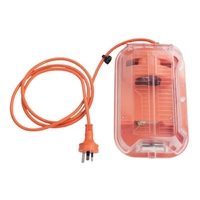
Only extension leads rated for outdoor use should be deployed outside. Look for products with weatherproof ratings or IP-rated industrial sockets — IP55 or higher — to guard against moisture and dust ingress. The Ampfibian X1 IP55 Weatherproof Extension Lead Protector provides a sealed enclosure around the plug and socket junction, protecting the most vulnerable point of any extension lead connection from water penetration in wet conditions.
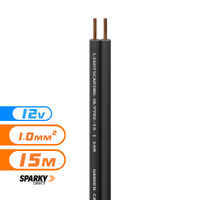
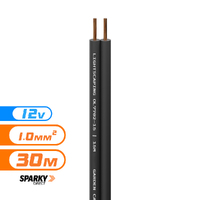
For garden lighting applications, low-voltage 12V garden cable systems offer a safer alternative to running mains-voltage leads across outdoor areas. These systems operate at 12V, significantly reducing the risk of electric shock if the cable is accidentally cut, damaged, or contacted by water. Lightscaping DIY garden cable systems, available in 15m and 30m lengths, are specifically designed for this application and integrate with compatible low-voltage garden light fittings.
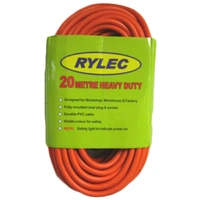
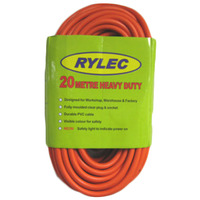
For outdoor events and camping with powered sites, extra-long leads with robust insulation are essential. Where higher current capacity is required at caravan park power pedestals, a 15A caravan-rated lead is the correct choice. The 20-metre heavy-duty extension lead with neon plug in the Sparky Direct range is built specifically for this purpose, with the neon indicator providing a clear visual indication that the lead is energised.
The junction between the lead's plug and the supply socket is the most vulnerable point in any outdoor power connection. A weatherproof extension lead protector encases this junction in a sealed, IP-rated enclosure, preventing water ingress at the point where it is most likely to enter. This is particularly important in rain, near irrigation systems, or at outdoor event sites where leads may be positioned on wet ground.
Home office and entertainment setups place very different demands on extension leads than workshops or outdoor applications. The primary concern here is not current capacity but protection of sensitive electronics from voltage spikes and the convenience of charging multiple devices simultaneously.
Voltage spikes can originate from lightning strikes, switching of large loads on the electrical grid, or fault conditions in the supply network. Without protection, these spikes can destroy or permanently damage computers, monitors, home theatre equipment, and network devices. Power boards with surge protection absorb these energy spikes before they reach connected equipment.
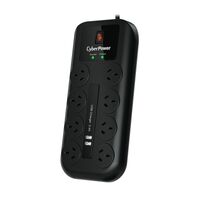
When evaluating surge-protected power boards, the joule rating indicates how much energy the board can absorb before the protection components degrade. Higher joule ratings provide greater protection. The CyberPower 8-Port Home Theatre Surge Protector Power Board with dual USB ports is designed specifically for entertainment setups, providing surge protection alongside integrated USB charging.
Power boards with integrated USB charging ports eliminate the need for separate USB wall chargers, reducing cable clutter and freeing sockets for appliances. This is particularly valuable in home office and entertainment setups where the device count is high. Look for boards that provide sufficient combined USB output — typically 2.4A to 4.2A combined — to charge multiple devices simultaneously without significantly slowing charge speed.
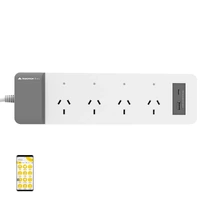
The Mercator Ikuü Wi-Fi 4-Socket Power Board combines individual socket control via smartphone app with integrated USB charging. This allows users to schedule power on and off times remotely, monitor energy consumption per socket, and integrate with broader smart home systems — all from a standard power board form factor. For home office users who want to automate standby device management or monitor the power draw of specific equipment, this represents a significant practical upgrade over a standard board.
Most extension lead fires and electrical incidents in Australia are preventable. They result from a small number of recurring mistakes that are easily avoided once you understand the risks involved.
A fully or partially coiled extension lead under load can overheat dangerously. The coiled configuration traps heat generated by current flow, and the temperature can rise rapidly even at loads within the lead's rated capacity. In a worst-case scenario, this can cause the insulation to melt or ignite. Always unroll the lead fully before use — particularly with high-wattage appliances. This applies to retractable leads as well as manually coiled leads.
Running extension leads permanently under carpets, through walls, behind furniture, or in any configuration where heat cannot dissipate is a fire risk and is not compliant with Australian electrical safety guidelines under AS/NZS 3000:2018. If you find yourself relying on an extension lead as a permanent solution, the correct approach is to have a licensed electrician install additional double power points or quad power points in the required locations.
Inspect extension leads before every use. Look for cracked or abraded insulation, damaged plug bodies, discolouration (which indicates heat exposure), bent pins, or loose plug connections. Any lead showing these signs should be taken out of service immediately and replaced. Attempting DIY repairs on mains-voltage leads is not compliant under Australian regulations and creates a serious safety risk — replacement is always the correct course of action.
Power boards and extension leads with safety shutters on the sockets prevent children from inserting objects into live sockets. Safety shutters require simultaneous pressure on both pins of a compatible plug to open — a mechanism that small fingers and single objects cannot replicate. This is an important consideration when selecting extension leads and power boards for use in homes with young children.
AS/NZS 3000:2018 Compliance: The Australian and New Zealand Wiring Rules (AS/NZS 3000:2018) govern all electrical installations, including the use of extension leads. Key provisions include requirements around temporary versus permanent wiring, circuit loading, and the use of RCD protection. Where compliance obligations are unclear, consult a licensed electrician.
A circuit breaker trips when the total current draw on the circuit exceeds its rated capacity. If multiple high-wattage appliances are connected to the same lead or the same circuit, the combined draw can exceed the breaker's limit and trigger a trip. This is the circuit protection system working correctly — it is protecting the wiring from overheating rather than indicating a fault with the extension lead itself.
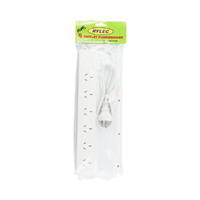
Extension leads and power boards with built-in overload protection provide a first line of defence by cutting power before the load reaches the level that would trip the circuit breaker. The Rylec range of power boards with overload protection addresses this directly, interrupting power at the board level before the circuit breaker is stressed. This helps protect the circuit breaker itself from repeated stress caused by overloading events.
If tripping is frequent even with modest loads, the issue may be the circuit rather than the lead or the connected appliances. Older Australian homes may have circuits rated at lower capacities, and deterioration of wiring connections can reduce the effective capacity over time. Consult a licensed electrician to assess whether additional circuits or upgraded wiring is required.
Electric heaters are among the highest-draw household appliances, with portable models typically drawing 1,000W to 2,400W and larger models drawing more. This places them at or near the maximum capacity of a standard 10A lead, leaving virtually no headroom for additional loads and generating significant heat in the cable under sustained use.
The safest approach is to plug heaters directly into a wall socket wherever possible. If an extension lead is genuinely necessary, use a heavy-duty lead rated well above the heater's wattage, ensure it is fully unrolled, and never leave the heater running unattended on an extension lead. Never use a multi-outlet power board to run a heater alongside other appliances — the combined load will almost certainly exceed the board's rating.
If the extension lead feels warm to the touch while the heater is running, the cable is carrying a load that is generating measurable heat. This is a warning sign. The lead should be replaced with a heavier-gauge alternative rated for the heater's full wattage draw, or the heater should be connected directly to a wall outlet.
The extension lead and power board category has evolved well beyond the basic cable-and-plug product. Modern options include a range of smart and feature-rich products suited to connected homes, energy-conscious users, and trade applications where remote monitoring and control add genuine value.
Smart power boards with Wi-Fi connectivity allow individual socket control via a smartphone app. Users can monitor energy consumption per socket, schedule power on and off times remotely, set timers for standby devices, and integrate with smart home platforms including Google Home and Amazon Alexa. The Mercator Ikuü Wi-Fi 4-Socket Power Board with dual USB charging ports represents this category, combining practical smart home functionality with the convenience of integrated USB charging.
For users who want smart control of a single appliance without replacing a full power board, smart single adaptors plug into an existing wall outlet and add Wi-Fi scheduling, energy monitoring, and app control to any connected device. This is a cost-effective way to add smart functionality to individual appliances such as lamps, heaters, fans, or appliance chargers.
Extension leads and power boards with built-in timers allow automated switching without the need for a smart home platform or smartphone. These are useful for outdoor lighting, holiday lighting, and energy-saving routines where consistent scheduling is required but full smart home integration is not necessary.
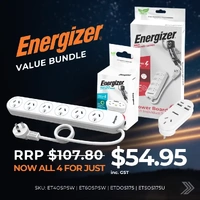
The combination of surge protection, overload protection, USB charging, and individual socket switching in a single unit represents the current state of the art in Australian power board design. Products in the CyberPower and Energizer ranges combine these features in products targeted at home office and entertainment environments where protection and convenience are both priorities.
Before connecting valuable equipment to any outlet — particularly on extension leads in unfamiliar environments — a power point tester can confirm the outlet is correctly wired, earthed, and safe. This is particularly useful for tradespeople, rental inspections, and anyone setting up equipment in temporary locations.
The extension lead and power board market covers a wide range of product types. The following breakdown maps common applications to the appropriate product type to simplify the selection process.
Caravan and camping power connections differ from domestic applications in important ways. Caravan park power pedestals supply power via a 15A outlet rather than the standard 10A outlet found in homes, and the connection is typically made outdoors in conditions that may include rain, moisture, and physical movement from the caravan or vehicle.
Caravan extension leads use a 15A plug and socket configuration to match the caravan park power pedestal supply. Using a standard 10A domestic lead at a 15A pedestal without an appropriate adaptor is unsafe — the 10A plug is not rated for the higher current the pedestal can supply, and the cable may not withstand sustained draws above its rated capacity.
Where a standard domestic lead must be used from a 15A caravan supply, a 15A to 10A adaptor with RCD protection is the correct solution. The Ampfibian Mini Power Adaptor and the Tesla Caravan Power Adaptor range are specifically designed for this application, providing the adaptor function alongside RCD protection that is particularly important in outdoor environments where moisture and shock risk are elevated.
For camping without access to a powered site, low-wattage 12V systems powered by portable battery packs or solar panels are the safest and most practical option, avoiding the need for mains-voltage leads altogether. These systems are widely used for lighting, device charging, and small appliances in off-grid camping setups.
Outdoor events require long leads — 20m to 30m — with heavy-duty cable and weatherproof connections to span large distances safely. For events where multiple power draws are required across a large area, careful load planning is essential before selecting leads and distribution equipment.
Before an event, calculate the total wattage of all equipment that will be connected. Sound systems, lighting rigs, catering equipment, and display screens all draw current simultaneously, and the combined load can quickly exceed what a single 10A lead can safely supply. If the total load exceeds the capacity of available leads, consult a licensed electrician about temporary power distribution options — distribution boards fed from a higher-capacity supply may be required.
At outdoor events, leads are exposed to dew, rain, spilled liquids, and foot traffic. The plug-to-socket junction must be protected with a weatherproof extension lead protector rated to IP55 or higher wherever water contact is possible. This is not just a best practice — it is a safety requirement wherever mains-voltage leads are used in outdoor environments that may become wet.
At events with multiple leads in use, neon indicator plugs provide an immediate visual indication of which leads are energised and which are not. This simplifies fault-finding, reduces the risk of accidentally connecting or disconnecting live leads in the dark, and is a standard feature of the heavy-duty 20-metre and 30-metre extension leads in the Sparky Direct range.
A well-maintained extension lead used within its rated capacity can remain serviceable for many years. However, the lifespan varies significantly depending on the application and the environment in which the lead is used.
Extension leads used with power tools or in outdoor environments are subject to substantially greater physical wear than leads used for light indoor duties. Being dragged across rough surfaces, stepped on, driven over by vehicle tyres, exposed to UV radiation, and subjected to repeated connection and disconnection cycles all accelerate degradation of both the cable insulation and the plug body.
Australian safety guidelines recommend replacing any lead that shows physical damage, has a loose or damaged plug, has been involved in an electrical fault, or shows signs of heat stress such as discolouration, stiffening of the cable, or deformation of the plug body. A replacement lead costs far less than the consequences of an electrical fault caused by a deteriorated lead.
For workshop and construction use, a structured inspection regime is advisable — inspecting leads before each use session and retiring any lead that shows early signs of deterioration rather than waiting for visible damage to become severe.
Proper storage extends the working life of an extension lead and prevents hidden safety hazards that result from repeated physical stress on the cable.
Always coil the lead loosely in large loops rather than wrapping it tightly around your hand and elbow or rolling it into a small bundle. Tight coiling stresses the cable at the same points repeatedly, causing work-hardening of the copper conductors and eventually breaking individual strands inside the insulation. This type of internal damage can be invisible from the outside but increases resistance in the cable, leading to localised heat generation during use.
Store leads in a dry location away from direct sunlight and heat sources. UV radiation and heat accelerate degradation of PVC cable insulation over time, making it brittle and reducing its dielectric strength — the property that prevents current from escaping through the insulation. Retractable extension leads simplify storage by automatically coiling the cable into a compact housing, making them a practical choice for workshops and garages where leads are used and stored regularly.
Never store an extension lead while it is still plugged in. Always unplug from the wall socket first, then coil and store the lead. A plugged-in lead left unattended represents an unnecessary energised circuit in a domestic or work environment, and any damage to the socket end or cable insulation while the lead is plugged in creates an immediate shock and fire risk.
Watch CyberPower CPSURGE08ANZUSB | Home Theatre 8-Port Surge Protector Power Board | 2 USB 2.4A | Black video
Watch CLIPSAL 438XHDTR | Rewireable Cord Extension 10Amp PVC Socket Heavy Duty video
Watch Mercator MDET240 | AC Voltage Power Outlet Tester Plug video

A good quality heavy duty extension lead at a great price delivered promptly, very happy, will continue our long association with pleasure.
The minute they arrived they were in use next day, sturdy, strong, great length that reaches everywhere. A definitely great addition to the toolbox.
Will come in handy after I set up my room with various electrical goods. Looks to be of good or very good quality. Purchased for added protection against a surge.
Domestic leads, heavy-duty leads, smart power boards & outdoor weatherproof accessories • Trade pricing • Fast Australia-wide delivery
Browse Extension Leads → Get Expert Advice →Yes, they are widely used for everyday household appliances.
Sparky Direct supplies extension leads Australia-wide, offering safe and reliable power extension solutions with convenient delivery.
Extension leads are securely packaged and delivered via standard courier services.
Unused products are generally eligible for return according to the seller’s returns policy.
Warranty coverage varies by manufacturer and typically covers defects in materials or workmanship.
Yes, extension leads are typically sold as individual electrical products.
Yes, selecting the correct length and rating is important for safety.
Yes, they are ideal for temporary or flexible power supply situations.
Yes, they are designed to be moved and used where needed.
Yes, regular inspection is recommended to ensure continued safe use.
Yes, many designs allow easy coiling and storage when not in use.
Many leads should be fully uncoiled during use to avoid heat build-up.
Yes, they are commonly used to power tools and equipment.
Extension leads are electrical cables with plugs and sockets used to extend the reach of a power supply.
Yes, when correctly rated and used as intended, they are safe.
They provide flexibility and convenience when power points are not easily accessible.
Yes, they are commonly used in residential, commercial, and light industrial settings.
Yes, some extension leads feature multiple sockets for added convenience.
Certain extension leads are designed for higher current loads and should be selected carefully.
Yes, some extension leads include built-in overload or safety features.
Only extension leads rated for outdoor use should be used outside.
Yes, many extension leads are designed specifically for indoor use.
Yes, they are available in a range of lengths to suit different applications.
Yes, extension leads sold in Australia must comply with relevant AS/NZS electrical safety standards.
They are used to supply power to appliances and tools where fixed power points are not within reach.