
Search Results:
Search Results:
Search Results:
Search Results:
The terminology around lamp holders can confuse buyers, especially when overseas product listings use words like "socket" interchangeably with "holder". This section sets out what a lamp holder is, how it differs from a power outlet, and how it sits within a lighting circuit. Trade buyers will already be familiar with most of this, but it remains useful as a reference for apprentices and informed retail buyers.
A lamp holder physically supports the light globe and completes the electrical path between the globe and the lighting circuit. Compatibility depends on four things: the base type of the globe, the voltage rating of the holder, the current rating, and the intended mounting style. Selecting the wrong holder can cause non-operation, intermittent contact, overheating, or mechanical strain on the globe and the holder body.
In Australian electrical contexts, "lamp holder", "lampholder", "light socket", and "globe holder" all refer to the same family of products. A general-purpose power outlet is a different device. Lamp holders are designed to receive a light globe via a bayonet, screw, twist-lock, or pin connection. Power sockets are designed to receive a plug top from an appliance flex. The two are not interchangeable, even though some overseas content uses "socket" loosely.
At a high level, a lamp holder connects to the lighting circuit through internal terminals. The terminal arrangement varies by product type. Batten holders mount to a fixed surface and accept circuit conductors at the back. Cord grip lampholders connect to a flex cord that drops from a ceiling rose or pendant point. Specialised products like MR16 leads connect on the secondary side of a 12V transformer. Fixed wiring terminations must be carried out by a licensed electrician under AS/NZS 3000:2018, and this page does not provide step-by-step wiring procedures.
A cord grip is a mechanical clamp inside the holder body that grips the outer sheath of a flex cord. The grip transfers the weight of the holder and the globe into the sheath, not into the electrical terminals. Without a working cord grip, every pull on the pendant flexes the conductor connection, which causes intermittent contact, overheating, or eventual terminal failure. Cord grips are the reason cord grip lampholders are the correct product for any pendant or suspended lighting application.
Australian lighting work uses a small set of standard lamp holder types. Naming conventions can change between product specifications, packaging, and online listings, which causes order errors. The table below sets out the most common holders, their base codes, and typical applications.
| Lamp Holder Type | Common Base Name | Typical Application | Key Buying Check |
|---|---|---|---|
| Bayonet cap holder | BC / B22 / bayonet | General residential, batten lights, ceiling fans, replacement work | Confirm B22 base on the existing globe or specification |
| Edison screw holder | ES / E27 / Edison screw | Pendants, decorative globes, exposed filament fittings, outdoor wall lights | Confirm E27 base; check whether E14 is needed instead |
| Small Edison screw holder | SES / E14 | Chandeliers, oven lamps, decorative wall lights, smaller luminaires | Verify the smaller E14 thread and the wattage rating |
| Batten holder | BC or ES batten | Surface-mount utility lighting in garages, sheds, hallways, storerooms | Plain or switched, BC or ES, looping terminal where required |
| Cord grip holder | BC or ES cord grip | Pendant lighting, suspended utility lights, decorative exposed globes | Plain or switched, base type, finish, and cord entry size |
| MR16 lead | GU5.3 (12V) | Low voltage downlights, display lighting, transformer-fed fittings | Compatibility with the existing 12V transformer or LED driver |
| GU10 holder | GU10 twist-lock (240V) | 240V mains downlights and spotlights, simple replacement work | Confirm 240V GU10, not low voltage MR16 |
B22 and BC both refer to the bayonet cap base, which is the traditional Australian residential standard. The globe pushes into the holder and twists to lock against two side pins. BC holders are common in batten holders, ceiling fan light kits, oil-rated industrial fittings, and replacement work in older homes. Most LED globes are now available in BC form, so older installations can switch to LED without changing the holder.
E27 and ES refer to the full-size Edison screw base. The globe screws into the holder, which gives a more secure mechanical seat for heavier decorative globes and exposed filament LEDs. E14 (also called SES, or small Edison screw) is the smaller version used in chandeliers, oven lamps, and compact decorative fittings. Electricians ordering ES lamp holders for repeat fit-out work should confirm pack quantities and the cord entry size if cord grip variants are involved.
Batten holders are surface-mounted lamp holders fixed directly to a ceiling, wall, or other structural surface. They suit garages, sheds, workshops, storerooms, plant rooms, hallways, service corridors, and temporary jobsite lighting. Both plain and switched variants are available, and most ranges include BC and ES versions. The looping terminal on quality batten holders simplifies daisy-chained circuits in larger spaces. The full batten holder range is on the dedicated category page.
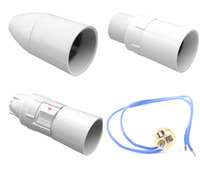
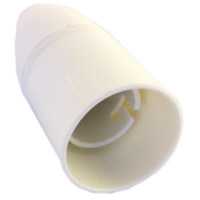
Cord grip lampholders are designed for fittings where the holder hangs from a flex cord rather than mounting directly to a surface. They include an internal cord grip that supports the weight of the assembly. BC and ES variants are both available, with plain and switched bodies, and a range of finishes. Cord grip holders are covered in detail in the next section.
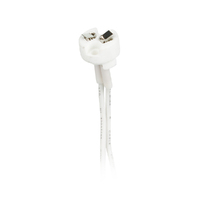
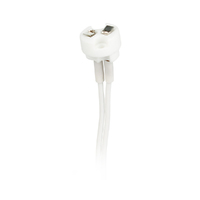
MR16 leads are short connection leads used to wire MR16 globes into 12V transformer-fed lighting circuits. They are common in older halogen downlight systems, retail display lighting, and any low voltage installation where the secondary side of a transformer feeds individual lights. MR16 leads are not interchangeable with 240V mains lamp holders. GU10 twist-lock holders look similar to MR16 but operate at 240V mains voltage, so the two must never be confused. The product packaging or specification will state the voltage clearly.
Cord grip lampholders are the most common holder used in pendant lighting and suspended utility fittings. They combine a globe socket with an integrated cord grip, which gives the assembly mechanical strength and protects the electrical terminals from pulling forces. This section covers what they are, how they work, the difference between plain and switched models, and how to evaluate the right cord grip lampholder for a pendant application.
Cord grip lampholders are lamp holders with integrated strain relief built into the body. The cord grip clamps onto the outer sheath of a flex cord, which means the weight of the holder and globe is carried by the cord, not by the conductor terminals. They appear in pendants, suspended utility lighting, temporary lighting assemblies, decorative exposed-globe fittings, and many residential pendant kits.
The mechanical role and the electrical role of a cord grip lampholder are separate. The cord grip should secure the outer sheath of the flex, not the individual conductors. The conductors then run to the holder terminals to complete the circuit. The two functions work together: the grip takes the mechanical load, and the terminals carry the current. This page does not describe terminal connection sequences, conductor stripping lengths, or testing steps. Fixed wiring work must be carried out by a licensed electrician.
The main reasons electricians and informed buyers choose cord grip lampholders are practical:
Plain cord grip lamp holders have no integrated switch. Switching is handled elsewhere on the circuit, typically by a wall switch, an existing dimmer, or another control device. Plain models suit pendants in living rooms, dining rooms, retail displays, hospitality fit-outs, and any setting where the local switch already exists. They are available in both BC and ES variants and in a range of finishes.
Switched cord grip lamp holders include an on-off switch built into the holder body. They suit utility pendants, task lighting, temporary lighting, and locations where local control is genuinely useful. Switched holders do not bypass any compliant switching arrangement required by the installation. They sit alongside, not instead of, the design of the lighting circuit.
"Best" depends on the project, not on a fixed ranking. The honest decision criteria for a pendant application are:
LED globes are usually the right choice for pendants because the heat output is lower and the available decorative styles are broader. Dimmable LED globes can match cord grip pendants where the circuit includes a compatible dimmer.
The simplest way to choose between a cord grip and a batten holder is by mounting style. A cord grip holder is suspended from a flex cord. A batten holder mounts directly to a fixed surface. Using the wrong style creates mechanical stress, poor mounting, or visible overhang at the ceiling. Pendant suspension cords sit on the cord grip side of this decision. Pendant lights often combine both into a finished assembly.
Low voltage lighting uses a different family of lamp holders to mains lighting. Confusing the two creates a real risk during procurement and installation. This section covers MR16 leads, the connection styles found in trade work, and the compatibility issues that arise when older halogen systems are converted to LED.
MR16 leads are short connection leads that link an MR16 globe to a compatible 12V lighting transformer or LED driver. They appear in recessed downlights, display lighting, retail and gallery lighting, and as replacement leads in existing low voltage installations. Common MR16 lead lengths include short replacement leads for direct downlight servicing and longer leads for transformer-to-globe runs in older systems.
MR16 leads come with two main connection styles on the secondary side. Spring terminals use a spring clamp that closes onto the conductor when released. Screw terminals use a fixed screw against a clamping plate. Both styles deliver a reliable connection when correctly used. Electricians may prefer one style based on access, speed, the manufacturer instructions, and whether existing leads on site already use one style. Selection is a product decision, not a wiring procedure decision.
MR16 leads must match the output of a compatible 12V transformer or LED driver. Older halogen transformer setups may need a separate review when the globes are changed to LED MR16. Some halogen transformers are incompatible with LED loads, and some LED MR16 globes are incompatible with magnetic transformers. The mismatch shows up as flickering, buzzing, or failure to start. Any review of fixed lighting circuits should be handled by a licensed electrician. The downlight transformer range covers replacement options for both halogen and LED MR16 systems.
This section converts the technical background into purchase decisions. The aim is to narrow the range by base type, rating, environment, finish, and job type, so the holder that arrives on site fits the job without rework.
The holder and the globe base must match exactly. The five common base types in Australian work are BC (B22), ES (E27), SES (E14), MR16 (12V), and GU10 (240V). Buyers should confirm the base type from the existing fitting, the project specification, or the globe packaging before ordering. Mixing BC and ES is the single most common ordering error, particularly on multi-unit fit-outs where assumptions are made from the photo rather than the spec sheet.
Product ratings on the holder must suit the circuit voltage, the current draw, and the globe load. Standard mains lamp holders are not interchangeable with low voltage holders, and vice versa. LED retrofits usually reduce the load below the rating, but the holder still needs the correct voltage rating, the correct current rating, and an installation method that suits the globe and the fitting. Reduced load does not remove the need for compliant ratings.
Standard indoor lamp holders are intended for dry indoor environments only. Bathrooms, laundries, covered outdoor areas, and direct weather exposure all require fittings with an appropriate IP rating, plus an installation method matched to the exact location. Universal IP claims should be avoided. The product specification, the installer's site assessment, and the manufacturer instructions together decide what is acceptable. The weatherproof batten LED lights page covers fixtures designed for weather-exposed locations.
Higher-use utility spaces need robust products. Workshops, garages, sheds, plant rooms, and storerooms see impact exposure, dust, vibration, fluctuating temperature, and frequent globe changes. The holder body should resist heat and impact, the terminals should be secure, and the mounting should hold under vibration. Trade-grade products with clear ratings and compliance markings are the right starting point. Clipsal, HPM, and NLS all carry batten holders aimed at this kind of work.
White thermoplastic batten holders dominate utility lighting because they are inexpensive, robust, and easy to service. Decorative exposed pendant fittings push the holder into view, which makes the finish part of the design. Black, brass, chrome, copper, and coloured finishes are available in cord grip variants, and the decision sits alongside the choice of cord, ceiling canopy, globe shape, and shade. Finish selection should follow rating and compliance, not lead the decision.
The practical quality signals across any reputable lamp holder range are consistent:
These signals matter more than a single price comparison or an unsupported "best" claim.
Many buyers reach this page through a comparison search. This section consolidates the main comparison decisions in one place, so the answer to a single question is easy to find without scrolling through earlier sections.
BC and ES are the two dominant base families in Australian residential and commercial lighting. BC (B22, bayonet) uses a push-and-twist mechanism. ES (E27, Edison screw) uses a screw thread. Both are widely available in plain and switched, batten and cord grip, and in a range of finishes. The right choice is set by the existing fitting or the project specification, not by personal preference. Common aliases on packaging and listings include:
| BC Family | ES Family |
|---|---|
| BC | ES |
| B22 | E27 |
| Bayonet | Edison screw |
| Bayonet cap | Edison screw cap |
For replacement work, the existing globe base sets the holder choice. For new fit-outs, the design specification or the chosen globe range sets the choice.
Lamp holders are designed for globes. Power sockets are designed for plug-in appliances. The two are not interchangeable. Some overseas catalogues use "socket" to mean a globe holder, which causes confusion when Australian buyers cross-reference international product names. The simple rule for Australian work is: if it accepts a globe, it is a lamp holder; if it accepts a plug top, it is a socket outlet.
The mounting decision drives the choice. Cord grip is for suspended applications where the holder hangs from a flex cord. Batten holder is for fixed surface-mount applications where the holder fastens directly to a ceiling or wall. The two are not substitutes. Trying to use a batten holder as a pendant component leaves the cable unsupported, and trying to use a cord grip holder on a flat ceiling without a flex cord defeats the cord grip itself.
"Cheap" searches often translate into "affordable, compliant, and fit for purpose". Low upfront price should not come at the cost of rating clarity, body material quality, secure cord grip operation, or compliance markings. A holder that fails on a customer site after a year is not cheap once the return visit, the new product, and the goodwill cost are added up. Bulk pricing on a recognised trade brand is usually the better route to genuine savings, particularly when the same holder is used across many jobs. Price breaks and pack quantities deserve a closer look than the per-unit headline price.
Weatherproof benefits only apply to products specifically rated for the environment. A standard indoor cord grip lampholder is not suitable for damp or exposed outdoor locations, regardless of whether it appears to be sealed. Outdoor selection should check the IP rating, the voltage rating, the body material, the seals, the manufacturer instructions, and the intended mounting position. The right product for the job is one that is rated for the job, not one that has been forced to fit. Outdoor lighting options sit alongside weatherproof fittings for full project coverage.
Pendant and decorative lighting put the lamp holder on display. The holder is no longer hidden behind a shade or recessed into a fitting; it becomes part of the visible design. This section covers how the holder integrates with the rest of the pendant assembly and what to consider when matching it to globes and finishes.
A pendant assembly typically combines four parts: a flex cord, a cord grip lamp holder, a ceiling canopy, and a globe. The flex runs from the ceiling rose down to the holder. The cord grip secures the flex inside the holder body. The canopy hides the ceiling connection and provides a clean visual finish. The globe completes the look. Because the holder is visible, the finish, body shape, and overall proportion all contribute to the result. Fixed wiring at the ceiling rose must be carried out by a licensed electrician under AS/NZS 3000:2018.
Decorative cord grip holders are available in white, black, brass, chrome, copper, and other finishes. The right finish is the one that matches the cord, the canopy, the globe shape, and the room style. A polished brass holder paired with a vintage filament LED suits warmer interiors. A matte black holder with a clear globe suits modern minimal interiors. White holders disappear against white ceilings and remain the safe choice for tenancy fit-outs and rental properties. Aesthetics should sit alongside rating and compliance, not ahead of them.
Decorative pendants typically use E27 or B22 globes. Filament LED globes, globe-shaped LEDs, and candle-shaped LEDs all work where the visible globe is part of the design. The four practical decisions for the globe are size, colour temperature, dimmability, and heat output. Larger globes need a holder and ceiling canopy that can support the visible mass. Warmer colour temperatures suit residential pendants; cooler temperatures suit task pendants and retail. Dimmable globes need a compatible dimmer on the circuit. LED globes generate less heat than equivalent halogen or incandescent globes, which extends the service life of the holder. The full light globes range covers the matching options.
Workshop and utility lighting is a different problem to residential pendant work. The fittings are exposed, the use is heavy, and the environment is harder on the equipment. This section covers the practical considerations for batten and switched holders in trade environments.
Batten holders are the dominant choice for utility lighting. They mount flush to the surface, present a low profile, and accept replacement globes without disturbing the wiring. They suit garages, workshops, storerooms, sheds, plant rooms, and service corridors. Simplicity matters in these spaces because globes get changed frequently and the assembly should not get in the way of work. Looping terminals on quality batten holders simplify long runs of utility lighting where multiple holders share a single circuit. Plain BC or ES batten holders are the most common, and switched variants suit any room where local control is genuinely useful.
Switched holders give the user a local on-off control at the holder body. They are useful for task lighting, temporary lighting at a worksite, and any location where the wall switch is inconvenient. Selection still depends on the circuit design and the installation requirements. A switched holder does not replace a properly designed control circuit, and the local switch should not be used to bypass a compliant switching arrangement.
Five practical factors decide how a lamp holder performs in trade environments:
Trade-grade brand selection helps on each of these. SAL, Martec, and other Australian distribution brands all carry products specified for these conditions.
Lamp holder selection is a buyer decision. Lamp holder installation in fixed wiring is a licensed electrician decision. This section sets out what a buyer can do, what an electrician must do, and what to check before, during, and after installation. It does not give step-by-step wiring instructions.
Compliance reminder: All work on fixed wiring in Australia must be carried out by a licensed electrician. Product selection, planning, and replacement research are all reasonable activities for any buyer, but the actual wiring must be handled by a qualified person under AS/NZS 3000:2018 and any applicable local requirements.
Lamp holders used in Australian installations should be compliant, correctly rated, and suitable for the application. AS/NZS 3000:2018 is the wiring rules document that covers fixed wiring work, and it applies to the circuits that lamp holders sit on. Product compliance is shown by markings on the holder body and packaging, including the voltage rating, current rating, and any IP rating where relevant. Manufacturer instructions also matter, particularly for cord grip orientation and cord size compatibility. Buyers should check these markings before purchase and the installer should check them again before installation.
Work on fixed wiring must be carried out by a licensed electrician. This applies whether the lamp holder is being installed from new, replaced after failure, or modified in any way that touches the circuit. Researching products, ordering replacements, and planning the installation are all activities a buyer can do, and they help the electrician arrive on site with the right parts. Detailed state-by-state DIY claims are not made on this page because the rules vary, and they should be confirmed against current legal sources before any decision is taken.
The most useful thing a buyer can do before engaging an electrician is confirm the inputs. The list below covers what to check ahead of installation, so the order, the site visit, and the result all line up:
This page does not cover terminal wiring sequence, conductor stripping length, or testing steps. Those belong with the licensed electrician on site.
Faulty lamp holders show a consistent set of warning signs. Cracking on the body indicates heat damage or impact. Discolouration around the terminals suggests excess heat. A loose globe fit means the contacts have weakened. Flickering after the globe has been ruled out points back to the holder. Buzzing or a burning smell, arcing marks on the body, and intermittent operation are all reasons to isolate the circuit at the switchboard and engage a licensed electrician. Replacement is usually quicker and safer than attempted repair on a damaged holder.
The likely causes of flickering or poor contact at a lamp holder include:
Each of these requires inspection by a licensed electrician before any conclusion is drawn. A downlight transformer review is often part of the troubleshooting on MR16 systems.
Online purchasing has become the default for trade buyers because it removes the trip to the wholesaler. The challenge is choosing the right product from a listing, comparing options across brands and pack quantities, and getting the order on site without surprise. This section covers practical buying criteria for any supplier, with relevant Sparky Direct context where it adds clarity.
A reliable listing should answer the following questions before the order goes through:
Filtering the category page by these attributes narrows the list quickly.
Trade buyers ordering in bulk usually have one of five jobs in mind:
The practical decisions are pack quantity, brand consistency across the order, spare stock for breakage and on-site replacement, and matching holder types across jobs to reduce errors. Buying the same holder in larger quantities, rather than mixing brands across small orders, usually saves time on site.
Affordability and compliance are not opposed. The way to get both is to focus on value, not headline price. Trade-grade brands at bulk pricing usually beat unbranded discount stock once installation time, return rate, and warranty support are added in. The wording on this page favours "affordable", "cost-effective", "trade value", "bulk pricing", and "fit for purpose" rather than "cheap" because the cheaper unit price is rarely the cheaper finished job. Compliance markings, rating clarity, and material quality are what hold the line.
Job planning relies on two questions: what is in stock now, and when does it arrive. The honest approach is for buyers to check stock status at the time of order and review the delivery options offered at checkout. Order cut-off times shown on the supplier site are worth noting, and all matching parts (holder, globe, cord, canopy) should appear on the same order to avoid split deliveries. Time-specific delivery promises are not made on this page because actual dispatch performance varies by location, courier, and order timing. Live shipping information at the checkout is the right reference for any specific order.
Authentic product reviews help buyers see how a holder performs in the field. The reviews shown lower on this page are real customer reviews from the Sparky Direct platform. Where review data is sparse for a specific holder, objective product signals fill the gap: recognised brand distribution in Australia, clear specifications, compliance markings, warranty information, and repeat suitability for trade use. Unsupported "top rated 2026" claims and fake review language do not appear here, because they damage trust without helping the buyer make a real decision.
The honest way to compare suppliers is by criteria, not by rhetoric. The factors that matter for a lamp holder order are:
Buyers can apply these criteria to any supplier, including Sparky Direct. The aim is a sensible decision, not a promotional comparison.
Club Clipsal is Australia's largest electrician community offering trade rewards, business support, and exclusive benefits. When you nominate Sparky Direct as your preferred wholesaler, we automatically apply your Clipsal spend points to your Club Clipsal account daily.
Entry-level offering coaching, mentoring, and training discounts
Unlock exclusive industry tools and networking events
Access Toyota fleet offers and business software discounts
Maximum benefits, including VIP experiences and rewards
1. Sign Up: Create your Club Clipsal account at clipsal.com/club-clipsal or via the iCat mobile app
2. Nominate Sparky Direct: Select Sparky Direct from the wholesaler dropdown menu in your profile
3. Add Email: Enter your Sparky Direct account email address in the membership number field
4. Start Earning: Every dollar spent on Clipsal products earns points automatically
Redeem points from the rewards store, including gift cards, tools, and experiences. Access business summits, product training, and industry networking events. Receive early access to new product launches and special promotions. Connect with fellow electricians via the Club Clipsal community app.
Watch Clipsal 530WE Batten Holder video
Watch NLS 30411 Batten Holder BC White video
Watch Oriel OL69321CO Albany 1800mm E27 Vintage Cloth Cord Suspension Copper video

These batten holders are good for use on any surface, they have good size terminals and a looping terminal if required.
Just what I needed 4 a up and coming project. These give far more light than down lights. They may be old school but far more practical and far less cost of copper wiring for the budget. Thanks Sparky
I was very happy with the service I received. The ordering process was simple and quick and the goods arrived very quickly. I am also happy with the products. They are excellent quality and exactly what I needed.
Quality products in stock • Fast Australia-wide delivery • Competitive trade pricing
Browse Lamp Holders → Get Expert Advice →Yes, they are often used for temporary or utility lighting setups.
Sparky Direct supplies lamp holders Australia-wide, offering a wide range of holder types with convenient delivery.
They are securely packaged and delivered via standard courier services.
Unused products are generally eligible for return according to the seller’s returns policy.
Warranty coverage varies by manufacturer and typically covers defects in materials or workmanship.
Yes, lamp holders are typically sold as individual fittings.
Yes, selecting the correct type ensures safe operation and compatibility.
Yes, they are often replaced or upgraded during lighting renovations.
Yes, many are visible and can form part of the lighting aesthetic.
No, light output depends on the globe used rather than the holder itself.
Yes, batten holders and similar types are commonly used in these areas.
Yes, choosing the correct base type ensures compatibility.
Yes, pendant lamp holders are commonly used with shades and decorative globes.
Lamp holders are electrical fittings designed to hold and connect light globes securely to a lighting circuit.
Yes, they allow the light to be turned on or off directly at the holder.
A cord grip helps support the cable and reduces strain on internal connections.
Yes, lamp holders are rated to suit specific electrical loads and globe types.
Yes, they are available in materials such as plastic, porcelain, and metal.
Yes, most modern lamp holders are compatible with LED globes of the correct base type.
Yes, they are suitable for residential and light commercial environments.
Yes, they are widely used in residential homes for general and feature lighting.
Quality lamp holders are manufactured to meet relevant AS/NZS electrical and safety standards when installed correctly.
Switched cord grip lamp holders include an on/off switch built into the holder for convenient control of the light.
Cord grip lamp holders include an integrated grip that supports the flex or cord, reducing strain on the electrical connections.
Common types include bayonet (BC), Edison screw (ES), small Edison screw (SES), batten holders, and pendant lamp holders.