
Search Results:
Search Results:
Search Results:
Search Results:
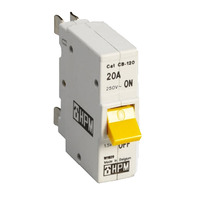
Find the best plug in circuit breakers here at Sparky Direct. [ Read More ]
Plug-in circuit breakers are widely used in Australian electrical installations as a convenient replacement for rewirable fuse wedges in compatible older switchboards. Unlike modern Clipsal or Hager DIN rail miniature circuit breakers (MCBs) that mount onto modular rail systems, plug-in breakers connect directly to an existing fuse base or breaker socket. They deliver thermal-magnetic overcurrent protection that automatically trips when a fault occurs and can be manually reset once the problem is resolved.
Electricians, maintenance contractors, property managers, and informed retail buyers rely on plug-in circuit breakers to maintain continuity of protection in switchboards where the original fuse-based protection remains serviceable but benefits from resettable operation. These devices suit installations where full switchboard replacement is not required or cost-justified. The board must remain in good condition, and the plug-in breaker must be correctly matched to the existing base type, circuit design, and protection requirements.
Plug-in circuit breakers are compact overcurrent protection devices that physically plug into a switchboard fuse base or socket designed to accept them. They contain a bimetallic thermal element that responds to sustained overload and a magnetic trip mechanism that reacts instantly to short-circuit faults. When either condition occurs, the breaker trips open and disconnects the circuit. Once the fault is located and cleared, the breaker can be manually reset by moving the switch handle back to the on position.
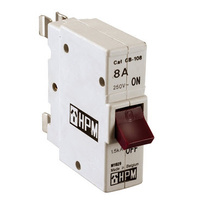
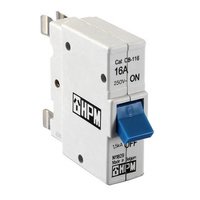
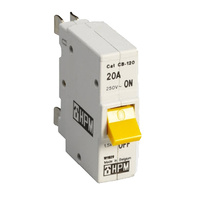
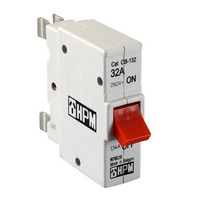
Common Australian plug-in breaker ratings include 8A, 10A, 16A, 20A and 32A. These ratings correspond to the maximum continuous current the breaker can carry under normal conditions. The correct rating must be selected based on the cable size, installation method, load type, and circuit design. Plug-in breakers are manufactured by electrical brands, including HPM, which supply a widely used range of 8A to 32A plug-in circuit breakers for this market.
Rewireable fuses rely on a replaceable fuse wire element that melts when overcurrent occurs. After a fault, the fuse wire must be physically replaced before the circuit can be restored. This process requires spare fuse wire on hand, correct wire gauge selection, and manual winding and tightening at the fuse terminals. Plug-in circuit breakers eliminate this maintenance requirement by providing resettable protection. When a fault trips the breaker, the circuit can be restored immediately after the underlying problem is resolved, simply by resetting the breaker handle.
This practical benefit makes plug-in breakers attractive for maintenance staff, property managers, and residential users in older buildings. The breaker can be reset quickly without needing to source and install replacement fuse wire. That said, replacing a rewirable fuse with a plug-in breaker does not automatically modernise the entire switchboard or remove the need for residual current device (RCD) protection where current regulations require it. A licensed electrician should assess whether the switchboard and its protection arrangement remain compliant with AS/NZS 3000.
Plug in circuit breakers use thermal-magnetic tripping technology to detect and interrupt fault conditions. The thermal element consists of a bimetallic strip that bends when heated by sustained overcurrent. This bending action mechanically releases the trip mechanism, opening the circuit. The response time depends on the magnitude of the overload: a small overload may take several seconds or minutes to trip, while a larger overload trips more quickly. The magnetic element provides instantaneous protection against short-circuit faults. A high-current fault generates a strong magnetic field that rapidly pulls the trip mechanism open, disconnecting the circuit within milliseconds.
Once the breaker has tripped, the handle moves to the off or tripped position. The circuit remains open until the breaker is manually reset. Before resetting, the fault must be located and corrected. Repeated tripping indicates an ongoing problem such as a faulty appliance, damaged cable, overloaded circuit, or incorrectly sized breaker. In these cases, a licensed electrician must investigate and resolve the underlying issue. Simply upsizing the breaker to stop nuisance tripping without addressing the root cause can create a serious fire risk by allowing cables to carry more current than they are safely rated for.
Selecting the correct plug-in circuit breaker requires matching the breaker type, pole configuration, and amp rating to the circuit design, cable size, and load characteristics. Plug-in breakers are available in single-pole and double-pole configurations, with various amp ratings to suit different circuit applications. Australian electrical installations must comply with AS/NZS 3000, which sets minimum requirements for cable sizing, circuit protection, and safe installation practices.
Breaker selection is not a matter of choosing the highest rating available or matching the breaker size to the connected load alone. The breaker rating must protect the cable from overheating under fault conditions while allowing normal operating currents to pass. A licensed electrician assesses cable size, installation method, ambient temperature, and other derating factors to determine the maximum protective device rating that complies with the wiring rules. Incorrect breaker sizing creates fire risk and compliance failures.
Plug-in circuit breakers are manufactured in standard amp ratings: 8A, 10A, 16A, 20A and 32A. These ratings define the maximum continuous current the breaker can carry without tripping under normal operating conditions. Lower ratings, such as 8A and 10A, are commonly used for lighting circuits and lower-power appliance circuits. Mid-range ratings like 16A and 20A suit general power circuits, small appliances, and some fixed equipment. Higher ratings, such as 32A, are used for heavier loads, including hot water systems, cooktops, and high-power equipment, where the circuit design and cable size support this level of current.
The correct breaker rating depends on multiple factors: the current-carrying capacity of the installed cable, the installation method, ambient temperature, cable bundling, thermal insulation contact, and the type of load. A circuit protected by a 20A breaker must use cable with sufficient current-carrying capacity after all derating factors are applied. The breaker rating is not determined by the appliance nameplate current alone. Cable protection is the primary concern, and a licensed electrician must perform these calculations in accordance with AS/NZS 3000.
Single-pole plug-in breakers protect the active conductor of a single-phase circuit. They are the most common type used in residential and light commercial switchboards, where compatible plug-in bases exist. When a fault occurs, the breaker disconnects the active conductor while the neutral remains connected. Single-pole plug-in breakers are suitable for most standard final sub-circuits, including lighting, power points, and appliances. The circuit design must permit single-pole protection, and the existing switchboard must have compatible single-pole fuse bases or breaker sockets.
Electricians replacing existing single-pole rewirable fuses with single-pole plug-in breakers must verify several factors. The replacement device must be rated correctly for the cable. The breaker must physically fit the existing base. The installation must continue to meet current protection requirements. Like-for-like replacement may not be appropriate if the circuit has been modified, if RCD protection is now required, or if the original fuse rating was incorrect.
Double-pole plug-in breakers switch and protect both the active and neutral conductors simultaneously. They are used where the circuit design, supply arrangement, or applicable standards require both poles to be disconnected under fault conditions. Double-pole devices may be specified for certain appliances, for isolation purposes, or where the installation conditions warrant switching both conductors. Suitability depends on the existing switchboard configuration, the supply type, and compliance with AS/NZS 3000.
A licensed electrician determines whether single-pole or double-pole protection is appropriate for a given circuit. Double-pole plug-in breakers require a compatible double-pole base or socket in the switchboard. If the existing board uses single-pole bases, converting to double-pole protection may not be possible without switchboard modifications or upgrades. Compliance and safety requirements always take precedence over simple like-for-like replacement.
Residual current circuit breakers with overcurrent protection (RCBOs) combine overcurrent protection and residual current protection in a single device. Standard plug-in circuit breakers provide overcurrent protection only. They do not detect earth leakage faults and do not provide the same level of shock protection as RCDs or RCBOs. If a circuit requires RCD protection under current regulations, a standard plug-in breaker alone will not satisfy this requirement.
Electricians may recommend RCBOs, switchboard-mounted RCDs, or full switchboard upgrades when assessing older installations. The presence of plug-in circuit breakers does not guarantee that the installation meets current RCD protection requirements for socket outlets, lighting circuits in certain locations, or circuits supplying equipment outdoors. A compliance assessment by a licensed electrician is required to determine whether additional or alternative protection is needed. Standard plug-in breakers should never be treated as a substitute for RCD protection where regulations require it.
Compatibility determines whether a plug-in circuit breaker will physically fit the existing switchboard base, operate safely under the installation conditions, and provide compliant circuit protection. Unlike modern DIN rail circuit breakers that mount onto standardised rail systems, plug-in breakers must match the specific fuse base or socket design in the switchboard. Physical fit, brand family, terminal size, breaking capacity, and electrical ratings must all align with the existing installation. Purchasing a plug in breaker without confirming compatibility risks installing a device that does not fit, does not operate correctly, or creates safety and compliance failures.
Electricians, maintenance contractors, and informed buyers verify compatibility through systematic inspection. They inspect the existing switchboard, identify the current breaker or fuse type, check the base design and mounting system, and confirm that the replacement device matches these requirements. Compatibility issues are common when mixing brands, retrofitting modern breakers into very old switchboards, or when the original equipment is no longer manufactured. A licensed electrician should always verify compatibility before purchase and installation, especially when dealing with older or unfamiliar switchboard types.
Plug-in circuit breakers are not universally interchangeable across all old switchboards. Different manufacturers use different base designs, terminal configurations, and mounting systems. A plug-in breaker designed for one brand or series of switchboards may not physically fit or electrically connect properly to a base from a different manufacturer or model. Physical dimensions, terminal spacing, pin configuration, and mechanical latching vary between designs.
Before purchasing a plug in breaker, check the existing base type, brand, physical format, and terminal arrangement. Take note of the current breaker or fuse model number if one is installed. If the existing equipment is worn, damaged, or unfamiliar, a licensed electrician should assess the switchboard before ordering replacement devices. Incorrect substitution creates installation failures, safety risks, and wasted time and money. Compatibility verification is mandatory before purchase.
HPM manufactures a widely recognised range of plug-in circuit breakers covering ratings from 8A to 32A. HPM-style plug-in breakers are commonly searched as replacements for older rewirable fuse wedges in compatible Australian switchboards. The HPM range includes single pole devices suitable for standard residential and light commercial final sub-circuits where the switchboard has compatible plug in bases. When selecting an HPM plug-in breaker, verify the amp rating matches the circuit requirements, confirm the device physically fits the existing base, and check that the breaking capacity and certification suit the installation.
HPM plug-in breakers are approved for use in Australian electrical installations and are stocked by electrical wholesalers and online suppliers, including Sparky Direct. Buyers should confirm the specific model number, rating, and pole configuration before ordering. Physical compatibility with the existing switchboard base must be verified. Even within the HPM product family, different series or models may have different mounting requirements. A licensed electrician should confirm suitability before installation, particularly when replacing equipment from other manufacturers.
Plug-in circuit breakers connect to the switchboard by plugging into a compatible fuse base or breaker socket. Bolt-on circuit breakers use a bolted connection to the busbar or mounting system within the switchboard. The two types are mechanically incompatible. A plug-in breaker cannot be installed in a position designed for a bolt-on breaker, and vice versa, without significant switchboard modifications. Bolt-on breakers are more common in some commercial and industrial distribution boards where higher breaking capacities, larger frame sizes, or specific busbar arrangements are required.
Electricians must identify whether the existing switchboard uses plug-in bases or bolt-on mounting before ordering replacement breakers. Attempting to substitute one type for the other without appropriate switchboard modifications creates installation failures and safety risks. If the switchboard condition or protection requirements have changed since the original installation, a licensed electrician may recommend upgrading to a modern board rather than attempting to source obsolete plug-in or bolt-on devices.
Modern DIN rail miniature circuit breakers (MCBs) mount onto standardised 35mm DIN rail and are wired into contemporary distribution boards using screw terminals. They are modular, interchangeable between brands (within limits), and are the standard choice for new electrical installations in Australia. Plug-in circuit breakers, in contrast, are generally associated with older switchboards or specific plug-in mounting systems. They are not wired via screw terminals but instead plug directly into a mating base or socket.
DIN rail breakers offer greater flexibility, standardised mounting, and easier replacement compared to plug-in devices. However, retrofitting DIN rail breakers into a switchboard designed for plug-in fuses or breakers requires switchboard modifications or complete replacement. The two systems are not directly interchangeable. When assessing an older switchboard, a licensed electrician will advise whether plug-in replacement is suitable. Upgrading to a modern DIN rail board may be the better long-term solution for safety, compliance, and future serviceability.
Selecting the correct plug-in circuit breaker requires understanding the relationship between cable current-carrying capacity, circuit load, installation conditions, and protective device rating. The breaker must protect the cable from overheating under fault conditions while allowing normal operating currents to pass without nuisance tripping. This selection process is not guesswork and is not based solely on the connected load's nameplate rating. AS/NZS 3000 sets out the requirements for cable sizing and overcurrent protection, and a licensed electrician must perform these calculations to ensure compliance and safety.
Incorrect breaker selection creates two serious risks. An undersized breaker may trip frequently under normal operating conditions, causing inconvenience and leading users to attempt unsafe bypasses or upsizing. An oversized breaker allows the circuit to carry more current than the cable can safely handle, creating overheating and fire risk. Breaker sizing must be approached as a professional specification task, not a parts-matching exercise. Electricians consider cable type, size, length, installation method, ambient temperature, derating factors, load characteristics, and fault level when selecting protective devices.
The plug-in circuit breaker rating must not exceed the current-carrying capacity of the installed cable after all applicable derating factors are applied. Cable capacity depends on insulation type, installation method, ambient temperature, grouping with other cables, thermal insulation contact, and other factors defined in AS/NZS 3008.1. For example, a 2.5mm² cable installed in conduit in a roof space may have a significantly lower current-carrying capacity than the same cable installed in free air at standard ambient temperature.
Upsizing a breaker to stop nuisance tripping without assessing the cable and installation conditions can create a fire hazard. If a circuit trips repeatedly, the correct response is to investigate the cause: overloaded circuit, faulty appliance, damaged cable, excessive starting current, or incorrectly sized original breaker. A licensed electrician must diagnose the problem and implement a compliant solution, which may include load redistribution, cable upgrade, circuit splitting, or fault repair. Simply installing a higher-rated breaker is not a safe or compliant solution.
Some electrical loads create high inrush current when they start, which can cause nuisance tripping even when the steady-state current is well within the breaker rating. Motors, pumps, compressors, older fluorescent ballasts, and some power supplies draw several times their running current for a fraction of a second during startup. Standard thermal-magnetic circuit breakers are designed to tolerate normal inrush conditions, but repeated or prolonged high starting currents may cause tripping.
Persistent tripping may indicate an overloaded circuit, an oversized motor relative to the circuit capacity, a mechanical problem causing the motor to draw excessive starting current, or a fault in the load. A licensed electrician investigates the root cause before recommending a solution. Options may include load redistribution, circuit upgrade, motor starter installation, or fault repair. Simply installing a higher-rated breaker without addressing the underlying problem is unsafe and may not resolve the tripping issue.
Breaking capacity (also called short-circuit capacity or fault rating) defines the maximum fault current a circuit breaker can safely interrupt without being damaged or failing to clear the fault. The breaker must have a breaking capacity equal to or greater than the prospective short-circuit current at the point of installation. Prospective fault current depends on the supply transformer size, cable impedance, and distance from the supply. A licensed electrician calculates or measures this value when specifying protective devices.
Products used in Australian electrical installations must be appropriately approved and certified for local use. Breakers must comply with applicable Australian and international standards and carry the necessary certification marks. Using non-approved devices, uncertified imports, or products not suitable for Australian supply voltages and conditions creates safety risks, compliance failures, and insurance issues. Electricians and buyers should verify that all protective devices are approved for use in Australia and meet the applicable standards for breaking capacity, operating voltage, and installation environment.
Replacing an existing plug-in breaker or rewirable fuse with a new device of the same rating may seem straightforward, but like-for-like replacement does not guarantee compliance or safety. Several factors can render simple replacement unsuitable. These include the age of the switchboard, the condition of the bases and terminals, heat damage from previous overloads, missing or inadequate RCD protection, and changes to the circuit since the original installation. AS/NZS 3000 has evolved over time, and installations that complied with earlier editions may no longer meet current requirements for RCD protection, circuit segregation, or labelling.
A licensed electrician assesses the switchboard condition, circuit design, and protection arrangement before replacing breakers or fuses. If the board shows signs of overheating, damaged terminals, corrosion, inadequate busbar connections, or missing safety devices, replacement of individual breakers may not be appropriate. Electrical safety regulations require that work be carried out in a way that does not reduce the overall level of safety. In some cases, upgrading to a modern switchboard is the only compliant and safe solution.
Older switchboards may have reached the end of their serviceable life, even if individual components can still be replaced. Signs that a switchboard should be upgraded rather than patched include several conditions. These include widespread heat damage or discolouration, corroded or loose connections, damaged or brittle insulation, and missing or inadequate RCD protection. Other signs include limited capacity for additional circuits, obsolete equipment with no replacement parts available, and non-compliance with current AS/NZS 3000 requirements. A licensed electrician evaluates these factors and advises whether upgrading the entire board is necessary.
Upgrading to a modern switchboard delivers improved safety, compliance with current standards, RCD protection on required circuits, modular DIN rail mounting for easier future servicing, circuit labelling, and increased capacity for additional circuits if needed. While the upfront cost is higher than replacing individual breakers, a new switchboard eliminates ongoing maintenance issues, reduces fire and shock risk, and provides a compliant electrical installation. Property owners should obtain professional advice from a licensed electrician before committing to ongoing patchwork repairs on ageing switchboards.
Installing or replacing plug in circuit breakers is electrical work that must be performed by a licensed electrician in compliance with AS/NZS 3000 and relevant state or territory electrical safety regulations. Switchboard work involves exposure to live electrical parts, high fault currents, and serious shock and arc flash hazards. Only licensed electricians with appropriate training, tools, and personal protective equipment are legally permitted to perform this work. Unlicensed individuals attempting switchboard repairs risk fatal electric shock, fire, legal penalties, insurance invalidation, and liability for resulting injuries or property damage.
Professional installation ensures that breakers are correctly matched to the circuit, physically compatible with the switchboard base, mechanically secure, and electrically sound. Electricians verify cable terminations, check for signs of overheating or damage, test the breaker operation, confirm correct polarity and earthing, and issue a compliance certificate where required. Attempting DIY switchboard work is illegal, extremely dangerous, and voids insurance coverage. All plug in circuit breaker installation and replacement must be carried out by licensed electricians.
Electrical Safety Warning: Switchboard work must only be performed by licensed electricians. Live electrical work, circuit alterations, and protective device replacement involve high-voltage exposure and serious safety risks. DIY switchboard work is illegal in Australia and can result in fatal electric shock, fire, property damage, legal penalties, and insurance claim rejection. Always engage a licensed electrician for any work involving plug-in circuit breakers or switchboard equipment.
Licensed electricians undergo extensive training in electrical theory, Australian wiring regulations, safe work practices, fault diagnosis, and compliance requirements. They understand how to safely isolate circuits, verify isolation, work on or near live parts when unavoidable, use appropriate personal protective equipment, and restore circuits correctly after work is complete. Electricians also carry professional indemnity and public liability insurance that protects property owners if something goes wrong. Unlicensed work is not covered by any insurance policy.
Plug in circuit breaker installation requires opening the switchboard enclosure, verifying isolation, confirming compatibility, removing the old device, installing the new breaker, checking connections, testing operation, and verifying that the circuit functions correctly under load. Each of these steps involves technical knowledge, safe work practices, and compliance with AS/NZS 3000. Mistakes can result in incorrect breaker sizing, loose connections that overheat and cause fires, incorrect polarity that creates shock hazards, or failure to restore earth continuity. Only licensed electricians have the training and legal authority to perform this work.
After installing a plug-in circuit breaker, electricians verify correct operation by performing functional tests and, where required, electrical testing. Functional testing includes manually operating the breaker to confirm it trips and resets properly and checking that the circuit operates correctly under load. Electrical testing may include insulation resistance testing, polarity verification, earth continuity checks, and RCD testing if applicable. These tests confirm that the circuit is safe, compliant, and ready for use.
Electricians also inspect the breaker terminals for tightness, check for signs of overheating or damage at connection points, verify that the breaker is mechanically secure in its base, and confirm correct labelling. Circuit directories should be updated to reflect any changes. Where work is notifiable under state or territory regulations, the electrician issues a certificate of compliance or similar document. Property owners should keep these records for future reference and to demonstrate compliance if the property is sold or inspected.
Plug-in circuit breakers occasionally experience operational issues that require diagnosis and repair by a licensed electrician. Common problems include repeated tripping, failure to reset, mechanical sticking, overheating, and visible damage. These symptoms indicate underlying faults in the circuit, the breaker itself, or the switchboard installation. Troubleshooting switchboard faults is specialist work that requires electrical knowledge, test equipment, and safety training. Property owners who experience breaker problems should engage a licensed electrician to diagnose the issue rather than attempting DIY fixes or bypasses.
If a plug-in circuit breaker trips repeatedly without an obvious overload condition, several faults may be present. Possible causes include a marginal overload where the circuit is loaded close to its rated capacity. High inrush current from motors or transformers can also cause tripping. A faulty appliance may be drawing excessive current. Damaged cable insulation can cause intermittent short circuits. Loose connections create high resistance and heat. A breaker that has degraded due to age or previous fault duty may also trip repeatedly. A licensed electrician uses test equipment and systematic diagnosis to identify the root cause.
Repeated tripping should never be ignored or bypassed. It indicates a real problem that requires professional investigation. Temporarily unplugging appliances may help identify a faulty device, but this does not address underlying circuit or installation issues. Upsizing the breaker without assessing the cable and circuit design creates fire risk. A licensed electrician must diagnose and resolve the fault, which may involve appliance repair, cable testing, circuit load redistribution, or breaker replacement.
If a plug in circuit breaker trips and will not reset, the fault that caused the trip may still be present, or the breaker mechanism may be damaged. Attempting to force the breaker handle or repeatedly cycling it on and off without clearing the fault can damage the internal mechanism. The correct procedure is to leave the breaker in the tripped or off position and engage a licensed electrician to investigate. The electrician will identify and clear the fault, inspect the breaker for damage, and test the circuit before restoring power.
Breakers that will not reset may have internal mechanical damage, a jammed trip mechanism, or severe fault duty that has exceeded the breaker's capability. In these cases, the breaker must be replaced. Attempting to force the mechanism, disassemble the breaker, or bypass it creates serious safety hazards. Only licensed electricians should handle breakers that fail to reset, and only after the underlying fault is identified and cleared.
Overheating at plug in circuit breaker terminals indicates a high-resistance connection, loose terminal screws, corrosion, or overcurrent conditions. Signs include discolouration of the breaker case, melted or brittle insulation near terminals, burning smells, or visible arcing marks. Overheating creates fire risk and indicates that the breaker or its connections are failing. Continued operation in this condition can result in complete breaker failure, switchboard fire, or electrical faults spreading to other circuits.
If overheating is discovered, the circuit should be isolated immediately and a licensed electrician engaged to investigate. The electrician will identify the cause, which may include loose connections, an undersized breaker for the load, cable corrosion, poor contact between the breaker and its base, or excessive fault current. Repairs may involve tightening or replacing connections, replacing the breaker, cleaning corroded terminals, or upgrading the switchboard if widespread damage is present. Overheating issues must be addressed urgently.
Plug in circuit breakers are available online from Australian electrical wholesalers, including Sparky Direct, which stocks common amp ratings and brands for delivery throughout Australia. Buying online provides access to product specifications, availability information, and competitive trade pricing. Buyers should verify the breaker model number, amp rating, pole configuration, breaking capacity, and physical compatibility with their switchboard before ordering. Clear product listings, accurate specifications, and supplier stock transparency help electricians and maintenance teams plan jobs and order with confidence.
Online suppliers serving the Australian electrical trade provide catalogues covering switches, power points, circuit protection devices, and other electrical components. Electricians benefit from access to stocked items, fast dispatch, and delivery to site or workshop. When ordering plug in circuit breakers, confirm the exact model matches the existing switchboard requirements and that the supplier holds current stock. Lead times and product availability should be checked before committing to job schedules.
Sparky Direct supplies plug-in circuit breakers online with same-day dispatch for in-stock items and delivery across Australia. The range includes common amp ratings from 8A to 32A, suitable for residential and light commercial applications. Product listings include specifications, ratings, and compatibility information. Electricians and trade buyers can order directly online with trade account pricing available. Sparky Direct also stocks related circuit protection products, including changeover switches and other switchboard components.
When comparing online suppliers, consider factors including product range, stock availability, delivery timeframes, returns policy, technical support, and trade account options. Suppliers with transparent stock levels and clear product specifications help electricians plan work and avoid delays. Fast dispatch and reliable delivery are critical for service calls and time-sensitive projects. Sparky Direct provides Australia-wide electrical supply with competitive pricing and trade-focused service.
Best value for electricians means balancing upfront cost with product quality, reliability, availability, and compliance. Cheap plug in breakers from unknown suppliers may lack proper certification, have shorter service life, or fail under fault conditions. Quality breakers from established manufacturers like HPM, Clipsal, and Hager provide reliable operation, compliance with Australian standards, and product support. Electricians should evaluate the total cost of ownership, including installation time, warranty support, and reduced callback risk.
Suppliers offering trade pricing, bulk discounts, and account facilities provide additional value for electricians managing multiple jobs. Fast dispatch and accurate order fulfilment reduce downtime and project delays. Technical support and clear product information help electricians select the correct devices for each application. Value is not only about the lowest price but also about reliable supply, compliant products, and supplier service that supports efficient workflow.
Extremely cheap plug-in circuit breakers may be uncertified, counterfeit, or manufactured to substandard specifications. These devices may not meet Australian safety standards, may fail to interrupt fault currents safely, or may have inadequate breaking capacity for Australian supply conditions. Using non-compliant breakers creates serious safety risks, legal liability, and insurance issues. Electricians have a professional and legal obligation to install only approved and certified electrical equipment.
Cheap breakers from unknown sources should be avoided regardless of apparent cost savings. The risk of breaker failure, switchboard fire, or non-compliance far outweighs any initial price advantage. Reputable suppliers stock certified products from recognised manufacturers. Buyers should verify that breakers carry appropriate certification marks and comply with AS/NZS 60898 or equivalent standards. Professional electricians use approved products from trusted suppliers to protect their clients, their reputation, and their legal standing.
Fast shipping and reliable delivery are critical for electricians managing service calls, maintenance schedules, and time-sensitive projects. Delays in receiving plug in circuit breakers can hold up jobs, extend downtime for clients, and create scheduling conflicts. Suppliers offering same-day dispatch for in-stock items help electricians maintain workflow efficiency. Sparky Direct provides fast Australia-wide delivery with tracking, allowing electricians to plan job schedules with confidence.
Project readiness depends on accurate order fulfilment, product availability, and clear communication from the supplier. Electricians benefit from suppliers who hold stock of common ratings and brands, provide real-time availability information, and communicate clearly about dispatch and delivery timeframes. Fast shipping supports efficient job completion, reduces client downtime, and allows electricians to respond quickly to emergency service requests. Reliable supply is a key factor in supplier selection for professional electrical contractors.
Plug-in circuit breakers represent one of several circuit protection technologies used in Australian electrical installations. Understanding how they compare with rewirable fuses, standard MCBs, RCBOs, and bolt-on breakers helps electricians and buyers make informed decisions about protection strategy, switchboard compatibility, and compliance with AS/NZS 3000. Each protection type has specific applications, strengths, and limitations. Selecting the appropriate device depends on the age and type of the switchboard, the circuit requirements, and whether the existing installation can accommodate the chosen protection method.
Plug-in circuit breakers provide resettable overcurrent protection, while rewirable fuses require replacement of the fuse wire element after each fault. Breakers offer convenience, faster fault recovery, and elimination of fuse wire inventory and replacement labour. However, rewirable fuses have no moving parts, cannot be reset accidentally, and provide reliable protection if correctly maintained. The main advantage of plug-in breakers over rewirable fuses is operational convenience, not necessarily superior protection performance.
Converting from rewirable fuses to plug-in breakers requires compatible switchboard bases and does not automatically upgrade the overall protection standard. If the switchboard lacks RCD protection, for example, replacing fuses with breakers does not address this compliance gap. A licensed electrician should assess whether plug-in breaker replacement is suitable or whether a full switchboard upgrade is required to meet current AS/NZS 3000 requirements.
Standard miniature circuit breakers (MCBs) mount onto DIN rail and are the default choice for modern Australian switchboards. They offer modular installation, easy replacement, standardised sizing, and compatibility across brands. Plug-in circuit breakers, in contrast, plug into specific bases or sockets and are generally associated with older switchboards. MCBs are more versatile, easier to service, and better supported by current product lines compared to plug-in devices.
When assessing an older switchboard, the choice between replacing plug-in breakers and upgrading to a modern DIN rail board depends on switchboard condition, available budget, compliance requirements, and long-term maintenance strategy. Plug-in replacement may be cost-effective for switchboards in good condition with compatible bases, but upgrading to DIN rail provides better future serviceability, compliance with current standards, and modular flexibility for circuit additions or modifications.
RCBOs combine overcurrent protection and residual current (earth leakage) protection in a single device. Plug-in circuit breakers provide overcurrent protection only. If a circuit requires RCD protection under AS/NZS 3000, a standard plug-in breaker will not satisfy this requirement. Plug-in RCBOs are available for some switchboard types, but compatibility is limited, and product availability varies. Modern installations typically use DIN rail RCBOs rather than plug-in devices.
Electricians assessing older switchboards must determine whether RCD protection is required for existing circuits under current regulations. If so, options include installing plug-in RCBOs (if compatible devices are available), adding switchboard-mounted RCDs to protect groups of circuits, or upgrading to a modern switchboard with individual or grouped RCD/RCBO protection. The appropriate solution depends on the switchboard type, circuit layout, and compliance requirements.
Watch Volt Safety LVR-KIT | Low Voltage Switchboard Rescue Kit video
Watch Volt Safety LVR-KIT | Low Voltage Switchboard Rescue Kit video
Watch Volt Safety LVR-KIT | Low Voltage Switchboard Rescue Kit video

Outstanding quality product, Super fast delivery, Perfect fitment. I researched before I ordered this product - the service and ease of ordering on the Sparky Direct site was one of the best I've experienced. The products were in stock, exactly as described, and a premium quality product that fitted... and they arrived ahead of time too! The overall customer experience was excellent. Sparky Direct do what they say and outshine others who pale by comparison. I couldn't be happier and would highly recommend to all.
Recently i had a project on the go with a short window of time to complete the task. I have been using Sparky Direct because the large product range available to me and fellow Sparky's is current and in stock..Getting product lines supplied correctly and on time means i can plan ahead with the knowledge that my order is only a click away. Regards John.
Replaced the old breaker with this new breaker. Breaker worked as designed. Tripped out because A/c controller was faulty. Good to see it worked fine. Replaced controller on a/c and everything works fine and I know that I have a reliable circuit breaker. Absolutely have never had a problem with sparky direct.
Quality products in stock • Fast Australia-wide delivery • Competitive trade pricing
Browse Circuit Protection → Get Expert Advice →Yes, their portable design allows them to be used where protection is needed.
Sparky Direct supplies plug in circuit breakers Australia-wide, offering convenient and compliant electrical protection solutions with fast delivery.
They are securely packaged and delivered via standard courier services.
Unused products are generally eligible for return as long as they are in original packaging and condition, in line with Sparky Direct's Return Policy.
Warranty coverage varies by manufacturer and typically covers defects in materials or workmanship.
Yes, plug in circuit breakers are typically sold as individual units.
Yes, selecting the correct current rating is essential for safe operation.
They generally require minimal maintenance beyond visual checks and testing.
Yes, they are commonly used in workshops and garage environments.
They can protect devices connected downstream, depending on the setup.
They are generally compact and designed not to obstruct surrounding outlets.
Most models include a manual reset function after a fault has been cleared.
Yes, they are used by electricians and trades for temporary protection.
Plug in circuit breakers are electrical protection devices designed to plug directly into compatible sockets or outlets to provide circuit protection.
Yes, they are designed for straightforward plug-and-play operation.
They provide a simple way to add circuit protection without modifying fixed wiring.
Yes, they help reduce the risk of overload-related damage and electrical faults.
Yes, they can be used in residential settings for added protection of portable equipment.
No, they provide supplementary protection and do not replace fixed switchboard protection.
Yes, they are available in various current ratings to suit different applications.
Yes, they are often used on worksites where additional circuit protection is required for tools and equipment.
Yes, they are commonly used for temporary or portable power applications.
They automatically disconnect power when an overload or fault is detected, helping prevent damage and reduce fire risk.
Quality plug in circuit breakers are manufactured to meet relevant AS/NZS electrical and safety standards when used correctly.
They are used to protect portable equipment, temporary circuits, and connected devices from overloads and short circuits.