

3 Phase Circuit Breakers
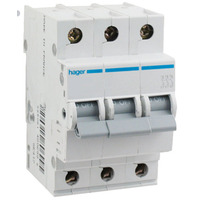
Find the best 3-phase circuit breakers here at Sparky Direct. [ Read More ]
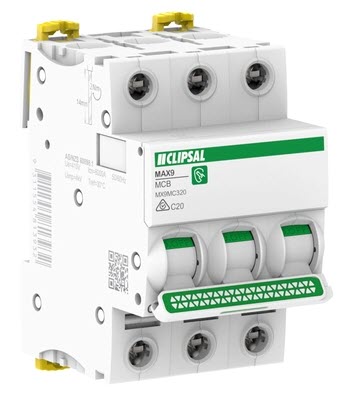
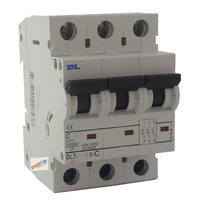
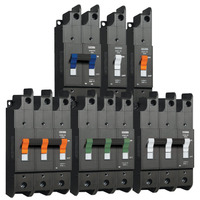


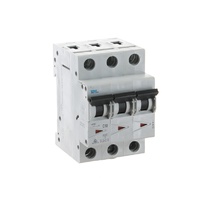
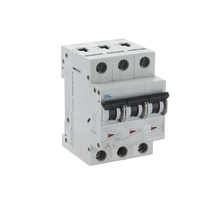
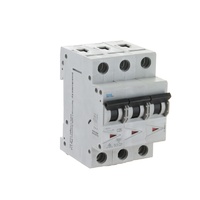
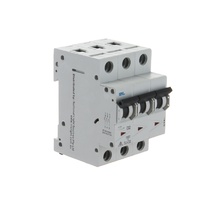
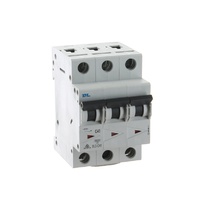
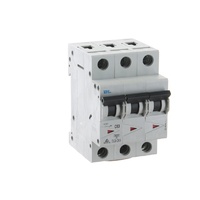

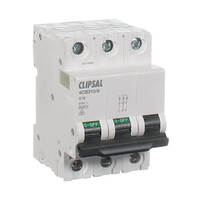
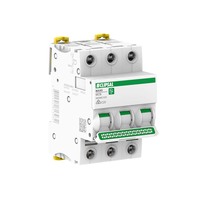
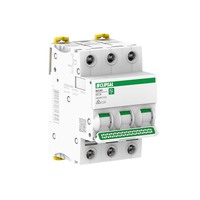
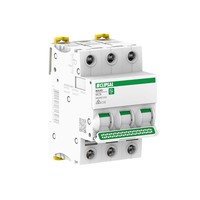
What Are 3 Phase Circuit Breakers and How Do They Protect Power Systems?
Table of Contents
- What 3 Phase Circuit Breakers Are and How They Work
- Why 3 Phase Circuit Breakers Are Critical for Electrical Safety
- Where 3 Phase Circuit Breakers Are Used
- 3 Pole Breakers vs Other Breaker Types
- Types of 3 Phase Circuit Breakers
- Understanding Breaker Ratings and Selection
- Breaking Capacity and Fault Protection
- Trip Curves and Load Characteristics
- Coordination and Selectivity in Three-Phase Systems
- Installation and Commissioning Best Practices
- Environmental and Operational Considerations
- Maintenance, Inspection, and Lifecycle
- Common Specification and Installation Mistakes
- 3 Phase Breakers in Modern Electrical Systems
- Compliance and Australian Standards
- Buying 3 Phase Circuit Breakers in Australia
- Troubleshooting Common Issues
- Tradies Join Club Clipsal with Sparky Direct
- Product Videos
- What Sparky Direct Customers Say
- Quick Summary (TL;DR)
- Frequently Asked Questions about 3 Phase Circuit Breakers
What 3 Phase Circuit Breakers Are and How They Work
A 3 phase circuit breaker, often called a three-pole breaker, switches and protects all three active phases of a three-phase supply through a single mechanism. The three poles are linked internally, so a fault on any one phase trips all three at once. This common-trip behaviour is what separates a true three-phase device from three single-pole breakers mounted side by side.
What Does a 3 Phase Circuit Breaker Do?
The breaker performs two related jobs at the same time. First, it carries the full rated current under normal operating conditions without nuisance tripping or noticeable temperature rise. Second, it safely interrupts the circuit whenever current exceeds the defined threshold, whether from a sustained overload or a sudden short-circuit fault. Three-pole circuit breakers must be sized to match the downstream cable, the connected load, and the prospective fault current available at the point of installation.
How Does Three-Phase Protection Differ from Single-Phase Protection?
Single-phase breakers protect only one active conductor and are used on lighting and general final sub-circuits across most installations. A three-phase load, such as a motor or commercial HVAC unit, draws current across all three phases together at the same time. If only one phase is interrupted during a fault, the motor will continue to run on two phases in a dangerous condition known as single-phasing. Single-phasing causes severe overheating across the motor windings and leads to rapid winding insulation failure. Three-pole common-trip breakers prevent this outcome by isolating all three active conductors simultaneously.
How Does Overload and Short-Circuit Tripping Work?
Most three-phase MCBs use a combined thermal and magnetic mechanism. The thermal element is a bimetallic strip that bends as it heats up under sustained overcurrent, releasing the trip latch after a delay proportional to the overload. The magnetic element is a coil that snaps the breaker open instantly when current spikes to short-circuit levels. This dual mechanism handles slow overloads and sudden faults using a single device.
Why 3 Phase Circuit Breakers Are Critical for Electrical Safety
Three-phase electrical systems carry far more energy than the equivalent single-phase circuits delivering the same useful power. A 63A three-phase supply at 400V delivers around 43 kW of continuous power into the load. Without correctly rated protection in place, a fault at this scale can vaporise cable insulation instantly, ignite switchboard plastics, or weld the breaker contacts permanently shut. A correctly specified three-pole breaker is the primary safety device standing between the supply network and the connected load.
Protecting Equipment, Cabling, and Infrastructure
The breaker shields downstream wiring from any current the cable cannot safely carry under continuous operation. Pairing the breaker correctly with the chosen cable size is a mandatory requirement under AS/NZS 3000 in every commercial and industrial installation. Motors, transformers, and variable speed drives also depend on the breaker to disconnect supply before fault energy reaches the windings.
Preventing Overheating and Fault Escalation
Sustained overloads heat conductors slowly, degrading insulation long before any visible damage appears. The thermal element of a three-pole MCB trips on this kind of slow rise. Magnetic tripping handles the opposite extreme: a bolted short circuit where current can climb to thousands of amps within milliseconds. Both modes prevent localised faults from escalating into switchboard fires.
Supporting Reliable Isolation and Maintenance
A three-pole breaker also serves as a manual isolator during maintenance. Switching it off opens all three phases, allowing safe testing or replacement of downstream equipment. For larger installations, dedicated three-pole main switches sit upstream of the breakers to isolate entire boards.
Where 3 Phase Circuit Breakers Are Used
Three-phase breakers appear wherever significant power is drawn or distributed. Their use spans light commercial sites through to heavy industrial plants.
Main Switchboards and Distribution Boards
In a typical commercial installation, three-pole MCBs sit on standard DIN rail inside a metered switchboard. They feed sub-circuits for HVAC plant, fixed machinery, and three-phase outlets across the building. Each breaker is sized to its specific downstream load and coordinated carefully with the upstream main switch.
Motor Control Centres and Industrial Machinery
Motor control centres group multiple three-phase starters in a single enclosure. Each starter is fed through a three-pole breaker chosen for the motor's full-load current and inrush profile. The breaker provides short-circuit protection while the contactor and overload relay handle starting and running control.
Commercial HVAC, Pumps, and Compressors
Rooftop air-conditioning plant, building water pumps, and industrial compressors are almost always three-phase. These loads start with high inrush, then settle to a steady running current. The breaker must ride through the inrush without nuisance tripping but still protect the cable during a fault.
3 Pole Breakers vs Other Breaker Types
Choosing the right pole configuration is a basic step in switchboard design. The decision depends on the supply, the load, and whether earth-fault detection is required.
3 Pole vs Single Pole Circuit Breakers
Single pole circuit breakers protect one active conductor and are used on single-phase final sub-circuits, such as lighting and general power. Three-pole breakers protect all three actives together and are required for true three-phase loads. Using three single-pole breakers in place of one three-pole device is non-compliant for common-trip applications because the poles do not share a trip mechanism.
3 Pole vs Two Pole Circuit Breakers
Two-pole circuit breakers switch active and neutral on a single-phase circuit, providing complete isolation. Three-pole breakers omit the neutral pole because three-phase loads are typically balanced and the neutral carries little current. Where neutral switching is required on three-phase, a four-pole device is specified instead.
3 Pole Breakers vs RCBOs and MCCBs
A standard three-pole MCB protects against overload and short circuit only. 3-phase RCBOs add residual current protection in the same module, detecting earth leakage as low as 30 mA. Moulded case circuit breakers, or MCCBs, handle higher current ratings and offer adjustable trip settings, making them the choice for main incomers and large feeders.
Types of 3 Phase Circuit Breakers
Three-phase breakers fall into a few clear families based on construction and protection function. Each type suits a defined range of currents and applications.
Miniature Circuit Breakers (MCBs)
- DIN-rail mount, three-pole modules
- Typical range 6A to 125A
- Used in distribution boards
- Fixed thermal-magnetic trip
Moulded Case Circuit Breakers (MCCBs)
- Higher current ratings, 100A to 1600A
- Adjustable thermal and magnetic trip
- Higher breaking capacity
- Used as main incomers and feeders
RCBOs and Combined Devices
- Combined overload, short-circuit, and earth leakage
- Three- or four-pole versions available
- Required where personal protection is needed
- 30 mA trip for general use
Fixed vs Adjustable Breakers
- MCBs have fixed trip settings
- MCCBs offer adjustable thermal pickup
- Adjustable models aid coordination
- Match adjustability to system complexity
Miniature Circuit Breakers (MCBs)
MCBs handle most distribution-board duties in commercial and light industrial switchboards across Australia. The Clipsal MAX9 range covers ratings from 6A through to 125A in three-pole format with a 6 kA breaking capacity, which suits the majority of commercial switchboards specified in Australian projects today.
Moulded Case Circuit Breakers (MCCBs)
MCCBs step in where current ratings exceed MCB limits or where adjustable trip settings are needed. They are the standard choice for main switches feeding large boards and for protecting transformer secondaries.
RCBOs and Combined Protection Devices
Three-phase RCBOs are required on circuits where personal protection is mandated, such as final sub-circuits feeding socket outlets. Browse the full RCBO range for available ratings and brands.
Fixed vs Adjustable Breakers
Fixed breakers are simpler and cheaper but offer no flexibility once installed. Adjustable MCCBs allow the trip pickup to be tuned to actual load conditions during commissioning, which improves coordination with upstream and downstream protection.
Understanding Breaker Ratings and Selection
Selecting the right breaker means matching three things: the rated current to the load, the voltage rating to the supply, and the breaking capacity to the prospective fault current. Get any one of these wrong and the breaker either nuisance trips or fails dangerously during a fault.
Current Ratings (40A, 63A, 100A and Beyond)
Three-pole MCBs are commonly stocked in 16A, 20A, 25A, 32A, 40A, 50A, 63A, 80A, 100A, and 125A ratings. The current rating must equal or exceed the maximum demand of the load while staying within the safe carrying capacity of the supply cable. Oversizing the breaker to "play it safe" is dangerous: it leaves the cable unprotected.
Voltage Ratings and System Compatibility
Australian three-phase supplies are nominally 400V line-to-line and 230V line-to-neutral across most installations. Three-pole breakers carry both a rated insulation voltage and a rated operational voltage, both of which must comfortably exceed the actual system voltage at the installation point. Standard breakers stocked for Australian use are rated 400V or 415V AC and suit the vast majority of commercial and industrial applications.
Matching Breakers to Real Load Conditions
Real loads vary throughout the day and across the seasons in any commercial installation. A breaker sized only to absolute peak demand may trip during normal inrush events, while one sized only to average demand may overheat under sustained peak loads. Calculate the maximum demand using the standard AS/NZS 3000 methods, then add a sensible margin for diversity and inrush before selecting a final breaker rating.
Breaking Capacity and Fault Protection
The breaking capacity of a three-pole circuit breaker is the maximum prospective fault current the device can interrupt safely without sustaining internal damage. This rating is expressed in kiloamps (kA) and is marked clearly on every compliant breaker. Underestimating this value during switchboard design is the most dangerous specification mistake an electrical designer can make.
Understanding kA Ratings
Common breaking capacities for three-phase MCBs are 4.5 kA, 6 kA, and 10 kA. MCCBs typically offer 25 kA, 36 kA, 50 kA, or higher. The kA rating must equal or exceed the prospective short-circuit current at the breaker's point of installation. A 6 kA MCB installed where 12 kA is available will rupture during a fault.
Prospective Fault Current and Interrupting Capacity
Prospective fault current depends primarily on source impedance: transformer size, supply cable length, and the overall network configuration feeding the board. Network operators publish typical values for standard connection points, and the switchboard designer calculates the actual figure for each individual board during the design phase. Always confirm the calculated value against the proposed breaker before specifying breakers for a new installation.
Risks of Under-Rated Breakers
An under-rated three-pole breaker can fail catastrophically during a high-current fault. The internal arc may not extinguish at all, contacts can weld closed under pressure, and the moulded breaker case can rupture violently. The downstream cable then continues to carry full fault current until an upstream protective device finally clears it. Selecting the correct kA breaking capacity is therefore non-negotiable for both equipment safety and personnel safety on site.
Safety note: The breaking capacity rating on the breaker must always equal or exceed the prospective fault current at the installation point. Verify this value during switchboard design, not after installation.
Trip Curves and Load Characteristics
Trip curves describe how quickly a breaker opens for a given level of overcurrent. The right curve depends on whether the load is resistive, inductive, or has high inrush.
Type B, C, and D Trip Curves
Type B curves trip magnetically at 3 to 5 times rated current and suit resistive loads such as lighting and heating. Type C curves trip at 5 to 10 times, the standard choice for general distribution and mixed loads. Type D curves trip at 10 to 20 times, used for heavy inductive loads with high inrush such as transformers and motor starters.
Motor Inrush and Inductive Load Behaviour
A typical three-phase motor draws 6 to 8 times its full-load current at startup, lasting a few hundred milliseconds. A Type B or C breaker often nuisance trips on this inrush, while a Type D handles it without complaint. Match the curve to the load profile, not just the steady-state current.
Selecting for HVAC, Compressors, and Machinery
HVAC and compressor circuits typically use Type C breakers, with Type D reserved for direct-online motor starters above about 7.5 kW. Variable speed drives may allow a Type B curve because the drive limits inrush, but always confirm with the drive manufacturer's specification.
| Trip Curve | Magnetic Trip Range | Typical Application |
|---|---|---|
| Type B | 3 to 5 x rated current | Lighting, heating, resistive loads |
| Type C | 5 to 10 x rated current | General distribution, mixed loads |
| Type D | 10 to 20 x rated current | Motors, transformers, high inrush |
Coordination and Selectivity in Three-Phase Systems
Selectivity means that a fault on one circuit trips only the breaker protecting that circuit, leaving the rest of the board energised. Achieving selectivity in a three-phase system requires careful coordination between upstream and downstream devices.
Upstream and Downstream Protection Coordination
The upstream breaker must be slower to trip than the downstream breaker for any fault current within the downstream device's rating. This is achieved by stepping up both current rating and time delay. Manufacturer coordination tables list which combinations are guaranteed selective.
Isolating Only the Faulted Circuit
Without selectivity, a single fault can take out an entire switchboard or building. Coordinated systems isolate only the faulted final circuit, leaving lighting, ventilation, and other essential services running. This matters most in commercial sites where downtime carries direct cost.
Maintaining System Reliability During Faults
True selectivity is hard to guarantee at high fault currents because fast-acting protection on multiple devices can trip together. Many real installations achieve partial selectivity, where the system is selective for normal overloads but cascaded for high-energy faults. The designer must accept this trade-off explicitly during design.
Installation and Commissioning Best Practices
Even a correctly specified breaker can fail in service if it is poorly installed. Three areas matter most: cable matching, mechanical termination, and pre-energisation testing.
Matching Breakers to Cable Size and Switchboards
The breaker rating must not exceed the safe current-carrying capacity of the smallest cable in the protected circuit. Refer to the AS/NZS 3008 cable tables, accounting for installation method, ambient temperature, and grouping. Confirm the breaker fits the DIN rail spacing and the busbar arrangement of the chosen switchboard.
Phase Sequence and Torque Verification
Check phase rotation before energisation, especially on motor circuits, because reverse rotation can damage equipment. Tighten all terminal screws to the manufacturer's torque specification. Loose terminations are the leading cause of switchboard fires.
Functional Testing Before Energisation
Before applying load, perform an insulation resistance test phase-to-phase and phase-to-earth. Test the trip mechanism using an injection set where practical. Confirm the breaker's serial number, rating, and breaking capacity match the design drawings and the switchboard schedule.
Pre-energisation checklist
Verify cable size matches breaker rating, confirm correct phase rotation, torque all terminations to specification, perform insulation resistance testing, and check that the kA rating exceeds prospective fault current at the installation point.
Environmental and Operational Considerations
Three-phase circuit breakers are rated for specific environmental conditions, including ambient temperature, vibration, humidity, and the presence of contaminants. Ignoring these published limits during installation causes premature device failure or persistent nuisance tripping in service.
Heat, Vibration, and Harsh Industrial Conditions
Heavy industrial sites expose breakers to ambient heat from adjacent equipment, vibration from machinery, and contamination from dust or chemical fumes. Specify breakers rated for the actual installation environment, not just the nominal indoor switchboard condition.
Outdoor and High-Humidity Installations
Outdoor switchboards require IP-rated enclosures and sometimes heaters to prevent condensation. Standard MCBs are not rated for direct outdoor exposure. Where outdoor protection is unavoidable, mount the breakers inside a sealed, IP-rated enclosure with appropriate ventilation.
Breaker Derating in High Ambient Temperatures
Most three-phase MCBs are rated for an ambient temperature of 30°C inside a normally ventilated switchboard. At higher ambient temperatures the rated current must be derated, typically by around 5 percent for every 10°C rise above the 30°C reference point. A 63A breaker installed in a 50°C plant room may only safely carry around 55A in continuous service. Manufacturer derating tables are essential reading whenever the installation environment runs significantly hotter than a standard indoor switchboard.
Maintenance, Inspection, and Lifecycle
Three-phase circuit breakers do not last forever in the field, even under normal switchboard conditions. Routine inspection extends service life, identifies degrading terminations early, and catches developing problems before they cause an unplanned outage.
Routine Inspection for Heat and Wear
Annual thermographic inspection identifies hot terminations and breaker bodies running above ambient. Visual inspection looks for discolouration, melted plastic, and dust accumulation. Both checks should be part of a planned switchboard maintenance schedule.
Detecting Loose Connections and Damage
Loose terminations show up as localised heat under thermography long before any visible damage appears on the breaker body or its terminals. Re-torquing is part of routine annual maintenance, but always check the manufacturer's guidance, because some terminal types must not be re-torqued repeatedly without replacement. Cracked or discoloured breaker cases require immediate replacement before the next energisation cycle.
When to Replace a 3 Phase Breaker
Replace any breaker that has cleared a major short-circuit fault, because the contacts may have eroded enough to compromise future operation. Replace breakers showing signs of mechanical damage, corrosion, or discolouration. Manufacturers typically rate MCBs for 10,000 mechanical operations and around 6,000 electrical operations at full load.
Common Specification and Installation Mistakes
Three patterns account for most breaker problems in the field. Each is avoidable with careful design and installation discipline.
Oversizing or Undersizing Breakers
Oversizing the breaker leaves the downstream cable unprotected during a sustained overload because the breaker will not trip before the cable insulation begins to degrade. Undersizing the breaker causes repeated nuisance tripping under normal operating conditions, frustrating users and tempting workarounds. Both errors stem from specifying breakers to immediate convenience or stock availability, rather than to a calculated maximum demand and verified cable rating.
Ignoring Fault Levels and Coordination
Specifying a breaker on current rating alone, without checking the kA breaking capacity against prospective fault current, is the most dangerous mistake in switchboard design. Selectivity coordination is the second most common omission, leading to unnecessary blackouts during faults.
Using Incorrect Breaker Types for Load Profiles
Fitting a Type B breaker on a motor circuit guarantees nuisance tripping. Fitting a Type D on a lighting circuit reduces sensitivity to genuine faults. The trip curve must match the load profile, not the convenience of stock on hand.
3 Phase Breakers in Modern Electrical Systems
Switchboard design is evolving as buildings draw more power, integrate solar generation, and require remote monitoring. Three-phase breakers play a central role in all three trends.
Switchboard Segmentation and Reliability
Modern boards are divided into clearly segmented sections, each protected by coordinated breakers. Segmentation contains faults, simplifies maintenance, and supports phased load changes without taking the whole board offline.
Integration with Smart Monitoring Systems
Newer three-phase breakers offer auxiliary contacts and communication modules that report status, current, and trip events to building management systems. This data enables predictive maintenance and accurate load profiling.
Planning for Future Load Expansion
Building loads grow over time as EV charging, heat pumps, and additional HVAC are added. A switchboard designed with spare capacity in the main breaker, busbar, and distribution breakers handles future expansion without a full rebuild. Specifying a three-phase kWh meter at the same time supports load monitoring and tariff verification.
Compliance and Australian Standards
Three-phase breakers sold and installed in Australia must comply with several mandatory standards. Compliance covers product manufacture, installation method, and ongoing certification.
AS/NZS 3000 Wiring Rules
AS/NZS 3000:2018 sets out the rules for protective device selection, cable coordination, and switchboard installation. Every three-phase breaker installation must comply with these rules.
AS/NZS 60898 and AS/NZS 60947 Standards
AS/NZS 60898 covers MCBs for household, commercial, and similar installations across the standard ratings carried by most distribution boards. AS/NZS 60947-2 covers low-voltage MCCBs and applies to the higher-rated devices used as main incomers and large feeders. Both standards define performance, marking, and testing requirements that any compliant breaker must meet. Always look for the relevant compliance markings stamped on the breaker body before installation.
RCM Certification and Compliance Requirements
The Regulatory Compliance Mark (RCM) confirms that an electrical product meets Australian electrical safety, EMC, and telecommunications requirements. Only RCM-marked breakers should be installed in Australian switchboards.
Buying 3 Phase Circuit Breakers in Australia
Buying online from a trade-focused electrical wholesaler gives access to the full range of brands, ratings, and breaking capacities, with current stock confirmed before any purchase is placed. Trade pricing applies to qualified contractors who hold a Sparky Direct trade account.
Where to Buy Online
Sparky Direct stocks three-pole circuit breakers from leading Australian and global brands, including Clipsal, Hager, NHP Electrical, Eaton, and Siemens. Stock levels are visible before purchase and orders ship Australia-wide.
Cheap vs Trade-Grade Options
Trade-grade breakers from established manufacturers carry RCM certification, predictable trip behaviour, and full coordination data. Cheap unbranded breakers may carry markings that look correct but lack independent verification. The cost of a switchboard fire massively outweighs the saving on a budget breaker. Legrand and IPD are also widely specified by Australian designers.
Bulk Purchasing for Contractors
Large jobs benefit from bulk pricing on identical breakers. Specifying a single brand and breaking capacity across a project simplifies coordination, spares stock, and switchboard schedules. Contact Sparky Direct directly for project pricing on quantities above standard pack sizes.
Troubleshooting Common Issues
When a three-phase breaker misbehaves, the cause is usually one of three things: a real fault, a sizing problem, or a thermal issue at the terminations.
Breakers Tripping Under Load
Repeated tripping under load typically points to a genuine overload, an undersized breaker for the actual demand, or a developing earth fault somewhere downstream. Measure the running load current under normal operating conditions using a clamp meter or installed current transformer. Compare the reading directly to the breaker rating and the cable's safe carrying capacity. If the load is genuinely within rating, check insulation resistance and look carefully for hidden wiring damage on the affected circuit.
Breakers Failing to Reset
A breaker that will not reset typically has an unresolved fault still present somewhere on the downstream circuit. Disconnect the connected load entirely and try resetting the breaker again with the circuit empty. If the breaker resets cleanly with no load, the fault is downstream of the breaker and needs systematic isolation. If it still will not reset with the circuit empty, the breaker itself may have failed internally and requires replacement.
Heat Build-Up and Connection Problems
Warm breaker bodies during normal operation usually indicate loose terminations, undersized conductors, or sustained operation at high load levels. Thermographic imaging across the switchboard quickly confirms which of these is the actual source of the heat. Re-torque all terminations to the manufacturer's specification, replace any damaged terminals, and consider upsizing both the breaker and the cable if site loads have grown over time.
Tradies Join Club Clipsal with Sparky Direct
Club Clipsal is Australia's largest electrician community offering trade rewards, business support, and exclusive benefits. When you nominate Sparky Direct as your preferred wholesaler, we automatically apply your Clipsal spend points to your Club Clipsal account daily.
Four Membership Tiers
Entry-level offering coaching, mentoring, and training discounts
Unlock exclusive industry tools and networking events
Access Toyota fleet offers and business software discounts
Maximum benefits, including VIP experiences and rewards
How It Works
1. Sign Up: Create your Club Clipsal account at clipsal.com/club-clipsal or via the iCat mobile app
2. Nominate Sparky Direct: Select Sparky Direct from the wholesaler dropdown menu in your profile
3. Add Email: Enter your Sparky Direct account email address in the membership number field
4. Start Earning: Every dollar spent on Clipsal products earns points automatically
Exclusive Benefits
Redeem points from the rewards store, including gift cards, tools, and experiences. Access business summits, product training, and industry networking events. Receive early access to new product launches and special promotions. Connect with fellow electricians via the Club Clipsal community app.
Product Videos
Watch Fluke ST240+ | RCD Socket Tester With Beeper video
Watch Fluke ST240+ | RCD Socket Tester With Beeper video
Watch Volt Safety LVR-KIT | Low Voltage Switchboard Rescue Kit video
What Sparky Direct Customers Say

The MAX9 MCBs are smart looking, easy to visually identify the switch position, and has large tunnels so it is easy to connect to with combs of various types (rather than just in-brand).
Purchased this to replace a faulty unit (different brand). Terminals are suitably large to comfortably accommodate all wiring. Slotted in perfectly. Works well - no issues.
Easy to navigate the website and find what I needed, and the item arrived very quickly to Perth WA. Well packaged and protected.
- 3 phase circuit breakers protect all three actives of a three-phase supply through a common-trip mechanism, preventing single-phasing damage to motors and other balanced loads.
- Match three things: current rating to load and cable, voltage rating to supply, and breaking capacity (kA) to prospective fault current at the installation point.
- Choose trip curve by load profile: Type B for resistive loads, Type C for general distribution, Type D for motors and high-inrush equipment.
- Select MCBs for distribution (up to 125A), MCCBs for higher ratings and adjustable trip, and 3-phase RCBOs where earth-leakage protection is required.
- Comply with AS/NZS 3000, AS/NZS 60898, and AS/NZS 60947-2; install only RCM-marked breakers.
- Inspect annually for heat and loose terminations, and replace any breaker that has cleared a major fault.
Shop 3 Phase Circuit Breakers at Sparky Direct
Quality products in stock • Fast Australia-wide delivery • Competitive trade pricing
Browse 3 Phase Circuit Breakers → Get Expert Advice →Circuit Breaker Three Pole Frequently Asked Questions
Are three pole circuit breakers easy to identify in a switchboard?
Yes. They are wider than single or two pole breakers and are clearly labelled for three-phase use.
Circuit Breaker Three Pole near me
Three pole circuit breakers are available from Sparky Direct, offering access to compliant electrical protection products.
Is delivery available for three pole circuit breakers?
Yes. Three pole circuit breakers are available with fast dispatch and fast delivery Australia wide, including metropolitan and regional areas.
Can three pole circuit breakers be used for replacements or upgrades?
Yes. They are suitable for replacing existing breakers or upgrading three-phase switchboards.
Do three pole circuit breakers come with a warranty?
Yes. Warranty coverage depends on the manufacturer and supplier, with conditions applying.
What should I consider before buying a three pole circuit breaker?
Consider the required current rating, switchboard compatibility, application type, and electrician recommendations.
Are three pole circuit breakers suitable for light industrial use?
Yes. They are widely used in light industrial and commercial installations.
Do three pole circuit breakers require maintenance?
They generally require no maintenance but are inspected during electrical safety checks.
Do three pole circuit breakers wear out over time?
They are designed for long service life but may require replacement if they no longer trip correctly.
Are three pole circuit breakers used in upgrades and renovations?
Yes. They are often installed during upgrades to three-phase systems.
Are three pole circuit breakers noisy during operation?
No. They operate silently under normal conditions.
Do three pole circuit breakers improve electrical safety?
Yes. Simultaneous disconnection of all phases reduces the risk of partial energisation.
Can frequent tripping indicate a system issue?
Yes. Repeated tripping may indicate overloads, phase imbalance, or faults requiring professional assessment.
What is a three pole circuit breaker?
A three pole circuit breaker is a protective device designed to simultaneously disconnect all three active conductors in a three-phase electrical system when a fault or overload occurs.
What happens when a three pole circuit breaker trips?
Power is disconnected across all three phases, stopping electricity flow to the connected equipment.
Why are three pole circuit breakers important in three-phase systems?
They ensure all phases are disconnected at the same time, improving safety and protecting equipment.
Is professional installation required for three pole circuit breakers?
Yes. Installation and replacement must be carried out by a licensed electrician.
Are three pole circuit breakers resettable after tripping?
Yes. Once the fault is resolved, three pole circuit breakers can be reset.
Can three pole circuit breakers be used in residential settings?
Yes. They may be used in larger homes with three-phase power for specific high-load circuits.
Are three pole circuit breakers suitable for Australian electrical systems?
Yes. They are designed for use in Australian three-phase electrical installations.
What current ratings are available for three pole circuit breakers?
Three pole circuit breakers are available in a wide range of amp ratings to suit different three-phase loads and applications.
Are three pole circuit breakers required for three-phase circuits?
Yes. Three-phase circuits typically require three pole protection to ensure all phases are disconnected simultaneously.
What does a three pole circuit breaker protect against?
It protects against overloads and short circuits across all three phases, helping prevent equipment damage and electrical hazards.
Do three pole circuit breakers comply with Australian standards?
Three pole circuit breakers supplied in Australia are designed to meet relevant AS/NZS electrical and safety standards when installed correctly.
Where are three pole circuit breakers commonly used?
They are commonly used in commercial, industrial, and larger residential installations for three-phase equipment such as motors, machinery, and air conditioning systems.