

SQ1 Tip
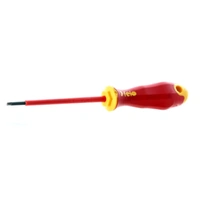
FELO 41910090 | Screwdriver Ergonomic SQ1 x 100 Soft Gel Suits CLIPSAL ICONIC
$20.84
$18.95 ex. GST
Search Results:
Search Results:
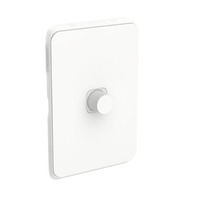
Find the best Clipsal Iconic Fan Controllers here at Sparky Direct. [ Read More ]

A fan controller regulates the electrical supply delivered to a ceiling fan or exhaust fan motor, sitting on the wall in place of a basic on or off switch. By varying the power delivered, the controller modulates how fast the motor turns, which gives the user multiple speed settings rather than a single fixed speed.
Fan controllers also accommodate the larger inrush current of motor loads, which a standard light switch is not rated to manage. Using the correct controller protects the motor and meets the wiring rules.
Wall control places the speed selector at switch height, so anyone in the room can reach it without standing under the fan. This matters for tall ceilings, accessible design, and multi-occupant rooms where a swinging cord is impractical.
Pull cords additionally deteriorate, tangle, and break over time, while a wall mechanism inside an Iconic plate has no exposed moving cord. The unit lasts longer and looks consistent with the rest of the room's switching.
Iconic fan controllers share the same grid, plate, and skin system as the rest of the range. They mount in a standard Iconic 1, 2, 3, or 4 gang plate alongside light switches, dimmers, and power outlets, as documented across the broader Iconic mechanisms category.
Modern fit-outs combine lighting, fan, and smart control on a single wall plate, and the fan controller is the missing piece that makes this possible without a remote or a third-party module. It keeps the wall layout tidy and gives the occupant direct, tactile speed control.
The standard Iconic fan controller is a 4-position rotary mechanism that steps through Off, 1, 2, and 3 to deliver low, medium, and high speed. The 40CSFM-VW is rated 250V at 75VA and suits most residential AC ceiling fans up to that load.
A wider fan speed controllers category covers comparable products from other brands and grids, but the Iconic version is preferred when the rest of the room already uses Iconic plates.
Combination plates put fan, light, and heat lamp controls on a single grid, with the Iconic 3 gang and 4 gang Heat-Fan-Light plates being the typical bathroom solution. Each gang carries a labelled rocker so the user can identify the function at a glance.
These complete switches sit in the Iconic complete switches range, and they suit installations where the fan is paired with an exhaust heat lamp unit.
The 41ECSFWMZ-VW is a Zigbee-connected fan controller that pairs with a Wiser hub, and it supports voice control through Google Assistant and Amazon Alexa. The unit also keeps a manual push-button mode for users who prefer direct control.
Connected models suit homes already running other Iconic Wiser devices, since they share the same hub, app, and routines as Wiser dimmers and switches.
A standard rotary controller is the right choice for a single bedroom fan or a basic living area, because it is cheaper, simpler, and needs no commissioning. A connected controller is justified when scheduling, automation, or voice control adds real value to the user.
A speed controller varies the voltage or impedance fed to the motor, and less voltage means less torque, which in turn means a slower rotation. The motor still receives a clean 50Hz supply, just at a reduced effective level for each speed step.
Capacitor controllers switch between several capacitors of different values, with each capacitor producing a fixed speed step. The system is simple, robust, and well suited to standard AC fan motors.
Electronic controllers use solid-state circuitry to chop the waveform, which allows finer control and smoother transitions. Variable speed mechanisms like the 32E500FM electronic style fall into this group.
Not every fan motor accepts every controller, so motor type drives the selection. AC induction motors usually pair with capacitor or stepped electronic controllers, while DC fans use their own controller built into the receiver and only need the wall mechanism to switch them on or off.
A mismatched controller can cause humming, overheating, or refusal to start. The fan may run at one speed only, or it may buzz on lower steps, and in some cases the mechanism itself fails because the load draws more than its rating.
The first check is the fan type, since this drives every other choice. AC ceiling fans pair with rotary or stepped mechanisms, while DC fans need their factory controller and only need a switched live from the wall, with the fan installation manual listing the supported control methods.
Each controller has a maximum VA rating that must not be exceeded. The 75VA Iconic mechanism covers the majority of single residential ceiling fans, while larger or commercial fans may require the 500VA variable mechanism instead.
A typical 1200mm to 1400mm AC ceiling fan draws around 50 to 70VA at full speed, so two fans on one controller may exceed the 75VA limit. Check the motor nameplate before specifying.
Iconic fan controllers fit a standard Iconic grid, and the grid mounts to any wall box that accepts a Clipsal Iconic plate. Replacement of a Series, 2000, or older plate usually needs a new grid fitted to the same wall box.
The most common mistake is using a dimmer instead of a fan controller, because dimmers cut the waveform in a way that damages most fan motors. Always check the front face for the fan icon, or read the data sheet to confirm fan rating.
A bedroom usually needs a single fan with three or four speeds, and the standard 4-position Iconic rotary suits this. Living rooms with larger fans may need the variable 500VA mechanism for finer adjustment.
Offices and small commercial spaces often pair a controller with multiple identical fans on one circuit, where the total load must stay under the controller rating.
Bathrooms with heat lamp units almost always use a 3 or 4 gang Heat-Fan-Light plate, since the labelled rockers reduce confusion and pass building inspection more easily. The Iconic version is slim and clear when compared with older 2000 series plates.
Smart control suits homes where the user already manages lighting through a phone or voice assistant, since the Zigbee fan controller integrates with the same Wiser hub. Users can schedule the fan to run during peak heat or stop overnight automatically.
Wall control sits at a fixed reachable height, which helps elderly users, users with mobility aids, and anyone with high ceilings. Specify a position consistent with other room switches at around 1100mm above finished floor.
The fan controller mechanism takes the same skin colours as Iconic switches, with Vivid White, Anthracite, and the Essence range all working with the standard mechanism. This keeps the wall plate visually consistent across one room.
Replacement skins from the Iconic skin and plate covers let an electrician change the look without rewiring.
The fan mechanism sits in any position on a 1, 2, 3, or 4 gang grid, while the remaining positions can hold light switches, USB outlets, or dimmers. The grid range is covered in Iconic grids and surrounds.
The Zigbee fan controller speaks the same protocol as other Wiser devices, joining the hub once and then appearing in the Wiser app like any other zone. Routines can include the fan in scenes that already control lights and air conditioning.
Specifying Iconic across an entire home or fit-out keeps the visual language consistent across rooms. A bedroom fan controller, a kitchen dimmer, and a study power outlet all share the same plate edge and skin texture, which is hard to achieve when mixing brands.
Most domestic ceiling fans benefit from a wall-mounted controller, since the standard Iconic rotary handles the load and matches existing plates. Renovations are the natural moment to swap older 2000 series fan switches for the modern Iconic version.
Commercial ceiling fans may run in groups under a single zone controller, and Iconic mechanisms suit smaller offices with one or two fans per zone. Larger spaces typically need a dedicated commercial fan controller with higher VA rating.
The connected fan controller pairs with Wiser, Google Home, and Alexa setups, allowing scheduled operation, voice control, and integration with temperature triggers. This is most valuable in homes with multiple smart devices already in use.
Each room normally has its own controller for direct access at the entry point. Multi-zone projects use one Iconic mechanism per fan, with all fans visible in a single Wiser dashboard for connected installations.
Wiring a fan controller is licensed electrical work in Australia, because the installation handles live mains and must be terminated correctly. Unlicensed work voids insurance and breaches state electrical safety law.
The controller accepts an active feed and a switched active to the fan, with earthing following the standard wiring rules. A neutral is required at the switch position for the connected Zigbee version.
Compliance note: All work must comply with AS/NZS 3000:2018, and connected Zigbee controllers also need a neutral conductor at the switch box. Older buildings may not have this neutral, in which case a rewire of that drop is then needed.
Iconic mechanisms accommodate any standard 70mm wall box on common Australian centres. The grid screws to the box, the mechanism clicks into the grid, and the skin clips on top, so existing 2000 series boxes accept the new grid without alteration in most cases.
The wiring rules cover circuit ratings, fault protection, earthing, and accessibility, and each fan controller install must meet these clauses. The product itself carries the required RCM mark from the manufacturer.
Multiple speed steps let occupants tune airflow to room temperature and personal preference. A low setting is enough for sleeping, medium suits reading, and high cools quickly after a hot day, while a single-speed switch cannot deliver this range.
The wall controller is always in the same place, so users do not need to find a remote or pull a swinging cord. This matters most for shared rooms and rental properties where remotes get lost easily.
Fixed-speed installations operate the fan harder than necessary most of the time, which wastes electricity and shortens motor longevity. Variable control lowers energy use and reduces motor wear, and the fan also runs more quietly at lower steps, which improves sleep quality.
A clear rotary or rocker is intuitive, with no menu, no application, and no configuration required. The user turns the dial or presses the rocker, and the fan responds, which is hard to beat for daily reliability.
A buzz at low speed usually means the motor and controller are mismatched, so try a different speed step first. Persistent humming after that points to a worn capacitor or the wrong controller type for that motor.
If only one or two speeds work, suspect a faulty internal capacitor in the controller. The mechanism is sealed and is replaced as a unit rather than repaired, so confirm the issue is in the controller, not the fan, by swapping a known-good unit briefly.
Check the fan motor type, VA rating, and any notes in the fan manual, then compare against the controller data sheet. A controller designed for AC fans will not drive a DC fan motor and vice versa.
Replace a controller that hums constantly, runs at one speed only, or feels warm to the touch. An upgrade to a Zigbee version is worthwhile when the remainder of the residence is migrating onto Wiser, otherwise a like-for-like replacement keeps cost down.
Remote-control fans put the receiver inside the canopy and give multi-speed control along with a built-in light dimmer in many cases. The drawback is the remote itself, which is easy to lose and easy to break.
A standard wall controller is a single mechanism with no setup beyond installation. A smart system adds an app, a hub, and voice control, so the smart route adds value in larger homes, while the wired controller wins on simplicity and cost in smaller installs.
| Control Type | Best Suited To | Typical Limitation |
|---|---|---|
| Iconic Rotary 75VA | Single AC ceiling fan, residential | Capped at 75VA load |
| Variable 500VA Mechanism | Larger fans, light commercial | Higher cost, electronic style |
| Connected Zigbee | Smart homes with Wiser | Needs neutral and a hub |
| Remote-Control Fan | Bedrooms, retrofit installs | Remote can be lost |
Wall control is fixed, tactile, and lasts for many years without maintenance. It does not run on batteries and does not depend on a phone, so for most residential fans, the wall mechanism is the most reliable choice over the long term.
Standard 75VA Iconic rotary mechanisms sit in the entry tier of the range. Variable 500VA electronic mechanisms cost more due to the solid-state circuitry, while connected Zigbee versions are the highest tier and include radio hardware.
Prices on the Clipsal Iconic fan controllers category reflect trade buying. Sparky Direct works as a wholesaler, so the price differs from large retail chains.
A new build with multiple bedrooms benefits from bulk buying, since buying a matched batch of mechanisms and skins ensures the same dye lot and revision. Single-unit replacement is cheaper but may have minor cosmetic differences.
Generic fan controllers exist online at low prices, but they often lack RCM marking and fail to match the listed VA rating in real use. Genuine Clipsal product carries warranty and full compliance documentation.
Trade counter pricing varies day to day depending on stock and supplier. Online wholesalers list a transparent price that the buyer can compare, and Sparky Direct is an online wholesaler, founded in 2005, which lists all stock with current prices and live availability.
Stock-on-hand status is shown on each product page, with most metro orders shipping the next business day. This matters when an electrician is mid-job and needs a replacement mechanism quickly.
Start with the fan motor type and VA, then pick the lowest-cost mechanism that meets the load with margin. Add the connected version only when the client requires connected automation across the home.
Plan the gang count up front so the grid and skins are right first time. A bedroom needs one gang for the fan and a second for the light, while a bathroom typically needs three or four gangs for fan, light, and heat lamps. Confirm the gang count before ordering grids and skins.
Buying a dimmer instead of a fan controller is the most common error in this category. Mixing Iconic mechanisms with non-Iconic plates is the second, and both are easy to avoid by reading the front face and checking the part number.
Sparky Direct stocks the full Iconic fan controller line, along with grids, skins, and matching Iconic dollies and dimmers and timers. Stock is held in Brisbane and ships nationally.
Club Clipsal is Australia's largest electrician community offering trade rewards, business support, and exclusive benefits. When you nominate Sparky Direct as your preferred wholesaler, we automatically apply your Clipsal spend points to your Club Clipsal account daily.
Entry-level offering coaching, mentoring, and training discounts
Unlock exclusive industry tools and networking events
Access Toyota fleet offers and business software discounts
Maximum benefits, including VIP experiences and rewards
1. Sign Up: Create your Club Clipsal account at clipsal.com/club-clipsal or via the iCat mobile app
2. Nominate Sparky Direct: Select Sparky Direct from the wholesaler dropdown menu in your profile
3. Add Email: Enter your Sparky Direct account email address in the membership number field
4. Start Earning: Every dollar spent on Clipsal products earns points automatically
Redeem points from the rewards store, including gift cards, tools, and experiences. Access business summits, product training, and industry networking events. Receive early access to new product launches and special promotions. Connect with fellow electricians via the Club Clipsal community app.
Watch Clipsal Iconic 41ECSFWMZ-VW | Connected AC Fan Controller | Zigbee video
Watch Clipsal Iconic 40CSFM-VW | Fan Speed Controller, 4-Position Off-1-2-3, 250V, 75VA video
Watch Clipsal Iconic 3041VF3CSF- Fan Speed Controller, 75VA | 3041VF3CSF-VW video

Designed for the Clipsal Iconic plate, no more pushing mechs in and out and wearing down the tabs - the sliding latch holds it secure. Looks great, works well. 1000% better than installing the fan controller that comes with the fan these days.
Used to replace rotary mech. Not using the automation functions. The push button manual mode is way better and easier to operate.
We replaced existing touch control switch's with these units. So much easier to control and not have to worry about turning them on every time you walked past them
Quality products in stock • Fast Australia-wide delivery • Competitive trade pricing
Browse Clipsal Iconic Fan Controllers → Get Expert Advice →Yes, they are designed for simple and intuitive operation.
Sparky Direct supplies Clipsal Iconic fan controllers Australia-wide, offering stylish and reliable fan speed control solutions with convenient delivery.
They are securely packaged and delivered via standard courier services.
Unused products are generally eligible for return according to the seller’s returns policy.
Warranty coverage varies by product and manufacturer and typically covers defects in materials or workmanship.
Yes, Clipsal Iconic fan controllers are typically sold as individual units or mechanisms.
Yes, compatibility with the fan motor is important for performance and safety.
They are designed to deliver smooth fan speed control without excessive noise.
Yes, their smooth surfaces make them easy to wipe clean.
They can be replaced within the Iconic system if requirements change.
Yes, they are commonly used in bedrooms, living rooms, and other indoor spaces.
Yes, they complement contemporary and minimalist spaces.
Yes, they are a popular choice in new builds and renovations.
Clipsal Iconic fan controllers are control mechanisms designed to adjust the speed of ceiling or exhaust fans within the Clipsal Iconic range.
Yes, they share the same slim and modern Iconic design.
They provide smooth and reliable fan speed control with a modern appearance.
They do not control lighting and should not be used as light dimmers.
Yes, they are designed for long-term, everyday use.
They are designed to control fan speed only, not lighting circuits.
Yes, many models provide multiple fan speed options.
Yes, they are designed to integrate with Clipsal Iconic grids, surrounds, and skins.
Yes, they are suitable for residential and light commercial applications.
Yes, they are widely used in residential homes and apartments.
Yes, Clipsal Iconic fan controllers are designed to meet relevant AS/NZS electrical and safety standards when installed correctly.
They are commonly used with compatible ceiling fans and ventilation fans.