
Search Results:
Search Results:
Search Results:
Search Results:
Find the best emergency push buttons here at Sparky Direct. [ Read More ]
An emergency push button switch is a manually operated control device used in safety, alarm, and emergency response circuits. The actuator is shaped, coloured, and positioned so an operator can find and press it quickly under stress. Common trade terms for these devices include emergency button, e-stop, emergency stop switch, red mushroom button, safety push button, and emergency stop push button.
The category covers several distinct functions. General emergency push buttons signal an alarm or call station. Emergency stop switches cut power or trigger a controlled shutdown on machinery. Alarm call buttons summon assistance in healthcare and aged care. Panic buttons protect staff in retail and public-facing roles. Machine safety buttons form part of an engineered safety circuit on automated equipment.
Pressing the actuator changes the state of the electrical contacts inside the device. That change in state sends a signal to the connected control circuit, which can be a safety relay, a contactor coil, a PLC input, an alarm panel, or a directly switched motor circuit. The button itself does not stop the machine. The wider control system does.
Most emergency stop devices use normally closed contacts in the safety circuit. When the button is pressed, the contacts open, the circuit drops out, and the protective action is triggered. Many devices also include normally open contacts for monitoring or signalling. Detailed wiring and circuit design must be handled by a licensed electrician or qualified machine safety professional in line with Australian standards.
Emergency push buttons reduce the time between a hazard appearing and the protective action starting. That time saving is the point of the device. Workers can stop machinery, isolate a control circuit, or call for help using a single, recognisable control. The result is faster response, lower injury risk, and a clearer record of how the site manages emergencies.
Typical installations include factories, workshops, processing plants, warehouses, plant rooms, automation cells, healthcare facilities, aged care, public buildings, and conveyor systems. In each case the button acts as a visible safety interface, not just an electrical component. It tells operators that the protective system exists and where to find it.
Confusion between these three device families is common. Each has a distinct purpose, and selecting the wrong type can leave a gap in the protective system. The risk assessment for the task should drive the choice.
An emergency stop button is a specific type of emergency push button used to stop machinery or equipment. Most e-stop buttons use a latching action and require a deliberate reset, such as a twist-release or key-release. The latching feature makes sure the device stays actuated until someone with authority resets it.
A general emergency push button might be momentary, used for alarms, call stations, or signal duties. Not every emergency push button is suitable for machinery emergency stop applications. The product datasheet and contact block configuration should be checked against the safety circuit requirements before purchase.
Emergency push buttons suit defined operator positions: control panels, machine operator stations, doors, alarm points, and call stations. Pull cord switches suit long runs such as conveyors, production lines, and material handling systems where a worker may need to trigger a stop from any point along a route. The two device types complement each other on larger sites.
The decision rule is simple: use the device type the risk assessment specifies and the relevant machinery safety standard supports. A long conveyor with a single panel-mount stop button will leave operators unprotected at the far end. A short, fixed workstation does not need a 20 metre pull cord run.
Momentary buttons spring back when released. They suit signalling, call stations, and circuits where the controller decides what happens next. Latching buttons stay actuated when pressed. They suit emergency stop and safety circuits where the device must remain triggered until reset. Twist-release resets are common on red mushroom e-stops. Key-release options give controlled reset access where only authorised staff should restore the circuit.
Emergency push button selection in Australia is influenced by several standards. AS/NZS 3000 covers electrical installation requirements. AS 4024 covers machinery safety. ISO 13850 sets the principles for emergency stop devices on machinery. IEC 60947-5-5 covers control circuit devices and switching elements. Workplace Health and Safety obligations also apply to the duty holder.
The exact requirements depend on the application, the machine risk, and the installation environment. Final selection and installation should always involve a licensed electrician, a qualified machinery safety professional, or another competent person.
Machinery emergency stop devices must be selected and applied in line with relevant Australian and international standards. AS 4024 sets the framework for machinery safety, AS/NZS 3000 governs the electrical installation, and the duty holder must meet WHS obligations for the workplace as a whole. Requirements scale with the machine, the risk, and the installation environment.
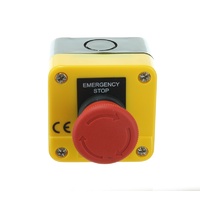
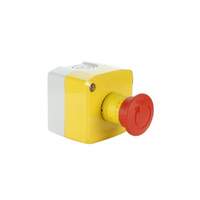
The red mushroom actuator on a yellow background is the recognised visual language for emergency stop. The convention helps workers identify the stop control quickly, even under stress or in poor lighting. Labels such as EMERGENCY STOP should be clear, durable, and sized for the viewing distance.
The visual standard is not optional decoration. It is part of how the safety system communicates with the people who use it. Replacing a faded label or a cracked actuator preserves that communication channel.
Higher-risk machinery often requires safety-rated circuits. That can mean dual-channel monitoring, a safety relay between the e-stop and the contactor, or full integration with a safety PLC. The required safety performance level should be determined by a documented risk assessment and implemented by appropriately qualified personnel.
This is not territory for circuit design improvisation. The device, the wiring architecture, and the monitoring all have to match the assessed performance level. Buyers selecting components for a safety-rated circuit should confirm the contact block ratings and the device certifications against the design specification.
The Sparky Direct range covers the main product families used by electricians, panel builders, and maintenance teams across Australia. Browsing by type helps narrow the choice quickly.
22mm panel-mount push buttons are the most common format in Australian industrial control panels and machine operator stations. The standard cut-out size keeps the device compatible with a wide range of contact blocks, legend plates, bezels, and pre-built control stations from multiple suppliers.
Selection factors for a 22mm e-stop include actuator style, contact configuration, mounting depth behind the panel, IP rating at the front face, and the reset method. Twist-release is common in general industrial use, key-release where controlled reset access matters.
Heavy-duty emergency buttons use robust actuator construction, impact-resistant housings, and contact blocks rated for repeated operation. They suit workshops, factories, maintenance bays, machinery rooms, processing plants, and other harsh trade environments where dust, moisture, vibration, chemical exposure, and accidental knocks are routine.
The cheapest button in the catalogue is rarely the right answer for these sites. The replacement cost of a low-grade button that fails under impact is much higher than the saving at purchase, especially when downtime is included.
Illumination supports visibility in low-light areas and can show fault status, alarm condition, or system readiness. Illumination does not replace correct labelling, correct positioning, or correct safety circuit design. It supplements them. Lamp module voltage must match the supply, so confirm this before ordering replacement modules or new units.
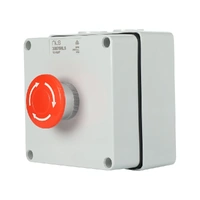
Pre-assembled control stations and enclosure-mounted emergency buttons are useful where panel mounting is not practical: wall mounting near a machine, retrofit work on existing equipment, washdown areas, and outdoor sites. Confirm the IP rating, the cable entry size, and the gland compatibility against the install environment. The Sparky Direct range also covers surface mount enclosures and cable glands to complete the install.
Emergency button selection has to factor in the environment, not just the control function. A button that performs perfectly in a clean workshop can fail in a washdown bay or an outdoor plant. Dust, water spray, cleaning chemicals, UV, vibration, and corrosion all affect long-term reliability.
IP65 generally means the device is dust-tight and protected against water jets from any direction. IP66 raises the protection to powerful water jets. Lower-rated devices may be fine for clean indoor panels but unsuitable for washdown or outdoor sites.
The rated protection only holds if the installed assembly maintains it. The enclosure, the seals, the cable glands, and the workmanship all contribute. A correctly rated button installed in a poorly sealed enclosure can still let water in.
Industrial washdown areas, food processing, outdoor plant, car wash environments, warehouses, workshops, and exposed commercial installations all need sealed, weather-resistant emergency buttons. Selecting a button that is rated for routine exposure avoids premature failure and protects the integrity of the wider safety system.
An incorrectly rated device can fail without warning and compromise the protective response when it is needed. Match the IP rating to the worst conditions the install will see, not the average.
Actuator feel, contact block quality, reset mechanism reliability, and housing strength all matter for long-term service. Heavy-duty trade environments often justify higher-quality components over the cheapest option. Signs of an unsuitable or failing button include sticky actuation, cracked housings, faded colours, moisture ingress, loose contact blocks, and unreliable reset.
A practical selection workflow protects the buyer from compatibility problems at install time. The key inputs are device type, actuation method, contact configuration, electrical rating, mounting style, IP rating, enclosure type, reset method, certification evidence, and compatibility with the broader control system.
| Specification | Options to Consider |
|---|---|
| Actuator type | Mushroom, flush, guarded, illuminated, key-release, twist-release |
| Contact arrangement | Normally closed, normally open, or combined blocks |
| Electrical rating | Match to the circuit voltage and current |
| Mounting size | 22mm is common, but confirm panel cut-out |
| Environment | Indoor, outdoor, dusty, wet, washdown, corrosive, public-facing |
| Reset method | Twist-release, pull-release, key-release, or momentary |
| Compliance evidence | Relevant certifications and supplier documentation |
| Accessories | Labels, legend plates, enclosures, contact blocks, guards, replacements |
Machinery emergency stop applications usually call for latching red mushroom devices with safety-rated contact blocks. The final selection depends on the risk assessment, the machine layout, the stopping category, the control architecture, and the operating environment. Electrical and machinery safety professionals should confirm suitability before installation.
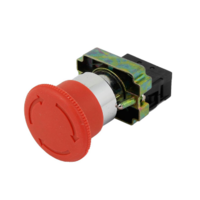
Red mushroom actuators dominate the e-stop market for good reasons: high visibility, easy palm operation, immediate emergency association, and fast actuation. When choosing one, check the actuator diameter, the reset method, the contact block options, the IP rating, and the available mounting accessories. The Sparky Direct range includes red mushroom buttons supplied by Clipsal, Pulset, and NLS.
Best value in this category means correct compliance, reliable operation, suitable IP rating, local Australian availability, genuine product supply, and easy accessory matching. The lowest-priced emergency button is often not the best value when a safety-related application is involved.
Trade practicality matters too. Common 22mm formats, compatible contact blocks, fast replacement availability, and simple ordering all reduce time on the job.
Online ordering suits electricians and contractors who need fast access to common emergency stop buttons and accessories. Buyers should check supplier stock, shipping speed, product compliance, and bulk ordering options before placing an order.
Australian electrical wholesalers and specialist suppliers carry emergency stop buttons across the major brands. Sparky Direct stocks CABAC, NHP, and Eaton control devices alongside the broader industrial supplies range. Before ordering, check the rated voltage, actuator type, contact block configuration, IP rating, and supplier documentation against the application.
Project procurement, spare parts, multi-site maintenance, machine upgrades, and facilities programs often need bulk ordering. Standardising on common 22mm sizes and compatible contact blocks reduces the spares holding and speeds up replacement work. Allow for spare contact blocks, legend plates, and enclosures in the order.
Safety devices should not be selected on price alone. Check compliance, build quality, contact reliability, IP rating, warranty cover, supplier documentation, and accessory compatibility before buying. Uncertified or poorly supported imports can fail at the worst moment, with consequences far beyond the original saving.
Urgent replacements, breakdowns, scheduled maintenance shutdowns, and tight project timelines all depend on local stock and reliable dispatch. Electricians and contractors often need to source multiple variants in one order: 22mm red mushroom buttons, key-release options, contact blocks, and enclosures. Sparky Direct ships push button switches Australia-wide alongside IP66 key-lockable isolator switches and electrical contactors for complete control panel orders.
Comparison should focus on practical buyer criteria rather than marketing claims. Stock range, trade-focused product information, transparent pricing, delivery options, compliance-aware product selection, and access to common electrical accessories are the variables that matter on the job.
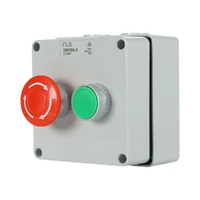
Sparky Direct supplies the major Australian-distributed brands in this category and provides product-level information aimed at trade buyers. The range covers CABAC pushbutton mechanisms, Pulset stop-start stations, NLS enclosed control boxes, and Clipsal 56 Series industrial switchgear. Buyers comparing suppliers should weigh stock range, dispatch speed, accessory availability, and transparent online pricing.
Useful reviews for emergency push buttons cover installation context, repeat-use reliability, actuator feel, enclosure durability, and performance in wet or dusty locations. Generic star ratings without context are less useful than a detailed account from someone who has installed the same device in a similar environment. Trade buyers should always verify product specifications against the application rather than relying solely on reviews.
A useful top-rated list is a selection framework rather than a fixed product ranking. Look for suitable compliance credentials, reliable contact blocks, clear emergency stop visual design, a robust reset mechanism, and the right environmental rating for the install site. The right top-rated button for one application is the wrong one for another.
An emergency push button is only as effective as the installation and maintenance regime around it. Electrical installation, safety circuit work, and machinery safety integration must be completed by licensed electricians or qualified safety professionals. The notes below cover planning and lifecycle considerations, not wiring instructions.
Planning factors include reachability, visibility, operator access, mounting location, enclosure rating, cable protection, labelling, and compatibility with the safety and control system. AS/NZS 3000 governs the electrical installation, and machinery safety standards apply to the wider integration. Installation must be done by appropriately licensed or competent persons.
Emergency buttons should be easy to reach, clearly visible, and positioned where operators are most likely to need them. Consider seated users, workstations, machinery sides, maintenance access points, and public areas where relevant. Avoid locations blocked by guards, stored materials, door swings, or moving plant.
Walk the operator path. If the button is more than two steps away from the most likely hazard point, or if a hand or arm has to cross the hazard to reach it, the placement needs review.
Functional testing after installation confirms the button does what the design specifies. Scheduled inspections during service catch wear before it becomes a failure. Inspect the actuator condition, the reset action, contact reliability, enclosure damage, missing labels, contamination, moisture ingress, and loose fittings. Keep maintenance records and audit trails for workplace safety system compliance.
Replacement triggers include cracked actuator, faded or missing markings, sticky or unreliable operation, damaged contact blocks, water ingress, broken enclosure, failed reset, and any non-compliant legacy device that no longer meets the current standard. Damaged emergency safety devices should be removed from service and replaced promptly. Safety lock-out equipment supports the isolation step before any replacement work.
Club Clipsal is Australia's largest electrician community offering trade rewards, business support, and exclusive benefits. When you nominate Sparky Direct as your preferred wholesaler, we automatically apply your Clipsal spend points to your Club Clipsal account daily.
Entry-level offering coaching, mentoring, and training discounts
Unlock exclusive industry tools and networking events
Access Toyota fleet offers and business software discounts
Maximum benefits, including VIP experiences and rewards
1. Sign Up: Create your Club Clipsal account at clipsal.com/club-clipsal or via the iCat mobile app
2. Nominate Sparky Direct: Select Sparky Direct from the wholesaler dropdown menu in your profile
3. Add Email: Enter your Sparky Direct account email address in the membership number field
4. Start Earning: Every dollar spent on Clipsal products earns points automatically
Redeem points from the rewards store, including gift cards, tools, and experiences. Access business summits, product training, and industry networking events. Receive early access to new product launches and special promotions. Connect with fellow electricians via the Club Clipsal community app.
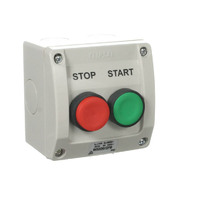
Watch Clipsal WS226/2PB-RG | Push Button Switch Weatherproof 2 Gang Start Stop IP66 video
Watch STOPSTART PB5-M215 | Stop Start Station 1 N/O 1 N/C Contacts video
Watch Emergency Stop Button 40mm Twist to Release | SB-BOX | XAL-J174H29 video

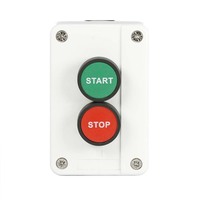
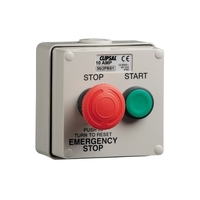
Great low cost but high quality weather proof start/stop station. NO start NC stop all in a robust easy to use Clipsal base.
The switch was exactly what I needed. It arrived very quickly for rural NSW. I have bought from Sparky Direct before and I will again. I am very pleased with the quality, price and speed of dispatch.
This is a sensibly-priced emergency switch from Sparky Direct that meets the needs for a seldom used emergency breaker.
Quality products in stock • Fast Australia-wide delivery • Competitive trade pricing
Browse Emergency Push Buttons → Get Expert Advice →Yes, they are designed to be activated quickly with minimal force.
Sparky Direct supplies emergency push buttons Australia-wide, offering reliable safety control solutions with convenient delivery.
Emergency push buttons are securely packaged and delivered via standard courier services.
Unused products are generally eligible for return according to the seller’s returns policy.
Warranty coverage varies by manufacturer and typically covers defects in materials or workmanship.
Yes, emergency push buttons are typically sold as individual safety devices.
Yes, placement should allow quick and easy access in an emergency.
Quality emergency push buttons are designed to withstand frequent use.
Yes, they help minimise risk by allowing immediate shutdown in emergencies.
Yes, they are used in various commercial and technical environments.
They should be periodically checked as part of normal safety procedures.
Yes, they are standard safety devices in industrial environments.
Yes, they are a critical part of many workplace safety systems.
Emergency push buttons are safety control devices designed to immediately stop equipment or isolate power in an emergency situation.
Yes, they are usually red with a prominent design for quick visibility.
They allow fast action to stop equipment and help protect people in emergency situations.
Yes, many models are designed for indoor environments, with some suitable for harsher conditions.
Yes, they are commonly integrated into control and safety circuits.
Yes, they are available in mushroom head, key reset, twist release, and other configurations.
Many emergency push buttons are designed to latch and require manual reset.
They are typically normally closed to ensure fail-safe operation.
They are often required where machinery or electrical equipment presents a safety risk.
They are commonly installed in industrial facilities, commercial buildings, workshops, and plant rooms.
Quality emergency push buttons are manufactured to meet relevant AS/NZS electrical and safety standards when installed correctly.
They are used to quickly shut down machinery, systems, or circuits to help prevent injury or damage.