

Marine Grade
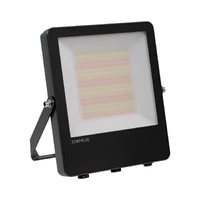
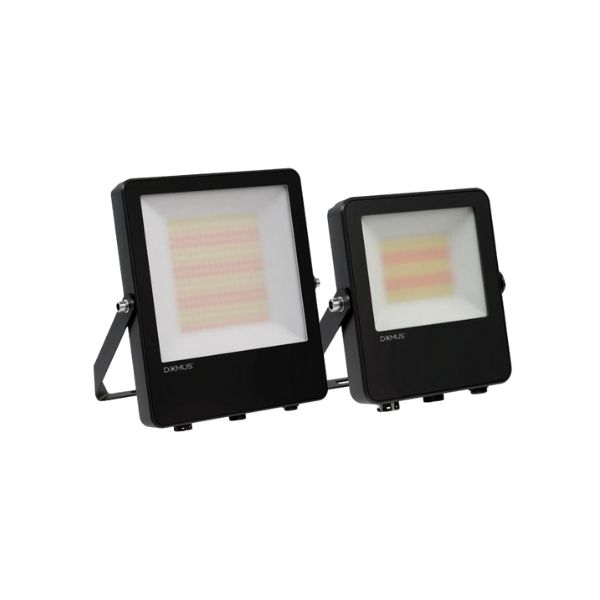
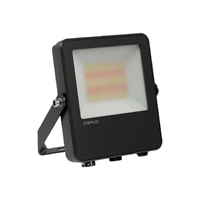
Domus 19908 | Blaze Pro 50W LED Floodlight 24V DC | Multi-Watt & Tri-CCT
$105.55
$95.95 ex. GST
Search Results:
Search Results:
24V floodlights operate on low-voltage direct current rather than standard 240V mains power. This lower voltage delivers several practical advantages for Australian residential and commercial lighting installations.
The 24V DC system requires a transformer to step down voltage from mains supply. Most modern units incorporate LED technology, combining energy efficiency with the inherent safety benefits of low-voltage operation.
A power supply converts 240V AC from your mains to 24V DC suitable for the lights. The transformer typically installs indoors or in a weatherproof enclosure, with low-voltage cable running to the floodlight locations.
LED drivers within the fixtures regulate current to the diodes, ensuring consistent brightness and protecting components from voltage fluctuations. Quality units include thermal management systems to maintain performance across Queensland's temperature range.
24V LED floodlights deliver between 800 and 4,000 lumens depending on wattage and application. A 10W unit typically produces 800-1,000 lumens suitable for accent lighting, while 30W models generate 2,400-3,000 lumens for security applications.
Higher-output units reach 50W with 4,000+ lumens for commercial sites requiring substantial illumination. Lumen-per-watt efficiency typically ranges from 80 to 120 lm/W in quality fixtures.
Low voltage reduces electric shock risk, particularly important in Australian outdoor environments where moisture is present. Safe for installation near pools, ponds, and garden beds.
LED technology combined with efficient 24V operation reduces electricity consumption by 80-90% compared to traditional halogen floodlights. Typical running costs under $0.15 per night at current Brisbane electricity rates.
Low-voltage wiring permits longer cable runs without significant voltage drop. Easier to bury cables in gardens without the strict conduit requirements of mains voltage systems.
Quality LED floodlights typically achieve 25,000-50,000 hours operation. This translates to 8-15 years of reliable service at typical usage patterns of 8 hours nightly.
24V systems integrate seamlessly with solar panels and battery storage. The voltage matches standard solar system architecture, enabling off-grid outdoor lighting solutions.
Reduced energy consumption lowers greenhouse gas emissions. LED technology contains no mercury or hazardous materials, simplifying disposal and reducing environmental impact.
A typical 20W 24V LED floodlight operating 8 hours nightly costs approximately $14 annually at Queensland electricity rates of $0.30/kWh. An equivalent 150W halogen unit costs $105 annually - a saving of $91 per fixture per year.
24V floodlights excel at highlighting garden features, trees, and architectural elements. The low voltage permits safe installation near water features and along pathways where traditional lighting poses greater risk.
Typical applications include uplighting feature trees, illuminating retaining walls, and providing ambient lighting for outdoor entertaining areas. The DOMUS 19908 Blaze Pro 50W suits most residential installations, with adjustable power settings optimizing output for specific features.
Low-level pathway lighting improves safety while minimizing light pollution. 24V floodlights mounted at ground level guide pedestrian traffic without excessive glare.
Driveway installations benefit from the flexible cable routing that low-voltage systems permit. The tri-CCT feature in DOMUS Blaze Pro models allows colour temperature adjustment to match existing exterior lighting schemes.
Higher-output 24V floodlights provide effective security illumination for entry points, side passages, and rear yards. Motion sensors integrate easily with 24V systems for automatic activation.
The DOMUS 19910 Blaze Pro 100W delivers 12,000 lumens suitable for large area security coverage. The rapid start-up of LED technology ensures immediate full brightness when sensors trigger.
Warehouses, car parks, and loading docks use 24V floodlights for accent and safety lighting. The low voltage simplifies compliance with electrical safety requirements in industrial environments.
Maintenance yards and storage areas benefit from the durability and long service life of LED technology. IP66 rating on DOMUS Blaze Pro models withstands high-pressure cleaning common in commercial operations.
24V floodlights suit marine applications due to low shock risk and availability of marine-grade fixtures. Boats, jetties, and waterfront properties benefit from the inherent safety of low-voltage systems.
Marine-rated units with IP68 protection withstand immersion and salt spray exposure common in coastal Queensland locations.
While primarily outdoor fixtures, 24V floodlights work well indoors for workshops, garages, and storage areas. The low voltage eliminates shock hazards in damp locations like laundries and bathroom surrounds.
Display lighting in retail and exhibition spaces uses 24V floodlights to minimize heat output near sensitive materials and artworks.
The Ingress Protection rating indicates resistance to dust and water. For Australian outdoor use, minimum IP65 rating is recommended, providing protection against dust ingress and water jets from any direction.
Coastal installations and areas with regular hose-down cleaning require IP66 or IP67 ratings. These higher ratings protect against powerful water jets and temporary immersion respectively.
| IP Rating | Protection Level | Suitable Applications |
|---|---|---|
| IP65 | Dust tight, water jets | General outdoor use, gardens, pathways |
| IP66 | Dust tight, powerful water jets | Driveways, commercial sites, coastal areas |
| IP67 | Dust tight, temporary immersion | Ground-level installation, poolside |
| IP68 | Dust tight, continuous immersion | Marine environments, underwater features |
Beam angle determines light spread and application suitability. Narrow beams (15-30 degrees) suit accent lighting and tree uplighting. Medium beams (40-60 degrees) work well for pathway and general security lighting.
Wide beams (90-120 degrees) provide broad area coverage for driveways and building facades. Some units offer adjustable beam angles through interchangeable reflectors or lenses.
Colour temperature affects ambiance and visibility. Warm white (2700-3000K) creates inviting outdoor living spaces and suits residential gardens. Natural white (4000K) balances visibility with aesthetics for pathways and entrances.
Cool white (5000-6500K) maximizes visibility for security applications and commercial sites. Daylight temperatures above 6000K suit task lighting and industrial environments.
Many 24V floodlights support dimming through PWM (Pulse Width Modulation) or 0-10V control systems. Dimming extends lamp life, reduces energy consumption, and permits lighting adjustments for different activities.
Smart control systems integrate dimming with timers, motion sensors, and home automation platforms. Verify dimmer compatibility with specific LED drivers before installation.
Die-cast aluminium housings provide durability and heat dissipation. Look for powder-coated finishes that resist UV degradation and salt corrosion in Australian conditions.
Tempered glass lenses withstand impact and thermal shock better than acrylic alternatives. Quality units include silicone gaskets that maintain seal integrity across temperature cycles.
Modern floodlights use SMD (Surface Mount Device) or COB (Chip on Board) LED technology. COB chips deliver higher lumen density and more uniform light distribution, particularly valuable in compact fixtures.
Quality manufacturers specify LED chip brand and CRI (Colour Rendering Index). CRI above 80 ensures accurate colour representation important for security footage and decorative applications.
IP ratings define protection against solid objects and liquids. The rating consists of two digits - the first indicates dust protection (0-6), the second indicates water protection (0-9).
First digit protection levels:
Second digit protection levels relevant to outdoor lighting:
Standard outdoor use: IP65 minimum for gardens, patios, and general exterior locations protected from direct weather exposure.
Exposed locations: IP66 for areas subject to driving rain, regular high-pressure cleaning, or coastal environments.
Ground-level or poolside: IP67 for fixtures installed in paving, near pools, or areas where temporary flooding may occur.
Marine or submersible: IP68 for jetties, boat applications, or water features requiring submersion.
Brisbane's subtropical climate presents specific challenges including summer storms with intense rainfall, high humidity year-round, and salt-laden coastal breezes in some areas.
Fixtures rated IP65 adequately handle typical Brisbane conditions in sheltered locations. Coastal suburbs require IP66 minimum to combat accelerated corrosion from airborne salt. Properties experiencing seasonal flooding should specify IP67 as minimum protection.
24V floodlights integrate seamlessly with solar power systems. The voltage matches standard solar panel and battery configurations, eliminating the need for additional voltage conversion.
A typical solar-powered 24V lighting system comprises solar panels, charge controller, battery storage, and the floodlights themselves. The charge controller regulates power flow from panels to batteries, preventing overcharge damage.
24V nominal battery banks typically consist of two 12V deep-cycle batteries in series, or purpose-built 24V lithium units. Battery capacity determines operating duration during cloudy periods and overnight.
Calculate total wattage of connected floodlights and multiply by daily operating hours. For Brisbane, allow for 4-5 peak sun hours daily when sizing panels. Add 30% capacity margin for efficiency losses and cloudy conditions.
Example with DOMUS 19908: Four fixtures operating at 40W (160W total) for 8 hours nightly require 1,280Wh daily. Solar panels should provide minimum 320W nominal capacity (1,280Wh ÷ 4 hours), increased to 416W accounting for losses.
Example with DOMUS 19910: Two fixtures at 80W (160W total) operating 8 hours require identical 1,280Wh daily capacity, demonstrating how multi-watt capability optimizes system design flexibility.
Battery capacity should provide 3-5 days autonomy for Australian conditions. Using the 1,280Wh example above, multiply by 3 days = 3,840Wh minimum capacity, equating to 160Ah at 24V nominal voltage. Deep-cycle batteries should not discharge below 50%, so specify 320Ah minimum capacity for lead-acid types.
The high efficiency of DOMUS Blaze Pro fixtures (120 lm/W) reduces battery requirements compared to lower-efficiency alternatives, enabling more compact solar systems.
Solar-powered 24V systems eliminate trenching costs for mains power to remote locations. Gardens, rural driveways, and farm buildings benefit from this installation flexibility.
Operating costs reduce to zero after initial investment. System payback typically occurs within 3-5 years compared to extending mains power and ongoing electricity costs.
Environmental benefits include zero emissions during operation and reduced grid demand. Systems continue operating during power outages, maintaining security lighting when most needed.
Install panels facing north in Australia to maximize exposure. Tilt angle should approximately match latitude (Brisbane: 27 degrees) for year-round performance.
Protect batteries from extreme temperatures - thermal performance degrades above 40°C and below 5°C. Ventilated battery enclosures prevent gas accumulation from lead-acid types.
Use weatherproof enclosures rated IP65 minimum for charge controllers and wiring terminations. Marine-grade tinned copper cable withstands outdoor conditions better than standard wire.
Premium LED floodlights achieve 120-140 lumens per watt, representing current efficiency peaks. The DOMUS Blaze Pro range achieves 120 lm/W, matching European premium fixtures while offering superior value.
High-efficiency models typically feature:
| Efficiency Rating | Lumens/Watt | Application Suitability |
|---|---|---|
| Standard | 80-100 lm/W | Budget-conscious installations, low-use areas |
| High Efficiency | 100-120 lm/W | General residential and light commercial |
| Premium (DOMUS Blaze Pro) | 120+ lm/W | High-use areas, maximum energy savings, solar systems |
LED floodlights reduce carbon emissions through decreased electricity consumption. A 20W LED unit replacing a 150W halogen reduces emissions by approximately 180kg CO2-e annually at Queensland's grid carbon intensity.
Manufacturing impacts remain lower than alternatives despite complex electronics. LED fixtures contain no mercury, simplifying disposal and reducing environmental contamination risk.
Long service life reduces replacement frequency, lowering cumulative manufacturing impacts. A 50,000-hour LED replaces 25 halogen bulbs rated 2,000 hours each.
Heat management critically affects LED longevity. Ensure adequate ventilation around fixtures and avoid installing in enclosed spaces without airflow.
Operating LEDs at reduced current extends lifespan exponentially. A 20W fixture dimmed to 70% output operates significantly cooler and may double expected service hours.
Quality power supplies protect LEDs from voltage spikes and electrical noise. Install surge protection on mains supply feeding 24V transformers, particularly in areas prone to lightning strikes.
Clean lenses quarterly to maintain light output. Accumulated dirt reduces effective brightness by 15-20% annually if neglected.
Inspect weatherproof seals annually, replacing degraded gaskets before moisture ingress occurs. Check mounting hardware for corrosion, particularly in coastal locations.
Test surge protection devices every two years or after significant electrical storms. These sacrificial components protect expensive LED drivers from damage.
Modern 24V floodlights increasingly incorporate wireless control protocols including Zigbee, Z-Wave, and Wi-Fi connectivity. These systems permit smartphone control, scheduling, and integration with home automation platforms.
Advanced sensors detect ambient light levels, automatically activating floodlights at dusk and deactivating at dawn. Motion sensors trigger lighting only when required, extending component life and reducing energy consumption.
Newer fixtures incorporate multiple LED arrays enabling colour temperature adjustment from 2700K warm white through 6500K daylight. Users modify ambiance for different activities or times of day.
Circadian lighting systems automatically adjust colour temperature throughout evening, promoting natural sleep patterns. Warm light later in evening reduces blue light exposure affecting melatonin production.
Precision-molded lenses and multi-faceted reflectors improve light distribution uniformity. These optical systems reduce glare while maximizing useful illumination on target surfaces.
Asymmetric beam patterns direct light where needed while minimizing spill into unwanted areas. This technology benefits security lighting near boundaries and pathway illumination requiring minimal light trespass.
Modern designs incorporate heat pipe technology and vapor chamber cooling, allowing higher power densities in compact housings. Improved thermal management maintains LED junction temperatures below 85°C, extending service life beyond 50,000 hours.
Active cooling systems with miniature fans appear in highest-output models, though reliability remains a consideration in dirty environments where fan failures can occur.
New polymer composite housings deliver marine-grade corrosion resistance at lower weight than die-cast aluminium. These materials withstand Australian coastal environments without the galvanic corrosion issues affecting metal fixtures.
Advanced coating technologies including ceramic and nano-coatings resist UV degradation and environmental contamination. These surfaces maintain appearance and remain easier to clean throughout fixture service life.
Plan cable routes before excavation to avoid existing services. Low-voltage 24V cable requires burial depth of only 150mm in non-trafficable areas, compared to 600mm for mains voltage circuits under AS/NZS 3000:2018.
Use direct-burial rated cable with UV-resistant outer sheath. Standard two-core cable suits basic installations, while shielded types reduce interference in areas with RF noise.
Install moisture-resistant junction boxes at branch points. Seal all connections with heat-shrink tubing or silicone-filled connectors to prevent corrosion from ground moisture.
Calculate voltage drop for cable runs exceeding 20 meters. Maximum 5% voltage drop is acceptable for LED circuits. Use larger conductor sizes or multiple smaller cables in parallel for long runs.
Voltage drop formula: VD = 2 × L × I × R, where L is one-way length in meters, I is current in amps, and R is resistance in ohms per meter. For 24V systems, current equals total wattage divided by 24.
While 24V wiring downstream of the transformer generally doesn't require licensed installation, the mains-voltage connection to the transformer must be performed by a licensed electrician holding appropriate credentials in Queensland.
Some local councils may require electrical safety inspections even for low-voltage systems. Verify requirements with your local authority before commencing work.
Size transformers to handle total connected load plus 20% capacity margin. Operating transformers near maximum capacity reduces efficiency and shortens service life.
Install transformers in ventilated locations protected from direct weather. Garage walls, eaves, or weatherproof enclosures maintain appropriate operating temperatures.
Multiple smaller transformers often prove more practical than single large units for distributed lighting systems. This approach reduces cable sizes and permits staged installation.
Mount floodlights on stable surfaces capable of supporting fixture weight and wind loads. Use stainless steel fasteners in coastal areas to prevent corrosion-related failures.
Aim fixtures to minimize glare affecting neighbors or passing traffic. Down-angled installations reduce light pollution and focus illumination where needed.
Maintain minimum 100mm clearance behind fixtures for heat dissipation. Avoid mounting directly on combustible surfaces without appropriate heat barriers.
Verify polarity at each fixture location using a multimeter. Reversed polarity won't damage most LED units but may prevent operation or reduce efficiency.
Test circuit protection by simulating fault conditions. Quality installations include appropriate overcurrent protection sized to cable capacity.
Document cable routes with photographs and measurements before backfilling. This information proves invaluable for future maintenance or system expansion.
Clean lenses every three months in standard environments, monthly in dusty or industrial locations. Use soft microfiber cloths with pH-neutral cleaning solution - avoid abrasive materials that scratch protective coatings.
Remove accumulated insects and debris from heat sink fins. Blocked cooling passages reduce thermal efficiency, accelerating LED degradation and shortening driver lifespan.
Inspect weatherproof seals annually for cracks or hardening. UV exposure and temperature cycling gradually degrade silicone and rubber components.
Replace gaskets showing visible deterioration before moisture penetrates housings. Water ingress causes corrosion of electrical connections and premature driver failure.
Check lens-to-housing seals particularly carefully. These interfaces experience maximum UV exposure and temperature extremes in operational fixtures.
Verify cable connections remain secure and corrosion-free. Oxidized copper reduces conductivity, increasing voltage drop and reducing light output.
Apply dielectric grease to outdoor connections during inspection. This preventative measure excludes moisture and oxygen, preventing corrosion formation.
Test voltage at fixtures annually using a multimeter. Significant deviation from nominal 24V indicates transformer issues or excessive cable voltage drop requiring investigation.
Document initial light output using a lux meter if precision monitoring is required. Gradual output reduction over years indicates normal LED degradation or lens contamination.
Sudden brightness reduction suggests driver issues, loose connections, or failed LED modules requiring replacement. Quality units typically fail gradually rather than catastrophically.
Replace fixtures when output drops below 70% of initial brightness or when driver failures occur. Modern LEDs often outlast associated electronics, so driver replacement may extend fixture life economically.
Consider replacement if maintaining old fixtures requires specialized parts or labor exceeding 50% of new unit cost. Technology improvements may justify early replacement despite functional operation.
Extreme weather affects maintenance requirements. Tropical cyclone debris can damage fixtures - inspect and clean thoroughly after severe weather events.
Salt spray in coastal areas accelerates corrosion of metal components. Fixtures within 1km of coastline require quarterly inspection versus annual checks inland.
High humidity environments promote mold growth on lens surfaces. Clean more frequently and consider fixtures with anti-fungal coatings in problematic locations.
The DOMUS Blaze Pro series delivers professional-grade 24V LED floodlights engineered for Australian conditions. These multi-watt, tri-colour temperature fixtures provide exceptional flexibility for residential, commercial, and off-grid solar applications.
Both Blaze Pro models feature selectable wattage output, allowing precise light level adjustment without replacing fixtures. This technology maximizes installation flexibility and enables optimization for specific applications after commissioning.
Field-adjustable power settings reduce inventory requirements and simplify specification. A single fixture model covers multiple application scenarios, from subtle accent lighting through high-intensity security illumination.
Integrated tri-colour temperature capability permits selection between 3000K warm white, 4000K natural white, and 5700K cool white. Switch settings on the fixture enable instant adjustment without tools or rewiring.
This flexibility proves valuable when lighting requirements change or when matching existing installations. Installers can modify colour temperature on-site to suit specific environments or client preferences.
Power Options: 30W / 40W / 50W selectable
Lumen Output: Up to 6,000 lumens at 50W
Efficiency: 120 lm/W
Applications: Residential gardens, driveways, medium-area security lighting, solar integration
Coverage: Suitable for areas up to 60m² at recommended mounting heights
Power Options: 60W / 80W / 100W selectable
Lumen Output: Up to 12,000 lumens at 100W
Efficiency: 120 lm/W
Applications: Commercial sites, large area coverage, warehouse yards, car parks, high-output security lighting
Coverage: Suitable for areas up to 120m² at recommended mounting heights
Die-cast aluminium housings provide superior thermal management essential for maintaining LED performance in Queensland's climate. Powder-coated finishes resist UV degradation and corrosion from coastal salt exposure.
IP66 rating protects against powerful water jets and dust ingress, suitable for high-pressure cleaning common in commercial applications. Tempered glass lenses withstand impact and thermal cycling without degradation.
Both models include adjustable mounting brackets enabling precise aiming angles. Trunnion-style mounting permits 180-degree vertical adjustment for wall, ground, or ceiling installation.
Pre-wired with marine-grade cable suitable for outdoor use. Weatherproof cable glands maintain IP66 protection while simplifying field wiring connections.
At 120 lumens per watt, the Blaze Pro range matches premium European fixtures at more accessible pricing. High power factor (>0.95) minimizes electrical losses and suits solar system integration.
| Model | Maximum Power | Maximum Output | Daily Cost (8hrs)* | Annual Savings vs Halogen |
|---|---|---|---|---|
| DOMUS 19908 | 50W | 6,000 lumens | $0.12 | $73 per fixture |
| DOMUS 19910 | 100W | 12,000 lumens | $0.24 | $146 per fixture |
*Based on $0.30/kWh Brisbane electricity rates. Halogen comparison assumes 400W and 800W equivalents respectively.
DOMUS Blaze Pro fixtures include comprehensive warranty coverage backed by Australian distribution. Local support ensures rapid replacement and technical assistance when required.
Extended service life reduces total cost of ownership through minimized replacement frequency. Quality components and thermal management deliver the rated 50,000-hour operational life under Australian conditions.
AS/NZS 60598 series governs luminaire safety requirements including electrical, thermal, and photobiological considerations. This international-based standard applies regardless of voltage.
AS/NZS 3000:2018 (Wiring Rules) defines installation requirements for low-voltage circuits. While less stringent than mains-voltage requirements, proper installation practices remain mandatory.
IP rating compliance follows IEC 60529 standard, internationally harmonized to ensure consistent protection levels across manufacturers.
24V DC qualifies as SELV (Safety Extra-Low Voltage) under AS/NZS 3000:2018, defined as voltage not exceeding 50V AC or 120V ripple-free DC. SELV circuits isolated from earth and higher voltages require simpler installation practices.
Separation from hazardous-live circuits must use basic insulation minimum. Transformers feeding SELV circuits require safety isolating transformer construction per AS/NZS 61558 series.
SELV wiring may use lower-rated insulation and reduced conductor sizes compared to mains circuits. However, adequate mechanical protection remains mandatory for buried cables.
Minimum burial depth of 150mm applies in non-trafficable garden areas. Increase to 300mm under driveways or areas subject to vehicle traffic.
Cable rating must exceed maximum fault current the supply can deliver. Overcurrent protection on the 24V side remains good practice despite not being mandatory for all installations.
Mains-voltage connections to transformers require licensed electrical contractor with appropriate Queensland licensing. This includes both initial installation and any modifications to supply circuits.
SELV wiring downstream of isolation transformers generally doesn't require licensed installation, though some councils impose additional requirements. Verify local regulations before proceeding.
LED luminaires sold in Australia must comply with Minimum Energy Performance Standards (MEPS) under the Greenhouse and Energy Minimum Standards Act.
MEPS currently require LED floodlights achieve minimum 65 lumens per watt, though quality products significantly exceed this baseline. Efficiency labeling helps consumers identify superior performers.
While no specific Australian standard governs residential light pollution, AS/NZS 4282 provides guidance for minimizing obtrusive outdoor lighting effects.
Shield fixtures to prevent upward light spill. Direct light downward toward illumination targets rather than into sky or neighboring properties.
Some council planning schemes restrict lighting installations visible from adjoining properties. Verify requirements before installing security lighting near boundaries.
Federal government rebates focus primarily on commercial energy efficiency upgrades under the Commercial Building Disclosure scheme. Residential installations generally don't qualify for federal incentives.
Some state and local programs periodically offer rebates for energy-efficient lighting. Queensland's Energy Savers Program historically included lighting upgrades, though programs change annually.
Solar integration may qualify for Small-scale Renewable Energy Scheme (SRES) certificates when combined with registered solar panel installations. Consult accredited installers regarding current incentive availability.
Learn more by watching our Domus 19908 | Blaze Pro 50W LED Floodlight 24V DC | Multi-Watt & Tri-CCT video.

Recently ordered from Sparky Direct. 2x 200W floodies and 5x 36W oysters. Parts were delivered faster than expected and in perfect condition. Excellent value and quality products. Will definitely be back.
Verified Bazaarvoice Review
Price was more than half cost compared to my local electrical dealer, delivered in 4 days, and these large down lights were perfect fit for my Beer Shed Barrel Lights
Verified Bazaarvoice Review
Excellent product range with great descriptions. Prices are extremely reasonable. Online transaction process was very easy and delivery was super fast. I'll definitely order again
Verified Bazaarvoice Review
Browse our complete range of energy-efficient 24V LED floodlights with competitive trade pricing and fast delivery across Australia.
Shop 24V Floodlights Get Expert AdviceYes, they are popular for highlighting plants, trees, and outdoor features.
Sparky Direct supplies 24V floodlights Australia-wide, offering reliable low-voltage lighting solutions with convenient delivery.
24V floodlights are securely packaged and delivered via standard courier services.
Unused products are generally eligible for return according to the seller’s returns policy.
Warranty coverage varies by manufacturer and typically covers defects in materials or workmanship.
They are available individually.
Yes, transformers and fixed wiring must be installed by a licensed electrician.
Models with suitable corrosion-resistant finishes are available for harsher environments.
They generally require minimal maintenance once installed correctly.
They are designed for extended operation, subject to correct power supply and installation.
LED technology provides long service life when used as intended.
Yes, they are commonly used around homes for landscape and feature lighting.
Their compact design and low-voltage supply make them flexible for outdoor placement.
24V floodlights are low-voltage lighting fixtures designed to provide wide-area illumination using a 24-volt power supply.
Yes, modern LED 24V floodlights provide strong illumination suitable for many outdoor uses.
They offer safer low-voltage operation and are ideal for landscape and outdoor feature lighting.
Yes, they are suitable for both residential and light commercial outdoor lighting applications.
Yes, different wattage options are available depending on brightness and application requirements.
They are available in various beam angles to suit wide-area or focused lighting needs.
Yes, they are designed for outdoor environments and typically have appropriate weather-resistant ratings.
Most 24V floodlights use LED technology, offering high efficiency and low power consumption.
Yes, they require a suitable transformer or power supply to convert mains power to 24 volts.
Low-voltage systems reduce electrical risk, making them suitable for certain outdoor and landscape applications.
Quality 24V floodlights are manufactured to meet relevant AS/NZS electrical and safety standards when installed correctly.
They are commonly used in landscapes, gardens, pathways, signage, and areas where low-voltage lighting is preferred.