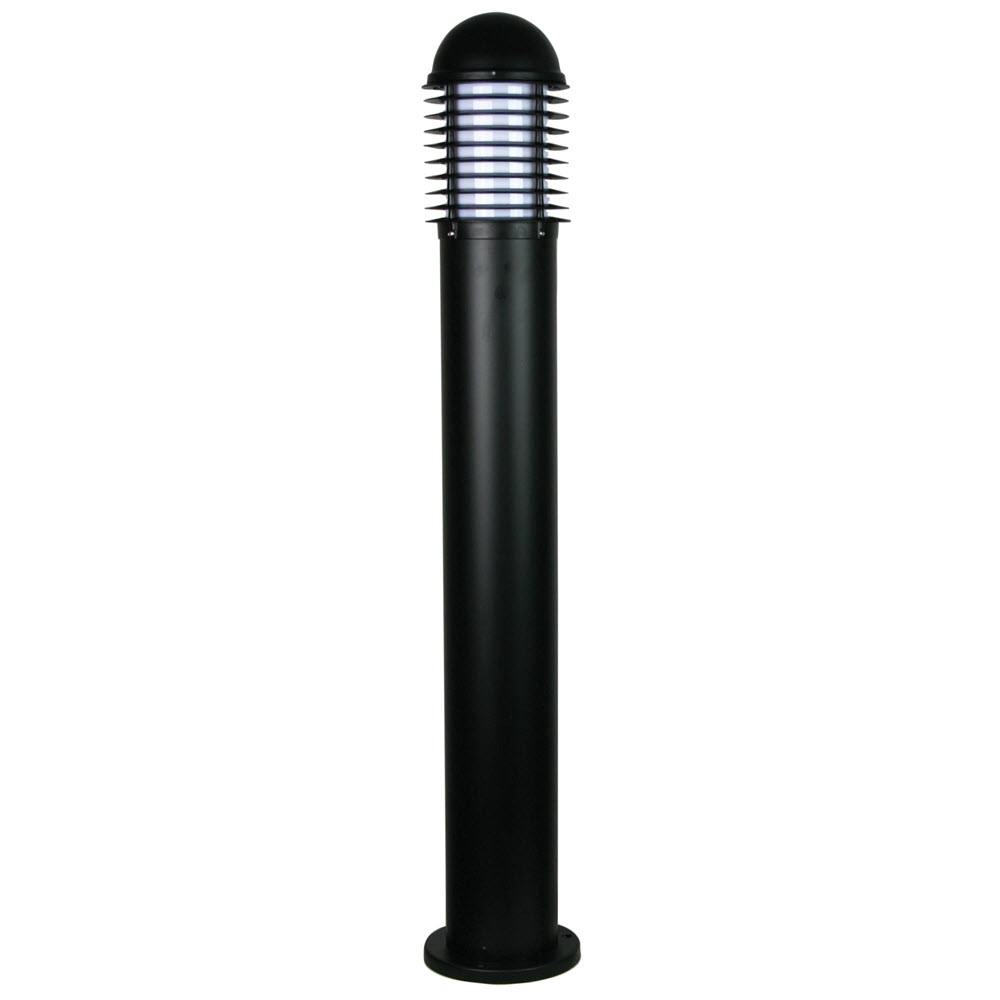

Search Results:
Search Results:
Search Results:
Search Results:
A bollard light is a freestanding outdoor fixture mounted at or near ground level, typically between 600mm and 1200mm tall. Unlike wall lights, which mount to vertical surfaces, or floodlights, which cast wide beams across large areas, bollard lights are designed specifically to illuminate the ground plane around them. This makes them well suited to pathways, driveways, garden beds, and public walkways where wayfinding and trip hazard reduction are the primary goals.
The key functional difference between bollard lights and other outdoor fixtures comes down to beam direction and mounting position. Floodlights project over distance and create high-contrast shadows. Spike lights push into soft ground and are repositionable but lack structural rigidity. Wall lights illuminate vertically mounted surfaces. Bollard lights sit upright in fixed footings, directing controlled light along walking surfaces with minimal upward spill. They also act as visual markers in low-light conditions, even when the fixture itself is not the brightest source on the site.
From a landscape design perspective, bollard lights serve a dual function: safety and visual rhythm. A well-spaced row of bollards along a driveway or garden path creates a sense of order and scale at night, helping visitors navigate confidently while also contributing to the overall aesthetic of the property.
Residential bollard lights typically stand between 600mm and 900mm high. This height range keeps light close to the walking surface, reduces glare for approaching pedestrians, and suits most residential fence lines and garden bed borders. Commercial bollard lights are generally taller, ranging from 900mm to 1200mm, which gives better visibility across wider paved areas and suits higher foot traffic environments like car parks, public parks, and commercial entrance zones.
Layered outdoor lighting uses multiple fixture types at different heights to achieve a complete result. Overhead area lights handle general illumination. Wall lights provide vertical surface lighting and security. Bollard lights fill the ground layer, ensuring that pathways and low-level hazards are clearly visible without flooding the entire space with light.
In garden design, bollards spaced at regular intervals create visual rhythm. They define edges without physical barriers, guide foot traffic without signage, and remain functional across different weather conditions. When combined with directional outdoor wall lights above, a bollard-based ground layer produces a complete and professional outdoor lighting result.
Bollard lights fall into two optical categories: diffused and directional. Understanding the difference helps you select the right fixture for each part of a project.
Diffused bollards spread light in all directions from a frosted or opal diffuser panel. They provide even illumination around the fixture, which works well along open garden paths or in areas where people may approach from multiple directions. The trade-off is that some light goes sideways and upward, which can contribute to light spill into neighbouring properties or upward glow.
Directional bollards use internal shielding, louvres, or asymmetric reflectors to concentrate output toward the ground or along a single axis. These are the better choice when you want to reduce glare, limit light spill, or comply with dark-sky friendly design briefs. In densely planted gardens, directional optics also prevent the light from washing out feature plantings immediately beside the path.
For pathways used by older adults or in public spaces, glare control matters. Choose bollards with opaque upper shielding or louvred panels that direct light downward. A well-shielded bollard at eye level should show no visible lamp source when viewed from the pathway approach angle.
Architectural bollard lights are engineered for design-forward projects. They typically feature slim profiles, premium aluminium extrusions, and integrated LED modules with consistent colour temperature across the range. Oriel Lighting and SAL Lighting supply architectural bollard options suited to contemporary residential and commercial applications.
Landscape bollard lights prioritise durability and low maintenance. They are often made from cast aluminium or powder-coated steel and designed to sit in garden beds without trapping moisture around the base. Stainless steel variants suit coastal and high-humidity environments where standard powder coat may degrade faster.
Industrial and heavy-duty commercial bollards are built to resist impact, vandalism, and sustained heavy use. They use thicker wall sections, reinforced base plates, and high-impact polycarbonate diffusers rated to IK08 or higher. These are the correct choice for public parks, car parks, and high-traffic commercial precincts.
In commercial settings, bollard lights face a different set of demands than residential garden applications. They may be walked into, bumped by service vehicles, exposed to cleaning chemicals, and operated for longer daily hours. IK ratings (impact protection) matter as much as IP ratings (ingress protection) in these environments.
IK08 provides resistance to 5 joules of impact, suitable for most public footpaths and parks. IK10 (20 joules) is specified for car parks and areas where bollards may be struck by trolleys or low-speed vehicles. Always confirm IK ratings with the product datasheet, not the product description alone.
| Application | Recommended Height | Key Requirements |
|---|---|---|
| Residential garden path | 600–800mm | IP44 minimum, LED, diffused optic |
| Residential driveway | 800–900mm | IP54 minimum, impact-resistant diffuser |
| Commercial entrance | 900–1000mm | IP65, IK08 minimum, photometric plan required |
| Public park or pathway | 900–1200mm | IP65, IK08–IK10, AS/NZS 1158 compliance |
| Car park perimeter | 1000–1200mm | IP65, IK10, photometric design required |
LED technology is now the default choice for new bollard light installations across Australia. The reasons are practical rather than trend-driven. LED modules draw significantly less power than halogen or compact fluorescent equivalents for the same lumen output, which reduces running costs across the working life of the installation. Rated lifespans of 50,000 hours or more mean that LED bollards installed correctly rarely need lamp replacement during a typical 10 to 15 year ownership cycle.
Maintenance is a major consideration for bollard lights, which are installed in locations that may be difficult to access for servicing. Bollards in garden beds, in the middle of planted borders, or along long driveways all benefit from the reduced service interval that LED provides. Lightscaping and Martec offer LED-integrated bollard ranges with long service life and consistent output.
LED also provides better colour rendering than older fluorescent or high-pressure sodium sources, which is relevant in garden settings where plant colour and landscape materials should appear natural under artificial light. A colour rendering index (CRI) of 80 or above is adequate for most outdoor path lighting. CRI 90+ suits decorative or feature-focused installations.
Comparing LED with halogen and compact fluorescent requires looking at both the purchase price and the total cost of ownership over several years. Halogen bollard lamps typically last 2,000 hours before replacement. CFL sources extend this to around 8,000–10,000 hours. LED modules in quality bollard fixtures routinely reach 30,000 to 50,000 hours under normal operating conditions.
| Technology | Typical Lifespan | Typical Power (for 600 lm) | Replacement Frequency |
|---|---|---|---|
| Halogen | 2,000 hours | 50–60W | Every 1–2 years |
| CFL | 8,000–10,000 hours | 13–15W | Every 4–5 years |
| LED | 30,000–50,000 hours | 6–10W | Rarely within ownership cycle |
For a pathway with eight bollard lights operating four hours per night, the energy saving between a 50W halogen system and a 10W LED system represents a meaningful reduction in annual electricity cost, in addition to eliminating ongoing lamp replacement labour.
Trade tip: When quoting LED bollard installations, include the reduced maintenance cost in your total project cost comparison. Clients who compare upfront fixture costs alone are not seeing the full picture. LED units typically recover their price premium within two to three years of operation.
Solar bollard lights integrate a photovoltaic panel into the top or upper face of the fixture, a rechargeable battery inside the housing, and an LED light source at the base or along the diffuser. During daylight hours, the panel charges the battery. At dusk, a built-in sensor activates the LED, which then runs until the battery is depleted or dawn triggers shut-off. Most solar bollard lights sold in Australia include a dusk-to-dawn sensor as standard, with some models offering adjustable brightness modes or motion-activated output to conserve battery capacity.
Philips solar pathway and bollard products are a reliable starting point for residential solar outdoor lighting. The advantage of solar bollard lights is the elimination of trenching, conduit runs, and 240V electrical connections. This reduces installation cost and allows placement in locations where mains cabling would be impractical.
Solar bollard performance depends directly on available sunlight reaching the panel. In Australia, most metropolitan and regional areas receive sufficient daily sun exposure to operate solar bollard lights reliably through most of the year. However, certain conditions reduce performance: heavy tree cover above or beside the fixture, south-facing installations with limited direct sun exposure in winter, and extended cloudy periods that reduce daily charging time.
Before specifying solar bollards for a project, check that the proposed installation positions receive at least four to six hours of direct sunlight per day. In shaded garden positions, mains-powered LED bollards are the more reliable choice. Some higher-end solar bollards include larger battery reserves specifically rated for two to three consecutive cloudy days, which suits southern Australian climates better than entry-level units.
The choice between solar and mains-powered bollard lights is primarily a trade-off between installation cost and long-term reliability. Solar units have a higher per-fixture cost but eliminate the labour and materials cost of electrical trenching. Mains-powered units carry a lower per-fixture cost but require a licensed electrician to install the underground circuit, which adds to the project total.
For most residential projects with more than four or five bollards, mains-powered LED bollards connected to a single underground circuit are typically more cost-effective and more reliable over the long term. Solar bollards are well suited to one or two feature positions, remote garden areas, or temporary installations where trenching is not practical. In large commercial or public-space projects, mains power with a photocell or time-clock controller is the standard specification.
Bollard light housings are made from several materials, each with different durability and maintenance profiles. The correct material choice depends on the installation environment and the expected service life.
IP ratings classify the level of protection a fixture provides against solid particles and water. For outdoor bollard lights, the minimum acceptable rating for Australian conditions is IP44, which protects against solid objects greater than 1mm and water splashing from any direction. For positions that receive direct rain exposure or are located near sprinkler systems, IP54 or IP65 is the correct specification. IP65 indicates complete dust exclusion and protection against low-pressure water jets from any direction, which is the appropriate minimum for exposed coastal or high-rainfall locations.
UV exposure is a secondary consideration for bollard light housings and diffusers. Non-UV-stabilised polycarbonate yellows and becomes brittle within two to three years of outdoor exposure in Australian conditions. Always confirm UV stabilisation with the product datasheet before specifying polycarbonate diffuser bollards for permanent installations.
Coastal installations face a combination of salt-laden air, high humidity, and UV exposure that accelerates corrosion in standard aluminium and steel components. Within approximately 1km of the ocean, grade 316 stainless steel is the recommended housing material. Grade 304 stainless provides less chloride resistance and is not suitable for direct coastal exposure over the long term.
Fixings and fasteners require the same attention as the housing. Stainless steel or hot-dip galvanised fixings should be used throughout. Standard zinc-plated or mild steel fixings corrode quickly in salt air and can cause staining on the fixture housing around penetrations. For coastal projects, a scheduled inspection of fixture integrity at 12-month intervals allows early identification of coating failure before corrosion takes hold.
Urban Architectural Lighting supplies coastal-rated bollard options for demanding Australian environments. Always review the product datasheet for specific coastal suitability claims before specifying.
Correct spacing is the most important factor in achieving even illumination along a pathway or driveway. As a starting point, space bollards at two to three times the effective beam radius of the fixture. For a bollard with a 1.5m effective illumination radius at ground level, this gives a spacing of 3 to 4.5 metres. The goal is to achieve overlapping light pools with no dark spots between fixtures.
In practice, spacing between 2.5 and 4 metres suits most residential pathways. Wider driveways or commercial walkways may require closer spacing, or the use of fixtures with wider beam angles. A photometric plan produced by the supplier or a lighting designer provides the most accurate spacing recommendation for a specific fixture and site configuration.
For driveways, install bollards along one side only unless the driveway is very wide, to avoid the visual complexity of staggered offset rows. Consistent single-side spacing reads more cleanly at night. For pedestrian pathways, alternating sides (offset rows) can reduce the total number of fixtures needed while maintaining even coverage.
Single-side spacing of 3–4 metres suits driveways up to 4 metres wide. For wider driveways or paths with central medians, staggered offset placement at 4–5 metre intervals on each side provides more even coverage with fewer fixtures per metre run than single-side installation.
Large outdoor areas, such as estate driveways, commercial car parks, or public park pathways, benefit from a zoned lighting approach. Rather than specifying a single fixture type throughout, divide the area into zones based on activity type and required light levels. Entry zones and decision points (path junctions, stairs, grade changes) warrant higher lux levels and closer fixture spacing. Straight run sections between these points can use wider spacing with adequate lumen output to maintain minimum path illumination.
Combining bollard lights at ground level with overhead outdoor area lighting at higher mounting heights produces a layered result that covers both ground-level wayfinding and general area illumination. This approach avoids the flat, uniform appearance that results from using bollards alone across large areas.
In public spaces, bollard lighting serves a direct safety function. Well-illuminated pathways reduce trip and fall risk, particularly for older pedestrians and in locations where path edges, kerbs, or level changes are present. Consistent ground-level illumination along pedestrian routes also improves wayfinding in unfamiliar environments, reducing the likelihood of people taking unintended routes.
Bollard lights produce minimal upward glare compared to post-top luminaires, making them less disruptive to adjacent residential properties and to the broader night sky environment. In areas governed by dark-sky or light-pollution ordinances, shielded bollard optics may be the only compliant ground-level fixture option.
Commercial entrance lighting with bollards serves both functional and brand identity purposes. At the functional level, bollards define the pedestrian approach route from the car park to the building entry, illuminate any level changes, and signal the entrance boundary. At a brand level, the choice of bollard form factor, finish, and light colour contributes to the first impression a building makes on visitors after dark.
For business frontages, powder-coated aluminium bollards in a brand-aligned colour with warm white or neutral white LED output (3000K to 4000K) are the most common specification. Stainless steel suits high-end commercial and hospitality projects where a premium material finish is consistent with the building's overall character. National Light Sources provides commercial-range bollard options across multiple finish and output configurations.
Commercial bollard lighting installations must be carried out by a licensed electrician in all Australian states and territories. The underground cable circuit supplying bollard lights requires protection within conduit to AS/NZS 3000:2018 requirements, with appropriate depth below the finished surface depending on the surface type and cable protection method used. Outdoor installations often require weatherproof switching and control equipment: see the Clipsal Weathershield Outdoor and weatherproof GPO ranges for compliant outdoor control and power point solutions.
Large commercial and public-space projects typically require a photometric plan demonstrating that the proposed bollard spacing and lumen output will meet the minimum illuminance levels specified for the application under AS/NZS 1158. For car parks, pathways, and public open space, the relevant local council or project authority may also specify additional requirements around minimum maintained illuminance, uniformity ratios, and glare limits.
Specification note: Always request IES photometric files from the bollard supplier for commercial projects. These allow the project lighting designer to run an accurate simulation of the proposed layout before installation, confirming that spacing and lumen output will deliver the required result.
Bollard light installations in Australia are subject to several standards, depending on the application type and installation method. Understanding which standards apply helps electricians and specifiers avoid non-compliant installations and the liability that comes with them.
AS/NZS 3000:2018 (Wiring Rules) is the foundational standard for all fixed electrical installations in Australia and New Zealand. It covers cable selection, installation depth for underground circuits, conduit requirements, protection device ratings, and connection methods. All bollard light installations connected to the mains supply must comply with AS/NZS 3000:2018 and must be carried out by a licensed electrician.
AS/NZS 1158 applies to road and public space lighting, including pedestrian-focused installations in parks, footpaths, and public open space. It sets minimum horizontal illuminance levels, uniformity ratios, and glare limits for different pedestrian and vehicular categories. For commercial and council-funded projects, compliance with AS/NZS 1158 is typically a project requirement.
RCM (Regulatory Compliance Mark) is required on all electrical products sold for use in Australia. Always verify that bollard lights carry a valid RCM mark before specifying or purchasing. Unmarked products do not comply with Australian product safety requirements and expose the installing electrician to liability if a fault occurs.
AS/NZS 60598 covers the construction and testing requirements for luminaires, including outdoor fixtures. IP and IK ratings on bollard light datasheets should be certified to the relevant IEC test standard, not self-declared.
Any bollard light installation connected to the 240V mains supply must be carried out by a licensed electrician. This applies to underground cable laying, conduit installation, circuit protection, and fixture wiring. DIY connection of mains-powered outdoor lighting is illegal in all Australian states and territories and creates serious safety and insurance risks for the property owner.
Before selecting a bollard light, establish the key parameters for your project. The most important factors are lumen output, colour temperature, IP rating, housing material, and installation method.
Lumen output determines how far useful light spreads from each fixture. For residential pathway lighting, 300 to 600 lumens per bollard is typically sufficient. For wider commercial pathways or areas with higher required illuminance, 600 to 1200 lumens per fixture may be needed depending on spacing. Colour temperature affects the character of the lighting: 2700K to 3000K produces warm white output suited to garden and residential settings; 4000K neutral white suits commercial and industrial applications; 5000K to 6500K daylight output is used in specific functional contexts but rarely in amenity or residential projects.
LED bollard lights are the most energy-efficient option available for new installations. For projects where sustainability reporting or energy ratings are relevant, look for fixtures with high luminous efficacy (lumens per watt). A quality LED bollard in the 6W to 15W range will deliver 60 to 100 lumens per watt or better. Solar bollard lights eliminate grid energy consumption entirely for suitable applications, though their effective output is lower than mains-connected LED units of equivalent size. Mercator Lighting supplies LED-based outdoor lighting ranges with strong efficacy ratings.
For mains-connected bollard light installations, the process begins with a site assessment to confirm fixture positions, spacing, and the routing of the underground cable circuit. Your licensed electrician will determine the cable size, circuit protection rating, and conduit depth required under AS/NZS 3000:2018. Conduit installation and cable laying are typically done before any paving, landscaping, or other surface finishing is complete, as trenching through finished surfaces adds cost and causes disruption.
For solar bollard lights, installation is simpler. Most require a concrete or in-ground anchor installation and no mains connection. However, panel orientation and shading assessment are still required before purchase. A solar bollard installed in a shaded position will underperform regardless of product quality.
The Australian bollard light market includes products from local and international brands across a wide quality range. When comparing products, the most reliable quality indicators are: third-party certified IP and IK ratings (not self-declared), RCM compliance mark, published IES photometric files, published lumen maintenance data (L70 or L80 rated life), and warranty terms that cover the LED module and driver as well as the housing.
Brands that supply installation documentation, wiring diagrams, and technical support through their Australian distributors are generally more reliable to specify for commercial projects where post-installation support may be required. Lighting Factory is among the brands available through Sparky Direct's outdoor lighting range.
Sparky Direct is an Australian online electrical wholesaler supplying trade professionals, licensed electricians, and contractors with access to wholesale-priced electrical products, including a wide range of bollard lights and broader outdoor lighting options. Products are sourced from established brands and ship Australia-wide. Trade account holders benefit from volume pricing and access to product technical support.
Sparky Direct is not a manufacturer and does not produce bollard lights under its own brand. The range reflects products from third-party suppliers, and specifications such as IP ratings, lumen output, and warranty terms are those published by each respective manufacturer.
Bollard light installation requires a licensed electrician for any mains-connected circuit. To find a qualified installer in your area, contact Master Electricians Australia or check the electrical contractor register for your state. For large commercial projects, an electrical contractor with experience in outdoor and landscape lighting will be able to produce photometric plans, specify appropriate trenching and conduit work, and commission the installation to AS/NZS 3000:2018 requirements.
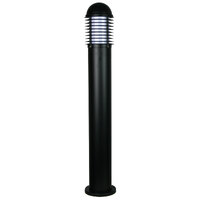
Watch Oriel OL7156BK | Velika Surface Mounted Outdoor Bollard 1m | Black video
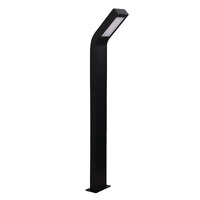
Watch Lightscaping OL7767SS | Lance DIY Garden Path Light 67cm | Stainless Steel video
Watch SAL SL7266WW/BK | Outdoor 6W Mini LED Spike Light | Black video
These bunker lights are sturdily constructed, aesthetically pleasing and economically priced. They are easily installed by your friendly Sparkie and they stand up to weather beautifully.
Very bright and tough build, worth the money. Also, Sparky Direct pricing is excellent and cheapest I can find. Shipping is prompt.
I've had this in operation for over a year and it hasn't missed a beat. Everyone asks me where I got it from.
Quality products in stock • Fast Australia-wide delivery • Competitive trade pricing
Browse Bollard Lights → Get Expert Advice →They provide gentle, even lighting ideal for paths and landscape features rather than floodlighting.
Sparky Direct supplies bollard lights Australia-wide, offering reliable outdoor lighting solutions with convenient delivery.
Bollard lights are securely packaged and delivered via standard courier services.
Unused products are generally eligible for return according to the seller’s returns policy.
Warranty coverage varies by manufacturer and typically covers defects in materials or workmanship.
Bollard lights are typically sold individually, with multiple units often used for projects.
Yes, spacing and placement are important to achieve even lighting and visual balance.
Yes, they are designed for extended outdoor operation when correctly installed.
LED bollard lights generally require minimal maintenance once installed.
Models with corrosion-resistant finishes are available for coastal environments.
Yes, they can be used to accent landscaping and outdoor design elements.
They are designed to be visually appealing while blending into outdoor environments.
Yes, many designs complement modern and contemporary outdoor spaces.
Bollard lights are short, upright outdoor light fittings designed to illuminate pathways, driveways, gardens, and outdoor areas.
Yes, they help define walkways and improve visibility at night.
They provide safe, low-level lighting while enhancing the appearance of outdoor spaces.
Some bollard lights can be used with external sensors or control systems where compatible.
Bollard lights are available in various heights to suit different lighting and design needs.
Yes, they are commonly used in commercial, public, and landscape projects.
Yes, they are widely used in residential gardens, pathways, and driveways.
They typically have IP ratings suitable for outdoor use, such as IP44 or higher, depending on the model.
Yes, most modern bollard lights use LED technology for efficiency and long lifespan.
Yes, bollard lights are specifically designed for outdoor environments and weather exposure.
Quality bollard lights are manufactured to meet relevant AS/NZS electrical and safety standards when installed correctly.
They are commonly used along walkways, garden paths, driveways, car parks, and landscape areas.