
Search Results:
Search Results:
Search Results:
Search Results:
Find the best Solar and LED Garden Lights here at Sparky Direct. [ Read More ]
Garden lights let you use outdoor areas after dark. A well-lit patio, deck or garden path is usable at night in a way that an unlit one simply is not. Lights placed near seating areas, along paths or around garden beds also make it easier to see what is around you, which matters for safety as much as comfort.
Decorative lights are low-output fittings used to create atmosphere. They are not bright enough for safe navigation on their own. Functional lights are higher-output fittings used on paths, steps and entry points where people need to see clearly. Most garden lighting setups use both: brighter fittings near steps and paths, softer ones near garden beds or seating. Combining floodlights for security with lower-output accent fittings for atmosphere is a common approach.
Front-of-property lighting improves how a property looks from the street. Path lights, bollards and facade uplights make the entry look tidy and well-maintained after dark. Licensed electricians often combine pathway lights with decorative accent fittings to cover both safety and appearance in a single installation.
Front-of-property lighting covers path lights, bollards and facade uplights. A mix of functional pathway lights and decorative accent fittings gives you good coverage for both safety and appearance.
Solar panels charge a battery during daylight hours. The battery powers the light after dark. Modern solar garden lights use lithium-ion batteries, which hold charge better than older nickel-metal hydride types. In good conditions, a fully charged solar light will typically run for 6 to 10 hours overnight. Sparky Direct's solar lighting range covers a wide variety of garden applications.
Solar lights need direct sun to charge properly. North-facing positions with at least 6 hours of unobstructed sunlight per day give the best results. Queensland and coastal areas with high solar exposure tend to get consistent performance year-round. Shaded spots, south-facing positions and areas under heavy tree cover will reduce how well the panels charge.
Solar lights depend on sunshine. A run of cloudy or rainy days will reduce how long they stay on at night. This is more common in southern states during winter. Battery capacity also drops gradually over 2 to 3 years, which shortens nightly run time. Solar lights cannot produce the same steady, high output as mains-powered LED fittings, so they are not well suited to security floodlighting or large area coverage.
Solar Performance Note: Solar garden lights suit accent and pathway applications in well-exposed positions. For security floodlighting or high-output area lighting, mains-powered LED fittings are more reliable regardless of weather or season.
LED lights use up to 80% less power than equivalent halogen globes and produce the same or better light output. LED globes and garden fittings are rated to last 25,000 to 50,000 hours, so globe replacements are rarely needed. They also run much cooler than halogen, which reduces fire risk in garden beds and near dry vegetation.
Colour temperature is measured in Kelvin (K) and describes how warm or cool the light looks. Lower numbers are warmer and more orange-toned. Higher numbers are cooler and bluer. For garden lighting, warm white (2700K to 3000K) suits entertaining areas, garden beds and feature trees. Cool white (4000K to 5000K) suits contemporary buildings and security zones. Keep colour temperature consistent within a single area so the lighting looks intentional rather than mismatched.
| Colour Temperature | Appearance | Best Application |
|---|---|---|
| 2700K to 3000K (Warm White) | Soft, amber-toned | Entertaining areas, feature trees, garden beds |
| 3000K to 4000K (Neutral White) | Balanced, natural | Pathways, driveways, general garden areas |
| 4000K to 5000K (Cool White) | Crisp, blue-toned | Contemporary facades, security zones |
| 5000K to 6500K (Daylight) | Bright, stark | High-output security floodlighting |
IP ratings describe how well a fitting is sealed against dust and water. The higher the number, the better the protection. IP44 is the minimum for sheltered outdoor areas such as covered patios and pergolas. IP65 is required for fittings exposed to direct rain. Australian standard AS/NZS 3000:2018 requires outdoor fittings to meet IP ratings appropriate to where they are installed. Weatherproof LED batten lights and other weatherproof fittings meet these requirements for exposed positions.
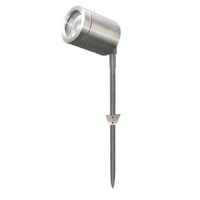
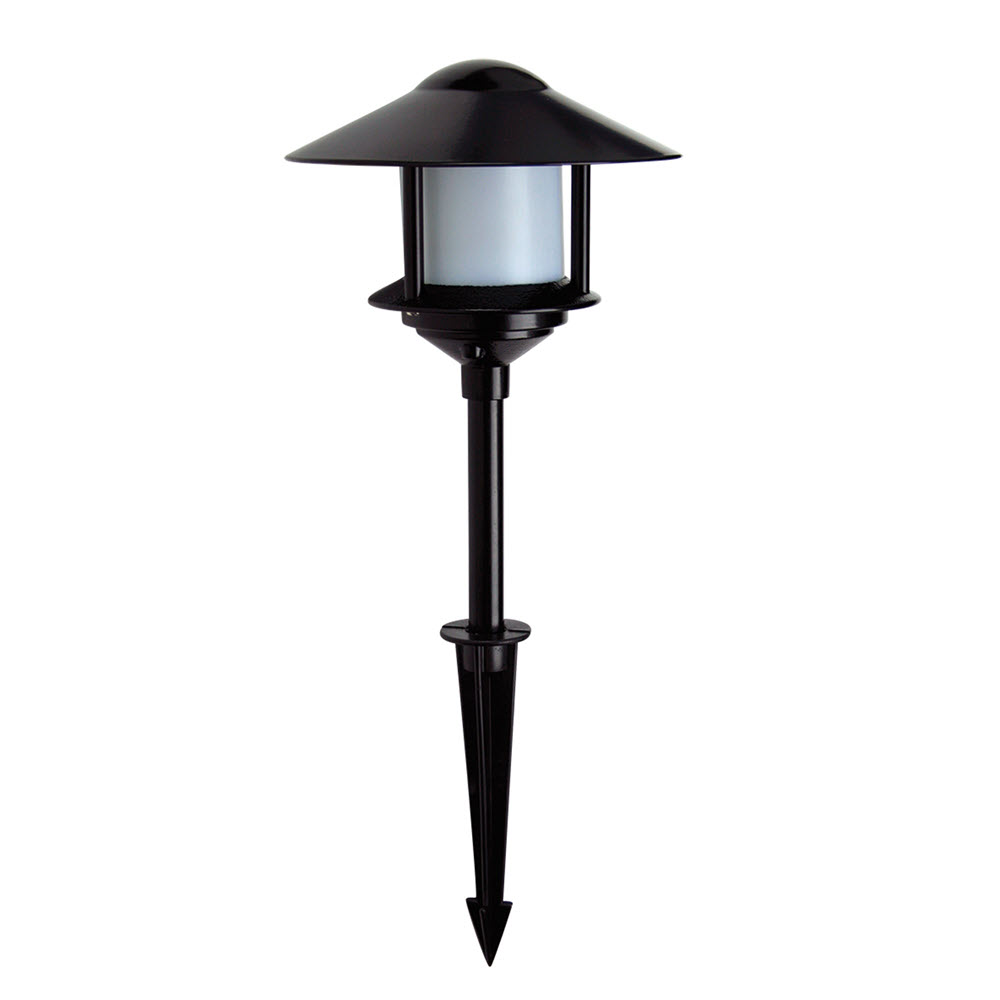
Spike lights push into garden beds and point upward to light plants, sculptures and other features. Path lights sit on short stakes along walkways and driveways to help people see where they are stepping. Both types come in solar and mains-powered versions. Mains-powered options are brighter and more consistent. Lightscaping and SAL Lighting offer spike and path lights suited to Australian conditions.
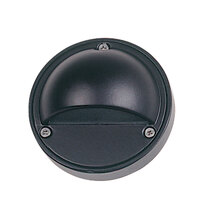
Wall-mounted garden lights fix to fences, retaining walls and exterior building surfaces and cast light across the area in front of them. Bollard lights are freestanding posts, typically 400mm to 1000mm tall, used to mark driveways, garden edges and pedestrian paths. Both types are predictable and easy to space evenly. Outdoor wall lights from Oriel Lighting and EGLO are available in a range of styles and IP ratings.
Floodlights cast wide-angle, high-output light across large areas. They are commonly used for security and for lighting recreation zones. Spotlights produce a narrow beam suited to highlighting specific features such as a specimen tree or water feature. Motion-activated versions of both are popular in Australian homes for security and for reducing power use. ILD and National Light Sources supply IP65-rated LED floodlights built for exposed outdoor use.
If your garden already has outdoor power points or conduit nearby, mains-powered LED lights are the straightforward choice. If there is no power access and running cable would mean trenching across the garden, solar lights are the practical option for those areas. On larger properties, a mix is common: mains-powered lights near the house, solar lights in more remote spots. Weatherproof outdoor power points can extend power access to garden areas where it does not currently reach.
Lumens measure light output. The right amount depends on what the fitting needs to do. Accent and decorative lighting needs 50 to 200 lumens per fitting. Pathway and step lighting needs 100 to 400 lumens for people to see safely without glare at eye level. Security and area floodlighting needs 700 lumens or more to cover large zones effectively. Commercial floodlights are available where high-output coverage is the priority.
Tropical and subtropical areas including Queensland and the Northern Territory need fittings that can handle high humidity, heavy rain and UV exposure over many years. Coastal gardens face salt air, which corrodes standard fittings faster than expected. Marine-grade or stainless steel fittings with appropriate IP ratings are necessary in these locations. Marine-grade floodlights are built for conditions where standard fittings would deteriorate quickly. Inland temperate and arid gardens have more flexibility in fitting choice, but IP44 is still the sensible minimum for any outdoor fitting.
| Application | Lumen Range | Recommended IP Rating | Typical Fitting Type |
|---|---|---|---|
| Accent and decorative | 50 to 200 lm | IP44 minimum | Spike lights, garden spots |
| Pathway and step | 100 to 400 lm | IP54 minimum | Path lights, bollards |
| Facade and feature | 300 to 700 lm | IP54 to IP65 | Wall lights, spotlights |
| Security and area | 700 lm and above | IP65 minimum | LED floodlights |
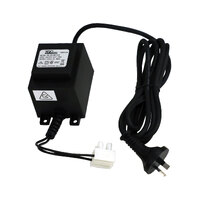
Any mains-powered garden lighting connected to the home's electrical system must be installed by a licensed electrician under Australian law. Low-voltage transformer systems running at 12V or 24V can sometimes be installed by homeowners, but the transformer itself still needs to be connected to mains power by a licensed electrician. Solar garden lights that run independently of the mains do not require a licensed electrician to install, making them a practical DIY option for many homeowners.
AS/NZS 3000:2018 Compliance: All mains-powered outdoor electrical installations in Australia must comply with AS/NZS 3000:2018 Wiring Rules. This includes underground cabling, weatherproof connections and appropriate IP-rated fittings for the installation zone. Licensed electricians are required for all mains-connected work.
Sketch out where you want lights before buying. It prevents over-buying, under-lighting and poorly distributed coverage. Think about how large your plants will be in a few years, not how large they are now. A fitting placed at ground level near a small shrub today may be blocked by foliage within two seasons. Testing positions at night with a torch before committing to permanent installation is a simple step that saves a lot of rework.
Underground cables must run through conduit at a minimum depth of 500mm under pedestrian areas and 600mm under driveways, as required by Australian standards. Conduit protects cables from ground movement, moisture and accidental damage if someone digs nearby in future. All outdoor connection points require weatherproof junction boxes and connectors to keep the IP integrity of the system intact. 24V floodlights and other low-voltage systems reduce the risks associated with cable exposure in garden environments.
Solar panels should be wiped down every 4 to 6 weeks to clear dust, bird droppings and debris. A dirty panel charges less efficiently and reduces how long the light runs overnight. LED lens covers and housings should be checked each season for moisture inside the fitting, cracking or UV yellowing of the lens. Any corroded or loose connections in mains-powered systems should be checked and fixed by a licensed electrician promptly. Mercator and Domus outdoor fittings use sealed housings that make cleaning straightforward and reduce the chance of water getting in.
Most solar light batteries last 1 to 3 years depending on how often they are fully cycled and how hot the climate is. When run time starts dropping noticeably, the battery needs replacing. Match the replacement to the original specification: same voltage, same capacity in mAh, same battery chemistry. Replacing the battery before it fails completely protects the LED driver and other components, which extends the overall life of the fitting.
Flickering, dim output or failure to reach normal brightness after cleaning and a fresh battery points to a fault in the electronics. Physical damage to the housing, lens or mount compromises the IP rating and the fitting should be replaced, not patched. LED modules that have shifted in colour or dropped significantly in brightness have reached the end of their rated life. Brilliant Lighting stocks replacement fittings across a wide range of outdoor lighting categories.
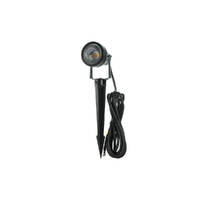
Watch SAL SL7266WW/BK | Outdoor 6W Mini LED Spike Light | Black video
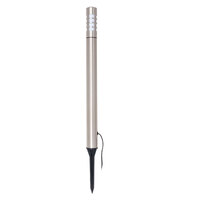
Watch Lightscaping OL7767SS | Lance DIY Garden Path Light 67cm | Stainless Steel video
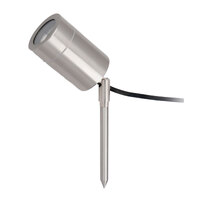
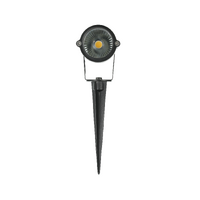
Watch Lightscaping OL7762BK | Accent DIY 12V Garden Spot | Black video

I recently purchased the Oriel OL7661BK Highgate Down Traditional Outdoor Wall Light from Sparky Direct, and I couldn't be happier with my experience! The product itself is beautifully designed, with a classic black finish that adds a touch of elegance to my outdoor space. It's sturdy, well-made, and provides excellent illumination. Sparky Direct made the purchasing process seamless, great prices, easy online ordering, and fast shipping. The item arrived well-packaged and in perfect condition. Their customer service was also fantastic, ensuring I had all the details I needed before making my purchase. Highly recommend both the Oriel Highgate Down Wall Light and Sparky Direct for quality products and reliable service!
Bought a pair of these on an awesome Sparky Direct special to replace some EBay units which failed after 12 months use. Look to made to a high standard and I'm expecting a long service life. I had some technical questions which I directed to the Australian distributor (ILD) - who answered very quickly and comprehensively. Very happy with the light output and general finish on them. Would definitely buy again.
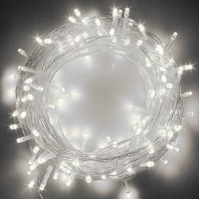
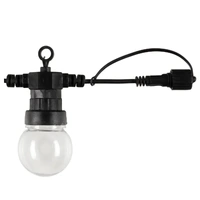
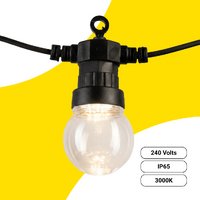
I installed them around my pool area and they look amazing, the Bulbs are TUFF, I dropped the string of lights on the concrete a few times when installing, not a mark on them. I bought these because they are waterproof and the build quality looks great. I set them to turn on and off when it gets dark and the light really makes a difference. Highly recommend these.
Quality products in stock • Fast Australia-wide delivery • Competitive trade pricing
Browse Garden Lights → Get Expert Advice →Yes, many designs complement modern and contemporary garden styles.
It depends on the effect you want. For ambient lighting, LED Deck Lights or Bollard Lights are great. To highlight plants or paths, use Spike Lights. For layered designs, consider LED Strip Lights or Wall Lights. Low voltage garden lights are especially good for ease of installation and safety in residential gardens.
Still unsure? Need help? Ask us. We’ll help you plan the perfect garden lighting setup.
If you're installing 240V mains-powered outdoor lighting, then yes, a licensed electrician is required by Australian law. However, if you're working with 12V or 24V low voltage garden lights, these are considered safer for DIY and can be installed without an electrician using the appropriate transformer or driver.
Sparky Direct supplies garden lights Australia-wide, offering reliable outdoor lighting solutions with convenient delivery.
Garden lights are securely packaged and delivered via standard courier services.
Unused products are generally eligible for return according to the seller’s returns policy.
Warranty coverage varies by manufacturer and typically covers defects in materials or workmanship.
Garden lights are available individually and as part of complete lighting systems.
Yes, thoughtful placement ensures balanced lighting and avoids glare.
LED garden lights generally require minimal maintenance.
Yes, they create a welcoming atmosphere for outdoor entertaining.
Yes, pathway and step lighting improves visibility and safety.
Once installed, they operate automatically or via switches and require minimal attention.
Yes, spot and spike lights are commonly used to highlight landscaping features.
Garden lights are outdoor lighting fixtures designed to illuminate gardens, pathways, plants, and landscape features.
Brightness varies by design, with options for subtle accent lighting or stronger illumination.
Yes, lighting extends the use of gardens and outdoor areas after dark.
Garden lights improve safety, highlight landscaping, and enhance outdoor ambience at night.
Yes, they are widely used in homes, parks, and commercial landscape projects.
Yes, options include warm white, cool white, and daylight, depending on the desired effect.
Some garden lights provide ambient lighting, while others can contribute to improved outdoor visibility.
Many garden lights operate on low voltage systems, such as 12V or 24V, using a suitable transformer.
Common types include spike lights, bollard lights, pathway lights, spotlights, and feature lights.
Yes, most modern garden lights use LED technology for efficiency and long service life.
Yes, garden lights are designed to withstand outdoor weather conditions and moisture exposure.
Quality garden lights are manufactured to meet relevant AS/NZS electrical and safety standards when installed correctly.
They are commonly used in gardens, along pathways, around trees, near features, and in outdoor living areas.