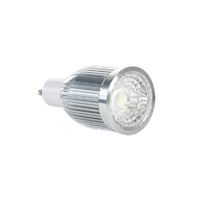

Search Results:
Search Results:
Search Results:
Search Results:
Dimmable LEDs use one of two methods to reduce light output. Pulse Width Modulation (PWM) rapidly switches the LED on and off at imperceptible speeds to simulate reduced brightness. Constant Current Reduction (CCR) reduces the current flowing through the LED chip directly. CCR is generally the superior method: it produces less flicker at low dim levels and places less stress on the driver over its service life.
Installing a non-dimmable globe on a dimmer circuit causes flickering, buzzing, overheating, and premature failure. Dimmable globes can operate on standard non-dimmer circuits without issue, making them a more versatile choice for mixed installations where some fittings are on dimmers and others are not.
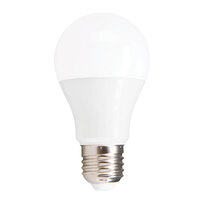
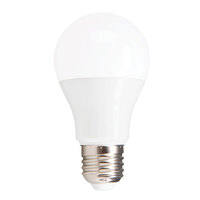
Dimmable and non-dimmable LED globes are visually identical. Compatibility must always be confirmed via the product specification or datasheet before purchase. Never assume a globe is dimmable based on appearance or price point alone.
Dimmable LED globes sold in Australia must comply with AS/NZS 4782.2 and carry the Regulatory Compliance Mark (RCM), confirming they meet electrical safety and electromagnetic compatibility requirements. Selecting globes with published RCM certification and documented dimmer compatibility lists provides a reliable performance baseline. Quality brands stocked at Sparky Direct include SAL Lighting and National Light Sources (NLS), both of which publish product datasheets and compatibility information.
Legacy incandescent dimmer switches operate on leading-edge or trailing-edge phase-cut technology, and not all LED globes are compatible with both types. Mismatched dimmers and globes are the leading cause of flickering, buzzing, and reduced globe lifespan in LED installations. Manufacturers publish compatibility lists that match specific globe models to tested dimmer switch brands. Consulting these before purchase eliminates most installation issues.
Leading-edge (TRIAC) dimmers were designed for incandescent and halogen loads and are the most common type in older Australian residential installations. Trailing-edge (ELV) dimmers are better suited to LED loads, offering smoother dimming curves, lower minimum load thresholds, and quieter operation. Replacing a leading-edge dimmer with a trailing-edge model is the most effective solution when flickering persists after switching to LED globes.
| Dimmer Type | Designed For | LED Compatibility | Typical Issue |
|---|---|---|---|
| Leading-edge (TRIAC) | Incandescent / halogen | Varies by globe model | Flickering at low dim levels |
| Trailing-edge (ELV) | LED loads | Broad compatibility | Generally trouble-free |
| LED-specific dimmers | LED only | High compatibility | Check manufacturer list |
Sparky Direct stocks Clipsal dimmers, SAL dimmers, and Cabac dimmers to suit different installation requirements.
Dimmer switches have a rated minimum load. If the total wattage of connected LED globes falls below this threshold, flickering and instability occur. LED globes draw significantly less wattage than incandescent equivalents, making it common to fall below the dimmer's minimum load in retrofit installations. Multi-gang dimmer installations require careful load calculation across all circuits. Adding a dummy load resistor is a practical workaround where globe count is low.
Retrofit warning: When replacing incandescent or halogen globes with LED equivalents, always confirm the existing dimmer is LED-compatible before purchasing globes. Many older TRIAC dimmers require replacement or upgrade when transitioning to LED. This is a one-time change that enables full system performance and eliminates flickering.
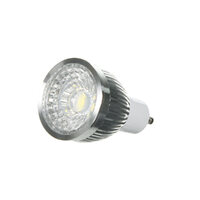
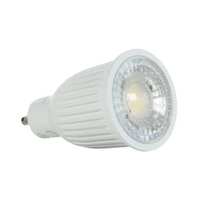
The most widely stocked dimmable base types include E27 (Edison screw), E14 (small Edison screw), B22 (bayonet), B15 (small bayonet), GU10 (240V twist-lock), and GU5.3 (MR16, 12V). Base type is determined entirely by the fixture. Always confirm the fitting type before selecting a globe, as base types are not interchangeable.
GU10 operates at 240V mains voltage and connects directly without a transformer. GU5.3 (MR16) operates at 12V and requires a compatible LED transformer. Do not substitute one for the other. If upgrading MR16 halogen fittings to LED, check that the existing transformer is compatible with LED loads, or replace it with a dedicated LED transformer from the Sparky Direct downlight transformer range.
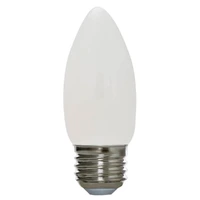
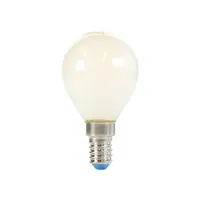
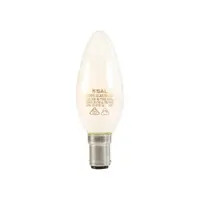
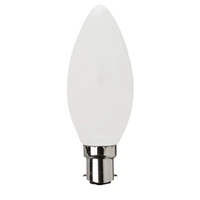
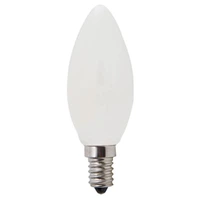
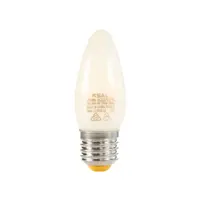
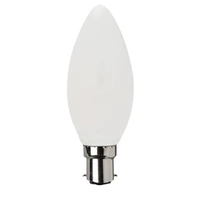
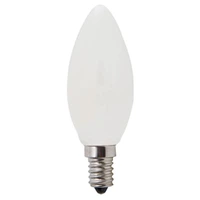
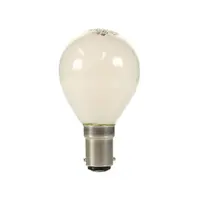
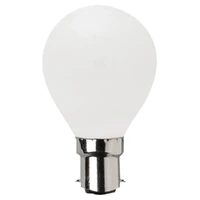
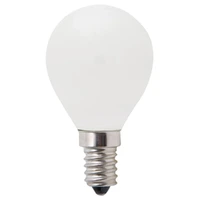
A-shape (GLS) globes produce omnidirectional light suited to general room illumination, pendants, and table lamps. GU10 and MR16 globes produce a directional, focused beam suited to downlights, track lighting, and accent applications. Beam angle, typically 36–60 degrees, determines spread. Candle and fancy round globes are available in dimmable formats across E27, E14, B22, and B15 bases, suited to chandeliers, wall sconces, and decorative pendants.
Filament-style dimmable LEDs replicate the warm glow and visible element of vintage incandescent globes while consuming significantly less energy. The visible filament is an LED strip array, not an incandescent element, and these globes carry the same RCM compliance requirements as standard LED products. Specialty shapes typically deliver lower lumen output than standard GLS globes and are selected primarily for their aesthetic contribution rather than task illumination.
Colour temperature is measured in Kelvin (K). Warm white (2700K) replicates incandescent tone. Cool white (4000K) suits task-focused spaces. Daylight (6500K) delivers the highest contrast. Warm white (2700K–3000K) is the most common choice for residential dimmable applications including living rooms, bedrooms, and dining areas where atmosphere is a priority.
An important distinction from incandescent sources: colour temperature in standard LED globes remains fixed regardless of dim level. The light does not shift warmer as brightness decreases, unlike incandescent and halogen sources. Warm dimming LEDs address this by engineering a colour shift from neutral white at full brightness to warm amber at lower dim levels.
Tri-colour switchable globes (for example, 2700K / 4000K / 6500K) allow the user to select a fixed colour temperature using the existing light switch. This is a practical option where versatility across rooms is needed without rewiring. Warm dimming globes replicate the natural colour shift of incandescent sources, shifting from a neutral white at full brightness to a warm amber tone at lower dim levels. These are particularly effective in dining, hospitality, and bedroom applications where ambience shifts across different times of day.
SAL Lighting's tri-colour dimmable range covers BC (B22), ES (E27), and GU10 bases with factory-documented colour switching behaviour.
CRI measures how accurately a light source renders colours compared to natural daylight, scored on a scale of 0–100. A CRI of 80 or above is acceptable for general residential use. CRI 90 or above is recommended for kitchens, retail displays, and art applications where colour accuracy is critical. Higher CRI globes produce more natural and vibrant colour rendering. This is particularly noticeable in spaces with strong colour elements such as artwork, furnishings, or food presentation.
| Colour Temp | Kelvin Range | Best Applications |
|---|---|---|
| Warm White | 2700K–3000K | Living rooms, bedrooms, dining, hospitality |
| Cool White / Neutral | 4000K | Kitchens, offices, bathrooms |
| Daylight | 5000K–6500K | Workshops, retail, security, task lighting |
Lumens measure the total quantity of visible light emitted by a globe. Wattage measures energy consumption, not brightness. A standard 60W incandescent globe produces approximately 800 lumens. An equivalent LED globe achieves the same output at 8–10W, an energy reduction of approximately 85%. General living spaces typically require 300–500 lumens per square metre. Task areas such as kitchens and workspaces require 500–750 lumens per square metre.
Lower-wattage LED globes have a narrower effective dimming range and may drop out or flicker at very low dim levels, typically below 20% brightness. Higher-wattage dimmable globes generally offer a smoother and wider dimming range, particularly when paired with a compatible trailing-edge dimmer. Selecting a globe with a published dimming range (for example, 10–100%) in the product datasheet provides a reliable performance benchmark before installation.
Dimming an LED globe to 50% brightness reduces energy consumption by approximately 40%. Unlike incandescent globes, LEDs do not generate significant heat when dimmed. Energy reduction translates directly to efficiency rather than heat dissipation. Regular dimmed operation also reduces lumen depreciation over time. Quality dimmable LED globes are rated from 15,000 to 25,000 hours, significantly outlasting halogen equivalents rated at 2,000–4,000 hours.
| Incandescent / Halogen | LED Equivalent (approx.) | Lumen Output (approx.) |
|---|---|---|
| 25W | 3–4W LED | 250–300 lm |
| 40W | 5–6W LED | 450–500 lm |
| 60W | 8–10W LED | 750–850 lm |
| 75W | 11–12W LED | 900–1000 lm |
| 100W | 14–15W LED | 1400–1600 lm |
Living rooms, bedrooms, and dining areas benefit most from dimmable lighting. The ability to shift between task brightness and ambient mood lighting enhances both comfort and functionality. Dimmable downlights in open-plan spaces allow different zones to be independently controlled using separate dimmer circuits, improving spatial flexibility. Pendant and chandelier fittings in dining areas are among the highest-priority applications for dimmable globe selection. Candle and fancy round formats are purpose-built for these fittings.
For downlight applications, Sparky Direct stocks LED downlights across warm white, cool white, and tri-colour options. The warm white downlight range suits bedrooms and living areas, while the tri-colour downlight range gives control over colour temperature after installation.
Retail environments use dimmable lighting to highlight merchandise, direct customer attention, and create distinct zones within a single space. Hospitality venues including restaurants, hotels, and bars rely on dimmable lighting as a primary tool for atmosphere management across breakfast, lunch, and dinner service periods. Commercial dimmable installations typically require globes with extended rated lifespans, broader dimmer compatibility, and published test data to support maintenance planning.
Dimmable globes installed in enclosed fixtures must carry an enclosed-rated designation. Heat build-up in sealed fittings can exceed the thermal tolerance of standard LED globes and cause premature failure. Outdoor dimmable applications require globes with an appropriate IP rating to withstand moisture and dust. IP44 is the minimum for covered outdoor areas. IP65 is required for exposed installations. Not all dimmable globe ranges include enclosed-rated or outdoor-rated variants. Confirm suitability in the product specification before installation.
For outdoor lighting needs, the outdoor lighting range at Sparky Direct covers IP-rated options. For interior ceiling applications, the ceiling lights range and pendant lights range include fittings suited to dimmable globes.
Enclosed fitting rule: Standard LED globes in an enclosed fitting will overheat. Check the product datasheet for the enclosed-fixture rating before installation. Using an unrated globe in a sealed fitting voids the warranty and may create a fire risk.
Base type, globe shape, colour temperature, lumen output, and dimmer compatibility are the five variables that must align for a dimmable globe system to perform correctly. Prioritising any single factor without considering the others is the most common cause of poor dimming performance, incompatibility, or early globe failure. A staged approach, confirming dimmer compatibility first, then selecting globe specifications, eliminates the majority of post-installation issues.
Direct replacement of incandescent or halogen dimmable globes with LED equivalents requires confirmation that the existing dimmer switch is LED-compatible before purchase. Many older TRIAC dimmers must be replaced or upgraded when transitioning to LED. Staged replacement, starting with the highest-use fittings, allows dimmer compatibility and dimming performance to be assessed before committing to a full installation.
The full light globes range at Sparky Direct covers halogen, LED, and specialty lamp types. The halogen globes range is available for fittings where direct LED replacement is not yet confirmed compatible. The discharge lighting range covers high-intensity applications outside standard globe categories.
Rated lifespan for quality dimmable LED globes ranges from 15,000 to 25,000 hours. Warranty periods of two to three years are standard for reputable brands. Selecting globes from manufacturers with published test data, RCM certification, and documented dimmer compatibility lists provides a more reliable performance baseline than price alone. Both SAL Lighting and NLS publish these details for their dimmable globe ranges.
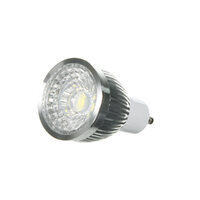
Watch NLS 10629 | Led Lamp GU10 7W Dimmable 240v Warm White 700lm 60Deg video
Watch NLS 10630 | 7W LED GU10 Lamp 240V Dimmable | Daylight 700lm 60° video
Watch SAL LCA27E14D | Candle Opal LED Bulb 4W Dimmable | E14 | Warm White video

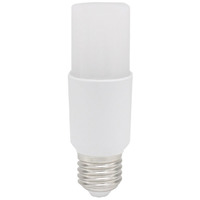
Fantastic - This SAL tubular globe not only fits in my old fan light (saving me replacing it), but does everything I want a globe to do. At 101mm long x 40mm wide, it's the shortest LED tubular bulb I've found. It's also dimmable, can be set to warm or cool white, and gives good light without flickering
To Sparky. I have used SAL globes in the passed and have always been good quality. The new adjustable type are great knowing you can getting the brightnesses just right for fanlight. As once put cover back up, you lost so much brightnesses. So for fanlight with 2 globes 4k is just is right.
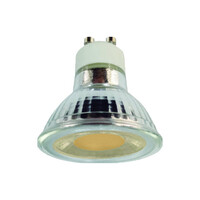
The SAL GU10 are a great little globe. We had some older Clipsal round mini fluros which are now not made anymore. Swapped them out in our kitchen to see how they performed. They throw a nicebdownward type light rarther than a spread. Very easy on the eyes.They also have three settings. We run them on the middle one. They are bloody brilliant. Will eventually do the rest of the house. Sparky Direct have the best price on these and highly recommend this light.
Quality products in stock • Fast Australia-wide delivery • Competitive trade pricing
Browse Dimmable LED Globes → Get Expert Advice →Lower brightness levels can help reduce glare in living and work spaces.
Sparky Direct supplies dimmable LED globes Australia-wide, offering flexible lighting solutions with convenient delivery.
Dimmable LED globes are securely packaged and delivered via standard courier services.
Unused products are generally eligible for return according to the seller’s returns policy.
Warranty coverage varies by manufacturer and typically covers defects in materials or workmanship.
Dimmable LED globes are available individually.
Yes, correct globe and dimmer selection ensures the best performance.
Yes, they are commonly used in modern and contemporary interiors.
Yes, they operate like standard globes with the added benefit of dimming.
Operating at lower brightness may reduce stress on the globe.
Yes, they allow brighter light for tasks and softer light for dining.
Quality globes provide flicker-free operation with suitable dimmers.
Yes, they are popular in bedrooms and living areas for adjustable comfort.
Dimmable LED globes are LED light sources designed to work with compatible dimmers, allowing light brightness to be adjusted.
When paired with compatible dimmers, they provide smooth and stable dimming.
They allow lighting to be adjusted to suit different moods and activities.
Yes, options include warm white, cool white, and daylight.
Yes, they are available in common bases such as B22, E27, GU10, and others.
Yes, reducing brightness also reduces energy consumption.
Compatibility depends on the globe and dimmer type, so manufacturer guidance should be followed.
No, only LED globes specifically marked as dimmable can be used with dimmers.
Yes, they are used in offices, hospitality venues, and retail spaces.
Yes, they are commonly used in homes to create adjustable lighting environments.
Quality dimmable LED globes are manufactured to meet relevant AS/NZS electrical and safety standards.
They adjust light output in response to a compatible dimmer, providing control over brightness levels.