
Search Results:
Search Results:
Search Results:
Search Results:
Lumens measure light output—the actual brightness you see. For LED spotlights, lumens matter far more than wattage. A 10W LED producing 800 lumens delivers the same brightness as a 50W halogen, using 80% less energy.
Choosing the right lumen output depends entirely on your application. Too little brightness fails to provide adequate security lighting or coverage. Too much creates harsh glare, disturbs neighbours, and wastes energy.
| Application | Recommended Lumens | Example Product | Typical Coverage |
|---|---|---|---|
| Security/Deterrent | 1000-3000 lm | NLS 20414 (2700lm, 30W) | 15-20m² at 3m height |
| Ambient/BBQ | 300-500 lm | Single 10W spotlight | 8-12m² entertaining area |
| Pathway/Accent | 200-400 lm | Low-output single units | 4-6m² directional |
| Commercial | 2000-5000+ lm | Multiple twin configurations | 30-50m² per unit |
Effective security lighting requires 1000-3000 lumens to illuminate large areas and act as a visible deterrent. Brightness alone creates psychological impact—intruders avoid well-lit properties.
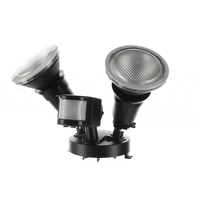
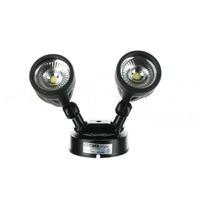
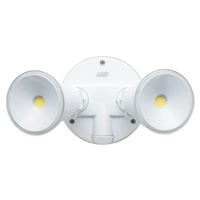
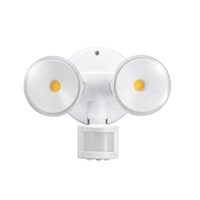
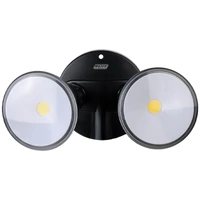
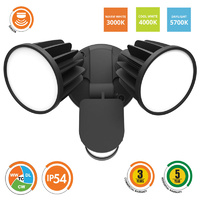
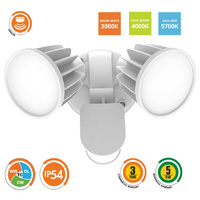
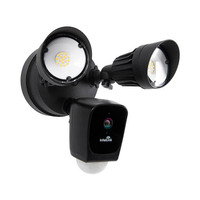
Twin spotlight configurations like the SAL Stargem III Twin 2x15W provide approximately 2000-2500 lumens total. Two independently adjustable heads deliver 120+ degrees of combined coverage—ideal for corners, driveways, and L-shaped areas where single direction illumination proves insufficient.
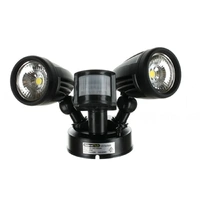
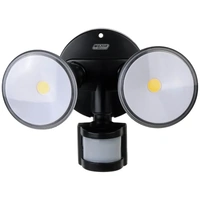
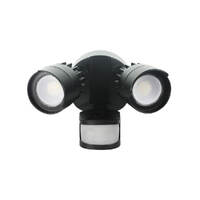
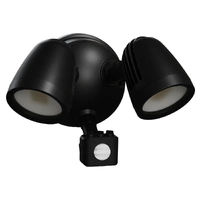
The NLS 20414 30W twin spotlight delivers 2700 lumens with 12-metre PIR detection range. This high-output configuration suits commercial properties, large driveways, and properties requiring maximum visibility.
Mount security spotlights 2.5-3.5 metres high for optimal human detection while reducing false triggers from ground-level wildlife. Pair high-lumen output with PIR motion sensors to balance security effectiveness with energy efficiency—lights activate only when movement is detected.
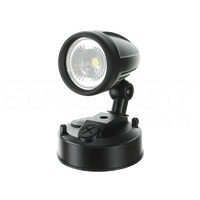
Lower lumen output creates ambiance without harsh glare for outdoor entertaining areas. Single 10W spotlights producing 300-500 lumens provide comfortable illumination for BBQ areas, patios, and outdoor dining spaces.
Multiple fixtures with moderate output distribute light more evenly than single high-output units. This approach reduces hot spots and creates pleasant atmosphere for evening gatherings. Position fixtures to highlight landscaping features while avoiding direct eye level glare.
Colour temperature significantly impacts outdoor ambiance. Warm white (3000K) at moderate lumen levels creates welcoming, residential feel—far more appropriate for entertaining than harsh cool white security lighting.
Twin spotlights provide superior coverage for security applications. Two independently adjustable heads deliver overlapping illumination patterns—essential for corners, wide driveways, and areas requiring comprehensive coverage. The ability to aim each head separately means you can illuminate your property entrance while also covering the side passage, all from one fixture and one circuit.
Single spotlights excel in directional applications. Entrance doorways, narrow pathways, and focused accent lighting benefit from single-head design. Lower cost makes single units economical when multiple fixtures can be positioned strategically throughout your property.
From a practical installation perspective, one twin spotlight often costs 30-40% more than a single spotlight but eliminates the need for multiple circuit runs. Your electrician can install one fixture with dual coverage rather than running cable to two separate locations—potentially saving labour costs that offset the higher fixture price.
A 1500-lumen spotlight mounted at 3 metres height illuminates approximately 15-20 square metres effectively. Double the height and you quadruple the coverage area but quarter the light intensity at ground level. This inverse square relationship explains why security lighting requires higher lumen output when mounted at recommended 2.5-3.5m heights.
IP (Ingress Protection) ratings define how well electrical equipment withstands solid particles and liquids. The two-digit system uses format "IP54" or "IP65"—the first digit indicates dust protection (0-6 scale), the second indicates water protection (0-9 scale).
Australian conditions demand serious weatherproofing consideration. Intense UV exposure degrades plastics and seals. Coastal salt spray corrodes metals. Summer storms deliver horizontal rain. Temperatures exceeding 50°C on dark surfaces stress electronic components. High humidity in tropical regions accelerates moisture ingress.
These factors make IP rating selection critical for longevity. Choosing insufficient protection leads to premature failure, safety risks, and replacement costs that dwarf the initial savings from buying cheaper fixtures.
| Rating | Dust Protection | Water Protection | Best For | Cost Premium |
|---|---|---|---|---|
| IP54 | Dust protected (limited ingress) | Splash water resistant | Covered patios, under eaves, sheltered courtyards | Standard pricing |
| IP65 | Dust tight (complete seal) | Water jet resistant | Exposed walls, coastal areas, unsheltered locations, commercial sites | +15-20% typical |
When IP54 is sufficient: Approximately 90% of residential installations in sheltered locations perform well with IP54 rating. Under eaves, covered patios, and sheltered courtyard installations receive adequate protection. The fixture handles rain splash and typical dust exposure without issues.
When IP65 is essential: Fully exposed walls facing weather, coastal properties within 5 kilometres of the ocean, unsheltered commercial installations, and tropical regions with heavy rainfall require IP65-rated fixtures. The complete dust seal and water jet resistance provide necessary protection in harsh conditions.
The 15-20% cost premium for IP65 represents false economy if your installation environment demands it. Premature failure from water ingress costs far more in replacement labour and parts than the initial upgrade investment.
Salt spray accelerates corrosion through chemical attack on metals and degradation of protective coatings. Properties within 5 kilometres of the ocean face constant salt-laden moisture—even when no visible sea spray occurs.
Quality coastal-rated fixtures incorporate specific design elements:
Customer feedback from electrician Nate highlights these quality indicators: "Really quality unit - nice casting, lots of seals on all parts, quick & easy to install. Great light output & lights/sensor can be moved in all directions to achieve perfect coverage of both light & detection. There's also lots of heat sink material behind the lights - critical for longevity of LEDs."
Annual maintenance for coastal installations should include seal inspection, gasket replacement if perished, and cleaning of salt deposits from heat sink fins. This preventative approach extends fixture life significantly in harsh marine environments.
LED lifespan depends heavily on operating temperature. Australian summer conditions create ambient temperatures of 35-40°C, with dark fixture surfaces reaching 50°C+ in direct sun. Quality heat sink design with substantial aluminium material dissipates heat effectively, maintaining LED junction temperatures within safe operating ranges. Cheap fixtures with minimal heat sinking suffer accelerated LED degradation and premature failure in our climate.
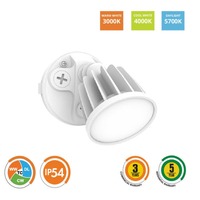
Colour temperature, measured in Kelvin (K), dramatically affects both visibility and ambiance. The scale runs from warm orange tones (2700-3000K) through neutral white (4000K) to cool blue-white (5700-6500K). Each temperature serves distinct purposes in outdoor lighting applications.
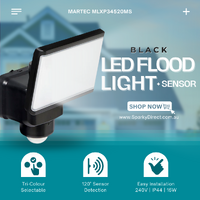
Traditional lighting required purchasing different fixtures for different temperatures. Tri-colour switchable technology eliminates this limitation—one fixture provides all three temperatures via simple DIP switch selection during installation.
| Temperature | Description | Best Applications | Visual Effect |
|---|---|---|---|
| 3000K | Warm White | Entertaining areas, entrance lighting, residential ambiance | Welcoming, cosy, restaurant-like atmosphere |
| 4000K | Neutral White | General purpose, mixed-use areas, commercial properties | Natural daylight appearance, balanced visibility |
| 5700K | Cool White | Security lighting, maximum visibility, CCTV integration | Crisp, alerting, high-contrast visibility |
Security applications benefit from 5700K cool white. The crisp, high-contrast illumination enhances alertness and provides maximum visibility for identifying faces and details. CCTV cameras perform better with cool white lighting—the colour spectrum matches camera sensor sensitivity for clearer footage. The psychological deterrent effect is stronger with bright, alerting cool white than with warm residential tones.
Ambient applications demand 3000K warm white. Outdoor entertaining, BBQ areas, and entrance lighting benefit from welcoming warm tones that complement home exterior aesthetics. Warm white reduces insect attraction compared to cool white—fewer moths and beetles congregate around 3000K fixtures. The residential character creates inviting atmosphere rather than harsh institutional feel.
Commercial applications often suit 4000K neutral white. The balanced temperature provides adequate visibility for safety while maintaining professional appearance. Retail shopfronts, office exteriors, and mixed-use properties benefit from neutral white's versatility—appropriate for both security and aesthetic purposes.
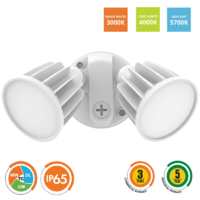
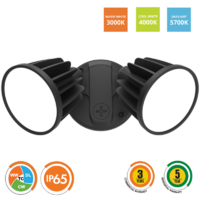
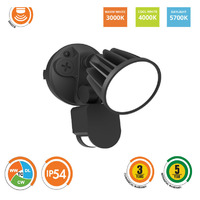
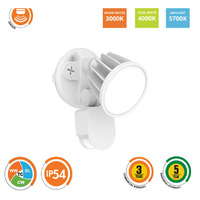
Tri-colour switchable spotlights like the SAL Stargem III SES70802TC series incorporate all three temperatures in one fixture. A small DIP switch accessible during installation allows selection between 3000K, 4000K, and 5700K.
This flexibility provides several practical advantages:
The SAL Stargem III tri-colour series earns 4.7-star rating from 61 customer reviews for the black model. Electrician Pete notes: "I used these SAL sensor lights to replace the garbage Bunnings sensor lights for a client. It's great when something works and is easy to install."
Tradesman Adrian confirms the value proposition: "Neat package, good value and nice and bright output."
The quick switch configuration during installation means no firmware updates, app configuration, or complex setup—just flip the DIP switch to desired temperature and the fixture operates at that setting permanently unless manually changed.
PIR (Passive Infrared) sensors detect heat signatures from moving objects. When body heat crosses the detection zone, the sensor triggers light activation. Quality sensors include adjustable sensitivity, duration, and lux threshold settings for precise configuration.
Typical detection specifications include 8-12 metre range with 180-degree coverage angle. Adjustable duration runs from 10 seconds to 12 minutes. Lux threshold determines daylight sensitivity—preventing activation during bright daylight hours while allowing twilight operation.
Australian wildlife creates unique PIR sensor challenges. Possums travelling across rooflines, fruit bats in evening flight, large birds (ibis, cockatoos), and even wallabies in suburban fringe areas trigger motion sensors designed for human detection.
Solutions for wildlife false triggers:
Heat-induced false triggers occur in 35°C+ weather when sensor struggles to distinguish body heat from hot ambient conditions. Quality sensors with temperature compensation minimise this issue, but strategic positioning away from heat-reflective surfaces (dark walls, metal roofing, glass) improves performance.
Tree branch movement in wind rarely triggers quality PIR sensors unless branches are very close to detection zone. Sensor detects heat signature change, not simple movement—wind-blown leaves lack heat signature differential. However, extremely close branches can cause issues through continuous motion in sensor field.
Light spill and glare concerns affect neighbour relationships. Queensland and NSW have boundary setback guidelines for outdoor lighting intensity and direction—consult your local council about specific requirements in your area.
Minimising neighbour disruption:
The independently adjustable heads on twin spotlights like the NLS 20414 provide precise coverage control. One head can illuminate your driveway while the second covers the entrance—both without excessive spill onto neighbouring properties. Customer Nate specifically praises this feature: "lights/sensor can be moved in all directions to achieve perfect coverage of both light & detection."
Communication with neighbours before installation prevents disputes. Explain the security rationale, show where lights will point, and invite feedback on duration/brightness preferences. Most neighbours appreciate security lighting when implemented considerately.
All mains-voltage (230V) outdoor lighting installations in Australia must be completed by a licensed electrician. This is a legal requirement across all states and territories, classified as high-risk electrical work due to the combination of electricity and weather exposure.
AS/NZS 3000:2018 Wiring Rules specify requirements for outdoor electrical installations including cable selection, protection methods, weatherproof connection techniques, and RCD (safety switch) protection. Non-compliance risks serious injury, fire hazard, and significant penalties.
Legal requirements: Every Australian state prohibits unlicensed electrical work on mains-voltage systems. Penalties range up to $100,000+ in some jurisdictions. Your home insurance becomes void if fire or injury results from unlicensed electrical work.
Safety risks: 230V mains electricity can cause fatal electrocution. Outdoor installations face water exposure—the combination creates extreme danger without proper weatherproofing and protection methods. Licensed electricians understand Australian Standards requirements for cable rating, junction box sealing, and RCD protection that prevent these risks.
Warranty protection: Most quality manufacturers void warranty for unlicensed installation. The SAL Stargem III 3-year warranty and NLS commercial warranties require installation by licensed electrician—stated explicitly in warranty terms. DIY installation forfeits this protection entirely.
What licensed electricians provide:
All mains-voltage (230V) outdoor lighting installations in Australia must be completed by a licensed electrician. This is a legal requirement across all states and territories. DIY electrical work is dangerous, voids product warranties, invalidates home insurance, and may result in significant fines. Always engage a licensed professional and request a compliance certificate upon completion.
Understanding installation costs helps budget appropriately for your outdoor lighting project:
Regional cost variations exist—metropolitan Brisbane, Sydney, Melbourne typically 20-30% higher than regional areas due to labour rates and demand. Always obtain quotes from 2-3 licensed electricians, confirm AS/NZS 3000 compliance, and request compliance certificate upon completion.
Licensed electrical work ensures safety and compliance while protecting your investment through proper installation. The modest professional installation cost prevents far greater expenses from premature fixture failure, insurance claim rejection, or regulatory penalties.
SAL: Australian-owned brand with national support network and 3-year warranties. The Stargem III series represents their flagship residential and light commercial offering—tri-colour switchable technology, quality die-cast construction, and proven reliability. SAL provides local technical support and maintains Australian stock for warranty replacements.
NLS: Trade-focused brand known for robust construction and commercial-grade reliability. The NLS 20414 30W twin spotlight exemplifies their engineering approach—extensive heat sink design, quality sealing on all components, and 2700-lumen high-output performance. Electricians appreciate the solid build quality and consistent specifications.
Major Tech: Value-focused option with good warranty support for budget-conscious projects. Major Tech products meet Australian Standards compliance while maintaining competitive pricing—suitable for residential applications where premium features aren't essential.
Clipsal: Premium Schneider Electric brand offering extended warranties and proven long-term durability. Clipsal's reputation spans decades in Australian electrical market—tradies trust the brand for quality and after-sales support. Premium pricing reflects this reliability and comprehensive warranty coverage.
All brands offer Australian Standards compliance and local warranty support through authorised distributors like Sparky Direct. Choose brands based on application requirements—commercial installations justify premium pricing for longevity, while residential projects may prioritise value without sacrificing quality.
LED spotlights use 80% less energy than halogen equivalents—10W LED equals 50W halogen output. Typical savings reach $15-20 yearly per fitting at typical usage rates. LEDs last 25,000-50,000 hours versus 2,000-5,000 for halogens.
Pair with PIR sensors for additional 60-70% savings versus always-on operation. Motion activation means lights operate only when needed—security effectiveness without continuous energy consumption. A 30W LED spotlight with PIR sensor uses approximately 3-5 kWh monthly compared to 20-30 kWh for always-on halogen equivalent.
Lower heat generation reduces cooling costs in summer. Halogen spotlights radiate significant heat—up to 90% of energy converts to heat rather than light. This heat load increases air conditioning costs when fixtures are near living areas. LEDs remain cool during operation, eliminating this secondary energy cost.
Replacement frequency drops dramatically—LEDs last 10-20 years with typical residential use versus 1-2 years for halogens. This longevity eliminates frequent electrician callouts for bulb replacement, saving both parts and labour costs over fixture lifetime.
Step 1 - Determine primary purpose:
Step 2 - Assess weatherproofing needs:
Step 3 - Choose configuration:
Step 4 - Select colour temperature:
Step 5 - Engage licensed electrician:
See detailed product demonstrations covering installation steps, feature adjustments, and real-world brightness comparisons. Videos show tri-colour switching operation, PIR sensor configuration, and adjustability of light heads for optimal coverage.
SAL SES70802TC-BK Stargem III Twin 2x15W LED Floodlight Tri-Colour with PIR Sensor (Black) - Product demonstration and installation guide
SAL SES70802TC-WH Stargem III Twin 2x15W LED Floodlight Tri-Colour with PIR Sensor (White) - Features and configuration overview
NLS 20414 Twin Spot 30W LED with Motion Sensor (Black, IP54, 2700lm) - High-output commercial-grade spotlight demonstration

I used these SAL sensor lights to replace the garbage Bunnings sensor lights for a client. It's great when something works and is easy to install.
Neat package, good value and nice and bright output.
Really quality unit - nice casting, lots of seals on all parts, quick & easy to install. Great light output & lights/sensor can be moved in all directions to achieve perfect coverage of both light & detection. There's also lots of heat sink material behind the lights - critical for longevity of LEDs. Really happy with these.
Trusted brands • Expert advice • Fast Australia-wide delivery • Trade pricing
Shop LED Spotlights → Get Expert Advice →Yes, sensors activate the light only when movement is detected, helping save energy.
Sparky Direct supplies LED spot lights and spot sensors Australia-wide, offering reliable lighting solutions with convenient delivery.
LED spotlights are securely packaged and delivered via standard courier services.
Unused products are generally eligible for return according to the seller’s returns policy.
Warranty coverage varies by manufacturer and typically covers defects in materials or workmanship.
LED spot lights and sensor models are only available individually.
Yes, fixed wiring and outdoor installations must be completed by a licensed electrician.
LED technology provides long service life compared to older lighting types.
Correct positioning and sensitivity adjustment help reduce false activation.
Most designs are low-profile and discreet when not in use.
Yes, their compact and clean design suits modern and contemporary exteriors.
Brightness varies by wattage and design, with options available for subtle or powerful lighting.
Yes, they are popular for highlighting trees, walls, and landscape features.
LED spotlights are focused lighting fittings designed to highlight specific areas, features, or objects with concentrated light.
Yes, especially when combined with motion sensors for automatic operation.
They offer brighter light, longer lifespan, and lower running costs.
Yes, they are widely used in homes, offices, retail spaces, and commercial properties.
Yes, motion-activated lighting can help deter unwanted activity and improve visibility.
Yes, common options include warm white, cool white, and daylight.
Beam angles vary from narrow beams for feature lighting to wider beams for area coverage.
Yes, many models are designed with weather-resistant ratings for outdoor environments.
Yes, LED technology provides high brightness with low energy consumption compared to traditional lighting.
Quality LED spot lights and sensor fittings are manufactured to meet relevant AS/NZS electrical and safety standards when installed correctly.
They are commonly used for outdoor security lighting, pathways, driveways, building features, and indoor accent lighting.
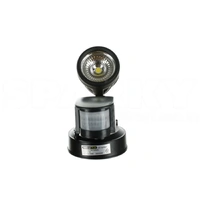
LED spot sensors are spotlights fitted with motion sensors that automatically turn the light on when movement is detected.