
Search Results:
Search Results:
Search Results:
Search Results:
A stove trim ring is a circular metal collar that surrounds a cooktop burner at the cooktop surface level. On electric coil cooktops, the ring fits between the drip pan and the cooktop deck, bridging the gap around the burner receptacle. On gas cooktops, trim rings or hob surrounds close the space between the burner head and the cooktop top sheet. On ceramic and induction cooktops, trim kits seal the cutout where the glass panel meets the benchtop.
The core function is containment. Without a properly fitted trim ring, food particles, cooking oils, and moisture travel directly into the cooktop cavity. This creates hygiene problems and, in electric models, risks contaminating the burner receptacle contacts.
Trim rings contribute to two practical outcomes: cleanliness and safety. A well-fitted ring keeps the cooktop surface easier to clean by preventing debris from working its way under the cooktop panel. For electric coil cooktops, grease accumulation around unprotected burner receptacles increases fire risk over time. A trim ring in good condition reduces that risk by maintaining a physical barrier between the cooking zone and the internal components.
Trim rings also help protect the cooktop deck from heat discolouration and surface damage immediately around the burner. On older appliances, replacing worn trim rings is one of the lowest-cost ways to extend usable appliance life.
These three components are often confused because they are located in the same area of the cooktop. Drip pans (also called drip bowls) sit below the burner and catch spills that fall past the heating element. Trim rings sit at surface level and surround the burner opening. Burner caps are used on gas cooktops and sit on top of the burner head, distributing the flame evenly.
On electric coil cooktops, trim rings and drip pans work together: the trim ring provides the surface seal, the drip pan catches what passes through. Replacing one without the other may not fully resolve a hygiene or fit problem. See the cooktop parts range for drip pans and other related components.
Electric coil cooktops use trim rings most prominently. The ring fits flush with the cooktop surface and holds the drip pan assembly in place. Standard sizes are 6-inch (small burner) and 8-inch (large burner), though exact outer diameter, inner diameter, and depth vary by brand and model. Chrome-plated steel is the most common finish for this application because it handles heat cycling well and is straightforward to replace.
Gas cooktop trim rings are less standardised than electric variants. They are often called hob surrounds or burner surrounds and vary significantly in diameter depending on the burner size (wok burner, dual ring, standard). Many are brand-specific and not interchangeable across appliance manufacturers. Universal gas surround kits exist but require careful diameter matching before purchase.
Induction and ceramic cooktops do not use burner rings in the traditional sense. However, trim kits are available to seal the gap between the glass cooktop panel and the benchtop cutout. These are typically stainless steel or powder-coated aluminium strips that clip or adhere around the perimeter of the cutout. They prevent moisture ingress into the cabinet below and give the installation a finished appearance.
Identify the cooktop type before purchasing. Electric coil cooktops use ring-and-drip-pan assemblies with defined standard sizes. Gas cooktops require dimension-specific surrounds. Induction and ceramic installations need trim kits sized to the cooktop model's cutout dimensions. Confirm whether a universal option will fit before ordering, particularly for older or discontinued appliance models.
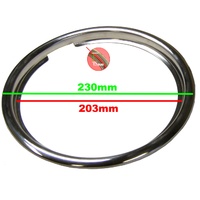
For electric coil cooktops, the two dominant sizes are 6-inch (approximately 152mm outer diameter) for small burners and 8-inch (approximately 203mm outer diameter) for large burners. These sizes cover the majority of Australian domestic electric coil cooktops from the 1970s to the present day. Gas cooktop surround diameters typically range from 75mm to 100mm for standard burners, with larger diameters available for wok burners.
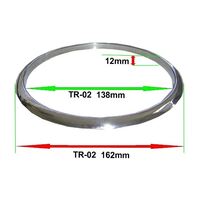
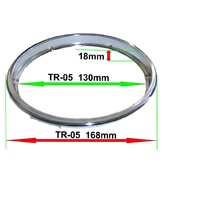
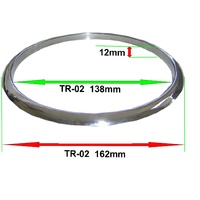
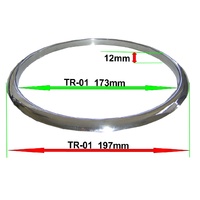
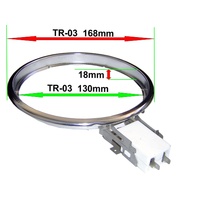
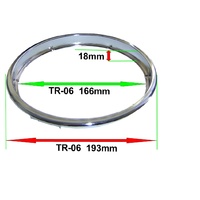
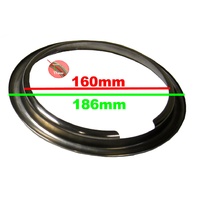
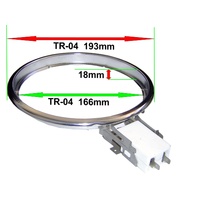
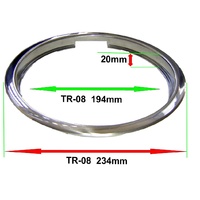
Always measure three dimensions before purchasing a replacement trim ring: outer diameter (the full width of the ring at its widest point), inner diameter (the opening through which the burner element passes), and depth (how far the ring drops below the cooktop surface to engage the drip pan). A ring with the correct outer diameter but wrong depth will not sit flush, leaving gaps that defeat its sealing function.
Use a vernier caliper or steel rule to measure the existing trim ring before ordering. Record all three dimensions: outer diameter, inner diameter, and depth (height of the ring wall). Compare these against product specifications before purchasing. Even a 5mm error in outer diameter can result in a ring that does not seat correctly.
The trim ring, drip pan, and burner element must work as a matched set. The trim ring inner diameter must clear the element's tubular body without binding. The trim ring outer lip must overlap the cooktop deck opening adequately to prevent gaps. The trim ring depth must allow the drip pan to sit at the correct height beneath it. When replacing individual components, confirm compatibility with the existing drip pan and element before ordering.
A trim ring that does not fit correctly creates more problems than it solves. A ring that is too small will not cover the deck opening, leaving a gap through which spills can enter. A ring that is too large will not seat flush, creating a raised edge that is difficult to clean. A ring that is too shallow will not engage the drip pan, causing it to rattle or drop during use. Incorrect fit also accelerates wear on both the ring and the drip pan.
Universal trim rings are designed to fit a range of cooktop models within a given size class. They are often the only practical option for older appliances where OEM parts have been discontinued. Universal options are typically stocked in higher volumes, so they are available faster and at lower cost than brand-specific parts. For technicians servicing a wide range of domestic appliances, carrying universal trim ring sets in standard sizes reduces the need for multiple part numbers.
OEM (original equipment manufacturer) trim rings are made to the exact tolerances of the appliance model they are designed for. The fit is tighter, the finish matches the original cooktop, and there is no risk of compatibility issues with the drip pan assembly. For newer appliances still within their service life, OEM parts are the preferred choice where available.
Universal parts become the default choice when OEM parts are no longer manufactured. Many Australian households still operate cooktops from the 1980s and 1990s, including models from brands that are discontinued or no longer importing to Australia. Universal trim rings allow these appliances to be repaired economically rather than replaced. When using a universal ring, verify the three key dimensions before fitting to confirm the ring will seat correctly.
Universal rings cost less but may require minor adjustment to achieve a flush fit. OEM rings cost more but install without modification. For rental property maintenance or high-volume appliance repair, universal sets offer practical cost savings. For single-appliance repairs where appearance and precision fit matter, OEM is the better investment if the part is still available.
| Factor | Universal Trim Ring | OEM Trim Ring |
|---|---|---|
| Fit precision | Good (within size class) | Exact match to model |
| Availability | High (current stock) | Varies (discontinued risk) |
| Cost | Lower | Higher |
| Finish match | Close but may differ | Exact match |
| Best use case | Older appliances, bulk repair | Current models, premium fit |
Chrome-plated steel is the standard material for electric coil cooktop trim rings. The chrome layer provides a bright, reflective finish and adequate corrosion resistance for kitchen environments. Chrome rings are durable under normal cooking conditions but can show discolouration from repeated heat cycling over many years. They are the most widely available and lowest-cost option.
Porcelain-coated steel trim rings offer better resistance to staining and surface etching from acidic food spills. The porcelain finish is harder than chrome and easier to wipe clean. Porcelain rings are more common on older American-specification cooktops and are less prevalent in Australian-specification domestic appliances. They are more brittle than chrome rings and can chip if dropped or struck.
Stainless steel trim rings are found on higher-specification cooktops and commercial-adjacent domestic models. They offer the best corrosion resistance and withstand harsh cleaning agents without surface degradation. Stainless rings maintain their appearance longer than chrome under heavy use. They cost more than chrome and are not interchangeable with chrome ring dimensions in all cases.
Chrome-plated steel suits standard domestic use where cost and availability are the priority. Porcelain-coated rings suit applications where spill resistance is important and the original appliance used porcelain components. Stainless steel suits commercial kitchens, high-use rental properties, or premium domestic cooktops. Match the replacement material to the original specification where possible, particularly when the ring will be visible alongside other cooktop components.
Start with the appliance model number, which is usually on a label inside the oven compartment or under the cooktop panel. Use this number to identify whether OEM parts are still available. If the model is discontinued, move to universal sizing. Measure the existing ring even if you have the model number, because some manufacturers changed component dimensions across production runs without updating the model designation.
Chrome suits most domestic applications. If the cooktop is in a rental property that will receive heavy use and infrequent cleaning, stainless steel is worth the extra cost because it will last longer between replacements. If the original appliance used porcelain components throughout, replacing with porcelain maintains consistency in appearance and thermal expansion characteristics.
For a single residential cooktop repair, OEM chrome rings at standard pricing represent good value. For trade technicians replacing rings across a batch of rental properties or retirement village units, universal chrome sets in both 6-inch and 8-inch sizes reduce per-unit cost and simplify stock management. Consider whether the rings need to match the appearance of a recently replaced or upgraded cooktop before defaulting to the lowest-cost option.
Replacing trim rings makes economic sense when the cooktop is otherwise functional and the appliance has remaining service life. If the heating elements, thermostat, and control switches are all in working order, new trim rings can extend the cooktop's usable life at a fraction of the cost of full replacement. When the cooktop has multiple failing components, a cost comparison against a new appliance is worthwhile. Related components are available in the hot plate elements and oven thermostat and switch ranges.
A trim ring sits directly adjacent to the heat source. Rings that warp under repeated thermal cycling create uneven surface contact, which leads to gaps and accelerated surface staining. High-quality trim rings use steel with sufficient gauge weight to resist warping. Lightweight rings may cost less but deform more readily under cooking temperatures above 300 degrees Celsius.
The plating or coating on a trim ring determines how long the ring maintains its appearance and protective function. Thin chrome plating flakes or pits faster than thicker application. Porcelain coatings that have been properly kiln-fired resist chipping better than spray-applied equivalents. When evaluating a product, check that the finish is even, the edges are cleanly formed, and there are no visible voids or thin spots in the surface treatment.
A trim ring that seats correctly provides a continuous seal around the burner opening. Press down on the ring at several points after installation: it should not flex, rock, or lift at any point around its circumference. Any movement indicates that the ring dimensions do not match the cooktop deck opening precisely, which will allow spills to bypass the ring.
Established appliance parts suppliers produce trim rings to consistent dimensional tolerances. Generic imports vary more widely in gauge weight, plating thickness, and dimensional accuracy. For trade and maintenance applications, sourcing from a supplier with a consistent product range reduces the risk of returns and rework. Wilson Elements is a recognised supplier of quality Australian appliance replacement parts.
A trim ring that shifts during cooking has either the wrong outer diameter for the deck opening or a depth that is too shallow to engage the drip pan. Check that the drip pan is correctly seated first, as a displaced drip pan will prevent the trim ring from sitting flat. If the ring is the correct part but still moves, inspect the deck opening for deformation or damage that may have occurred during a previous repair.
If cooking odours persist even after cleaning, grease may have accumulated beneath the trim ring or inside the drip pan cavity. Remove the trim ring, drip pan, and element, and clean all surfaces before reassembling. If the trim ring has corroded or warped to the point that it no longer seals evenly, replace it. Ongoing odours from a sealed cooktop often indicate that grease has reached the internal wiring cavity, which requires professional inspection.
Surface rust on chrome rings begins at areas where the plating has failed, typically at the edges or at stress points from thermal cycling. Pitting on the surface indicates accelerated corrosion, usually from prolonged exposure to acidic food residue or harsh cleaning agents. A ring with visible rust or pitting should be replaced: the compromised coating will continue to deteriorate and the rust will transfer to adjacent surfaces during cooking.
If a replacement ring does not seat correctly, verify the three measurements against the product specifications before assuming the part is faulty. Confirm the ring is for the correct cooktop type (electric vs gas) and burner size. Check that the drip pan is the original component and has not itself been replaced with an incompatible part. If dimensions match but fit is still poor, the deck opening may have distorted from heat damage or a previous mechanical impact.
Replace a trim ring when any of the following are present: visible rust or pitting on the ring surface; warping that prevents the ring from sitting flat against the deck; cracking or chipping in a porcelain finish; discolouration that has penetrated through the surface coating; or a ring that no longer holds its position during use. Cosmetic discolouration from heat is normal over time, but structural deterioration is a replacement trigger.
A trim ring that is no longer sealing correctly creates two practical problems. Hygienically, food debris and cooking oils enter the cooktop cavity where they accumulate and become difficult to remove. From a safety perspective, grease buildup around electric burner contacts and wiring increases fire risk. Replace trim rings before deterioration reaches the point where internal components are affected.
Trim ring replacement frequency depends on use intensity and cleaning practices. In a domestic household with regular cooking and weekly cleaning, trim rings typically last five to ten years before corrosion or warping justifies replacement. In rental properties or commercial environments with higher use and less frequent deep cleaning, replacement every two to three years is reasonable. Inspect rings annually as part of routine appliance maintenance.
Trim ring replacement is cost-effective when the cooktop is otherwise serviceable. If the heating elements are also failing, consider replacing all cooktop consumables at the same time, including hot plate elements and drip pans. If the cooktop is more than 20 years old and multiple components are failing simultaneously, the cumulative repair cost may approach the cost of a new unit, at which point full replacement is worth considering.
Before replacing a stove trim ring, isolate power to the cooktop at the circuit breaker. For electric coil cooktops, confirm isolation with a non-contact voltage tester before touching any internal components. For gas cooktops, close the gas supply valve at the appliance. Trim ring replacement on electric coil cooktops is a task that does not require opening the internal wiring cavity, but working near live components creates unnecessary risk. Always isolate first.
Safety note: Gas appliance repairs beyond trim ring and surface component replacement must be performed by a licensed gas fitter. If removing a trim ring requires accessing gas connections or the burner assembly beyond the surface hob surrounds, engage a qualified tradesperson. For appliance wiring faults identified during a trim ring inspection, contact a licensed electrician.
Lift the heating element by its connector end and swing it up and out of the burner receptacle. Remove the drip pan from the deck opening. Lift the old trim ring straight up off the deck. Clean the deck surface around the opening before fitting the new ring. Place the new trim ring into position and confirm it seats flush on all sides. Replace the drip pan, then re-seat the heating element into the burner receptacle until the terminal pins engage fully. Restore power and test the element before reassembling the full cooktop.
Gas cooktop hob surrounds typically lift clear of the burner head assembly without tools. Remove the burner cap first, then lift the burner head, then remove the surround. Clean the cooktop surface before fitting the replacement surround. Confirm the surround sits flat around the burner body and does not contact the flame ports. Replace the burner head and cap before restoring gas supply. Test the burner at low flame and check for any unusual flame distribution that might indicate a misaligned surround.
After fitting new trim rings, press down firmly around the perimeter to confirm the ring is seated evenly. For electric cooktops, restore power and run each element at full power for two minutes. Inspect the ring for any movement, discolouration from contact with a live element surface, or gaps at the cooktop deck. For gas cooktops, use a leak detection solution around the burner assembly to confirm gas connections remain sealed after the work.
Individual chrome stove trim rings for electric coil cooktops typically range from approximately $8 to $25 per ring, depending on size and brand. Full four-ring replacement sets cost between $30 and $80. Stainless steel versions sit at the upper end of the range. OEM rings for specific appliance models may be priced higher than universal equivalents due to lower production volumes and supply chain complexity.
Budget chrome rings are adequate for low-to-medium use domestic applications. Premium chrome or stainless steel rings are worth the additional cost in high-use environments where replacement frequency would otherwise make budget options uneconomical over two to three years. Porcelain rings are mid-range in cost but offer specific advantages in spill resistance that may justify the price for certain users.
When replacing all trim rings on a four-burner cooktop, purchasing as a set is more economical than individual rings. Sets are available in matched 6-inch and 8-inch combinations to suit standard four-burner layouts (two small, two large). For technicians managing multiple properties, buying in packs of four sets or more reduces per-unit cost further. Factor in drip pan replacement at the same time to avoid a second call-out.
Replacing a single worn ring while leaving three older rings in place will result in an uneven appearance and a second replacement job within a short period. When one ring is showing significant wear, the others are typically at a similar point in their service life. Replacing the full set at once is the practical approach for any appliance that will remain in service for several more years.
Wipe trim rings after each cooking session with a damp cloth while the cooktop has cooled. Dried food residue is significantly harder to remove than fresh spills. Weekly, remove the trim rings and drip pans and wash both in warm soapy water. Avoid soaking chrome rings for extended periods, as water can penetrate through any minor plating defects and promote corrosion from below the surface. Dry fully before refitting.
The main corrosion triggers for chrome trim rings are acidic food spills (tomato, citrus, vinegar), prolonged moisture contact, and abrasive cleaning. Rinse the ring promptly after any acidic spill. Do not leave wet rings sitting in the sink or against metal surfaces overnight. Apply a thin film of non-flammable stainless steel conditioner to chrome rings twice a year to maintain the surface. This is particularly useful in coastal environments where salt air accelerates corrosion.
Steel wool pads, abrasive scouring powders, and metal scrapers damage chrome and porcelain finishes. Once the surface coating is scratched through, corrosion accelerates rapidly at the exposed steel substrate. Use nylon scrubbing pads or soft cloths for stubborn residue. For baked-on grease, soak the ring in hot water with a small amount of dish detergent for 15 to 20 minutes before scrubbing.
If a trim ring retains a dull, pitted, or stained appearance after thorough cleaning, the surface coating has reached end of life. Continued use of a ring with failed coating does not affect cooktop function, but the damaged surface will accumulate residue faster and becomes progressively harder to clean. At this point, replacement is more practical than further cleaning effort.
Stove trim ring replacement is one of the most common domestic appliance repair tasks. For electricians and appliance technicians servicing residential customers, carrying a small stock of standard 6-inch and 8-inch chrome rings eliminates the need for a second visit when a worn ring is identified during a service call. Pairing a trim ring replacement with element or thermostat work at the same visit reduces labour cost for the customer and increases job efficiency for the technician. Related parts are available in the fan forced oven element and grill element ranges.
Property managers responsible for multiple tenancies benefit from keeping trim ring sets in stock as a maintenance consumable. Worn or damaged trim rings are a common finding during end-of-tenancy inspections. Replacing them promptly before re-letting improves the condition of the property, reduces odour complaints, and avoids the risk of tenants using a cooktop with gaps around burners that accumulate grease. The low per-unit cost makes this a practical item to keep on hand. The broader oven elements and appliance parts range covers other common rental property repair items.
Commercial kitchens that use domestic-specification cooktops (common in small cafes and residential-style accommodation) apply trim rings in the same way as residential installations. In these settings, replacement frequency is higher due to use intensity. Stainless steel rings are worth specifying for commercial-adjacent applications. Scheduled quarterly inspection of trim rings as part of a broader kitchen equipment maintenance program reduces unplanned downtime.
Grease accumulation beneath and around cooktop burners is a recognised fire risk in domestic kitchens. Trim rings in poor condition that do not seal the deck opening properly allow cooking oils and food debris to enter the cooktop internal cavity. Over time, this debris builds up around wiring, elements, and receptacle contacts. A trim ring replacement program as part of routine appliance maintenance reduces this risk at minimal cost.
For electric cooktops, trim ring replacement does not involve working on energised components, but the cooktop must be isolated before any work. Confirm isolation with a voltage tester before touching the burner receptacle or drip pan assembly. For gas cooktops, the gas supply must be closed at the appliance service valve before removing any hob surround components. Do not operate a gas burner with a surround removed or incorrectly fitted, as this can affect flame distribution and create a hazard. Connections to both electric and gas cooktops are addressed under cooker switches and associated isolation equipment.
A trim ring that does not fit correctly creates ongoing problems beyond cosmetic imperfection. On electric cooktops, a ring that contacts the heating element can create a localised hot spot that accelerates element wear. On gas cooktops, a surround that restricts airflow around the burner can affect combustion quality and, in extreme cases, increase carbon monoxide production. Correct fitment is a functional requirement, not only an aesthetic one.
Domestic cooktops sold in Australia are subject to mandatory safety standards under the Electrical Equipment Safety System (EESS) and relevant AS/NZS product standards. Trim rings are consumable components and are not subject to individual certification, but they must not compromise the safety characteristics of the certified appliance. Using trim rings that are significantly undersized or made from materials with inadequate heat resistance may void the appliance's compliance documentation. Source replacement rings from reputable suppliers and confirm they are appropriate for the cooktop type.
Dedicated appliance spare parts suppliers are the primary source for stove trim rings in Australia. They stock both OEM and universal options across a range of sizes and finishes, and they can cross-reference model numbers to identify compatible parts. For older or discontinued appliance models, specialist parts suppliers are more likely to have stock than general hardware retailers.
Electrical wholesalers with appliance parts ranges offer trim rings alongside related components such as elements, thermostats, and fan motors. Purchasing from an electrical wholesaler that carries a broad appliance parts range means you can address multiple repair items in a single order. Sparky Direct stocks stove trim rings for domestic electric cooktops, with Australia-wide delivery and trade pricing available. Browse the full stove trim rings range or the complete appliance parts catalogue. Related parts including oven fan motors are also available.
Before ordering, confirm the cooktop type (electric coil, gas, ceramic or induction), the burner size (measure the existing ring outer diameter, inner diameter, and depth), and whether OEM or universal parts are needed. Check that the supplier lists the dimensions in the product specifications rather than only a model number range. For trade purchases, check whether the supplier offers account pricing or volume discounts on multi-ring orders.
Watch Fan Forced Oven Element 2000W EUROMAID HIGHLANDER | FE-33 video
Watch Fan Forced Oven Element 2100W | FE-35 video
Watch Fan Forced Oven Element 2200W | FE-05 / 10318 / GA26A000 video

Just so you know this works perfectly as a replacement for bottom oven element in Malleys Viceroy Wall Oven Model VR96ARB. It's about 30 years old and in Masterton home. I found this exact model hard to find much on other than I already had a Wilson one in it. The ovens they used back then and still good. The last one of these branded elements lasted 12 years or so whereas a replacement genuine one only went for 12 months! It is different shape - hour glass / z shape compared to original square one. I purchased 2 so have a spare! All good.
We have a trusty old Simpson conventional double oven for over 3 decades now, loving everything about it. Its heating element died recently and we were concerned that we had to get a whole new unit installed thinking no replacement parts would be available for such an old unit...until we came across this replacement oven element that was a direct fit without any modification at all!! The crispy pork roasts roast again, rich cheese cakes come out perfectly, day in day out, just as they always have been, no changes to my old recipe. yey.
The replacement element was easy to install, great quality for a fair price. You can definitely tell the difference in heating time compared to the old unit as the new element heats up within seconds. Very happy with the purchase.
Quality products in stock • Fast Australia-wide delivery • Competitive trade pricing
Browse Stove Trim Rings → Get Expert Advice →Yes, most can be wiped clean or washed once removed and cooled.
Sparky Direct supplies stove trim rings Australia-wide, offering reliable replacement parts with convenient delivery.
They are securely packaged and delivered via standard courier services.
Unused trim rings are generally eligible for return according to the seller’s returns policy.
Warranty coverage varies by manufacturer and usually covers defects in materials or workmanship.
Yes, stove trim rings are typically sold as individual replacement parts.
Yes, they should be allowed to cool before removal or cleaning.
Incorrect sizing can result in poor fit or instability of the heating element.
Yes, sizes vary to match different element diameters.
Yes, they are designed for regular household cooking.
Cooking without them may expose the cooktop surface to spills and uneven element support.
Yes, clean and intact trim rings help keep the cooktop looking neat and well maintained.
Yes, exposure to heat, moisture, and spills can cause wear or corrosion over time.
Stove trim rings are metal rings fitted around stove or cooktop elements to support cookware and protect the surface from spills.
Signs include rust, bending, discolouration, or poor fit around the element.
They help keep elements stable, protect the cooktop surface, and catch minor spills.
They are generally simple to fit, but appliance work should be handled carefully to avoid damage.
They are suitable for coil-style cooktops but not typically used on ceramic or induction surfaces.
Replacement trim rings are available for many common stove and cooktop models.
They do not affect heating performance but help support elements and keep the cooktop surface tidy.
Yes, stove trim rings are designed to withstand high cooking temperatures.
They are typically made from stainless steel, chrome-plated steel, or enamel-coated metal.
Yes, trim rings are often specific to certain stove or cooktop models and element sizes.
Stove trim rings are appliance accessories designed to suit appliances that comply with relevant AS/NZS standards.
They are commonly used on electric coil cooktops and some freestanding stoves.