
Search Results:
Search Results:
Search Results:
Search Results:
A pop up power outlet is a retractable electrical socket unit that mounts into a horizontal surface and sits flush or near flush when closed. It rises with a push or spring action when power is needed, and the user pushes the unit back down once finished so the surface returns to a clean line.
These units are also searched as pop up power points, pop up sockets, retractable GPOs, benchtop power outlets, and hidden power outlets. The main buyer benefit is point-of-use power without permanent visual clutter. That matters most in modern kitchens, home offices, boardrooms, and commercial fitouts where the surface design is part of the brief.
The product is a self-contained module built around a metal or polymer housing. Inside the housing sits the power module, which presents one or more 10A general purpose outlets to the user. Many models add USB-A, USB-C, USB-C Power Delivery, wireless charging, data, HDMI, or RJ45 ports, so the buyer can select the port mix that suits the application.
The retractable mechanism is the defining feature of these units. When closed, only the top cap is visible at the surface, and when open, the sockets sit above the benchtop or desk at a comfortable plug-in height. Final connection to fixed wiring must be carried out by a licensed electrician under Australian law.
The mechanism is straightforward: a cylindrical or rectangular housing drops through a cutout in the surface and the base is fixed to the underside or anchored to a sub-frame. Pushing the cap releases the spring or latch. The power module then rises to its working height, and a second push retracts the unit when the user is done.
Power is delivered through standard Australian 230/240V circuits, with the fixed wiring connecting to a junction box or termination point on the underside of the unit. Final connection and testing must be carried out by a licensed electrician. Manufacturer templates and cutout dimensions must also be checked before any benchtop is drilled or routed.
Wall-mounted GPOs are the default for general room power because they are cheap, easy to install, and well understood by every trade on a build. Pop-up outlets serve a different need. They put power at the surface where the appliance is used: the island, the desk, the meeting table, or the reception counter.
Standard wall GPOs are the better choice for utility areas, garages, laundries, and rooms where the cutout cost and cabinet clearance cannot be justified for a retractable unit. Pop-up outlets are chosen where appearance, accessibility, and clean cable runs are part of the original design brief.
Pop-up outlets are grouped by mounting surface, port mix, and environment. The right type for a project depends on where the unit will live and what it has to drive. The five categories below cover almost every common installation in Australian kitchens, offices, and commercial fitouts.
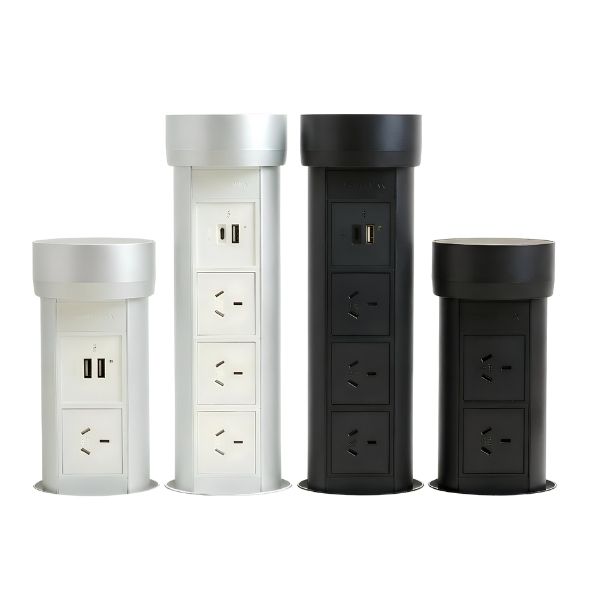
These are the most common pop-up units sold in Australia, and they suit stone, timber, laminate, and engineered benchtops without much fuss. Typical configurations include 2 GPO, 3 GPO, and GPO plus USB combinations, with brands such as Point Pod and Clipsal dominating this segment.
Planning factors matter on every kitchen install. Benchtop thickness, under-bench cavity depth, drawer clearance, splash distance from sinks, and cabinetry interference all decide whether a given unit will fit. Retrofits need more care than new builds because the cutout has to clear existing services.
Office models suit home offices, boardrooms, meeting tables, reception counters, schools, libraries, and hot desks. They typically combine cable management features with USB-C Power Delivery and integrated data ports. Procurement teams usually order one model across the whole project for consistency and easier maintenance over the life of the fitout.
USB-C PD is increasingly the selection driver for office buyers. Laptops, tablets, and newer phones all charge over USB-C, which reduces the need for separate chargers at every workstation.
Floor pop-up outlets serve foyers, showrooms, exhibition spaces, and open-plan offices where furniture floats away from walls and needs power at the table. These are usually specified during design and rough-in rather than added late. The unit must handle foot traffic, occasional cleaning fluid contact, and load rating where carts or chairs pass over it.
IP protection is a separate consideration for floor boxes in wet zones or external transitions. The rating must be matched to the actual exposure of the installation location.
Outdoor and alfresco pop-up outlets need a suitable IP rating and a careful installation assessment before the unit is purchased or fitted. Applications include outdoor kitchens, covered patios, garden benches, hospitality venues, and BBQ areas. Product rating, placement, RCD protection, and AS/NZS 3000 requirements must be confirmed by the installing electrician.
Pop-up outlets without a documented outdoor IP rating are not suitable for direct weather exposure. For outdoor wall installations where a pop-up unit is not appropriate, Sparky Direct also stocks dedicated weatherproof GPO ranges built for the job.
Modern units combine 10A GPOs with USB-A, USB-C, and USB-C PD ports, and some add a wireless charging pad to the cap for a single touch-and-charge experience. The choice depends on the device mix at the install location, since a busy kitchen will pull different ports than a quiet study desk.
USB-C is the preferred port for newer phones, tablets, and many laptops at the right wattage. Standard GPO-only units still suit kitchens where the main load is small appliances. For broader USB charging needs around the home, see the dedicated USB powerpoint range.
Spec sheets matter more than marketing on this product type, and the four areas below decide whether a unit will fit, perform, and stay compliant in the install location. Each one should be confirmed against the manufacturer datasheet rather than the box photo or the website thumbnail.
Match the outlet count to the real workload at the install point, because a kitchen island with a kettle, blender, and a phone needs different ports than a boardroom hot desk. Single GPO units suit tight desk cutouts, double GPO units cover most kitchen islands, and triple GPO units with USB suit busy benchtops and shared workspaces.
Buying more sockets than will ever be used wastes cutout space and budget. Buying too few creates the same power board problem that the unit was meant to remove from the surface in the first place.
Check the datasheet rather than the marketing label. Look for child safety shutters on every GPO, a clear overload or thermal cut-out spec, and a strain relief grip on the cable entry. Compliance markings should include RCM and an SAA-style certification number where applicable, and anything missing these markings should be treated with caution by the specifying electrician.
IP ratings use a two-digit code where the first digit covers solids and the second covers water, so a higher second digit means better water resistance. Dry office desks need no IP rating beyond the indoor standard, while kitchen islands near sinks call for sealed caps and a sensible distance from the splash zone.
Outdoor or alfresco installs need a documented outdoor IP rating and a licensed electrician's sign-off on the location. Do not assume an indoor kitchen unit will survive permanent outdoor mounting, since cap seals and internal components are rated for different conditions.
Stainless steel handles kitchen humidity, cleaning chemicals, and frequent wipe-downs without losing its finish, which is why it dominates the premium kitchen segment. Aluminium and zinc alloy suit offices and hospitality where appearance matters and humidity is lower, while polycarbonate and ABS housings cost less and suit lower-traffic applications. Check the mechanism's cycle rating if the unit will be opened many times per day in a commercial setting.
Cutout dimensions are non-negotiable on this product type, so confirm the diameter or rectangular cutout before ordering. Confirm the cavity depth below the bench, drawer and shelf clearance under the unit, and the cable entry direction against the available conduit route. Manufacturer templates exist for exactly this reason and should be on site before any cutting begins.
Retrofits should always start with a physical measurement rather than a published spec, because existing benchtops, splashbacks, and cabinets rarely match the new build assumptions in product datasheets.
The same product type serves several distinct markets, and each one has its own selection priorities driven by the surface, the user, and the appliance mix.
This is the strongest single market for pop up outlets in Australia, with islands and benchtops accounting for most retail and renovation sales. The unit puts power at the appliance, removes the need for wall sockets in awkward positions, and keeps the island visually clean. Stainless steel finishes match most stone and engineered benchtops.
Safety planning matters near sinks and cooktops because moisture and current are a poor combination. RCD protection on the circuit is standard practice for kitchen socket outlets under AS/NZS 3000. The minimum distance from the sink should be confirmed against state requirements and the manufacturer's installation guide. A licensed electrician must complete the final connection.
A pop up outlet in a desk replaces a power board snaking under the chair. Monitors, laptops, phones, and tablets all run from one tidy point on the desk surface. USB-C PD is the priority feature for modern work-from-home setups because it covers everything from earbuds to laptops on a single cable.
Commercial fitouts buy in volume, and model consistency across the project simplifies installation, future replacement, and spares management for the facilities team. Boardroom tables typically combine a 10A GPO with USB-C PD and data, while hot desks favour a smaller footprint with USB-C only or single GPO plus USB.
Durability matters in commercial use because cheap mechanisms fail after a few thousand cycles and end up looking like a maintenance line item. Specify a unit with a published cycle rating and serviceable internals so the fitout still works at year five.
Hotel rooms, serviced apartments, cafes, point-of-sale areas, and display benches all benefit from concealed power that disappears when the surface is photographed. Guests get the convenience of a charging point, and the room or counter keeps a clean appearance when the unit is closed. Cleaning and tamper resistance become the main selection drivers in these high-turnover settings.
Outdoor kitchens and alfresco areas can use pop up outlets only when the product carries a suitable outdoor IP rating and the placement is correct for the exposure. Placement, RCD protection, and compliance with the outdoor sections of AS/NZS 3000 must be confirmed before purchase. A licensed electrician should assess the site if the buyer is unsure.
Three comparisons cover most buyer decisions on this product type, and each one addresses a different trade-off between cost, appearance, and accessibility.
Pop up outlets rise vertically from a closed cap, while flip up outlets hinge or tilt open from a flush plate set into the surface. Pop up units typically need more depth below the surface but a smaller surface footprint, while flip up units sit shallower in the cavity but take more surface area when open. Either format works for kitchens and desks, so confirm the access angle and cable clearance before specifying one over the other.
A power board is a temporary accessory, while a pop up outlet is fixed electrical infrastructure that becomes part of the building. Power boards trail leads across the floor, create trip hazards, and contribute to workplace safety incidents. They are also a known cause of overload events when daisy-chained beyond their rating.
For any space where power is needed at the same point every day, a hardwired pop up outlet is the better long-term solution. Commercial fitouts in particular should plan for hardwired power rather than relying on boards that drift around the room over time.
Standard wall GPOs cost less, install faster, and need no cutout in the benchtop, which makes them the default choice for the bulk of fixed power on any project. Pop up outlets cost more, take longer to install, and require accurate measurement, so the trade is appearance and accessibility against price and installation simplicity.
| Option | Best For | Trade-off |
|---|---|---|
| Pop Up Outlet | Islands, desks, premium fitouts | Higher cost, cutout planning |
| Flip Up Outlet | Shallow cavities, retro fits | Larger open footprint |
| Wall GPO | General room power, utility areas | Visible, fixed location |
| Power Board | Temporary or short-term use only | Trip hazard, not infrastructure |
Pop up outlets are fixed electrical infrastructure, which means installation, replacement, and final connection must be carried out by a licensed electrician under Australian electrical safety laws. The notes below cover the planning side without crossing into wiring instructions.
All fixed wiring work must be performed by a licensed electrician operating under the relevant state or territory safety act. Compliance with AS/NZS 3000 Wiring Rules is mandatory, and product selection must align with the circuit rating, RCD protection, install location, and manufacturer instructions provided with the unit.
Important: No part of this page is a wiring guide. Pop up outlets must be installed by a licensed electrician. DIY connection of fixed wiring is unlawful in Australia.
Cutout size, depth, and mounting method must be confirmed before ordering, and the electrician usually coordinates with the cabinetmaker, stone mason, or joiner to lock those numbers in. The manufacturer template should be on site before any cutting starts, and stone benchtops in particular do not forgive an oversized or off-centre cutout.
Connected appliances must not exceed the outlet or circuit rating, which is the most common cause of nuisance trips on busy kitchen islands. Kitchen, bathroom, and outdoor socket circuits require RCD protection under current Australian wiring requirements. Buyers should consider the expected load from kettles, blenders, laptops, tools, or commercial devices before specifying the circuit.
Practical guidance keeps these units reliable for years of daily service. Wipe spills away before they enter the unit, do not force the mechanism if it sticks, and inspect for damage after any impact to the surface. Stop using the outlet if it feels hot, loose, or sparks on plug-in. Damaged units should be assessed or replaced by a licensed electrician rather than patched in place. Commercial sites should add pop up outlets to the periodic electrical inspection schedule.
The selection process changes slightly by buyer type, but the core questions stay the same across kitchens, offices, and commercial fitouts.
Confirm the application, surface type, cutout size, cavity depth, IP rating, GPO count, USB and data requirements, current rating, certification markings, and stock availability before committing to a model. Multi-room or commercial projects also need a stock check across the whole order before site delivery so the install crew is not waiting on back-ordered units mid-job.
Match the cap finish to the benchtop hardware and appliance handles so the unit reads as a deliberate design choice. Confirm the position relative to sinks, cooktops, splash zones, drawers, and seating, and choose USB-C or wireless charging where phone and tablet charging is a daily use. Order a spare cap or unit if the project is custom or the supplier stock is thin.
Prioritise durability, cable management, and serviceability over price on commercial work, since the cost of a failed unit usually exceeds the upfront saving on a cheaper model. Specify USB-C PD where laptops will charge from the outlet, and pick one model across the whole fitout to simplify installation and replacement. Plan bulk procurement around the project schedule rather than the supplier promotion calendar.
Price varies by port count, housing material, IP rating, finish, certification depth, and mechanism quality, with the spread from entry-level to premium running into hundreds of dollars per unit. Budget units suit dry desks and low-cycle locations, while premium units earn their cost in kitchens, commercial fitouts, and outdoor-rated applications. Buy from a reputable Australian electrical supplier that publishes specifications, holds warranty terms in writing, and dispatches reliably.
Pop up power outlets are a specialty product, and local trade counters often carry one or two units in stock at any given time. Online electrical wholesalers carry the full range from Point Pod, Clipsal, and other specifiers, which makes them the practical choice for trade and project buyers.
Electrical wholesalers and online electrical suppliers carry the deepest range for trade and project buyers in Australia. Datasheets, compliance information, warranty terms, and dispatch timeframes should all be visible before checkout. Sparky Direct ships to electricians, builders, cabinetmakers, renovators, and commercial fitout teams across the country.
Multi-unit orders for offices, apartment fitouts, kitchens, hotels, and education spaces benefit from a single point of contact who can track the full job. Standardising models and finishes across a project simplifies installation, future replacement, and stock holding, and stock availability should be confirmed before committing to a project programme.
Fast dispatch, Australia-wide delivery, transparent specifications, and accessible support all weigh into the supplier decision for trade and project buyers. Online ordering is useful where local trade counters carry limited specialty stock in the pop up range. For project advice or pricing, the Sparky Direct team can confirm stock and lead times across the full power points range, including single, double, quad, 10 amp, smart, cover plate, and ethernet options. Other major brands stocked include Hager, Legrand, HPM, and PDL.
Club Clipsal is Australia's largest electrician community offering trade rewards, business support, and exclusive benefits. When you nominate Sparky Direct as your preferred wholesaler, we automatically apply your Clipsal spend points to your Club Clipsal account daily.
Entry-level offering coaching, mentoring, and training discounts
Unlock exclusive industry tools and networking events
Access Toyota fleet offers and business software discounts
Maximum benefits, including VIP experiences and rewards
1. Sign Up: Create your Club Clipsal account at clipsal.com/club-clipsal or via the iCat mobile app
2. Nominate Sparky Direct: Select Sparky Direct from the wholesaler dropdown menu in your profile
3. Add Email: Enter your Sparky Direct account email address in the membership number field
4. Start Earning: Every dollar spent on Clipsal products earns points automatically
Redeem points from the rewards store, including gift cards, tools, and experiences. Access business summits, product training, and industry networking events. Receive early access to new product launches and special promotions. Connect with fellow electricians via the Club Clipsal community app.
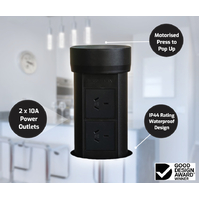
Watch Clipsal SBIP2P-WE | Pop-Up Power Outlet WHITE video
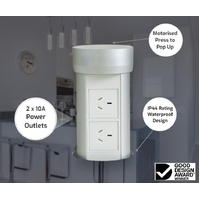
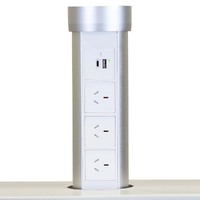
Watch Point Pod PPC01 | Pop-Up Power Outlet 2 Power Point | Silver/White video
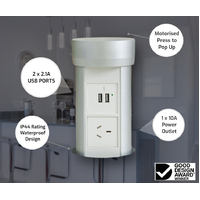
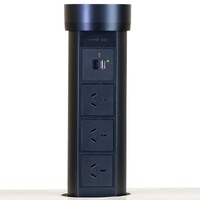
Watch Point Pod PPM01 | Pop-Up Power Outlet 3 Power Point | 2x 2.1Amp USB A & USB C video

I absolutely love my pop up outlet. We have a small amount of tiles in our laundry room with a lovely pattern that I didn’t want disturbed. When I discovered that Sparky direct had these outlets, I was absolutely thrilled. They install very easily, they have a seal around the inside that prevents any water leakage. Where we live in Queensland, they have to be installed at a minimum 500 mm from a sink, which worked out perfectly. I use this outlet for my hidden ironing board. That’s underneath my counter in my laundry room. I would definitely buy another one if I were to do another pop-up outlet. Sparkys was excellent with their service and, as usual, very responsive and quick in their delivery of the product.
Product is as described and will be ideal for our new kitchen renovation. Small and compact, unlike the alternative tall pop-up bench power outlets that require extra depth under the bench, restricting placement options.
This point pod looks great in my island bench and has clear me in very handy when It am preparing food. Also handy for recharging phone in kitchen.
Quality products in stock • Fast Australia-wide delivery • Competitive trade pricing
Browse Pop Up Power Outlets → Get Expert Advice →Use them on kitchen islands, breakfast bars, home offices, or media units—anywhere you drag cords now. That’s where a pop-up power outlet makes life easier.
No worries! Reach out to the amazing Australian support team at Sparky Direct through their contact page: www.sparkydirect.com.au/contact. They’re always happy to help.
Sparky Direct gives you clear specs, GST-inclusive and excluding prices, local stock, and warranty support. Not sure what you need? Your electrician can help match the product to your plans and ensure it meets all requirements.
Some models plug in and fit into desk grommet holes, but still need a drilled hole. Renters should ask landlords first or choose clamp-on power boards instead.
Just light cleaning. Wipe with a dry or damp cloth—no harsh cleaners. Don’t force the mechanism; if it sticks, call an electrician or the supplier.
Manual models make a quiet click. Motorised ones hum softly for a second or two. It’s barely noticeable in most kitchens, offices or boardrooms.
Not really. When closed, they sit almost flush. When open, keep cords tidy and push them down when done to clear space.
IP44-rated models can handle light splashes, but always clean spills quickly. Never soak or hose them, and ensure your electrician fits RCD protection as required.
Absolutely. Most handle 10 A appliances, such as kettles, toasters, laptops, and chargers. Just don’t overload them and keep cords away from heat.
Yes, if installed properly. Choose models with the right IP rating, keep the lid closed when not in use, and always get a licensed electrician to handle wiring and RCD protection.
Pop-up power outlets stay hidden inside a bench or desk and rise up when pressed. They’re perfect for kitchen islands, office desks, meeting tables, and workbenches—giving you power where you need it without surface clutter.
Look for the RCM (Regulatory Compliance Mark) and standards like AS/NZS 3112 and AS/NZS 3100 on the product or documentation. This proves the outlet is approved for use in Australia and New Zealand.
Most include a 1–2-year manufacturer's warranty on the unit and the lift mechanism. Warranty terms vary, so check each Sparky Direct listing for exact details and conditions for residential or commercial use.
Definitely. Many come with USB ports, data jacks, HDMI pass-through, and even Qi wireless charging in the lid. Choose one that suits how you use your space.
Some plug into a wall socket with a 3-pin plug. Others need to be hard-wired, which must be done by a licensed electrician under AS/NZS 3000. No DIY wiring.
Most need a round cut-out between 95–120 mm and fit benches 10–50 mm thick. Always follow the brand’s drilling template and datasheet—don’t guess.
Pop-up power outlets come in different setups. Most have 1 to 3 standard sockets. Some models also include USB-A, USB-C, or both for charging your devices. Browse the entire range on the Sparky Direct website.
Yes, many are splash-resistant with ratings like IP44 or IP54. That makes them safe for kitchen benches—if installed correctly. Match the IP rating to your space, and always use a licensed electrician to comply with AS/NZS 3000.
Most support 10 A at 230 V—standard for Aussie homes under AS/NZS 3112. Some heavy-duty models go up to 15 A or more, so check the label or datasheet before buying.
Yes. Sparky Direct lists pop-up power outlets made for Australia’s 230 V, 50 Hz supply. Most use AS/NZS 3112 sockets. Still, check each product for certifications like AS/NZS 3112, AS/NZS 3100, and the RCM mark in the images or datasheet.