
Search Results:
Search Results:
Search Results:
Search Results:
Arc flash incidents release temperatures that can exceed 19,000 degrees Celsius at the point of fault. The thermal pulse, pressure wave, and shrapnel can cause severe burns, hearing loss, and fatal injuries within milliseconds. Standard work clothing offers no protection. Arc flash kits use specialised flame resistant fabrics and layered components to absorb and dissipate this energy.
An arc flash occurs when current jumps across an air gap between conductors or between a conductor and ground. The resulting plasma releases intense heat and a blast pressure that can rupture eardrums and project molten metal. Common causes include accidental tool contact, equipment failure, dust ingress, and insulation breakdown.
Arc-rated garments are tested to specific calorie-per-square-centimetre values. The fabric chars rather than ignites, and creates an insulating barrier that prevents second-degree burns to the skin underneath. Face shields and hoods deflect debris and reduce direct radiant heat exposure to the face and neck.
Standard electrical work gloves and high-vis clothing protect against abrasion, weather, and visibility hazards. Arc flash PPE protects specifically against thermal incident energy. The two categories often overlap on a job site but serve different risk profiles.
Arc flash kits are sold through electrical wholesalers, dedicated safety suppliers, and specialist PPE distributors. Trade-focused electrical suppliers tend to stock kits suited to switchboard and contractor work, while industrial safety companies often carry higher HRC suits for utility and mining applications.
Electrical wholesalers stock kits alongside related items like lockout tagout equipment and voltage testers. This makes it simple to assemble a complete safe-work setup in one order. Pure safety suppliers may offer broader fabric options but less integration with electrical hardware.
A reliable supplier provides clear arc rating data, manufacturer certification documents, garment sizing charts, and current stock for replacement components. Look for kits sold individually or as parts, so a single damaged item does not force replacement of the whole set.
Compliance paperwork matters. Australian sites increasingly request data sheets, test certificates, and date-of-manufacture labelling at induction. Fast despatch matters for contractors working to tight schedules, especially when replacing damaged or expired components mid-project.
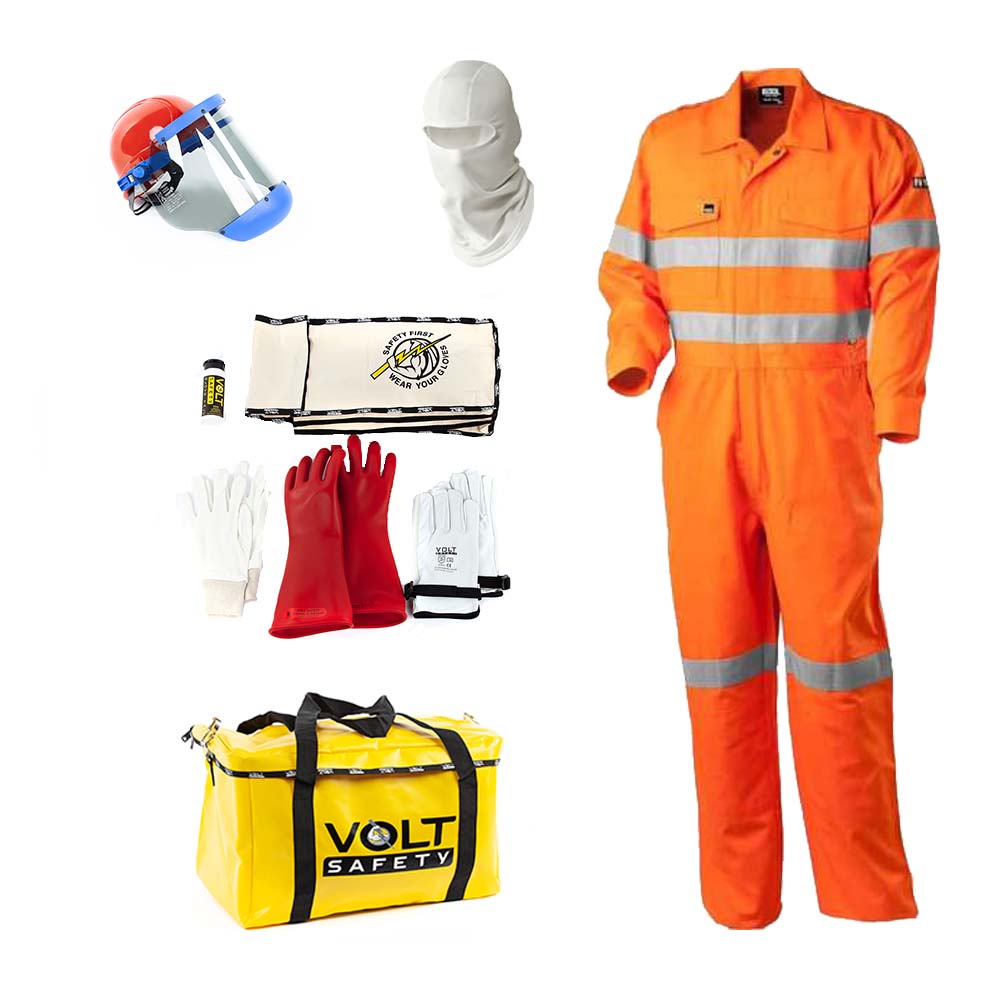
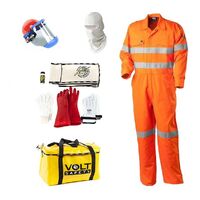
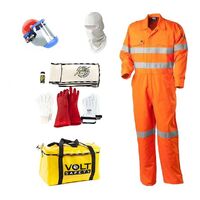
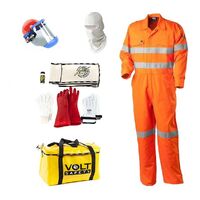
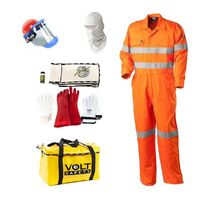
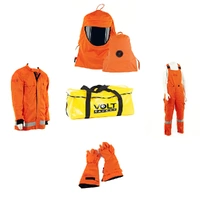
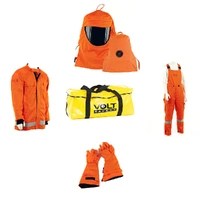
A complete arc flash kit covers the head, face, torso, arms, hands, and legs. The components work together to provide layered protection. Missing or substituting items reduces the calorie rating of the entire system.
Coveralls cover the body in a single garment. Two-piece jacket-and-trouser suits suit higher HRC categories. Both options use inherently flame resistant fibres or FR-treated cotton, and they must be labelled with their calorie rating.
Face shields use a curved, tinted polycarbonate visor mounted to a hard hat or arc-rated cap. The visor must carry an arc rating that matches or exceeds the rest of the kit, so the weakest component does not define the system rating.
A balaclava sits between the helmet and the visor, protecting the neck, ears, and lower face. Full hoods replace the balaclava and shield in HRC 4 systems and provide 360-degree coverage with built-in arc-rated viewing windows.
Insulated rubber gloves are the primary shock barrier. Leather over-gloves protect the rubber from cuts and abrasion. Australian rules require the rubber gloves to be retested at regular intervals, and a fail at retest takes the kit out of service until replacement.
Storage protects fabric and rubber from UV, ozone, and contamination. A clean, dry kit bag in the vehicle keeps components together and reduces the chance of using degraded gear at the next site.
Arc flash kits combine physical and material properties to absorb thermal energy before it reaches the wearer. The fabric, the layering, and the fit all contribute to the protection level.
Inherently FR fibres include aramids like Nomex and Kevlar. Treated FR cotton uses a chemical finish to resist ignition. Both produce a self-extinguishing fabric that chars rather than continues to burn after the heat source is removed.
Adding layers raises the calorie rating of the system because each layer absorbs energy and traps an insulating air pocket. A 12 cal jacket worn over an 8 cal shirt can produce a system rating well above either single garment alone.
The arc rating of the kit reflects the incident energy at which there is a 50 percent probability of a second-degree burn. Selecting a kit rated above the calculated incident energy at the work point produces a margin against partial coverage gaps and tear-related faults.
Two number systems describe arc flash PPE: the calorie-per-square-centimetre rating, and the hazard risk category. Understanding both helps an electrician match the kit to the calculated incident energy of the task.
One calorie per square centimetre is the energy required to cause a second-degree burn on bare skin. A garment rated at 8 cal/cm² has been tested to provide a 50 percent probability of preventing such a burn at that incident energy level.
HRC, or Hazard Risk Category, simplifies cal ratings into four bands. HRC 1 covers up to 4 cal/cm², HRC 2 covers up to 8, HRC 3 covers up to 25, and HRC 4 covers up to 40. Higher categories require more layers and full hood coverage.
Incident energy is calculated from the available fault current, the clearing time of the upstream protective device, and the working distance. The kit rating should equal or exceed this calculated value, with a sensible margin for variability.
Using a kit rated below the incident energy can produce burns, fabric breakthrough, and increased ignition risk. Mixing components of different ratings produces a system rated to the lowest item, not the average.
| Category | Min Arc Rating | Typical Use Case | Required Components |
|---|---|---|---|
| HRC 1 | 4 cal/cm² | Light residential or low-current panel work | FR shirt and trousers, safety glasses, hard hat |
| HRC 2 | 8 cal/cm² | Switchboard inspection, voltage testing on energised circuits | FR coverall, arc-rated face shield, balaclava, insulated gloves |
| HRC 3 | 25 cal/cm² | Industrial switchgear, motor control centres | Multi-layer flash suit, arc-rated hood, insulated gloves |
| HRC 4 | 40 cal/cm² | Utility substations, high-fault industrial sites | Full flash suit, full hood, multi-layer system |
HRC 1 suits domestic and very small commercial work where calculated incident energy stays low. HRC 2 covers most sub-distribution and switchboard tasks. HRC 3 and HRC 4 belong to industrial, mining, and utility sites with large transformers and high fault levels.
Higher HRC means more fabric layers, heavier garments, and full hoods rather than face shields. Hand protection often stays consistent across categories, since insulated rubber glove classes follow voltage rather than calorie ratings.
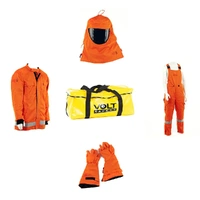
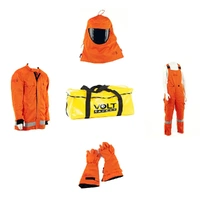
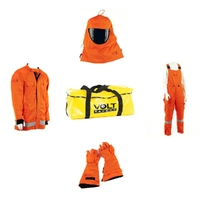
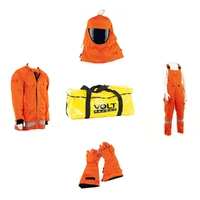
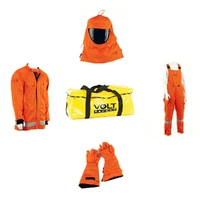
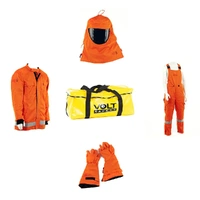
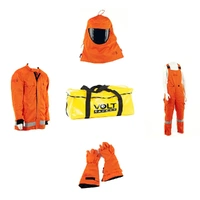
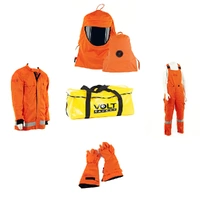
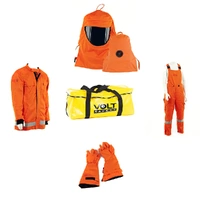
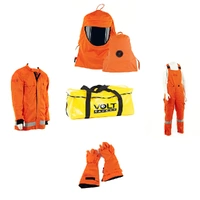
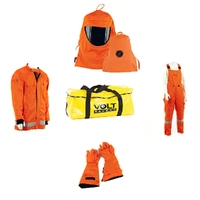
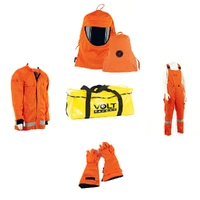
A full flash suit becomes necessary when incident energy exceeds 12 cal/cm² or when calculations indicate a hazardous arc-blast pressure wave. Suits include a jacket, bib trousers, a hood, and arc-rated gloves as a single matched system.
Choosing a kit one category above the minimum required gives a buffer for fabric wear, calculation uncertainty, and unexpected fault conditions. The trade-off is heat stress and reduced dexterity in heavier garments.
Arc flash PPE in Australia follows a layered standards framework. Some standards cover the work practice, others cover the garments and gloves, and several international standards inform local risk assessment.
AS 4836 sets the safe working practices for electrical equipment and installations. It defines hazard identification, risk control, and the conditions under which energised work may proceed. PPE selection follows directly from the assessment process described in this standard.
AS 5732 covers the testing and labelling of arc-rated garments sold in Australia. Compliant garments carry an arc rating, the test method reference, and the manufacturer details on a permanent label.
IEC 61482 and ASTM F1959 are the international test methods most often referenced on Australian product labels. NFPA 70E is the U.S. consensus standard for electrical safety in the workplace, and its incident energy methodology is widely used by Australian engineers when local data is limited.
Inspect labels before use. A compliant garment shows the arc rating in cal/cm², the standard reference, the size, and a manufacture date. Missing or illegible labels are grounds to remove the item from service.
Kit selection starts with a documented risk assessment. The assessment identifies the energised work, the available fault current, and the protective device clearing time. From there the calculated incident energy points to an HRC band.
Tasks at the same site can require different kits. Voltage testing inside an enclosed switchboard might call for HRC 2, while racking out a large air circuit breaker on the same board might require HRC 3. The risk assessment, not the supplier, drives the choice.
Most contractor work in residential and small commercial settings sits within HRC 1 or HRC 2. Industrial switchboard maintenance moves into HRC 2 or HRC 3. Utility substation work commonly requires HRC 4 with full hooded systems.
Pre-assembled kits guarantee that each component carries a matching rating. Mixing items from separate suppliers risks downgrading the system to the lowest-rated piece. Individual replacement is fine, provided the new component meets or exceeds the kit rating.
Common errors include sizing too tight (which compresses the air gap), choosing on price alone, ignoring face and neck protection, and treating insulated gloves as a substitute for the full kit. A complete system is the only system rated to the printed value.
Different sectors face different incident energy profiles. The kit appropriate for a domestic electrician differs from the kit needed by a mine site electrician working on 11 kV switchgear.
Residential and commercial switchboard work usually falls within HRC 1 or HRC 2. Voltage testing, breaker replacement, and live tagging procedures are common tasks that require an arc-rated coverall, face shield, balaclava, and Class 0 Volt Safety insulated gloves.
Plant electricians work on motor control centres, large variable frequency drives, and 415 V distribution boards. Incident energies in these settings often justify HRC 2 or HRC 3 kits. Test equipment compatible with energised work supports the assessment process.
Utility crews working on substations, primary feeders, and HV switchgear face the highest incident energies. HRC 3 and HRC 4 systems with full hoods are standard. Class 2, Class 3, or Class 4 insulated gloves match the voltage rather than the arc rating.
Electric vehicle chargers, solar inverter arrays, and battery banks add DC arc flash hazards alongside conventional AC risks. DC arcs sustain longer, so arc flash assessment for these systems often pushes selection up one HRC band.
Standard electrical PPE addresses shock and abrasion. Arc flash kits address thermal incident energy. Both are required on many tasks, and neither replaces the other.
Insulated gloves and mats prevent current passing through the body. Arc-rated fabric prevents heat passing through to the skin. The two work together: insulated gloves stop the shock that often initiates the arc, and arc-rated fabric protects against the thermal blast if an arc occurs anyway.
Energised work at or near exposed live conductors requires both. Inspection of a closed switchboard with a thermal imaging camera might require arc-rated clothing without insulated gloves. Voltage testing through covers requires insulated gloves and arc-rated outerwear.
Standard PPE requirements come from general WHS regulations. Arc flash PPE selection follows AS 4836 hazard analysis and AS 5732 garment compliance. Documenting the basis for the chosen kit forms part of safe work method statements.
Two kits with the same calorie rating may perform differently in service. Fabric type, construction, and care life all affect real-world protection.
Inherent FR fibres keep their flame-resistant property for the life of the garment. Treated FR cotton can lose protection if washed incorrectly or treated with non-approved detergents. Inherent fabrics tend to cost more upfront but reduce the risk of compromised protection.
Manufacturers publish a recommended number of wash cycles for treated FR garments. Industrial laundering often outlasts home laundering for both fabric types. Visible damage, char marks, or thinning are signs to replace the garment regardless of wash count.
Heat stress is a real safety concern. Heavier multi-layer suits trap body heat, and prolonged work in HRC 3 or HRC 4 kits requires planned breaks and hydration. Lighter inherent FR fabrics often improve compliance because workers will actually wear the kit.
Brands that publish full test reports and manufacture in audited facilities provide more confidence than unbranded kits. Common Australian-recognised brands for arc flash and insulated PPE include Maxisafe, MMS Safety, and 3M.
Most arc flash incidents involving PPE failure trace back to selection or use errors rather than fabric performance. Awareness of these patterns reduces risk.
Choosing HRC 1 for a task that calculates to 12 cal/cm² produces a serious gap. Risk assessment must come before kit selection, not after. When in doubt, match the next higher category.
Wearing a 25 cal jacket with a 4 cal hood produces a system rated at 4 cal. Each item caps the system at its own value. Replacement components must match or exceed the original kit rating.
Sleeves that ride up, trouser cuffs that bunch above the boot, and gaps between gloves and sleeves all break the protective envelope. Garments must overlap at every seam, with no exposed skin under any movement.
Some sites still select kits based on tradition or convenience rather than calculated incident energy. A documented risk assessment is required by AS 4836 and is the foundation of every other selection decision.
Arc flash PPE is consumable. Even premium kits have a service life shaped by use, washing, contamination, and component-specific retest cycles.
Inspect every component before each use. Check for tears, char marks, contamination with flammable liquids, missing labels, and damaged fasteners. Insulated gloves require an air-leak test by trapping air and rolling the cuff.
Follow the manufacturer's washing instructions exactly. Avoid bleach, fabric softener, and high-temperature drying for treated FR cotton. Industrial laundries that specialise in FR fabric extend service life for fleets.
Insulated rubber gloves must be electrically retested at intervals defined by AS 2225 and the manufacturer. The test cycle varies by class and use frequency. Failed gloves go straight to disposal, never back into the kit.
Replace any garment that has been exposed to an arc, has visible damage, has missing labels, or has reached the manufacturer's wash cycle limit. When in doubt, replace. The cost of a new garment is far below the cost of a burn injury.
Arc flash kits range from a few hundred dollars for HRC 1 to several thousand for full HRC 4 systems. Long-term value depends on durability, replaceability, and the cost of compliance failure.
Budget kits often use treated FR cotton, basic face shields, and lower-grade insulated gloves. Premium kits use inherent FR fabrics, certified hoods, and brand-supported retest paths. Both can meet the same calorie rating; the difference shows up in service life and comfort.
A second-degree burn from arc flash exposure routinely produces six-figure medical and lost-time costs. Investing in a kit one category above the minimum is generally cost-effective when measured against this exposure.
Standardising a team across one kit family simplifies sizing, training, and replacement. Bulk orders typically reduce per-kit cost and enable consistent retest scheduling for the gloves.
Certified kits with documented test reports retain their compliance status over the service life provided maintenance is followed. Unlabelled or undocumented kits cannot be verified during audits and may require premature replacement.
Arc flash kit selection is one part of a broader electrical safety program. The kit complements isolation, lockout, testing, and procedural controls; it does not replace them.
The Work Health and Safety Act and supporting regulations require employers to provide PPE matched to identified risks. Arc flash PPE forms part of this obligation when energised work cannot be avoided.
A written risk assessment records the incident energy calculation, the chosen kit rating, the residual risks, and the controls in place. This document supports site induction, audit, and incident investigation.
The first defence against arc flash is to deenergise the equipment. Lockout kits and lockout tags ensure isolation cannot be reversed during work. Arc flash PPE applies when LOTO cannot be achieved or during the verification of isolation itself.
SWMS documents list the hazards, controls, and PPE for the planned work. Arc flash kit selection appears in the PPE column with the cal rating, and the basis for that rating links back to the risk assessment.
Watch Volt Safety GLOVE0-KIT-10 | Class 0 Insulated Glove KIT 1000v IEC 360mm ASTM [Size: 10] video
Watch Volt Safety LVR-KIT | Low Voltage Switchboard Rescue Kit video
Watch Volt Safety MAT-0-K | Insulated Mat Kit Class 0 1000V | 1m x 1m Incl. Mat Roll-Up Carry Bag video

Great value gloves. Exactly what I needed at a great price and speedy delivery! Having used insulated gloves a lot in my career, I can recognise value! Cheers and thanks!
Awesome range of specialized electrical items on their catalogue. Rare find these days and a reasonable price for items purchased.
Was looking for those Class 0 gloves everywhere finally found a supplier who had one, great package and timely delivery.
Quality products in stock • Fast Australia-wide delivery • Competitive trade pricing
Browse Arc Flash Kits → Get Expert Advice →Arc-rated garments are usually worn as outer layers, following manufacturer and workplace guidance.
Sparky Direct supplies compliant arc flash kits with fast Australian delivery to support electrical safety requirements.
Warranty terms vary by manufacturer and generally cover defects in materials or workmanship.
Check arc rating, compliance with standards, sizing, and compatibility with workplace safety requirements.
Yes, arc flash kits are commonly supplied for licensed electrical contractors and commercial operations.
Yes, kits are available with varying arc ratings to suit different incident energy requirements.
Yes, training is important to ensure users understand correct use, limitations, and maintenance of arc flash PPE.
Service life depends on use, care, and exposure, with regular inspection essential to confirm continued suitability.
Face protection requirements depend on the level of arc energy and task risk assessment.
Arc flash kits are designed for thermal and blast protection and do not replace insulated tools or safe work practices.
Cleaning must follow manufacturer instructions, as incorrect washing can reduce protective performance.
Arc flash PPE can be shared if sizing is appropriate and items are cleaned and inspected according to procedures.
Kits should be stored clean, dry, and away from direct sunlight or contaminants that could degrade materials.
An arc flash kit is designed to help protect workers from thermal, blast, and light hazards associated with arc flash incidents in electrical environments.
Modern arc flash kits are designed to balance protection with comfort, though they may feel heavier than standard workwear.
Proper fit means the clothing and hood allow full movement while providing complete coverage without gaps.
Yes, arc flash kits are commonly used in industrial, commercial, and infrastructure environments where electrical hazards exist.
Arc flash PPE should be inspected before use and at intervals recommended by the manufacturer and workplace safety procedures.
Some kits include insulated gloves, while others require gloves to be selected separately to suit the electrical task.
Yes, but the level of protection required varies, and the kit must be appropriate for the voltage and fault levels involved.
Selection is based on calculated incident energy levels, equipment type, and site safety assessments carried out by qualified personnel.
Requirements depend on the task and workplace risk assessment, with arc flash protection often required where live electrical work risks are identified.
Arc-rated refers to materials that have been tested to withstand a specific level of incident energy from an arc flash without igniting or causing severe injury.
Arc flash kits supplied in Australia should comply with relevant AS/NZS standards and recognised international testing requirements for arc-rated PPE.
An arc flash kit commonly includes arc-rated clothing, face shield or hood, gloves, and other protective components suitable for electrical work.