

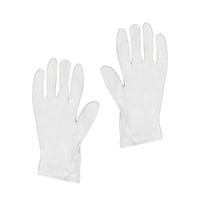
5 Pack
Cotton Inner Gloves 5 Pack | For Use with All Rubber Gloves | One Size Fits Most | Gloveinner
$9.78
$8.89 ex. GST
Search Results:
Search Results:
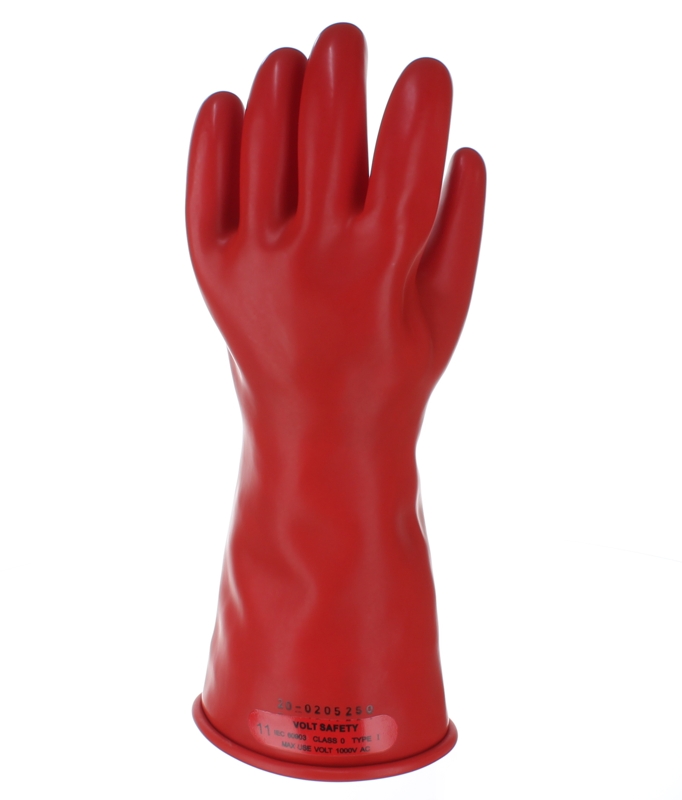
Insulated gloves (also called dielectric gloves or electrical safety gloves) are made from a specially formulated rubber compound that resists the flow of electric current. Each glove is voltage-rated, tested at a high voltage during manufacture, and re-tested at set intervals during its working life. The glove is the barrier between the hand and any energised conductor it might brush against.
When isolation cannot be guaranteed, the rubber barrier across the hand becomes the worker's last reliable safeguard against current passing through the body. A shock that crosses the chest can stop the heart at currents below 100 mA, so the margin between protected and unprotected work is enormous.
Gloves do not replace isolation, lockout, or testing for dead. Australian Standard AS/NZS 4836 and the Electrical Safety Code of Practice both treat live work as a last resort. Gloves form one layer in a hierarchy that starts with proving the circuit dead using a voltage tester and locking the supply with a lockout kit.
General safety suppliers carry many glove styles but rarely stock the dielectric range that meets IEC 60903 or ASTM D120 testing standards. Electrical wholesalers such as Sparky Direct stock gloves chosen for the live work tasks electricians actually face, with class ratings, sizes, and certification documentation aligned to Australian site requirements.
A reliable supplier ships gloves with a current test certificate and lists the IEC class and maximum use voltage on each product page. Stock should cover a range of sizes, and staff should be able to answer technical questions before purchase. Stock turnover matters too: rubber degrades on the shelf, so gloves bought from a slow-moving supplier may have lost meaningful service life before they reach the worksite.
For contractors fitting out crews, fleet purchases reduce per-unit pricing and keep all workers on the same certified product. Sparky Direct ships Australia-wide with trade pricing for registered accounts, which helps when a job needs replacement gloves in days rather than weeks.
The rubber compound used in insulated gloves contains no conductive fillers, carbon black, or metal pigments. The result is a material with very high volume resistivity, which means electrons cannot flow through the wall of the glove under normal working voltages. The thickness of the wall, the homogeneity of the rubber, and the absence of pinholes all contribute to the rated voltage withstand.
If a hand brushes a live busbar or terminal, the rubber wall absorbs the electrical stress. No current path forms through the worker's body to earth, and no shock occurs. The glove also protects against the small puncture currents that can flow when a tool slips and contacts an adjacent phase.
The protection is only as good as the condition of the rubber on the day of use. A pinhole, a tear, conductive contamination on the surface, or damage hidden under the cuff can all create a path that bypasses the insulation. This is why daily inspection and periodic re-testing are mandatory, not optional.
Operating switchgear under load, racking circuit breakers in or out, and probing terminals with a multimeter all bring the worker into the arc and shock zone of an energised system. Class 0 gloves rated to 1000 V cover most of this work in commercial and residential settings.
Inside an electric switchboard, exposed busbars and unshrouded terminals create multiple shock points within hand reach. Insulated gloves combined with an insulating shroud over adjacent live parts give two independent layers of protection.
Sometimes a board cannot be fully de-energised. A continuous service may need to keep running, or the only available isolation point may sit upstream of the work area. In these cases, gloves matched to the system voltage are the primary safeguard until the work is complete.
The international classification used by IEC 60903 and ASTM D120 sets six classes based on maximum AC use voltage.
| Class | Max Use Voltage (AC) | Proof Test Voltage | Typical Use |
|---|---|---|---|
| Class 00 | 500 V | 2,500 V | Light low voltage work, secondary distribution |
| Class 0 | 1,000 V | 5,000 V | Standard low voltage work, switchboards, residential and commercial |
| Class 1 | 7,500 V | 10,000 V | Distribution at substation entry level |
| Class 2 | 17,000 V | 20,000 V | Medium voltage distribution |
| Class 3 | 26,500 V | 30,000 V | Higher medium voltage networks |
| Class 4 | 36,000 V | 40,000 V | High voltage transmission and substation work |
The class chosen must equal or exceed the system voltage of the equipment being worked on. For most Australian residential and commercial work at 230/400 V, Class 0 (1000 V rated) is the standard choice. Industrial sites with higher distribution voltages need Class 1 or above.
Wearing an under-rated glove on a higher voltage system gives a false sense of safety. The rubber may flash through during a fault, the wearer may not notice the breach until shock occurs, and the glove may not be tested to handle the current involved.
Always select a class with a maximum use voltage that meets or exceeds the highest line-to-line voltage of any conductor that could come within reach during the task. When in doubt, step up one class.
Shock injury comes from current passing through the body. Arc flash injury comes from the radiant heat, pressure wave, and molten metal released when a fault arcs across phases or to earth. Insulated gloves address shock. They are not arc-rated unless the product specifically states an ATPV (Arc Thermal Performance Value) or equivalent rating.
Some tasks carry elevated arc flash risk: racking medium voltage breakers, switching under fault current conditions, or working on systems with high prospective short-circuit current. These tasks require an arc flash kit in addition to insulated gloves. The kit covers the face, torso, and legs against the thermal energy that gloves alone cannot stop.
For most low voltage live work, the correct PPE stack is straightforward: insulated gloves (Class 0), safety glasses, long sleeves, and (where required) a face shield rated for the available arc energy. Each item addresses a different injury mechanism, and removing one weakens the whole system.
Start with the maximum system voltage you will encounter, then add task factors. Cuff length, dexterity for fine terminal work, and whether leather over-protectors are required for mechanical resilience all shape the right choice. A switchboard fitter and a meter installer face different conditions and may end up with different gloves.
Outdoor work exposes rubber to UV, ozone, and temperature swings, all of which accelerate ageing. For frequent outdoor use, Type II gloves (ozone-resistant) extend service life. Indoor work in dry conditions is gentler on the rubber but introduces other risks such as solvent contamination from cleaning products.
Higher class gloves are thicker and reduce finger sensitivity. For a task that needs fine motor control, choosing a class above what is required can introduce risk by making tools harder to grip and increasing the chance of slips.
The two most common errors are buying by price rather than by voltage class, and assuming that any pair of black rubber gloves is a dielectric glove. Standard nitrile safety gloves, grip gloves, and general work gloves have no electrical rating, even when they look superficially similar.
Natural rubber latex is the traditional dielectric material. Synthetic compounds (EPDM and similar) offer better resistance to ozone, oils, and temperature extremes, at slightly higher cost. The choice often comes down to whether the worksite involves chemical exposure or sustained outdoor use.
Class 00 gloves are thin enough for delicate terminal work. Class 4 gloves are noticeably stiff and reduce hand mobility. There is no way around this trade-off: more insulation means more rubber between the hand and the conductor, and more rubber means less feel.
Standard cuff lengths range from 280 mm to 410 mm and beyond. Longer cuffs cover more of the forearm and protect against incidental contact when reaching into a board. The 360 mm length is a popular middle ground for switchboard work.
Leather over-protectors slip over the rubber glove and shield it from cuts, abrasion, and punctures from sharp metal edges. They are mandatory in some workplaces for higher class gloves and strongly recommended whenever mechanical damage is likely.
A glove that is too large bunches at the fingertips and reduces grip on tools. A glove that is too small stretches the rubber thin and may fail at the seam under flex. Correct sizing is a safety control, not just a comfort one.
Fine work such as terminating a screw clamp depends on tactile feedback through the fingertips. A close-fitting glove transmits this feedback better, even though it remains a thicker barrier than bare skin.
Rubber does not breathe. Hands sweat heavily inside dielectric gloves, especially in Australian summer conditions. Cotton liner gloves absorb perspiration, improve comfort, and make donning and doffing easier without compromising the dielectric barrier.
If gloves are uncomfortable, workers find reasons to skip them. Investing in correctly sized gloves with liners is the single most effective way to lift on-site compliance with PPE rules.
Before each use, the glove must be inspected externally and internally for cuts, abrasions, embedded objects, ozone cracking, and signs of chemical attack. Turn the glove inside out to check the lining surface. Any damage that exposes a path through the rubber wall removes the glove from service.
Common damage includes pinholes from puncture, surface cracking from UV exposure, swelling from oil contact, and discoloration from chemical exposure. Conductive contamination (metal swarf, graphite, salt residue) can compromise the surface even when the rubber underneath is intact.
Insulated gloves must be electrically tested at intervals set by the standard and by site procedures. AS/NZS 2225 and IEC 60903 typically require re-testing every six months in service, with the test date stamped on the glove. Gloves not in service should be tested before first issue if the manufacturer's test is more than six months old.
Compliant gloves carry permanent marks showing the class, the standard followed (IEC 60903, ASTM D120), the manufacturer, the size, and a date code. The most recent test date is added as a stamp or sticker after each periodic test.
The roll-up air test is the universal field check. Hold the glove cuff upward, roll it from the cuff toward the fingers to trap air inside, then watch and listen for any escape of air. Any pinhole reveals itself as a hiss or a visible deflation. A mechanical inflator can be used for the same purpose with greater consistency.
A glove that audibly leaks during the air test has failed and must not be used. Soft spots, blisters, embedded particles, and discoloured patches are all reasons to remove the glove from service even if the air test passes.
Remove the glove from service if it fails the air test, has visible damage, or has been chemically contaminated. The same applies if it has been dropped onto a sharp edge, or if the test stamp is older than the period set by site rules. Mark damaged gloves clearly so they cannot be returned to use by mistake.
Periodic dielectric testing is performed in a laboratory using a controlled high voltage source and a calibrated current meter. This test cannot be replicated in the field. Treat the air test as a daily go/no-go screen, not a substitute for laboratory certification.
Critical Reminder: A glove that passes the visual and air tests can still be unsafe if its certification has expired. Always check the test date stamp before donning the glove for live work.
Wipe gloves clean with mild soap and water after each use, then dry them away from direct heat. Dust the inside lightly with the manufacturer-supplied talc, and store them in a dedicated bag or canister. Never store gloves folded or with weight on top of them.
Keep gloves out of direct sunlight, away from sources of ozone (motor brushes, welders, photocopiers), and clear of solvents, fuels, and aggressive cleaning agents. A storage temperature of 10 to 21 degrees Celsius extends rubber life.
Replace gloves when they fail any test, when the test certificate expires and re-testing is uneconomic, when the rubber shows ozone cracking, or when the glove no longer fits the user. A glove that has been in heavy daily service for more than three years is approaching the end of its useful life regardless of test results.
Keep at least one spare pair per electrician on hand, with current test stamps. A failed daily test mid-shift means the worker stops until a tested replacement is available, which is a real cost when stock is thin.
Manufacturer test data shows the proof voltage and the leakage current allowed during the periodic test. Lower leakage at the proof voltage indicates a better-formulated rubber and a longer expected service life under field conditions.
Quality gloves resist repeated flexing without surface cracking, hold up to mild abrasion against switchboard edges, and recover their shape after donning and doffing. Cheap gloves often show stress whitening and stiffening after only a few weeks.
Gloves should fit cleanly under sleeve cuffs and accept leather over-protectors without binding. Check the glove against the rest of the PPE stack before committing to a model for a whole crew.
Reputable manufacturers such as Volt Safety, Maxisafe, and MMS Safety issue full test certification with each pair, hold consistent quality across batches, and supply documentation that satisfies site auditors.
The majority of insulated glove use in Australia is by licensed electricians performing maintenance, fault-finding, and switching tasks on systems below 1000 V. A typical maintenance kit includes one pair of Class 0 gloves, a insulation tester, and a personal lockout kit.
Substation operators, distribution network workers, and heavy industry electricians use Class 1 to Class 4 gloves for medium and high voltage work. Leather over-protectors are standard practice in these settings due to the mechanical hazards of large switchgear.
Construction sparkies fitting out new circuit protection gear or upgrading existing boards rely on insulated gloves whenever isolation is incomplete. The chaotic site environment makes mechanical damage to gloves more likely, so frequent inspection is non-negotiable.
On sites where multiple trades work near energised equipment, insulated gloves protect the electrician but cannot protect other trades. Coordinated lockout, signage, and barriers are needed to keep non-electrical workers clear of the live zone.
The most dangerous habit is treating gloves as permission to skip isolation. Gloves are the last line of defence, not the first. Working live when the system could have been isolated is a procedural failure, not a glove choice.
Reaching for whichever pair is closest in the truck instead of the pair rated for the system creates real risk. Label gloves clearly and store classes separately to prevent the wrong choice in a hurry.
Skipping the daily air test, glancing at the gloves rather than examining them, or failing to check the inside surface all leave defects undetected. The inspection is short, but it is the only barrier between a damaged glove and a shock.
New apprentices often do not know what ozone cracking looks like, why talc matters, or how to read a test stamp. A short induction on glove care pays for itself many times over in extended glove life and avoided incidents.
Under the Work Health and Safety Act, employers must provide PPE that is suitable, properly fitted, maintained, and used correctly. For electrical work, this obligation is amplified by the Electrical Safety Act in each state and territory, which sets out specific duties around live work and isolation.
Key standards include AS/NZS 3000:2018 (the Wiring Rules) and AS/NZS 4836 (Safe Working on or Near Low Voltage Electrical Installations). For the gloves themselves, AS/NZS 2225 and IEC 60903 set the testing and classification rules. Site procedures should reference these standards directly.
Maintain records of glove serial numbers, issue dates, test dates, test results, and removal-from-service dates. Auditors look for traceability from purchase to disposal, and a missing record is treated as a missing safety control.
Insulated gloves are part of a wider safe-system-of-work that includes lockout devices, lockout tags, voltage proving, and earthing where applicable. The glove protects against residual energy after isolation has been verified, not as a substitute for that verification.
Cheaper gloves can meet the rated test voltage on day one but degrade faster, fail re-tests sooner, and need replacement on a tighter cycle. Over a three-year horizon, premium gloves often cost less per safe working hour despite the higher purchase price.
Crews of five or more benefit from buying gloves in matched sets with consistent test dates. This simplifies the inspection schedule, makes it easier to spot a glove that has gone missing, and reduces administrative overhead.
Periodic re-testing typically costs a fraction of a new pair, so re-testing makes sense until a glove fails or the rubber visibly degrades. Build the test cost into the annual PPE budget rather than treating it as a surprise expense.
The financial argument for compliant gloves is straightforward: a single shock incident generates costs (medical, downtime, investigation, regulatory action) that dwarf decades of PPE spending. The PPE budget is one of the highest-return safety investments on a sparky's books.
Watch Volt Safety LVR-KIT | Low Voltage Switchboard Rescue Kit video
Watch Volt Safety LVR-KIT | Low Voltage Switchboard Rescue Kit video
Watch Volt Safety LVR-KIT | Low Voltage Switchboard Rescue Kit video

Great value gloves. Exactly what I needed at a great price and speedy delivery! Having used insulated gloves a lot in my career, I can recognise value! Cheers and thanks!
Awesome range of specialized electrical items on their catalogue. Rare find these days and a reasonable price for items purchased.
Was looking for those Class 0 gloves everywhere finally found a supplier who had one, great package and timely delivery.
Quality products in stock • Fast Australia-wide delivery • Competitive trade pricing
Browse Insulated Gloves → Get Expert Advice →They can be worn for extended periods, but comfort and task suitability should be considered.
The purpose of insulated gloves is to protect electrical workers from electrical shock when working on live electrical systems. These gloves provide a critical layer of insulation that minimizes the risk of electrical injuries and ensures the safety of those working with electricity.
The primary difference between Class 0 and Class 00 gloves lies in their maximum voltage withstand capacity. Class 0 gloves are suitable for up to 1,000 volts, while Class 00 gloves can handle up to 500 volts. Therefore, Class 00 gloves offer a lower level of electrical insulation than Class 0 gloves.
Absolutely. Insulated gloves are essential for electrical work, as they protect workers from direct contact with live electrical components, reducing the risk of electrical shock.
Yes, safety insulated gloves are specifically designed to prevent electrical shock. These gloves are made from insulating materials that act as a barrier against electrical current, protecting users from electric shock and related injuries.
Sparky Direct supplies safety insulated gloves Australia-wide, supporting safe electrical work with reliable delivery.
Safety insulated gloves are packaged securely and delivered via standard courier services.
Unused safety insulated gloves are generally eligible for return according to the seller’s returns policy.
Warranty coverage varies by manufacturer and generally covers defects in materials or manufacture.
Safety insulated gloves are typically sold in pairs.
They should be stored flat, clean, and protected from heat, sunlight, and sharp objects.
Yes, materials can degrade, so gloves should be replaced according to manufacturer guidance.
They may be used by apprentices under supervision and in line with workplace safety procedures.
Yes, they are reusable if properly maintained and remain in good condition.
Yes, they should be visually inspected before use for damage, wear, or contamination.
Safety insulated gloves are used to provide protection against electrical shock when working near live electrical components.
Yes, they are available in a range of sizes to ensure proper fit and effectiveness.
Quality gloves are designed to balance protection with flexibility and comfort.
Selection depends on voltage rating, glove size, and the specific electrical task being performed.
They help reduce the risk of electric shock and improve safety when working near live electrical systems.
They are required where regulations or risk assessments identify the need for insulated hand protection.
Their primary function is electrical insulation; additional outer gloves may be used for mechanical protection if required.
They can be used in both environments, provided they are suitable for the conditions and correctly rated.
Yes, they are designed to be used alongside other personal protective equipment such as safety glasses and protective clothing.
Yes, gloves are available in different classes, each rated for maximum working voltage.
They are commonly made from insulating rubber or specialised materials designed to prevent electrical conductivity.
Safety insulated gloves are rated for specific voltage levels, which must be matched to the intended application.
Many safety insulated gloves are tested and certified to relevant AS/NZS standards for electrical insulation and safety.
Yes, they are specifically designed for electrical applications where insulation and protection are required.


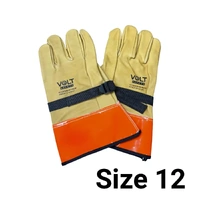
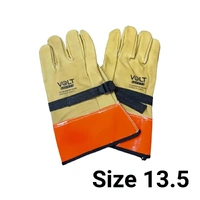
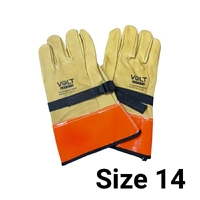
![Leather LV Outer Glove Goat Skin [Size: 10] | GLOVEOUTLV-10](/assets/thumb/GLOVEOUTLV-10.jpg?20250321105534)

![Leather LV Outer Glove Goat Skin [Size: 11] | GLOVEOUTLV-11](/assets/thumb/GLOVEOUTLV-11.jpg?20250321105534)
![Leather LV Outer Glove Goat Skin [Size: 9] | GLOVEOUTLV-9](/assets/thumb/GLOVEOUTLV-9.jpg?20250321105534)
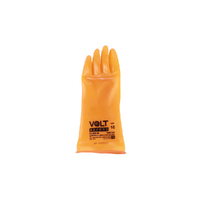
![Class 00 Insulated Gloves 500v 280mm ASTM [Size: 11] | GLOVE00AS-11](/assets/thumb/GLOVE00AS-11.jpg?20250321105534)
![Class 00 Insulated Gloves 500v 280mm ASTM [Size: 10] | GLOVE00-10](/assets/thumb/GLOVE00-10.jpg?20250327131900)
![Class 00 Insulated Gloves 500v 280mm ASTM [Size: 10] | GLOVE00AS-10](/assets/thumb/GLOVE00AS-10.jpg?20250321105534)
![Class 00 Insulated Gloves 500v 280mm ASTM [Size: 11] | GLOVE00-11](/assets/thumb/GLOVE00-11.jpg?20250327134000)
![Class 00 Insulated Gloves 500v 280mm ASTM [Size: 8] | GLOVE00-08](/assets/thumb/GLOVE00-08.jpg?20250709102637)
![Class 00 Insulated Gloves 500v 280mm ASTM [Size: 9] | GLOVE00-09](/assets/thumb/GLOVE00-09.jpg?20250327122514)
![Class 00 Insulated Gloves 500v 280mm ASTM [Size: 9] | GLOVE00AS-09](/assets/thumb/GLOVE00AS-09.jpg?20250321105534)
![Class 0 Insulated Gloves 1000v 360mm ASTM [Size: 10] | GLOVE0-10](/assets/thumb/GLOVE0-10.jpg?20250328070842)
![Class 0 Insulated Gloves 1000v 360mm ASTM [Size: 10] | GLOVE0AS-10](/assets/thumb/GLOVE0AS-10.jpg?20250321105534)
![Class 0 Insulated Gloves 1000V 360mm ASTM [Size: 11] | GLOVE0-11](/assets/thumb/GLOVE0-11.jpg?20250328073641)