

Search Results:
Search Results:
Search Results:
Search Results:
Every grid-connected or off-grid solar installation in Australia needs isolation points. Isolator switches give electricians and emergency responders a safe way to disconnect live conductors before touching any part of the system.
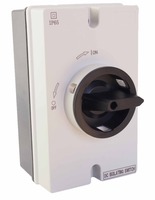
A solar isolator switch opens the circuit between the PV array and downstream equipment. It is not a protection device. It does not break fault current like a circuit breaker. Its job is to create a visible, lockable air gap so the system can be worked on without live voltage present.
Solar arrays produce voltage whenever there is daylight. You cannot turn a panel off. The only way to make the DC side safe is to break the circuit at an isolator. Without one, technicians face live conductors carrying up to 1500V DC.
Rooftop arrays require a DC isolator at the array and another at the inverter. An AC isolator sits between the inverter and the switchboard. Battery systems add further isolation points between the battery bank and the hybrid inverter. Each location serves a specific safety function under AS/NZS 5033.
Solar isolators look simple on the outside. Internally, DC and AC versions work very differently because of how each type of current behaves when a circuit is broken.
Moving a rotary handle or toggle physically separates two conductive contacts inside the switch body. The gap between contacts must be wide enough to stop current from arcing across. Quality isolators use spring-loaded mechanisms for fast, decisive contact separation.
AC isolators are used on the output side of the inverter, between the inverter and the meter box. DC isolators sit on the input side, between the panels and the inverter. A DC isolator cannot be substituted for an AC unit, and the reverse is also unsafe.
AC current crosses zero volts 100 times per second. That natural zero-crossing helps extinguish any arc drawn when contacts separate. DC current does not cross zero. Once an arc strikes, it will keep burning unless the switch is built to quench it. DC isolators use arc chutes, magnetic blow-out coils, or multi-break contact designs to force the arc to stretch, cool, and extinguish.
Solar isolators are specified by pole count, environmental rating, and whether they handle DC or AC. Getting the combination wrong means the switch will either fail compliance or fail in service.
A single-string isolator handles one pair of conductors (positive and negative) from a single PV string. Multi-string units combine several strings into one enclosure and isolate each pair on separate poles. Multi-string isolators reduce the number of enclosures on the roof and simplify wiring for larger arrays.
A 2-pole isolator breaks one positive and one negative conductor. It suits a single string. A 4-pole isolator breaks two positive and two negative conductors, which suits a two-string array or provides double-break contacts on a single string for higher voltage systems. Four-pole units offer better arc quenching at high DC voltages because the current is split across more contact gaps.
| Feature | 2 Pole Isolator | 4 Pole Isolator |
|---|---|---|
| Strings handled | One | One (double break) or two |
| Contact gaps per conductor | Single break | Single or double break |
| Typical DC voltage suitability | Lower-voltage residential strings | Higher-voltage and commercial arrays |
| Physical size | Smaller enclosure | Larger enclosure |
| Installation complexity | Simpler wiring | More terminations per switch |
Indoor isolators carry a lower IP rating and are installed inside switchboards or protected enclosures. Outdoor units must be sealed against dust, water, and UV. Rooftop DC isolators are always outdoor-rated because they live next to the array.
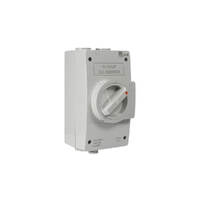
Australian rooftops expose hardware to extreme UV, heat, driven rain, and salt air in coastal zones. IP66-rated isolators with UV-stabilised polycarbonate enclosures handle these conditions. Look for units tested to AS/NZS IEC 60947-3 for outdoor installation. Related products include weatherproof isolator switches used for general outdoor circuits and IP66 key lockable isolator switches for commercial sites.
Specification sheets for solar isolators contain a handful of numbers that matter. Matching these correctly to the system is the single biggest factor in whether the switch performs safely over its lifetime.
The voltage rating is the maximum DC voltage the switch can interrupt safely. Modern residential strings run at 600V to 1000V DC. Commercial arrays push up to 1500V DC. The current rating is the maximum continuous current the contacts can carry without overheating. Both ratings must exceed the expected operating values at the hottest and coldest array temperatures.
AS/NZS 5033 sets the compliance requirements for PV array installations. Isolators must be marked with a DC rating that matches or exceeds the maximum system voltage calculated at the lowest expected ambient temperature. An AC-rated switch used on a DC circuit will likely arc and fail within months, sometimes catastrophically.
String voltage depends on panel count, panel Voc (open-circuit voltage), and temperature. A 20-panel string at -5°C may exceed 1000V even if it runs at 850V at 25°C. Calculate the cold-temperature Voc before selecting an isolator. Use compatible solar circuit breakers and solar cables on the same circuit.
Panel open-circuit voltage rises as temperature drops. A string rated at 850V in summer can exceed the isolator's rating on a cold winter morning. Always use the manufacturer's temperature coefficient and the lowest expected ambient temperature at the installation site.
An isolator is cheap compared to the cost of a rooftop fire, a damaged inverter, or an injured electrician. The safety case for fitting a quality unit is simple.
Isolators give installers a defined, visible disconnection point. A locked-off isolator removes the risk of accidental re-energisation while someone is working on the roof. It also gives firefighters a documented way to de-energise the DC side of the array during a building fire.
Fault-finding on a live PV array is dangerous and often impossible. With a string isolated, an electrician can safely test cable insulation, measure string voltage at open circuit, check connectors, and replace failed components without risk of shock or arc flash.
First responders cannot safely fight a fire in a building with an active PV array on the roof. A clearly labelled, accessible isolator at the switchboard gives them a single point to kill the DC output and enter the building safely.
Labelling requirement: All solar isolators must carry durable, weather-resistant signage identifying them as PV system isolators, per AS/NZS 5033. Unlabelled isolators fail certification and create risk for emergency services.
Solar isolators have been responsible for a significant share of rooftop PV fires in Australia over the past decade. The failure modes are well understood, and most come down to either product quality or installation practice.
Water ingress through poorly sealed enclosures causes corrosion on contacts and insulation breakdown. UV damage embrittles plastic housings until they crack. Loose terminations produce high-resistance joints that heat under load and eventually ignite surrounding material. Undersized contacts pit and weld shut after repeated switching under load.
Common installation errors include reversed polarity on DC terminals, incorrectly sized cable glands that let water in, mounting orientations that collect water at the gland entry, and overtightened terminals that damage contact springs. Each of these creates conditions for eventual failure.
Visible cracking of the enclosure, discolouration around terminal entries, a stiff or grinding switch action, visible moisture inside the housing, and any sign of heat damage are all grounds for immediate replacement. Do not operate a suspect isolator under load.
Do not attempt to operate the switch. Cover the unit if possible to reduce solar gain, isolate the circuit upstream if safe to do so, and book a licensed solar installer to inspect and replace the unit. Operating a failing DC isolator under load can create a sustained arc.
Selecting a solar isolator is a straightforward process if you work through the specifications methodically. Cutting corners at the specification stage costs more in the long run than any saving at the checkout.
The relevant standards are AS/NZS 5033 for PV array installation, AS/NZS 4777 for grid-connected inverter installation, AS/NZS 3000 (the Wiring Rules) for general electrical requirements, and AS/NZS IEC 60947-3 for the isolators themselves. Products must be marked with compliance to the applicable parts of IEC 60947-3.
Residential rooftop arrays typically run at 600V to 1000V DC. A 2-pole or 4-pole isolator rated for 1000V DC and 25A to 32A covers most domestic jobs. Commercial arrays running at 1500V DC need isolators rated accordingly, often with higher current ratings to match larger string outputs.
Coastal sites need corrosion-resistant terminals and stainless mounting hardware. Hot inland sites benefit from thicker UV-stabilised enclosures. Sites with cyclone exposure need isolators mounted to certified brackets and sealed to the full IP66 rating. Look for UV-stabilised polycarbonate housings, not basic ABS.
The price difference between a budget DC isolator and a certified quality unit is usually under $50. The performance difference shows up over years of service: enclosure sealing, contact material, arc quenching capacity, and UV stability. Brands with a long history of Australian compliance include NHP Electrical, Connected Switchgear, and NLS Electrical Products.
Sourcing isolators for a solar job is now as much about stock reliability and lead time as it is about unit price. A job delayed two days waiting for a $40 switch costs far more than the switch itself.
Sparky Direct supplies solar isolators to electricians and solar installers Australia-wide. The range covers DC isolators from 16A to 63A, AC isolators for inverter output connections, and IP66 weatherproof enclosures suitable for rooftop mounting. Stock levels are updated daily from the warehouse.
Same-day dispatch on in-stock items is the baseline for trade supply. Order cut-off times, courier coverage to regional areas, and options for pickup from Sydney dispatch all affect how quickly you can get a replacement isolator to a job site.
A supplier showing "in stock" on a product page does not always mean the item is on the shelf. Look for suppliers that update stock in real time, list actual quantities for high-volume items, and flag pre-order items clearly. Call the trade line if a critical item shows low stock.
Price per unit matters, but so does trade account support, technical advice, and returns policy. It also matters whether the supplier stocks the full range of compatible solar accessories and solar cable supplies needed to finish the job. A low price on the isolator means little if the MC4 connectors and DC cable are out of stock.
Installing a solar isolator is regulated work in every Australian state and territory. The isolator is a safety device, and compliance is not optional.
Only a licensed electrician with the appropriate solar or grid-connect endorsement can install a solar isolator on a PV system. Unlicensed installation is illegal, voids insurance, and creates criminal liability in the event of a fire or injury.
Mount the isolator vertically with the cable entry at the bottom to shed water. Use the correct IP-rated gland for the cable diameter. Torque terminals to the manufacturer's specification, no higher. Label the isolator per AS/NZS 5033 signage requirements. Test the disconnection under open-circuit conditions before re-energising the system.
The full compliance set for a residential solar installation covers AS/NZS 5033 (PV array), AS/NZS 4777 (inverter installation), AS/NZS 3000 (general wiring rules), and AS/NZS 3008 (cable selection). The isolator itself must carry AS/NZS IEC 60947-3 compliance markings. Installers must provide a Certificate of Compliance or equivalent for the installation as a whole.
DIY installation is prohibited: Solar isolator installation on a grid-connected PV system is restricted to licensed electrical contractors with solar endorsement. This is a legal requirement, not a recommendation.
Solar isolators are not fit-and-forget. They sit in a harsh environment and do work every time they operate. Regular inspection extends service life and catches failures before they become fires.
Check the enclosure annually for cracks, discolouration, or signs of water ingress. Verify that labelling remains legible. Operate the switch under open-circuit conditions to confirm the action is smooth. Check terminal tightness at scheduled service intervals. Inspect cable glands and seals for integrity.
Replace the isolator if the enclosure is cracked or shows internal moisture. Replace it if the switch action is stiff or gritty, or if there are signs of heat damage. Replace it when the unit is beyond its rated service life. Manufacturers typically specify 10-year service life under standard conditions.
Adding panels to an existing array usually pushes string voltage higher. If the original isolator was rated for 1000V DC and the expanded array pushes Voc above that figure at low ambient temperatures, the isolator must be upgraded to a 1500V DC unit. Check the replacement isolator against the new calculated maximum system voltage, not the original.
Watch Volt Safety LVR-KIT | Low Voltage Switchboard Rescue Kit video
Watch Volt Safety LVR-KIT | Low Voltage Switchboard Rescue Kit video
Watch Volt Safety LVR-KIT | Low Voltage Switchboard Rescue Kit video

Great product, well-priced and well built and I've installed a lot of these now on solar systems and never had any problems.
These isolating switches make great on /off units for machinery that runs on banks of 250 watt grid connect wired in parallel for specialised machines that are designed and manufactured to run on 36 volts DC. The switches are robust and reliable.
Outstanding isolators at a great price, thanks sparky direct. Nicely engineered, sensibly sized and located terminals, clearly marked for efficient fitting-off.
Quality products in stock • Fast Australia-wide delivery • Competitive trade pricing
Browse Solar Isolator Switches → Get Expert Advice →Yes, clear labelling helps identify the switch quickly in emergency or maintenance situations.
Sparky Direct supplies solar isolator switches Australia-wide, offering compliant solar safety components with convenient delivery.
They are securely packaged and delivered via standard courier services.
Yes. Sparky Direct generally accepts returns of unused solar isolator switches, provided they’re in new condition and returned in the original packaging, in line with Sparky Direct’s returns policy.
Warranty coverage varies by manufacturer and usually covers defects in materials or workmanship.
Yes, solar isolator switches are typically sold as individual components.
Yes, they should only be operated as intended and by authorised or qualified persons.
They generally require minimal maintenance but should be inspected during system servicing.
Outdoor-rated models are specifically designed for external installation.
Yes, faulty or damaged isolators can interrupt power or pose safety risks.
They generally operate quietly with a firm switching action.
They are usually mounted in accessible locations near the inverter or switchboard.
Exposure to heat, weather, and use can cause wear, so quality components are important.
A solar isolator switch is a safety device used to disconnect a solar PV system from power for maintenance or emergency purposes.
They are designed for simple on and off operation when required by authorised personnel.
They allow safe shutdown of the solar system for servicing, maintenance, or emergencies.
They do not affect performance when operating correctly and are essential for safe system operation.
Yes, they are also used in commercial and industrial solar PV systems.
Yes, they are commonly used in residential solar installations.
Many models are designed for outdoor installation and include weather-resistant enclosures.
Voltage ratings vary by model and must match the solar system’s design specifications.
Yes, solar isolator switches are specifically designed and rated for DC voltages used in solar systems.
Solar PV systems generally require isolators as part of compliant installation practices.
Solar isolator switches are designed to meet relevant AS/NZS standards when selected and installed correctly.
They are typically installed near the solar inverter and at the solar array, depending on system design and regulations.

.png)