
Search Results:
Search Results:
Search Results:
Search Results:
Architrave switches solve a simple problem: limited wall space beside door frames, cupboards and tight wall returns. They carry the same switching mechanism as a standard wall plate, just on a narrower mounting format. Electricians specify them where a full-size plate would crowd a door architrave, foul a tile edge or sit awkwardly against decorative trim.
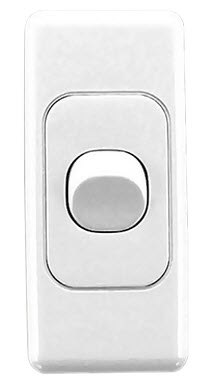
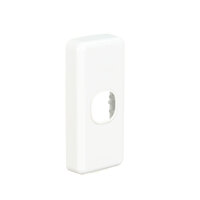
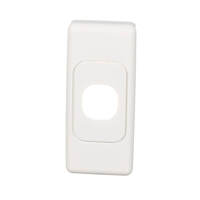
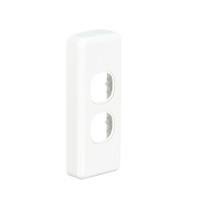
An architrave switch is a narrow-format electrical switch that controls a lighting or accessory circuit. The plate is typically around 30 to 35 mm wide, compared with roughly 75 mm for a standard switch plate. The switch mechanism, backing plate, terminals and wiring still need to be suitable for the electrical load. A narrower plate does not mean lower functionality, it simply means the same switching function in a smaller, neater footprint beside the door frame or trim.
An architrave switch opens or closes the active conductor in a lighting or control circuit, which is the same job a standard wall switch performs on a wider plate. Variants on the market include rocker action, push button, intermediate, two-way, illuminated and dimmer designs across multiple finishes. Each style suits a different use case, but the basic switching action remains consistent across the product range stocked at Sparky Direct from major Australian brands.
Architrave switches are a common solution in Australian homes where wall space is restricted. They suit bedroom doors, bathrooms, linen cupboards, laundry entries, wardrobes, hallways and renovation work. Commercial fitouts also use them in narrow corridor spaces, partition walls and built-in joinery. They reduce the need to relocate switch positions further away from the door opening, which keeps the user experience natural.
Understanding the main types helps buyers select the right product for the circuit and the location. The right choice depends on the number of circuits, the load type and whether the switch needs illumination or dimming.
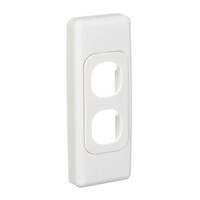
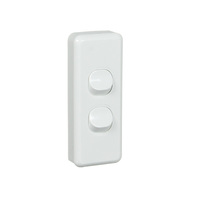
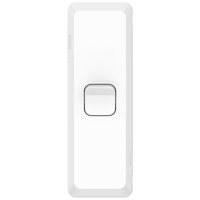
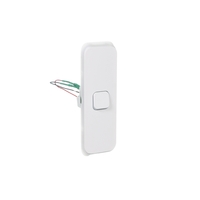
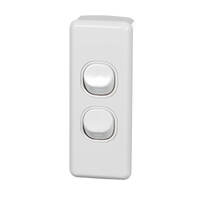
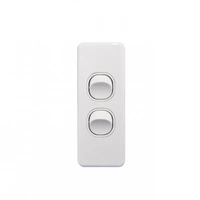
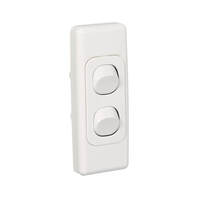
Single-gang architrave switches control one lighting circuit and are the most common choice for a single bedroom light or hallway fitting beside a doorway. Two-gang or double architrave options control two adjacent circuits in a narrow location where a wider plate will not fit. A common example is a bathroom or laundry entry where separate switching is needed for the main ceiling light and an exhaust fan running on its own circuit.
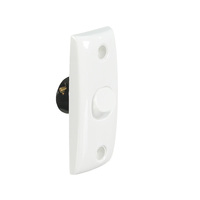
Illuminated architrave switches use a small neon or LED indicator to make the switch easy to find in low light. LED indication tends to draw less current and lasts longer than neon. These switches suit hallways, entries, stair landings and commercial corridors where night-time visibility matters. Some Clipsal Iconic and Saturn ranges include LED-illuminated push button architrave switches.
Architrave dimmer switches give brightness control in narrow locations where a full-size dimmer switch will not physically fit beside the door frame. Load compatibility is the key selection factor when matching a dimmer to the connected lamps and drivers. LED driver compatibility, minimum and maximum wattage, and heat dissipation all need to be confirmed against the dimmer specification sheet. Architrave dimmers have less surface area for heat dissipation than full-size dimmers, so the rated load is generally lower than a standard dimmer plate. A licensed electrician should confirm dimmer suitability for the specific lamps or drivers on the circuit before purchase.
Two-way architrave switches let users control one light from two locations, which is useful in long hallways and rooms with multiple entries or doorways. Intermediate switches add a third or fourth control point for more complex multi-entry layouts found in larger homes and commercial spaces. Specialty options include timer mechanisms and key-operated switches for restricted access points. Smart-compatible architrave mechanisms are more limited in range than standard plate equivalents, so brand and model availability should be checked carefully before specifying smart options for a tight architrave space.
A good specification framework prevents the most common installation problems on site, from incompatible plate sizes to wrong cut-out dimensions. Electricians, builders and renovators should confirm the rating, the mounting format and the finish carefully before placing an order, especially in retrofit work.
Architrave switches are commonly rated at 10A, with some 16A and 20A options available for higher-load circuits. Lighting circuits, exhaust fans and other inductive loads each behave differently. High-draw appliances or motor loads may need an appropriately rated switch, relay or contactor arrangement. The rating on the back of the mechanism should be checked against the connected load.
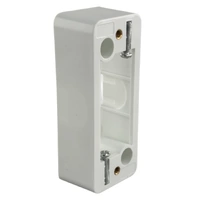
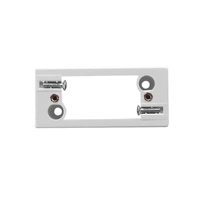
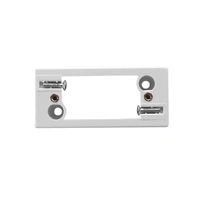
Matching the switch to the existing backing plate, wall box or bracket is critical. Older switch dimensions may not align with modern products, which is a common issue in retrofit work. Narrow cavities in door frames and masonry walls add another check. Confirming the cut-out size and the screw centres before ordering avoids rework on site.
Architrave switches are available in white, black, brushed metal and a range of premium finishes. Matching the architrave style to the broader switch and power point range in the room keeps the install looking consistent. The Clipsal Iconic, Saturn and Pro Series ranges all include matching architrave plates that align with the wider style family. For modern fitouts, heritage renovations and commercial projects, finish consistency is often as important as the technical specification.
Application context drives the specification of architrave switches across different project types. Renovation work, new builds and heritage projects each have their own constraints, and architrave switches solve different practical problems in each of those settings.
Architrave switches are common in renovation work where door frames, cabinetry, tiling or splashbacks reduce the available wall space for a standard switch plate. Kitchen, bathroom, laundry, wardrobe and hallway modifications often produce these awkward tight spots beside doorways. Older wiring or unusual wall construction should always be assessed by a licensed electrician before product selection to confirm safe and compliant fitment in the existing wall cavity.
Specifying architrave switches at the rough-in stage gives builders the cleanest result and avoids late-stage changes during fit-off. A switch schedule that lists location, gang count, finish and function helps the project team order consistent products across the entire build. Repeatable supply matters for builders running multiple residential or commercial sites at the same time. Sparky Direct supports trade orders for consistent Clipsal Iconic switches and dimmers across project rollouts of any reasonable scale.
Architrave switches preserve visual balance beside decorative mouldings and narrow wall returns in heritage homes from the Federation and Victorian eras. They avoid the need to cut large plates into period skirtings, picture rails or original timber trim. Heritage work may require additional council approval depending on the property and its listing status, and product selection should respect the original architecture wherever possible. A licensed electrician can advise on safe specification within heritage constraints and help match finishes to the existing fittings.
Choosing the right format depends on the available wall space, the design intent and whether the location calls for any kind of automation or smart control. The table below summarises the practical differences between the main switch types stocked at Sparky Direct for narrow installations.
| Switch type | Best for | Limitations |
|---|---|---|
| Architrave switch | Narrow walls beside doors, trim, recesses | Smaller product range than standard plates |
| Standard wall switch | Open walls with plenty of mounting space | Too wide for tight architrave returns |
| Slimline switch plate | Reducing wall protrusion in modern fitouts | Lower profile but not necessarily narrower |
| Smart switch | App control, scheduling and automation | Limited architrave options; needs neutral |
Standard switches generally have a broader product range, more load options and a wider choice of finishes. Where wall space allows, a standard plate is often the simpler choice. Architrave switches become the better option where width is the limiting factor, such as beside doors, narrow trim or recessed cupboards.
Slimline plates reduce how far the switch protrudes from the wall surface, but they are not necessarily narrower across the face of the plate itself. Architrave switches reduce the width of the plate, not the depth of how it sits on the wall. If the issue is limited width beside a door frame or trim, an architrave switch is the right solution for the location. If the issue is bulky-looking standard plates protruding from a flat wall, slimline plates may suit the project better.
Smart switches and sensor-based controls add automation, app control and scheduling beyond what a standard architrave switch can provide. They suit projects where remote control or motion detection is required for security, energy management or convenience. Smart architrave options are more limited in range than standard plate options, and a neutral conductor is usually needed at the switch location for the electronics to function. Wall depth, neutral availability and brand compatibility should be checked carefully before specifying smart mechanisms in a narrow architrave position. For broader automation choices, see the wider smart light switch range across multiple Australian brands.
All fixed electrical switching work in Australia is subject to compliance requirements. Product selection, installation and connection are governed by national standards and licensing laws.
Architrave switches sold for fixed wiring in Australia must be compliant with national standards and carry the Regulatory Compliance Mark (RCM). AS/NZS 3000 is the governing installation standard and is commonly referred to in the trade as the Wiring Rules. Sourcing from a reputable Australian electrical supplier helps confirm that the product is approved for sale and installation in Australia and meets the relevant safety standards.
Installation, replacement or connection of fixed electrical switches must be performed by a licensed electrician in Australia. DIY electrical work on fixed wiring is unsafe, illegal in most contexts, and can affect insurance cover and compliance certificates on the property. Buyers can safely decide product type, finish, location preference and project quantity without any licensing requirement. The wiring and connection work, however, belongs to a qualified tradesperson who can certify compliance with the Wiring Rules.
Wet, dusty or outdoor locations require suitably IP-rated products or appropriate enclosures to protect against moisture and dust ingress. Bathrooms, laundries, garages, patios and commercial corridors each have specific compliance requirements set out in the Wiring Rules. Architrave switches installed inside a bathroom must still respect wet-area zoning rules around showers, baths and basins. For outdoor switching applications beyond the wet area, the weatherproof switches range is generally more suitable than a standard internal architrave switch design.
Licensed installation only: All fixed switch wiring must be carried out by a licensed electrician under AS/NZS 3000. Sparky Direct sells compliant products. The installation responsibility sits with the qualified tradesperson on site.
A practical buyer framework saves time on site and avoids product returns once installation has begun. Electricians, builders and retail customers each weight the selection criteria slightly differently, but the core checks remain the same across all three buyer types.
Confirm the switch function first: single, double, two-way, intermediate, illuminated, dimmer or specialty option. Next, confirm the electrical current rating and the load type connected to the circuit. Then confirm the compatible plate system, the cut-out size in the architrave and the exact installation location. Finally, confirm the finish, colour, mounting format and the quantity required across the whole project schedule. Working through this checklist before ordering reduces costly site rework and avoids the wrong product turning up on the day of install.
Ordering from an Australian electrical supplier gives clear product specifications, brand options and quick dispatch. Electricians and builders may need bulk quantities across consistent finishes for fitouts. Checking model numbers, certification, stock availability and return conditions before ordering is good practice. Sparky Direct ships nationwide and supports trade pricing for ongoing project supply.
Value in trade work means compliance, durability, finish consistency and reliable supply, not just the lowest sticker price on the box. Premium designer ranges such as Clipsal Saturn Zen dimmers, mechs and accessories offer high-end finish and feature options for showcase projects. Mid-tier ranges from Hager, Legrand and NLS give strong value for everyday residential project work. Brand consistency across a site also makes future maintenance and parts matching significantly easier years down the track.
Most architrave switch issues come down to specification mistakes during ordering or end-of-life wear after many years of service. Understanding the common symptoms and underlying causes helps buyers make better replacement choices when a switch fails on site.
The most frequent errors include selecting the wrong plate size or the wrong switch function for the circuit. Other common mistakes include an incompatible dimmer for the connected lamps, an unsuitable IP rating for the location, or a mismatched finish from the rest of the room. Architrave dimmers have less heat dissipation capacity than full-size dimmers, so overloading them is a common cause of premature mechanism failure. Confirming compatibility before purchase is especially important in retrofit work where existing wall boxes and cut-out dimensions may dictate the product choice.
Symptoms that suggest an existing switch needs professional assessment include loose mechanism action and flickering lights downstream of the switch. Other warning signs include sticking or buzzing during operation, discolouration of the plate face, heat marks around the rocker or button, or intermittent operation on certain loads. These warning signs should not be ignored or worked around with a quick fix. A licensed electrician should inspect the circuit and confirm whether full replacement or further fault investigation is needed. Repair work on the internals of a switch mechanism is not a DIY task under any circumstances.
Standard wall plates are usually the better choice in locations where wall space allows them to fit cleanly. Weatherproof switches are better suited to exposed outdoor positions such as sheds, garages and patios where IP rating is critical. Contactors, relays, fan controllers or dedicated controls are better for loads beyond what a standard architrave switch can safely handle on its own. The Clipsal Iconic fan controllers range is one example of load-specific control for ceiling fan motors.
Club Clipsal is Australia's largest electrician community offering trade rewards, business support, and exclusive benefits. When you nominate Sparky Direct as your preferred wholesaler, we automatically apply your Clipsal spend points to your Club Clipsal account daily.
Entry-level offering coaching, mentoring, and training discounts
Unlock exclusive industry tools and networking events
Access Toyota fleet offers and business software discounts
Maximum benefits, including VIP experiences and rewards
1. Sign Up: Create your Club Clipsal account at clipsal.com/club-clipsal or via the iCat mobile app
2. Nominate Sparky Direct: Select Sparky Direct from the wholesaler dropdown menu in your profile
3. Add Email: Enter your Sparky Direct account email address in the membership number field
4. Start Earning: Every dollar spent on Clipsal products earns points automatically
Redeem points from the rewards store, including gift cards, tools, and experiences. Access business summits, product training, and industry networking events. Receive early access to new product launches and special promotions. Connect with fellow electricians via the Club Clipsal community app.
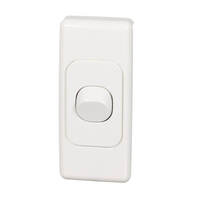
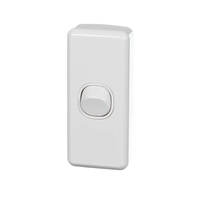
Watch Clipsal Iconic 3041AL-VW | Switch 1 Gang Architrave 10Amp | Vivid White video
Watch Clipsal Iconic 3042AL-VW | Switch 2 Gang Architrave 10Amp | Vivid White video
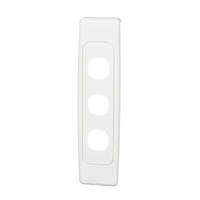
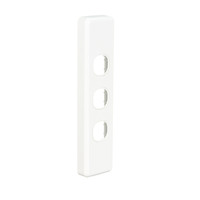
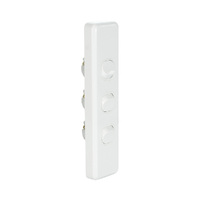
Watch NLS 30596 | 3 Gang Architrave Switch 10amp 250v White video

We used the Clipsal Iconic 3041AL-VW as a concealed switch inside our wine display, and it was the perfect choice for both function and aesthetics. The architrave design is slim, discreet, and ideal for tight spaces where a standard switch wouldn't fit. It blends seamlessly with the cabinetry, giving the display a clean, modern look without compromising on accessibility. The vivid white finish matches our interior perfectly, and the build quality feels solid and reliable, as expected from Clipsal. Whether you're installing it in a custom cabinet, a hallway, or a feature wall, this switch is a great solution when space is limited but style and performance still matter. Highly recommend for anyone looking for a smart, low-profile lighting control option.
We ordered a box of Clipsal's Horizon series switches and outlets for our house after deciding the old plain white switches were dragging the place down post recent renovations. I have to say, these switches look fantastic, the matte black finish gives every room an instant upgrade. They feel solid, sleek, and modern, and they really suit our newly updated style. Installation was straightforward for our electrician, and now they're the perfect finishing touch to bring the whole house together.
Replaced an old clipsal architrave with the iconic. Had to make a bit more space for the iconic switch to fit in the existing cut-out but was all good. The iconic looks much nicer, but personally I'm not a fan of the push button switches. Would have preferred a regular flick switch but for some reason clipsal don't make them in the iconic series like they do for the standard size switches. Otherwise really good and easy to install.
Quality products in stock • Fast Australia-wide delivery • Competitive trade pricing
Browse Architrave Switches → Get Expert Advice →Yes, modern designs are available to suit contemporary interiors.
You can find Architrave Switches at Sparky Direct, offering suitable options for narrow installation spaces.
Yes, Australian regulations require a licensed electrician to install or replace architrave switches.
Check the required configuration, finish, mounting type, and installation requirements.
Yes, they are available through authorised electrical suppliers and online electrical retailers.
Yes, they are typically supplied with a manufacturer’s warranty covering defects under normal use.
Yes, quality architrave switches are designed for long-term performance.
Yes, many ranges offer finishes to match other switches and power points.
Yes, they are often used in older homes with narrow wall spaces.
They are designed for everyday use and long-term reliability.
Yes, they are commonly used in bedrooms and hallways.
Yes, they are specifically designed for installation on door frames.
Yes, they can be wiped clean with a soft, dry cloth.
Architrave switches are slim, narrow light switches designed to fit on door frames or narrow wall spaces where standard switches are not suitable.
Yes, they are designed for simple and familiar operation.
They are ideal where space is limited and a standard wall switch will not fit.
Yes, installation must be completed by a licensed electrician to ensure safety and compliance.
Yes, they are available in single, double, and specialty configurations.
They are designed to suit architrave-style mounting boxes rather than standard wall boxes.
Yes, they are compatible with most LED lighting circuits when matched with the correct switch type.
Yes, they are particularly useful in renovation projects with limited wall space.
Yes, they are widely used in Australian residential homes.
They are commonly installed on door frames, architraves, and tight wall spaces.
They are typically rated for standard Australian mains voltage of 230–240 volts AC.
Yes, architrave switches are designed to meet relevant AS/NZS electrical safety and performance standards when installed correctly.