
Search Results:
Search Results:
Search Results:
Search Results:
A fan speed controller is a wall-mounted electrical accessory that regulates the speed of a compatible fan motor. The buyer turns a dial or moves a slider; the controller adjusts the voltage, control signal, or capacitor configuration delivered to the fan. The motor responds by running faster or slower.
The point of a speed controller is finer airflow management than a standard switch can give. A simple wall switch turns the fan on or off; a speed controller lets the user dial in a comfort point. Electricians and builders specify speed controllers in bedrooms, living rooms, bathrooms, laundries, kitchens, offices, and commercial fit-outs where airflow, noise, and draught control all matter.
Efficiency claims should be treated carefully. Some controller and motor combinations reduce energy use at low speed; others do not. The right framing is comfort and control, not energy savings, unless the specific product and fan combination supports it.
This is the most important safety distinction on the category. A light dimmer must not be used as a fan speed controller unless the product is specifically rated for fan motor loads. The two devices look similar on the wall but handle different load types internally.
Using a lighting dimmer on a fan motor can cause humming, audible buzzing, motor overheating, poor speed response, nuisance failure, and in some cases motor damage. The fan motor reads the dimmed waveform as a fault condition rather than a speed instruction.
If the search intent is "fan dimmer", the correct product is a fan-rated speed controller from a dedicated category, not a lighting dimmer. The dimmer switch range covers lighting loads; fan motor loads need products from a fan controller category. A licensed electrician should confirm product selection for any non-standard load.
Different controller types use different methods to slow a fan motor. The four main approaches are rotary mechanical control, stepped capacitor-based control, electronic variable control (typically triac or thyristor based), and motor-specific control supplied by the fan manufacturer. The next three sections cover the residential and trade options in turn.
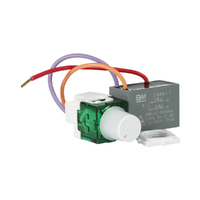
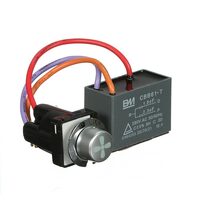
Rotary control is the most common wall-mounted format for fan speed adjustment in Australian homes. The user turns a dial to select speed, typically with positions labelled 0, 1, 2, and 3 or similar.
Rotary units come in two main flavours. Rotary stepped controllers click into fixed speed positions, giving predictable, repeatable settings. Rotary variable controllers offer continuous speed adjustment between the minimum and maximum positions. Both are popular for ceiling fans and exhaust fans because they are familiar to homeowners and quick to operate.
The tactile feel of the dial matters more than buyers expect. Good rotary controllers have a positive click at each step and a smooth turn between positions. Cheap units feel loose, which can be a sign of poor mechanical design or worn-out tabs on the mechanism.
Multi-speed control uses preset speed positions, commonly low, medium, and high. These are fixed and repeatable. A user always gets the same airflow at the "medium" position because the controller is delivering the same configuration to the motor each time.
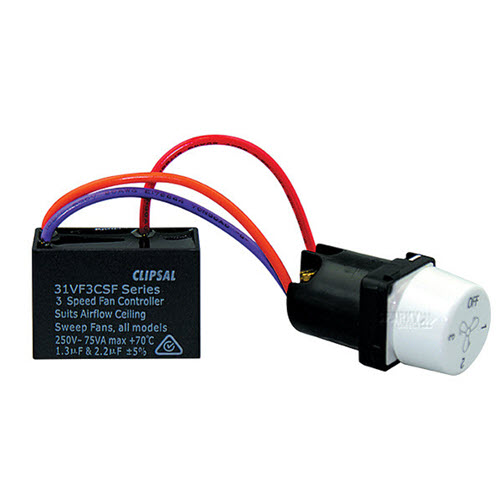
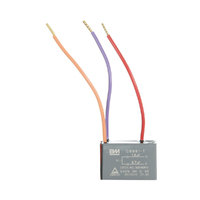
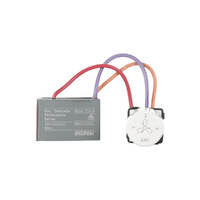
Stepped controllers can be a good choice where predictable fan behaviour and reduced humming are priorities. The defined positions match well to capacitor-based AC ceiling fan motors, which are designed around specific speed steps. Many residential ceiling fans sold in Australia use these motors, which is why 3-speed and 4-speed stepped controllers are widely available across the Clipsal Iconic fan controllers range and similar trade ranges.
Capacitor-based stepped controllers are quieter on compatible AC motors than triac electronic controllers are. The trade-off is less speed flexibility; the user gets three or four set points, not continuous adjustment.
Variable controllers allow finer speed adjustment than fixed 3-speed controls. The output ramps smoothly between minimum and maximum positions, which suits applications where the airflow target sits between standard step points.
Most electronic variable controllers use triac or thyristor switching internally. The device chops the AC waveform to deliver a fraction of full power to the motor. This works well on compatible AC motors but is not universal. Compatibility with the specific fan motor must be confirmed before specifying electronic control. Some motors, particularly EC motors and certain DC ceiling fan designs, do not tolerate triac waveforms and may fail or refuse to start. The general switch mechanisms range includes both stepped and variable formats; the right choice depends on the motor, not the buyer's preference for finer control.
The category covers wall controllers for several distinct fan applications. Selecting by use case rather than by product name avoids ordering errors on jobs that mix ceiling fans, exhaust fans, and inline ventilation.
Wall controllers for compatible AC ceiling fans cover most residential installations. The controller is used instead of, or alongside, a standard wall switch, giving the user a way to select speed without relying on a remote or pull chord. Note that many DC ceiling fans use their own supplied remote, wall plate, or smart control module and may not accept a third-party wall speed controller. The ceiling fans category lists each fan with its compatible control method.
Wall speed controllers for exhaust fans suit bathrooms, laundries, kitchens, workshops, and utility spaces where fan noise and extraction rate need control. Inline and ducted applications require correct controller selection based on the motor design and the connected load. Wet-area planning awareness applies; the controller itself should not sit in a damp or exposed zone unless it carries the correct IP rating. Compare with the broader exhaust fan range when planning the full installation.
Inline fans may need controller types recommended by the fan manufacturer, particularly in ducted ventilation systems. Common applications include bathroom inline extraction, subfloor ventilation, heat transfer systems, rangehood-adjacent ventilation, and small commercial extraction. Continuous-duty motors require correctly rated controllers; a controller sized for intermittent residential use may overheat on a 24-hour ventilation circuit.
Searches for a "universal" fan controller are common but the answer is more limited than the term suggests. There is no genuinely universal controller for every fan. "Universal" usually means compatible with a broad group of AC motor fans, not DC or EC motors. Check the fan motor type, the wattage rating, and the manufacturer instructions before assuming any controller will work with any fan.
Controller compatibility is determined primarily by the fan motor type. Mismatched controllers cause humming, overheating, unreliable operation, premature failure, and warranty issues. Get the motor type right first; everything else is secondary.
Many traditional AC ceiling fans suit compatible capacitor-based or fan-rated electronic speed controllers. Older and entry-level fans typically use AC induction motors, but the product specification should still be checked rather than assumed. For electricians replacing a failed controller, the cleanest path is to confirm the existing fan model and the original controller type, then specify a like-for-like replacement where the original product is still available.
DC ceiling fans are generally not compatible with standard AC wall fan speed controllers. DC fans rely on supplied remotes, proprietary wall controllers, or smart modules from the fan manufacturer. Installing an incompatible AC controller on a DC fan can damage the fan electronics and void the warranty. Where a wall control is needed for a DC fan, the correct product is the manufacturer-approved wall plate, not a generic speed controller.
EC (electronically commutated) motors and some premium ventilation fans require controller types approved by the fan manufacturer. Standard triac-style controls are often unsuitable unless specifically listed as compatible by the fan manufacturer. The driver electronics in these motors expect a specific control signal; chopped AC waveforms can confuse them. Check fan documentation before ordering a replacement or upgrade controller.
"Quiet fan speed controller" is a common buyer search. Noise issues are usually caused by controller-motor mismatch, poor load matching, or unsuitable electronic control on a motor that wants stepped capacitor switching. The practical fix is to choose a fan-rated controller with documented compatibility for the specific fan, and to avoid lighting dimmers regardless of price or appearance. Persistent humming, overheating, or irregular fan operation should be assessed by a licensed electrician; the fault may be in the motor rather than the controller.
Once motor compatibility is confirmed, the electrical ratings are the next check. These details prevent overload, premature failure, and unsafe operation.
Controllers are rated by maximum wattage or current and must not be overloaded. Use the fan motor wattage from the data plate or specification sheet, not an estimate. Leave a suitable margin above the fan load, especially for continuous-use ventilation where the controller runs at full load for long periods.
Controlling multiple fans from one controller is only suitable when the combined load and the motor type both match the controller rating. Commercial, hospitality, or large residential applications may need higher-rated controllers or separate controls per fan. Electricians should confirm the total connected load before installation; underrated controllers fail early under sustained multi-fan loads.
Fans need enough voltage or control signal to start and continue rotating safely. Running a motor too slowly can create stall conditions, heat, and reliability issues over time. Controllers with minimum-speed adjustment should be set by a licensed electrician at fit-off, not left at the factory default if the factory default sits below the motor's reliable starting threshold.
Some controllers are sold as complete wall plates; others are mechanisms only that fit into a separate modular plate. Common Australian wall plate formats and multi-gang configurations vary by brand, so check the controller mechanism size, plate style, and gang layout before ordering. A mechanism-only product needs a matching plate; a complete-plate product replaces the entire wall accessory in one piece.
A practical decision framework: start from the motor type, narrow by room use, then choose the controller style and finish. Specification mistakes at this stage are expensive to fix after fit-off.
For bedrooms, living rooms, and family areas, the right product is a compatible, quiet, fan-rated controller matched to the specific ceiling fan model. Ceiling fans in sleep spaces benefit most from predictable low-speed operation and minimal hum, which usually points to a capacitor-based stepped controller rather than electronic variable control. A clean wall plate finish matters where the controller is visible in a renovated room.
For exhaust fans, check the fan manufacturer compatibility first, particularly for inline, ducted, and continuous-run fans. Bathrooms, laundries, and kitchens benefit from controllers that reduce noise and airflow without compromising the extraction rate the fan was specified for. The bathroom exhaust fans range lists compatible control methods per model. Wet-area compliance applies to the controller placement, not just the fan itself.
Value is reliability, compliance, availability, standard plate compatibility, easy specification, and trade pricing. The cheapest product is rarely the best value if it causes callbacks, humming complaints, or compatibility issues on commission. Trade-friendly availability matters most on multi-fan projects where stock holds delay the whole fit-off.
Choose rotary for familiar user control and broad residential use. Choose 3-speed stepped for predictable fixed settings, simple operation, and quietest performance on AC ceiling fans. Choose variable electronic where finer airflow control is needed and the motor compatibility has been confirmed. Motor compatibility always comes before user preference.
Fan speed controller installation is fixed electrical work and must be carried out by a licensed electrician in Australia under AS/NZS 3000:2018. The buyer can select and purchase a controller, but the wiring is not a DIY task.
Wall-mounted fan speed controllers involve fixed wiring, isolation requirements, load matching, terminal connections, and circuit protection considerations. All of these are licensed electrician tasks. The safety reasons include correct termination, correct load rating against the circuit breaker, and verification of compliance with AS/NZS 3000:2018.
The buyer's role is selection, not installation. What the buyer can usefully do:
Wiring diagrams, terminal instructions, and procedural electrical steps are not appropriate here.
Controllers sold and installed in Australia should carry valid Regulatory Compliance Mark (RCM) certification. AS/NZS 3000 compliance covers the installation. Buying from authorised Australian electrical suppliers reduces the risk of grey-market or non-compliant product, both of which create installation and warranty problems.
Controllers in bathrooms, laundries, alfresco areas, or other damp environments need correct placement and a suitable IP rating. Standard indoor controllers should not be installed where they are exposed to moisture unless they are specifically rated for that environment. Where a wet-area or outdoor location is part of the brief, the electrician should confirm whether the planned controller is suitable or whether a weatherproof switch or IP-rated alternative is required.
This comparison sits as its own section because it is the most common source of product confusion in the category.
Light dimmers are designed for lighting loads. They handle resistive incandescent, LED, halogen, and similar loads through phase-cut waveform control optimised for lamp behaviour. Fan speed controllers are designed for fan motor loads. They handle inductive AC motor loads through capacitor switching or motor-rated electronic control.
The two products look similar on the wall, sit in similar mechanism formats, and sometimes even share a plate range. They are not interchangeable. Using a dimmer on a fan can cause humming, motor overheating, and premature fan failure. Using a fan controller on a lighting circuit can cause flicker, poor dimming range, or driver damage on LED lamps.
If the search term is "fan dimmer", the correct product is a fan-rated speed controller from the fan controller category, not a lighting dimmer. The product type matters more than the brand or the price.
Wall speed controllers are not the only way to vary fan speed. Each alternative has a use case where it is the better choice.
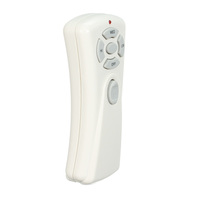
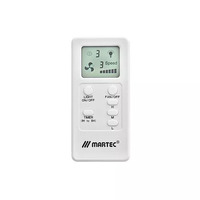
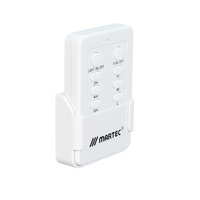
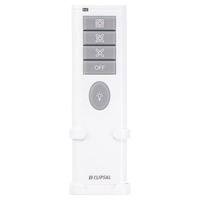
Wall controllers suit fixed, always-visible, always-available control. They sit at a known location and do not get misplaced. Remotes are common with DC fans and smart ceiling fans, but they can be lost, run out of battery, or tie the fan to a proprietary system that does not survive a manufacturer change. Some fans require the supplied remote and should not be converted to a generic wall speed controller. The ceiling fan remotes range covers manufacturer-approved remote options.
Mechanical or capacitor-based controllers provide reliable stepped control for AC motors. They are quiet on compatible motors and have a long service life because the switching is mechanical rather than electronic. Electronic controllers provide smoother adjustment where the motor is compatible with triac or thyristor switching. Electronic units typically cost more, run warmer, and depend on accurate compatibility checks.
Smart control covers app, voice, and automation-based fan operation. It works through a proprietary hub or module specific to the fan brand. Smart compatibility depends on the fan system, not on the wall plate. Standard fan speed controllers remain the dependable choice for straightforward manual control where smart integration is not a project requirement. The smart light switch range covers dedicated automation-ready products in the lighting category for comparison.
Problem-solving guidance for common buyer queries. The advice here covers diagnosis only; actual electrical repair is a licensed electrician task.
Likely causes: incompatible controller, unsuitable electronic control on a motor that needs stepped capacitor switching, incorrect load range, ageing fan motor, or motor design that does not tolerate phase-cut waveforms. The first check is fan and controller compatibility against the manufacturer specifications. Persistent humming should be assessed by a licensed electrician, who may recommend a capacitor-based stepped controller or a manufacturer-approved alternative.
This is usually a minimum-speed or starting-torque issue. Some motors cannot reliably run below a certain speed; the controller is sending a valid low signal but the motor needs more torque to rotate. Possible fixes include electrician adjustment of the controller minimum-speed setting (where supported) or replacement with a controller that has a higher minimum-speed floor.
Some controller types generate heat under normal operation, but excessive heat, an unusual smell, discolouration, or intermittent operation should be treated as a fault. Switch the circuit off at the switchboard where it is safe to do so, and contact a licensed electrician. Do not open the controller or attempt repair; the fault may indicate a wiring issue, an overload condition, or a damaged component that needs replacement.
Before ordering a replacement, confirm the fan type, the existing controller brand and model, the wall plate style, the load rating, and the number of fans on the circuit. Like-for-like replacement is the safest path when the product is still available and the original installation was correctly specified. A faulty controller can sometimes indicate a motor issue rather than a controller failure; the licensed electrician should diagnose before the order is placed.
Trade and renovation buying works best when the product selection is locked in before order placement. The checks below reduce mid-order substitutions and shipping delays.
Low-cost options can suit basic AC ceiling fans if the product is certified and motor-compatible. Avoid choosing on price alone without checking the motor type and the load rating against the fan. Non-compliant or incompatible products cost more through callbacks, replacement labour, and warranty disputes than the unit price savings recover.
Variable and electronic controllers usually cost more than basic stepped units. Compare on controller type, load rating, brand support, and plate compatibility rather than headline price alone. Bulk or trade orders typically reduce per-unit cost for electricians and builders working through a project schedule.
Buy through Australian electrical wholesalers and authorised online suppliers. Pre-purchase checks include RCM certification, product code, controller type, load rating, warranty terms, returns policy, and the manufacturer's compatibility documentation. Sparky Direct stocks fan speed controllers and related accessories with trade-friendly product information, nationwide delivery, and suitability for electricians, builders, and informed retail buyers. The ceiling fan switches range covers related fan-switching products, and the broader fans and ventilation category lists every related fan product. For mechanism-only items, see the light switches category where Allure, Iconic, and other modular ranges are listed alongside compatible fan controller mechanisms. Major brands stocked include Clipsal, Legrand, HPM, Fantech, and Martec.
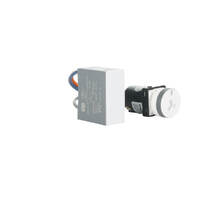
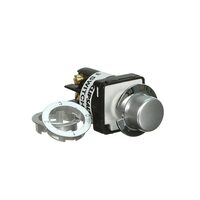
Watch CLIPSAL 30CSFM | 3 Speed 75VA Fan Controller (Mech Only) , 30CSFMWE video
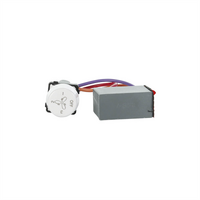
Watch Clipsal Iconic 40CSFM-VW | Fan Speed Controller, 4-Position Off-1-2-3, 250V, 75VA video
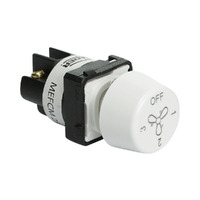
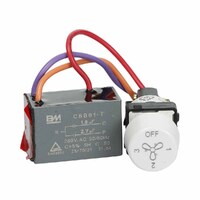
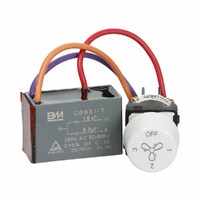
Watch Trader Meerkat MEFC | Rotary Fan Controller with 1.6/2.3 uF Capacitor video

Would definitely recommend the company Sparky Direct for all your electrical component needs. They have a large range, especially for items that are hard to find. We were looking specifically for a black fan controller and we found it instantly on the website. The website was so easy to use, especially if you are not tech savvy. Sparky Direct made sure the product was packaged extraordinarily well to protect it. Extremely fast delivery.
Designed for the Clipsal Iconic plate, no more pushing mechs in and out and wearing down the tabs - the sliding latch holds it secure. Looks great, works well. 1000% better than installing the fan controller that comes with the fan these days.
I just bought a replacement Clipsal switch for my ceiling fan. The store is just 15 mins away so I arranged to pick it up today (no postage!) and even, not the handyperson at all, had no trouble replacing it! My fan is working just fine again. Thank you!
Quality products in stock • Fast Australia-wide delivery • Competitive trade pricing
Browse Fan Speed Controllers → Get Expert Advice →Yes, they allow you to fine-tune airflow to suit different seasons and room conditions.
You can find Fan Speed Controllers at Sparky Direct, offering suitable options for Australian homes.
Yes, Australian regulations require a licensed electrician to install or replace fan speed controllers.
Check fan compatibility, control type, wall box depth, and installation requirements.
Yes, they are available through authorised electrical suppliers and online electrical retailers.
Yes, they are typically supplied with a manufacturer’s warranty covering defects under normal use.
Yes, speed control is useful year-round to manage airflow and comfort.
Yes, they are designed for long-term everyday use in Australian homes.
Yes, they are suitable for renovation projects with compatible wiring and wall boxes.
Minimal maintenance is required once installed correctly.
Yes, they are suitable for living rooms, dining areas, and other shared spaces.
Yes, they are commonly used in bedrooms to allow quieter, lower-speed operation at night.
Quality controllers are designed to operate smoothly and quietly when matched with compatible fans.
Fan speed controllers are electrical devices used to adjust and control the operating speed of ceiling fans or other compatible electric fans.
Yes, they are designed for simple and intuitive operation.
It allows you to adjust airflow and comfort rather than having the fan operate at a single fixed speed.
Yes, installation must be completed by a licensed electrician to meet Australian electrical regulations.
Yes, they are available in rotary, push-button, and electronic control designs.
Yes, some models support combined fan and light control, depending on the configuration.
Many are designed to suit standard Australian wall boxes, though depth requirements should be checked.
Not all fans are compatible, so the fan motor type and controller compatibility should be confirmed before selection.
Yes, they are designed for use with compatible ceiling fans that support speed control.
Yes, they are commonly used in Australian homes to provide adjustable fan speed control.
They are typically rated for standard Australian mains voltage of 230–240 volts AC.
Yes, fan speed controllers are designed to comply with relevant AS/NZS electrical safety and performance standards when installed correctly.