
Search Results:
Search Results:
Search Results:
Search Results:
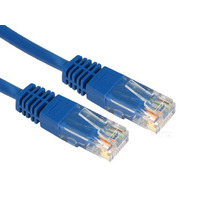
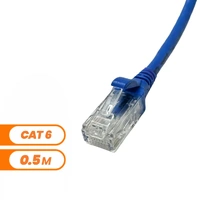
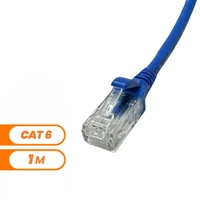
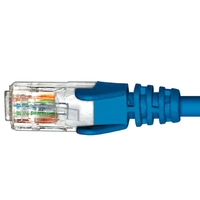
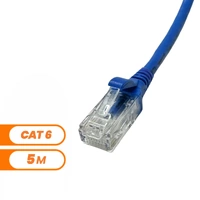
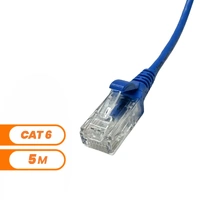
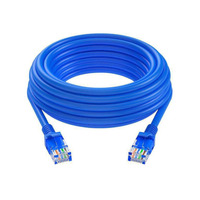
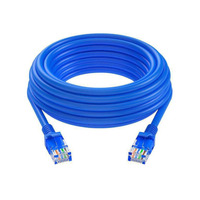
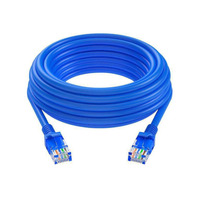
A patch lead (also called a patch cord or patch cable) is a short, pre-terminated cable with a connector on each end. The most common form is a copper twisted-pair cable with RJ45 plugs, used for ethernet. Fibre patch leads use connectors such as LC, SC or MPO. A patch lead bridges two fixed points: a wall socket to a device, a switch port to a panel, or two pieces of network gear.
Structured cabling refers to the permanent, in-wall horizontal and backbone runs that connect outlets back to a comms room. Patch leads are the flexible, replaceable cables that connect into that fixed infrastructure. Horizontal cable is solid copper and is terminated into RJ45 wall outlets or patch panels. Patch leads use stranded copper, which makes them more flexible and better suited to repeated handling.
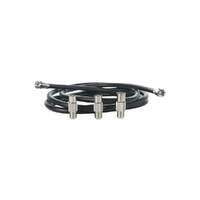
In a typical install, the patch lead is the final link between fixed cabling and the active equipment. A network switch in a cabinet patches into a panel. Horizontal cable runs from the panel to a wall outlet. The user then patches into a PC, IP camera, access point, or AV device. Patch leads also carry HDMI, coax, and other signals. The wider HDMI cable range and coaxial cable range cover related AV connections.
Patch leads are sold by electrical wholesalers, dedicated data and comms suppliers, and online retailers. Electrical wholesalers like Sparky Direct stock patch leads alongside the wider data and phone accessories range. That is useful when a single job needs leads, RJ45 wall plates, and a patch panel in the same order.
Look for clear category labelling (Cat5e, Cat6, Cat6A), manufacturer detail, and stock that ships from Australia. A supplier that also stocks data cabinets, punch down tools, and network testers usually has the trade knowledge to advise on the right cable for the job.
Trade users often buy patch leads in length packs (for example a mix of 0.5m, 1m, 2m and 3m for a single rack) so the cabinet can be built without leftover slack. Sparky Direct supplies trade customers across Australia and ships from local stock, so leads ordered today reach most metro sites within a few business days.
In a data centre, patch leads connect servers to top-of-rack switches and link those switches up to aggregation layers. Density is high, so short leads (0.3m to 1m) are normal at the top of the rack, with longer leads only where equipment is spread further apart.
Comms cabinets in offices, schools, and retail sites use patch leads to connect outlets in the building to network switches inside the cabinet. Cable management bars, rings, and ducting keep the leads tidy and let any single lead be removed without disturbing the rest.
AV racks use patch leads for IP-based control, video over IP, and networked audio. Many modern AV products run on standard Cat6 or Cat6A infrastructure, which means the same patch lead types used for data also handle AV traffic.
Some industrial switchboards include networked controllers, meters, or relays that connect over ethernet. Short patch leads inside the switchboard link these devices to a managed switch or gateway. Clipsal Iconic network connectivity products provide RJ45 outlets that match the surrounding switch range for clean, consistent finishes.
Copper patch leads are sold by category, which sets the maximum supported speed and frequency. The category of the patch lead must match the category of the horizontal cable for the channel to perform to its rated speed.
| Category | Max Speed | Max Bandwidth | Typical Use |
|---|---|---|---|
| Cat5e | 1 Gbps | 100 MHz | Legacy and basic office networks |
| Cat6 | 1 Gbps (10 Gbps to 55m) | 250 MHz | Most current commercial installs |
| Cat6A | 10 Gbps to 100m | 500 MHz | 10G data centre and PoE+ runs |
| Cat7 / Cat7A | 10 Gbps | 600 / 1000 MHz | Specialist shielded installs |
| Cat8 | 25 / 40 Gbps | 2000 MHz | Short data centre links to 30m |
Cat5e supports gigabit ethernet over the full 100 metre channel. It is still common in legacy installs and small office networks. New installs generally specify Cat6 or higher, but Cat5e patch leads remain useful for replacements and lower-speed connections.
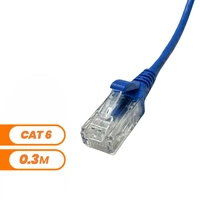
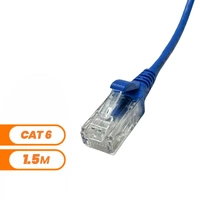
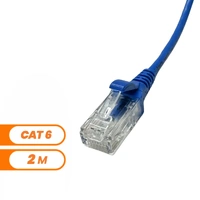
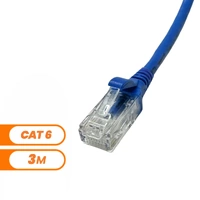
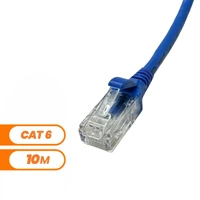
Cat6 is the most common patch lead category in current commercial work. It supports gigabit ethernet on full-length runs and 10 Gigabit ethernet on shorter channels (up to 55 metres). The tighter twist rate and improved insulation reduce crosstalk compared with Cat5e.
Cat6A supports 10 Gigabit ethernet across the full 100 metre channel. It is the standard choice for new commercial fitouts, PoE+ devices such as Wi-Fi 6 access points, and any site planning for higher speeds in the next few years.
Cat7, Cat7A and Cat8 use heavily shielded constructions and offer higher bandwidth. Cat7 is not recognised by TIA and uses non-RJ45 connectors in its full specification, which limits practical use in standard structured cabling. Cat8 is recognised by TIA but is rated only for short links up to 30 metres and is mainly used inside data centres for high-speed switch-to-server connections.
Fibre patch leads carry data over glass strands and are used where copper distance limits or electrical noise rule out twisted pair. Multimode fibre (OM3, OM4, OM5) suits short runs inside buildings, typically up to a few hundred metres at 10 Gbps. Single mode fibre (OS1, OS2) suits long runs between buildings or across campuses and can carry signal over many kilometres.
Unshielded twisted pair (UTP) patch leads rely only on the cable twist to reject interference. UTP is lighter, more flexible, and cheaper, and it is the standard choice in most commercial and residential installs.
Shielded patch leads add a metallic foil or braid around the pairs, the cable as a whole, or both. FTP uses an overall foil. STP shields each pair. S/FTP and SFTP combine pair shielding with an overall braid or foil. Shielded leads cost more and are stiffer to handle.
Shielding becomes important where electromagnetic interference (EMI) is high. Typical examples include cable runs near variable speed drives, large transformers, fluorescent lighting banks, or industrial machinery. Shielded patch leads are also used in 10 Gigabit installs where alien crosstalk between cables can affect performance.
Shielded cabling only works if the shield is bonded to earth at the correct point in the system. Use shielded patch leads with shielded outlets and shielded patch panels, and follow the cabling vendor's bonding instructions. Mixing shielded leads with unshielded outlets can leave the shield floating, which can act as an antenna and make interference worse.
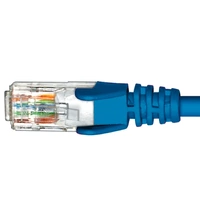
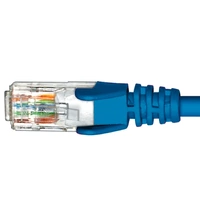
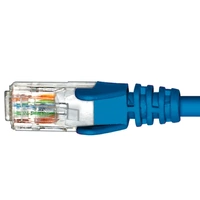
The RJ45 (8P8C) connector is the standard plug for copper ethernet patch leads. Quality leads use plated contacts and a moulded boot that protects the cable jacket where it enters the plug. The same RJ45 plug terminates Cat5e through to Cat8 leads, with internal differences in how the wires are managed inside the connector.
Fibre patch leads use a range of connectors. LC is a small form-factor connector used in most modern switches and transceivers. SC is larger and still common in older equipment and patch panels. MPO is a multi-fibre connector used for high-density 40G and 100G links, with 12 or 24 fibres in a single ferrule.
Snagless boots cover the release tab on the RJ45 plug so it cannot catch on other cables when leads are pulled out of a dense bundle. They cost slightly more but reduce broken tabs and accidental disconnections in busy racks. Standard boots are fine for fixed installs that are rarely moved.
The most common failure point on a patch lead is the release tab on the plug. Once the tab snaps off, the lead cannot lock into the port and will eventually drop the connection. The second is strain at the cable entry point, where flex over time can break individual conductors. A broken tab or a bent boot is a sign the lead should be retired.
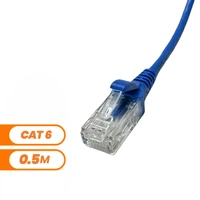
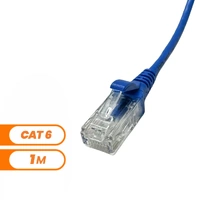
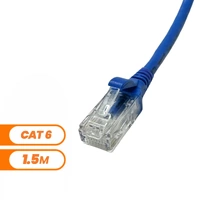
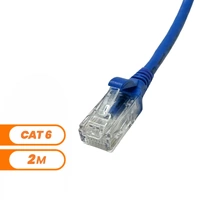
Patch leads are sold in standard lengths: 0.3m, 0.5m, 1m, 2m, 3m, 5m, 10m, and longer. Longer leads up to 30m exist for site work, but in a structured cabling install most leads are kept under 5m. The total channel length (horizontal cable plus both patch leads) must stay within 100 metres for copper ethernet.
Match the lead to the actual cable path, with a small allowance for routing and bend radius. Excess length creates loops that take up space, block airflow, and make later changes difficult. As a rough guide, allow 50 mm to 100 mm of slack at each end after the lead is dressed into the cable management.
Over-long leads bunched at the back of a switch can block hot exhaust and raise equipment temperatures. Tidy patching with correct-length leads keeps airflow paths clear, makes faults easier to trace, and reduces the chance of pulling the wrong lead during changes.
Colour coding patch leads by function helps with day-to-day management. Common conventions are blue for general data, yellow for VoIP, red for security or management, green for fibre uplinks, and grey for spare ports. Pick a scheme, document it, and stick to it across the site.
TIA-568 (United States) and ISO/IEC 11801 (international) are the two main standards covering structured cabling performance. Both define category ratings, channel test parameters, and connector requirements. Patch leads sold to a category rating should be tested and certified to the matching standard.
AS/NZS 3080 adopts ISO/IEC 11801 for telecommunications cabling in Australia and New Zealand. It covers performance requirements for generic cabling in commercial premises, including channel and link testing values. Cabling work covered by this standard is registered cabling work and must be performed by a registered cabler under ACMA rules.
The rated speed of a channel is set by its lowest-rated component. A Cat6A horizontal run patched with a Cat5e patch lead is a Cat5e channel for performance purposes. To get the full benefit of higher-category cabling, the patch leads at both ends must meet or exceed the channel rating.
Certified leads are tested against the relevant standard and ship with documentation. Non-compliant leads, often sold cheaply online, may be labelled Cat6 but use undersized conductors or non-compliant connectors. They can pass a basic continuity test but fail proper channel certification, which is a problem for any install that needs a compliance certificate at handover.
Start by checking the rating of the installed horizontal cable and the active equipment. If both are Cat6, Cat6 leads are the natural fit. Going higher only helps if either side is being upgraded, or if a future-proof channel is wanted.
Choose copper for runs under 100 metres, for shorter speeds up to 10 Gigabit, and where Power over Ethernet is needed. Choose fibre for runs over 100 metres, for high-speed backbones, between buildings, or in high-EMI environments where copper cannot meet performance requirements.
For high-EMI sites pick shielded leads and a matched shielded system. For hot environments use leads rated for the operating temperature range. For tight bend areas pick stranded patch leads with a quality boot. In plenum spaces (return-air ceiling voids) use leads with the correct fire-rated jacket where local rules require it.
Common mistakes are easy to spot once you know them. Mixing shielded and unshielded components in the same channel breaks the shield path. Using a higher category at one end and ignoring the other wastes the upgrade. Picking leads that are far too long creates spaghetti behind the rack. Treating cheap unbranded leads as equivalent to certified product can fail compliance testing.
Modern switchboards often house networked metering, controllers, and protection relays. Short patch leads inside the board link these devices to a managed switch, gateway, or BMS controller. Lead routing inside the board must follow the relevant switchboard and separation rules in AS/NZS 3000.
Industrial sites often use M12 connectors instead of RJ45. M12 connectors have a screw-locking metal body that resists vibration, dust, and water ingress to IP67 or higher. RJ45 leads are still used inside cabinets and clean control rooms, while M12 leads run out to field devices on the plant floor.
Low Smoke Zero Halogen (LSZH) jacket material releases less smoke and no halogen acid gases when burnt, which matters in tunnels, transport, and sealed plant rooms. Harsh-environment leads also use UV-stable jackets for outdoor use and oil-resistant jackets for plant work.
Industrial cabling must meet AS/NZS 3000 for general electrical safety, AS/CA S009 for telecommunications customer cabling, and AS/NZS 3080 for performance. For data work in switchboards, the cabler must be registered under the ACMA cabling provider rules.
Use horizontal and vertical cable management bars at every patch panel and switch. Lacing bars, fingers, and rings keep leads off the floor, route them clear of airflow paths, and make later changes faster. The wider cable management range covers the common products used in racks.
Twisted-pair cable should not be bent tighter than four times its overall diameter. Fibre is even more sensitive: standard single-mode patch leads need a minimum bend radius of around 30 mm (bend-insensitive types allow tighter radii). A kinked cable will pass a quick continuity test but may fail certification or develop intermittent faults later.
Label both ends of every patch lead and record the patching scheme. A clear label survives moves, adds, and changes far better than memory or pencil notes on the rack frame. Most sites use printed labels with a port and outlet code.
Hook-and-loop ties are preferred over cable ties for patch leads. They can be loosened and re-used, and they apply less crushing force to the cable jacket. Avoid pulling Velcro or zip ties tight; the goal is to dress the leads, not compress them.
An intermittent link usually traces back to a damaged plug, a marginal connection in the patch panel, or a cable that has been pinched or kinked. Swap the patch lead first; it is the cheapest and fastest way to rule out the lead as the cause.
Crosstalk shows up as packet errors, slow throughput, or auto-negotiation failures. Causes include using a lower-category lead in a higher-rated channel, untwisting too much pair at the connector, or running unshielded leads next to a strong noise source. Move the lead away from the noise source or switch to a shielded lead.
Inspect both plugs before installing a lead. Bent contacts, cracked housings, and broken release tabs are all reasons to discard the lead. A bent contact can leave a port dead even when the lead looks fine from a distance.
Work from simplest to most complex: check link lights at both ends, swap the patch lead, swap the port at the switch, then bring out a tester. A basic continuity tester confirms wiring. A full certification tester measures performance against the cable category and is the only way to prove a link meets its rating.
Patch leads do not have a fixed service life, but they should be inspected during any rack work and replaced as soon as damage is found. Sites with frequent changes wear leads out faster and benefit from a regular inspection cycle, for example every six to twelve months.
Common wear signs include flattened cable jacket near the boot, discoloured plugs, broken release tabs, and scuffed or kinked sections. A lead with any of these signs should be retired even if it still passes a basic test.
In comms cabinets that see frequent moves and changes, snagless leads, colour coding, and good labelling all reduce wear and trace time. Keep a small stock of common lengths so a damaged lead can be swapped without delaying the work.
For any business that depends on the network, a small stock of spare leads in the most-used lengths and colours is sensible. As a starting point, keep two or three of each length used on the site and replace them after they are deployed.
Budget leads can work well for low-speed, fixed installs that are unlikely to be touched. Premium leads with snagless boots, certified testing, and quality plugs are worth the small extra cost in any setting where reliability matters. The price difference between a no-name lead and a tested branded lead is small relative to the cost of chasing a fault.
For larger projects, buy leads by the length pack: a single carton with a balanced mix of 0.5m, 1m, 2m and 3m leads in the chosen colours. This avoids the common situation of running out of one length at the end of the build.
An unplanned network outage costs far more than the price of any single patch lead. Even a short outage in a small office disrupts work, calls, payments, and customer access. The economics of buying tested leads and keeping spares are easy to justify against this background.
Certified leads come with test results that match the category rating. For commercial work that needs a compliance certificate at handover, only certified leads will pass channel testing. The extra cost is built into the project price and protects the install over its full life.
A typical office fitout uses Cat6 or Cat6A horizontal cabling with matching patch leads at the desk and at the patch panel. Lead colour usually marks the service: blue for data, yellow for voice, red for management. The choice of category is set by the speed needed today and the speed planned for the next refresh.
Data centre patching is dense and short. Most leads are 0.3m to 1m for top-of-rack switching, with longer runs only for inter-rack links. Cat6A and Cat8 copper cover most ethernet links; fibre takes the high-speed backbone work between rows and to upstream networks.
Industrial automation runs on industrial ethernet variants such as PROFINET, EtherNet/IP, and Modbus TCP. These use standard Cat5e or Cat6 cabling, often shielded, with M12 connectors out to field devices and RJ45 leads inside the control cabinet.
Home networks built around a small comms cabinet use the same RJ45 patch leads as commercial sites, just in smaller numbers. Cat6 is the common choice. Patch leads connect outlets in each room back to a small switch and the NBN connection box.
Data cabling must be kept clear of mains power cabling to limit interference and meet the separation rules in AS/CA S009. Standard practice is to run data cable in its own ducts, on its own cable trays, and to cross power runs at right angles where they must intersect.
AS/NZS 3000 (the Wiring Rules) covers the electrical side of any installation. AS/CA S009 covers customer cabling for telecommunications, including data cabling. Cabling work tied into the network boundary point must be done by a registered cabler under the ACMA rules.
Use the right tools for termination, match plug type to cable category, and test every link after installation. Avoid running data leads through the same gland or cable tie bundle as mains cables. Keep leads away from sharp edges in cabinets and racks.
Commercial sites usually require channel certification at handover. The cabler tests every link with a certifying tester, prints the results, and provides them as part of the project documentation. This proof of performance is what most warranty and compliance regimes rely on.
Club Clipsal is Australia's largest electrician community offering trade rewards, business support, and exclusive benefits. When you nominate Sparky Direct as your preferred wholesaler, we automatically apply your Clipsal spend points to your Club Clipsal account daily.
Entry-level offering coaching, mentoring, and training discounts
Unlock exclusive industry tools and networking events
Access Toyota fleet offers and business software discounts
Maximum benefits, including VIP experiences and rewards
1. Sign Up: Create your Club Clipsal account at clipsal.com/club-clipsal or via the iCat mobile app
2. Nominate Sparky Direct: Select Sparky Direct from the wholesaler dropdown menu in your profile
3. Add Email: Enter your Sparky Direct account email address in the membership number field
4. Start Earning: Every dollar spent on Clipsal products earns points automatically
Redeem points from the rewards store, including gift cards, tools, and experiences. Access business summits, product training, and industry networking events. Receive early access to new product launches and special promotions. Connect with fellow electricians via the Club Clipsal community app.

Used as an alternative to a patch panel inside a comms cupboard. Nice dense mech packing. Some of the really old digitech mechs (cube ones) didn't fit and needed to be modified. Newer mechs were fine. Mech are hard to get out one pressed in. Didn't need the covers. Would have been nice to leave them out.
This cable tester is incredibly straightforward and provides accurate readings in just seconds. Its compact design makes it perfect for carrying around job sites, and the clear display helps diagnose any issues without fuss. If you're after a reliable, no-nonsense tester, the LAN Scout Jr. is a top choice.
My partner and I have bought two big orders now from Sparky Direct and both times our packages arrived very quickly and we received all the correct items. Sparky direct have been a great company to go thought for any electrical needs. We love the Clipsal Iconic range! Looks so beautiful in our newly renovated home. Highly recommend.
Quality products in stock • Fast Australia-wide delivery • Competitive trade pricing
Browse Patch Leads → Get Expert Advice →Yes, most patch leads are designed to be flexible for easy routing and connection.
Sparky Direct supplies patch leads Australia-wide, offering reliable connectivity solutions with convenient delivery.
Patch leads are securely packaged and delivered via standard courier services.
Unused patch leads are generally eligible for return according to the seller’s returns policy.
Warranty coverage varies by manufacturer and typically covers defects in materials or workmanship.
Patch leads are available individually and in multi-pack options.
Patch leads generally require no maintenance beyond checking for damage.
Yes, they are ideal for both permanent and temporary network connections.
Yes, patch leads are often available in different colours for easy identification.
With frequent movement or bending, patch leads can wear and may need replacement.
Yes, they are commonly used in home office and small network setups.
Yes, patch leads are simple to replace and do not require special tools.
Yes, low-quality or damaged patch leads can cause slow speeds or dropouts.
Patch leads are used to connect devices such as computers, routers, switches, and patch panels within data and network systems.
Shorter leads can help reduce signal loss and keep installations tidy.
Choosing the right patch lead depends on the required speed, cable length, and environment.
Yes, patch leads are an essential part of structured cabling systems.
Yes, they are designed to work with standard RJ45 network ports when correctly matched.
Patch leads are available in a range of lengths to suit different installation requirements.
Yes, shielded patch leads are available for environments with higher electrical interference.
Yes, the cable category and quality of the patch lead can affect data speed and performance.
Yes, patch leads are widely used in homes, offices, and commercial network installations.
Patch leads are commonly available in Cat5e, Cat6, Cat6A, and higher categories for different network speeds.
Many patch leads are manufactured to meet relevant AS/NZS cabling and performance standards, depending on the category and use.
Common types include Ethernet data patch leads, phone patch leads, and coaxial patch leads.