
Search Results:
Search Results:
Search Results:
Search Results:
Heated towel rails are sold through three main channels in Australia: bathroom showrooms, online retailers, and electrical wholesalers. Showrooms offer in-person display but typically carry limited stock at full retail pricing. Online retailers offer convenience, though product knowledge and technical support vary significantly. Electrical wholesalers stock trade-grade product, carry accessory items such as timers and thermostats, and price for volume purchasing.
For licensed electricians and trade buyers, an electrical wholesaler is the most efficient source. Stock availability is higher, lead times are shorter, and pricing reflects trade volumes rather than retail margins. Sparky Direct stocks heated towel rails with competitive trade pricing and Australia-wide delivery.
A reliable supplier stocks product from established brands, provides accurate technical specifications, and can fulfil orders without extended lead times. For trade buyers, the ability to source compatible accessories in the same transaction matters. A timer switch, thermostat, or replacement element sourced alongside the rail saves a second order and keeps a job moving.
Most metropolitan areas in Australia receive online trade orders within two to three business days. For renovation jobs and new builds, ordering in advance of installation is standard practice. Confirm stock status before scheduling installation to avoid delays on site.
Electric heated towel rails contain a sealed heating element running through the rail body. The element converts electrical energy to heat, which transfers through the rail surface by conduction. The rail warms the towel through direct contact and radiates ambient warmth into the bathroom. Most electric models run at wattages between 60W and 180W depending on rail size. A timer switch or thermostat can control operating hours to manage running costs.
Electric heated towel rails installed in wet areas (zones 1 and 2 as defined under AS/NZS 3000:2018) must use a hardwired connection. Plug-in models are limited to zone 3 placement. Always confirm zone classification during site inspection before specifying product type.
Hydronic heated towel rails connect to a central hot water heating circuit. Hot water flows through the rail body, transferring heat to the surface. The rail output depends on the flow temperature and rate from the central system. Hydronic rails produce no electrical load of their own and are controlled through the central heating system, including any zone valves or thermostatic controls already in place.
Dual-fuel rails include both a hydronic connection point and a built-in electric element. During periods when the central heating system is inactive (warmer months, for example), the electric element keeps the rail operational. This makes dual-fuel the most flexible option in climates where central heating is seasonal. The electric element requires a separate hardwired connection.
Electric rails are the most straightforward to install in new or renovation contexts. They require a hardwired 240V connection and have no dependence on a central heating system. The electrical load is modest, making them suitable for dedicated circuit connections or sharing an existing bathroom circuit where load calculations permit. They are well suited to apartments, new builds, and renovations where hydronic infrastructure is not present.
Hydronic rails are part of a whole-house or zone heating circuit. They produce consistent heat output as long as the central system is running and deliver that heat at lower running cost per hour than an equivalent electric rail. Installation requires a plumber to connect the rail into the existing circuit. Hydronic rails are common in homes already fitted with in-slab or panel heating systems.
Dual-fuel models operate on either a hydronic circuit or a built-in electric element, selectable by the user or switched automatically. They suit homes where central heating is seasonal. During winter, the hydronic circuit handles the load. In summer, the electric element maintains rail function for towel drying. Both elements of the system require separate installation by the relevant licensed trades.
The decision comes down to what infrastructure exists in the building. New builds with hydronic in-slab heating benefit from hydronic or dual-fuel rails. Apartments and older homes without hydronic circuits are typically better served by electric models. Dual-fuel suits homes with seasonal central heating where year-round towel rail use is required.
Electric rails require a licensed electrician to run a hardwired 240V connection. The plumbing trade is not involved. Hydronic rails require both a plumber (to connect the rail into the hot water circuit) and an electrician (if a dual-fuel element is fitted). Dual-fuel installations always require both trades. From a project management standpoint, electric-only is the simplest to schedule.
| Feature | Electric | Hydronic | Dual-Fuel |
|---|---|---|---|
| Trades required | Electrician only | Plumber (and electrician for controls) | Plumber + electrician |
| Running cost | Moderate (240V element) | Lower (uses existing system) | Variable (depends on mode) |
| Year-round use | Yes | Depends on central system | Yes |
| Best suited to | Apartments, renovations | Hydronic-heated homes | Seasonal central heating |
| Timer/thermostat control | Yes, via switch accessories | Via central system controls | Both methods applicable |
An electric heated towel rail operating at 100W for four hours per day consumes 0.4kWh daily. At an average Australian electricity rate of around $0.30 per kWh, that equates to approximately $0.12 per day or $44 per year. A timer switch limits operation to periods of actual use, reducing this figure substantially. Hydronic rails add minimal marginal cost when the central heating system is already running, making them the lower-cost option in homes with whole-house hydronic heating.
Electric rails reach operating temperature faster than hydronic models because there is no lag time waiting for the central heating circuit to warm up. Hydronic rails deliver steadier and more uniform heat across the rail body because the flow of warm water maintains consistent temperature throughout. Electric rails may show slight temperature variation between the element location and the outer rails depending on design and wattage.
Most Australian homes do not have hydronic central heating. For the majority of residential installations, electric heated towel rails are the practical choice. They can be installed in any bathroom with a suitable 240V supply, require no plumbing integration, and deliver consistent performance year-round. In homes with hydronic systems already in place, adding hydronic or dual-fuel rails makes efficient use of existing infrastructure.
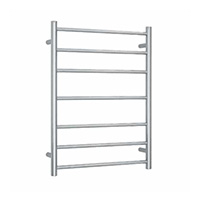
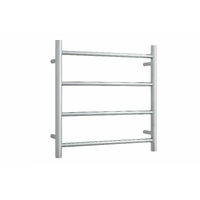
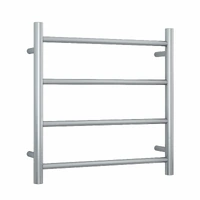
The ladder-style rail is the standard format in Australian bathrooms. It features a series of horizontal bars between two vertical uprights, closely resembling a ladder in profile. This format maximises towel capacity for a given wall width and allows multiple towels to hang without contact between them. Ladder rails are available in widths from around 450mm to 900mm and heights from 800mm to 1200mm, with specific sizing depending on brand and model.
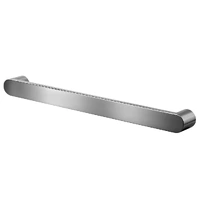
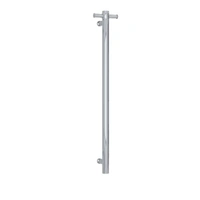
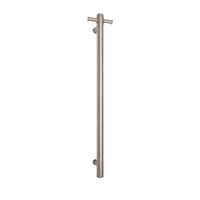
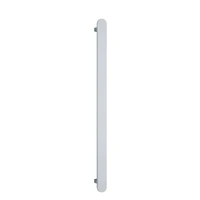
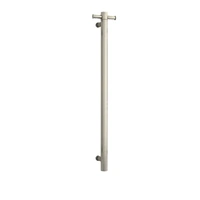
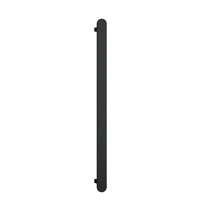
Designer rails depart from the traditional ladder format and are available in curved, angular, and asymmetric configurations. These are suited to bathrooms where the fixture is a visible feature of the room rather than a purely functional item. Finishes extend beyond standard chrome to include brushed nickel, matte black, gunmetal, and brushed gold. Verify that decorative finish options are available in the wattage and configuration required before specifying.
Slimline rails project less from the wall than standard models, typically 80mm to 120mm in depth. They are suited to compact ensuites and bathrooms where available floor or passage space is limited. Towel capacity is reduced compared with a full-depth rail of equal width, but slimline models remain effective for one or two towels in a single-person bathroom. Check product specifications for projection depth when wall clearance is a constraint.
A general rule for rail sizing: each horizontal bar accommodates one standard bath towel when the bars are spaced adequately. A 600mm-wide ladder rail with five bars can hold up to five towels, though practical drying performance improves when fewer towels are hung at once. For a family bathroom, a rail with six to eight bars at 700mm to 800mm wide provides enough capacity. Ensuites typically require three to five bars.
A single-person ensuite typically requires a rail with three to five bars and a width of 450mm to 600mm. A family main bathroom benefits from a wider rail with more bars to handle higher towel volume. Commercial bathrooms (gyms, hotels, spas) need high-capacity rails, often multiple units per room, selected for continuous use rather than occasional household use.
Count the number of users in the household and select a rail with at least one bar per regular user. Add one or two bars for occasional guests if the bathroom is frequently used. For a two-person household, a five-bar rail at 600mm wide is adequate. A family of four typically needs a seven-to-eight-bar rail or two smaller rails in the same room.
Higher-wattage rails reach temperature faster and produce more ambient warmth but cost more to run. Lower-wattage models are more economical but slower to warm. For a bathroom used briefly in the morning, a higher-wattage rail on a timed switch may be more practical than a low-wattage rail running continuously. Budget entry-level rails perform adequately for basic towel warming. Premium rails typically offer better finish durability, more even heat distribution, and longer warranties.
Mount the rail within easy reach of the shower or bath to minimise post-shower distance to a warm towel. Position the rail on an interior wall where possible, as exterior walls lose more heat to the outside. Clearance of at least 150mm between the rail and adjacent fittings allows adequate air circulation for drying. Follow manufacturer minimum clearance specifications, which vary by model.
Rail wattage is not the only determinant of drying performance. The distribution of heat across all bars, the thermal mass of the rail body, and how the towel is hung all affect drying speed. A rail with an even-flow element or high-quality manifold will warm all bars uniformly. Poor-quality designs may leave outer bars noticeably cooler than the central bars, reducing effective drying area.
Heated towel rails are manufactured from stainless steel, mild steel with surface treatment, or brass-core construction. Stainless steel offers inherent corrosion resistance without surface coatings. Mild steel rails depend on the quality of the chrome or powder-coat finish to prevent corrosion. Bathroom environments are consistently humid, so material quality directly affects service life. Thermogroup is an established Australian brand in this category.
Chrome finishes are the most durable in bathroom environments when properly applied and maintained. Matte black powder-coat and brushed nickel finishes have become more common but require more careful selection. Verify that the finish specified is rated for bathroom use and check manufacturer warranty terms for finish coverage. Avoid cheap imports where finish adhesion is not tested to Australian bathroom conditions.
Established brands offering Australian market warranty support are preferable over no-name imports for trade and commercial installations. Warranty periods for quality heated towel rails typically range from two to five years on the product and heating element. Confirm whether the warranty covers the element separately from the rail body, as element failure is the more common fault mode.
Running cost for an electric heated towel rail depends on wattage, daily operating hours, and the local electricity tariff. A 100W rail running three hours per day consumes 0.3kWh. At $0.30/kWh, the daily cost is $0.09, or approximately $33 per year. A 150W rail at four hours per day costs around $66 per year. These figures are estimates: actual tariffs and usage patterns vary. A timer switch gives precise control over operating hours, which is the most effective way to manage running costs.
Hydronic rails contribute minimal additional running cost when the central heating system is active. The incremental load of adding one or two rails to an existing circuit is small relative to the total system output. The efficiency gain over electric depends on the efficiency of the central heat source. A high-efficiency gas boiler or heat pump system makes hydronic rails very cost-effective. A less efficient or older boiler narrows the advantage over electric.
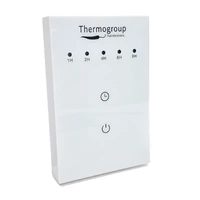
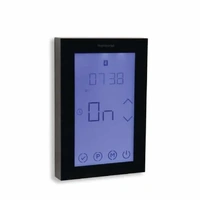
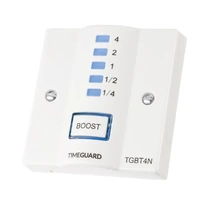
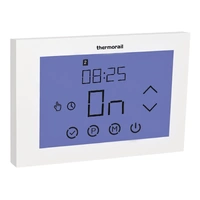
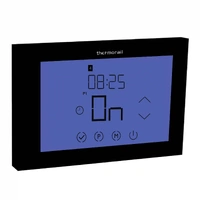
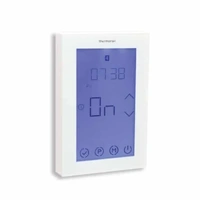
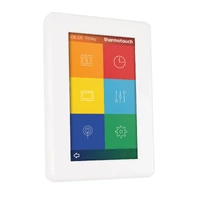
A mechanical or digital timer switch connected to an electric heated towel rail can reduce running costs by 40% to 60% compared with continuous operation. Set the timer to activate 30 minutes before morning use and switch off after the bathroom is no longer in use. A thermostat limits element operation once the rail reaches a set temperature, further reducing consumption. Combination timer-thermostat accessories are available for this purpose. Underfloor heating controls use similar thermostat logic and are a useful reference for electricians specifying heated towel rail control accessories.
Over a 10-year period, a typical 100W electric heated towel rail operated three hours daily will consume approximately 1,095kWh. At $0.30/kWh, that represents around $329 in electricity cost. Higher-wattage rails or longer operating periods increase this proportionally. Correct sizing (avoiding oversized rails for small bathrooms) and timer control are the two most effective ways to manage long-term energy use.
Hardwired electric heated towel rails connect directly to a 240V circuit via a fixed wiring connection. This is the required method for installations in wet area zones 1 and 2 under AS/NZS 3000:2018. Plug-in models connect via a standard 10A socket and are only suitable for zone 3 placement, where the socket outlet is at least 600mm from any water source. Most bathroom installations in Australia place the rail in zone 1 or 2, making hardwired installation the standard approach.
Hydronic rail installation requires connection to the existing hot water heating circuit. The rail is fitted with inlet and outlet connections, typically 15mm or 22mm compression or push-fit fittings, depending on system pressure and flow requirements. A licensed plumber must complete the connection, pressure-test the joints, and integrate the rail with any existing zone valves or thermostatic controls. An electrician is required if a dual-fuel element or external thermostat is added to the rail.
AS/NZS 3000:2018 defines wet area zones for bathroom installations. Zone 1 covers the interior of baths and showers. Zone 2 extends to within 600mm horizontally and 2400mm vertically from a shower head or bath rim. Zone 3 extends beyond zone 2 to the bathroom boundary. Electric heated towel rails installed in zone 1 or 2 must carry an IP44 minimum ingress protection rating. Products installed in zone 3 do not have a mandatory IP rating requirement, though IP21 or higher is common practice.
Compliance requirement: All electrical work on heated towel rails in Australia must be performed by a licensed electrician. This applies to initial installation, replacement, and any modification to the wiring or control accessories. DIY electrical installation is not permitted under state and territory electrical safety legislation.
Electrical installation of heated towel rails is licensed work in all Australian states and territories. The installing electrician is responsible for confirming that the product is suitable for the installation zone, that the wiring complies with AS/NZS 3000:2018, and that a certificate of electrical safety (or equivalent documentation) is issued on completion. Verify that the product selected carries RCM (Regulatory Compliance Mark) approval for the Australian market.
An electric rail that fails to heat at all has either lost power or has a failed element. Check the circuit breaker and RCD for the bathroom circuit first. If power is present at the switched outlet or hardwired connection but the rail does not warm, the element is the likely cause. Element replacement is possible on some models and requires the rail body to be drained if it is a fluid-filled type. Confirm element availability for the specific model before recommending replacement over full unit swap.
Uneven heating in a fluid-filled electric rail typically indicates air trapped in the fluid circuit. The fluid must be topped up and the air bled from the highest point of the rail. Dry element rails should heat evenly; if bars on one side are significantly cooler, the element distribution within that section of rail may have failed. For hydronic rails, uneven heating usually points to insufficient flow through the rail, which may be caused by a partially closed isolation valve, sediment in the rail body, or low system pressure.
Repeatedly tripping RCDs connected to an electric heated towel rail indicate an earth leakage fault. This is a safety issue requiring immediate isolation. The rail must be disconnected and inspected by a licensed electrician. Do not reset the RCD and continue operation. Common causes include moisture ingress at the element end cap, damaged element insulation, or a faulty cable connection in the junction box.
Low or no flow through a hydronic rail can result from a closed zone valve, air in the circuit, sediment accumulation in the rail headers, or insufficient system pump pressure. Bleed the rail using the bleed valve if fitted. Check that isolation valves at the rail connections are fully open. If flow issues persist across multiple radiators or towel rails, the fault may be in the central pump or zone controls rather than the individual rail.
Budget electric heated towel rails in Australia typically start from around $150 to $300 for a basic ladder style in chrome. Mid-range models with better finish quality and longer warranty fall in the $300 to $600 range. Premium models with designer finishes, high-quality materials, and extended warranties can reach $800 or more. For residential single-bathroom installations, a mid-range electric rail is generally adequate. Commercial and hospitality applications justify premium product for finish durability and reduced maintenance frequency.
Hydronic rails are often priced similarly to equivalent electric models on the rail body itself. The cost difference between hydronic and electric installation typically comes from trade labour: hydronic installs require both a plumber and an electrician, while electric requires the electrician only. For small bathroom renovations where no hydronic infrastructure exists, the total installed cost of an electric rail is usually lower than a hydronic equivalent once labour is factored in.
Licensed electricians purchasing heated towel rails for multiple bathrooms in a new build or renovation project benefit from trade pricing. Buying through an electrical wholesaler rather than a consumer retailer typically reduces per-unit cost by 15% to 30%, depending on volume and brand. Trade accounts with Sparky Direct offer consistent pricing across all product categories, including control accessories such as timers and thermostats. Mirror demisters and bathroom exhaust fans are commonly specified alongside heated towel rails in bathroom renovation packages.
Bathroom renovations provide the lowest-cost opportunity to upgrade a heated towel rail. Access to walls is open, existing wiring is exposed, and trades are already on site. Adding or upgrading a heated towel rail during a renovation costs significantly less than a standalone post-renovation installation. If a bathroom is being retiled or replumbed, schedule the heated towel rail installation at the same time to minimise repeat call-out costs.
Chrome-finished rails require regular wiping with a soft damp cloth to remove soap residue and mineral deposits. Avoid abrasive cleaners and steel wool, which scratch chrome plating. For matte black and powder-coat finishes, use only mild soap solution and a soft cloth. Avoid chemical bathroom cleaners on decorative finishes unless the manufacturer specifically states they are safe. Consistent cleaning prevents surface corrosion under soap film buildup.
Corrosion in bathroom environments typically starts at joints, welds, and areas where surface finish is thin or damaged. Inspect the rail annually for any signs of rust spots, particularly at the wall bracket attachment points and at the element end cap. Address minor surface corrosion with appropriate touch-up compound early. A rail showing active corrosion at the element housing should be assessed by an electrician for safety before continued use.
Periodically check that all bars of the rail reach similar temperatures during operation. Uneven heating that develops over time in a fluid-filled rail usually indicates fluid loss or air ingress and should be corrected promptly. A rail that takes significantly longer than usual to reach operating temperature may have a partially failed element, particularly in multi-element designs. Early identification of performance decline prevents unexpected failure.
Electric heated towel rails in good-quality installations typically last 10 to 15 years. Replacement is warranted when the element fails and a compatible replacement element is unavailable, when the rail body shows structural corrosion, when the finish has deteriorated beyond cosmetic repair, or when the installation no longer meets current compliance requirements. During a bathroom renovation, replacing an aged rail with a current model is always preferable to re-installing an older unit that may require service again within a few years.
Residential heated towel rail installations are the most common trade application. A standard installation involves surface-mounting the rail to the wall, running a hardwired connection from the nearest suitable circuit, fitting a dedicated switch or timer, and commissioning the unit. In new construction, the rough-in wiring is completed at the first-fix stage and the rail connected at second-fix once tiling is complete. Confirm the rail body dimensions and fixing centres before the rough-in stage to ensure conduit or cable positioning is correct.
New builds allow the electrician to plan circuit routing and switch placement in advance. This is the ideal situation for hydronic or dual-fuel installations, as plumbing can be roughed in alongside electrical at the early build stage. Renovations present more variable conditions: access to walls may be limited, existing wiring may need to be extended or upgraded, and surface-mount conduit may be required where concealed cable routing is not possible.
Hotels, gyms, spas, and serviced apartments use heated towel rails in higher-traffic settings than domestic installations. Commercial applications require product rated for continuous or extended daily operation. Select models with commercial-grade elements and finish durability tested for high-frequency cleaning. Multiple rails per room are common in hotel ensuite specifications, and centralised timer or BMS (building management system) control is often used to coordinate operating schedules across multiple rooms.
Bathrooms are classified as special locations under AS/NZS 3000:2018. Electrical equipment installed in these areas must meet minimum ingress protection requirements for the zone in which they are installed. All fixed electrical equipment must be hardwired by a licensed electrician. RCD protection is mandatory for all bathroom circuits in new Australian installations. Where RCD protection is not present on an existing circuit, its installation should be recommended to the client as a safety upgrade before new bathroom electrical equipment is connected.
Heated towel rails sold in Australia must carry RCM (Regulatory Compliance Mark) approval. This confirms the product has been assessed against the relevant Australian and New Zealand electrical safety standard. For electricians, specifying RCM-marked product protects against liability associated with product defects and ensures the manufacturer has met the testing obligations required by Australian regulators. Verify RCM marking on the product label or in the technical documentation before installation.
After installation, the electrician should verify surface temperature of the rail is within safe limits for the specific model. Heated towel rails are not designed to exceed surface temperatures that cause burns on brief contact, but prolonged contact with a child or a person unable to move away can still cause harm. Ensure clients understand that the rail surface is hot during operation and that children should be supervised near the unit.
Do not hang items other than towels on a heated towel rail. Draping clothing, especially synthetic fabrics, over a heated rail presents a fire risk if airflow around the element is restricted. The rail should be clear of curtains, blinds, and any combustible material. Follow the manufacturer's minimum clearance specifications from adjacent surfaces. Where these are not provided, a 150mm clearance from all combustible materials is a practical working guide.
Watch Cabac - Hourly Mech Timer 2 Wire 240V 1.7 Amp | HNS420TM video
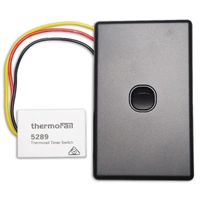
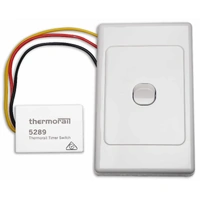
Watch Thermogroup 5289 | Thermorail Eco Timer For Heated Towel Rails video
Watch Cabac - Hourly Mech Timer 3 Wire 240V 5 Amp | HNS450TM video

The Wiser hub is required to use Clipsal Iconic light switches and cameras etc via WiFi. It is overpriced in my view, but does a great job and connects every time, from anywhere in the world. If you want to control Clipsal/PDL light switch, towel rails, fans and cameras remotely, you need this hub, or they only communicate locally via bluetooth. The app is Wiser SE, warning it is time consuming and tricky to set up, but once you get it up and running, it is faultless.
Needed a timer switch for a heated towel rail instead of a straight on/off. This is perfect and fits into the existing casing.
Perfect for heated towel rails. Easy to program and fits in trader and clipsal plates.
Quality products in stock • Fast Australia-wide delivery • Competitive trade pricing
Browse Heated Towel Rails → Get Expert Advice →Yes, they help towels dry faster, reducing dampness and odours.
Sparky Direct supplies heated towel rails Australia-wide, offering reliable bathroom heating solutions with convenient delivery.
They are securely packaged and delivered via standard courier services.
Unused heated towel rails are generally eligible for return according to the seller’s returns policy.
Warranty coverage varies by manufacturer and typically covers defects in materials or workmanship.
Yes, they are available in ladder, bar, and designer styles.
Yes, installation must be carried out by a licensed electrician.
Warm towels add comfort, especially during colder months.
Quality materials and finishes help resist corrosion in bathroom environments.
Yes, they are commonly used in family bathrooms when installed correctly.
They are available in a range of contemporary designs to suit modern bathroom styles.
Yes, operation is simple, often using a wall switch or timer.
They can help reduce moisture by drying towels, but they do not replace ventilation systems.
Many users operate them for extended periods, but usage should follow manufacturer recommendations.
They become warm during operation but are designed to operate at safe surface temperatures.
One of the foremost concerns regarding heated towel rails is their energy consumption. Understanding the power usage involves considering the design and efficiency of these appliances. Most modern towel rails are designed with energy efficiency in mind, typically using between 60 to 200 watts of power. This is considerably less than many traditional heating alternatives, making them a sustainable option for keeping towels dry and warm. Their low energy usage is particularly beneficial for homes aiming to reduce their overall power footprint, offering a comfortable solution without an exponential increase in electricity costs.
The key to managing power consumption effectively lies in selecting the right model and controlling its operation. Some advanced models come equipped with timers and thermostats, allowing users to set precise heating schedules that match their lifestyle. This not only avoids unnecessary energy use but also prolongs the appliance's lifespan. For professionals and tradespeople in Australia, understanding these details is essential when advising clients on energy-efficient bathroom solutions. In sum, by choosing a model tailored to your specific needs and utilizing smart features, heated towel rails become a cost-effective component of an energy-conscious household.
Many models include features such as thermal cut-outs to prevent overheating.
They are commonly used in residential bathrooms and may also be suitable for light commercial settings.
They provide gentle warmth but are generally intended for towel drying rather than full room heating.
Yes, heated towel rails are available in various sizes, shapes, and bar configurations.
Energy consumption varies by size and wattage, but most models are designed for efficient, low-running-cost operation.
They are commonly made from stainless steel, mild steel, or aluminium with corrosion-resistant finishes.
Yes, they are specifically designed for bathroom environments when installed in accordance with electrical zoning requirements.
Heated towel rails are available in both hardwired and plug-in models, depending on the design and installation requirements.
Heated towel rails are manufactured to meet relevant AS/NZS electrical safety standards when installed correctly.
Heated towel rails are electrically powered bathroom fixtures designed to warm and dry towels while also providing gentle ambient heat.
Concerns about the safety of leaving heated towel rails on overnight are valid, especially when considering the intersection of heat and moisture in a bathroom. The modern design of these appliances incorporates several safety features aimed at minimising risk, such as overheat protection. However, for ultimate safety, it is essential to ensure the towel rail is correctly installed according to electrical safety standards - particularly significant in Australia, where stringent compliance requirements are in place to prevent electrical mishaps.
Leaving a heated towel rail on overnight is generally considered safe, provided it features a built-in thermostat or timer to regulate heat levels automatically. Such components prevent the appliance from overheating, which could otherwise lead to safety hazards or efficiency loss. Nevertheless, it's wise to turn off towel rails overnight if they're not needed and instead leverage programmable features for effective energy management. Electric towel rails are generally preferred for overnight use due to their predictable energy use and straightforward controls. Professionals advising on installations must highlight these safety features, ensuring clients can confidently enjoy the benefits of their towel rails without compromising safety. These measures align with Sparky Direct’s ethos of ensuring quality installations alongside compliance and safety, optimising user experience and providing peace of mind.
While heated towel rails bring about notable benefits such as comfort and functionality, they also come with certain drawbacks. One potential downside is the initial installation cost, particularly for hydronic systems that require integration with existing plumbing. Electric models, although simpler to install, can also incur their installation expenses, necessitating professional installation to adhere to safety standards. These upfront costs, however, are often offset by the long-term convenience and efficiency these appliances provide.
Another possible downside is their continuous energy use. Though designed to be more energy-efficient than traditional heating methods, improperly used towel rails can lead to increased electricity bills. To mitigate this, selecting a model with energy-efficient features such as timers and thermostats is beneficial. Furthermore, while towel rails are generally safe, improper use in bathrooms, where moisture is prevalent, could pose safety risks if installation doesn’t comply with Australian safety codes. Awareness of these factors enables better management of the appliance's functionality and longevity. For professionals, a crucial step is advising clients on these aspects, ensuring they weigh the pros and cons thoughtfully before investing in a heated towel rail.
The question of whether it is cheaper to keep a heated towel rail on continuously is frequently posed by those seeking to balance comfort and cost. The answer largely depends on the towel rail model and the bathroom's insulation quality. While some argue that maintaining a constant temperature avoids the energy spike of reheating from cold, it's essential to consider the incremental energy cost of running the appliance non-stop. Most experts, including those in the Australian market, advise against leaving heated towel rails on continuously, especially without a timer or thermostat.
Utilising a timer allows for greater control, aligning the towel rail’s operation with peak usage times, such as in the morning or evening. This method ensures towels are warm and dry only when needed, significantly reducing unnecessary electricity expenditures. Moreover, towel rails integrated with thermostats automatically adjust the heating level based on room temperature, optimising energy use. For tradespeople recommending installations, advocating for models with these features is wise, as it encourages cost-effectiveness and client satisfaction. Ultimately, while continuously operating a heated towel rail may offer constant warmth, leveraging intelligent controls is a smarter approach for cost savings and energy efficiency.