
Search Results:
Search Results:
Search Results:
Search Results:
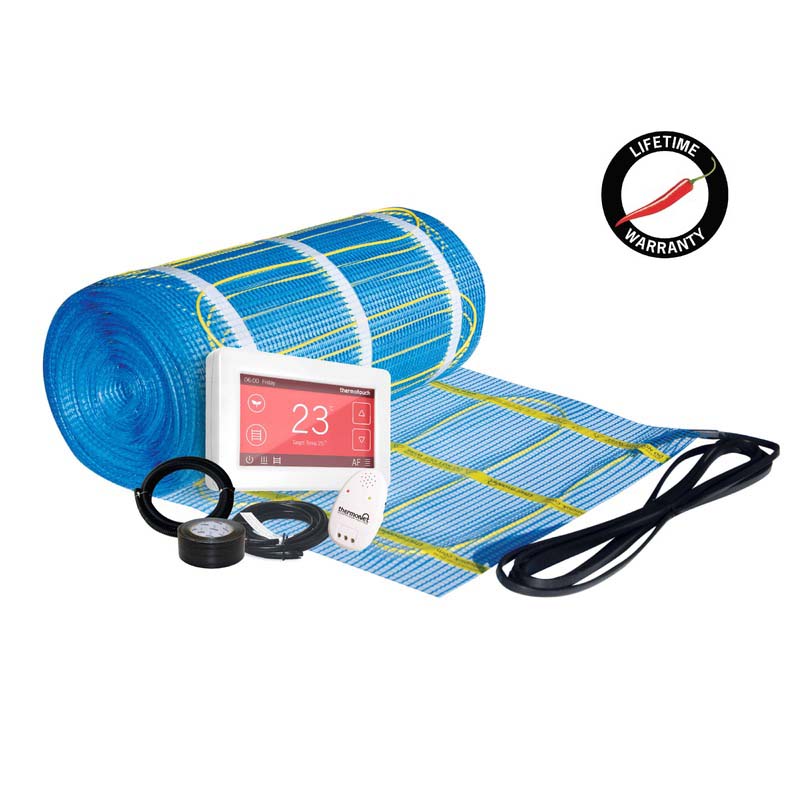
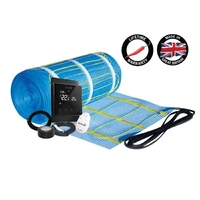
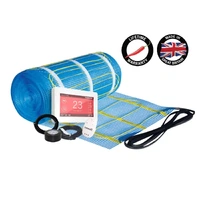
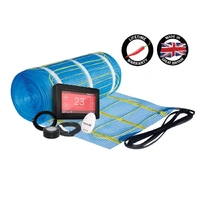
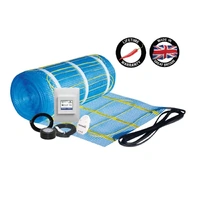
Find the best underfloor heating systems here at Sparky Direct. [ Read More ]
Electric underfloor heating uses a resistive element, either a loose cable or a pre-woven mat, that converts electrical current into heat. The cable or mat sits in the floor substrate, typically embedded in tile adhesive or a thin screed. A thermostat controls the circuit, switching the element on and off to maintain a set temperature. Most systems run at 240V and connect to a dedicated circuit or a shared circuit depending on load. Power output ranges from around 100W/m2 to 200W/m2 depending on the system and the application. Electric systems are well suited to single rooms and renovations because they require no boiler, no pipework, and no wet trades beyond standard tiling.
Hydronic systems circulate hot water through cross-linked polyethylene (PEX) or polypropylene pipes embedded in a concrete slab or screed. A boiler or heat pump heats the water, and a manifold distributes it through loops across the floor zone. The thermal mass of the slab absorbs and retains heat, releasing it gradually. Hydronic systems are most cost-effective over large areas and whole-home installations. They require a licensed plumber for the pipework and pressure testing, plus a licensed electrician for the boiler connection and controls.
Far-infrared mats use carbon fibre elements or graphene-based films to emit infrared radiation directly into the floor material and objects in the room. They typically operate at very low temperatures (25 to 45 degrees Celsius surface temperature) and are extremely thin, making them suitable for installations under luxury vinyl plank, engineered timber, and other floating floors. Response time is fast. The mats connect to a standard thermostat and require no screed overlay.
Electric cable and mat systems are the dominant choice for Australian residential renovations. They are installed above the existing slab without altering floor height significantly. Tile adhesive or thin-set is the standard embedding medium for mat systems in bathrooms and kitchens. Installation is completed by a licensed electrician without the need for plumbing trades. Most systems can be commissioned and operational within a day. Electric underfloor heating suits bathrooms, ensuites, laundries, and kitchen areas where targeted warmth is needed rather than whole-home heating.
Hydronic underfloor heating is the preferred option for new builds where the slab can be poured around the pipe loops. It delivers consistent heat across large open-plan areas at lower running costs than electric systems over the same area. The system requires a manifold room, a boiler or heat pump, expansion vessel, pump, and zoning controls. Commissioning involves pressure testing, water treatment, and balancing each loop. A licensed plumber must install and certify the pipework. A licensed electrician connects the boiler, pump, and thermostat controls.
Far-infrared mats are the thinnest option available, often under 1mm in total thickness. This makes them practical for installations where floor height is a critical constraint, such as bathrooms where tile thresholds have already been set, or rooms where doors clear the existing floor by only a small margin. They work well under floating floors and laminate. They are not suitable for embedding in tile adhesive or screed, as the heat output and element type require free air circulation below the floor surface.
The right system depends on project scope, budget, floor construction, and area size. For a single bathroom or ensuite renovation, an electric mat system is almost always the correct answer: low installation cost, fast commissioning, and straightforward thermostat control. For a new home or major renovation across multiple zones, hydronic provides better long-term running economics. Far-infrared suits thin-profile retrofit applications where electric mat thickness or screed depth is a problem.
Thermogroup is one of the most recognised brands in the Australian electric underfloor heating market. Products include cable kits, mat systems, and matching thermostats tested to Australian standards. Thermogroup systems are commonly specified for bathroom and kitchen installations where a trusted, locally supported product is required.
Electric mat and cable systems have the lowest installation complexity. A licensed electrician runs a circuit, installs the thermostat, and embeds the mat or cable in adhesive or screed. No additional trades are required. Hydronic systems involve licensed plumbers for pipe loops, manifolds, and pressure testing, plus a licensed electrician for the boiler and controls. Far-infrared mats are the simplest to install physically but still require electrical connection by a licensed electrician.
| Factor | Electric Mat/Cable | Hydronic | Far-Infrared |
|---|---|---|---|
| Trades required | Electrician only | Electrician + Plumber | Electrician only |
| Floor height impact | 10 to 20mm (in screed) | 80 to 150mm (slab/screed) | Under 1mm |
| Best for | Single rooms, renovations | Whole-home, new builds | Thin retrofit, floating floors |
| Running cost (relative) | Moderate | Low over large areas | Low to moderate |
| Heat-up time | 20 to 40 minutes | 1 to 3 hours | 10 to 20 minutes |
| Thermostat control | Yes, programmable | Yes, zoned | Yes, programmable |
Electric underfloor heating costs depend on the wattage of the mat or cable, the hours of operation, and the local electricity tariff. A 10m2 bathroom mat rated at 150W/m2 draws 1.5kW. At a typical rate of 30 cents per kWh, running the system for two hours per day costs approximately 90 cents per day. Hydronic systems have higher upfront costs but lower per-kilowatt-hour costs when paired with a heat pump or gas boiler across large areas. Far-infrared systems are efficient over the area they cover because of low surface operating temperatures and direct radiant transfer.
Electric mat systems embedded in tile adhesive respond within 20 to 40 minutes of switching on, depending on tile thickness and mat wattage. Programmable thermostats allow the system to pre-heat before the room is used. Hydronic systems in concrete slabs take significantly longer to reach operating temperature because of the thermal mass involved. This makes scheduling critical. Far-infrared mats reach operating temperature quickly because energy is transferred radiantly rather than through conduction of a mass of floor material.
For the majority of Australian residential installations, electric mat systems represent the most practical choice. Australia's grid electricity is accessible, installation trades are widely available, and bathroom and kitchen renovations are the primary use case. Hydronic becomes cost-competitive in new homes across southern states where winter heating loads are significant and the system can be incorporated into the slab during construction. Far-infrared suits installations under engineered timber or vinyl plank where thickness constraints make cable and mat systems impractical.
Bathrooms are the most common location for underfloor heating in Australian homes. Tile floors become uncomfortably cold in winter, and an electric mat system under the tile provides warmth exactly where it is needed. Kitchens with tile floors benefit similarly. Living areas suit hydronic or electric cable systems where larger coverage is required. Bedrooms are less common but are specified in high-end residential projects where whole-room radiant heat is preferred over ducted air conditioning.
Complementary products for bathroom comfort include bathroom mirror demisters and heated towel rails, which are often installed alongside underfloor heating to complete a warm bathroom package.
Modern underfloor heating installations use zone control to heat only the areas that are occupied at a given time. Bathrooms, bedrooms, and living areas operate on separate thermostats and timers. This avoids heating unoccupied zones and reduces overall consumption. Programmable thermostats allow pre-heating before typical use times, so occupants experience warmth when they arrive rather than waiting for the system to reach temperature. Smart thermostats extend this further with smartphone control and learning algorithms.
Underfloor heating is installed in both residential and commercial settings. In residential projects, the primary application is bathroom, kitchen, and living area comfort. In commercial projects, it appears in hotel bathrooms, healthcare facilities, aged care rooms, and high-end retail spaces where floor warmth is part of the design brief. Hydronic systems are more common in commercial builds due to their lower operating cost over large heated areas. Licensed electricians and plumbers working on commercial projects must comply with AS/NZS 3000:2018 and relevant state regulations for commercial electrical installations.
Ceramic tile and natural stone are the ideal floor coverings for underfloor heating. Both materials have high thermal conductivity, which means heat passes through quickly and the floor surface reaches temperature efficiently. Concrete as a finished floor surface performs similarly. These materials also retain heat well, so the system does not need to run continuously to maintain comfort. Tile is the most common choice for bathroom installations because of its combination of thermal performance, moisture resistance, and durability.
Engineered timber is compatible with underfloor heating when the system is correctly sized and the maximum floor surface temperature does not exceed the manufacturer's specification (typically 27 degrees Celsius). Luxury vinyl plank (LVP) and vinyl composite tile (VCT) are compatible with most electric mat and far-infrared systems. Carpet is compatible in limited cases, but the added thermal resistance of carpet and underlay slows heat transfer and may require higher wattage to achieve the same floor surface temperature. Check the carpet manufacturer's specification before installing underfloor heating beneath any carpet product.
Bamboo flooring, cork, and products with rubber backings are generally incompatible with underfloor heating. Bamboo can expand, contract, and crack at elevated temperatures. Cork has a high thermal resistance, which reduces efficiency and may cause the heating element to overheat. Rubber-backed products trap heat at the element surface and can degrade over time. Solid hardwood is also not recommended because of its susceptibility to moisture movement caused by temperature cycling.
Thermal resistance (expressed as an R-value for flooring) directly affects how efficiently heat reaches the room. A tile floor with low thermal resistance allows heat to pass through with minimal energy loss. A carpet with a combined R-value of 1.5 requires more energy to push the same amount of heat into the room. When specifying a system for a carpeted application, a higher wattage per square metre is required to compensate. System designers and suppliers can calculate the appropriate wattage once the flooring R-value is known.
Standard electric mat systems for bathroom tile applications are typically specified at 150 to 200 watts per square metre. For a 6m2 bathroom, a 150W/m2 system requires a 900W load on the circuit. This is well within a standard 10A circuit. Larger areas or applications requiring faster heat-up may use higher wattage systems. The key metric is the heated area, not the total room area. Areas covered by the vanity, toilet, bath, or shower base are excluded from the calculation because mats should not run under fixed fittings.
Insulation below the heating element prevents heat from conducting down into the slab or subfloor rather than upward into the room. Without insulation, a significant proportion of the energy input is lost downward. Reflective foil insulation or rigid foam boards placed beneath the heating element redirect energy upward, improving efficiency and reducing running costs. In new builds, this is standard practice. In renovations over existing slabs, an insulating decoupling membrane can serve a similar function. Correct insulation can reduce running costs by 20 to 30 percent.
An underpowered system will never reach the desired floor temperature and will run continuously, increasing running costs without delivering comfort. An oversized system heats too rapidly, causing the thermostat to cycle frequently and potentially generating surface temperatures that damage the floor covering or reduce the lifespan of the element. The correct sizing calculation uses the heated area, the floor covering's thermal resistance, the desired surface temperature, and ambient room conditions. Consult the system supplier's sizing guide or contact the manufacturer's technical support before specifying a system.
Accurate layout planning prevents cold spots and avoids positioning the heating element under fixed structures. A scaled floor plan should mark the positions of vanity units, shower bases, bathtubs, toilet pans, and any other fittings that will sit permanently on the floor. The mat or cable layout is then planned around these exclusion zones. Most electric mat systems can be cut and redirected during installation, but the heating cable itself must never be cut or overlapped. Planning the layout before purchase confirms the correct mat or cable length for the area.
In new builds, underfloor heating is ideally integrated during slab construction (for hydronic systems) or during the fitout stage before tiling (for electric systems). This allows optimal insulation placement, correct substrate preparation, and clean routing of thermostat cables. In renovation projects, the installation occurs over an existing floor substrate. The substrate must be assessed for flatness, structural integrity, and suitability for the adhesive or screed system being used. Any cracks or movement joints must be addressed before the heating element is installed.
An electric mat installation follows this sequence: prepare the substrate, apply insulating membrane if required, lay the mat in the planned pattern, secure with adhesive or tape, connect the tail cable to the thermostat conduit, install the floor sensor in a conduit between mat loops, complete the tile adhesive or screed over the mat, allow full cure time before commissioning, and finally connect the thermostat and circuit. The system must not be powered during the adhesive cure period. Manufacturers typically specify a minimum 28-day cure for screeded installations before the system is run at full temperature.
Hydronic system installation involves laying pipe loops in the slab or screed, connecting loops to the manifold, pressure testing the circuit, pouring or screeding over the pipework, connecting the boiler or heat pump, filling and bleeding the system, balancing flow rates across loops, and commissioning the controls. Each pipe loop must be a single continuous length with no joints in the slab. The manifold location requires access for balancing and maintenance. System commissioning requires the boiler, pump, expansion vessel, and safety valve to be checked against specification before the system is handed over.
In all Australian states and territories, connecting an electric underfloor heating system to the mains supply is electrical work that must be performed by a licensed electrician. This includes running the circuit, installing the thermostat, and connecting the element cable. Hydronic systems additionally require a licensed plumber for all pipework and boiler connections. Unlicensed installation voids insurance, may void the product warranty, and exposes the property owner to liability under state electrical safety legislation. A Certificate of Compliance for Electrical Work (CCEW) must be issued for all new electrical connections in Australia.
Compliance note: All electrical connections for underfloor heating systems in Australia must be performed by a licensed electrician. AS/NZS 3000:2018 (the Wiring Rules) governs the installation. A Certificate of Compliance for Electrical Work is required upon completion in all states and territories.
Heat output is rated in watts per square metre and determines how quickly the system reaches floor surface temperature. Even distribution depends on consistent cable or mat spacing across the heated area. Gaps in coverage create cold spots. The thermostat sensor position influences control accuracy. Sensors placed too close to the element read high and shut the system off prematurely. Sensors placed in unrepresentative locations provide inaccurate feedback. Most manufacturers specify sensor placement between cable runs or loops, at a fixed distance from the wall.
Quality electric heating cables and mats carry manufacturer warranties of 10 to 25 years in Australia. The element itself has no moving parts and, when correctly installed at the specified wattage and within the floor covering's thermal resistance limits, should last the life of the building. Failure modes include physical damage during installation (cutting through the cable) and operation above maximum temperature limits due to incorrect sizing or incompatible floor coverings. Thermostats and control units have shorter lifespans and may need replacement over the life of the system. Check warranty terms before purchase.
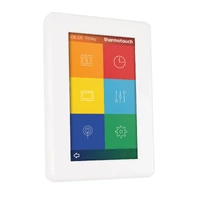
Modern underfloor heating thermostats offer programmable schedules, floor and air temperature sensing, and in many cases Wi-Fi connectivity for smartphone control. A thermostat with both a floor sensor and an air sensor provides more accurate comfort control than a floor sensor alone. The floor sensor prevents the surface from exceeding the maximum temperature for the floor covering. The air sensor maintains room temperature at the set point. Smart thermostats allow remote scheduling, energy monitoring, and integration with home automation platforms.
Specify systems that carry SAA (Standards Australia) approval or equivalent certification for use in Australia. Products sold for the Australian market must comply with relevant electrical safety standards. Thermogroup products are tested and certified for Australian conditions. When purchasing from an electrical wholesaler, confirm that the system includes local technical support and that replacement components are available in Australia.
A 10m2 electric mat system at 150W/m2 draws 1.5kW. Operating two hours per day at 30 cents per kWh costs 90 cents per day, or approximately $328 per year. A 5m2 bathroom system at the same rating costs roughly half that amount. These figures assume average thermostat cycling. A well-insulated substrate reduces actual consumption by 20 to 30 percent versus an uninsulated slab. Programmable thermostats that limit operation to occupied hours reduce consumption further.
Hydronic systems become cost-effective relative to electric when heating areas exceeding 40 to 50 square metres continuously. The cost advantage depends on the heat source. A gas boiler is currently cheaper per kilowatt-hour in most Australian states than grid electricity. A heat pump produces three to four units of heat per unit of electricity consumed (COP of 3 to 4), which changes the economics significantly. In southern states where winter heating loads are high and sustained, a hydronic system with a heat pump can deliver lower annual running costs than equivalent electric underfloor coverage.
Households with solar panels can reduce electric underfloor heating running costs by scheduling system operation during daylight hours when solar generation offsets grid consumption. Many programmable thermostats allow time-of-use scheduling that aligns with solar generation windows. Feed-in tariff rates continue to fall in most Australian states, making self-consumption of solar energy (rather than export) increasingly valuable. Running underfloor heating between 9am and 3pm on a pre-heat schedule takes advantage of available solar generation.
Thermal insulation beneath the heating element is the single most effective measure for reducing running costs. Heat lost downward into the slab or subfloor is wasted energy. Reflective foil board or polystyrene panels rated at R1.0 or better placed beneath the element significantly reduce downward heat loss. In renovation projects over existing concrete slabs, a thin insulating decoupling membrane serves a similar purpose. Correct insulation pays for itself within one to two heating seasons in most Australian climates.
Entry-level electric underfloor heating kits for a 3 to 5m2 bathroom typically include the heating mat, a basic thermostat, and installation accessories. Supply costs for this size range from a few hundred to over a thousand dollars depending on the brand and thermostat specification. Installation cost depends on labour rates in the area, substrate preparation required, and whether tiling is being done at the same time. Combined supply and installation for a small bathroom is typically completed in a single day by an experienced electrician working alongside a tiler.
Hydronic underfloor heating supply costs depend heavily on the size of the system and the heat source. The pipe, manifold, and fittings component alone can range from $50 to $150 per square metre for materials. The boiler or heat pump adds significantly to the total. Installation labour involves both plumbing and electrical trades. For a whole-home hydronic system in a new build, total supply and installation costs commonly range from $15,000 to $50,000 or more depending on home size and heat source specification.
Underfloor heating adds measurable value to a property. In bathroom renovations, it is considered a premium feature that differentiates a project. In new builds targeting high-end buyers, hydronic underfloor heating is a standard expectation. The long element lifespan (typically 25 years or more for electric systems) means the capital cost is amortised over many years of use. For investors, underfloor heating in bathrooms and living areas can differentiate a rental property and support higher rental yields in cooler climate zones.
Several Australian state governments offer rebates or incentives for energy-efficient electric heating systems, particularly when combined with solar PV or heat pump technology. Victoria's Energy Upgrades program and NSW's Energy Savings Scheme are examples where electric heating upgrades may attract financial support. Check current eligibility requirements with the relevant state energy authority before purchasing a system, as program terms and eligibility criteria change regularly.
Several Australian states are progressively restricting new gas connections in residential buildings. This policy direction accelerates the uptake of electric heating systems, including electric underfloor heating, as the default choice for new residential construction. Specifiers and builders working on new homes in affected states should confirm current local government requirements before specifying a heat source for hydronic systems. Electric resistance heating and heat pump systems are unaffected by gas restriction policies.
Underfloor heating is well suited to integration with solar PV systems. Thermal mass in the floor (particularly in hydronic or high-mass electric systems) can be pre-charged during high solar generation periods and maintained at temperature through the afternoon and evening. Battery storage combined with solar PV provides further opportunity to shift heating loads away from peak tariff periods. Smart thermostat platforms with energy management features can automate this scheduling without manual intervention.
If an electric underfloor heating system is not reaching temperature, check the thermostat settings first. Confirm the floor sensor is correctly positioned and has not been damaged during tiling. Test the element resistance with a multimeter against the manufacturer's specification. A resistance reading significantly outside the rated range indicates a damaged cable. Check circuit breaker condition and that the thermostat wiring is correct. For hydronic systems, low flow rate, air locks, or boiler faults are the primary causes of inadequate heat output.
Cold spots in an electric system typically indicate cable damage, incorrect spacing during installation, or areas where the cable was not embedded in adhesive and has an air gap above it. Review the original installation layout plan to confirm cable positioning. In hydronic systems, uneven distribution indicates a balancing problem at the manifold, where some loops are carrying more flow than others. Manifold balancing is a commissioning task that should be completed by the installing plumber.
Higher than expected energy consumption usually results from incorrect thermostat programming, inadequate floor insulation, or a floor covering with higher thermal resistance than was used in the system design calculation. Check the thermostat schedule and confirm the system is not running during unoccupied hours. Confirm insulation is in place beneath the element. If the floor covering was changed after the system was installed, recalculate the wattage requirement for the new covering.
Thermostat faults may present as the system not switching on, not switching off, or displaying incorrect temperature readings. A faulty floor sensor causes inaccurate temperature readings and erratic cycling. Most thermostats display a sensor fault code when the sensor circuit is open or short-circuited. Thermostat replacement is typically straightforward: the wiring configuration is documented in the installation manual and the replacement unit connects to the same terminals. A licensed electrician should replace any mains-connected thermostat.
Electric underfloor heating cables and mats have no moving parts and require no routine maintenance once correctly installed. The thermostat is the component most likely to require attention over the system's life, typically after 10 to 15 years of operation. Annual visual inspection of the thermostat display and manual verification of the schedule settings is sufficient. If the floor covering is replaced, confirm that the replacement material is compatible with the heating system before installation begins, and test the element resistance before and after the new floor is laid.
Hydronic systems require periodic servicing of the boiler or heat pump, typically annually. The heat transfer fluid (water with corrosion inhibitor) should be tested and treated regularly, particularly in systems with mixed metal pipework. Pump seals and expansion vessel pressure should be checked as part of the annual service. Manifold valves should be operated through their full range of movement annually to prevent seizure. Filter strainers at the boiler return should be cleaned periodically. A licensed plumber or hydronic heating specialist should conduct the annual service.
A thermostat with energy monitoring displays consumption data that can be used to identify changes in system performance over time. An increase in energy consumption for the same comfort level may indicate degraded insulation, a change in floor covering thermal properties, or a developing fault in the element or controls. Keeping a record of the initial commissioning data (element resistance, thermostat settings, energy consumption per degree-day) provides a baseline for future comparison.
Electricians tendering bathroom, kitchen, or living area renovations should include underfloor heating as an upsell option where clients are replacing existing tile floors. The additional circuit, thermostat, and mat supply can be quoted as a fixed addition to the tiling scope. The installation is straightforward and adds significant perceived value to the renovation. Clients in southern states are particularly receptive during autumn and winter projects when floor warmth is top of mind. Underfloor heating systems are stocked at Sparky Direct for fast trade supply.
Premium residential projects commonly specify hydronic underfloor heating throughout the living areas, bedrooms, and bathrooms. These projects require detailed system design, including heat loss calculations for each zone, pipe loop layout drawings, and manifold sizing. The electrical scope includes thermostat installation, boiler connection, pump wiring, and zoned control panel installation. Licensed electricians with hydronic control experience are preferred for these projects. Complementary products such as heated towel rails and mirror demisters are standard inclusions in high-end bathroom fitouts.
Commercial applications include hotel bathrooms, aged care facilities, healthcare settings, and premium retail environments. Multi-residential projects (apartments) may specify electric underfloor heating in bathroom and ensuite areas as a standard inclusion in mid to upper-tier developments. Commercial installations must comply with AS/NZS 3000:2018 and any additional requirements under the National Construction Code (NCC) and relevant state building regulations. A Certificate of Compliance for Electrical Work is required for all new electrical connections. Bathroom heaters and heat alarms are complementary products for commercial bathroom specifications.
AS/NZS 3000:2018 (the Wiring Rules) governs all fixed electrical installations in Australia and New Zealand, including underfloor heating systems. Relevant requirements cover circuit protection, earth fault loop impedance, earth continuity, and the installation of heating cables in floor structures. Bathroom installations must comply with the zone restrictions for electrical equipment in wet areas defined in AS/NZS 3000:2018. Residual current devices (RCDs) are mandatory for circuits in wet areas including bathrooms. The installing electrician is responsible for compliance and must issue a Certificate of Compliance for Electrical Work upon completion.
Hydronic pipework in Australia is subject to the Plumbing Code of Australia and relevant state plumbing regulations. PEX and polypropylene pipe systems used for underfloor heating must be installed by a licensed plumber using materials tested to Australian standards. Pressure testing of the completed pipe circuit before screed pour is mandatory. The plumber must certify the completed work in accordance with state licensing requirements.
The heating cable or mat must be checked for continuity and insulation resistance before and after installation. Damage during tiling is the most common cause of element failure. The element must not be walked on, cut, crossed over itself, or covered by fixed fittings. The minimum bend radius specified by the manufacturer must be maintained throughout the cable layout. Floor sensor conduits must allow sensor replacement without disturbing the floor finish. All mains connections must be made in an accessible enclosure with correct cable gland sealing where required.
All electrical connection work for underfloor heating systems must be performed by a licensed electrician holding a current licence in the relevant state or territory. In Queensland, this is a Electrical Mechanic licence. In NSW, Victoria, South Australia, and Western Australia, equivalent state licensing applies. Hydronic system pipework requires a licensed plumber. Engaging unlicensed trades for this work is illegal in all Australian jurisdictions, may void product warranties, and removes insurance coverage for any resulting property damage.
Start with the project type. A bathroom renovation in an existing home points directly to an electric mat system. A new home in Victoria or Tasmania with a concrete slab and significant winter heating loads points to a hydronic system evaluated alongside a heat pump. A floating floor retrofit over an existing bathroom where height is a constraint points to a far-infrared mat. Each system type has a defined best-fit application, and staying within that scope produces better outcomes than selecting on price alone.
Before specifying a system, confirm the following: What is the heated area in square metres? What floor covering is planned and what is its thermal resistance? Is there existing insulation below the slab or will insulation be added? What is the circuit capacity at the distribution board? Is the thermostat location accessible for future replacement? Does the client want a programmable or smart thermostat? Are there any height constraints that rule out a standard mat installation? Is a licensed electrician available and has the installation timing been confirmed with the tiler?
Purchase from a supplier that can provide local technical support, has replacement components available in Australia, and stocks systems tested to Australian standards. Thermogroup and other established brands in the Sparky Direct range offer Australian technical support and documented compliance. Avoid unbranded systems with no local technical support path, as element or thermostat faults after installation can be difficult to resolve without manufacturer assistance.
The thermostat is the primary control point for an electric underfloor heating system. At minimum, select a programmable thermostat with a floor sensor. Air sensor control provides better room temperature accuracy. Wi-Fi enabled thermostats allow remote scheduling and monitoring from a smartphone. When specifying a thermostat, confirm it is compatible with the heating element being installed (voltage, amperage, and sensor type). Underfloor heating thermostats and control systems are available through Sparky Direct alongside the heating elements and mats.
Watch Clipsal 6600LEDLAMP | Airflow LED Lamp 8W Suits 6600ADP-WE | Warm White video
Watch IXL12309 | Tastic Prime 3 in 1 Bathroom Heater, Exhaust Fan & Light video
Watch Cookson Controls 20433-3-1 | Hotwater Thermostat Adjustable Universal 50-70 Deg | WIM2 video

Sparkies spend alot of time everyday ensuring downlights are evenly spaced in a room for correct beam dispersal and aesthetic. So why do they often overlook the bathroom? These lights bring a premium feel to any bathroom as everything isn't crammed into a large piece of plastic hanging off the ceiling. Used in conjunction with a seperate fan be that an in line one plumbed to a grille or a more typical pass through. The assembly of the light fitting is robust and what you would expect. Being a larger diameter and depth than a standard downlight check your clearances before committing to cutting the hole.
I second Dr Watts! No bloated bland bezel bulging from the ceiling, just a more elegant fixture. Great for heating separate areas of a large bathroom more efficiently (e.g. above sink, above shower). Most bathroom shall use more than one for faster heating, but a single lamp can be used for keeping the loo warm. Another advantage is the lamps can be more flexibly controlled, such as by having separate switches, and using a smart thermostat with multi-stage heating for automation and energy-saving. I used a Google Nest thermostat with a relay box I built.
I had an older model which lasted 12 years, still works , but the fan would make banging noises while on and sometimes not even work. So I decided to get a new one and didn't want to cut a bigger hole or patch the existing hole for a different size fan. Went online and straight away found same looking fan with updated model on sparky direct website. Purchased and few days later delivered, that's how I like it. Got my sparky mate to install it and works a treat. Good stuff.
Quality products in stock • Fast Australia-wide delivery • Competitive trade pricing
Browse Underfloor Heating → Get Expert Advice →When controlled properly with a thermostat, it maintains a comfortable and consistent temperature.
Sparky Direct supplies underfloor heating solutions Australia-wide, offering reliable systems with convenient delivery.
Underfloor heating components are packaged securely and delivered via standard courier services.
Unused products are generally eligible for return according to the seller’s returns policy.
Warranty coverage varies by manufacturer and typically covers defects in materials or workmanship.
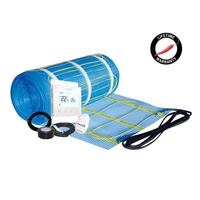
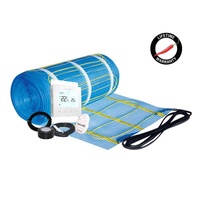
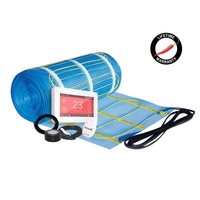
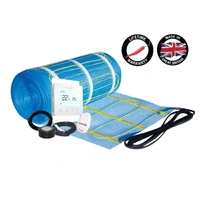
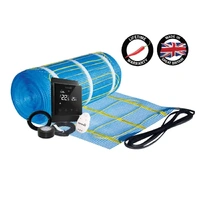
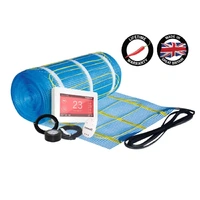
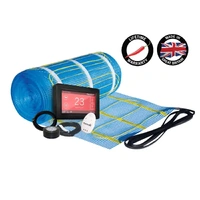
Underfloor heating is commonly sold as kits that include heating elements and control components.
Yes, underfloor heating installation must be carried out by licensed electricians and qualified trades.
Electric systems generally require minimal maintenance once installed.
It can be installed during renovations, though suitability depends on floor structure and access.
Quality systems are designed for long service life when installed and used correctly.
Yes, it produces less air movement than forced-air systems, which may reduce dust circulation.
Radiant heat creates a more even and comfortable environment compared to some traditional heaters.
Yes, underfloor heating systems operate silently.
Underfloor heating is a heating system installed beneath the floor surface that provides radiant heat evenly across a room.
No, the system is hidden beneath the floor, maintaining a clean appearance.
Yes, it provides even warmth underfoot and reduces cold spots in a room.
It can be used as a primary or supplementary heating solution depending on the design and room size.
Yes, systems are typically controlled by thermostats to manage temperature and energy use.
Underfloor heating is commonly used in bathrooms when installed with appropriate waterproofing and compliance.
Yes, insulation is important to improve efficiency and direct heat upwards into the room.
Efficiency depends on system type, insulation, and usage, with electric systems often used for targeted heating zones.
Compatible floor types include tiles, stone, polished concrete, and some timber or laminate floors, depending on the system.
Yes, underfloor heating is suitable for many Australian homes, particularly in bathrooms, kitchens, and living areas.
Underfloor heating systems are designed to meet relevant AS/NZS electrical and safety standards when installed correctly.
Common types include electric underfloor heating systems and hydronic (water-based) systems.