
Search Results:
Search Results:
Search Results:
Search Results:
Building wire forms the backbone of every electrical installation. Without it, no power reaches a single light fitting, power point, or appliance circuit. The term covers any fixed cable run permanently inside a building structure, as opposed to flexible appliance leads or extension cords.
Building wire is designed for permanent installation in walls, ceilings, conduits, and switchboards. It is rated for fixed wiring only, not for repeated flexing or movement. This separates it from flex and plug cable, which uses fine multi-strand conductors to handle the constant bending of an appliance lead. Building wire conductors are stiffer, sized for current capacity, and sheathed for long-term durability inside a structure.
The category also differs from data and signal cabling. Building wire carries mains voltage (230V single phase or 400V three phase in Australia) at currents from 10 amps in lighting circuits up to several hundred amps in distribution mains.
Power enters a property through service mains, passes through the meter and main switchboard, then distributes via consumer mains and sub-mains to local switchboards. From there, final sub-circuits run to individual rooms, lights, and outlets. Building wire is used at every stage of this chain, with conductor size increasing toward the supply side and decreasing toward the load side.
A few core terms appear constantly in cable selection:
Building wire is rated for fixed installation. Flexible cable is rated for movement. Using one in place of the other creates real risk. Building wire used as an appliance lead will fatigue and crack at flex points. Flexible cable used in a wall has lower mechanical protection and may not meet AS/NZS 3000 requirements for fixed wiring.
TPS, or flat twin and earth cable, is the most common building wire in Australian homes. The flat profile contains two insulated cores (active and neutral) plus a bare earth conductor, all enclosed in a PVC sheath. It runs through wall cavities, under floors, and through ceiling spaces with minimal effort thanks to the flat shape, which staples flat against framing.
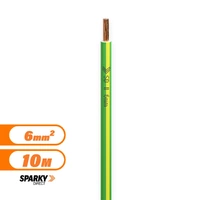
Common sizes include 1mm Twin and Earth, 1.5mm Twin and Earth, 2.5mm, and 6mm Twin and Earth. Smaller sizes serve lighting circuits and the largest sizes handle stoves, hot water, and sub-circuits.
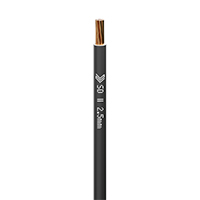
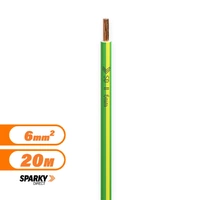
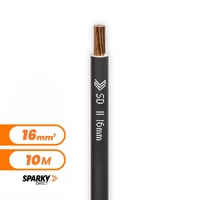
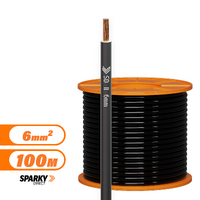
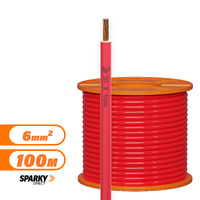
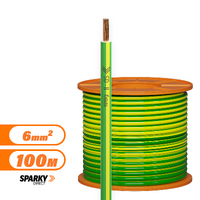
Single-core building wire is a single insulated conductor used inside electrical conduit. Each circuit needs separate active, neutral, and earth conductors pulled into the same conduit. SDI (Single Double Insulated) cable is one common type, with two insulation layers for added mechanical protection.
Single-core systems suit commercial and industrial buildings where cables need protection from impact, moisture, or chemical exposure. They also allow easier alterations: pulling in a new conductor is faster than recabling a whole TPS run.
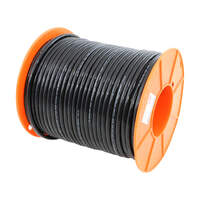
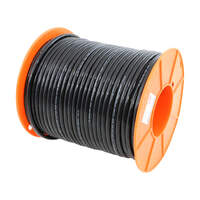
Three-phase circuits need three active conductors plus neutral and earth. Orange circular cable is the typical building wire for three-phase sub-mains in Australia. The orange sheath signals three-phase voltage, and the round profile suits conduit runs and underground installations.
Multi-core options also exist for specific applications such as air-conditioning circuits, with cable cuts available in three-core and earth configurations for split-system wiring.
Flat TPS suits stud-frame construction and existing renovations because it lies neatly against framing and pulls through tight cavities. Round cable (SDI in conduit, or orange circular for three-phase) suits new commercial builds, exposed runs, and underground or buried installations where mechanical protection matters more than ease of routing.
| CSA | Typical Application | Indicative Current |
|---|---|---|
| 1.0mm² | Lighting circuits | Up to ~10A |
| 1.5mm² | Lighting, small power | Up to ~16A |
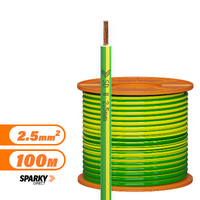
| 2.5mm² | General power circuits, GPOs | Up to ~20A |
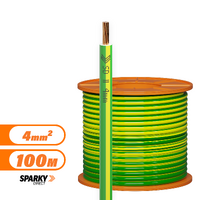
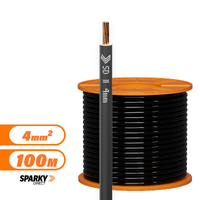
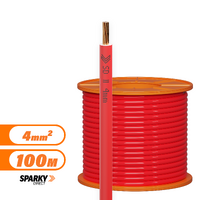
| 4.0mm² | Stove, hot water, oven circuits | Up to ~25A |
| 6.0mm² | Sub-mains, large appliances | Up to ~32A |
| 10mm² and above | Consumer mains, sub-distribution | 40A and higher |
Indicative ratings vary with installation method, grouping, and ambient temperature. Final sizing must follow AS/NZS 3008 calculations.
Current capacity is the maximum continuous current a cable can carry without exceeding its rated insulation temperature. PVC-insulated building wire is typically rated to 75°C conductor temperature. Exceeding this shortens insulation life and raises fire risk.
Voltage drop along a long cable run can leave equipment running below specification. AS/NZS 3000 limits total voltage drop to 5% from supply point to the furthest outlet. Long runs to sheds, granny flats, or rural buildings often need an upsize. A 2.5mm cable that handles 20A across 10 metres may need to be 4mm or 6mm at 40 metres for the same load.
Picking cable on amperage alone (ignoring voltage drop), missing the derating factor for grouped or insulated cables, and underestimating future load growth. Each can leave a circuit non-compliant, prone to nuisance tripping, or unsafe under fault conditions.
Lighting circuits typically use 1.0mm or 1.5mm cable on a 10A or 16A circuit breaker. General power circuits (GPOs) use 2.5mm on a 20A breaker. Dedicated appliance circuits for stoves, hot water systems, or instantaneous water heaters often need 4mm or 6mm depending on the appliance rating and run length.
Residential work uses TPS extensively because it suits stud framing and short runs. Commercial work leans on conduit systems with single-core cable, partly for protection and partly because circuit changes are common over a building's life. Industrial sites add factors like mechanical protection, chemical exposure, and high ambient heat.
Three steps: calculate the maximum continuous current (load in amps), check the cable rating for the chosen installation method, then verify voltage drop across the full run length. If any step fails, step up to the next cable size and repeat.
Upgrade when adding a higher-load appliance (e.g. switching from gas to electric stove), when run length increases significantly, when grouping more cables in a duct, or when an existing circuit shows signs of overheating at terminations.
How a cable is installed changes its current rating. A cable clipped to a surface in open air dissipates heat freely. The same cable buried in thermal insulation, or run inside a conduit with several other cables, retains heat and must be derated. AS/NZS 3008 lists rating factors for each installation method.
When two or more loaded cables run side by side, each cable's heat raises the temperature of its neighbours. The more cables grouped together, the more each one must be derated. Three grouped 2.5mm cables may have only 80% of the rating of a single 2.5mm cable in open air.
Cable ratings assume a reference ambient temperature, typically 30°C or 40°C in Australia. In hot roof spaces, switchboard cabinets, or industrial environments, ambient temperatures often run higher. Each rise above the reference reduces allowable current.
Why this matters: Skipping derating calculations leaves cables running hot, insulation degrading early, and circuit protection devices that may not trip in time during a fault. AS/NZS 3008 derating is not optional, it is the legal basis for safe cable selection.
PVC (polyvinyl chloride) is the standard insulation across most Australian building wire. It is cost-effective, flame-retardant, and rated to 75°C continuous operation. PVC-sheathed TPS cable handles most residential and light commercial work without issue.
XLPE (cross-linked polyethylene) tolerates higher operating temperatures, typically 90°C continuous and 250°C short-circuit. This improves current capacity and short-circuit performance compared to PVC at the same conductor size. XLPE is common in larger sub-mains and consumer mains where current density matters.
LSOH (low-smoke, zero-halogen) cable is engineered to release minimal smoke and no halogen acid gases when burned. It suits buildings where evacuation paths must stay visible during a fire: hospitals, data centres, schools, transport tunnels, and high-rise residential. Standard PVC cable releases dense smoke and corrosive gases under fire conditions, both of which LSOH avoids.
PVC suits standard residential and most commercial work. XLPE suits high-current sub-mains and applications where temperature headroom helps. LSOH is required by specifiers and often by code in occupied public buildings. UV-resistant sheathing is needed wherever cable runs in direct sunlight, such as solar installations.
AS/NZS 3000 (the Wiring Rules) is the legal standard governing all electrical installations in Australia and New Zealand. It defines how cables are selected, installed, supported, and protected. Every licensed electrician works to this standard, and every electrical inspection checks against it.
AS/NZS 5000 covers cable construction itself: conductor materials, insulation thicknesses, sheath specifications, marking, and testing. Compliant cable carries identifying markings including the standard reference, manufacturer, voltage rating, and conductor size. These markings are how an inspector verifies compliance on site.
AS/NZS 3008 sets out the calculation method for cable sizing. It contains current rating tables for every common conductor size and installation method, plus derating factors for grouping, ambient temperature, and thermal insulation. Every sizing decision on a job is justified against this document.
Compliant cable shows a continuous printed marking along its sheath including manufacturer, AS/NZS standard reference, voltage rating (typically 0.6/1kV for building wire), and conductor size. Cable without these markings should not be installed: it cannot be verified as compliant and may not perform as labelled.
Cables must be protected from physical damage. In wall cavities, this means avoiding nail-strike zones near plates and studs. In exposed runs, conduit or cable tray provides protection. Cables passing through metal framing need grommets to prevent abrasion of the sheath.
AS/NZS 3000 sets maximum spacing for cable supports based on cable size and orientation. Use proper cable clips sized to the cable. Undersized clips can deform the sheath, and oversized clips fail to hold the cable in place.
Power cables must keep minimum distances from data, communications, and gas services to prevent electromagnetic interference and accidental damage. Where cables share a route, the higher-voltage service typically sits above lower-voltage services in the cable tray hierarchy.
Every termination must be made into an approved connector or terminal. Use wire strippers sized to the conductor (over-strip removes too much insulation; under-strip leaves insulation in the connection). Tighten terminations to manufacturer torque specifications. Loose terminations are a leading cause of switchboard fires.
Residential work uses TPS extensively. Lighting circuits in 1.0mm or 1.5mm, GPO circuits in 2.5mm, stove and hot water in 4mm or 6mm. New homes and major renovations follow the same conventions, supplemented by orange circular for three-phase circuits where present.
Commercial buildings rely heavily on conduit systems with single-core cable. This suits open ceilings with cable tray, allows easier circuit changes, and offers better mechanical protection. Industrial sites add requirements for chemical resistance, high temperature, and arduous mechanical environments.
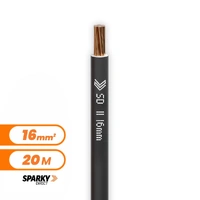
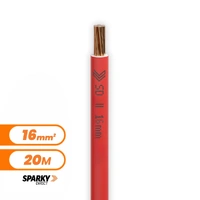
Sub-mains feed local switchboards from the main distribution point. These typically use larger conductor sizes (10mm, 16mm, 25mm and up) in either TPS, single-core in conduit, or orange circular. Sizing is driven by maximum demand calculations and voltage drop over the run length.
Outdoor cable runs need UV-resistant sheathing or full conduit protection. Underground runs need rated cable, mechanical protection, and warning tape. Underground electrical warning tape placed above the cable alerts future excavators to the buried service.
Most cable-related fires trace back to one of three causes: overloaded circuits, loose terminations, or damaged insulation. Correct sizing prevents the first, careful workmanship prevents the second, and proper mechanical protection prevents the third.
Every degree above rated temperature shortens insulation life. PVC operating consistently above 75°C will harden, crack, and eventually expose the conductor. This is why derating matters: it keeps cables operating within their rated thermal envelope.
Quality building wire installed correctly should last decades. Most failures relate to poor terminations or environmental exposure beyond the cable's rating, not the cable itself. Choosing cable rated for the application and installing it to AS/NZS 3000 gives the best long-term outcome.
PVC building wire installed in conditioned spaces typically lasts 30 to 40 years before insulation degradation becomes an issue. Outdoor or high-temperature locations shorten this significantly. Older homes wired before the 1970s may use rubber-insulated cable that is well past replacement age.
Building wire pricing follows copper commodity prices closely, since the conductor accounts for most of the material cost. Prices are usually quoted per metre or per 100-metre roll. Larger conductor sizes cost significantly more per metre than smaller sizes due to copper content.
Full 100-metre rolls offer the lowest cost per metre and suit electrical contractors with steady throughput. Cable cuts in 10-metre, 20-metre, or 50-metre lengths suit smaller jobs or one-off repairs without forcing the buyer to carry an excess roll.
Premium cable from established manufacturers typically delivers more consistent insulation thickness, cleaner conductor stranding, and reliable AS/NZS marking. Very cheap cable can have under-thickness insulation or undersized conductors marketed at a nominal CSA, creating compliance and safety issues.
Traditional trade counters offer same-day pickup and personal advice. Online wholesalers offer broader range, transparent pricing, and direct delivery to site. Many electricians now combine both: counter pickup for urgent items, online for stock replenishment and larger orders.
For trade buyers, next-day or two-day delivery on cable orders avoids costly delays on site. Stock availability matters as much as price: an in-stock 100-metre roll dispatched same day is more valuable than a cheaper roll on backorder.
Build a cable schedule before ordering: list every circuit, the load in amps, the run length, the installation method, and the resulting cable size. This catches sizing errors before stock arrives on site and avoids return trips for additional cable.
Add 10 to 15% to your measured cable length to allow for routing detours, terminations at each end, and minor errors. For long runs, double-check voltage drop before finalising the quantity. It costs little to upsize at the order stage and a lot to recable a short run later.
Sparky Direct stocks the full range of building wire in standard sizes from 1.0mm through to large sub-mains, with both full rolls and cut lengths available. Cables are dispatched from Australian stock with established trade brands including Electra-Cables and Garland Cables.
Watch 1.5mm SDI Red Cable | Single Double Insulated 1.5mm Red 20mtr Cut | 15SDI-R20 video
Watch Klein Tools 11061 | Wire Stripper and Cutter | Self-Adjusting video
Watch 29-514 | Cable Cutters - 165mm Ultimax Pro Black Panther Gen II video

2.5 twin and earth might just seem like cable and it is but the insulation material is better. It feels better and can strip easier. Marking the active cable on the outer Sheath is a bonus. Again good value for money good cable. As a multi strand conductor still give a heavier cable flex. Definitely recommend for the product and the cost
I have been dealing with Sparky Direct for years and I have never had a problem. I have always received great service along with quality products and great prices. Thank you.
Excellent service which is the very high benchmark Sparky Direct have set themselves and are widely known for.
Quality cable in stock • Fast Australia-wide delivery • Competitive trade pricing
Browse Building Wire → Get Expert Advice →Yes. Building wire is commonly used during upgrades, renovations, and electrical modifications.
Building wire is available from Sparky Direct, offering access to compliant electrical products with Australia-wide delivery.
Delivery options depend on the supplier and location, with availability across metropolitan and regional Australia.
Yes. Building wire is suitable for new construction, renovations, and electrical upgrades.
Warranty coverage depends on the manufacturer and supplier, with conditions applying to correct use and installation.
Consider conductor size, insulation type, compliance markings, application requirements, and electrician recommendations.
Yes. When compliant products are installed by licensed electricians, building wire provides a safe and dependable wiring solution.
Yes. Building wire is used in residential, commercial, and light industrial settings.
Yes. Building wire is designed to allow routing through conduits and confined spaces as required.
The wire itself does not require maintenance but is checked during routine electrical inspections.
Yes. When correctly sized, building wire is suitable for modern household and workplace electrical loads.
When correctly installed and protected, building wire can provide many years of reliable service.
In most cases, building wire is concealed within walls, ceilings, or conduits once installed.
Building wire is electrical wire used for fixed wiring installations within buildings, including residential and light commercial applications.
Building wire is designed for professional use and is manageable for licensed electricians during installation.
Building wire is versatile, reliable, and suitable for concealed installations, making it ideal for new builds and renovations.
Yes. Installation must be carried out by a licensed electrician to ensure safety and compliance with Australian regulations.
Building wire is primarily designed for indoor or protected environments and is not intended for direct exposure to weather unless specifically rated.
Yes. Building wire is available in configurations suitable for both single-phase and three-phase electrical systems.
Yes. Building wire is available in a range of conductor sizes to suit different electrical loads and circuit requirements.
Building wire typically uses copper conductors due to their conductivity, strength, and reliability.
Yes. Building wire is widely used in Australian homes for lighting, power, and control circuits.
Building wire is commonly installed within walls, ceilings, conduits, switchboards, and other protected building cavities.
Quality building wire supplied in Australia is manufactured to meet relevant AS/NZS electrical and safety standards when installed correctly.
Common types include single insulated, double insulated, and sheathed building wires designed for specific electrical applications.