
Search Results:
Search Results:
Search Results:
Search Results:
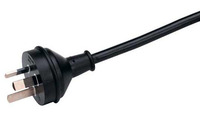
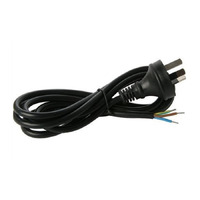
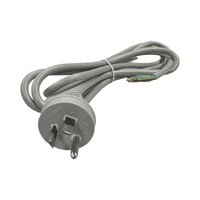
Find the best flex and plug cables here at Sparky Direct. [ Read More ]
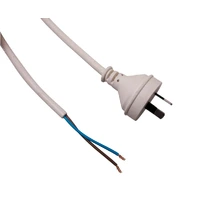
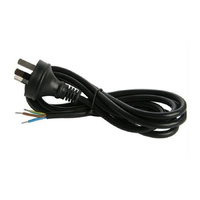
A flex and plug assembly combines a flexible electrical cable (the "flex") with a pre-fitted three-pin plug, creating a ready-to-use power connection for portable appliances and equipment. The flexible cable contains fine-stranded copper conductors encased in PVC insulation, allowing the cable to bend repeatedly without damaging the internal conductors. Unlike hardwired connections, flex and plug assemblies allow appliances to be moved, repositioned, or disconnected from a power outlet without any electrical work.
Fixed wiring uses solid or semi-rigid conductors designed to stay in place permanently within walls and conduit. Flex cable uses multi-stranded conductors engineered to withstand repeated movement and bending. Flex cable is rated for portable and movable applications under AS/NZS 3191 and AS/NZS 60227, the Australian and New Zealand standards that govern flexible cords used in domestic and commercial settings. Using the wrong cable type in a flexing application can cause internal conductor fatigue, insulation breakdown, and premature failure. Selecting compliant flex cable is both a safety and longevity decision.
Flex and plug is appropriate when an appliance needs to be portable, regularly moved, or disconnected for maintenance, such as lamps, fans, power tools, and small kitchen equipment. Hardwiring is required when an appliance is permanently installed, such as ovens, fixed air conditioning units, and switchboard-connected equipment. Australian electrical regulations prohibit plug-in connections for certain fixed appliances. The decision between flex and plug versus hardwiring must account for the appliance's load rating, intended location, and whether it will be regularly repositioned.
If the appliance will be moved, repositioned, or disconnected regularly, flex and plug is the correct connection method. If it will stay in one place permanently, hardwiring is likely required under AS/NZS 3000:2018. When in doubt, consult a licensed electrician before specifying the connection method.
In Australia, flex and plug assemblies are commonly available in 7.5 amp, 10 amp, and 15 amp ratings. Each rating corresponds to the maximum continuous current the cable and plug can safely carry. A 10A flex and plug is the most widely used rating, suitable for standard household appliances connected to a 10A GPO (general purpose outlet), including lamps, fans, and small appliances drawing up to 2,400 watts at 240V. A 15A flex and plug is required for higher-draw equipment such as air compressors, some power tools, and commercial appliances connected to a dedicated 15A outlet. A 15A plug will not fit a standard 10A outlet, which is an intentional safety feature of the Australian plug standard.
The correct amperage rating is determined by dividing the appliance's wattage by 240 volts (the Australian mains voltage) to calculate the operating current, then selecting a cable rated above that figure. Undersizing a flex and plug cable relative to the appliance load causes the cable to overheat, which can degrade insulation, trip circuit breakers, and create a fire risk. Australian Standard AS/NZS 3191 specifies the minimum conductor cross-section and insulation requirements for each amperage class, ensuring that compliant products deliver safe, consistent performance.
The 7.5A rating is designed for light-duty applications such as pendant lighting, bedside lamps, and low-wattage decorative fittings where the load does not exceed approximately 1,800 watts. 7.5A flex cables typically use a smaller conductor cross-section than 10A cables, making them more flexible and easier to route in tight spaces around pendant suspension systems and ceiling roses. Using a 7.5A assembly on an appliance that draws more than 7.5A is a safety hazard and a breach of AS/NZS standards. Always verify the appliance's rated current draw before selecting a cable.
| Rating | Max Load at 240V | Typical Applications | Plug Fits Standard GPO? |
|---|---|---|---|
| 7.5A | 1,800W | Pendant lights, decorative lamps, low-load fittings | Yes (10A GPO) |
| 10A | 2,400W | Fans, kettles, toasters, general appliances, lighting | Yes (10A GPO) |
| 15A | 3,600W | Air compressors, commercial equipment, power tools | No (dedicated 15A outlet required) |
Australian flex and plug assemblies are commonly available in lengths of 1.0m, 1.2m, 1.7m, 2m, 2.9m, and 3m, with each length suited to specific installation scenarios. Shorter lengths of 1.0m to 1.2m are typically used for pendant lighting and ceiling-mounted applications where the appliance is close to the power source and cable management is a priority. Longer lengths of 1.7m to 3m are used for floor-standing appliances, power tools, and equipment where the outlet is not immediately adjacent to the appliance.
Resistance in a conductor increases proportionally with length, meaning longer flex cables experience a slightly higher voltage drop under load compared to shorter cables of the same conductor cross-section. For most residential appliance applications this voltage drop is negligible. For high-draw equipment or very long runs, selecting a cable with a larger conductor cross-section mitigates this effect. Australian standards specify maximum conductor resistance values per metre for each cable class, ensuring that even longer assemblies remain within safe operating parameters.
Selecting a cable that is too short creates tension on the connection points at both the plug and appliance end, accelerating wear on the cable sheath and increasing the risk of intermittent faults. Selecting a cable that is excessively long leads to coiling during use, which can cause localised heat build-up if the cable is coiled while carrying current. Cables should always be fully extended during operation. The correct length is the shortest cable that allows the appliance to be positioned and used without placing strain on the cable or creating a trip hazard.
Safety note: Never operate a flex and plug cable while it is coiled. Coiling a cable under load traps heat generated by resistance in the conductors. This can cause insulation damage and, in extreme cases, create a fire risk. Always fully extend the cable before use.
Pre-assembled flex and plug units arrive with the cable and plug already connected and terminated, reducing installation time on-site and eliminating the need for the electrician to terminate the plug by hand. Factory-terminated assemblies are manufactured under controlled conditions, ensuring consistent cable grip, correct polarity, and compliant insulation displacement. This reduces the risk of wiring errors during high-volume installations. Pre-assembled units are particularly efficient for repetitive installations such as lighting fit-outs, where an electrician may connect dozens of pendant fittings in a single job.
Separate flex cable and plug tops allow the electrician to cut the cable to the exact length required, eliminating waste and allowing precise cable management in installations where standard lengths do not suit the layout. Separate components are also used when replacing a damaged plug on an existing cable, or when building a custom lead for a specific appliance or commercial application. Electricians working across a variety of job types often carry both pre-assembled units and separate components to ensure they have the right solution for each scenario without carrying excessive stock.
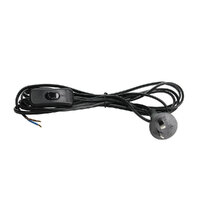
Some flex and plug assemblies include an inline switch fitted to the cable body, allowing the appliance to be switched on and off without accessing the wall outlet. Inline switch assemblies are commonly used for pendant lighting, table lamps, and decorative fittings where the wall switch is not conveniently positioned relative to the appliance. The inline switch must be rated to match the cable's amperage rating. Using an undersized switch on a higher-rated cable creates a fault point that can overheat under load.
AS/NZS 3191 is the primary Australian and New Zealand standard governing flexible cords. It specifies requirements for conductor construction, insulation materials, sheath composition, and mechanical performance. AS/NZS 60227 covers PVC-insulated flexible cables and cords, aligning Australian requirements with international IEC standards while incorporating local amendments for the Australian electrical environment. Products sold in Australia for use in electrical installations must carry evidence of compliance with these standards. Purchasing non-compliant flex and plug products creates liability for the electrician and risk for the end user.
In all Australian states and territories, electrical work involving the connection of flex and plug assemblies to fixed wiring or appliances must be carried out by a licensed electrician. A licensed electrician is required to inspect, test, and certify the completed work, and in most jurisdictions must issue a Certificate of Electrical Safety (CES) or equivalent compliance document for the installation. Homeowners may replace a damaged plug on an existing appliance lead in some jurisdictions. Connecting new flex and plug assemblies to fixed wiring or ceiling roses is classified as electrical work and is not a DIY task.
The conductor resistance limits in AS/NZS 3191 ensure that cables of a given amperage rating do not overheat under normal operating conditions, reducing the risk of insulation degradation and fire. Mechanical testing requirements specify the minimum number of flex cycles a cable must withstand without conductor fracture or insulation cracking, ensuring the product performs reliably over its service life. Sheath adhesion and insulation thickness requirements prevent the outer sheath from separating from the inner insulation under mechanical stress, maintaining the cable's protective integrity in real-world use.
In residential settings, flex and plug assemblies are most commonly used for pendant lighting, ceiling fans, table lamps, and small appliances including kettles, toasters, and portable heaters. Standard 10A assemblies in 1.2m to 1.7m lengths cover the majority of residential lighting and small appliance connections, while 7.5A assemblies are appropriate for low-wattage decorative lighting. Ceiling rose installations in Australian homes typically use a 10A or 15A flex and plug to connect the pendant fitting to the ceiling rose, allowing the fitting to be removed and replaced without disturbing the fixed wiring.
Commercial environments such as offices, retail fit-outs, and hospitality venues use flex and plug assemblies for display lighting, equipment connections, and portable appliances, often requiring 15A ratings for higher-draw equipment. Light industrial settings including workshops, warehouses, and manufacturing facilities use heavy-duty flex and plug assemblies with reinforced sheaths designed to resist abrasion, oil contamination, and mechanical damage. Tool replacement flex and plug assemblies are a specific product category designed for power tools, featuring heavy-duty 2-core construction and robust plug bodies that withstand the physical demands of on-site use.
Standard PVC-sheathed flex and plug assemblies are rated for indoor use only. Outdoor applications require cables with UV-resistant sheaths and plugs with weatherproof ratings appropriate for the exposure level. In Australian outdoor environments, flex and plug assemblies used in exposed locations must be connected via weatherproof outlets rated to at least IP23, with the cable selected to suit the ambient temperature range and UV exposure of the installation site. Outdoor flex and plug connections must not be left exposed to direct rainfall unless both the cable and outlet are rated for wet area use. Using indoor-rated products in outdoor applications is a non-compliant installation.
Selecting the correct flex and plug assembly requires matching five parameters to the specific application. Getting any one of these wrong can result in a non-compliant installation, premature product failure, or a safety hazard.
Compliant flex and plug products display the relevant AS/NZS standard number on the cable sheath or packaging, along with the voltage and amperage rating, conductor cross-section, and manufacturer or supplier identification. The RCM (Regulatory Compliance Mark) is required on flex and plug products sold in Australia, indicating that the product has been assessed and found to comply with the applicable Australian electrical safety standards. Purchasing flex and plug products from established Australian electrical wholesalers ensures access to compliant stock, with product data sheets and technical support available to confirm the correct specification for the application.
Flex and plug assemblies should be visually inspected before each use for signs of sheath damage, conductor exposure, plug pin corrosion, or cable kinking near the plug or appliance entry point. Cables that show signs of sheath cracking, conductor exposure, or damaged plug bodies must be replaced immediately. Damaged flex and plug assemblies are a shock and fire risk and must not be repaired with tape or temporary measures. In commercial and industrial settings, flex and plug assemblies connected to portable appliances and tools must be included in the site's test and tag programme under AS/NZS 3760, with testing intervals determined by the risk classification of the environment.
A ceiling rose is the fixed wiring termination point mounted to the ceiling, providing the connection between the building's fixed wiring and the pendant fitting via a flex and plug assembly. The flex cable from the pendant fitting connects to the ceiling rose terminals, with the plug end of the assembly not used in this configuration. The ceiling rose provides the mechanical and electrical connection to the fixed wiring. Ceiling roses in Australia are rated at 15A 500V and must be installed by a licensed electrician, with the pendant flex selected to match the load rating of the fitting and the current capacity of the circuit.
Australian standard power points (GPOs) are rated at 10A 240V, meaning only 10A flex and plug assemblies with the corresponding flat-pin plug can be connected to them. 15A outlets have a different pin configuration to standard 10A GPOs, physically preventing a 15A plug from being inserted into a 10A outlet. This is a deliberate safety feature of the Australian plug standard that prevents overloading standard circuits. When an appliance requires a 15A connection, a dedicated 15A circuit and outlet must be installed by a licensed electrician before the 15A flex and plug assembly can be used.
Residential lighting fit-outs typically combine ceiling roses, pendant suspension cords, flex and plug assemblies, and batten holders or lamp holders into a complete pendant lighting system. Selecting compatible components from a single supplier simplifies the specification process, reduces the risk of mismatched ratings, and streamlines on-site installation by ensuring all components are designed to work together. For commercial fit-outs, documenting the flex and plug specifications used throughout the installation supports future maintenance, replacement, and compliance auditing by providing a clear record of the products installed and their ratings.
Watch Clipsal 93 Ceiling Rose | 4 Terminal 15 Amp 500v 93WE video
Watch NLS 40038 | 1.7mtr Flex & Plug 10amp video
Watch EDC0568ZX | Tool Replacement Flex & Plug Heavy Duty 3mtr 10Amp 2 Core Black video

I've recently been coming across some appliances fitted with 20A plugs in my ventures of testing and tagging - namely some wielders, cookers and commercial drying machines. Instead of coming up with a makeshift solution onsite to test those appliances, I wanted to make a short test lead fitted with a 20A socket. None of the electrical wholesalers in my area were aware such a product existed, so I looked online and Sparky Direct was the only place in Australia that yielded a favourable result. Not only did they have them available, the price was very reasonable. I have since made the lead and it has streamlined my testing regime.
I have been using Sparky Direct for a while and recently purchased some 15Amp HD Plugs. The price and quality of the product was good, no complaints there. This has been the case with all the transactions I've made. When it comes to customer service, Sparky Direct is tops! Every order is processed very quickly and pick-up is smooth and efficient. Big thumbs up and thanks.
I do a lot of Extra Low Voltage DC wiring and I have been very dismayed at how scarce these products are becoming at a reasonable price. I can get similar 2 pin plug tops that are not the quality of these. Clipsal 2 pin plug tops are the best but are at ridiculous prices at some outlets that I would never pay.
Quality products in stock • Fast Australia-wide delivery • Competitive trade pricing
Browse Flex and Plug Cables → Get Expert Advice →Yes, they allow appliances to be moved without disconnecting fixed wiring.
Sparky Direct supplies flex and plug products Australia-wide, offering reliable electrical connection solutions with convenient delivery.
They are securely packaged and delivered via standard courier services.
Unused items are generally eligible for return according to the seller’s returns policy.
Warranty coverage varies by manufacturer and typically covers defects in materials or workmanship.
Yes, flex and plug products are sold individually in various configurations.
Electrical connections and modifications must be carried out by a licensed electrician.
Yes, damaged components should be replaced to maintain safety.
They are usually discreet and designed to blend with appliance placement.
With regular use, cables and plugs can wear and should be inspected periodically.
Yes, flexible cables are designed to bend without damaging internal conductors.
Yes, they are commonly used for everyday household electrical items.
When correctly rated and installed, they provide safe power connection for appliances.
Flex and plug assemblies are used to connect electrical appliances and equipment to a power outlet.
Yes, they are designed for straightforward appliance connection.
Flex and plug connections allow appliances to be easily connected and disconnected from power.
They are available as pre-assembled units or as separate flex and plug components.
Yes, they are used in both residential and commercial environments when correctly specified.
Many are designed for indoor use, while some are suitable for outdoor or heavy-duty applications.
Cable sizes vary depending on the appliance load and manufacturer specifications.
Yes, flexible cords are available in various lengths to suit different applications.
Yes, they are commonly used with appliances such as lamps, fans, and small electrical equipment.
Quality flex and plug products are manufactured to meet relevant AS/NZS electrical safety standards.
Australian plugs are typically three-pin plugs designed to suit Australian power outlets.
Flex refers to flexible electrical cable used to supply power to portable or movable appliances.