
Search Results:
Search Results:
Search Results:
Search Results:
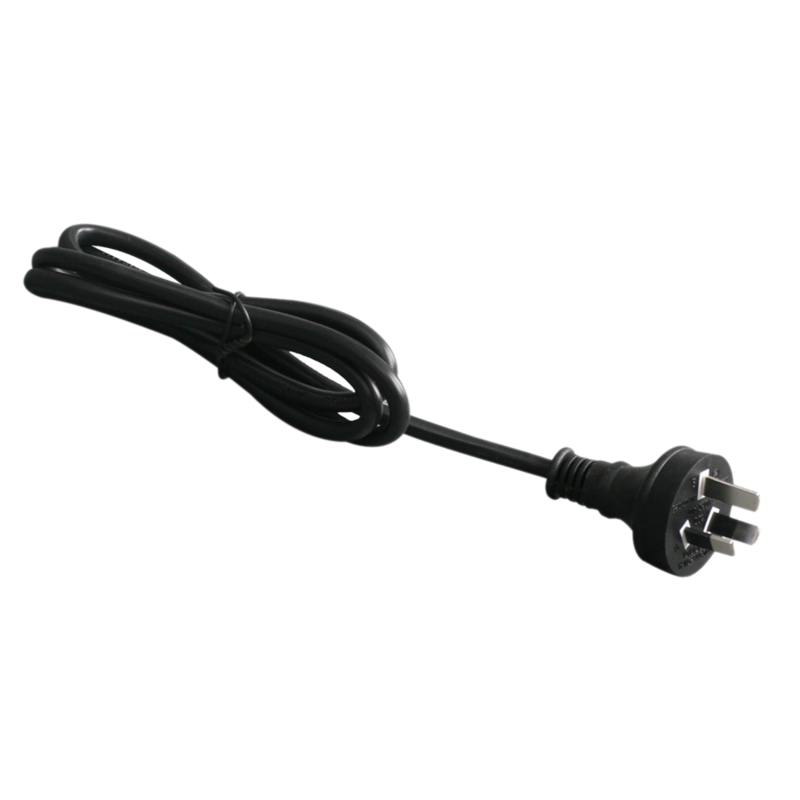
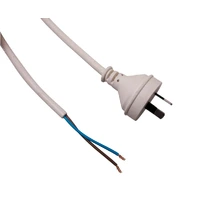
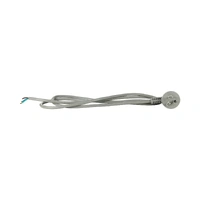
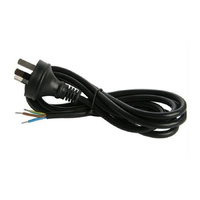
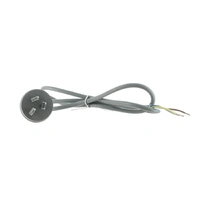
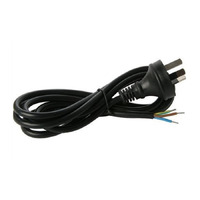
A flex and plug assembly carries mains current from a wall socket to an appliance through three insulated conductors: active, neutral, and earth. The plug top docks into the GPO, the cable transmits the load, and the appliance terminations complete the circuit. Unlike fixed wiring buried in walls, flex is built to bend, coil, and move without damaging the conductors inside.
Electrical flex uses fine-stranded copper conductors wrapped in flexible insulation. Fixed wiring, such as twin and earth cable, uses solid or coarsely stranded conductors designed to sit static inside conduit or wall cavities. Flex is rated for repeated movement; fixed cable is not.
The plug top is the disconnect point between the appliance and the supply. Pin geometry follows AS/NZS 3112, which sets the angled active and neutral pins and the vertical earth pin used across Australia and New Zealand. Plug ratings must match or exceed the load: 10A for general appliances, 15A for higher-draw equipment, and 20A for industrial portable loads.
Inside every three-core flex you will find a brown active, a blue neutral, and a green-yellow earth. The earth conductor is non-negotiable on Class I appliances. It bonds the metal chassis to the supply earth, so a fault current trips the upstream circuit breaker or RCD before it reaches the user.
Flex and plug assemblies are the most-handled electrical components in any building. They get tugged, kinked, run over by chairs, and pinched by doors. Compliance is what stands between routine use and an electrocution risk.
A correctly specified assembly delivers the full rated current without overheating, holds its grip on the GPO under cable tension, and keeps the earth path intact even when the active and neutral are stressed. Cheap or undersized cord sets fail at all three.
An undersized 7.5A flex feeding a 10A heater overheats the cable, melts the insulation, and exposes live conductors. A 10A plug fitted to a 15A appliance trips repeatedly or worse, runs hot inside the GPO. Always match the assembly rating to the appliance nameplate.
AS/NZS 3112 governs plug and socket dimensions, pin geometry, and insulation. AS/NZS 3000:2018 (the Wiring Rules) sets the rules for installation, earthing, and protection. AS/NZS 3760 governs in-service inspection and testing of portable electrical equipment, commonly known as test and tag. Assemblies sold by Sparky Direct meet all three.
Flex selection comes down to current rating, environment, and mechanical exposure. Australian sites typically run three families of flexible cable.
Light-duty 0.75mm and 1.0mm flex covers small appliances, table lamps, and pendant connections. Two-core and three-core versions cover Class II and Class I equipment respectively. Pendant suspension cords use this lighter flex paired with a suspension extension socket.
Heavy-duty 1.5mm and 2.5mm flex handles workshop tools, industrial cleaners, and high-draw appliances. The thicker conductor reduces voltage drop on long runs and survives repeated mechanical stress. Three-core 1.5mm is the workhorse for 10A and 15A portable loads.
Specialised flex covers situations where standard PVC fails. Silicone-sheathed flex tolerates high temperatures around ovens and lighting. Submersible flex seals against water for pumps and pond gear. Flat twin flex feeds slim-profile appliances where round cable will not fit.
Australian plug tops follow AS/NZS 3112. Within that single standard you have several common variants matched to current ratings and fitting orientations.
The 10A plug is the default Australian three-pin top. It fits every domestic 10A power point in the country. Standard 10A plugs cover loads up to 2400W on 240V supply.
15A plugs use a wider earth pin and only fit 15A sockets, which prevents overloading a 10A circuit. They suit workshop equipment, caravans, and commercial appliances. 20A plugs go further again, with an even wider earth pin reserved for higher-draw industrial gear. Both belong in the heavy-duty plug top range.
Angled (side-entry) plugs route the cable downward or sideways from the GPO instead of straight out. They suit furniture pushed against walls, cable runs behind appliances, and any installation where a straight plug would foul the wall or get tugged on. The Clipsal 418 series is the classic side-entry top.
Picking the right assembly is a calculation, not a guess. Three numbers matter: current draw, cable cross-sectional area (CSA), and run length.
Read the appliance nameplate. A nameplate showing 1800W on 240V draws 7.5A. Add a 25 per cent margin for inrush and ageing, then choose the next standard rating up. A 7.5A continuous load wants a 10A assembly minimum. A 12A load wants 15A.
| Cable CSA | Typical Current Rating | Common Use |
|---|---|---|
| 0.75mm | 6A | Lamps, low-draw electronics |
| 1.0mm | 10A | General appliances, vacuums, kitchen gear |
| 1.5mm | 15A | Power tools, heaters, commercial equipment |
| 2.5mm | 20A+ | Industrial loads, welders, cookers |
Voltage drop becomes significant on long runs. AS/NZS 3000 limits total voltage drop to 5 per cent from origin to load. A 1.0mm flex carrying 10A across 30 metres drops more than that, so step up to 1.5mm or use a shorter extension lead sized correctly for the load.
Sheath material decides where an assembly can safely operate. PVC, rubber, and TPE each have a defined comfort zone.
Outdoor and workshop environments wear flex faster than domestic use. Look for assemblies marked with H07RN-F (heavy-duty rubber) or equivalent for site work, oil-resistant sheaths for kitchens and workshops, and UV-stable jackets for permanent outdoor connections.
Stranding count drives flexibility. A 1.5mm flex with 30 fine strands bends easily and survives repeated coiling. The same CSA in 7-strand construction is stiffer and tires the conductor faster under flexing. For tools and gear that get rolled up daily, choose high-strand-count flex.
Both formats meet AS/NZS 3112. Each suits a different workflow.
Rewireable plug tops let an electrician fit, replace, or repair a plug on existing flex. They suit custom-length leads, repairs to expensive equipment with damaged plugs, and any situation where the appliance comes without a fitted plug. The male 3-pin plug top range covers 10A, 15A, and 20A rewireable formats.
Moulded plugs are factory-pressed onto the flex. The plug body and the cable sheath are bonded as one piece, so the connection cannot loosen and water cannot track inside. Moulded assemblies install in seconds, cost less than buying flex and a plug separately, and pass test and tag first time.
Moulded assemblies cannot be repaired. If the cable fails or the plug breaks, the whole assembly is scrap. Rewireable plugs can be opened, inspected, and re-terminated. For high-value equipment with long cables, a rewireable plug saves money over the lifetime of the gear.
The right choice balances appliance rating, environment, and how the cable will be handled in service.
Start with the appliance nameplate. Match or exceed the current rating, then check the environment. Indoor dry use accepts PVC. Damp or outdoor use needs IP-rated terminations or weatherproof weatherproof GPOs at the supply end. Workshop floors with oil and solvents need TPE or rubber.
Indoor flex is light, flexible, and relies on the building structure for protection. Outdoor flex needs a UV-stable jacket and, where it crosses traffic paths, mechanical protection from cable covers. Permanent outdoor connections also need IP-rated plug tops, not standard 418 or 439 series.
Light-duty assemblies cost less but wear faster. Heavy-duty assemblies cost more upfront and last years longer in trade use. For tools used daily, heavy-duty is cheaper over the lifetime of the equipment.
Installation is regulated. The rules protect users from shock and fire, and they protect electricians from liability.
The Wiring Rules cover earthing, protection, and conductor sizing. Section 4 governs flexible cords and the protective devices upstream of them. The standard requires fault protection, voltage drop limits, and conductor identification across all permanent and portable connections.
AS/NZS 3112 sets the dimensions of plugs and sockets, the keying that prevents 15A plugs entering 10A sockets, and the insulation distances inside the plug body. Every plug top sold by Sparky Direct carries this approval mark.
Compliance reminder: Wiring a rewireable plug onto flex is restricted electrical work in every Australian state and territory. The work must be carried out by a licensed electrician. Test and tag of completed assemblies is regulated separately under AS/NZS 3760.
Flex and plug assemblies show up in every sector, with the rating and construction varying by load and environment.
Domestic applications are dominated by 10A assemblies feeding kitchen appliances, lamps, electronics, and laundry gear. Pendant lights use lightweight 0.75mm flex with suspension sockets. The suspension extension socket range covers ceiling pendant connections.
Commercial sites mix 10A and 15A assemblies. Office equipment runs on 10A. Catering gear, floor scrubbers, and HVAC accessories often draw 15A. Fit-out contractors keep stock of both formats in 1m, 1.7m, and 3m lengths.
Construction and industrial sites step up to industrial outlets and sockets rated to IP66. The Clipsal Easy56 plug range covers 3-pin, 4-pin, and 5-pin industrial plugs in 10A, 15A, 20A, and 32A ratings.
Most assembly failures come down to three errors made at the specification stage.
Fitting 1.0mm flex to a 12A appliance is the textbook mistake. The cable runs hot, the insulation degrades, and the assembly fails inside a year. Always size flex one rating above the steady-state current.
A 10A plug on a 15A appliance defeats the keying that AS/NZS 3112 was designed to enforce. The plug overheats inside the socket and may damage the GPO contacts. The 15A pin geometry exists to prevent exactly this scenario.
Two-core flex has no earth conductor. It belongs only on Class II (double-insulated) appliances. Fitting two-core flex to a Class I appliance leaves the metal chassis ungrounded, so any internal fault energises the casing. The result is an electrocution waiting for the next user.
Flex is a wear item. The earlier damage is found, the cheaper it is to replace.
AS/NZS 3760 sets the inspection intervals for portable electrical equipment in workplaces. Construction sites test every three months. Factories typically test every six to twelve months. Office environments test every five years for equipment that does not move. A power point tester covers visual checks between formal test cycles.
Look for cracked sheathing, exposed strands at the plug entry, melted plug pins, loose strain relief, and discolouration around the plug body. Any of these is an immediate fail. Tag out the assembly and replace it.
Replace the whole assembly when the cable is cut, kinked, or has visible conductor exposure. Replace the plug top alone when only the plug is damaged and the cable passes inspection. Never repair a moulded plug. Cut it off and fit a new rewireable.
Trade buyers and licensed electricians have different needs from a domestic shopper. Sparky Direct stocks for trade.
Sparky Direct ships flex and plug assemblies Australia-wide from Brisbane warehousing. The catalogue covers 10A, 15A, and 20A formats from Clipsal, NLS, and Trader, with same-day dispatch on stocked lines.
The price gap between cheap import assemblies and trade-grade Australian-approved gear is small once installation labour is counted. Trade-grade assemblies hold their seal, pass test and tag, and last the life of the appliance. Cheap assemblies fail inside a year and have to be replaced.
Contractors fitting out commercial premises can order in bulk for trade pricing. The plug tops and extension sockets range is stocked deep enough for full-site rollouts.
Three failure patterns dominate flex and plug troubleshooting.
Hot plugs and warm cable indicate either overload or a poor connection inside the plug body. Switch off, unplug, and inspect. A melted plug pin or discoloured sheath is a permanent fail. Replace the assembly.
Flicker or drop-out usually traces to a broken conductor inside the flex, often near the plug entry where the cable flexes most. Wiggle-test the cable while the appliance runs. If the load drops out, the flex is broken. Replace it.
Cracked plug bodies, loose terminals, and stripped cable are all signs of mechanical failure. None can be safely repaired in the field. Cut the plug off, fit a new rewireable top to clean cable, or replace the whole assembly if the flex is also damaged.
Club Clipsal is Australia's largest electrician community offering trade rewards, business support, and exclusive benefits. When you nominate Sparky Direct as your preferred wholesaler, we automatically apply your Clipsal spend points to your Club Clipsal account daily.
Entry-level offering coaching, mentoring, and training discounts
Unlock exclusive industry tools and networking events
Access Toyota fleet offers and business software discounts
Maximum benefits, including VIP experiences and rewards
1. Sign Up: Create your Club Clipsal account at clipsal.com/club-clipsal or via the iCat mobile app
2. Nominate Sparky Direct: Select Sparky Direct from the wholesaler dropdown menu in your profile
3. Add Email: Enter your Sparky Direct account email address in the membership number field
4. Start Earning: Every dollar spent on Clipsal products earns points automatically
Redeem points from the rewards store, including gift cards, tools, and experiences. Access business summits, product training, and industry networking events. Receive early access to new product launches and special promotions. Connect with fellow electricians via the Club Clipsal community app.
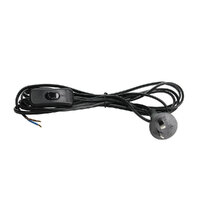
Watch EDC0117X | Flex & Plug 2.9 Mtr 7.5Amp 2 Core c/w Inline Switch video
Watch CLIPSAL 439S15HDTR | 3 Pin 15Amp Heavy Duty PlugTop (Transparent) video
Watch CLIPSAL 438/20 | 3 Pin 20Amp Extension Socket (Transparent) video

I've recently been coming across some appliances fitted with 20A plugs in my ventures of testing and tagging - namely some wielders, cookers and commercial drying machines. Instead of coming up with a makeshift solution onsite to test those appliances, I wanted to make a short test lead fitted with a 20A socket. None of the electrical wholesalers in my area were aware such a product existed, so I looked online and Sparky Direct was the only place in Australia that yielded a favourable result. Not only did they have them available, the price was very reasonable. I have since made the lead and it has streamlined my testing regime.
I have been using Sparky Direct for a while and recently purchased some 15Amp HD Plugs. The price and quality of the product was good, no complaints there. This has been the case with all the transactions I've made. When it comes to customer service, Sparky Direct is tops! Every order is processed very quickly and pick-up is smooth and efficient. Big thumbs up and thanks.
I recently had a need for 5 light fitting products to brighten our lives in these dark times. Luckily I'd had success with Sparky Direct before, so they were my go-to outlet. The items arrived in no time, at a great price & are better quality than eBay & other online sources.
Quality products in stock • Fast Australia-wide delivery • Competitive trade pricing
Browse Flex and Plug Assemblies → Get Expert Advice →Yes, they are standard electrical components used in many applications.
Sparky Direct supplies flex and plugs Australia-wide, offering compliant and reliable electrical connection solutions with convenient delivery.
Flex and plugs are securely packaged and delivered via standard courier services.
Unused products are generally eligible for return according to the seller’s returns policy.
Warranty coverage varies by manufacturer and typically covers defects in materials or workmanship.
Yes, flex and plugs are typically sold as individual electrical components.
Yes, selecting the correct rating is important for safety and performance.
They should be visually checked occasionally for signs of wear or damage.
They can be replaced by licensed professionals when required.
Yes, compliant products help ensure safe and reliable connections.
Yes, heavy-duty options are commonly used in workshops and garages.
Quality products are designed to withstand regular bending and use.
Yes, they allow appliances and tools to be moved easily while powered.
Flex and plugs refer to flexible electrical cable (flex) and electrical plugs used to connect appliances and equipment to a power supply.
Yes, plugs are designed for simple and secure connection to power points.
Quality flex ensures durability, flexibility, and safe power delivery.
Yes, heavy-duty flex and plugs are available for tools and demanding applications.
Yes, they are suitable for residential, commercial, and light industrial applications.
Yes, they are commonly used in homes for appliances and portable equipment.
Yes, electrical flex is commonly used to make extension leads when correctly specified.
Yes, they are widely used for connecting appliances to power outlets.
Yes, plugs are commonly available in 10 amp and 15 amp ratings.
Yes, flex and plugs must comply with relevant AS/NZS electrical safety standards when sold and used in Australia.
Common types include light-duty, heavy-duty, and heat-resistant flexible cables.
Electrical flex is used to provide a flexible power connection for appliances, tools, and portable equipment.