
Search Results:
Search Results:
Search Results:
Search Results:
Heat shrink tubing serves three core purposes on a job site: electrical insulation, mechanical protection, and environmental sealing. The tubing is supplied at one diameter and shrinks to a smaller diameter when heated, producing a snug, durable layer around the conductor or join.
Licensed electricians use it to insulate cable lugs, cover crimped joins, repair worn cable jackets, and protect terminations in switchboards and control panels. It replaces the bulk and cable-creep weakness of layered tape with a single, conforming sleeve.
Heat shrink and electrical tape both insulate, but they perform differently. Tape is fast and reusable for short-term fixes. Heat shrink is permanent, conforms tightly to the join, and resists peeling, lifting, and adhesive breakdown over time.
For exposed installations, plant rooms, and outdoor work, heat shrink delivers a longer service life with less risk of unwinding. Tape still has a place for colour-coding, temporary identification, and quick low-stress insulation.
The shrink ratio describes how far the tubing contracts. A 2:1 ratio means the recovered diameter is half the supplied diameter. A 3:1 ratio means it shrinks to one-third, and 4:1 to one-quarter. Higher ratios suit irregular shapes, large connectors, and joins where the start and end diameters differ.
Pick a supplied diameter at least 20 percent larger than the largest part of the join. Confirm the recovered diameter is smaller than the smallest part. This ensures the tubing slides over the join easily, then shrinks tight on every section once heated.
For straight cable repairs, 2:1 tubing is usually sufficient. For inline crimps, lugs, and connectors with a stepped profile, 3:1 or 4:1 tubing gives better conformance. Glued, dual-wall versions in higher ratios are common for outdoor and waterproofing work.
| Mistake | Result | Better Approach |
|---|---|---|
| Tubing too small to slide over the join | Cannot install once cable is crimped | Check supplied diameter against largest section |
| Tubing too large after recovery | Loose fit, poor sealing, can slide off | Confirm recovered diameter snugs the conductor |
| Wrong shrink ratio for stepped joins | Bridges or wrinkles around connectors | Step up to 3:1 or 4:1 for complex profiles |
| Length too short for full coverage | Exposed conductor at sleeve ends | Allow 25 mm overlap each side of the join |
Thin-wall tubing is the standard choice for general electrical insulation, light cable repairs, and identification work. It shrinks fast and uses less heat. Thick-wall and medium-wall tubing add mechanical strength, making them suited to underground joins, heavy cable repairs, and applications exposed to abrasion or impact.
Dual-wall tubing has an outer polyolefin layer and an inner adhesive lining. When heated, the adhesive melts and flows around the join, then sets as the tubing cools. The result is a sealed, waterproof bond that locks the sleeve in place. It is widely used for outdoor splices, automotive harnesses, and marine work.
Standard heat shrink is rated for indoor and general electrical work. Heavy-duty options carry higher temperature ratings, thicker walls, and stronger adhesives. They are designed for industrial environments, high-vibration installations, and harsh outdoor conditions where standard tubing would fail prematurely.
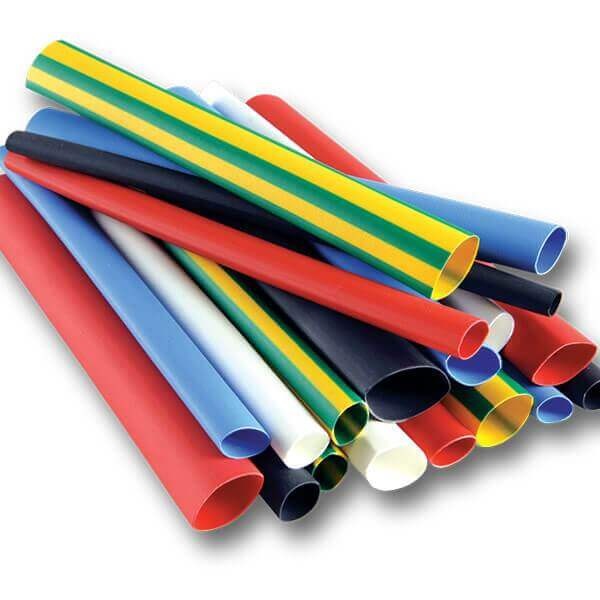
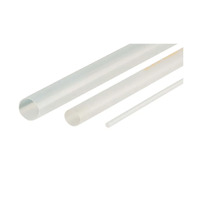
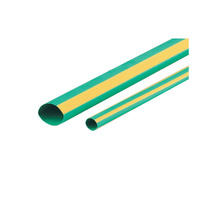
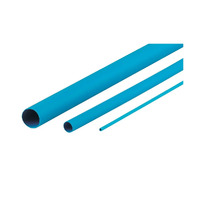
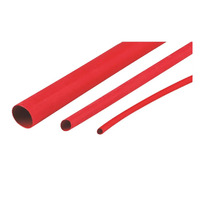
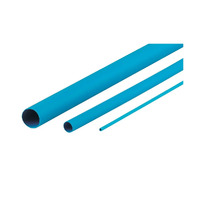
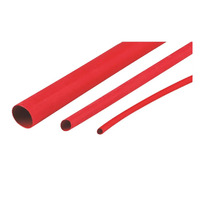
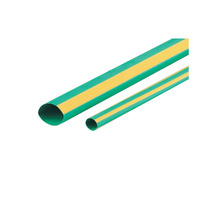
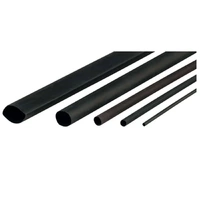
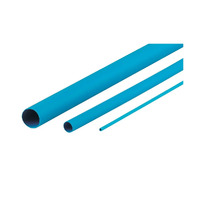
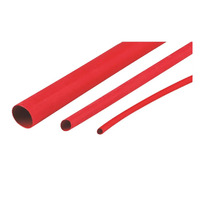
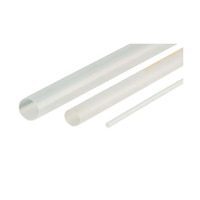
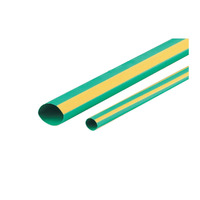
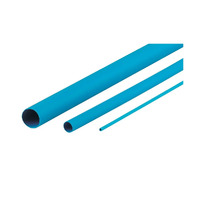
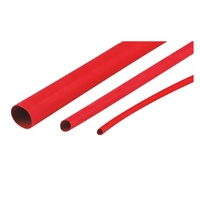
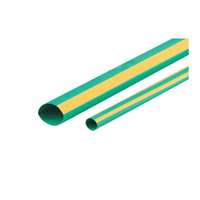
Coloured heat shrink supports phase identification, circuit marking, and visual sorting on switchboards and harnesses. Black is the default for general insulation, while red, blue, yellow, green, and white are common for active, neutral, earth, and trade-specific marking conventions.
Polyolefin is the dominant material across the trade. It offers a strong balance of flexibility, dielectric strength, flame retardancy, and chemical resistance. Most general-purpose tubing on Sparky Direct shelves is polyolefin-based.
PVC tubing is a lower-cost option for light insulation, identification, and DIY work. It has lower temperature and chemical resistance than polyolefin, so it suits indoor and low-stress applications rather than industrial or outdoor use.
PTFE and other high-temperature tubings handle continuous service well above 150 degrees Celsius. They are specified for aerospace, motor leads, high-current bus connections, and any environment where standard polyolefin would soften or scorch.
Elastomeric and silicone tubings stay flexible across a wide temperature range. They are well suited to joins that must bend or vibrate without cracking, including cable transitions on motors, pumps, and rolling stock.
Start with the operating temperature range and the type of contact the tubing will see. Polyolefin covers the majority of indoor and protected outdoor work. Step up to silicone, elastomeric, or PTFE where temperatures are higher or where flex life matters.
Use adhesive-lined dual-wall tubing whenever moisture ingress, vibration, or pull-off forces are likely. Standard single-wall tubing is sufficient for protected indoor joins, switchboard insulation, and identification work.
Indoor work in dry locations is forgiving on tubing choice. Outdoor and marine installations need UV-rated material, sealed adhesive linings, and good chemical resistance. Underground splices typically require heavy-wall, glued tubing rated for direct burial.
Heat shrink is used to insulate crimped cable lugs, cover bare conductor joins, and finish quick connect terminals on appliance leads, fan-coil units, and switchgear. It produces a neat, durable termination that resists vibration and moisture far better than tape.
Vehicle wiring runs through hot, oily, vibrating spaces. Adhesive-lined polyolefin tubing protects splices, repairs damaged insulation, and bundles loom branches. Coloured tubing is also used to identify circuits during diagnostic work.
In switchboards and control cabinets, heat shrink finishes lug terminations, marks phases on busbar drops, and protects sensor leads and instrumentation cabling. Heavy-wall tubing is used on busbar joints and isolators where mechanical protection matters.
Marine and underground installations are the most demanding environment for any cable join. Glued, heavy-wall heat shrink seals out salt water, soil moisture, and chemical contamination. It is the standard finish on submersible pump leads, jetty wiring, and direct-buried splices.
A controlled-temperature heat gun is the right tool for the job. Open flame can scorch the tubing, weaken the polymer, and start fires in confined spaces. For occasional small repairs, a butane micro-torch with a soft yellow flame can be used carefully, but a heat gun is always preferred for consistent results.
For glued, dual-wall tubing, watch for a thin bead of adhesive at each end of the sleeve. The bead confirms the inner liner has reached its activation temperature and bonded to the cable jacket. If no bead appears, apply more heat until it does.
Heating only one section produces wrinkles, gaps, and uneven walls. Overheating causes scorching and can split the tubing. Forgetting to slide the tubing on before the join is the classic error: once the lug is crimped, the sleeve will not fit. Keep a checklist of pre-cut sleeves on the bench before crimping starts.
Heat shrink products used on fixed wiring in Australia must comply with the relevant clauses of AS/NZS 3000:2018 for installation practice and the manufacturer's stated compliance with IEC standards for tubing performance. Trade-grade products from established suppliers carry these declarations on the packaging or datasheet.
Tubing carries a stated voltage rating, typically 600 V for general low-voltage work. Higher-voltage products are available for medium-voltage cable joins. Always confirm the rating on the datasheet matches the circuit class before using the product on installed wiring.
Look for tubing rated VW-1 or equivalent for flame retardancy when working in switchboards, control cabinets, and any enclosed installation. Flame-retardant tubing is self-extinguishing, which limits the spread of fire if a fault occurs.
Licensed electricians are responsible for the compliance of every termination. Use tubing from named manufacturers with documented voltage and temperature ratings. Avoid unbranded product on installed wiring. Document the product used on jobs that require sign-off.
Polyolefin tubing has good resistance to common solvents, oils, and weak acids. UV resistance varies between products, so confirm the datasheet rating for sustained outdoor exposure. Adhesive-lined tubing improves moisture sealing significantly over single-wall versions.
The recovered tubing forms a tough sleeve that resists abrasion at cable transitions and protects joins from pulling forces. Heavy-wall versions add further impact resistance for plant-room and underground use.
Most polyolefin tubing is rated for continuous service to 125 degrees Celsius. Silicone and PTFE products extend this range significantly. Confirm the maximum operating temperature against the application before selecting a product.
Indoor switchboard use can deliver decades of service from a quality polyolefin sleeve. Outdoor and direct-burial conditions shorten service life unless heavy-wall, glued tubing is used. The right product, correctly applied, will outlast many other elements of the installation.
Pricing depends on diameter, wall thickness, length, and whether the tubing is glued. Standard 1.2 m polyolefin sticks in common sizes are inexpensive. Heavy-wall, adhesive-lined trade products sit at a higher price point but offer significantly longer service life on demanding installations.
Assorted-colour kits suit electricians who want a range of sizes on the van for occasional work. Individual lengths suit planned jobs where the diameter is known. Bulk reels are the most cost-effective option for fit-out and panel-build work where one or two sizes dominate.
Budget tubing can be acceptable for non-critical, indoor identification work. For installed wiring, terminations, and any compliance-sensitive job, choose trade-grade product with documented ratings. The cost difference per metre is small, and the risk reduction is significant.
Trade suppliers carry the wall thicknesses, diameters, and adhesive-lined products that licensed electricians actually need. Retail outlets often stock only consumer-grade kits, which lack the voltage and temperature documentation required for compliant installation work.
Sparky Direct ships heat shrink across Australia from Brisbane stock. Common sizes and pack types are typically available for next-day dispatch on weekday orders.
Build a short specification before ordering. Note the conductor diameter, the joined-section diameter, the operating environment, and the voltage class. With those four numbers, picking the right product becomes straightforward.
Carry a small assortment of common diameters in 2:1 polyolefin for general repairs, plus a handful of glued 3:1 sticks for outdoor and automotive work. A multi-size kit covers occasional odd jobs without overstocking the van.
Sparky Direct is an Australian online electrical wholesaler supplying licensed electricians, contractors, and serious DIY buyers. The heat shrink range covers polyolefin, glued medium-wall, and assorted-colour kit options from established trade brands including CABAC, 3M, Utilux, and Sicame.
Need help with sizing or product selection? Sparky Direct's trade team can help match the right heat shrink to your job. Contact the team for product advice, bulk pricing, or stock availability across the range.
Watch Cabac XLPKIT | 22 Piece Heat Shrink Kit 1.5mm to 125mm diameter | Assorted Colours video
Watch CABAC Cable Ties CT290BK | 300mm x 4.8mm UV Resistant Black (100) Pack video
Watch 1.5mm SDI Red Cable | Single Double Insulated 1.5mm Red 20mtr Cut | 15SDI-R20 video

These Cabac Cable Ties are easy to use and very strong. They are permanent ties (non reusable) which is perfect for the security I require. The price is good, there are plenty of cables in the bundle and the size selection is just about perfect. Thanks, Sparky - you've done it again.
This is a good quality product with reasonable delivery time and well-packed for transportation. Easy to use and the insolation is thick as standard.
Excellent quality lug, the flared entry certainly makes it easier to insert fine stranded flexible conductors.
Quality products in stock • Fast Australia-wide delivery • Competitive trade pricing
Browse Heat Shrink Tubing → Get Expert Advice →Heat shrink tubing is straightforward for trained users, requiring controlled heat for proper application.
Heat shrink tubing is available from Sparky Direct, offering access to quality electrical insulation products with Australia-wide delivery.
Delivery options depend on the supplier and location, with availability across metropolitan and regional Australia.
Yes. Heat shrink tubing is suitable for new electrical work, maintenance, and repairs.
Warranty coverage depends on the manufacturer and supplier, with conditions applying to correct use.
Consider tubing size, shrink ratio, material type, flame rating, and application requirements.
Yes. When used correctly and on appropriate applications, heat shrink tubing is a safe insulation solution.
Yes. Heat shrink tubing is commonly used in automotive and marine electrical applications.
Many heat shrink products offer moisture resistance, with some types providing a sealed finish.
Yes. Heat shrink tubing can be cut to suit specific application requirements.
When correctly applied, heat shrink tubing can last many years without degradation.
Yes. It helps reduce stress at cable joints and terminations.
It can be used for minor insulation repairs when appropriate, but major cable damage should be assessed by a licensed electrician.
Heat shrink tubing is a protective tube that contracts when heated, providing insulation, protection, and strain relief for electrical connections.
Yes. It helps protect connections from moisture, abrasion, and mechanical stress.
Heat shrink tubing provides a more durable, secure, and professional finish compared to tape.
Heat shrink tubing should be applied by trained professionals when used in electrical installations to ensure safety and compliance.
Yes. Heat shrink tubing is available in multiple colours for identification and organisation.
Yes. Some heat shrink tubing is rated for outdoor use and provides resistance to moisture and UV exposure.
Many heat shrink tubing products are flame retardant, depending on the material and rating.
Yes. Heat shrink tubing is available in a range of diameters and shrink ratios to suit various cable sizes.
Yes. Heat shrink tubing is widely used in electrical and electronic applications for insulation and protection.
Heat shrink tubing is commonly made from polyolefin or similar polymers designed for electrical insulation.
Quality heat shrink tubing supplied in Australia is manufactured to meet relevant AS/NZS electrical safety and material standards.
Heat shrink tubing is used to insulate wires, protect joints, repair cable insulation, and improve durability of electrical connections.