
Search Results:
Search Results:
Search Results:
Search Results:
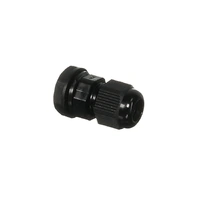
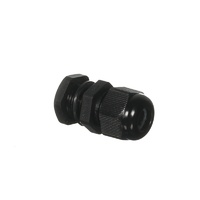
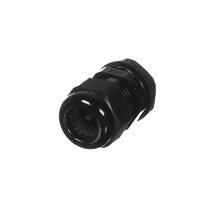
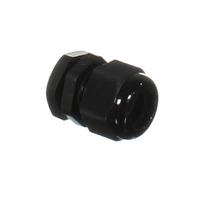
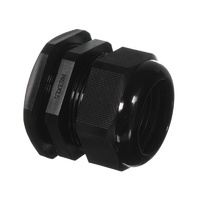
A cable gland (sometimes called a cable connector or cable fitting) is a small assembly fitted to the wall of a switchboard, junction box, or piece of equipment, wherever a cable passes through. Its job is to hold the cable, seal the entry point, and protect the cable termination from being pulled or twisted inside the enclosure.
A typical PVC or nylon gland has four parts. The threaded body screws into the enclosure. A sealing ring or O-ring compresses against the wall. A rubber grommet grips the cable jacket, and a clamping nut compresses the grommet around the cable when tightened. Brass and stainless steel glands work the same way but use machined metal parts and tougher seals for higher-rated applications.
The grommet inside the gland compresses around the cable jacket when the outer nut is tightened. This grip provides strain relief: any pull on the cable transfers to the gland body and the enclosure wall, not to the screw terminals inside. The same compression seals the gap between the cable and the gland, and an O-ring or threaded seal closes the gap between the gland and the enclosure wall.
The IP rating of an enclosure only holds at the entry points if those entries are sealed correctly. A cable gland is the standard way of doing that. Without one, an unsealed cable hole leaves the enclosure exposed to dust, water spray, and insects, and provides no mechanical protection for the cable termination inside.
Cable glands appear in almost every Australian electrical installation, from a domestic switchboard through to industrial control panels and outdoor floodlights. They are not decorative fittings: skipping them or installing them poorly creates real safety and compliance problems.
Water inside an enclosure leads to corrosion on terminals, tracking across insulation, and eventually short circuits or earth faults. Dust accumulation reduces airflow around components and can cause overheating. A correctly sized and tightened gland keeps both out for the working life of the cable.
Without strain relief, any tug on the external cable goes directly to the screw terminals inside the enclosure. Repeated stress loosens connections, creates high-resistance joints, and produces heat. The gland transfers that load to the enclosure wall instead.
AS/NZS 3000:2018 (the Wiring Rules) requires that cables be supported and protected at every point of entry to an enclosure or accessory. The gland is the most common compliant solution for circular cables. The standard also requires that the IP rating of the enclosure be maintained, which a properly fitted gland achieves.
An enclosure rated to IP66 only retains that rating if every cable entry uses a gland of at least the same IP rating, fitted to the correct cable diameter, and tightened to the manufacturer's torque. One under-tightened gland on a six-entry box drops the whole enclosure to whatever the weakest entry rates at.
Cable glands are used wherever a cable passes from one environment into a sealed enclosure or piece of equipment. The size and material vary, but the function stays the same.
Standard PVC or nylon glands handle most fixed-wiring entries on residential and commercial switchboards, distribution boards, and junction boxes. Sizes from 12mm through 32mm cover the bulk of single-phase and three-phase circuit cables.
Larger sites use brass or stainless steel glands on heavy-current feeders entering main switchboards, motor control centres, and field equipment. 40mm, 50mm, and 63mm glands handle the larger circular cables used at this scale.
Outdoor lighting, pump stations, jetty installations, and exposed control gear all need sealed gland entries. Marine and coastal sites generally call for stainless steel rather than brass, and hazardous areas (gas, dust, mining) require certified Ex-rated glands matched to the enclosure certification.
The type of gland matters as much as the size. Picking the wrong type for the cable construction or environment is one of the most common installation errors.
For most domestic and light commercial work, plastic glands from National Light Sources or Matelec do the job at lower cost and lighter weight. Metal glands earn their place where mechanical impact, fire, hazardous areas, or armoured cables are involved.
An unarmoured gland has a single grommet that grips the outer jacket. An armoured gland has an additional internal cone or clamping ring that grips the steel or aluminium wire armour layer separately, providing earth continuity and additional mechanical retention. Using an unarmoured gland on SWA cable is non-compliant and unsafe.
Ex-rated glands carry IECEx or ATEX certification and are designed for use in classified hazardous areas where flammable gas, vapour, or dust may be present. They must be matched to the enclosure certification (Ex d, Ex e, Ex i) and installed by qualified personnel under the relevant standards.
EMC glands maintain electromagnetic shielding continuity from a screened cable into a metal enclosure. They contain a contact spring or braid clamp that bonds the cable shield to the gland body around its full circumference. These are common on variable-speed drive feeders and instrumentation runs.
Cable glands and the entry holes they fit into come in several thread standards. Mixing standards causes cross-threading, leaks, and damaged enclosures.
Metric threads (M12, M16, M20, M25, M32, M40, M50, M63) are the dominant standard in Australia and across most of the world. The number refers to the outside diameter of the thread in millimetres. M20 fits a 20mm hole and is the most common size in switchboard work.
PG is an older German thread standard still found on legacy European-built equipment. PG sizes do not align directly with metric, so adapters or replacement parts are needed when retrofitting metric glands into PG holes. Common sizes include PG7, PG9, PG11, PG13.5, PG16, PG21, and PG29.
NPT (National Pipe Tapered) is the dominant standard for North American imports. It is tapered rather than parallel, so NPT glands cannot be used in a metric hole and vice versa without an adapter. Some imported industrial enclosures and motor terminations use NPT.
Standard Australian-supplied electrical enclosures, junction boxes, and switchboards use metric thread holes. Confirm the entry hole size and thread before ordering glands; M20 and M25 are the workhorse sizes for general work.
| Metric Size | Hole Diameter | Typical Cable OD | Common Use |
|---|---|---|---|
| M12 | 12mm | 3 to 7mm | Small flex, signal cables, sensors |
| M16 | 16mm | 4 to 10mm | Light flex, control cables |
| M20 | 20mm | 6 to 13mm | Standard single-phase circuits, lighting |
| M25 | 25mm | 9 to 17mm | Three-phase sub-mains, larger feeders |
| M32 | 32mm | 13 to 21mm | Sub-main feeders, larger industrial cables |
| M40 | 40mm | 19 to 28mm | Large feeders to main switchboards |
| M50 | 50mm | 26 to 35mm | Main switchboard incomers |
| M63 | 63mm | 34 to 45mm | Heavy industrial mains |
Cable OD ranges shown are typical. Always verify against the specific gland datasheet, as ranges vary by brand and model.
Material choice drives weight, cost, durability, and the environments the gland can survive in.
Brass is the standard metal gland material for industrial work. It machines well, conducts for earth bonding, and resists most indoor environments. Nickel plating adds corrosion resistance for damp or mildly aggressive locations. Brass is widely used with armoured cable, hazardous area equipment, and motor terminations.
Stainless steel handles environments that corrode brass: marine air, chemical plants, food production, and chlorinated pools. Grade 304 covers most general harsh-environment work, while grade 316 contains added molybdenum for greater chloride resistance and is the choice for coastal and marine installations.
Nylon and polyamide glands are the lightest and most cost-effective option, suitable for indoor enclosures, lighting fittings, and general protected outdoor use. They will not corrode, but they are not suitable for high-impact, fire-rated, or hazardous-area applications. Most domestic and light commercial cable entries use these.
The IP (Ingress Protection) rating tells you what the gland keeps out. Picking the right rating for the location is the difference between a long-lived seal and a callback.
The first digit covers solids (dust). The second digit covers liquids (water). IP54 protects against dust ingress and splashing water. IP65 is dust-tight and resists water jets. IP67 is dust-tight and survives short-term immersion. IP68 is dust-tight and rated for continuous submersion to a specified depth.
Read the full rating, not just the headline number: A gland marked IP68 typically has a depth and duration limit (for example, "IP68 to 5m, 30 minutes"). For permanently submerged installations such as pump pits, verify the specific rating against the application before installing.
Outdoor exposed installations such as floodlights, sensors, and weatherproof outlets generally require IP65 or higher. Pump pits, submerged lighting, and below-ground splice enclosures need IP67 or IP68 rated glands matched to the enclosure rating.
For most outdoor electrical work in Australia, IP66 is the practical baseline. It tolerates heavy rain, dust storms, and pressure-washing of equipment, which covers virtually every exposed environment from suburban backyards through to rural sheds and remote site cabinets.
Sizing is straightforward when you know the cable's outside diameter, but a surprising number of failed installations come from picking the wrong size.
The cable outside diameter (OD) is the measurement across the cable jacket, not the conductor cross-section. A 2.5mm² twin and earth cable has a conductor of 2.5mm² but an overall OD of around 9mm. Always measure or check the cable datasheet.
Each gland has a clamping range, for example 6 to 13mm for an M20. The cable OD must fall within that range. A cable smaller than the lower limit will not seal; a cable larger than the upper limit will not fit through the grommet at all.
Aim for the cable OD to sit roughly in the middle of the gland clamping range. This gives the grommet enough material to compress without overstressing it, and provides a margin if the cable is slightly oval rather than perfectly round.
For Australian residential and light commercial work, M20 glands cover the vast majority of single-phase circuits, lighting cables, and small flex. M25 takes over for larger circuits and three-phase sub-mains. Stocking these two sizes covers most day-to-day work, with smaller and larger sizes carried for specific jobs. Sparky Direct lists glands by size: 12mm, 16mm, 20mm, 25mm, 32mm, and larger.
Beyond size, choosing a gland comes down to matching the cable construction, the environment, and the duty of the installation.
Round circular cables work with standard glands. Flat profile cables (such as flat TPS) need either a flat-cable-rated gland or a different entry method altogether. Armoured cables need armoured glands. Screened cables in EMC-sensitive applications need EMC glands. Picking the gland for the cable is the first sizing decision, before size or material.
Indoor switchboard work: nylon or PVC glands at IP54 or IP55. Outdoor or wet area: nylon or brass at IP66 minimum. Coastal or marine: 316 stainless steel. Hazardous area: certified Ex glands matched to the area classification. Submerged: IP68 with specified depth rating.
Light-duty plastic glands suit fixed wiring inside enclosures that are not subject to vibration or impact. Heavy-duty applications, including motor cables, mining equipment, and equipment subject to vibration or thermal cycling, need metal glands with reinforced grommets and locking mechanisms.
Some installations need glands engineered specifically for the cable type or the environment. Using a general-purpose gland on these applications is non-compliant.
Steel Wire Armour (SWA) and Aluminium Wire Armour (AWA) cables carry their earth path in the armour layer itself. The gland must clamp the armour separately from the outer jacket and provide a low-resistance bond to the enclosure for earth continuity. Using a non-armoured gland on SWA cable leaves the earth path floating.
Hazardous area work is a separate discipline with its own competency requirements under AS/NZS 60079. Glands must be certified for the relevant zone and gas group, and must be installed in accordance with the certification documentation. Sealing compounds, barrier glands, and specific torque values all apply.
EMC glands provide a 360-degree shield bond at the enclosure entry, which is critical for variable-speed drive cables, instrumentation circuits, and any cable carrying high-frequency switching currents. The shield must be exposed at the gland entry and clamped against the contact spring or braid inside.
A correctly chosen gland still fails if it is fitted incorrectly. The following practices apply to almost any gland install.
The entry hole must match the gland thread exactly. For metric glands, use the manufacturer hole-saw or knockout sized for that thread. Deburr the hole on both sides before fitting, and check that the entry surface is flat so the O-ring or flange can seal evenly.
Tighten the lock-nut on the inside of the enclosure first to fix the gland body in place. Pass the cable through, then tighten the outer compression nut by hand until the grommet starts to grip, followed by a quarter turn with a spanner. Most plastic glands do not need heavy torque; over-tightening cracks the body or distorts the grommet.
For outdoor and wet area work, fit the supplied sealing washer between the gland flange and the enclosure wall. Some installations also benefit from a thread sealant or PTFE tape on metric threads, particularly where the entry surface is not perfectly smooth. For Ex-rated glands, follow the certification document; sealing compound may be mandatory.
Most gland failures come from the same handful of installation errors. Avoiding these covers the bulk of the field issues.
Using an M20 gland with a 14mm cable is the most common sizing error. The cable sits at the very top of the clamping range, so the grommet barely compresses and the seal fails under any movement. Always check the cable OD before ordering, and step up a size if it is borderline.
Over-tightening cracks plastic gland bodies and crushes grommets so they take a permanent set. Under-tightening leaves the seal loose, allowing water and dust through and providing no real strain relief. The grommet should compress against the cable visibly without the body deforming.
Fitting a generic gland to an armoured cable, an Ex-rated enclosure, or a high IP location may pass a quick visual check but fails at audit and creates real risk. Under-rated glands are a common shortcut on time-pressed jobs; the cost of doing it correctly the first time is far lower than the cost of revisiting the work.
A correctly fitted gland should outlast the cable it secures. Failures over the working life of an installation usually trace back to a small number of causes.
Rubber grommets and O-rings degrade under UV, ozone, and temperature cycling. Specifying glands rated for the actual environment, rather than a generic indoor product, extends seal life dramatically. EPDM and silicone seals outlast standard rubber in outdoor and high-temperature locations.
Equipment subject to vibration (motors, pumps, transformers) loosens fittings over time. Use locknuts on the inside of the enclosure, or specify glands with anti-vibration features such as locking ribs. Periodic inspection during scheduled maintenance catches loosened glands before they become a problem.
For outdoor and wet area installations, inspect glands annually for signs of UV degradation, cracking, or grommet deformation. Replacement is straightforward and far cheaper than dealing with water inside a switchboard. Stainless steel glands in coastal locations should also be checked for crevice corrosion at the thread interface.
Cable gland installations sit under several Australian standards depending on the application.
The Wiring Rules require that all cables be supported and protected at every entry point to an enclosure or accessory, and that the IP rating of the enclosure be maintained. The standard cable gland satisfies both requirements when correctly sized and installed.
IEC 62444 is the international standard covering cable glands for electrical installations. It defines the testing methods for IP rating, mechanical strength, and resistance to environmental factors. Glands carrying compliance to IEC 62444 have been independently tested to declared performance.
For hazardous areas, glands must carry IECEx certification (or equivalent ATEX) and be marked with the relevant zone, gas group, and protection type. The certification must match the equipment they are installed on. Installation in hazardous areas requires the appropriate Ex competency.
Cable glands are a high-volume consumable on most electrical jobs. Buying decisions usually come down to brand, quantity, and lead time.
Sparky Direct lists cable glands by size category and by brand, including National Light Sources, Matelec, CABAC, and Atco-CMP. Ordering online avoids the time cost of trade counter visits for what is essentially a stocked consumable.
Generic and unbranded cable glands often skip on grommet quality, thread tolerance, and IP testing. The price difference per unit is small, but the failure rate on outdoor or high-humidity work is much higher. Trade-grade brands carry compliance documentation and tested IP ratings.
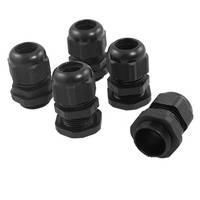
For contractors fitting out commercial buildings or industrial sites, glands are typically ordered by the box rather than the unit. Sparky Direct stocks bulk packs across the common sizes from NLS and Matelec, which suits switchboard manufacturers, panel builders, and high-volume install crews.
When cable glands fail in service, the cause is usually one of a small number of recurring issues.
Water inside the enclosure points to either an undersized cable in the gland (so the grommet did not compress), an over-tightened body that cracked, or a degraded grommet from age or UV. Replace the gland, confirm the cable OD against the new gland range, and check the surrounding hole for damage.
A cable that pulls free or rotates inside the gland indicates the compression nut was not tightened enough during install, or that vibration has loosened it over time. Re-tighten in the first instance; if the grommet has taken a set and no longer grips, replace the gland.
Persistent or rapid failures across a site usually mean the wrong gland type was specified for the conditions. Coastal corrosion on brass glands, UV damage on indoor-grade plastic outdoors, or armoured cables in non-armoured glands all show up this way. The fix is replacement with the correct specification, not re-tightening.
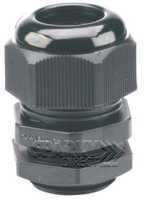
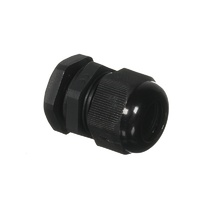
Watch NLS 30360 | 16mm PVC Cable Gland Black video
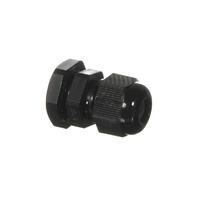
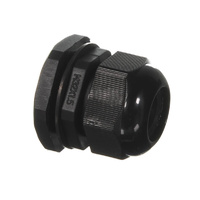
Watch NLS 30311 | 20mm PVC Cable Gland Black video
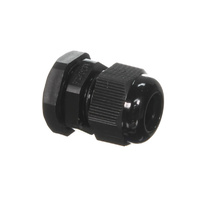
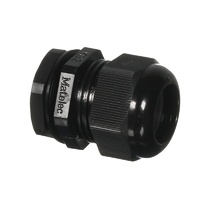
Watch Matelec NCG-M32/B | 32mm Nylon Cable Gland | Black video

Excellent product. Great Price and Quality. I am a purchasing officer for a trailer company and we use sparky direct for our electrical needs. These cable glands are excellent for our trailers ensuring the wiring is protected!
This is a very compact tee and great if space is limited and looks so much better than the bulk inspection tees. Wires are easy to pass through the branch section, however consideration must be given to wire qty and sizing along with the number of through wires due to the minimal area for the radial turn of the branch wire, This tee was perfect for my job and I had no problem using it at all
Small yet robust product and ideal to safely accomodate the joining of three covered 240v mains cables. I used this one in a power supply project I was constructing for my internet modem and router
Quality products in stock • Fast Australia-wide delivery • Competitive trade pricing
Browse Cable Glands → Get Expert Advice →Yes, they provide strain relief and reduce wear at cable entry points.
Sparky Direct supplies cable glands Australia-wide, offering reliable and compliant cable entry solutions with convenient delivery.
Cable glands are securely packaged and delivered via standard courier services.
Unused products are generally eligible for return according to the seller’s returns policy.
Warranty coverage varies by manufacturer and typically covers defects in materials or workmanship.
Yes, cable glands are typically sold individually or in packs.
Yes, correct sizing ensures proper sealing and strain relief.
Once installed correctly, they generally require no maintenance.
Yes, they are commonly used when upgrading or modifying installations.
They may be visible depending on the enclosure and installation method.
Quality cable glands are designed for long-term performance.
Yes, proper cable termination helps maintain enclosure integrity and safety.
They are straightforward for licensed professionals to install correctly.
A cable gland is a device used to securely attach and seal electrical cables as they enter enclosures or equipment.
Yes, they are a standard component in many electrical installations.
They help protect cables and equipment while maintaining a neat installation.
Yes, they are used in residential, commercial, and light industrial applications.
Yes, many cable glands provide sealing against dust and moisture.
Outdoor-rated cable glands can be used externally when correctly specified.
Yes, many cable glands are designed for indoor installations.
Yes, they are available in a wide range of sizes to suit different cable diameters.
They are typically made from plastic, brass, or metal depending on the application.
Yes, they are commonly used in switchboards, control panels, and electrical enclosures.
Yes, quality cable glands are manufactured to meet relevant AS/NZS electrical and safety standards when installed correctly.
They provide strain relief, sealing, and protection for cables at entry points.