
Search Results:
Search Results:
Search Results:
Search Results:
Nylon bushes are a low-cost, high-impact trade consumable. They sit between the cable sheath and the raw edge of a metal or plastic panel hole. Without one, vibration, cable movement, and time work against the insulation. With one, the entry point stays neat and the cable stays protected.
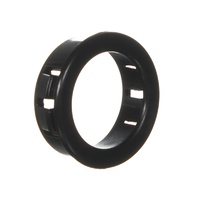
A nylon bush is a small protective insert designed to line a panel hole or knockout. Once seated, it acts as a smooth, non-conductive collar between the cable sheath and the surrounding panel material. Common search terms for the same product include nylon snap bush, snap bushing, cable bush, panel bush, electrical bush, and enclosure bush. The shape and retention method varies across the range, but the protective function is consistent.
Sharp panel edges, metal burrs, and rough drilled holes can cut into cable sheaths. Vibration and routine cable movement make the damage progressive. The result is exposed conductors, earth faults, short circuits, nuisance tripping at the switchboard, and failed inspections. Cable entries through metallic structures should be protected by suitable bushings or shaped openings, in line with applicable wiring rules and licensed trade practice. Treating cable entry protection as optional creates avoidable risk on jobs that should otherwise be straightforward.
Nylon is non-conductive, durable, and low-friction. It holds shape under typical fixed-installation loads, accepts cable insulation without scoring it, and is light to handle on the bench or on a switchboard build. Nylon 6/6 is the common engineering grade for snap bushings where product data confirms it. Material performance varies by product, manufacturer, and rating, so check the product listing before assuming heat, UV, or chemical performance.
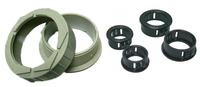
Most nylon bushes fall into three families: closed snap, open or split snap, and male/female. The right choice depends on whether the cable is already in place, the panel thickness, and how much retention you need.
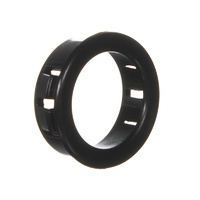
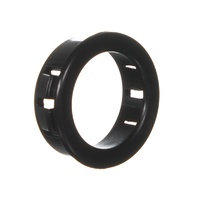
Closed snap bushes are one-piece fittings that clip into a correctly sized panel hole. They are the everyday choice for new switchboard work, control cabinet builds, and any installation where the cable has not yet been routed. Fit is fast, the finish is neat, and the bush matches standard knockout sizes. Closed snap bushes give the cleanest result when the panel thickness sits inside the product's specified range.
Split bushes have a slot down the side so the bush can be wrapped around an existing cable and clipped in. This is the retrofit answer when disconnecting and re-routing the cable is not practical or desirable. Common search phrases include split nylon bush, open snap bush, and retrofit cable bush. Any work around existing electrical equipment must be assessed for isolation, access, and legal requirements by a licensed electrician. A split bush helps with the mechanical fit; it is not a substitute for safe isolation.
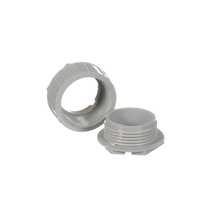
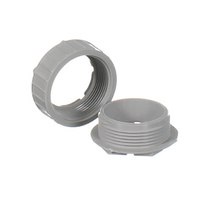
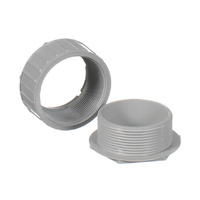
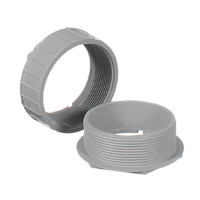
Male and female bushes are two-part assemblies that thread or clamp together through the panel. They suit thicker panels, finished panels, control cabinets, and switchboard builds where mechanical retention matters more than speed. The threaded or clamping retention holds the bush firmly when snap-fit alone would not. Use this style where panel thickness, cable load, or presentation rules out a single-piece snap bush.
A short decision framework covers most jobs. Snap bush: standard panel hole, new cable route, quick fit. Split or open bush: existing cable route, retrofit context, licensed assessment required. Male/female bush: thicker panel, stronger retention, finished panel presentation. The correct choice depends on the hole size, panel thickness, cable bundle, access, and retention needs. The product page is the source of truth for compatible panel thickness, bore, and overall dimensions.
Most ordering mistakes are sizing mistakes. The nominal size on a nylon bush refers to the panel hole or knockout diameter, not the cable diameter. Check the finished hole, check the panel thickness, and check the cable bundle clearance before placing the order.
Standard nominal sizes in the Australian trade range cover 20mm, 25mm, 32mm, 40mm, and 50mm. These match common knockout sizes in switchboards, enclosures, and control panels. Stock listings carry size in the title and the dimensions in the product spec sheet. Confirm exact dimensions, panel thickness range, and bore size on the listing before ordering, because nominal size alone does not guarantee fit.
The bush must match the finished hole size for the clips or retention mechanism to engage properly. Knockouts and drilled holes vary slightly between enclosures and manufacturers, even at the same nominal size. Measure the finished hole rather than relying only on the nominal knockout label. A bush that is too small will rattle. A bush that is too large will not seat. Either result wastes time and stock.
The cable or cable bundle needs enough clearance through the inner bore to pass without forcing. Forcing a bundle compresses insulation and undoes the protection the bush is meant to provide. Avoid drilling oversized holes that leave cables loose and unsupported. Where multiple cables share an entry point, a larger bush, a split style, or a different cable entry product may be the better answer, subject to installation design.
Snap bushes are designed for a compatible panel thickness range. Outside that range, the locking tabs either will not engage or will hold poorly. Male and female bushes suit thicker panels and situations where stronger mechanical retention is needed. Check the product dimensions before ordering and order one panel thickness up if you are stocking for a mixed job.
Many sizes come in black and white. Colour is a presentation or identification choice rather than an electrical performance difference, unless the product data explicitly says otherwise. Pick the colour that matches the panel finish or the in-house convention.
Nylon bushes show up across residential, commercial, industrial, and data installations. Anywhere a cable passes through a hole in a panel, the bush is doing quiet work.
Cable entries into switchboards, meter boxes, distribution boards, and sub-boards all benefit from bushed knockouts. Supply cables, sub-circuit wiring, and control cabling enter through metal or plastic apertures that need protection. Inspectors look for tidy, protected entries. Licensed electricians use bushes routinely in switchboard work as standard practice.
Motor control panels, PLC cabinets, machinery enclosures, and mechanical plant rooms all carry control wiring through plate-style entries. Neat cable routing and protected entries make maintenance visits faster and reduce intermittent faults. Vibration and cable movement become factors in this environment, so retention type matters. Male and female bushes often suit these applications when snap-fit alone is marginal.
Structured cabling, Cat6, fibre patch leads, security and access control systems, and building automation all use cable entries through racks and data cabinets. A nylon bush gives a non-conductive, smooth entry without claiming shielding or signal-performance benefits. Use the product where edge protection is the goal and reach for purpose-built data accessories where signal integrity is a requirement.
Domestic switchboards, small distribution boards, air-conditioning control panels, mechanical services, and light commercial plant rooms all use nylon bushes as a low-cost trade consumable. The job is the same: tidy, protected cable entries that pass inspection and stand up over time. A small handful of bushes in the van saves a return trip on most fit-outs.
The protection a nylon bush provides is real but bounded. Knowing the boundary keeps installations safe and prevents over-claiming on the spec sheet.
The main role of a nylon bush is to keep cable insulation and sheath from contact with sharp panel edges. That single function reduces the risk of abrasion, gradual insulation damage, and long-term entry-point failure. A bush will not prevent every fault and does not by itself guarantee compliance. It does, however, address one of the most common workmanship failures at the cable entry point.
A nylon bush protects the edge of the cable entry. It is not a cable gland, cord grip, clamp, or full strain relief device. Where pull-out protection, sealing, or cable anchoring is required, a cable gland or other suitable support method is the correct product. This distinction is the single most common buyer mistake, so make the call deliberately at the design stage rather than at the install.
AS/NZS 3000 Wiring Rules and applicable state or territory electrical safety requirements set the framework for cable protection at metallic structures, switchboard entries, enclosure holes, and cable tray penetrations. Where cable sheath damage could occur, suitable protection at the cable entry is expected. Installation decisions in electrical equipment must be made by licensed electricians where legally required. Clause numbers vary across editions and amendments, and verification against the current standard remains the responsibility of a qualified person on the job.
A standard nylon bush does not seal an enclosure or provide an IP rating unless the product explicitly says so. Check product-specific data for material grade, temperature rating, flame rating, UV suitability, chemical resistance, and indoor/outdoor suitability. Outdoor and harsh-environment installations often need a different cable entry product or a sealed gland. Treat the bush as edge protection and assess the rest of the requirement separately.
Cable entry products solve different problems. Picking the wrong one wastes stock and, more importantly, leaves the installation short on either protection or compliance.
Nylon bushes are rigid, neat, and clip in with positive retention. They suit standard panels and enclosures where the hole is sized to spec. Rubber grommets are softer and more flexible, useful where cushioning, vibration damping, or compression fit is preferred. Neither is universally superior. Match the product to the application: rigid panel and standard hole favour the bush, irregular hole or vibration-sensitive use favour the grommet.
Cable glands seal, anchor, and provide strain relief. They are the right product where IP-rated entries, environmental sealing, or pull-out protection are required. Nylon bushes handle edge protection at standard holes and knockouts. A useful buying rule: if the cable must be held, sealed, or protected from pull-out, a 20mm cable gland or similar size is likely the correct product, not a snap bush.
Conduit fittings manage cable pathway transitions from one section of electrical conduit to another, or from conduit into a box. Nylon bushes protect the immediate panel edge where a cable enters an enclosure. Both can appear on the same job, often within centimetres of each other, but they are not substitutes for one another.
The four common cable entry products at a glance, each with the problem it actually solves:
| Product | Primary Function |
|---|---|
| Nylon bush | Edge protection and neat panel entry |
| Rubber grommet | Soft cushioning for non-standard or vibration-sensitive holes |
| Cable gland | Sealing, strain relief, and cable anchoring |
| Conduit fitting | Protected cable pathway connection |
A short, repeatable selection process keeps stock orders accurate and reduces returns. Run through these four steps before selecting a size or style.
The finished hole size must match the bush specification. Nominal sizes of 20mm, 25mm, 32mm, 40mm, and 50mm are common, but the listed dimension matters more than the label. Measure the finished hole if there is any doubt, particularly on drilled or modified panels.
Retention depends on the bush type and the compatible panel thickness range. Thin sheet metal and thicker switchboard panels suit different bush styles. Use the product dimensions and fit range from the listing rather than assuming the same style works on every panel.
The inner bore must accept the cable or bundle without forcing. Tight bores compress insulation and risk damage during install. For multi-cable bundles or retrofits, an open or split style may suit, subject to licensed assessment of the existing equipment.
This step prevents the most common buying mistake. Nylon bushes are not a substitute for strain relief or sealing. If the application calls for IP-rated entry, anchoring against pull-out, or environmental protection, a cable gland, rubber grommet, or conduit fitting is the right call. Match the product family to the requirement before going to the size.
Nylon bushes are high-turnover consumables. Switchboard builders, electrical contractors, and maintenance technicians use them daily. Stocking common sizes based on job mix saves return trips and keeps quotes competitive. Bulk packs and size variety are standard procurement considerations. The Sparky Direct range supports trade ordering with clear sizes, practical naming, and pathways into related cable clips, cable ties, and conduit saddles.
Nylon bush selection is straightforward. Installation around live or existing electrical equipment is not. The notes below cover planning and inspection rather than procedural install steps.
Electrical work on switchboards, enclosures, circuits, or existing wiring must be handled by a licensed electrician where required. Plan the job around isolation, access, panel material, hole size, cable route, and product suitability. The bush itself is a small part of a larger workflow that depends on safe site practice and correct testing.
Rough, sharp, or deformed holes damage cables and prevent proper bush seating. Deburring and inspection of the hole are workmanship considerations handled by the licensed trade. A clean, round hole at the correct nominal size is the foundation that makes the bush work as intended.
After fit, the cable sheath should be clear of any raw edge. The bush should be seated securely, not loose, and not dislodged by normal cable routing. No active cable entry should rely on an unprotected sharp opening. These checks form part of routine quality control on switchboard and control panel work.
Correctly selected nylon bushes are usually low-maintenance over the life of the installation. Routine switchboard, control panel, and maintenance inspections are a reasonable point to check cable entries. Replace any bush that is cracked, loose, heat-affected, UV-degraded, or clearly the wrong size for its hole.
Most nylon bush issues come back to a sizing or product-family mismatch. The four scenarios below cover the bulk of returned or unused stock.
Likely causes are wrong nominal size, hole too small, burrs blocking the locking tabs, incompatible panel thickness, or the wrong bush type for the application. Measure the hole, check the spec, and confirm the panel falls inside the listed thickness range before reordering.
Typical causes are an oversized hole, a panel that is too thin or too thick for that bush, damaged locking tabs, or simply the wrong product. A male and female bush or an alternative cable entry method may be the better answer where the panel sits outside the snap-fit range.
The inner bore is undersized for the bundle. Move up a size, split the cables across separate entries, or switch to a conduit fitting or cable gland depending on the design. Forcing a bundle into a small bore defeats the protection the bush is meant to provide.
A nylon bush is not the right product for sealed or anchored entries. Cable glands or suitable enclosure fittings handle environmental sealing and mechanical anchoring. Make this call at the design stage to avoid revisiting the entry later.
Watch NLS 30335 | 20mm Nylon Bush Black video
Watch NLS 30336 | 25mm Nylon Bush Black video
Watch NLS 30337 | 32mm Nylon Bush Black video

Excellent product. Great Price and Quality. I am a purchasing officer for a trailer company and we use sparky direct for our electrical needs. These cable glands are excellent for our trailers ensuring the wiring is protected!
The fact that you can go on line to Sparkydirect and purchase what you need for a job and not having to go in to town which is a hour drive there and back is great for me. They are quick, cheap and easy to use I recommend them to anyone.
Small yet robust product and ideal to safely accomodate the joining of three covered 240v mains cables. I used this one in a power supply project I was constructing for my internet modem and router
Quality products in stock • Fast Australia-wide delivery • Competitive trade pricing
Browse Nylon Bushes → Get Expert Advice →Yes, they are a standard accessory in many electrical installations.
Sparky Direct supplies nylon snap bushes Australia-wide, offering reliable cable protection solutions with convenient delivery.
They are securely packaged and delivered via standard courier services.
Unused products are generally eligible for return according to the seller’s returns policy.
Warranty coverage varies by manufacturer and typically relates to material quality.
They are commonly sold individually or in packs, depending on size and supplier.
Yes, selecting the correct size ensures proper fit and cable protection.
They are usually only partially visible and blend neatly into the enclosure.
No, they generally require no maintenance once installed.
Yes, they are designed for long-term use under normal conditions.
Yes, they are suitable for electrical, data, and control cabling.
Yes, their compact design makes them suitable for confined enclosures.
Yes, they provide a clean and professional appearance around cable entry points.
Nylon snap bushes are protective inserts used to line holes in metal or plastic enclosures, helping prevent cable damage from sharp edges.
Yes, they are designed to snap into place quickly once the correct size is selected.
They reduce the risk of cable insulation damage and improve overall installation safety.
Yes, they help protect and organise cables where they pass through openings.
Yes, nylon provides good resistance to abrasion and vibration in normal operating conditions.
Yes, they are commonly used in switchboards, control panels, and metal enclosures.
Yes, they are available in a wide range of sizes to suit different hole diameters and cable bundles.
Yes, nylon is non-conductive, making these bushes suitable for electrical applications.
They are typically made from durable nylon, offering good insulation and wear resistance.
Yes, they are commonly used in electrical and data installations to protect cable insulation.
Quality nylon snap bushes are manufactured to meet relevant Australian material and safety requirements when used correctly.
They are used to protect electrical cables and wiring as they pass through panels, enclosures, and chassis.