
Search Results:
Search Results:
Search Results:
Search Results:
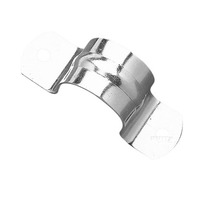
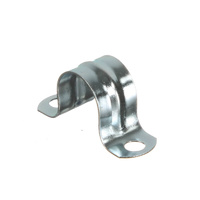
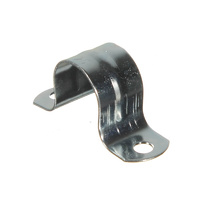
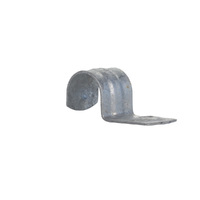
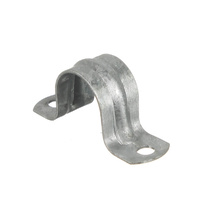
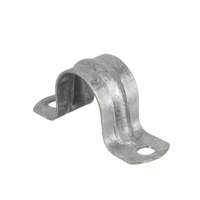
A full saddle is a one-piece fixing bracket shaped to match the outside diameter of a specific conduit size. The saddle has a curved central section that cradles the conduit, with two flat tabs on either side. Each tab carries a pre-drilled hole for a screw or anchor. Once both screws are driven home, the conduit is captured fully around its circumference and held flush against the mounting surface.
Unlike clips or half saddles, a full saddle contacts the conduit on every side. This 360-degree contact distributes load evenly and resists pull-out, lift, and lateral movement at the fixing point. The bolted tabs anchor both ends of the saddle independently, so the conduit cannot rotate or slip sideways under thermal expansion or vibration.
Full saddles deliver mechanical protection at the surface where the conduit needs it most. They prevent the conduit from being knocked loose by impact, keep the run aligned during cable pulling, and stop sag between supports on long horizontal runs. On heavy-duty rigid conduit, this stability protects the cables inside from shear stress at conduit joints and bends.
Conduit runs flex with temperature changes, vibration from nearby plant, and the weight of cables drawn through them. Full saddles lock each support point completely. This eliminates the small movements that loosen fixings, fatigue conduit joints, and damage cable insulation over time.
A run of conduit fixed with full saddles sits perfectly flush, parallel to the wall or ceiling, and arrow-straight between fittings. This is the visible difference between a tidy switchboard supply and a bowed, uneven run that signals a rushed job. Apprentices learn early that a clean conduit run is judged at a glance.
Properly saddled conduit forms part of the mechanical protection system required for cables installed in accessible locations. AS/NZS 3000 sets minimum mechanical protection standards for installed wiring systems. Full saddles, spaced correctly, keep electrical conduit within the protective envelope that the standards assume.
A half saddle covers only the front face of the conduit and screws down with a single fixing in the centre. A full saddle wraps the entire circumference and uses two fixings. The half saddle is faster to install but offers less hold under load. Full saddles are the stronger fixing wherever the conduit will be exposed, weight-bearing, or subject to movement.
Cable clips and spring clips suit lightweight, concealed work where the cable simply needs a tidy retention point. Full saddles take over wherever the run needs to resist physical stress: exposed walls, plant rooms, factory floors, riser ducts, and any location where conduit will be visible or accessible. Where mechanical protection is the goal, the full saddle wins every time.
| Fixing Type | Coverage | Best For | Trade-Off |
|---|---|---|---|
| Cable Clip | Single point, top of cable | Concealed cable runs | Minimal mechanical hold |
| Half Saddle | Front face only, one screw | Light conduit, fast installs | Lower resistance to lift and impact |
| Full Saddle | 360-degree, two screws | Exposed runs, heavy or vibrating systems | Slower to fix, two anchor points needed |
Half saddles and clips win on installation speed: one screw, one strike with the hammer drill, and move on. Full saddles need two fixings per support point. On a long industrial run that adds up to real time. The trade-off pays back when the run will be inspected, knocked, vibrated, or loaded with heavy cable.
Zinc-plated steel is the workhorse for indoor saddle work. The steel base gives the bracket structural strength, and the zinc plating delivers reasonable corrosion resistance for dry indoor conditions. Heavy-duty galvanised saddles step up the protection: thicker zinc layers, often hot-dip applied, suit damp basements, garages, and semi-protected outdoor locations.
PVC full saddles match neatly with PVC conduit systems. They will not corrode, will not stain a painted wall with rust streaks, and will resist mild chemical exposure. PVC saddles suit residential surface-mount work, ceiling spaces, and locations where appearance matters, often paired with electrical mounting blocks at fitting termination points. They are not the right choice for heavy cable loads or high vibration.
Grade 316 stainless steel saddles handle the worst environmental conditions: coastal salt spray, marine installations, food processing washdowns, and outdoor plants. The price step is significant, but stainless steel resists the chloride attack that ruins plated steel within a season. Nylon saddles offer a non-metallic alternative for chemical plant or specialised industrial environments.
Match the saddle material to the worst conditions the run will see. A correctly chosen saddle outlasts the conduit it supports. The wrong material fails first, usually at the screw heads or the saddle tabs, and brings the whole run down with it.
Saddles are sized to the nominal conduit they fit. A 25mm saddle is shaped to grip 25mm conduit, not 20mm or 32mm. An undersized saddle distorts when forced over the conduit, an oversized saddle leaves the conduit free to slide. Always confirm the conduit diameter before ordering.
20mm and 25mm saddles cover the majority of residential and light commercial work. 32mm and larger sizes appear in commercial main supply runs, switchboard tails, and industrial installations. Sparky Direct stocks sizes from 20mm up through 32mm in zinc, PVC, and stainless steel finishes.
Metal saddles fit either medium-duty PVC conduit or steel conduit at the matching nominal size. PVC saddles are intended for PVC conduit only. Mixing systems is acceptable mechanically, but matching colours and materials gives the cleanest visual result.
Masonry fixings need a hammer drill, a masonry bit matching the anchor diameter, and a wall plug or screw anchor rated for the load. Standard nylon plugs sized for No. 8 or No. 10 screws cover most light-duty saddle work. Heavier installs may call for sleeve anchors or chemical anchors driven into solid concrete.
Timber takes a wood screw directly, no plug required. Plasterboard alone will not hold a full saddle under load: locate a stud where possible, or use cavity anchors rated for the saddle weight plus the cable load. Plug fixings into plasterboard alone fail under any meaningful pull.
Self-drilling tek screws bite straight into thin steel sections such as purlins and stud framing. Self-tapping machine screws into pre-drilled and tapped holes suit thicker steel. Beam clamps offer a no-drill option for structural steelwork. Match the screw thread length to the saddle tab thickness plus the steel gauge.
Light-duty zinc and PVC saddles work well with No. 8 to No. 10 self-tappers or wood screws. Heavy-duty saddles supporting larger conduit and cable loads need No. 12 screws or sleeve anchors. Saddle hole diameter is typically 5mm to 6.5mm: confirm the screw shank fits the saddle hole before ordering bulk.
Saddle spacing depends on conduit type, diameter, and orientation. A common rule of thumb for rigid conduit is 1.2 metres maximum on horizontal runs and 1.5 metres on vertical runs, with closer spacing near bends, fittings, and direction changes. Spacing reduces further around conduit bends and direction changes, where any movement is concentrated at the fitting. Always check manufacturer guidance for the specific conduit in use, as PVC and steel have different sag characteristics.
Snap a chalk line or use a laser level to mark the saddle positions before drilling. Set the first and last saddles, run a string between them, and mark the intermediate fixings against the string. This gives a dead-straight line on every run, every time.
Match the fastener to the saddle material and the substrate. Galvanised or stainless steel screws prevent galvanic corrosion when paired with stainless saddles. Phosphate-coated black screws look neat with painted finishes. Avoid mixing zinc and stainless fixings on the same saddle, as the dissimilar metals can accelerate corrosion in damp conditions.
Indoor, dry: zinc-plated steel or PVC are both fine. Indoor, damp (laundries, plant rooms, sub-floors): step up to galvanised steel or PVC. Outdoor, sheltered: galvanised steel as a minimum. Outdoor, exposed or coastal: 316 stainless steel is the only material that holds up over the long term.
Cable weight inside the conduit, conduit weight itself, and any environmental loads (wind on exposed runs, vibration on plant) all add up at each saddle. Heavier conduit demands the heavier-gauge saddle: a 32mm saddle is significantly thicker and stronger than a 20mm saddle, not just larger.
Surface-mount domestic work, exposed industrial runs, switchboard tails, and outdoor solar conduit each have a different best-fit saddle. The brief drives the choice: visible work calls for tidy PVC or finished metal, industrial work calls for heavy galvanised steel, exposed coastal work calls for 316 stainless.
In homes, full saddles secure surface-mount conduit on garage walls, in roof spaces, around switchboards, and on outbuildings. PVC and zinc saddles dominate. The work is usually visible, so saddle alignment and consistent spacing matter for the final appearance.
Commercial buildings combine concealed and exposed conduit. Saddles support tenancy supply runs, communications conduit, lighting circuits, and emergency systems. Galvanised steel saddles are the most common choice, with PVC used in clean ceiling cavities and stainless steel reserved for kitchens and washdown areas.
Factory walls, plant rooms, and outdoor process areas demand the strongest saddles available. Heavy-duty galvanised or stainless steel saddles take the abuse: knocks from forklifts, washdowns, vibration from compressors and pumps, thermal cycling. Spacing tightens to 1.0 metre or less to manage the loads involved.
Corrosion at the saddle is the most common long-term failure. The saddle tabs trap moisture between the bracket and the wall, and any break in the zinc plating around screw holes becomes a rust starting point. Pre-treating exposed steel saddles with cold galvanising spray at cut edges and screw entries adds years to service life.
Vibration loosens fixings over time. On plant near rotating equipment, use spring washers or thread-locking compound under the saddle screws. Re-tension saddles during planned maintenance: a saddle that is loose by a few millimetres works itself further loose every cycle.
A saddle is only as durable as the substrate and the anchor holding it. Wall plugs degrade in damp masonry, anchors lose grip in cracked concrete, and timber fixings loosen as moisture cycles through the timber. Annual visual checks on critical runs catch loose saddles before they become hanging conduit.
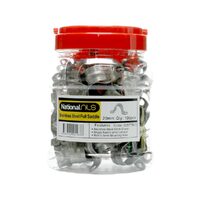
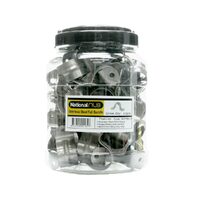
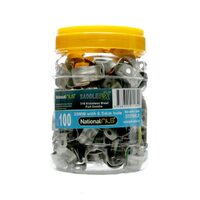
Sparky Direct stocks the full conduit saddle range online, including PVC, zinc-plated, heavy-duty galvanised, and 316 stainless steel options. The full range is supplied by National Light Sources (NLS) and other trade-grade manufacturers, with sizes from 20mm through 32mm in pack and jar quantities.
Bargain-bin saddles often look identical on the rack and fail on the wall. Plating thickness, base metal gauge, and tab strength are the differences that matter. Trade-grade saddles cost slightly more per piece but install faster, hold conduit straight, and survive the conditions they were chosen for.
Saddles are bought by the box or jar: 50, 60, or 100 pieces is standard. For ongoing trade work, buying bulk packs cuts the per-piece cost significantly compared with hardware-store retail packets. Standing orders and trade pricing apply to registered trade customers at Sparky Direct.
The most common error is reaching for a 20mm saddle when the run uses 25mm conduit (or vice versa). A loose saddle fails immediately. A tight saddle distorts when fitted, breaks the plating, and starts rusting. Confirm conduit size before ordering, and never mix saddle sizes within a single run.
Zinc-plated saddles installed outdoors near the coast last roughly one wet season. PVC saddles installed in a hot plant room can become brittle and crack. Match the saddle material to the worst conditions on the run, not the average.
Plug-only fixings into plasterboard, screws too short to bite the substrate, and saddle spacing wider than recommended all lead to the same end: drooping conduit and stressed fittings. The saddle is only as good as the screw and the wall behind it.
Critical: Always confirm the conduit diameter and the saddle size match exactly before installation. A 25mm saddle on 20mm conduit will not grip; a 20mm saddle on 25mm conduit will not close. Both errors waste time and product.
If saddles are working loose, check whether the screws are bottoming out before the saddle pulls flush. Replace short fixings with longer screws or upgrade the anchor type. On vibrating installations, add thread-locking compound or spring washers to the existing fixings.
Sag between supports usually means the saddle spacing is too wide for the conduit and load. Add intermediate saddles to close the gap. Movement at fittings often points to a missing saddle within 300mm of the bend or coupling: every direction change needs a saddle close on each side.
Rust streaks down the wall below a saddle indicate plating failure on a steel bracket. Replace with a higher-grade material (galvanised or stainless) and treat the wall stain. Cracked or chalky PVC saddles point to UV exposure or heat: replace with a UV-stable or metal alternative.
Watch NLS 30305 | 20mm PVC Full Saddle video
Watch NLS 30457 | 25mm Zinc Full Saddle | 100 pack video
Watch NLS 30579 | 32mm Full Saddles 316 Stainless Steel (60 Jar) video

Very easy to purchase from this company. I did not have to put up with - I can’t sell to you unless you have an electrical license like I have had with other companies. Information on the website made it very easy for me to purchase the correct item(s) I required.
This is the second time I am ordering from Sparky and I am satisfied with the prices, the products, the service and the delivery. Thank you!
fanatastic service,ordered and delivered within the week,got exactly what i ordered,great price and good quality
Quality products in stock • Fast Australia-wide delivery • Competitive trade pricing
Browse Conduit Full Saddles → Get Expert Advice →Yes, they help maintain straight, well-supported conduit runs.
Sparky Direct supplies full saddles Australia-wide, offering reliable electrical conduit fixing solutions with convenient delivery.
Full saddles are securely packaged and delivered via standard courier services.
Unused products are generally eligible for return according to the seller’s returns policy.
Warranty coverage varies by manufacturer and typically covers defects in materials or workmanship.
Yes, full saddles are typically sold as individual electrical fixings.
Yes, choosing the correct size ensures secure fixing and compliance.
Once installed correctly, they generally require no maintenance.
Yes, they are commonly used when upgrading or installing new conduit runs.
They may be visible in surface-mounted installations but are designed to be unobtrusive.
Quality full saddles are designed to withstand everyday installation conditions.
Yes, they are commonly used in surface-mounted conduit installations.
They are straightforward for trained professionals to install as part of a compliant system.
Full saddles are electrical conduit fixings that fully wrap around the conduit to secure it firmly to a surface.
Yes, they are frequently used where a more secure fixing is required.
They provide extra stability and are ideal where conduit needs stronger support.
Yes, they provide strong support and help minimise movement or vibration.
Yes, they are suitable for residential, commercial, and light industrial applications.
Yes, they are widely used for indoor electrical conduit installations.
They are typically made from PVC or metal, depending on the installation requirements.
They are available to suit common conduit sizes such as 20mm, 25mm, and 32mm.
Yes, they are commonly used with rigid electrical conduit systems.
Quality full saddles are manufactured to meet relevant AS/NZS electrical and safety standards when used correctly.
Full saddles encircle the entire conduit, offering greater support compared to half saddles which cover only part of the conduit.
They are used to provide strong, stable fixing of conduit to walls, ceilings, or other structures.