
Search Results:
Search Results:
Search Results:
Search Results:
Matelec is an Australian electrical brand with a long-standing presence in fire detection. The smoke alarm range serves the residential, rental, and light commercial markets, with a focus on photoelectric sensing and wireless interconnection.
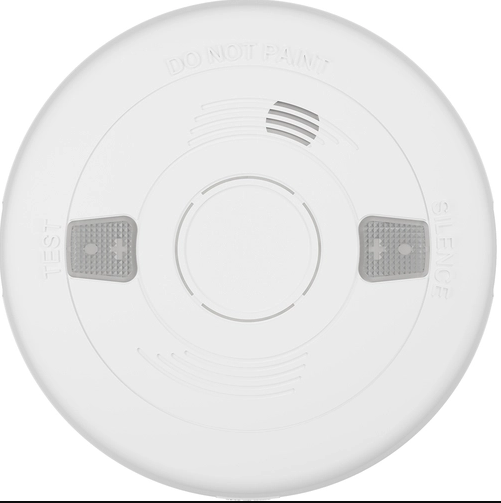
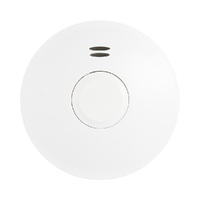
Matelec smoke alarms are ceiling-mounted detection units that sense visible smoke particles in the air. The range includes 240V hardwired alarms with battery backup, sealed 10-year lithium battery units, and wireless interconnect modules. Each unit is independently tested and certified to AS 3786:2014, the Australian standard for residential smoke alarms.
The primary function of any smoke alarm is to detect smoke before flames spread, giving occupants time to evacuate. Photoelectric sensors respond to smouldering fires, the most common type of household fire originating from upholstery, bedding, and electrical faults. Matelec units sound an 85dB alarm at three metres on detection.
Common installation locations include private homes, rental properties, apartments, granny flats, and small commercial offices. The wireless interconnect range is popular for retrofits, where running new cabling between rooms is impractical. Trade installers also use Matelec units for new builds where a full hardwired system is specified.
Smoke alarms operate on one of two detection principles. Matelec uses photoelectric sensing across the entire range, which is the technology recommended for residential use by Australian fire authorities.
A photoelectric sensor uses a small chamber containing an LED light source and a photo-receptor. Under normal conditions, the light beam does not reach the receptor. When smoke enters the chamber, particles scatter the light onto the receptor, triggering the alarm circuit.
Ionisation alarms use a small radioactive source to detect rapidly burning fires with little smoke. Photoelectric alarms detect smouldering fires with visible smoke particles. Australian fire services recommend photoelectric for residential use because most home fires begin with smouldering. Matelec only manufactures photoelectric units.
When one alarm detects smoke in an interconnected system, every alarm in the network sounds. This is critical in larger homes where a fire in the garage may not be heard from a bedroom. Matelec offers two interconnect methods: hardwired (via the third interconnect conductor) and wireless RF.
The Matelec range covers four main product types. Each suits a specific installation scenario and compliance requirement.
Photoelectric is the core technology across all Matelec units. The FSA-30000 wireless model and the FSA-60000 hardwired model both rely on photoelectric sensing. This technology has fewer false alarms from cooking steam compared to ionisation.
The FSA-60000 is a 240V hardwired unit with a sealed 10-year lithium battery backup. Mains power runs the alarm under normal conditions; the battery takes over during outages. This configuration is mandatory in new builds across most states.
The FSA-30000 wireless model runs on a sealed 10-year lithium battery with no mains connection. These suit retrofit work in older homes, rental properties, and detached structures like sheds. The sealed battery cannot be removed, which prevents tenants from disabling the unit by removing the battery.
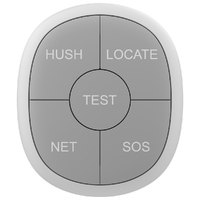
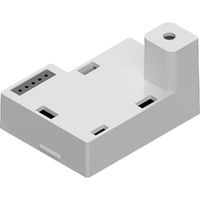
Wireless interconnect is achieved through built-in RF modules. The FSA-50000 module enables interconnection between hardwired and battery-powered units. Up to 24 alarms can be linked in a single mesh network without running cable.
The Australian smoke alarm market includes a handful of established brands. Matelec sits in the mid-market segment, typically priced below premium brands but above generic imports.
Premium brands such as Brooks and Clipsal often command higher prices due to brand recognition and trade preference. Matelec offers comparable photoelectric performance at a lower cost. Ei Electronics targets the high specification end with sensor-grade chambers and extended warranties.
Matelec is distributed through electrical wholesalers nationwide. Stock availability is consistent at Sparky Direct, with bulk pack pricing available for trade installers working on multi-dwelling developments.
For the average home retrofit, the FSA-30000 sits at a price point that suits 4-to-6 alarm installations without inflating project cost. Premium brands can add 30 to 50 per cent to the same scope of work. Performance differences in photoelectric sensitivity are minimal between certified units.
Smoke alarm compliance in Australia is governed by AS 3786:2014, building codes, and state-based residential tenancy legislation. Every Matelec unit sold by Sparky Direct carries certification.
AS 3786:2014 is the Australian standard covering smoke alarms used in residential buildings. It specifies sensor sensitivity, alarm volume, battery life, and labelling requirements. A non-compliant alarm cannot legally be installed in a dwelling for fire safety purposes.
Each state imposes its own rules layered on top of AS 3786. Queensland has the strictest requirements, mandating interconnected photoelectric alarms in every bedroom and hallway. New South Wales and Victoria require working alarms in residential properties, but allow more flexibility on type.
Rental properties typically require landlord-installed and tested alarms before each new tenancy. Properties listed for sale often need certificate-grade compliance reports. New builds must comply with the National Construction Code, which references AS 3786 directly.
Queensland has the most prescriptive smoke alarm legislation in Australia. The rules apply to every domestic dwelling and have phased compliance dates running through 2027.
From 1 January 2022, all rental properties and properties sold or leased require upgraded photoelectric alarms. From 1 January 2027, every domestic dwelling in Queensland must comply, regardless of sale or lease status. Owner-occupied homes have the longest lead time, but are not exempt.
Property owners are responsible for installation, testing, and replacement at the end of life. Landlords must test alarms within 30 days before each new tenancy and supply written confirmation. Tenants are responsible for routine monthly testing during occupancy.
The QLD legislation requires alarms in every bedroom, in hallways connecting bedrooms to other parts of the dwelling, and on every storey. All alarms must be photoelectric, less than 10 years old, and either hardwired or sealed 10-year battery powered. They must also be interconnected so all alarms sound when one detects smoke.
QLD compliance reminder: The 1 January 2027 deadline applies to every domestic dwelling, not just rentals or sales. Owner-occupiers must upgrade before this date.
The right model depends on three factors: property type, electrical infrastructure, and the level of interconnection required. Use this section as a decision framework before purchase.
Owner-occupied homes have the most flexibility and can mix hardwired and wireless units. Rental properties benefit from sealed battery models because tenants cannot disable them by removing batteries. Commercial settings often require hardwired systems tied into a building fire panel.
Choose hardwired when running new cabling is feasible, such as in new builds or major renovations. Choose battery-powered when retrofitting an existing home where ceiling access is limited. The FSA-50000 module bridges both systems if a partial retrofit is needed.
Matelec wireless units interconnect with other Matelec wireless units. They do not pair with other brands. For mixed-brand sites, install Matelec wireless units in a discrete zone or migrate the entire network to a single brand for predictable behaviour.
When evaluating any photoelectric smoke alarm, three specifications matter most: sensitivity, battery life, and interconnect capacity.
Photoelectric sensitivity is governed by AS 3786 testing protocols. All certified Matelec units meet the same minimum thresholds. Differences between models relate to chamber design and the volume of smoke required for activation.
Sealed 10-year lithium batteries are the current Australian standard for battery-powered alarms. Replaceable 9V backup batteries (in older 240V units) still appear in some models but are being phased out. The FSA-25000 retains the 9V backup format for replacement scenarios.
The Matelec wireless mesh supports up to 24 units per network. This is sufficient for most domestic and small commercial installations. Larger sites should split the network across multiple zones or specify a hardwired fire panel system.
| Model | Power Source | Interconnect | Best For |
|---|---|---|---|
| FSA-30000 | 10-year sealed lithium | Wireless RF | Retrofits, rentals, sheds |
| FSA-60000 | 240V with lithium backup | Wireless option | New builds, major renovations |
| FSA-25000 | 240V with 9V backup | Hardwired | Like-for-like replacements |
| FSA-50000 | Module unit | Bridges both | Mixed system retrofits |
Correct placement is as important as the alarm specification itself. AS 3786 and AS 1670.6 set out clearance, location, and density requirements.
Mount alarms on the ceiling at least 300mm from any wall or corner. Avoid the dead air space within 300mm of a wall, where smoke does not circulate. Do not install within 400mm of a light fitting, ceiling fan, or air conditioning vent.
Install one alarm in every bedroom, one in each hallway connecting bedrooms to the rest of the home, and one on every storey of multi-level dwellings. Avoid kitchens and bathrooms where steam and cooking fumes trigger nuisance alarms.
Mounting too close to a wall, installing inside a kitchen, painting over the unit, and failing to interconnect units across the network are the four most common faults found at compliance inspections. Each renders the installation non-compliant under QLD legislation.
Battery powered alarms can be installed by anyone. Hardwired 240V alarms require a licensed electrician under AS/NZS 3000:2018.
Any work involving the 240V mains circuit must be performed by a licensed electrician. This includes the FSA-60000 and FSA-25000. Unlicensed installation of mains powered alarms voids insurance cover and breaches state electrical safety laws.
Electrical work is required when adding a new hardwired alarm, replacing a hardwired unit with a different brand, or wiring an interconnect circuit between hardwired units. Replacing a wireless 10-year battery unit with another wireless unit does not require an electrician.
Licensed electricians must issue a Certificate of Electrical Safety (or equivalent state document) for all hardwired smoke alarm work. Retain this certificate for insurance and property sale purposes.
Owner occupiers can choose any compliant configuration. The FSA-30000 wireless range is the easiest retrofit for established homes. New builds typically specify the FSA-60000 hardwired range for ongoing reliability.
Rentals benefit from sealed 10-year lithium battery units because the battery cannot be removed by tenants. The FSA-30000 is the standard rental specification. Landlords must keep test logs for each unit.
Apartments, units, and townhouse developments require interconnected alarms across each individual dwelling. Commercial premises larger than typical residential scope may need a fire indicator panel instead of standalone alarms. Speak with a fire safety engineer for buildings over two storeys.
Sparky Direct stocks several smoke alarm brands. Each occupies a slightly different price and feature point.
Brooks alarms have a long trade reputation, particularly the EIB3016 hardwired model. Brooks units typically carry a higher unit price but enjoy strong electrician familiarity. Matelec matches the certification baseline at a lower cost. Both perform comparably in residential photoelectric sensing.
Clipsal smoke alarms (the 755 series) are commonly specified in major builder developments. The Clipsal smoke alarm range integrates with Schneider home automation. Matelec is more competitively priced and suits standalone installations where automation is not required.
Price tends to favour Matelec. Brand recognition favours Brooks and Clipsal. Feature parity is close across all photoelectric models because the AS 3786 standard sets the floor. Availability of Legrand smoke alarms and PSA photoelectric smoke alarms rounds out the choice for trade buyers.
Smoke alarms have a defined service life. Once that window closes, the sensor degrades and detection performance falls below AS 3786 thresholds.
Press the test button on each alarm at least once a month. Vacuum the exterior with a soft brush attachment quarterly to remove dust and insect debris. Avoid cleaning sprays directly on the unit, which can leave residue inside the chamber.
A chirping unit signals low battery (in replaceable battery models) or end of service life (in 10-year sealed units). Repeated false alarms point to dust ingress, insect contamination, or sensor drift. Persistent issues warrant replacement rather than continued cleaning.
Every smoke alarm carries a manufacture date label and a replacement date 10 years later. Once that date passes, the unit is non-compliant under AS 3786 regardless of whether it still functions. Plan replacement at least 6 months ahead to avoid stock or installer delays.
Sparky Direct stocks the full Matelec range with stock held in the Australian warehouse. Trade buyers should also review the heat alarms range for kitchens and garages where photoelectric sensors are unsuitable.
Cheap online imports often skip AS 3786 certification. They may carry CE marks or US-style labels that are not valid for Australian installation. Always check the certification label on the housing before purchase. Matelec units carry the AS 3786 certification mark on every unit.
Confirm the manufacture date is recent (less than 1 year old at purchase), verify AS 3786 certification, and check whether your installation needs hardwired or battery configuration. For QLD properties, photoelectric and interconnection are both mandatory.
Most false alarms come from dust, insects, or steam. Vacuum the exterior, check the unit is at least 3 metres from the kitchen, and confirm no air conditioning vent is blowing directly across the chamber. Persistent false triggers in a unit under 10 years old should be reported to the supplier.
If the test button does not produce a sound, check the battery (in replaceable battery models) or the manufacture date (in sealed units). A dead 10-year battery within the service window indicates a fault and warrants replacement under warranty.
Wireless interconnect failures usually trace to one of three causes: a unit out of RF range, a unit not paired correctly, or a unit at end of life. Re-pair the network from scratch following the Matelec datasheet. If a single unit fails to pair, replace it.
Watch Matelec FSA-30000 | Wireless Photoelectric Smoke Alarm With 10 Year Lithium Battery | 3V video
Watch Matelec FSA-60000 | Photoelectric Smoke Alarm With 10 Year Lithium Battery | 240v | Wireless Interconnect option video
Watch Matelec FSA-25000 | Photoelectric Smoke Alarm 240v/9v video

These units are so easy to install and interconnect. I even have mine connected out to my shed. You cannot go pass these units.
i have used these in a lot of houses and found them very user friendly, especially pairing together
easy to fit and not overly loud as to have your ears bleed but enough to get your attention
Quality products in stock • Fast Australia-wide delivery • Competitive trade pricing
Browse Matelec Smoke Alarms → Get Expert Advice →Photoelectric technology helps reduce nuisance alarms from cooking fumes compared to other types.
Sparky Direct supplies Matelec smoke alarms Australia-wide, offering compliant fire safety solutions with convenient delivery.
Matelec smoke alarms are securely packaged and delivered via standard courier services.
Unused products are generally eligible for return according to the seller’s returns policy.
Warranty coverage varies by model and typically covers defects in materials or workmanship.
Yes, Matelec smoke alarms are typically sold as individual units.
Yes, correct placement ensures effective detection and compliance.
Yes, interconnected Matelec alarms are suitable for multi-level dwellings.
Yes, they are commonly used in rental properties to meet safety regulations.
Smoke alarms are typically replaced every 10 years, depending on manufacturer guidance.
They should be tested regularly and kept free from dust and debris.
They emit a loud audible alarm designed to alert occupants throughout the home.
Yes, they include test buttons for simple routine testing.
Matelec smoke alarms are fire safety devices manufactured by Matelec, designed to detect smoke and alert occupants to potential fire hazards.
Yes, they are designed for dependable long-term operation when correctly installed.
Matelec is a well-known electrical brand offering reliable and compliant fire safety products.
Hardwired smoke alarms must be installed by a licensed electrician.
They are typically installed on ceilings outside bedrooms and on each level of a dwelling.
Yes, selected Matelec smoke alarms support interconnection so multiple alarms sound together.
Many hardwired Matelec models include battery backup for continued operation during power outages.
Matelec smoke alarms are available in hardwired and battery-powered models, depending on the product.
Yes, they are commonly used in new homes and renovation projects to meet compliance requirements.
Yes, they are designed for use in Australian residential environments.
Yes, Matelec smoke alarms are designed to meet relevant AS/NZS smoke alarm standards when installed correctly.
Matelec smoke alarms commonly use photoelectric detection technology.