
Search Results:
Search Results:
Search Results:
Search Results:
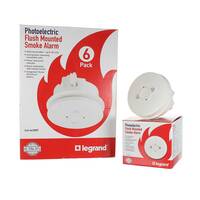
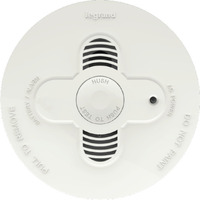
Legrand is a French electrical manufacturer with a long history in Australian residential wiring accessories. Its smoke alarm range covers compact 240V mains-wired units with sealed lithium battery backup. The current Australian flagship is a flush-mount photoelectric model engineered for low ceiling profile and a ten-year service life. These units sit in the wider Legrand product family alongside Legrand switches and Legrand power points.
Most fatal house fires happen at night when occupants are asleep. A working smoke alarm detects combustion products before flames spread and gives sleeping residents the seconds they need to evacuate. Australian fire authorities consistently report that homes without working alarms face dramatically higher fire fatality rates. This is why every state and territory now mandates smoke alarms in residential dwellings.
The Legrand range suits owner-occupied homes, rental properties, units, townhouses, and light commercial fit-outs such as small offices and shopfronts. The flush-mount design appeals to architects and builders who want a discreet ceiling profile. Mains-wired installation makes them a natural choice for new builds and major renovations where a licensed electrician is already on site.
A smoke alarm samples the air inside its sensing chamber. When combustion particles enter the chamber and disrupt a calibrated baseline, the unit triggers an internal piezo sounder rated above 85 decibels at three metres. Legrand units use a photoelectric sensor, the technology now preferred by Australian fire services for general residential use.
Photoelectric sensors use a light beam and a photo-receiver positioned at an angle. Smoke particles entering the chamber scatter the beam onto the receiver, which triggers the alarm. Ionisation alarms rely on a small radioactive source and respond faster to flaming fires but slower to smouldering ones. Photoelectric units respond well to the smouldering fires that cause most home fatalities, which is why most current Australian standards reference them.
Interconnection links multiple alarms so that when one detects smoke, every connected unit sounds. This matters in larger homes where a fire in the laundry might not wake a sleeper at the far end of the house. Mains-wired Legrand alarms can be daisy-chained via a dedicated interconnect conductor during installation. Both wired and wireless interconnect options are available across multiple brands at Sparky Direct.
Hardwired units draw power from the home's 240V mains supply and use the lithium battery only as a backup during outages. This is the configuration mandated for new builds and significant renovations across all Australian states. Legrand's flush-mount 240V model is the primary hardwired option in the Sparky Direct range.
Battery-only alarms run on sealed 10-year lithium cells with no mains connection. They suit retrofit scenarios where running cabling to ceilings would be disruptive or expensive. Legrand's Australian smoke alarm range currently centres on mains-wired units, so customers seeking battery-only options often look at Red Smoke Alarms or Matelec smoke alarms.
Hybrid systems combine hardwired alarms in primary locations with battery-powered wireless units in harder-to-reach areas. This approach works well in two-storey homes or extensions where running new cables is impractical. Legrand mains-wired alarms can form the backbone of such a system, with compatible wireless units filling the gaps. Heat-only sensing is also available via heat alarms, which suit garages and kitchens where steam and dust trigger nuisance smoke alarms.
Photoelectric sensing is the dominant residential smoke detection technology in Australia. It responds quickly to visible smoke from smouldering fabrics, furniture, and electrical insulation, the most common sources of fatal house fires. Detection chambers are designed to resist insect ingress, dust accumulation, and temperature extremes within rated limits.
For an interconnected system to function, every alarm in the chain must be compatible at the protocol level. Mixing brands or using an alarm without an interconnect conductor will leave the unit operating in isolation. Plan the layout before purchase, and confirm that every device on the loop is rated for the same interconnect method.
The 10-year lithium backup runs the alarm if mains power fails. The cell is sealed inside the unit and is not user-replaceable, which is intentional: it removes the temptation to disable an alarm by removing the battery. When the cell reaches end of life, the entire alarm is replaced.
Single-storey homes with three or four bedrooms often need at least four alarms: one in each bedroom area, one in the main hallway, and one in living spaces. Two-storey homes need alarms on each level. Large open-plan layouts may need additional units to ensure smoke is detected before it spreads beyond a single zone.
Choose hardwired Legrand units when an electrician is already on site, when local code requires mains-powered alarms, or when long-term reliability matters more than installation cost. Choose battery-powered alternatives when retrofitting an existing home where cabling would be disruptive, or for short-term rental property upgrades.
Risk varies by occupancy. Households with young children, elderly residents, or anyone with hearing or mobility limitations benefit from interconnected systems with louder coverage. Homes with frequent kitchen activity may want photoelectric units placed slightly away from cooking zones to reduce nuisance triggers.
| Brand | Primary Strength | Typical Use Case |
|---|---|---|
| Legrand | Flush-mount profile, 10-year sealed lithium backup | New builds, design-led renovations |
| Clipsal | Wide model range, established installer base | Like-for-like replacement, mixed retrofits |
| Red Smoke Alarms | Battery-powered wireless interconnect | DIY retrofit, rental compliance |
| PSA Products | Long-running mains-wired Lifesaver series | Trade installer favourite, base-plate compatibility |
| Matelec | Wireless interconnect with remote control | Mixed wired and wireless coverage |
| Brooks | Low nuisance alarm rate | Humid regions, kitchen-adjacent rooms |
The main practical differences between brands are interconnect protocol, base-plate compatibility with existing installations, and physical profile. A Legrand alarm will not interconnect with a Clipsal alarm at the wireless level, and base plates are rarely cross-compatible. Always plan the system around a single brand where possible.
Legrand is positioned as a premium European brand with a strong design focus. Australian homeowners and trade buyers tend to choose Legrand when ceiling appearance matters, and when they want a single-vendor solution alongside other Legrand wiring devices. Trade-grade brands such as PSA and Clipsal dominate volume installations where installer familiarity and base-plate compatibility drive selection.
Cheaper alarms from non-specialist brands can pass certification, but trade-grade brands tend to outperform on long-term reliability, false alarm rejection, and base-plate consistency across model generations. Spending more upfront often saves on call-back labour over the alarm's ten-year service life.
The minimum legal placement in most Australian states is one alarm in every bedroom area and one in every level of the home, including basements. Hallways outside bedrooms, the top of stairwells, and main living areas are also recommended. Alarms should sit on the ceiling, ideally near the centre of the room and at least 300mm from any wall or light fitting.
One alarm per bedroom, one in every hallway servicing bedrooms, and one on every storey. Mount on the ceiling at least 300mm from walls and light fittings. Avoid kitchens, bathrooms, and laundries where steam and cooking fumes cause nuisance triggers.
Mounting alarms too close to kitchens, bathrooms, or air-conditioning vents is the most common installation error. Steam, cooking fumes, and forced air all reduce detection sensitivity or trigger nuisance alarms. Alarms inside garages can also struggle with vehicle exhaust and temperature swings, so a heat alarm is often the better choice in that location.
Walk through the home and mark every bedroom, every hallway, and every staircase. Add living areas and any zone where a fire could start unnoticed, such as a study or workshop. Connect every alarm via interconnect cabling or wireless link so a fire anywhere in the home wakes everyone.
AS 3786 is the Australian Standard that governs smoke alarms for residential buildings. It defines test methods, sensitivity ranges, sounder output, and labelling requirements. Legrand smoke alarms sold through Australian channels are certified to AS 3786, and the certification mark appears on the product itself.
Mains-wired smoke alarms must be installed by a licensed electrician in every Australian state and territory. The work involves connecting 240V supply, testing the interconnect loop, and verifying that the alarm responds correctly. DIY installation of mains-wired units is illegal and voids any insurance claim arising from a fire.
Each state has different rules for landlord obligations, sale-of-property requirements, and inspection cycles. Queensland's Domestic Smoke Alarms legislation requires interconnected photoelectric alarms in every bedroom and hallway by 2027 in all rental properties and properties being sold. Other states have similar but distinct timelines. Check current requirements with the relevant state fire authority before specifying a system.
For owner-occupied homes, the priority is long service life and low maintenance. A mains-wired Legrand unit with sealed lithium backup gives ten years of operation with only annual button-press testing required. Pair with a single-brand interconnect across all alarms for whole-home coverage.
Rental properties carry strict landlord obligations. Annual inspection by a licensed contractor is now standard practice in most states, and interconnected photoelectric units are increasingly mandated. Hardwired Legrand alarms suit properties undergoing electrical upgrades or compliance refits.
Small offices, retail shopfronts, and serviced apartments often fall under residential rather than full commercial fire detection rules. Legrand smoke alarms can satisfy these requirements when specified by the building certifier. Larger commercial installations need addressable systems beyond the scope of standalone alarms.
The flush-mount profile, ten-year sealed battery, and photoelectric sensor combine into a low-maintenance unit suited to design-conscious installations. Legrand's wider electrical accessories range means a single brand can cover switches, power points, and smoke alarms in one project, simplifying procurement.
The Australian Legrand smoke alarm range is narrower than competitors such as Clipsal or Red. There are fewer model variants for specialised use cases such as wireless-only retrofits, deaf-and-hard-of-hearing alerting, or carbon monoxide combination units. For complex specifications, a multi-brand approach may be needed.
Confirm three things before purchase: the alarm meets AS 3786, the interconnect method matches every other unit in the system, and the base plate fits the existing installation if you are replacing like for like. Skipping any of these checks tends to produce expensive surprises during installation.
Press the test button monthly. Vacuum the alarm cover quarterly to clear dust and insect debris. A failed monthly test means the unit is faulty and should be replaced. Do not paint over a smoke alarm under any circumstances; paint clogs the sensing chamber and disables detection.
Common warning signs include intermittent chirping, false alarms during normal cooking, no response to the test button, or visible discolouration of the casing. Chirping every 30 to 60 seconds usually indicates the backup battery is depleted, which on a sealed-cell unit means the alarm itself needs replacing.
AS 3786 mandates that smoke alarms be replaced at most ten years after the manufacture date printed on the unit. Plan ahead: a household replacing all alarms at once gets better pricing and avoids the maintenance pattern where one alarm fails, then another, then another over a six-month period.
Legrand smoke alarms are available from Australian electrical wholesalers including Sparky Direct, where the Legrand smoke alarm range is stocked alongside compatible Legrand wiring accessories. Trade pricing applies on bulk orders.
Hardware-store smoke alarms can pass minimum certification but often suffer from short service life, frequent nuisance alarms, and limited interconnect compatibility. Trade-grade brands cost more upfront but deliver lower lifetime cost when the call-back labour from premature failures is factored in. For any rental or compliance-driven installation, trade-grade is the safer choice.
Look for AS 3786 certification on the box, a clear ten-year manufacture warranty, photoelectric sensor type, and confirmation of base-plate compatibility if you are replacing existing units. Check that the model is currently in production, since smoke alarm bases occasionally change between generations and an older base may not fit the newest alarm body.
Most false alarms are caused by cooking steam, shower steam, dust, or insects entering the sensing chamber. Move the alarm at least three metres from kitchen doorways and bathroom doors where possible. Vacuum the unit, then test it. If false alarms continue after cleaning, the unit may be approaching end of life.
If pressing the test button produces no sound, check that the mains supply is on at the circuit breaker. On a sealed-cell unit, no test response also means the backup battery has expired and the entire alarm needs replacement. Never bypass a non-responding alarm by disconnecting power; replace it the same day.
Persistent chirping every 30 to 60 seconds indicates low battery. On Legrand sealed-lithium units, this signal means the cell is at end of life and the alarm must be replaced. The chirp is intentionally annoying so that occupants act on it rather than ignoring it for weeks.
Critical reminder: Never remove a working smoke alarm to silence a nuisance trigger. Mute it briefly using the hush button, identify and address the cause (cooking steam, dust, insects), then test the alarm. Removing the unit and forgetting to refit it is a recurring cause of fatal house fires.
Watch LEGRAND 643092 | SMOKE ALARM MAINS WIRED FLUSH LITHIUM BATTERY 240V video
Watch CLIPSAL 755PFM4 | Flush Mount 240V Smoke Detector | Photoelectric | 9v Battery Back Up video
Watch PSA LIF6800 | 240V Photoelectric Smoke Alarm with 9V DC Battery Backup | 10YR Warranty video

I chose Brooks smoke alarms because they have few if any problems with false/nuisance alarms. I've been a sparky for many years ( now retired ) and recommend paying a little extra for these. Don't be the household with alarms disconnected because of nuisance alarms.
I have been a Licensed Electrical Tradesman for over 40 years. I have been dealing with electrical suppliers for the same amount of time. This is the 3rd time I have returned to deal with SD for reason being 3 things. 1 Competitive pricing. 2. Convenience, as I live in a regional area. 3. Excellent Service & Delivery time. Highly recommend this business.
These Clipsal 755RLPSMA4 mains powered battery back-up smoke alarms are great value and the brand is reputable. Bought 6 to replace existing life expired Clipsal 755 series alarms. Rapid delivery and great service from Sparky Direct. Easy to change out and testing is simple even with interconnected units plus these models with rechargeable 10-year lithium batteries avoid the need to replace batteries yearly.
Quality products in stock • Fast Australia-wide delivery • Competitive trade pricing
Browse Legrand Smoke Alarms → Get Expert Advice →Photoelectric models are designed to reduce nuisance alarms compared to older technologies.
Sparky Direct supplies Legrand smoke alarms Australia-wide, offering compliant fire safety solutions with convenient delivery.
Legrand smoke alarms are securely packaged and delivered via standard courier services.
Unused products are generally eligible for return according to the seller’s returns policy.
Warranty coverage varies by model and typically covers defects in materials or workmanship.
Yes, Legrand smoke alarms are typically sold as individual units.
Yes, choosing the correct model and placement ensures compliance and effective protection.
Yes, interconnected models are suitable for multi-level dwellings.
Yes, they are commonly used in rental properties to meet safety regulations.
Smoke alarms are typically replaced every 10 years, depending on manufacturer guidance.
They require regular testing and should be kept free from dust and debris.
They emit a loud audible alarm designed to alert occupants throughout the home.
Yes, they include test functions for regular safety checks.
Legrand smoke alarms are fire safety devices manufactured by Legrand, designed to detect smoke and alert occupants to a potential fire.
Yes, they are designed for dependable long-term operation when correctly installed.
Legrand is a trusted global brand known for quality, reliability, and compliance.
Hardwired smoke alarms must be installed by a licensed electrician.
They are typically installed on ceilings outside bedrooms and on each level of a dwelling.
Yes, selected Legrand smoke alarms support interconnection so all alarms sound together.
Many hardwired Legrand models include battery backup for operation during power outages.
Legrand smoke alarms are available in hardwired and battery-powered models, depending on the product.
Yes, they are commonly used in new homes and renovation projects to meet compliance requirements.
Yes, they are designed for use in Australian residential environments.
Yes, Legrand smoke alarms are designed to meet relevant AS/NZS smoke alarm standards when installed correctly.
Legrand smoke alarms commonly use photoelectric detection technology.